Besalú day trip from Barcelona
Besalú is a perfectly preserved medieval Catalan village 130 km from Barcelona. Romanesque bridge, Jewish quarter and how to combine it with Girona.
From Barcelona: medieval villages day tour (Besalú & Rupit)
Duration: Full day
- Free cancellation
- Small group
Quick facts
- Distance from Barcelona
- 130 km northeast
- Travel time
- 1h30–2h by car; 1h30 by train+bus
- Best for
- Romanesque bridge, medieval Jewish quarter, photography
- Entry cost
- Village free; Jewish baths €3
Besalú is the kind of medieval town that travel writers describe as “stepping back in time” — an overused phrase, but in this case accurate in a specific architectural sense. The 11th-century fortified bridge over the Fluvià river, the preserved Romanesque church of Sant Pere, and the medieval Jewish quarter containing one of only three surviving ritual baths in Spain make Besalú one of the most remarkably intact medieval settlements in Catalonia. It has been a protected historic monument since 1966 and has been very lightly touched by modern development.
Besalú at a glance
| Where | 130 km northeast of Barcelona, near Girona |
| Cost | Village free; Mikveh (Jewish baths) around €3 |
| Time needed | Half a day (2–3 hours) |
| Getting there | ~1h30 by car; train to Girona + TEISA bus (~1h30 total) |
| Best time | April–June and September–October |
Getting there from Barcelona
By car (recommended): Take the AP-7 motorway north from Barcelona toward Girona (approximately 1 hour), then continue northwest on the N-260 direction Olot. Besalú is signposted from the main road. Total journey approximately 1h30. Parking is available just outside the medieval centre; the old town itself is pedestrianised. See getting around Barcelona and Catalonia for car rental options.
By public transport: Take a Rodalies or regional train to Girona (37–40 minutes from Barcelona Sants, €9–15 single), then a TEISA bus from Girona’s bus station to Besalú (approximately 45 minutes, €5). TEISA buses run several times daily; check the current timetable at teisa-bus.com before travelling. Return services in the afternoon; verify the last bus time to avoid being stranded.
By guided tour: Small-group day trips from Barcelona to medieval villages typically include Besalú as a highlight, often combined with Rupit, the Garrotxa volcanic park, or Girona. These cost approximately €65–75 and include transport and a guide. See the day-trips guide for current options.
What to see in Besalú
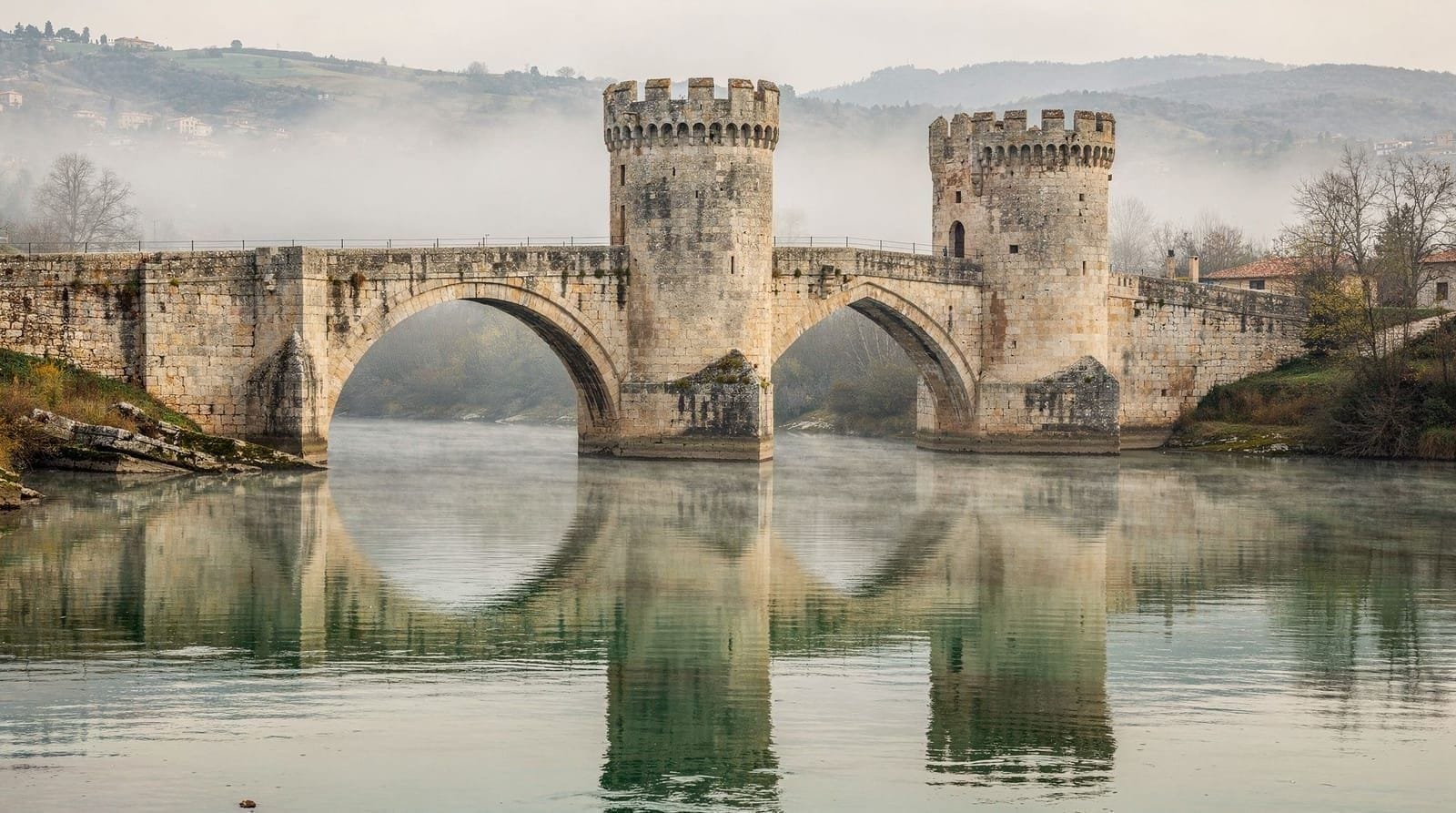
The Pont Fortificat (fortified bridge): The defining structure of Besalú and one of the most important examples of Romanesque civil engineering in Catalonia. Built in the 11th and 12th centuries, partially destroyed and rebuilt multiple times, the bridge has irregular arches reflecting different periods of construction. The watchtower gate at the midpoint is original. Walk across the bridge from both directions; the view from the river bank looking up at the bridge and the town above is the classic image of Besalú.
El Call (Jewish Quarter) and the Mikveh: Besalú had a documented Jewish community from at least the 10th century. El Call is the area of narrow lanes between the bridge and the main square where the medieval Jewish quarter concentrated. The Mikveh de Besalú — a 12th-century ritual bath discovered beneath a building — is one of the rarest surviving examples in Spain (only Gerona, Besalú and another Catalan town have confirmed surviving mikvehs). Visits are guided only, small groups, duration 20 minutes. Book at the tourist office on arrival; entry approximately €3. Not every visit time is available; arrive by 10 am to secure a slot.
Church of Sant Pere: The Benedictine monastery church at the centre of the old town, largely 12th-century Romanesque. The interior is sober and well-preserved; the carved capitals in the apse are particularly fine. Entry typically free or minimal.
Plaça de la Llibertat: The main square, ringed by arcaded medieval houses. Market on Tuesdays. The arcades provide shade for lunch in summer.
Convent de Sant Pere (ruins): Behind the main church, the ruined Gothic cloister of the Benedictine convent is accessible and atmospheric — less visited than the main bridge area.
River walk: Follow the Fluvià river downstream (south of the bridge) for the best views looking back at the town and bridge from outside. 20-minute round trip on a flat path.
Honest assessment of Besalú
Besalú is genuinely remarkable but compact. The bridge, the Mikveh, the main church and El Call can be covered comfortably in 2–3 hours. This makes it ideal as a half day combined with another destination — most naturally Girona (40 minutes by car or bus), or as part of a wider medieval-villages circuit with Rupit, Santa Pau and the Garrotxa.
As a standalone full-day trip from Barcelona, Besalú alone would feel too brief unless you take the scenic approach: arriving for a slow lunch in the arcaded square, doing the Mikveh visit, walking the river and bridge multiple times in different light, and exploring the surrounding countryside by car in the afternoon. That is a pleasant day but requires either a car or patience with the bus schedule.
For photographers: The best light on the bridge is early morning (9–10 am) when the stone is warm and tourists are absent. From the south riverbank looking north-northeast, with the bridge reflected in the Fluvià, is the canonical angle. The late afternoon (6–7 pm) light from the west is also excellent.
Combining with other destinations
Besalú + Girona: The natural pairing. Girona by fast train in the morning (see the Girona guide), then a TEISA bus to Besalú in the afternoon, returning to Girona for the evening train to Barcelona. This works well but requires careful bus timing.
Besalú + Garrotxa volcanic park: The Garrotxa Volcanic Zone Natural Park (25 km west of Besalú near Olot) is a landscape of extinct volcanoes covered in beech forest, with hiking trails around the perfectly conical volcano of Santa Margarida. The combination of medieval architecture and volcanic landscape is distinctive. Requires a car. See the Catalan Pyrenees guide for the full Garrotxa write-up.
Medieval villages tour: Rupit, 50 km east of Besalú on mountain terrain, is another excellent medieval village — famous for its stone houses, a rope bridge over a canyon, and its relative isolation. Combined with Besalú, it makes a memorable day. Public transport to Rupit is very limited; tour or car required.
Besalú + Figueres: With a car, Figueres and the Dalí Theatre-Museum are about 35 minutes east — a workable combination for a Dalí-and-medieval-Catalonia day, though it makes for a long day without your own transport.
The day-trips from Barcelona guide covers options for combining multiple medieval villages efficiently.
Where to eat
Plaça de la Llibertat restaurants: Several options on the main arcaded square. Can Quei has the best local reputation for Catalan cooking — try the escudella (hearty meat and vegetable soup) in cooler months. Prices reasonable for a tourist town.
Market day: Tuesday market on the square sells local produce including charcuterie, cheeses and honey from the Garrotxa region. Good for picnic provisions.
Avoid: The tourist-menu boards near the bridge approach (overpriced for what they are). Walk to the square or the side streets.
Besalú vs Girona for medieval architecture
Both towns are Romanesque-heavy Catalan destinations, but they scale very differently. Girona is a full city with a cathedral, a well-preserved Jewish quarter (El Call) and a wider restaurant scene — enough for a complete day. Besalú is a single, perfectly intact set piece: one bridge, one church, one small quarter, done in 2–3 hours. Neither replaces the other; the standard pattern is Girona for depth and Besalú for concentrated atmosphere, ideally in the same day trip via the TEISA bus connection.
Besalú is a compact medieval gem that rewards those who reach it — the Romanesque bridge alone justifies the journey from Barcelona. For most visitors, it works best as a half day combined with Girona or as part of a medieval-villages day tour. The Mikveh requires planning (guided visits only) but is genuinely rare. Come early, see the bridge in morning light, and combine with a lunch in the arcaded square.
Top experiences
Bookable activities with verified prices and instant confirmation on GetYourGuide.