Montserrat day trip from Barcelona
Montserrat by train from Barcelona: FGC from Plaça Espanya, rack railway, the Black Madonna, hiking trails and what the combined ticket actually covers.
Barcelona: Montserrat monastery and natural park day trip
Duration: Full day
- Free cancellation
- Hotel pickup
Quick facts
- Distance from Barcelona
- 50 km northwest
- Transport
- FGC from Plaça Espanya + rack railway
- Combined ticket
- ~€30 (FGC + rack railway)
- Best for
- Mountain scenery, monastery, La Moreneta, hiking
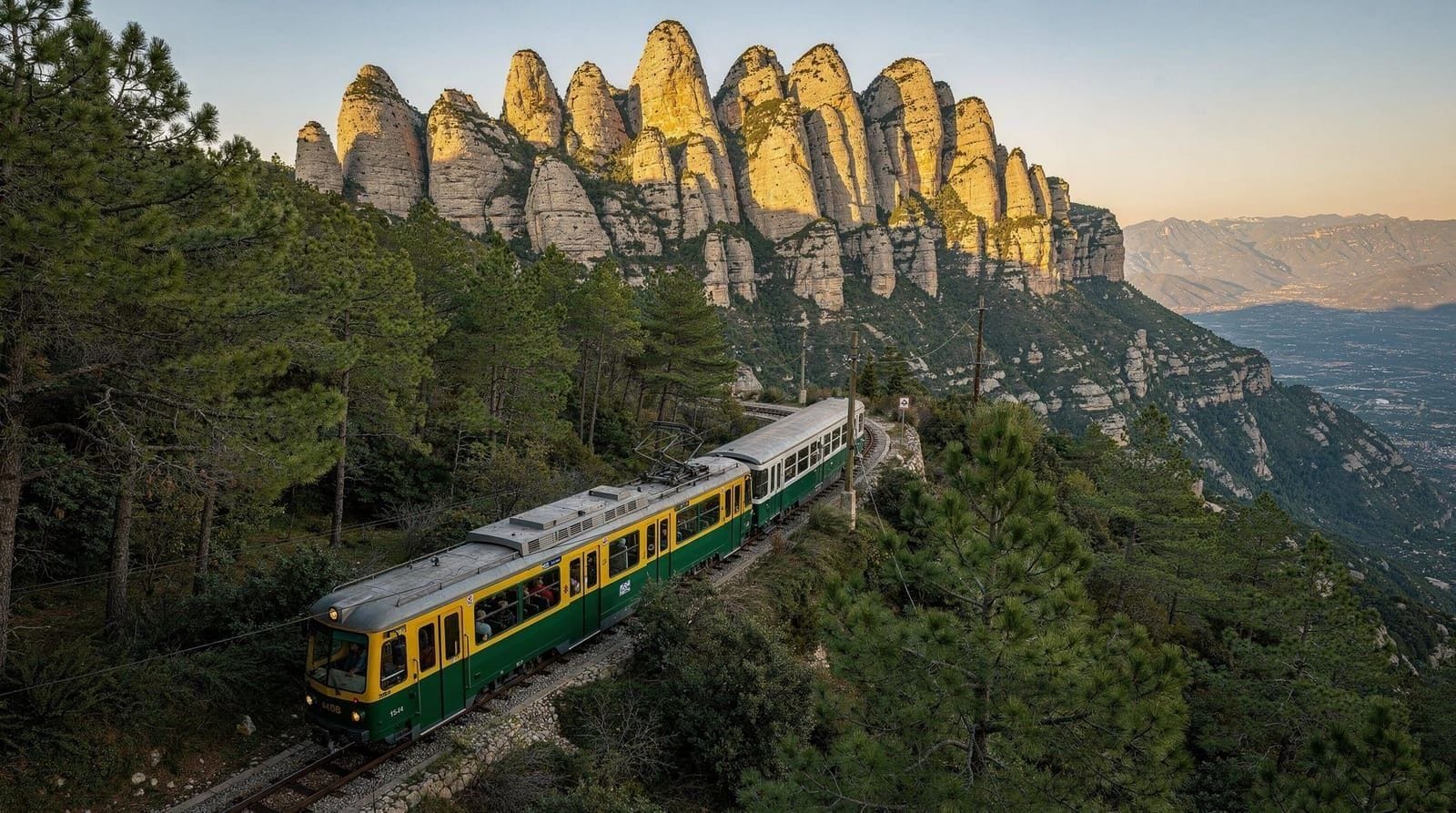
Montserrat is the day trip that Barcelona visitors come back from most changed. The serrated mountain 50 km northwest of the city — its name literally means “jagged mountain” — has a geological improbability that hits you from the train window before you even reach the foothills: rounded boulders and pinnacles stacked impossibly 1,200 metres above the Catalan plain, seemingly impossible products of differential erosion over 30 million years. The 11th-century Benedictine monastery halfway up the mountain is the cultural and spiritual heart of Catalonia — the patron saint La Moreneta is here, the Escolania boys’ choir has sung here for 800 years, and Goethe and Wagner both visited and took notes.
| Where | 50 km northwest of Barcelona |
| Cost | Combined FGC + rack railway ~€30 return; museum ~€8 |
| Time needed | Half day (monastery only) to full day (with hiking) |
| Getting there | FGC R5 from Plaça Espanya, ~1hr, plus 15-min rack railway |
| Best time | April–June and September–October; arrive before 9 am to beat crowds |
Getting there from Barcelona
FGC R5 line (recommended): The Ferrocarrils de la Generalitat de Catalunya (FGC) R5 line departs from Plaça Espanya station (Metro L1 and L3, or Line 3 FGC). Trains run to Monistrol de Montserrat approximately every 30–60 minutes. At Monistrol, transfer to the cremallera (rack railway), which climbs steeply to the monastery level. Journey time: approximately 1 hour FGC + 15 minutes cremallera.
A combined FGC return + cremallera return ticket costs approximately €30 from Plaça Espanya. Buy at the station or online at fgc.cat. This is the most economical option.
Alternatively, the FGC continues to Monistrol-Vila station (before Monistrol de Montserrat), from where an aerial cable car (Aeri de Montserrat) reaches the monastery. Slightly more dramatic and faster, but fewer departures and weather-dependent.
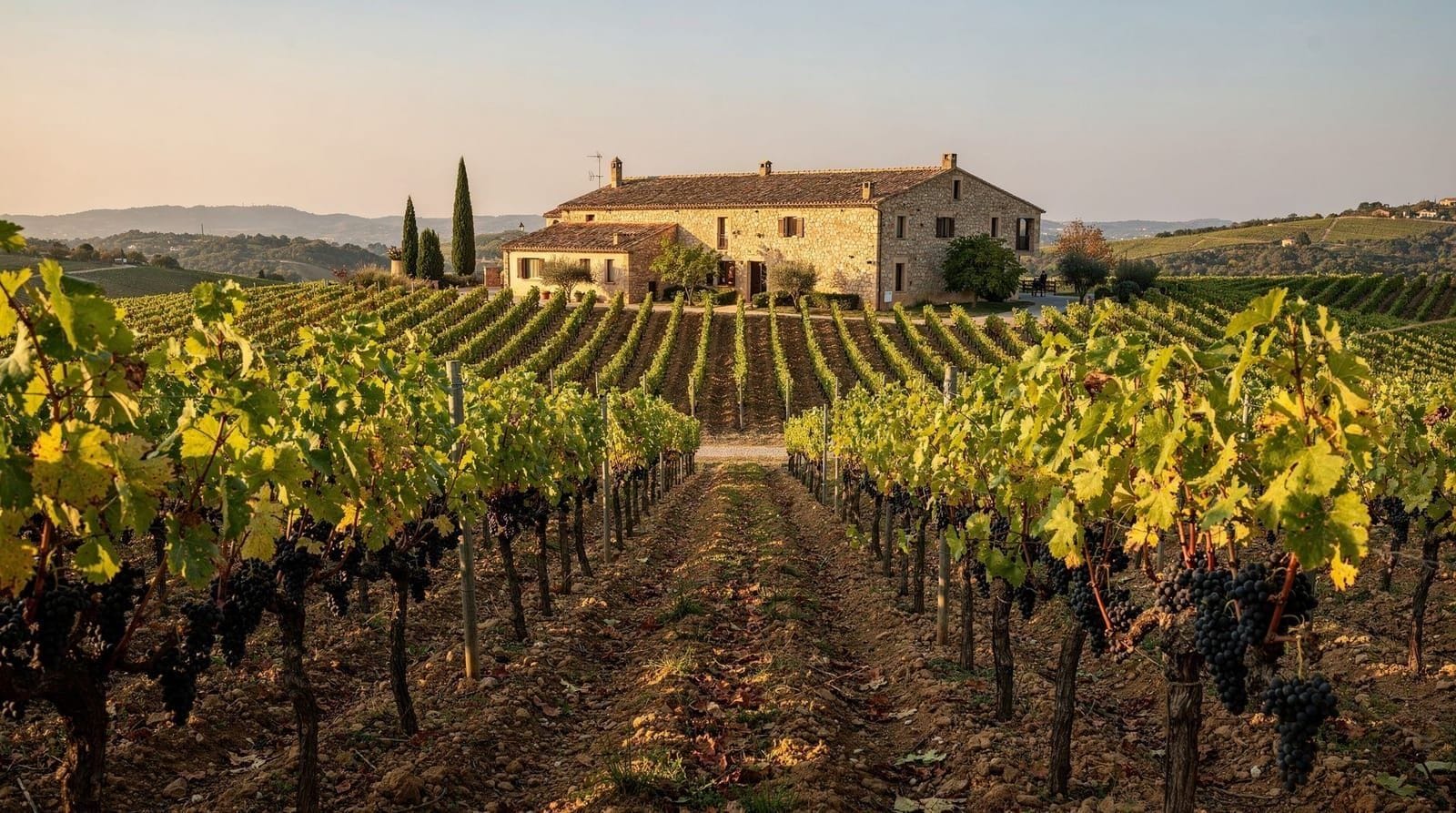
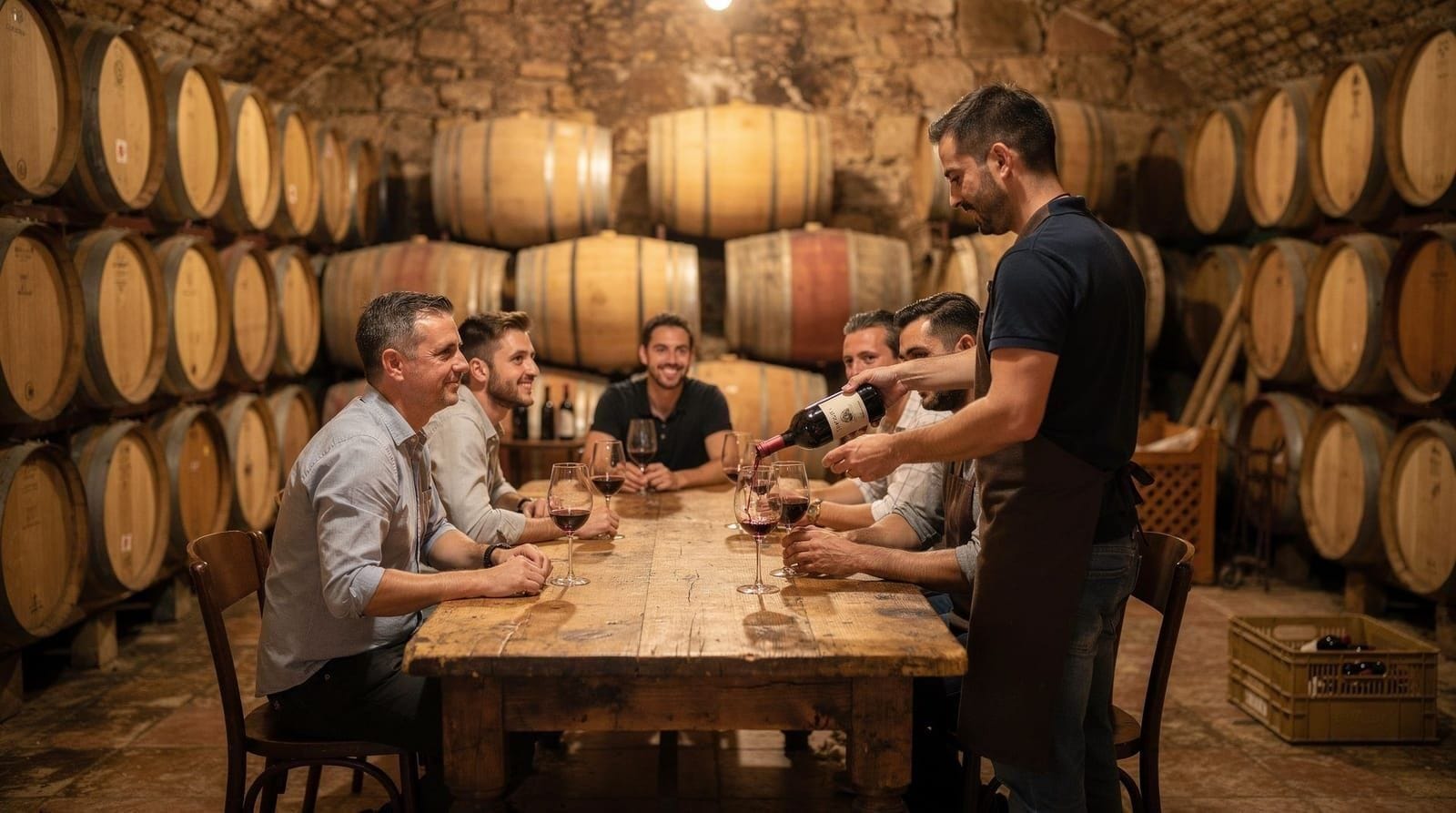
Guided tours from Barcelona: Tours typically start around €45–55 and include hotel pickup, transport and a guide. The advantage over DIY is not the train (which is easy) but the guided context — Montserrat’s history, the geology, and the significance of La Moreneta are much richer with explanation. Many tours also combine with Penedès wine country, adding a winery visit on the return.
For more day-trip options from Barcelona, see the best day trips from Barcelona.
The monastery and what to see
Santa Maria de Montserrat Basilica: The main church, rebuilt in the 16th–19th centuries after various destructions, is a large and ceremonial space with an ornate high altar. The side entrance on the right leads to the Camerin de la Mare de Déu — the small chamber above the high altar where La Moreneta is displayed. Queue here (20–60 minutes in summer; free to enter). The statue itself is 95 cm tall, carved in dark wood and dating to the 12th century. The Catholic tradition is to touch the golden orb in her hand.
Escolania performance: The boys’ choir sings in the basilica at 1 pm daily (not on Saturdays; some Sundays excluded in July–August — check the schedule at abadiamontserrat.net). The acoustics of the basilica combined with young voices singing Montserrat’s traditional music is a remarkable experience even for secular visitors. Arrive 20–30 minutes early to get a seat on the central pews.
Museu de Montserrat: A surprisingly good collection that reflects centuries of cultural gifts to the monastery: Caravaggio, El Greco, an Egyptian mummy, Picasso, Monet, and ecclesiastical art. Entry approximately €8. Easy to spend an hour here.
Plaça de Santa Maria: The open square in front of the basilica is the central hub with restaurants, shops and visitor facilities. Café de l’Abadia (the monastery café) is good for lunch; the restaurant is more formal. Prices are tourist-level but reasonable given the altitude and logistics.
What is included in the combined ticket
Montserrat’s ticketing is genuinely confusing on first look, since several products overlap. The basic FGC + rack railway combined ticket (~€30) covers transport only — the basilica itself is always free to enter separately. A step up, the “Trans Montserrat” ticket adds unlimited use of the Sant Joan and Santa Cova funiculars on the mountain for the day, useful if you plan to hike both. The “Tot Montserrat” ticket goes further, bundling in the museum and a self-service lunch — worth it only if you would eat at the monastery restaurant anyway. For most day-trippers doing the basilica plus one short walk, the basic combined ticket is sufficient; add the funicular supplement (around €10 return) only if Sant Joan is on your plan.
Hiking on the mountain
Montserrat’s appeal extends well beyond the monastery for those willing to walk.
Sant Joan: Take the Sant Joan funicular (additional charge, approximately €10 round trip) from the monastery level up to the upper station, then a marked trail leads to the Sant Joan hermitage (25 min) and the highest accessible viewpoint with views from the Pyrenees to the Balearic Islands on clear days. Doable in 1.5–2 hours from the funicular station.
Santa Cova: Walk 20 minutes downhill from the monastery on a marked path to the 17th-century chapel of Santa Cova, built at the site where legend holds that La Moreneta was discovered by shepherds led by angels in the 9th century. The path passes 15 sculptural stations by Gaudí, Puig i Cadafalch and other Modernista architects — a surprising open-air museum. Easy terrain; fine for families.
Sant Jeroni (summit, 1,236 m): A serious 2-hour hike from the monastery, reaching the highest peak on the massif. Not suitable for casual walkers without proper footwear and water. Rewarded with complete solitude and the best panoramic views on the mountain.
The rock formations: The truly dramatic geology of Montserrat is best appreciated from the hiking paths, where the rounded conglomerate “balls” — some 30 metres high — sit balanced on narrow bases and colonize every accessible ledge. The monastery viewpoints show the landscape but the paths get you among the rock.
Timing and crowds
Montserrat is the most visited day trip from Barcelona — several thousand visitors on peak summer weekends. The monastery platform can feel extremely crowded between 11 am and 3 pm in July–August. Strategies:
Arrive early: The first FGC train from Plaça Espanya reaches the mountain before 9 am. At this hour, the mountain is quiet, the light is good, and La Moreneta queue is short. Being on the mountain before 10 am makes a significant difference.
Go midweek: Weekends bring Catalan families in addition to tourists. Tuesday to Thursday the mountain is dramatically quieter.
Best months: April, May and October offer the best combination of good weather, dramatic light (the mountain looks exceptional in cloud and mist), manageable crowds and hiking conditions. June and September are still good. July–August works but requires early arrival and patience.
DIY vs guided tour
DIY: Straightforward. The combined ticket from Plaça Espanya is simple, the monastery is self-evident, and the hiking trails are well-marked. Best for independent travellers, hikers, or those who want maximum flexibility on time.
Guided tour: Adds significant value for those interested in the history and spiritual significance. The relationship between Montserrat and Catalan identity — the monastery as a refuge of Catalan language and culture during the Franco dictatorship, the role of La Moreneta in Catalan consciousness — is a story that needs telling to land properly. Guides who cover this make the visit much richer.
Montserrat + Penedès combination: A tour that combines the mountain in the morning with a Penedès winery visit in the afternoon is a very satisfying Catalonia day. The wine country is 20 km south of Montserrat; the route back to Barcelona passes through it.
Montserrat works as a half day if you stick to the monastery and La Moreneta; as a full day if you hike. Arrive early, queue for the Black Madonna, listen to the choir at 1 pm if your timing allows, and walk at least the Santa Cova path. The combination of the mountain’s improbable geology and the monastery’s position within Catalan culture makes it consistently the best day trip from Barcelona — not despite being popular, but because the reasons for its popularity are genuine. See the Montserrat day-trip guide for a fuller ticket breakdown, and the hiking trails blog post for first-hand trail notes.
Top experiences
Bookable activities with verified prices and instant confirmation on GetYourGuide.
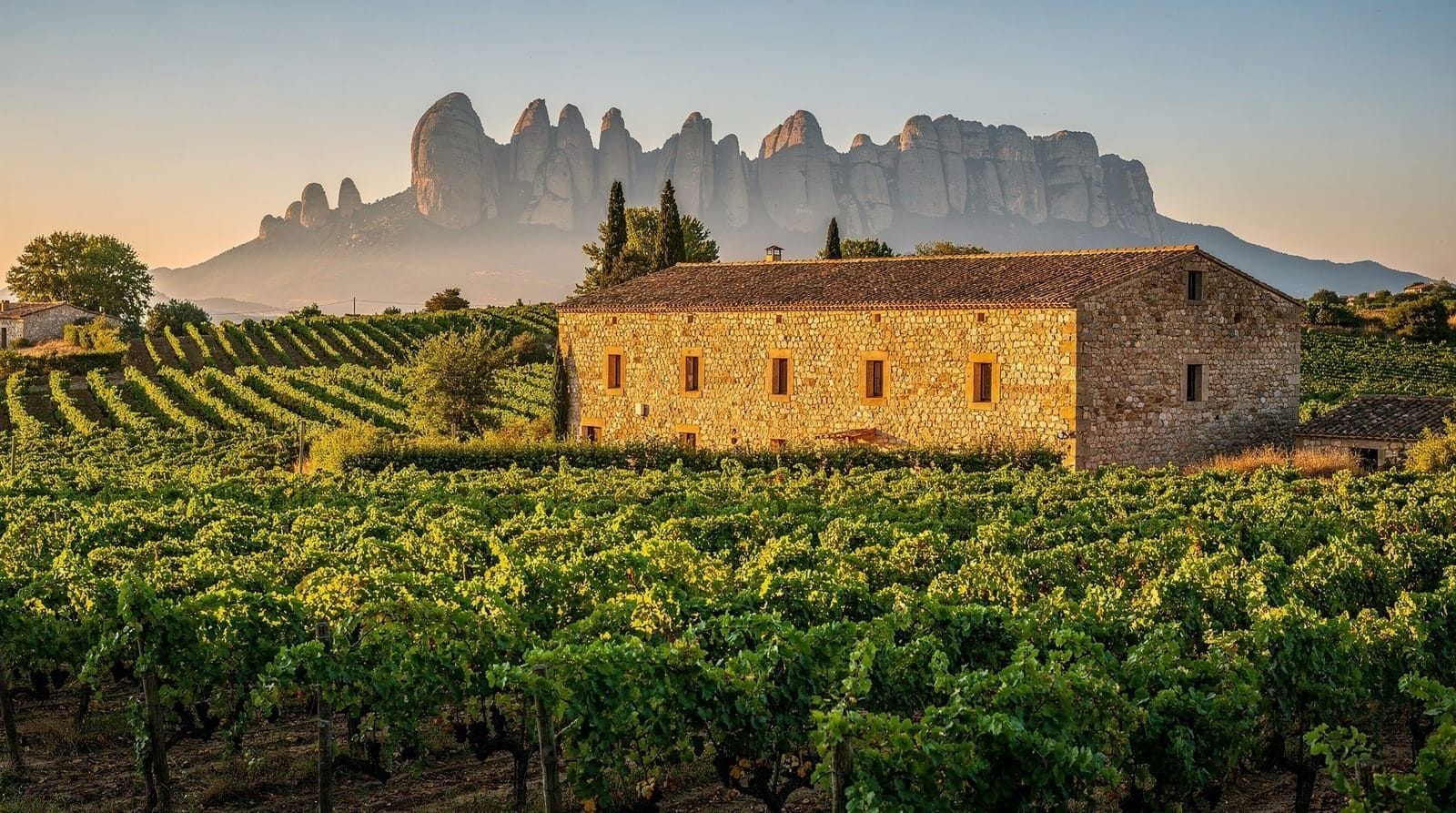
From Barcelona: Montserrat & cava winery day trip
- Free cancellation
- Small group
From Barcelona: Montserrat full-day trip with guided hike
- Free cancellation
- Small group
Barcelona: Montserrat cogwheel train, Black Madonna and winery tour
- Free cancellation
From Barcelona: Montserrat day trip with optional tickets
- Free cancellation