Begur day trip from Barcelona
Begur travel guide: a clifftop Costa Brava village with six hidden coves below. How to get there from Barcelona, best beaches and practical tips.
From Barcelona: Costa Brava and Girona small-group tour
Duration: Full day
- Free cancellation
- Small group
- Hotel pickup
Quick facts
- Distance from Barcelona
- 130 km northeast
- Travel time
- ~2h by car; 2h30+ by bus
- Access
- Car recommended; bus via Palafrugell
- Best for
- Secluded coves, clifftop village, local Catalan atmosphere
Begur is the central Costa Brava village that Catalan families have been coming to for generations — a hilltop settlement 200 metres above the sea with Arab-influenced castle ruins and six dramatically different coves accessible by steep paths or winding roads. It is not a beach resort. It is a village that happens to have beaches below it, which is entirely different and far more pleasant.
Begur at a glance
| Where | Central Costa Brava, 130 km northeast of Barcelona |
| Cost | Village and castle free; fish lunch around €20–35 |
| Time needed | Full day; overnight recommended for more than one cove |
| Getting there | ~2h by car; ~2h30+ by bus via Girona/Palafrugell |
| Best time | June and September for quieter coves |
Getting to Begur from Barcelona
Begur is more practical by car than by public transport, but public connections exist.
By car: Take the AP-7 motorway north, exit toward La Bisbal d’Empordà or Palafrugell, and follow signs to Begur. Journey time approximately 2 hours. You will need a car to visit multiple coves in a day — the village is at the top of a hill and the coves are at the bottom of separate roads.
By bus: SARFA runs direct services from Barcelona’s Estació del Nord to Palafrugell (approximately 2h15), from where a local bus connects to Begur (15 minutes). Alternatively, take a train to Girona and change to a Palafrugell bus. Services are more frequent June–September; check sarfa.com before travelling. The last bus back can be early — confirm return times before you go.
By guided tour: Some Costa Brava day tours include Begur or the central Costa Brava area; fewer than those covering Tossa or Cadaqués. The Girona and Costa Brava guide covers combined options.
For other Catalonia day-trip options from Barcelona, see the day-trips overview.
Begur vs Tossa de Mar
Both are classic Costa Brava day trips, but they suit different travelers.
| Begur | Tossa de Mar | |
|---|---|---|
| Travel time | ~2h by car, 2h30+ by bus | ~1h15 direct bus |
| Public transport | Workable but requires connections | Easy — direct SARFA bus |
| Character | Local Catalan village, six secluded coves | Medieval walled old town above one bay |
| Best without a car | No — coves are spread out | Yes — everything is walkable from the bus stop |
| Crowds | Lower away from Aiguablava | Busier, more day-trip infrastructure |
For a full comparison of Costa Brava options, see the Costa Brava guide. If you prefer a base with more restaurants and a Roman/medieval old town rather than pure coves, Girona makes a good alternative day trip 45 minutes from Begur.
The village of Begur
The hilltop centre of Begur is a compact and unreconstructed Catalan village — not a tourist village in the La Rambla sense, but a place with a genuine local life that happens to attract visitors for the beaches below. The Arab castle ruins at the top (free to visit, 10 minutes from the main square) give 360-degree views: the Pyrenees behind, the Costa Brava below, and on clear days the silhouette of Mallorca on the horizon.
The main square, Plaça de la Vila, has several restaurants and a Sunday market in high season. The architecture reflects the village’s history as a centre of emigration to Cuba and return — the so-called “Americano” houses, built by returnees in the 19th and early 20th centuries with Caribbean-influenced facades, are a distinctive feature throughout the village and surrounding Costa Brava towns.
The village itself takes about 2 hours to explore at a relaxed pace, including the castle. Most visitors use it as a base for the coves rather than a destination in itself.
The coves of Begur
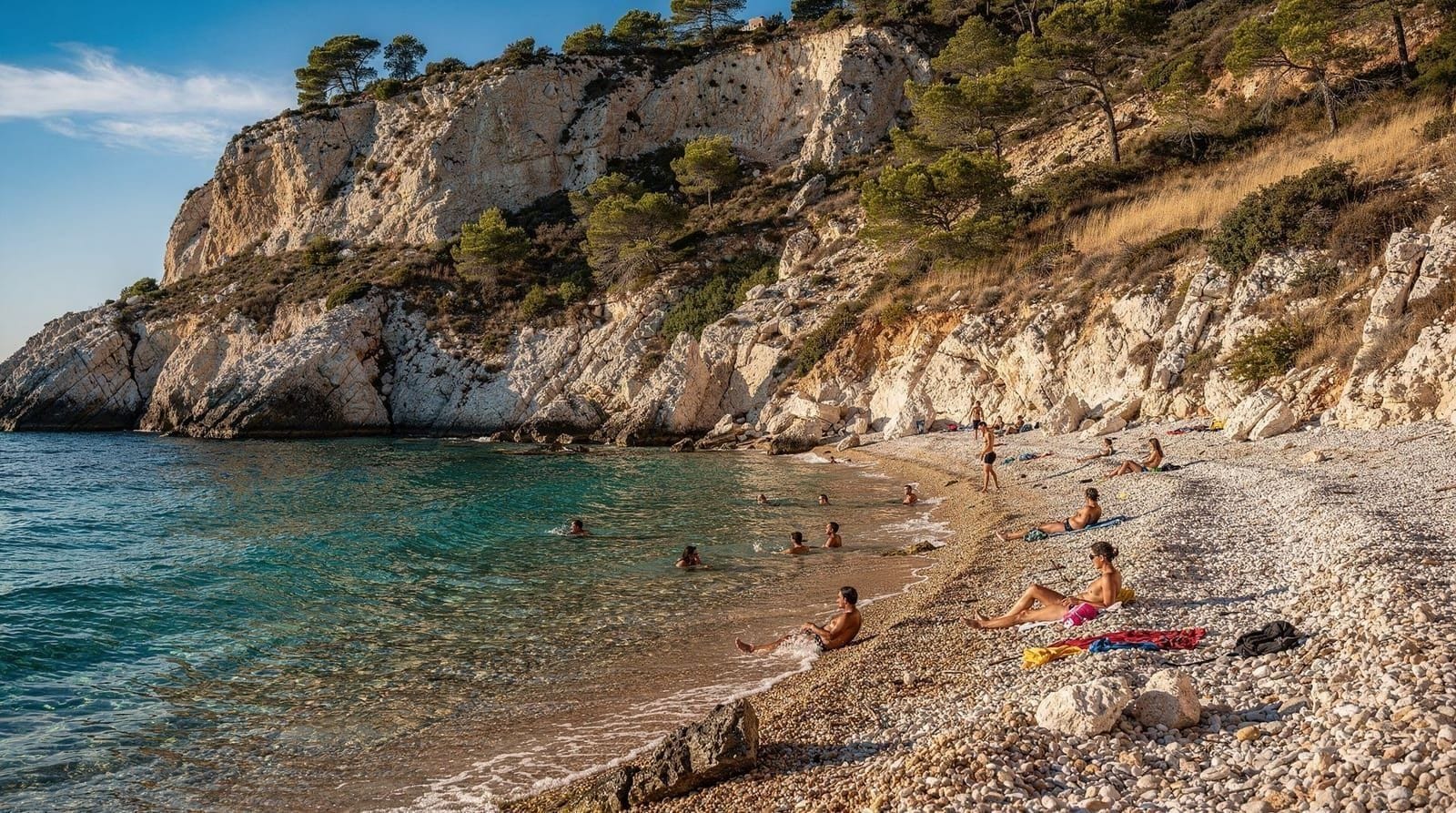
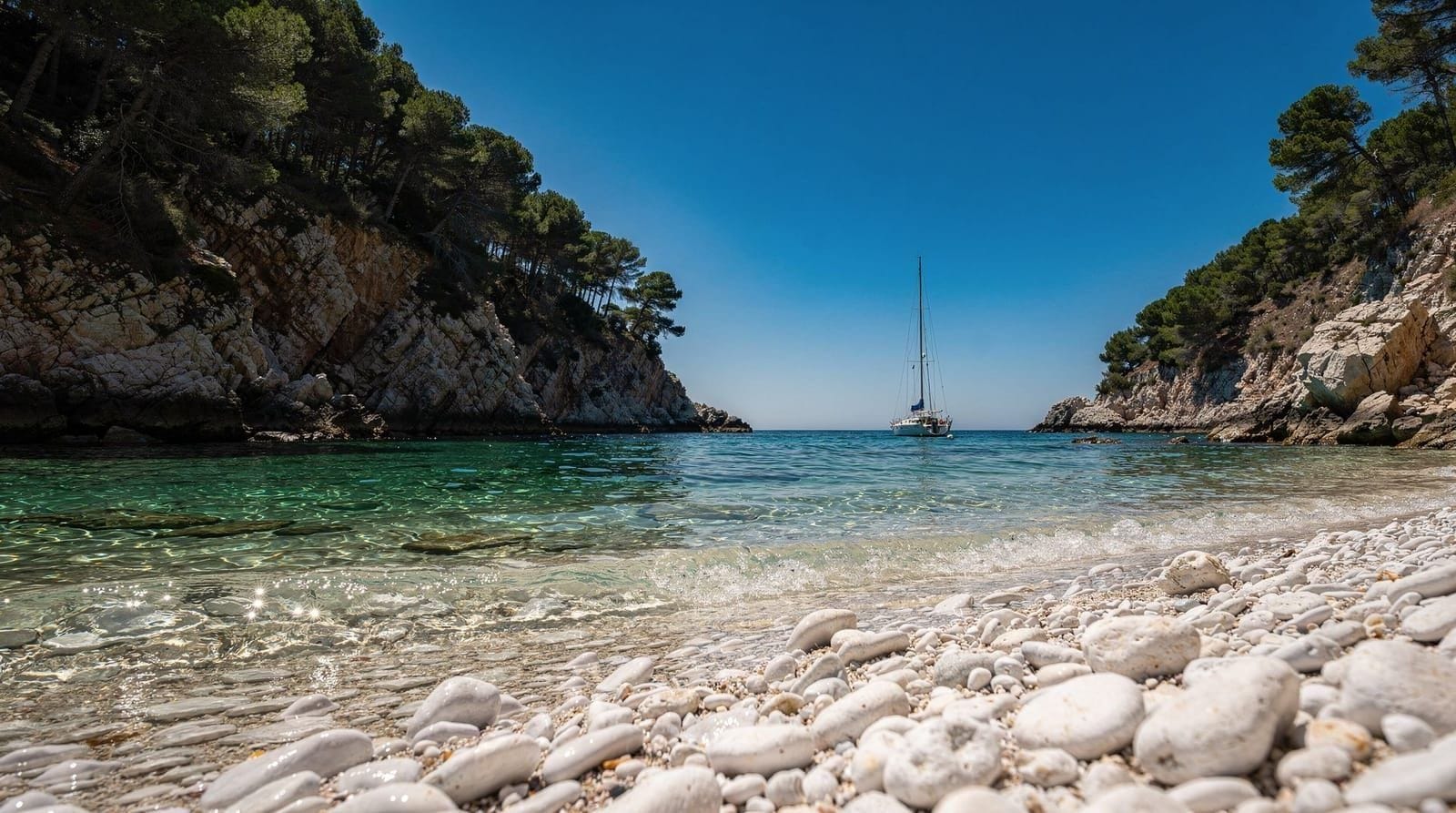
Aiguafreda: 3 km from Begur, the most sheltered of the small coves — a tiny arc of sand surrounded by pine forest and a handful of houses. No beach bars; bring your own supplies. Access: road + short walk.
Aiguablava: The largest and most organised cove in the Begur cluster, with clear turquoise water, beach bar service and the Parador de Begur hotel perched above. Reasonably crowded in summer but the water quality is exceptional. From the parador terrace (accessible without a hotel booking) the view of the cove from above is superb.
Sa Riera: A working fishing port turned beach, with local fishing boats sharing the bay with swimmers. More atmospheric than pristine. Fish restaurants on the waterfront — lunch here rather than down the coast.
Sa Tuna: The smallest and most local-feeling of the main coves — a curve of sand with a few wooden fishing boats pulled up and a single simple restaurant. Reached by a dead-end road; park at the top and walk 5 minutes.
Fornells: Between Aiguafreda and Begur town, with a coastal hotel and good snorkelling on the rocky sides of the bay.
Calella de Palafrugell: Not technically a Begur cove (it belongs to Palafrugell) but accessible by the Camí de Ronda (30 minutes on foot from Llafranc). Arguably the most atmospheric of all — a long strip of white fishermen’s houses and small fishing boats directly on the beach. The Wednesday havaneres singing on the beach (traditional Cuban sailor songs, a Costa Brava tradition) happens at Calella in July–August.
Walking between the coves
The Camí de Ronda coastal path connects most of the Begur coves with varying difficulty. A pleasant circuit: Aiguafreda → Fornells → Aiguablava (1h30 one way, moderate terrain, some rocky sections). The path offers views impossible from the road and accesses small coves with no road access. Proper walking shoes required; swimming spots along the route.
Allow 4–5 hours for a proper Camí de Ronda walk including a cove stop and lunch. Start early — paths get hot by midday.
Where to eat
Sa Tuna beach restaurant (no formal name, just the one there): Simple grilled fish, reasonable prices for the location, reserved feel for locals. Arrive before noon.
Restaurant Pa i Raïm (Begur village): Good Catalan cooking in the village centre — better value than cove restaurants. Seasonal menu including local anchovies, roasted meats, good cava list.
Avoid: Any restaurant advertising “paella” on a sign outside facing the beach — same dynamic as Barcelona’s beachfront trap. Order fideuà (noodle-based version, a Catalan beach lunch tradition) at a local place with a handwritten menu.
DIY vs guided tour
By car (DIY): The ideal approach. Arrive early, park above a cove, visit two or three coves during the day, eat lunch at Sa Tuna or Sa Riera, explore the village in the late afternoon. Full flexibility, no waiting for buses.
By bus (DIY): Workable for budget travellers who commit to one cove (Aiguablava, reached by shuttle from Begur village). Limited by return bus times.
Guided tour: Less optimal for Begur specifically — most tours combine it with other stops and give limited time at the coves. Better for Begur as part of a broader Costa Brava experience. Renting a car for the day is straightforward from Barcelona; see getting around Barcelona and Catalonia for rental tips.
Honest timing
Begur is one of those places that genuinely benefits from an overnight stay. Arriving the night before and having a morning on an empty cove before the day-trippers appear is a qualitatively different experience. As a pure day trip from Barcelona, you get the village and one cove properly — which is enough to understand why it is special, but not enough to be unhurried about it.
Begur is the Costa Brava that Catalan families choose for their own holidays — which is the most reliable endorsement of any destination. The coves are real, the village is unreconstructed, and the food at the fishing-village restaurants is worth the trip alone. Go with a car, go in June or September, and do not try to see all six coves in one afternoon.
Top experiences
Bookable activities with verified prices and instant confirmation on GetYourGuide.