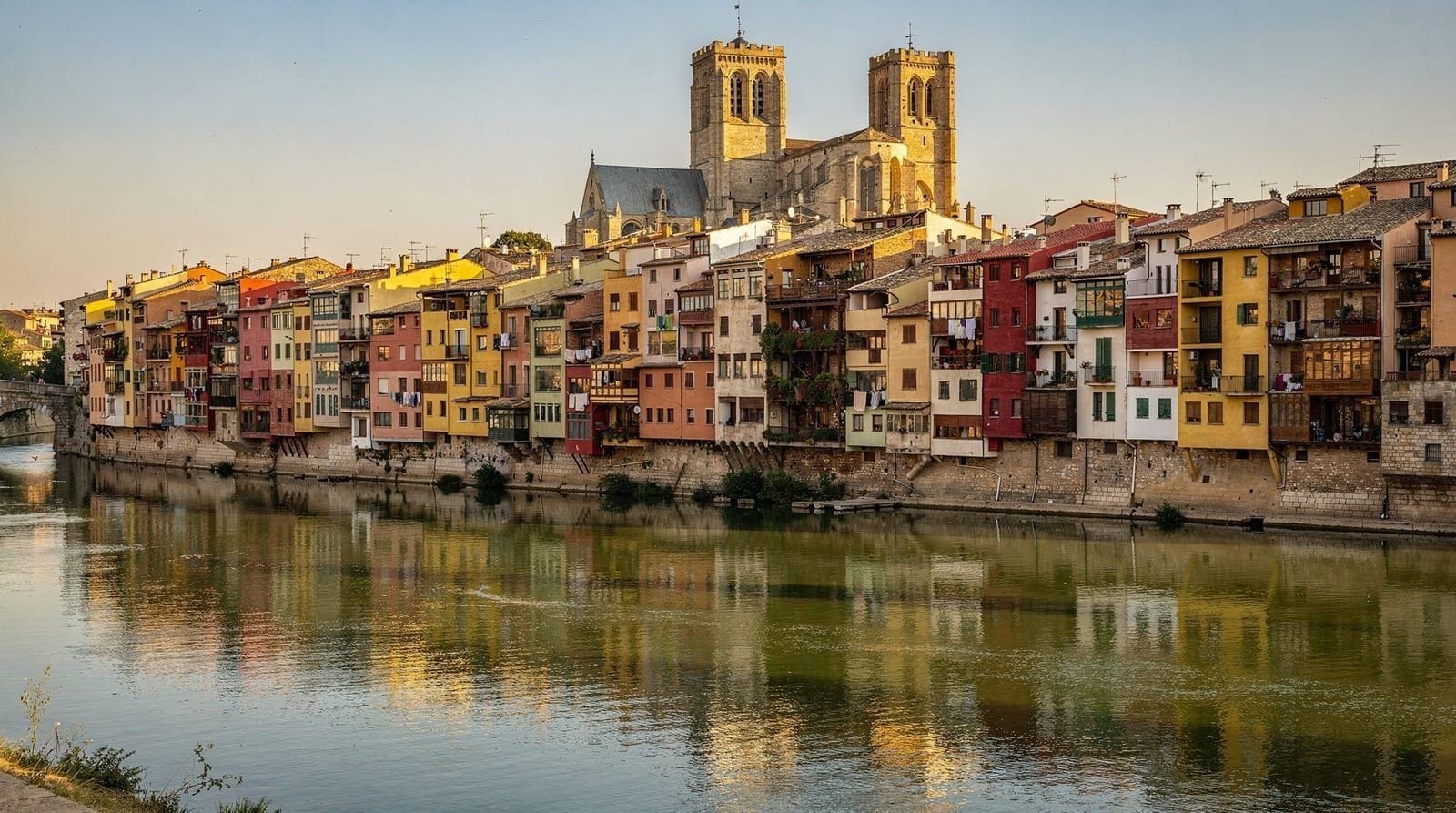
Tossa de Mar day trip from Barcelona
Plan a Tossa de Mar day trip from Barcelona — bus times, the medieval walled city, best beaches and honest tips on crowds.
Barcelona: Costa Brava boat ride and Tossa de Mar visit
Duration: 9 hours
- Free cancellation
- Hotel pickup
Quick facts
- Distance from Barcelona
- 100 km northeast
- Bus time
- 1h15 from Estació del Nord (SARFA)
- Bus fare
- ~€13 single / ~€25 return
- Best for
- Medieval walls, cliff swimming, easy day trip
Tossa de Mar is the most accessible point of the Costa Brava from Barcelona — a 100-kilometre bus ride delivers you to a horseshoe bay backed by one of the best-preserved medieval fortified towns on the Catalan coast. The combination of a good swimming beach, free medieval walls and a walkable old town makes it the obvious first Costa Brava experience for visitors based in the city.
| Where | 100 km northeast of Barcelona, Costa Brava |
| Getting there | SARFA bus, ~1h15 from Estació del Nord |
| Cost | Around €13 single / €25 return |
| Time needed | Full day |
| Best time | Weekday mornings, May–June or September |
Getting there from Barcelona
Bus (recommended): SARFA operates direct services from Barcelona’s Estació del Nord (next to Arc de Triomf metro station, L1) to Tossa de Mar year-round. Journey time: approximately 1h15. Single fare roughly €13, return €25 (check sarfa.com for current prices and timetable — services vary seasonally). In July and August, book at least a day ahead; the first morning buses fill quickly on weekends.
By car: About 1h30 via the AP-7 motorway to Lloret de Mar then the coastal road north. Parking in Tossa is limited in summer; use the signposted car parks on the approach and walk in (10 minutes).
Guided tour: Some Costa Brava day tours include Tossa alongside a coastal boat segment. Useful if you want to combine with other stops; you typically get 2–3 hours in Tossa itself.
There is no train to Tossa. The nearest rail station is Blanes (15 km south), but connections onward require a bus.
For a wider comparison of Catalonia day trips including timing and cost, see the best day trips from Barcelona.
The Vila Vella: what it is and when to go
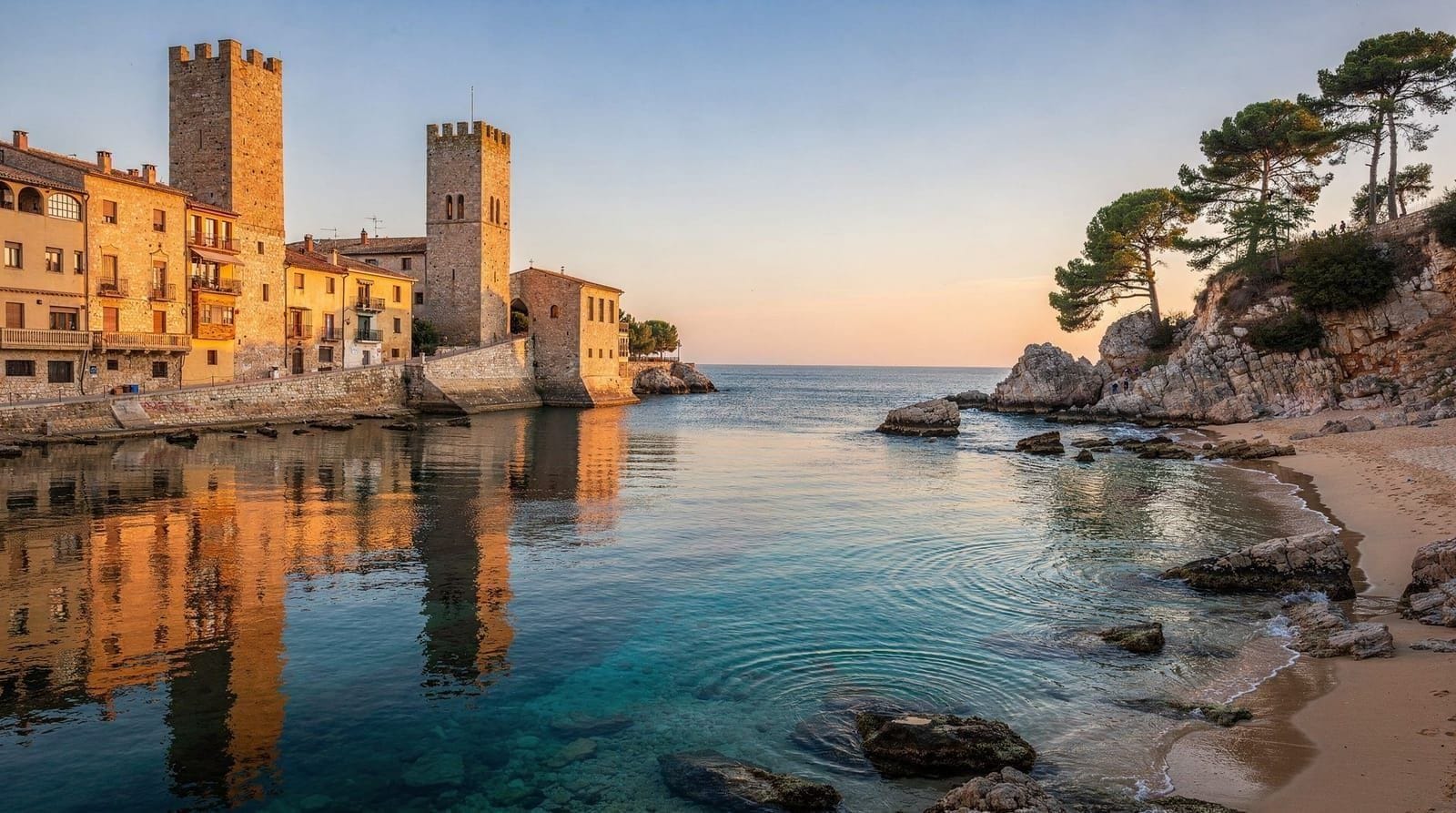
The medieval walled town is the reason Tossa de Mar is photographed from every charter-flight magazine. Built between the 12th and 14th centuries to defend a fishing community that had already existed for Roman centuries, the walls run around a rocky promontory at the south end of the main bay. Entry is free, any time.
Inside the walls — about 10 minutes to walk the perimeter — you find:
Torre de les Hores: The tallest remaining tower, climbable for views over the bay and roof terrace. Free.
Museu Municipal de Tossa: Small but excellent. Roman-era floor mosaics from a nearby villa, a painting by Marc Chagall (who spent time here in 1934 and called it “my blue paradise”), and local archaeological finds. Entry around €4; closed Mondays in low season.
Sant Vicenç church (14th century): Simple Gothic interior, usually open during daytime.
The light: In late afternoon (5–7 pm), when day-trippers from tour buses have largely left, the Vila Vella empties and takes on a warm amber quality. This is when it is at its best. If you arrive on an early bus, use the afternoon for beach and coastal walking, then return to the walled town before sunset.
Beaches and swimming
Platja Gran: The main beach directly below the Vila Vella — sheltered, sandy, well-serviced. Blue Flag status. Gets crowded by 10 am in summer. Sunbed rental available. Water entry is gradual and safe for children.
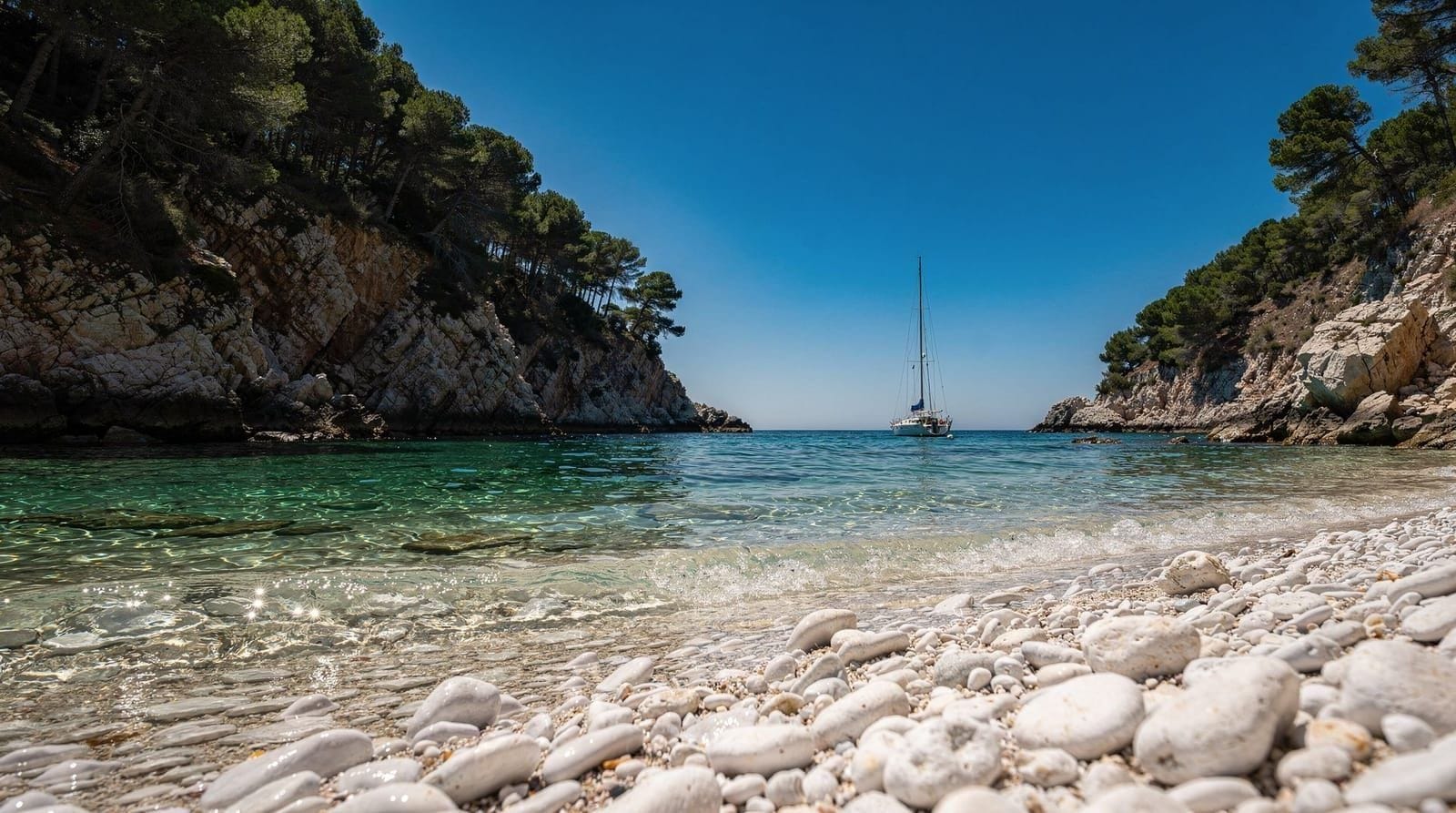
Platja d’es Codolar: A small pebble cove on the other side of the walled promontory (10-minute walk through the Vila Vella or around the headland). Much quieter because less obvious — many visitors don’t find it.
Platja de Mar Menuda: 15 minutes north on foot along the bay. Rocky and narrower than Platja Gran; clearer water, fewer people. Popular with snorkellers — the rocky bottom supports marine life.
Coastal path north and south: The Camí de Ronda leaves Tossa in both directions. Heading south (30-minute walk, moderate terrain) reaches a chain of coves accessible only on foot. Heading north, the full path to Sant Feliu de Guíxols is 18 km of dramatic cliff-edge walking — a serious half-day or full-day undertaking for experienced hikers with proper footwear.
Honest crowd assessment
Tossa in July–August between 11 am and 4 pm is genuinely crowded. The main beach fills completely; the old town is shoulder-to-shoulder on the main lane. This is not a hidden gem in summer. Strategies that work:
- Arrive on the 8:45 or 9:00 am bus, claim beach space and explore the old town by 9:30 am before the tour buses arrive.
- Walk to Platja d’es Codolar or north toward Mar Menuda.
- Have lunch at a restaurant one street back from the promenade — prices drop significantly off the seafront.
- Return on a 6 or 7 pm bus after the crowds thin.
May, early June, September and October are dramatically better. The sea is warm from late May; September averages 23–24°C water temperature and perhaps 20% of the summer crowds.
Eating in Tossa de Mar
Avoid: The main promenade restaurants with photos outside and tourist menus. Standard Costa Brava trap: decent-looking paella at €20+ that arrived frozen.
Look for: Restaurant Mas Nou (reliable Catalan cooking, inland end of town), La Cuina de Can Simon (one of the Costa Brava’s longest-established quality restaurants — splurge for a special lunch), or simply the market area near the bus stop for local produce and sandwiches for a beach picnic.
What to order: Suquet de peix (Catalan fish stew), fideuà (noodle-based paella), local anchovies with pa amb tomàquet (bread rubbed with tomato and olive oil), and a glass of cava rather than sangria.
When to go: a season-by-season view
| Season | Sea temperature | Crowds | Verdict |
|---|---|---|---|
| May–June | Warming, 18–20°C | Low–moderate | Best overall balance, our top pick |
| July–August | Warm, 23–25°C | Very high, especially 11 am–4 pm | Come for energy, expect crowds |
| September | Warm, 23–24°C | Low, about 20% of summer levels | Excellent, quieter alternative to June |
| October–April | Too cold to swim | Very low | Vila Vella and coastal walks only |
Seeing Tossa from the water
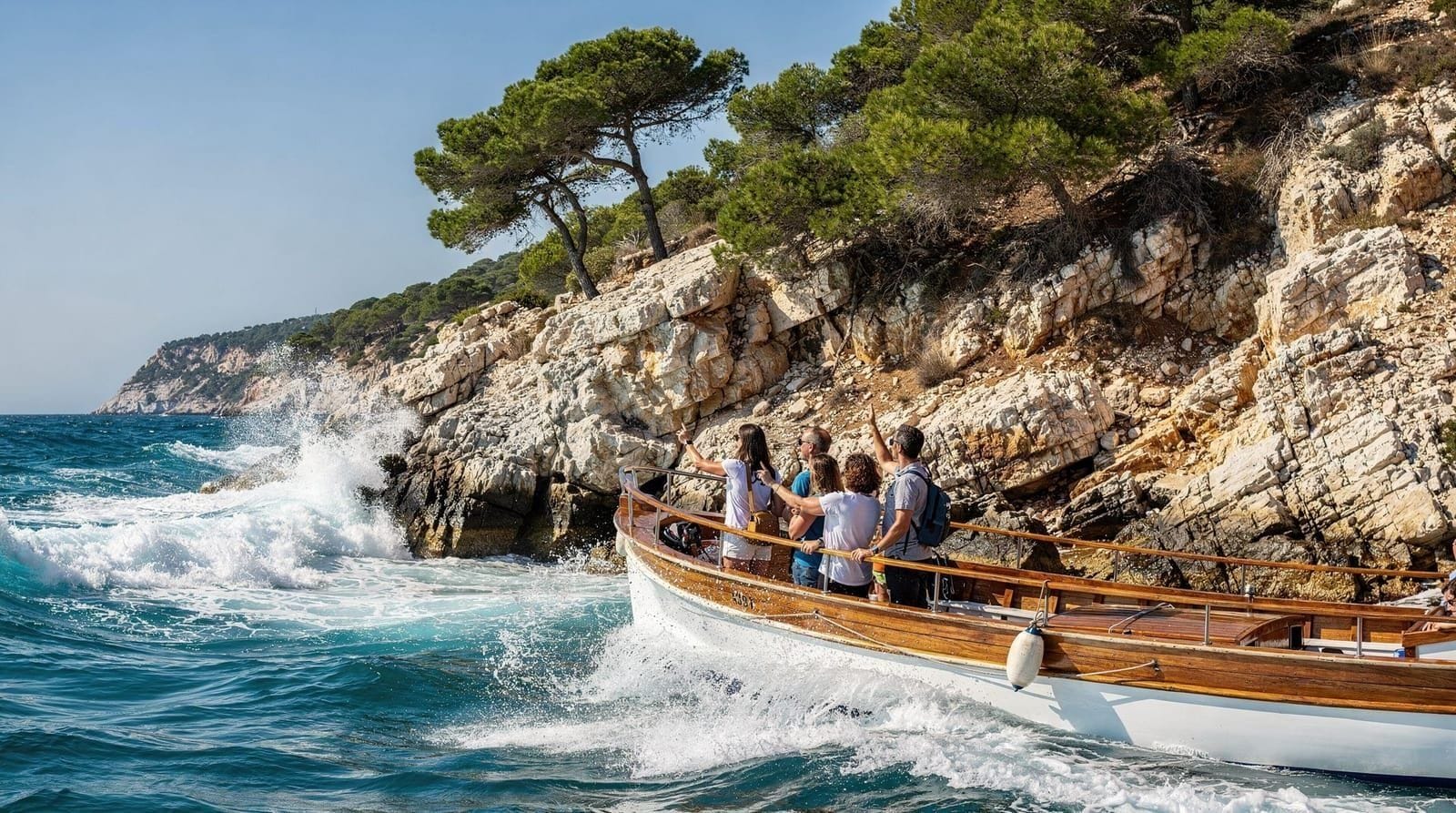
A short boat trip out of Tossa’s harbour is the best way to appreciate why the Vila Vella’s walls were built where they were — the fortified promontory looks genuinely dramatic from the sea, and the boat route typically passes several coves along the Camí de Ronda that are otherwise only reachable on foot. Combined boat-and-hike itineraries pair a coastal walk in one direction with a return leg by boat, avoiding a there-and-back walk on the same path.
How Tossa compares to other Costa Brava towns
Tossa’s advantage over towns further north like Begur or Cadaqués is pure accessibility — it’s the only major Costa Brava destination reachable by a single direct bus from central Barcelona, without a rental car or a multi-leg journey. What you trade for that convenience is a busier, more resort-oriented feel in peak season. If you want a quieter, less-discovered stretch of coastline and have a car, the Costa Brava’s best beaches roundup and the Costa Brava boat trips guide cover the alternatives further north.
DIY vs guided tour
DIY: Ideal for Tossa specifically. The bus is straightforward, the town is walkable, and you have flexibility to stay for the afternoon light. Best for independent travellers who want a beach day with culture.
Guided tour: Better if you want a coastal boat excursion along the cliffs, which you cannot easily arrange independently as a day-tripper. Tours typically include a 1-hour boat segment that shows the coast from the sea — the best angle. Also worth it if combining with Girona.
Combining with other stops
Tossa as a standalone day trip is entirely sufficient for a satisfying day. For those who want to see more of the Costa Brava, a car gives flexibility to drive north to Begur or Palafrugell. The Girona and Costa Brava day-trip guide covers the combined option in detail.
With an early bus from Barcelona, a morning in the Vila Vella, an afternoon on the quieter beaches and a seafood lunch away from the promenade, Tossa de Mar delivers a genuinely satisfying Costa Brava day. The key is timing — the crowds are real in summer, but entirely avoidable if you arrive before them.
Top experiences
Bookable activities with verified prices and instant confirmation on GetYourGuide.