Barça Immersive Experience: honest review and booking guide
Barcelona: FC Barcelona Museum "Barça Immersive Tour" ticket
Duration: 2 hours
- Free cancellation
What is the Barça Immersive Experience and how much does it cost?
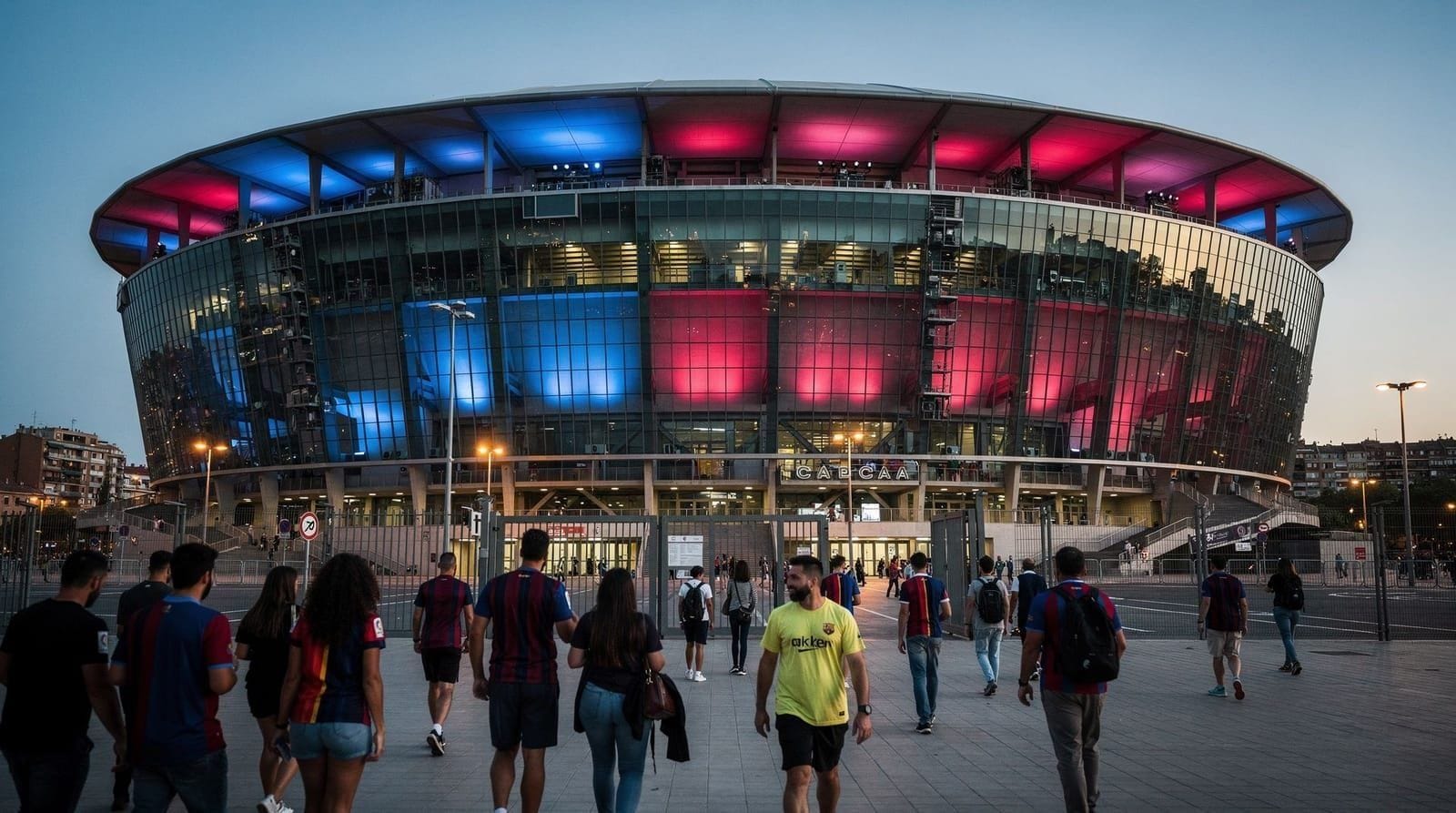
The Barça Immersive Experience is FC Barcelona's interactive museum, opened during the Camp Nou renovation. It covers trophies, Messi, Cruyff, La Masia and a digital stadium simulation across 2,400 m². Entry from €28 for adults. Book online — weekends sell out in advance.
FC Barcelona opened the Barça Immersive Experience as the replacement for the Camp Nou stadium tour when the Espai Barça renovation began in 2023. Rather than treating it as a temporary measure, the club invested in a purpose-designed 2,400 m² space that presents the club’s history in a way the old stadium-walk format never could. The result is a dedicated museum-grade experience — not a consolation prize.
| Where | Adjacent to Camp Nou, Les Corts |
| Cost | From €28 standard, around €85 for the Players Experience |
| Time needed | 1.5–2 hours standard, 2.5–3 hours for dedicated fans |
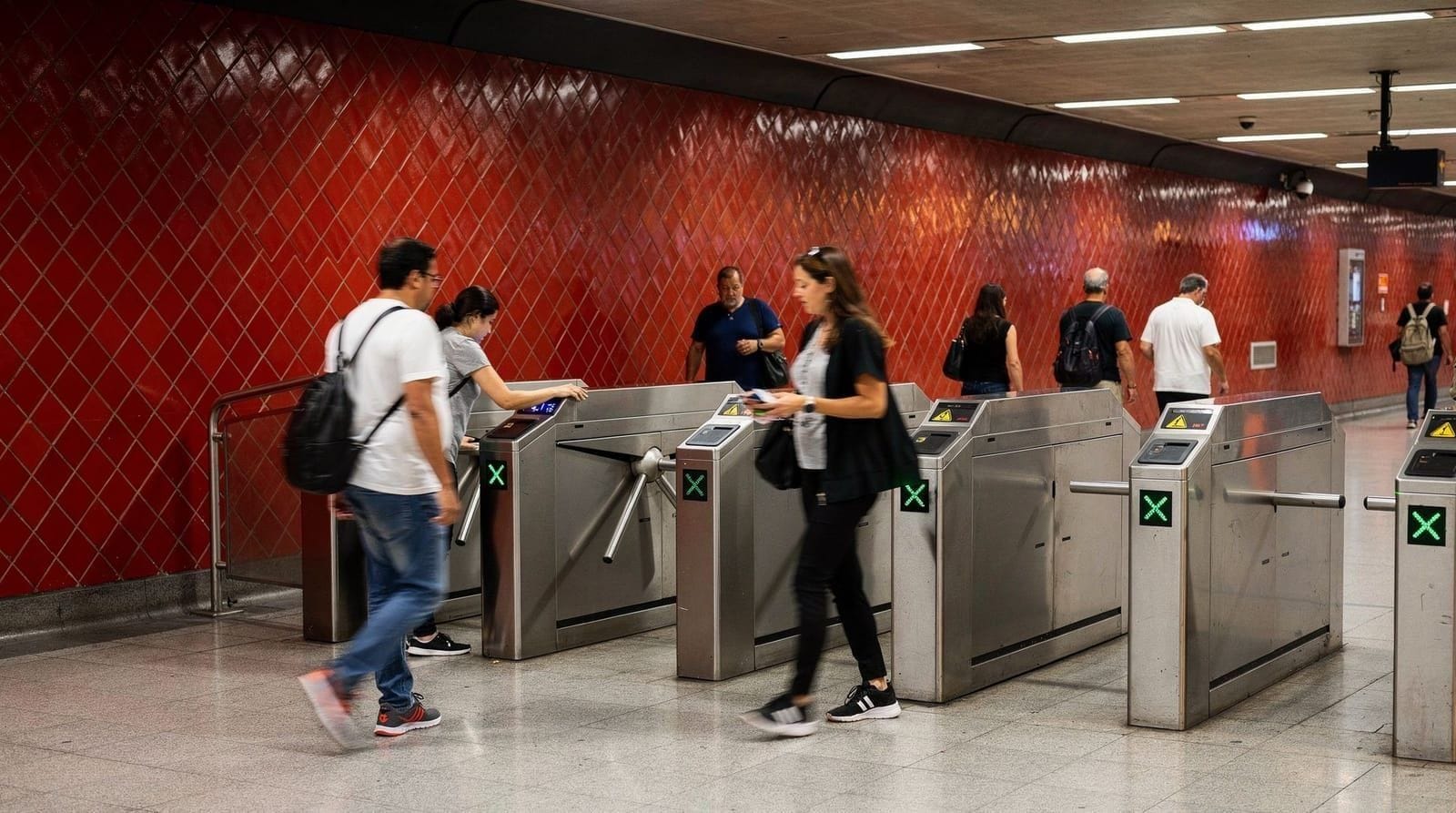
| Getting there | Metro L3 to Palau Reial (7 min walk) |
| Booking | Advance recommended, especially weekends and match days |
What you actually get
The entrance and orientation
The experience begins with a short film introducing the club’s history and philosophy. Production quality is high — this is not a tourist-trap introductory loop but a considered piece of filmmaking. Non-Spanish and non-Catalan visitors get good context here.
The trophy room
The first main hall houses the physical trophies: Champions League cups (five), Liga trophies (27 as of 2025), Copa del Rey, Supercopa, UEFA Super Cup, Club World Cup. The display is chronological and each major trophy has contextual text covering the season in which it was won.
The scale of the trophy collection is the first thing that registers even for non-fans. You understand immediately why “Més que un club” is not empty marketing.
The Cruyff legacy section
Johan Cruyff’s two periods at FC Barcelona — as player (1973–78) and as manager (1988–96) — are presented in depth. The “Dream Team” managed by Cruyff won four consecutive Liga titles and Barcelona’s first European Cup (1992). More importantly for the club’s identity, Cruyff established the possession philosophy and the La Masia academy system that produced Xavi, Iniesta and Messi.
The section on La Masia — the youth academy established on a farmhouse next to Camp Nou — is genuinely interesting: the progression of players through the system, the global scouting that brought Messi to Barcelona as a 13-year-old from Rosario, the development methodology that emphasises technique over physicality.
The Messi archive
The largest space in the museum. A comprehensive record of Lionel Messi’s 2003–2021 career at Barça: signed match shirts from key games, all six Ballon d’Or awards displayed together, boots from milestone goals, the full record of 672 goals and 778 matches. Video walls showing goal sequences from across the entire career.
Even visitors with minimal football knowledge tend to spend significant time here. The record is extraordinary and the presentation is not hagiographic — the complex departures and returns are addressed alongside the goals.
The digital pitch experience
An immersive screen installation creates a floor-level simulation of famous Camp Nou moments: Messi’s 2012 Clasico performance, Iniesta’s 2010 World Cup final goal, the 2009 sextuple season. The scale is impressive and the sound system effectively recreates the stadium noise.
This is the closest approximation to the stadium atmosphere currently available. For visitors who have never been to Camp Nou, it provides a reference point for the scale and intensity of the real thing.
The Espai Barça models and renders
The final section covers the renovation itself: detailed architectural models of the new Spotify Camp Nou, renders of the completed stadium interior, the new Palau Blaugrana and the wider Espai Barça district. Construction timelines and progress reports are updated regularly.
If you are interested in stadium architecture or large-scale urban development, this section is better presented than most construction-site museum exhibits. If you just want to see football, skip to the exit.
The Players Experience upgrade
For €85 (vs €28 standard), a small guided group (maximum 10–15) accesses areas not open in standard entry:
- The press conference room (where post-match interviews are conducted)
- The official broadcast studio
- Access to restricted zones near the stadium (varies by renovation status)
Availability is limited. Book this at least a week in advance if you want it — it sells out faster than standard entry.
Honest assessment
Who will love it: Barça fans of any depth, football history enthusiasts, visitors interested in the Cruyff philosophy and the La Masia system, children with football interest, anyone who follows Spanish football.
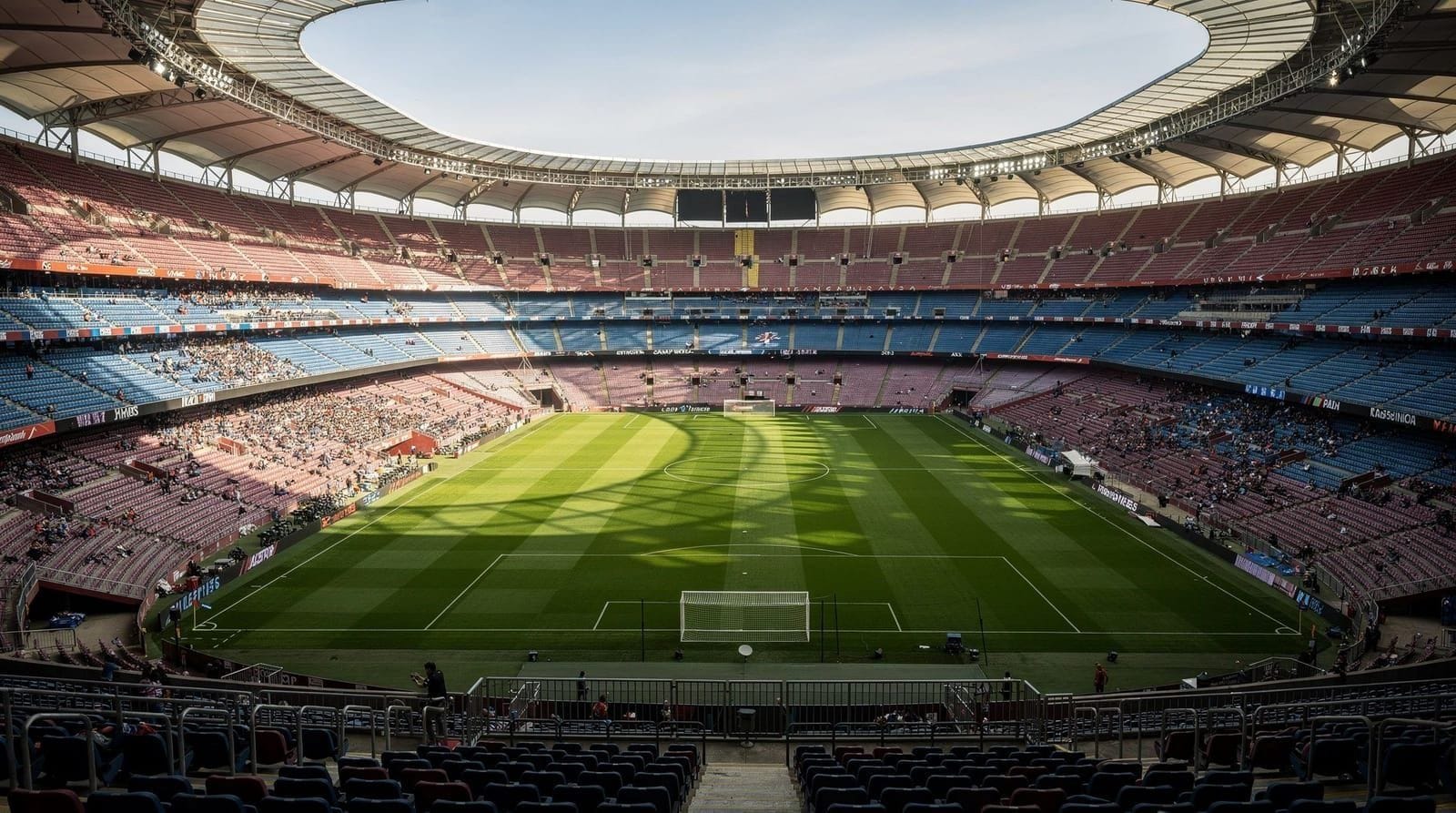
Who might feel underwhelmed: Visitors whose primary goal is to see the famous bowl, green pitch, and dressing rooms. These are simply not accessible during the renovation, and the Immersive Experience — excellent as it is — cannot substitute for walking into one of the world’s great stadiums.
Value at €28: Fair for the quality of the experience. Better value than many comparably priced European football museum visits.
Is it worth it for children?
Families visiting with football-interested children generally find the Immersive Experience delivers well: the digital pitch installation and the video walls in the Messi archive hold children’s attention better than a traditional glass-case museum format would. Children under a certain age (check current pricing tiers on the official site) receive reduced entry. If you are planning a wider family itinerary around Barcelona, our Barcelona with kids guide covers how to sequence this alongside other family-friendly stops.
Combining with the rest of Les Corts and the Eixample
Les Corts, the neighbourhood around Camp Nou, is primarily residential and does not have the density of restaurants and sights found in the Gothic Quarter or Eixample. Most visitors treat the Immersive Experience as a standalone half-day trip rather than combining it with extensive neighbourhood exploring — take the metro back toward Passeig de Gràcia or the Eixample for lunch and the afternoon’s onward plans. Our getting around Barcelona guide covers the metro network in full if you are combining several stops in one day.
Renovation progress and what changes when Camp Nou reopens
The Espai Barça project is being delivered in phases, and the club has continued hosting matches at a reduced-capacity Camp Nou as construction progresses around the pitch, rather than relocating entirely for the duration. The Immersive Experience is expected to remain the primary non-matchday visitor offering until the stadium tour in its traditional form — walking the tunnel, the dugout and pitch-side access — can resume safely, which depends on construction handover of the relevant stands. Renovation timelines for a project of this scale routinely shift, so treat any specific reopening date you read elsewhere as provisional and check the official FC Barcelona website close to your travel dates rather than planning around a fixed month.
Once the traditional stadium walk does reopen in some form, expect it to run alongside the Immersive Experience rather than replace it — the museum-format exhibition has been popular enough, and expensive enough to build, that the club has signalled it as a long-term fixture of the visitor offering rather than a temporary substitute.
Practical details
Address: Adjacent to Camp Nou, Avinguda de Joan XXIII, Les Corts, Barcelona.
Metro: L3 (green) to Palau Reial — 7 minutes’ walk. Les Corts station is slightly closer.
Hours: Generally 09:30–19:00 daily, with extended hours in summer. Check the official FC Barcelona website for current opening times as these vary around match schedules.
Language: All text is in Catalan, Spanish and English. Audio guide available in additional languages.
Photography: Permitted throughout, including the trophy room.
The Barça story in brief — what the exhibition covers
Understanding the historical arc that the exhibition traces makes the visit significantly more rewarding. The Immersive Experience is not simply a trophy display; it is a narrative of one of the most politically and culturally significant sports clubs in the 20th century.
The founding and early years
FC Barcelona was founded in 1899 by Joan Gamper — born Hans-Max Gamper in Winterthur, Switzerland — who arrived in Barcelona at 22 and placed a newspaper advertisement seeking players for a football club. Eleven men responded. Within a decade the club had its first stadium and had begun to attract Catalan identity as a dimension beyond sport.
The founding by a Swiss immigrant remains significant: it partly explains why the club’s motto is “Més que un club” (More than a club) rather than a purely nationalist statement. Barcelona was not simply a local team; it was from the start a cosmopolitan urban project that happened to exist in Catalonia.
The Franco era
The decades between 1939 and 1975 define much of what FC Barcelona means politically. Under Franco’s dictatorship, Catalan language and culture were suppressed; the club operated as one of the few public spaces where Catalan identity could be expressed and celebrated without direct prohibition. Camp Nou became, in effect, a site of political resistance. The Barça–Real Madrid rivalry during this period acquired dimensions far beyond football — Real Madrid was perceived, not entirely fairly, as the club of Castilian centralism; Barcelona as the club of Catalan autonomy.
The exhibition addresses this history with appropriate weight. Visitors who arrive knowing nothing about the Franco period leave with an understanding of why the Barcelona supporters’ response to a home win against Real Madrid was, for a generation, something close to a political act.
The Cruyff revolution and European success
The club’s first European Cup came in 1992 under Johan Cruyff’s management — almost 40 years after the club’s first European campaign. The intervening decades had been dominated by domestic success interrupted by Real Madrid’s dominance in European competition. The 1992 Wembley final (vs Sampdoria) ended that wait and established Cruyff’s “Dream Team” as the defining chapter in the club’s 20th-century history.
Since then, the trophies have accumulated: six UEFA Champions League titles (1992, 2006, 2009, 2011, 2015, with the most recent period covered in the exhibition). The 2009 season — in which the club won La Liga, Copa del Rey and Champions League under Pep Guardiola, completing a historic treble — is the dominant set piece of the modern section.
The trebles: 2009 and 2015
The 2009 treble was unprecedented in Spanish football and was followed by the Supercopa de España, UEFA Super Cup and Club World Cup, making Pep Guardiola’s first season a sextuple. The core of that team — Xavi Hernández, Andrés Iniesta, Lionel Messi, all La Masia graduates — gave the achievement a particular narrative quality: the world’s best team built entirely from players developed at the club’s own youth academy.
The 2015 treble, also featured in the exhibition, replicated the 2009 achievement with a different configuration — Messi, Neymar and Suárez forming the attacking trio — and confirmed the Guardiola model as more than a single exceptional season.
How to make the most of your visit
Order of rooms: The exhibition flows chronologically. Follow the sequence in order on first visit — the historical context accumulates and the Messi archive hits harder if you arrive there knowing what preceded it.
Quietest arrival times: Tuesday and Wednesday mornings (09:30–11:00) are the least crowded times of the week. Avoid Friday and Saturday afternoons in any season; these are peak visitor windows. On match days or the day before a home game, expect the shop and café to be significantly busier.
What to skip if time is short: The Espai Barça architectural models section (the last room covering the renovation) is thorough but not essential unless you have a specific interest in stadium architecture. The digital pitch experience and the Cruyff and Messi sections are the non-negotiable rooms. If you have 60 minutes, these three rooms are where to focus.
Gift shop: The FC Barcelona official shop adjacent to the experience is larger and better-stocked than it has been in previous years, and prices are broadly in line with online official store pricing. The personalised shirt service (name and number printed while you wait) is the most popular purchase for families. Allow 15–20 minutes if you intend to browse properly — the range is extensive.
Photography: Photography is permitted throughout the exhibition including the trophy room, Messi archive and digital pitch installation. There are no flash restrictions in most areas. The most photographed spots are the six Champions League trophies together and the Ballon d’Or display. If you want unobstructed photographs without other visitors in frame, arrive at opening time (09:30) when the first group enters and the rooms are empty.
The Barça Immersive Experience is one of the better sports museum experiences in Europe regardless of whether Camp Nou is open. Our full Camp Nou guide covers getting there, match tickets, and what to expect from the renovation timeline. For ticket booking options, see our Camp Nou tickets guide.
Frequently asked questions about Barça Immersive Experience
Is the Barça Immersive Experience the same as the old Camp Nou tour?
No. The old Camp Nou Experience included walking through the stadium — the press room, dressing rooms, dugout and pitch-side. The Immersive Experience replaces this during renovation with a museum-format exhibition. There is no pitch or stands access currently.How long does the Barça Immersive Experience take?
Plan 1.5–2 hours for a standard visit. Dedicated fans will spend 2.5–3 hours. The Players Experience upgrade adds guided access to restricted areas and extends the visit.Is it worth the €28 entry price?
For Barça fans of any depth: yes. The trophy collection, Messi archive and digital experience are well-presented. For casual visitors mainly wanting to see the famous stadium bowl: temper expectations, as pitch access is not currently available.Do I need to book in advance?
Yes — weekend slots sell out, particularly if a nearby match is scheduled. Book online at fcbarcelona.com or through a verified partner at least 48–72 hours ahead.Is the Players Experience tour worth the €85?
For committed football fans, yes — it offers small-group guided access to areas not open in standard entry. The press conference room and (renovation-permitting) tunnel access are the main additions. Strictly limited capacity; book well ahead.
Top experiences
Bookable activities with verified prices and instant confirmation on GetYourGuide.