FC Barcelona and Camp Nou: the complete visitor guide
Barcelona: Camp Nou stadium tour
Duration: 1.5 hours
- Free cancellation
Can you visit Camp Nou in 2026 during the renovation?
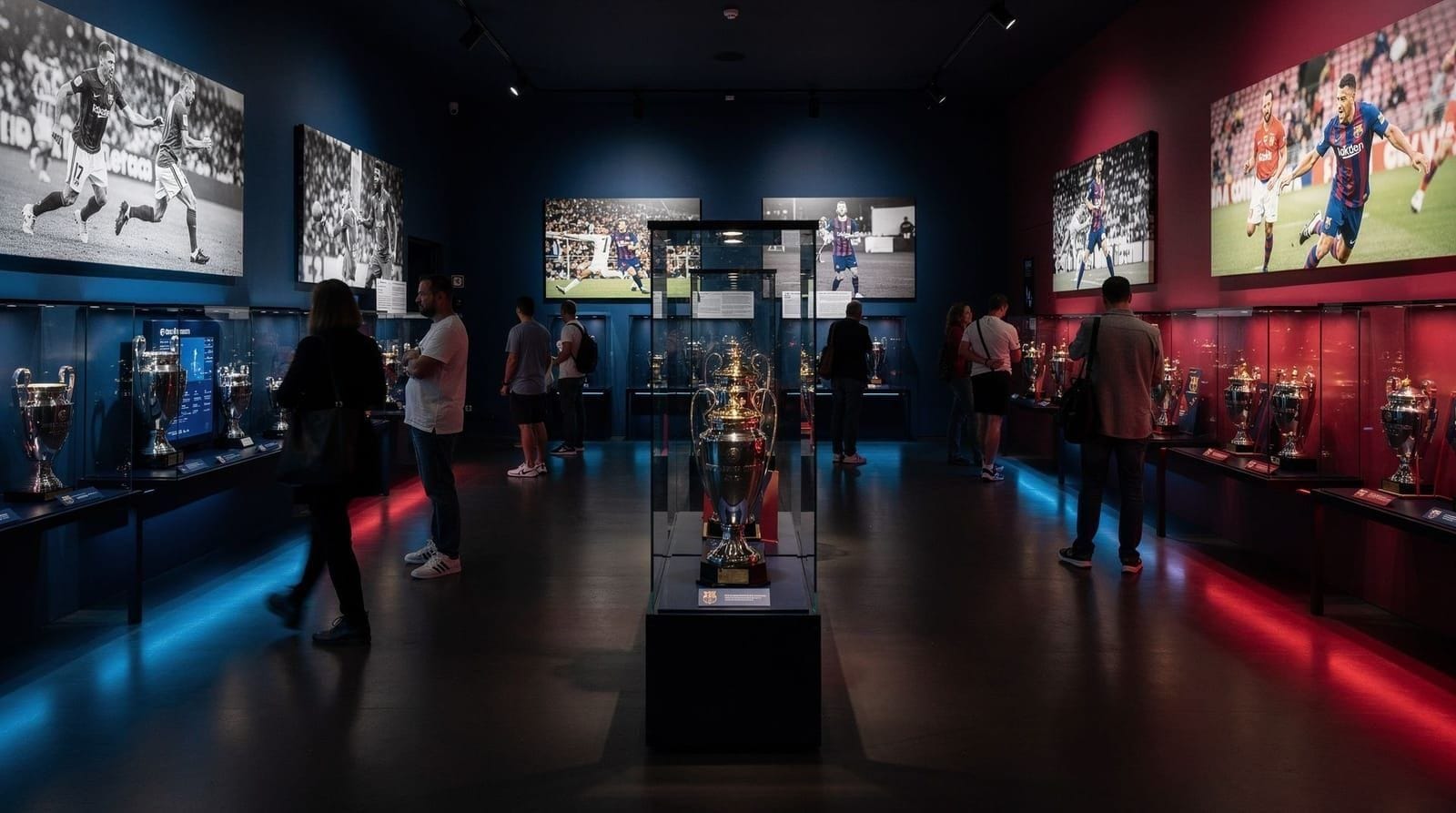
The stadium pitch and stands are not accessible during the 2026 renovation. Instead, FC Barcelona operates the Barça Immersive Experience — a 2,400 m² interactive exhibition covering trophies, history and the Espai Barça construction — from €28 per adult. Book online; it sells out on weekends and match days.
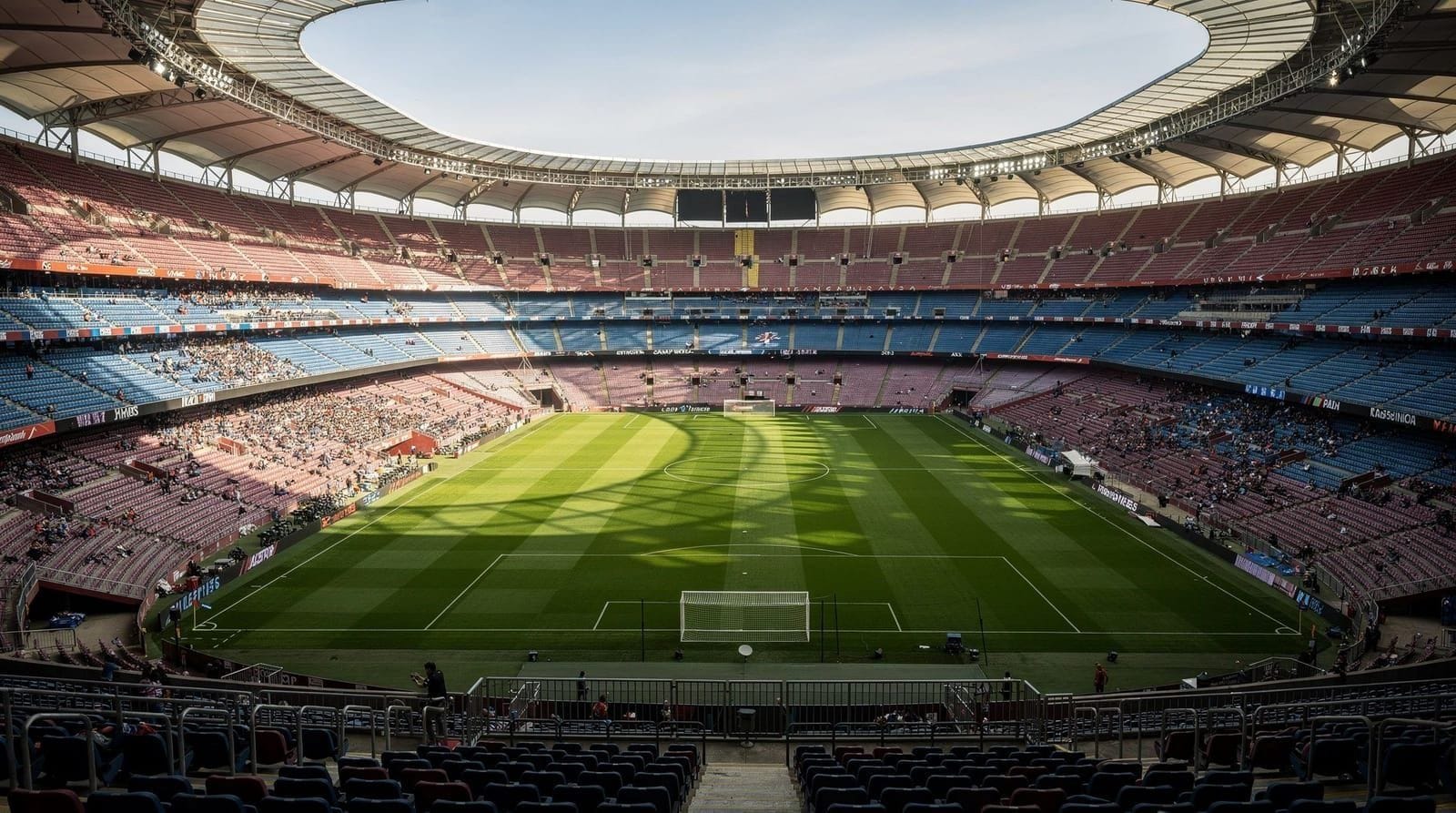
Camp Nou is the largest football stadium in Europe (capacity 99,354, now under renovation that will push it to over 105,000). Since 1957, it has been the home of FC Barcelona — one of the most successful clubs in football history, the birthplace of Cruyff’s Total Football, Pep Guardiola’s tiki-taka, and the Messi era that produced six Ballon d’Or awards in eight years.
In 2026, the stadium is undergoing the most extensive renovation in its history. This guide explains what you can actually visit now, what the Barça Immersive Experience offers, and how to get the most from a Camp Nou visit during the construction period.
| Where | Les Corts, ~4km west of the Gothic Quarter |
| Cost | From around €28/adult (Immersive Experience); €85+ for the Players Experience |
| Time needed | 1.5–2 hours; 2.5–3 hours for dedicated fans |
| Getting there | Metro L3 to Palau Reial or Les Corts (~20–25 min from Plaça Catalunya) |
| Booking | Online in advance — weekend slots sell out about a week ahead |
The renovation context: Espai Barça
FC Barcelona’s Espai Barça project is the most ambitious redevelopment in European football. The renovated stadium will have a retractable roof, full air-conditioning, a steeper bowl with improved sightlines, 1,700 premium boxes, and an expanded footprint. Surrounding facilities include a new Palau Blaugrana for basketball, the Barça Studios, and a commercial district.
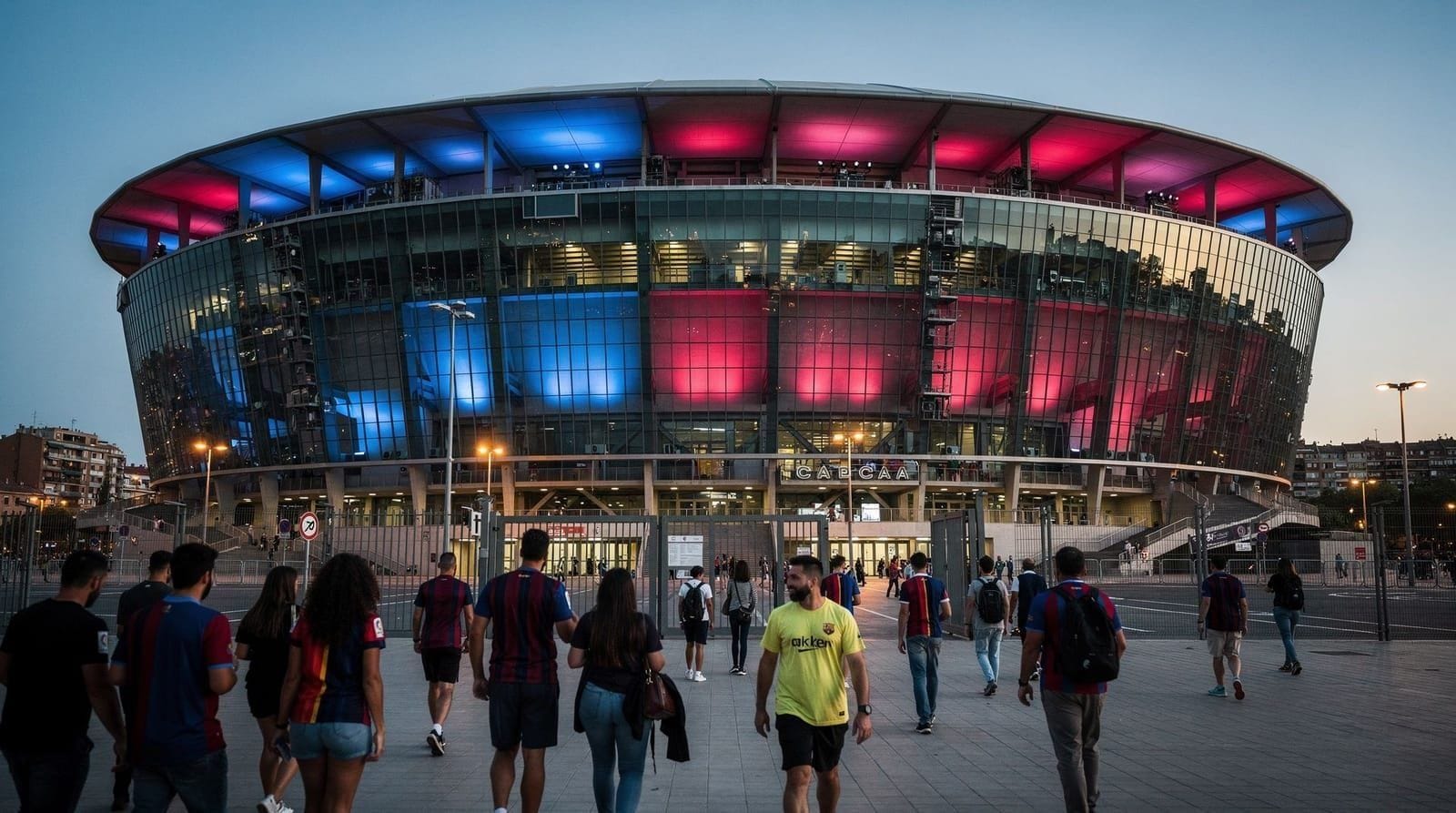
The project began in summer 2023. As of June 2026, the stadium is not in use for matches (Barça returned to using Estadi Olímpic on Montjuïc for home games). The exterior of Camp Nou — including the famous façade — is visible and accessible for photography from the surrounding streets. The interior, including the pitch and stands, remains closed.
Completion target: The renovated Spotify Camp Nou is scheduled to reopen for the 2026–27 season, with some accounts suggesting partial opening for specific matches before that. Check the official FC Barcelona news for the current status.
The Barça Immersive Experience
In response to the stadium closure, FC Barcelona opened the Barça Immersive Experience — a purpose-designed museum and interactive exhibition at a location adjacent to the stadium.
What it includes
The 2,400 m² space is divided into themed rooms covering:
- Trophy gallery: Champions League titles (the club has won it five times), La Liga championships, Copa del Rey and international cups. The physical trophies are displayed with historical context.
- The Messi room: The largest dedicated section to a single player in any football museum — an exhaustive archive of boots, shirts, medals and video from his 2003–2021 career at Barça.
- The Cruyff section: The Dutchman who transformed Barça’s philosophy in the 1970s and again as manager in the 1980s. The “Dream Team” era and the development of La Masia academy are documented here.
- Digital pitch experience: An immersive screen simulation that places you at ground level for famous goals and matches — the closest approximation to the stadium atmosphere currently available.
- Espai Barça construction models: Detailed architectural models and renders of the renovated stadium and the wider district.
Practical details
Price: From €28 per adult (standard entry). Premium combinations with guided tours run €45–60. The Players Experience (includes usually restricted areas) is €85+.
Duration: 1.5–2 hours at a comfortable pace; 2.5–3 hours for comprehensive Barça fans.
Booking: Online booking is strongly recommended. Weekend slots sell out a week in advance, particularly if any major match is scheduled nearby. Book at the FC Barcelona website or through a verified affiliate.
| Ticket tier | Around | Best for |
|---|---|---|
| Standard entry | €28 | First-time visitors, families |
| Guided combination | €45–60 | Fans who want context on the exhibits |
| Players Experience | €85+ | Dedicated fans wanting restricted-area access |
Accessibility: The venue is fully accessible for wheelchair users and visitors with mobility difficulties.
For groups wanting the fullest access currently available, including areas normally closed to the public:
Getting to Camp Nou
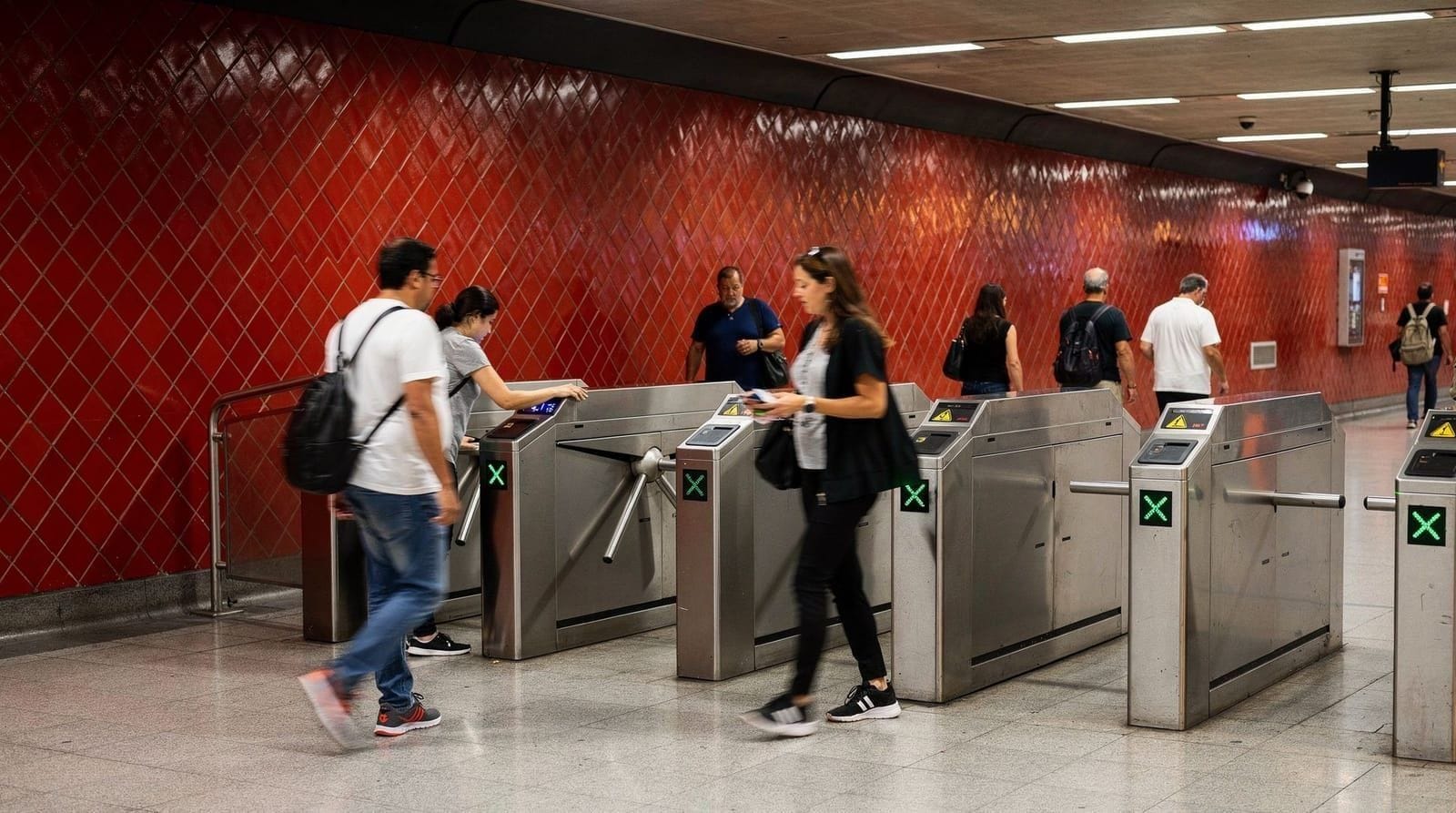
By metro: Line L3 (green line) to Palau Reial or Les Corts stations — both a 5–8 minute walk from the stadium. Journey from Plaça Catalunya: approximately 20 minutes. See the getting around Barcelona guide for the wider transport picture, including which pass makes sense if you’re combining this with other sights.
By bus: Multiple TMB bus lines serve the Avinguda de Joan XXIII around Camp Nou. The hop-on-hop-off bus stops at the stadium (one route).
On foot from Eixample: About 30–40 minutes west from the Passeig de Gràcia area. Walkable in good weather but not ideal in summer heat.
By taxi/Uber: Standard Barcelona taxi from the Gothic Quarter or Eixample runs approximately €10–12. Faster than public transport during busy periods.
Match tickets (when available)
When FC Barcelona returns to Camp Nou (or during temporary Olímpic period), match tickets are sold through:
- Official FC Barcelona website (fcbarcelona.com) — primary allocation, sold weeks ahead
- Barça members (socis) take priority; tourist allocation is the remaining stock
- GetYourGuide / verified affiliates — official partnership tickets with no reseller markup
Avoid unofficial reseller sites, which charge significant premiums. For high-profile matches (El Clásico vs. Real Madrid, Champions League knockouts), tickets may be sold out months in advance.
The Camp Nou experience for non-football fans
Even visitors with limited football interest tend to find the Barça Immersive Experience more engaging than expected. The narrative of the club’s history is inseparable from Catalan political identity: Barça’s motto “Més que un club” (More than a club) reflects the club’s role as a symbol of Catalan culture during the Franco dictatorship, when the Catalan language and cultural expression were suppressed and Camp Nou became one of the few spaces where 100,000 people could speak and sing in Catalan.
The sections on Johan Cruyff’s influence and the development of possession-based football as a philosophy rather than a system are intelligently presented and accessible to visitors with no prior knowledge of the sport.
Camp Nou with children
Children are very well served. The interactive digital sections, the trophy room, and the Messi exhibit engage young visitors effectively. The museum is fully family-friendly with no age restrictions. The Players Experience tour (€85) is most interesting for older children and teenagers with genuine football interest. See the Barcelona with kids guide for how a Camp Nou visit fits into a wider family itinerary.
Combining Camp Nou with other sights
Camp Nou is in Les Corts — close to the Pedralbes district and the Palau de Pedralbes (Gothic royal palace). If you are spending a half-day at Camp Nou, the Pedralbes monastery (a 14th-century Gothic complex with an exceptional cloister) is a 15-minute walk and makes a quality pairing.
The hop-on-hop-off tourist bus route that serves Camp Nou also connects Montjuïc, the Gaudí sites in Eixample, and the waterfront — convenient for combining the football visit with the rest of a sightseeing day.
Barça’s history: the players who built the legend
Understanding the museum displays — and the intensity of the crowd on match day — requires some sense of the club’s sporting and political history. The Barça Immersive Experience traces this narrative across its rooms, but here is the context visitors will need.
The foundational era: Kubala and the first international identity
FC Barcelona was founded in 1899 by Hans Gamper, a Swiss footballer, and a group of English, Swiss and Catalan players. From its earliest years the club drew players from across Europe — an internationalist character that distinguished it from rival Spanish clubs. The first globally famous Barça player was László Kubala, a Hungarian-Slovak refugee who arrived in 1950 and became the club’s first superstar. His technical skill and showmanship drew record crowds and helped fund the original Camp Nou construction in 1957. The stadium was built to capacity to accommodate the fans he brought in.
Johan Cruyff and the philosophy of football
Johan Cruyff arrived in 1973 and changed the club in two phases. As a player, he brought the Dutch Total Football concept — a fluid, possession-based game where position was interchangeable and space was the primary resource. Barça won the Liga title in 1974 with him leading the team, breaking a long drought.
As manager (1988–1996), Cruyff built what became known as the Dream Team — the first Barça side to win the European Cup (1992) and four consecutive Liga titles (1991–94). More importantly, he formalized the positional play and pressing concepts that became the club’s philosophical identity, and he pushed La Masia (the youth academy) toward producing technically educated players rather than merely athletic ones. The players Cruyff’s system produced — Pep Guardiola, Albert Ferrer, Guillermo Amor — became the foundation for what followed.
Ronaldinho and the arrival of joy
The period between Cruyff’s departure and the Guardiola era had some strong teams but no sustained dominance. The player who re-energized the club was Ronaldinho, who arrived from Paris Saint-Germain in 2003. His two seasons as Barça’s central creative force (2004–2006) were among the most entertaining periods in the club’s history — goals of outrageous technique, a style of play that looked spontaneous but was technically immaculate. He won the Ballon d’Or in 2005 and was arguably the most popular player at the club since Cruyff himself. The Ronaldinho section of the museum documents this period with video and memorabilia.
Xavi, Iniesta and the golden decade
The Guardiola era (2008–2012) is the most technically analyzed period in football history. The foundation was a midfield built around two players who had grown up together in La Masia: Xavi Hernández and Andrés Iniesta. Both were small (under 1.75 m), technically exceptional, and positionally intelligent in ways that redefined what the central midfielder position could be.
The tactic was known outside Spain as tiki-taka — a dismissive foreign label for what was actually a sophisticated pressing and possession system. Barça’s 2009 and 2011 Champions League victories were the high points: the 2011 final defeat of Manchester United at Wembley (3–1) is widely regarded as the finest single performance by any club team in the Champions League era.
Xavi and Iniesta are both displayed prominently in the museum. Their museum sections are notable for the analytical depth — this is not a hagiography but an attempt to explain what they actually did and why it worked.
Leo Messi: 2003–2021
Messi joined La Masia aged 13 in 2001 from Rosario, Argentina, on a training contract signed (according to club legend) on a napkin. He made his first-team debut in 2003 and spent 18 seasons at the club — the longest sustained peak performance of any player in modern football history.
The statistics are simply numbers until you see them in context: six Ballon d’Or awards, 672 goals in 778 appearances for the club, 35 trophies including 10 Liga titles and four Champions Leagues. He also produced 10 La Liga seasons with 40+ goals — a level that had never been reached before him and has not been matched since.
The Messi room in the Barça Immersive Experience is the largest dedicated section to a single player in any football museum. It documents every significant season of his career at the club and includes the 2021 departure — forced by the club’s financial crisis — which is presented without evasion.
Watching a match — what to expect
When Barça return to the renovated Camp Nou (scheduled for the 2026–27 season), or while they play at Estadi Olímpic on Montjuïc, the match experience for first-time visitors is worth understanding before arrival.
Getting there and timing
For Camp Nou: Metro L3 (Palau Reial or Les Corts), arriving 60–75 minutes before kickoff is enough. The area around the stadium fills from 90 minutes before but the majority of fans arrive 30–45 minutes out. Do not underestimate the exit — 99,000 people leaving simultaneously creates a 20–30 minute wait even at the metro.
For Estadi Olímpic (Montjuïc, current temporary home): The access is via Montjuïc by Funicular de Montjuïc from Paral·lel station (L2/L3). Allow 45–60 minutes from the city centre. The Olímpic seats around 56,000; the atmosphere is less intense than Camp Nou but still substantial for major matches.
The atmosphere
The Camp Nou crowd is not a singing crowd by European standards — no single end equivalent to an English home supporters section with orchestrated chanting. The sound in a packed Camp Nou is more of a constant low roar that builds during pressing sequences and erupts into noise for goals and close chances.
The most vocal section is typically behind one goal — the sections that host ultras (Supporters Granota, Boixos Nois historically, though the latter were banned after violence incidents). These fans sing throughout and their chants spread to neighbouring sections during high moments.
The anthemic moment at Camp Nou is the club’s anthem (L’Himne del Barça) played before kickoff — a moment when the whole stadium sings together. Learn at least the opening lines before you go: “Tot el camp és un clam” (The whole ground is one cry).
Practical advice
Tickets: Official sources only — fcbarcelona.com or verified partners. For El Clásico (Real Madrid), tickets must be purchased weeks or months in advance and will be expensive.
Food and drink: The Camp Nou concourses serve standard Spanish stadium food — bocadillos, beer, water. Prices are elevated but not extortionate by European stadium standards. Better: eat beforehand in a bar near the stadium.
What to wear: Blue and red (blaugrana) or neutral colours. Rival team shirts are not common among away fans and can attract unwanted attention in more passionate sections.
Food, shopping and the surrounding area
The FC Botiga megastore, adjacent to the Immersive Experience, is the largest official club shop in the world — several floors of kit, memorabilia and collectables, including personalisation services for shirts. Prices are standard official-merchandise level, not inflated specifically for the location, though the range is wider here than at smaller city-centre branches. For food, the immediate stadium area has standard casual options — bocadillo bars and chain cafés — rather than destination restaurants; most visitors combine the visit with a meal in the nearby Eixample or plan to eat before or after in the city centre rather than around Les Corts itself. If you are visiting Camp Nou as part of a longer day and want a proper sit-down meal, it is worth building in the extra 15–20 minute journey back toward the centre rather than expecting stadium-area dining to match Barcelona’s better food neighbourhoods.
Club facts and Catalan identity
The official motto of FC Barcelona is “Més que un club” — More than a club. This is not marketing copy. During the Franco years (1939–1975), Catalan language and public identity were suppressed across Spain. Camp Nou became one of the only spaces where 100,000 people could gather and express Catalan identity openly — through the club colours, the use of Catalan in the stadium, and the particular fervour directed against Real Madrid as the establishment’s preferred club.
The club has always refused government funding (unlike Real Madrid, which received preferential property deals from the Franco government in the 1950s). It is owned by its 150,000+ members (socis) through a democratic structure — no billionaire owner, no external shareholders.
The stadium record attendance: 120,000 for a 1986 European Cup semifinal against Juventus (since then, seating-only regulations have reduced the official capacity to 99,354, expanding to 105,000+ after renovation).
The Catalan values the club projects onto itself are seny i rauxa — two concepts central to Catalan cultural self-understanding. Seny is roughly common sense, prudence and pragmatism. Rauxa is passionate, creative, inspired abandon. Barça’s greatest teams were built on both: the tactical seny of positional play combined with the rauxa of individual brilliance from Cruyff, Ronaldinho, Messi.
Camp Nou is a pilgrimage for football fans worldwide and a genuine piece of Barcelona cultural history for every visitor. See our Barça Immersive Experience guide for a dedicated review, and camp nou tickets for booking strategy.
Frequently asked questions about FC Barcelona and Camp Nou
What is the Barça Immersive Experience?
A relocated, purpose-built interactive museum covering FC Barcelona's complete history: trophy rooms, interactive screens, Messi memorabilia, Cruyff legacy, construction models of the new Camp Nou, and digital simulations of being on the pitch. Approximately 2,400 m² across multiple rooms. Entry from €28. Located near the stadium.When will the new Camp Nou open?
The renovated Camp Nou (Spotify Camp Nou) is scheduled for completion in 2026, initially for the 2026–27 season. However, construction timelines have shifted previously. Check the official FC Barcelona website for the latest status before booking your trip.Can I watch a match at Camp Nou during the renovation?
Barça played home matches at Estadi Olímpic Lluís Companys on Montjuïc from summer 2023 through most of the renovation period. Confirm the current home ground on the FC Barcelona official website before booking match tickets, as this may change as the new stadium nears completion.How far is Camp Nou from the Barcelona city centre?
Camp Nou is in the Les Corts district, approximately 4 km west of the Gothic Quarter. Metro L3 (Palau Reial or Les Corts stations) reaches the stadium in 20–25 minutes from Plaça Catalunya. The hop-on-hop-off tourist bus also connects the stadium.Is the Camp Nou tour worth it with the renovation happening?
The Barça Immersive Experience is a high-quality museum experience in its own right — worth 1.5–2 hours for Barça fans of any depth. For casual visitors who mainly want to see the famous stadium bowl and green pitch, the renovation makes the experience less impactful. Check reviews near your visit date to see what access has been restored.What is the Players Experience tour?
A premium guided tour (from €85) that takes small groups through areas normally closed to the public — the press room, technical area, and reportedly tunnel access depending on renovation status. Strictly limited capacity.
Top experiences
Bookable activities with verified prices and instant confirmation on GetYourGuide.