Andorra day trip from Barcelona: what to know before you go
Barcelona: three countries – Andorra, France & Spain day tour
Duration: Full day
- Free cancellation
How long does it take to get from Barcelona to Andorra?
3.5 to 4 hours each way by direct bus from Barcelona Nord station (Alsina Graells operator). The return fare is approximately €35–45. This leaves only 3–4 hours on the ground, making Andorra the most time-intensive day trip from Barcelona.
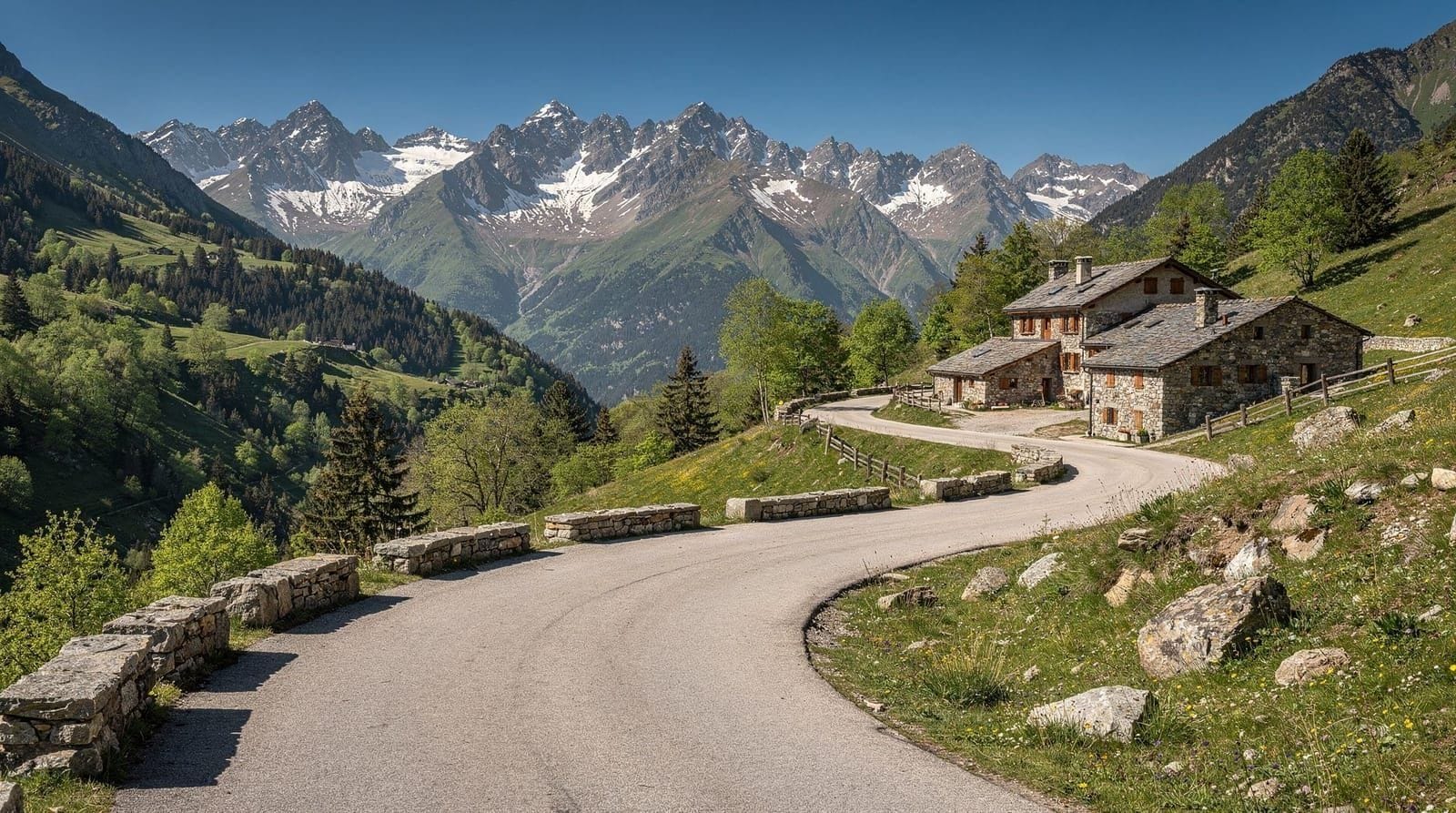
Andorra is the honest outlier on the Barcelona day trip list. It is the only destination on the list that occupies a full day entirely with travel rather than experience. The bus from Barcelona Nord takes 3.5–4 hours each way through the Pyrenean foothills, which means arriving in Andorra la Vella around 12:30 if you take the 08:30 departure and leaving again by 16:00 to be back in Barcelona by 20:00.
That is 3.5 hours on the ground. For some purposes — duty-free electronics, a large bottle of spirits, a specific perfume — this might be worth it. For anything requiring time or space — skiing, hiking, exploring the mountain valleys — you will need to stay the night.
This guide gives you the honest logistics and helps you decide whether the day trip makes sense for your specific goals.
| Distance | Andorra la Vella, around 200 km from Barcelona |
| Travel time | 3.5–4 hours each way by direct bus |
| Cost | Around €35–45 return by bus; €70–75+ on a guided day tour |
| Time on the ground | Roughly 3–4 hours |
| Best for | Duty-free shopping, a novelty “third country” stop, winter skiers with an early departure |
| Skip if | You want hiking, cultural depth or a relaxed pace — stay overnight instead |
Getting to Andorra from Barcelona
By bus (the only realistic public transport option)
Alsina Graells / Novatel operates direct coaches from Barcelona Nord station (metro L1, Arc de Triomf) to Andorra la Vella. Journey time: 3 hours 30 minutes to 4 hours depending on border traffic and road conditions.
Return fare: approximately €35–45 (buy at the Barcelona Nord bus station ticket counter or online).
Departure times: several daily, with the earliest departures around 07:00–08:30. The last return bus from Andorra la Vella back to Barcelona typically leaves around 16:30–17:30 — check exact times when booking, as schedules vary by season.
Border: The bus passes through Spanish and Andorran customs. On summer weekends and the day before Spanish public holidays, the border queue can add 30–60 minutes to the journey each way. Factor this in.
By guided tour from Barcelona
Guided day tours to Andorra (approximately €70–75 for a standard group tour, €120+ for private) depart from central Barcelona by minivan, include a guide who handles all logistics, and typically cross into France briefly to add the “three countries in one day” angle. The tour experience is considerably more comfortable than the bus for the same amount of time on the ground.
If your goal is purely shopping, the tour adds little value (you spend the same time at the duty-free shops). If you want historical and cultural context for the Romanesque churches and mountain landscape, a good guide makes the difference.
For a more focused option without the France detour, a smaller private tour keeps the day tighter and leaves more ground time in Andorra la Vella itself.
Andorra vs the other big day trips from Barcelona
If you are weighing Andorra against the other common day-trip options, the travel-time-to-ground-time ratio is the number that matters most.
| Destination | Travel time (round trip) | Time on the ground | Best for |
|---|---|---|---|
| Andorra | 7–8 hours | 3–4 hours | Duty-free shopping, novelty |
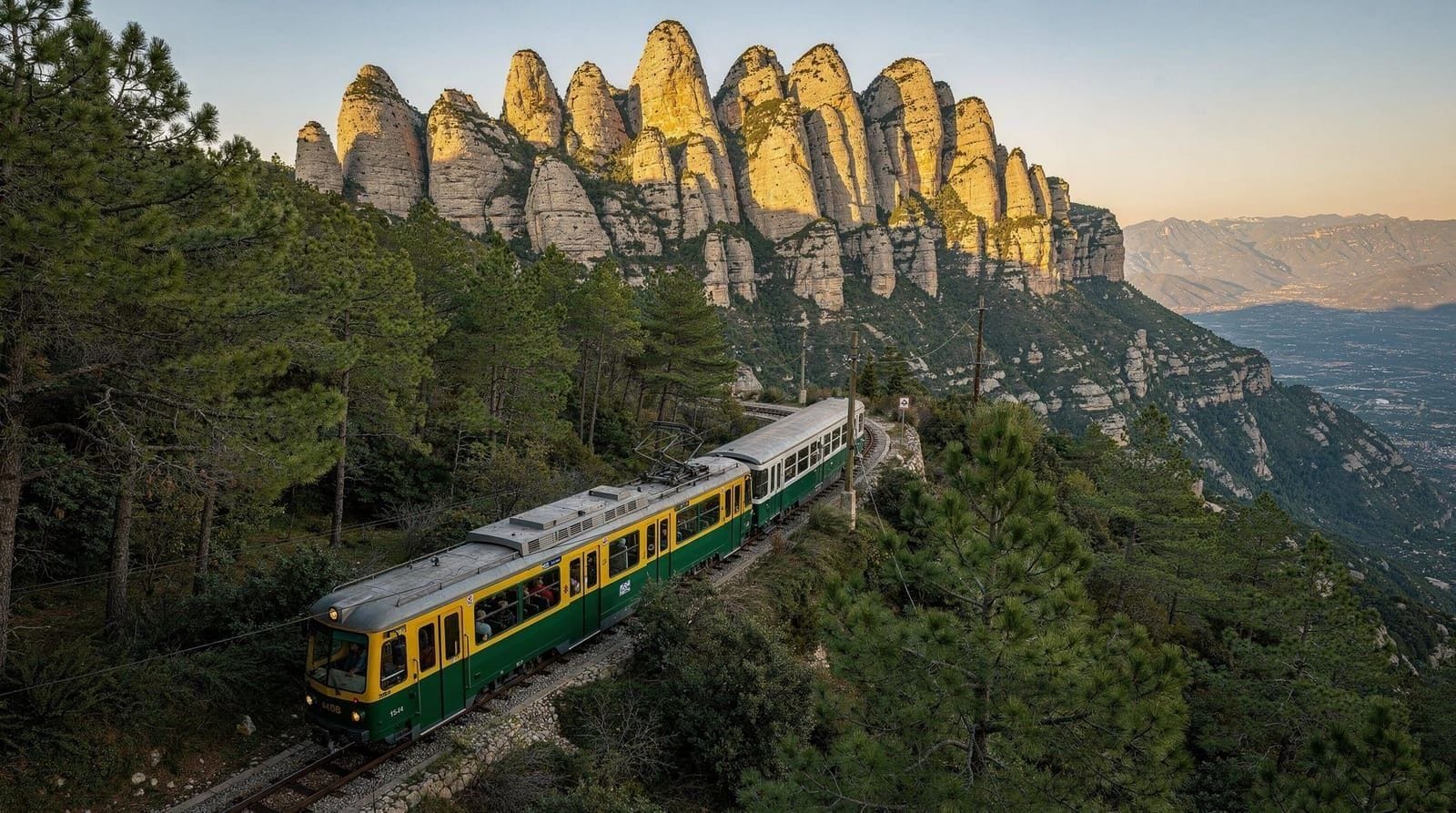
| Montserrat | 2 hours | 5–6 hours | Scenery, hiking, monastery |
| Girona | 1.5 hours | 6–7 hours | Medieval old town, cathedral |
| Sitges | 1 hour | 7+ hours | Beach town, easy half-day |
Andorra is, by a clear margin, the least time-efficient of the standard day trips from Barcelona. That is not a reason to skip it if duty-free shopping or a specific goal genuinely applies to you — it is a reason to be realistic about what the day will actually feel like.
What to do in Andorra
Duty-free shopping
Andorra la Vella’s main commercial street (Avinguda Meritxell) is a continuous duty-free retail strip. The main savings compared to Spain:
- Electronics: 10–20% cheaper than Spanish retail prices on average. Not always worth the trip for one item, but meaningful on larger purchases.
- Perfume and cosmetics: Consistently 20–30% cheaper than in Barcelona.
- Alcohol: Spirits particularly — a bottle of premium whisky or brandy runs 30–40% less than in Spain.
- Tobacco: Significantly cheaper. Spanish customs allows 200 cigarettes back into the EU duty-free.
EU customs limits (as of 2026): You may bring back to Spain duty-free up to 4 litres of wine, 1 litre of spirits over 22% ABV, 16 litres of beer, 200 cigarettes, and €300 of other goods (€430 if arriving by air — which does not apply to the bus). Goods over these limits are subject to Spanish import duty. Keep receipts.
Romanesque churches
Andorra has some of the finest Romanesque churches in the Pyrenees, most built between the 11th and 13th centuries. They are small, made of stone, decorated with original frescoes (or reproductions — many originals were removed to Barcelona’s MNAC for preservation).
- Sant Joan de Caselles (Canillo): a single-nave Romanesque church with a Romanesque bell tower and visible original fresco fragments. 5 km from Andorra la Vella.
- Sant Esteve (Andorra la Vella): the oldest church in the capital, 12th century, with a Romanesque apse.
- Santa Coloma (Santa Coloma village): the oldest circular bell tower in Andorra.
If you have 3–4 hours on the ground, a church visit can be combined with shopping, but requires a car or taxi. Anyone who cares more about Romanesque art than shopping is often better served staying in Barcelona and visiting the Pyrenean frescoes preserved at MNAC, which holds one of the finest collections removed from these same mountain churches.
Skiing (winter only)
Grandvalira is one of the largest ski areas in the Pyrenees: 210 km of marked pistes across two linked resorts (Pas de la Casa and Grau Roig). For a serious ski day from Barcelona, you need to stay overnight at minimum — the bus journey does not allow enough time on the slopes. Day ski packages from Barcelona are available but require a 05:00–06:00 departure and a late return. Better to stay two nights in Andorra and ski properly.
Hiking (summer)
The Vall del Madriu-Perafita-Claror is a UNESCO World Heritage biosphere reserve: glacial valleys, lakes, stone huts and alpine pastures. Trailhead at Escaldes-Engordany (walking distance from Andorra la Vella). A half-day hike into the valley and back is feasible within a day trip’s time frame. Wear layered clothing and sturdy footwear — altitude here reaches 2,900 metres.
Eating in Andorra on a day trip
If your 3–4 hours on the ground include lunch, Andorran food leans heavily on Catalan and French Pyrenean influences — hearty mountain cooking rather than the lighter Mediterranean plates you get in Barcelona. Trinxat (a mashed cabbage-and-potato dish with bacon, similar to the Catalan-Pyrenean version found around the Cerdanya) and escudella (a slow-cooked meat-and-vegetable stew) are the two dishes worth seeking out if you have time for a sit-down meal rather than a duty-free sandwich.
Restaurants along Avinguda Meritxell cater heavily to shoppers and tend toward convenience rather than quality; walking a block or two into the old quarter (the Barri Antic around Casa de la Vall) usually finds better, less rushed options at similar prices. Given the tight time window most day-trippers have, many visitors simply grab a quick lunch near the shopping strip and prioritise the shopping and, if time allows, a short walk to one of the Romanesque churches — a full sit-down meal is a genuine trade-off against ground time on a single-day visit.
Is the Andorra day trip worth it?
Worth it if:
- You have a specific duty-free purchase that saves you significant money
- You are a ski enthusiast and can book early morning departures in winter
- You want to say you visited a third country on the same trip
Not worth it if:
- Your goal is hiking, cultural depth or real mountain time — stay overnight
- You are travelling with children who will be exhausted by 8 hours on a bus
- The cost of the bus tickets (€35–45) buys you more value elsewhere
The honest alternative for scenery and mountains in a day: Montserrat is 1 hour from Barcelona, dramatically beautiful, and leaves most of the day free for hiking.
Practical tips
- Bring your passport or national ID (Andorra is not in the Schengen Area).
- The euro is used but Andorra has no central bank — change money before leaving Barcelona if you want cash.
- Altitudes in Andorra reach 2,900 metres; even in summer the weather can change rapidly. A waterproof layer and sunscreen are both useful.
- The main commercial street closes for siesta 13:00–15:00 in quieter periods. Some shops open all day in summer.
Andorra’s history in brief
Eight hundred years of co-principality
Andorra is one of Europe’s most durable political curiosities: a co-principality jointly governed by two co-princes — the President of the French Republic and the Bishop of Urgell. This arrangement has persisted, with interruptions, since 1278, making it one of the oldest surviving constitutional arrangements in Europe.
The original agreement — the “pareatge” of 1278 — settled a territorial dispute between the Count of Foix and the Bishop of Urgell over a cluster of mountain valleys in the eastern Pyrenees. Rather than resolve the dispute with one winner, the two powers agreed to share sovereignty: each would have equal rights to Andorra, the territory would pay taxes alternately to both, and neither would have exclusive control. A similar arrangement had been formalised in 1162.
The peculiarity of the arrangement is that it has survived every subsequent change in the political landscape around it. When the County of Foix was absorbed into France, the French sovereign’s co-princeship passed to the King of France and then, after the Revolution, to the head of state (now the President). The Bishop of Urgell — a small diocese in the Catalan Pyrenees, currently with a seat in La Seu d’Urgell, 9 kilometres from the Andorran border — remains the ecclesiastical co-prince. This means that each time France elects a president, Andorra automatically acquires a new co-prince.
The governance model
The two co-princes are the formal heads of state but hold largely ceremonial power. The actual governance is carried out by the Cap de Govern (Head of Government, equivalent to a Prime Minister) and the Consell General (the parliament, 28 members elected by the seven parishes of Andorra). The system functions as a parliamentary democracy within a constitutional monarchy — or, more precisely, within a constitutional co-principality, a category of governance that exists nowhere else.
Andorra has no army (its last war was in the 14th century), no central bank, and until 1993 had no formal written constitution. It operated under a semi-feudal system based on the 1278 pareatge agreement until constitutional reform was negotiated. The 1993 constitution established Andorra as a democratic state, joined it to the United Nations, and established a formal legal system.
Why Andorra never joined the EU
Andorra’s relationship with the European Union is anomalous. It uses the euro (by bilateral agreement, not as an EU member) and has a customs union with the EU for industrial goods, but is not a member of the EU, the Schengen Area, or the European Economic Area. This is partly historical (the co-principality’s particular status did not map onto EU membership frameworks) and partly economic: Andorra’s economy is substantially built on duty-free retail and low-tax financial services. EU membership would require adopting EU VAT rules, which would eliminate the primary economic advantage that makes the duty-free model work.
Negotiations for a closer framework agreement between Andorra and the EU have been ongoing for years and have not yet produced a concluded agreement. For visitors, the practical consequence is the customs process at the border and the duty-free limits on what you can bring back.
Overnight in Andorra
The day trip’s constraints are real: 7–8 hours of travel for 3–4 hours on the ground. If you are willing to stay one or two nights, the calculation changes entirely.
Where to stay
Andorra la Vella: The capital, at 1,023 metres altitude, is the commercial and administrative centre. Hotels range from business-oriented three-star properties to a few larger resort hotels near the spa facilities at Caldea (Europe’s largest thermal spa complex). Staying in Andorra la Vella puts you within walking distance of the commercial strip, the old quarter with the Casa de la Vall (the historic parliament building), and the Sant Esteve church.
Escaldes-Engordany: Directly adjacent to Andorra la Vella, sharing essentially the same urban space, Escaldes is the parish where the Caldea spa complex is located — a glass and steel thermal structure that draws from natural hot springs and is the most visited attraction in Andorra. If spa access is part of your plan, staying here is convenient.
Canillo and Encamp: Further up the valley, these smaller parishes are the entry points for Grandvalira ski area access in winter and for trails into the upper mountain areas in summer. Less commercially developed than the capital; better for those prioritising hiking and mountains over shopping.
Extending with hiking
With one extra day, the Vall del Madriu-Perafita-Claror UNESCO biosphere reserve becomes genuinely accessible. The main trail from Escaldes-Engordany into the valley climbs through pine and birch forest before reaching open alpine grassland, glacial lakes, and stone shepherd huts at altitudes above 2,000 metres. The highest accessible point in the reserve reaches 2,900 metres.
A comfortable two-day hiking format: arrive on day one, afternoon/evening in the capital; day two full hiking day into the Madriu valley; return to Barcelona on day three. This requires only one night’s accommodation and turns Andorra from a rushed shopping excursion into a genuinely worthwhile mountain visit.
Extending with skiing
Grandvalira (winter only, typically December to early April depending on snowfall) covers 210 km of marked pistes across two linked resorts. A proper ski day requires arriving the evening before — the first lifts open at 09:00 and the journey from Barcelona to the slopes is not compatible with a same-morning departure.
Two-night stays are the minimum for a genuine ski trip: arrive day one, ski days two and three, return day three evening. The cost of accommodation in Andorra during ski season is significantly lower than comparable Pyrenean resorts in France or Spain, which is one reason Andorra la Vella fills with skiers from both countries on winter weekends.
If you are combining Andorra with time elsewhere in the Pyrenees or planning a broader Catalonia loop, our guide to getting around Barcelona covers the transport hubs (Barcelona Nord, Sants) you will use to connect onward.
Andorra is feasible but demanding as a day trip from Barcelona. Compare it with the rest of the options in our complete day trips guide.
Frequently asked questions about Andorra day trip from Barcelona
Is Andorra worth a day trip from Barcelona?
Honestly: barely, for most visitors. The 7–8 hours of total travel time leave only 3–4 hours in Andorra la Vella. If your goal is duty-free shopping (electronics, alcohol, perfume), it makes sense. If you want to hike or ski, an overnight stay is far more rewarding.What can I buy duty-free in Andorra?
Andorra has no VAT (Spain's IVA is 21%). Electronics, perfume, alcohol and tobacco are significantly cheaper than in Spain or France. However, EU customs limits apply on return: 4 litres of still wine, 1 litre of spirits over 22%, 200 cigarettes, and a general goods allowance of €300 (€430 by air). Keep receipts.Do I need a passport for Andorra?
Andorra is not in the EU, Schengen Area or the eurozone (it uses the euro by bilateral agreement). You will pass through Spanish and Andorran border controls. A valid passport or national ID card is required. Non-EU visitors should carry their passport.Is there a train to Andorra from Barcelona?
No direct train. The closest rail connection is L'Hospitalet de l'Infant (not helpful) or Andorra-La Vella Estació d'Autobuses by coach. Direct buses (Alsina Graells / Novatel) depart from Barcelona Nord bus station. The journey is entirely by road through the Pyrenean foothills.What is there to do in Andorra besides shopping?
In winter: skiing at Grandvalira (one of the largest ski areas in the Pyrenees, 210 km of pistes). In summer: hiking in the Pyrenean valleys, particularly around Ordino, Encamp and the Vall del Madriu UNESCO biosphere. The Romanesque churches of Sant Martí de la Cortinada and Sant Corneli are worth a detour.
Top experiences
Bookable activities with verified prices and instant confirmation on GetYourGuide.