Avoiding pickpockets in Barcelona: practical, location-specific advice
How common is pickpocketing in Barcelona?
Barcelona consistently ranks among the highest-theft cities for tourists in Europe. Petty theft is the main visitor risk. It concentrates in specific locations and uses identifiable techniques — advance knowledge reduces exposure significantly.
Barcelona’s pickpocket problem is real, location-specific, and highly predictable. The techniques used are consistent; the locations are consistent; and the mitigation, while not absolute, substantially reduces exposure. This guide covers the specific detail that generic “watch your bags” advice skips.
| Highest-risk spots | La Rambla, metro L3, Barceloneta beach, La Boqueria, Park Güell entrance |
| Main technique | Distraction-then-reach, in groups of 2–5 |
| What to carry | Front-worn bag, front trouser pocket wallet, phone away while walking |
| What to leave behind | Passport, spare cards, most cash — hotel safe |
| If it happens | Freeze cards immediately, file a denuncia within 24 hours |
Why Barcelona specifically
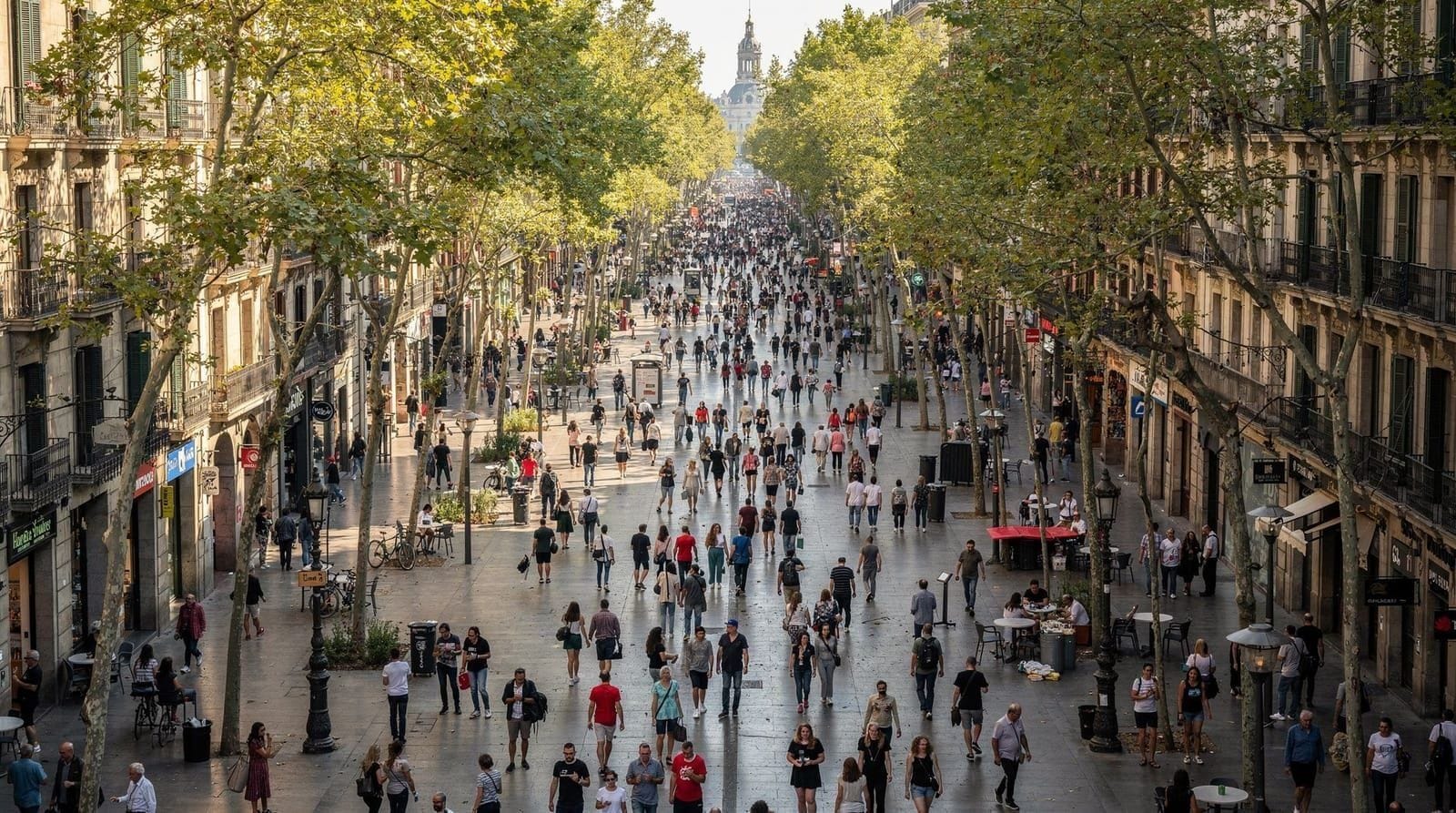
Several factors combine to make Barcelona one of Europe’s highest-incidence pickpocket cities. The volume of tourists is extraordinary — over 32 million arrivals in 2025, concentrated into a small central zone. La Rambla concentrates international visitors in a linear, easily monitored corridor. The metro system carries high tourist density on specific lines. And the economic structure of professional pickpocket networks, which have operated in the city for decades, is difficult for police to disrupt comprehensively.
This is not a reason to feel unsafe. Violent crime targeting tourists is rare and statistically low. The entire risk is in non-confrontational theft. Being aware of how it works and where it concentrates is sufficient preparation.
How professional pickpocket networks operate
Barcelona’s pickpocket problem is not primarily a matter of individual opportunists — it is sustained by an organised economic structure that makes the city a profitable target for professional networks.
A typical professional pickpocket team operates in groups of 3–5 people with specific roles: one or two distraction operators, one or two collectors (who make the actual contact), and often a passer (who takes the item from the collector within seconds, making recovery or evidence-gathering nearly impossible). The teams work defined territories — specific metro lines, specific sections of La Rambla, specific market entrances — and rotate to avoid police pattern recognition.
The economic incentive is significant. A professional team working a tourist-dense environment can generate €200–500 per day from multiple small thefts. The criminal justice landscape (see below) means that arrest rarely results in meaningful consequences, particularly for first offences. Barcelona’s status as a tourist hub with visitors from high-purchasing-power countries means the average value of a stolen wallet is higher than in most European cities.
Police do disrupt these networks periodically — the Mossos d’Esquadra (Catalan police) and the Guàrdia Urbana run regular operations, and arrest rates have improved in recent years. But the networks reconstitute relatively quickly, which is why the problem persists despite awareness campaigns and visible policing in tourist areas.
Understanding this structure matters for visitors because it explains why the mitigation needs to be physical (making the theft harder) rather than social (being alert to individual suspicious people). You cannot identify a professional pickpocket team by appearance. You can reduce the accessible opportunities they look for.
Location breakdown: where risk is highest
La Rambla
The entire 1.2 km boulevard is an elevated-risk environment. Within it, three micro-locations concentrate incidents:
Human statue areas. The statues draw a tight crowd, which is the exact environment needed: people standing close together, looking up and ahead (not at their own bags), often holding phones out for a photo. The technique is to enter the crowd from the side and work bag pockets or back pockets while attention is forward. Do not enter the tight inner crowd. Watch from 3–4 metres back where you have peripheral awareness.
La Boqueria market entrance. The arch entrance from La Rambla funnels large numbers of people into a narrowing space. The slow movement and close proximity in the approach corridor is the risk zone. Keep bags closed and in front; the interior stalls themselves are less problematic than the entrance funnel. Our La Boqueria market guide covers the best times to go and what is actually worth buying.
Flower stall areas. The narrow gap between the central stalls and the building facades creates a compressed flow of pedestrians. Combined with the distraction of transaction activity, this is a predictable moment.
Metro lines
Line L3 (the green line) carries the highest tourist volume and the most documented incidents. Priority stations: Liceu (La Rambla access), Drassanes (port and Columbus Monument access), Barceloneta, Paral·lel, and Passeig de Gràcia.
The turnstile technique is well-documented: positioning yourself immediately behind a target at the gate allows a brief physical contact moment during the pass-through. The counter is to position your bag against the gate opening rather than behind you, and to give space before the person ahead has fully cleared.
In the carriages, rush-hour and crowded trains between tourist stops are the risk environment. If you are on a crowded L3 carriage with a backpack, wear it on your front or hold it. Our getting around Barcelona guide covers which lines and passes make most sense for your trip beyond just the safety angle.
Barceloneta beach
The beach theft model is simpler: valuables left with clothing while swimming are taken. No sophisticated technique involved — someone walks past and takes unattended items while you are in the water.
The practical solution: take to the beach only what you can afford to lose. Your hotel safe should hold your passport, extra cards, and large amounts of cash. A beach day requires: one card (ideally with a low daily limit), enough cash for drinks, and your phone if you are willing to monitor it actively.
Locker rental is available at the beach facilities in season for a few euros and is worth using if you have no option. For the full picture of which beaches are quieter and which are busiest, see our Barcelona beaches guide.
Gothic Quarter
The narrow street network — particularly the approaches to Plaça Reial, the lanes around Carrer de la Mercè and Carrer dels Escudellers, and the area around the Cathedral — concentrates foot traffic in tight passages. The distraction technique (someone asking for directions while you stop to answer, or appearing to show you something on a map) works well in these environments where stopping seems normal.
Park Güell
The approach to the Monumental Zone entrance — where visitors are standing and checking phones for timed-entry QR codes — has become more active in the last two years. This is a specific moment of high distraction (everyone is looking at a phone screen) in a crowd. Download your QR to your phone’s gallery (photo album) before leaving the hotel so you are not opening an app that requires mobile data while standing in a crowd. The same applies at the Sagrada Família entrance queue, where the same phone-out moment repeats at scale.
Technology tools for security
GPS trackers in wallets and bags: Small Bluetooth trackers (Apple AirTag, Tile, Samsung SmartTag) can be placed in a wallet or bag and used to trace the location after a theft. These are not a prevention tool — they do not stop the theft from happening. They can, however, locate a discarded wallet (thieves typically take cash and cards, then discard the wallet) and help you identify approximately where the theft occurred, which is useful for a police report. AirTag placement in a wallet is the most common version of this setup.
Find My iPhone / Google Find My Device: If your phone is stolen, immediate remote erase is the most important action to protect your personal data and prevent access to banking apps. Set up this functionality before your trip — it requires that you know your Apple ID or Google account credentials from memory (your phone, which had the apps, is now gone). Remote lock is also possible and prevents immediate access while preserving the tracking capability for longer.
Low-limit travel cards: A Revolut, Wise, or similar travel money card with a configurable daily spending limit used as your street card is the most practical financial mitigation. Set the daily limit to what you plan to spend. If it is stolen, you freeze it immediately from another device; your primary card, which stayed in the hotel, is untouched. Most travel cards also offer instant freeze from a mobile app, which takes under 10 seconds.
Travel insurance that covers theft: what to know
Travel insurance theft coverage is widely misunderstood. Here is what most policies actually cover and exclude.
What is typically covered: Cash up to a low limit (often €100–250); credit and debit cards after you report loss to the bank (usually covered up to the amount taken before you reported); personal belongings including phones, cameras, and bags up to a per-item limit (often €500–750 per item with proof of ownership); emergency document replacement costs.
What is commonly excluded: Items left unattended in a public place (beachfront bag while swimming may be excluded if the policy specifies items must be “supervised”). Cash above the policy’s cash limit. Electronics above the per-item limit without a premium add-on. Anything not reported to police within 24 hours (the denuncia is almost always a requirement for any claim).
What the police report does: The denuncia filed at a Spanish police station or online at policia.es is the document your insurer will require before processing any claim. It establishes the date, location, and circumstances of the loss. Without it, almost all travel insurance theft claims will be rejected.
Recommended approach: Read your existing travel insurance policy before departure and note the specific cash limit, per-item limit, and reporting requirements. If you are travelling with a high-value camera or laptop, consider whether a specific electronics policy is needed.
The legal landscape: why pickpocketing is hard to prosecute
Spain’s criminal code distinguishes between petty theft (hurto) and robbery (robo). Pickpocketing is classified as hurto (theft without violence or intimidation) and carries relatively minor penalties — fines and short custodial sentences that are often suspended for first or second offences.
This legal structure, combined with the difficulty of establishing evidence in a non-confrontational theft scenario (no witnesses, the item is gone, the perpetrator is gone), means that arrest rates are low and conviction rates lower. The Mossos d’Esquadra have stated publicly that repeat offenders — individuals arrested multiple times for pickpocketing in the same year — are released and back in operation within days.
This is not an argument against filing a police report (it is required for insurance) — it is context for why deterrence through individual prosecution is limited. The practical implication is that professional pickpocket operations in Barcelona are persistent partly because the legal consequences of being caught are disproportionate to the economic rewards.
Risk by season and event
Theft risk in Barcelona is not constant through the year — it tracks visitor volume closely, with specific spikes worth planning around.
| Period | Risk level | Why |
|---|---|---|
| June–September | Highest | Peak tourist volume, crowded beaches and Rambla, distracted holiday mindset |
| Major festivals (La Mercè, Sant Jordi, Primavera Sound) | Elevated | Dense street crowds concentrate opportunities in normally lower-risk areas |
| Christmas markets (Fira de Santa Llúcia) | Elevated locally | Tight crowds around Plaça Nova and the cathedral |
| October–May, non-holiday weeks | Lower | Fewer visitors, less crowd cover for distraction techniques |
| Champions League or Clásico match days | Elevated near Camp Nou and metro L3 | Large, distracted, celebratory crowds moving together |
If your trip coincides with any of the elevated-risk periods above, the location-specific advice in this guide matters more than usual, not less — treat La Rambla and the metro with extra caution during festival weeks.
Accommodation security: what to check on arrival
Hotel and apartment security is a secondary but real consideration. On check-in, identify where the room safe is and use it for your passport, spare cards and any cash beyond a day’s spending — this single habit removes the single largest potential loss from any single theft incident. For short-term rental apartments without an in-room safe, distribute valuables rather than keeping everything in one bag, and note that ground-floor apartments in tourist-dense areas (particularly around the Gothic Quarter and El Born) have occasionally reported opportunistic break-ins when windows are left open. This is uncommon relative to street pickpocketing but worth a moment’s attention if you are self-catering.
For hostel dormitories, use the provided lockers for anything you are not carrying that day, and bring your own small padlock — many hostels supply lockers without one. Genuinely nothing about Barcelona’s accommodation security is unusual for a major European tourist city; the point is simply that the same “keep valuables secured and out of sight” principle that applies on the street applies indoors too.
Rental car and luggage theft
Visitors arriving by car or renting one for onward travel (to Girona, Sitges or the Costa Brava) should know that theft from parked vehicles is a separate, well-documented problem in Barcelona, distinct from pedestrian pickpocketing. Never leave luggage, bags or electronics visible in a parked car, even for a short stop — car park attendants and street parking near tourist sites are both targeted. Underground guarded car parks (marked with a blue “P” and staffed) are safer than street parking for any stop longer than a few minutes. If you are dropping off a rental car at the airport after a day trip, remove all luggage from view before you arrive, not once you are already parked and visible.
Airport and train station luggage is a lower-risk category than street pickpocketing but not zero-risk: keep bags within physical contact (a strap around your leg or arm, not just “nearby”) while waiting at El Prat airport or Barcelona Sants station, particularly during the queuing and check-in process when attention is naturally split between phone, documents and bags.
Restaurant and terrace theft
A distinct, lower-profile version of the same problem occurs at outdoor restaurant and bar terraces, particularly along La Rambla, the Barceloneta seafront and the busier squares of the Gothic Quarter. The technique here is simpler than the street versions: a bag hung on the back of a chair, or a phone left face-up on the table while you are absorbed in conversation or a menu, is taken by someone walking past the terrace’s edge. This is opportunistic rather than an organised team operation in most cases, but it is common enough that experienced servers in tourist-dense areas will often warn new arrivals to keep bags on their lap or looped around a table leg rather than on the chair back.
The practical fix is simple: never hang a bag on a chair back facing the street or walkway side of a terrace, and keep your phone in a pocket rather than on the table when you are not actively using it. This single habit prevents the majority of terrace theft incidents reported in the tourist zones covered in this guide.
Children’s safety
Children are targeted by pickpockets in Barcelona in specific situations:
Young children are sometimes used as distractors in family pickpocket setups — a child approaching to ask a question or show you something creates a moment where adults instinctively lower physical awareness. This is not common but documented.
Children’s bags (particularly backpack-style bags common in primary-age visitors) are vulnerable in exactly the same way as adult bags — accessible pocket zippers are the target. Keep children’s bags zippered and in front in the high-risk environments listed above, or have the child wear the bag on their front in particularly crowded situations.
Children’s phones are targeted for phone snatching as well as adults’. The same rules apply: phone use in doorways or against walls, not while walking on La Rambla or the Barceloneta promenade.
How techniques actually work
Distraction-then-reach: One or more people engage your attention — asking a question, pointing at something on your clothing (“You have something on your jacket”), creating a minor incident near you. While your attention is redirected, a partner reaches the target bag or pocket. The key is that this requires 2–4 seconds of attention redirection. Any suspicious approach — particularly anyone who gets very close physically while talking to you — should prompt an immediate step back.
The hold-and-pass: A person in front slows or stops unexpectedly (on stairs, at a turnstile, on a narrow pavement), causing you to press forward. The contact moment is the access window. This is common on escalators from metro platforms.
Phone snatch: The fastest technique — someone approaches rapidly (sometimes on a bicycle or scooter) and grabs the phone directly from your hand while you are using it. Particularly common on La Rambla, the Barceloneta promenade, and the Passeig de Gràcia. If you need to look at your phone on the street, step into a doorway or against a wall so the approach direction is limited.
La Boqueria bump: Inside the market, a person “accidentally” bumps into you or presses close at a stall counter. The bump creates a physical contact that masks the reach. The movement has to be deliberate: bags close and in front; don’t stop with your bag accessible at a stall counter.
What actually works as mitigation
Bag position: A crossbody or shoulder bag worn in front of the body (hugged against your chest in tight crowds) removes the primary access point for most techniques. A backpack worn on the back is vulnerable to careful opening in crowd situations. Front position is not comfortable for a whole day of walking — in genuinely low-risk environments (inside a restaurant, in open streets in Gràcia) you can relax to the shoulder or back. In the specific high-risk locations listed above, bring it forward.
Phone practice: Put your phone away while walking in high-risk areas. Use it in doorways or standing with back to a wall when you need to check something. A wrist loop/leash is an inexpensive addition that makes snatching significantly harder.
Wallet position: Front trouser pocket only in high-risk areas. Back pocket wallets are trivial to remove without the carrier noticing. A slim wallet (rather than a thick card-filled one) is easier to position in a front pocket.
Cash quantity: Carry only what you plan to spend that day, plus a reserve. Keep the bulk of cash in the hotel safe. If a wallet is taken, the loss is limited.
Card strategy: Consider using a travel card (Revolut, Wise) with a configurable daily spending limit as your street card. Your primary bank card stays in the hotel. If the street card is taken, you freeze it from the app immediately; your bank card is uncompromised.
Group behaviour: The distraction technique requires your attention to be fully redirected. In a group, having another person beside you who maintains awareness while you look at something divides the access opportunity. Pairs and groups are markedly less targeted than solo walkers.
The recovery timeline after a theft
If a theft occurs despite precautions, here is a realistic timeline of what happens in the hours after.
Immediate (0–30 minutes): You realise something is missing. Check whether it was simply misplaced before filing any report. If confirmed stolen, call your bank immediately to freeze cards. Contact your travel card provider via app. Note the approximate time and location — this will be required for the police report.
Within 2 hours: File a denuncia online at policia.es or go to the nearest police station. The online process takes approximately 20 minutes and is available in English. The receipt confirms the report and is the document your insurer requires. If your phone was stolen, initiate remote wipe via Apple ID or Google account from another device before the thief can access it.
Within 24 hours: Contact your travel insurer to begin the claim process. They will require the police report number, a list of items taken with estimated values, and proof of purchase for high-value items where possible. For passport theft, contact your country’s consulate in Barcelona — the Consulate list is available from your government’s travel website.
Over the following days: Most stolen items are not recovered. The police report creates a record but active investigation of individual pickpocketing incidents is not typical unless the amounts involved are significant. Focus energy on recovering card costs through your bank’s fraud process (most banks refund contactless and chip-and-pin transactions made after you reported the card stolen) and filing your insurance claim with documentation.
If it happens despite everything
The experience is disorienting — many people do not notice the theft until minutes or hours later. Some notice in real-time but cannot identify who did it. Do not pursue or confront anyone you suspect; professional pickpockets work in groups and an individual pursuit creates risk.
Immediate steps: freeze your bank cards (via your bank app or emergency number). Check for your passport — leave it in the hotel safe so this check is unnecessary. Call the emergency number on the back of any cards taken. File a denuncia (police report) at the nearest police station or at policia.es online — required for insurance claims. Contact your travel insurer to begin the claim process.
For more on what to do when incidents occur and the broader scam context, see the safety and scams guide.
The La Rambla walk done correctly
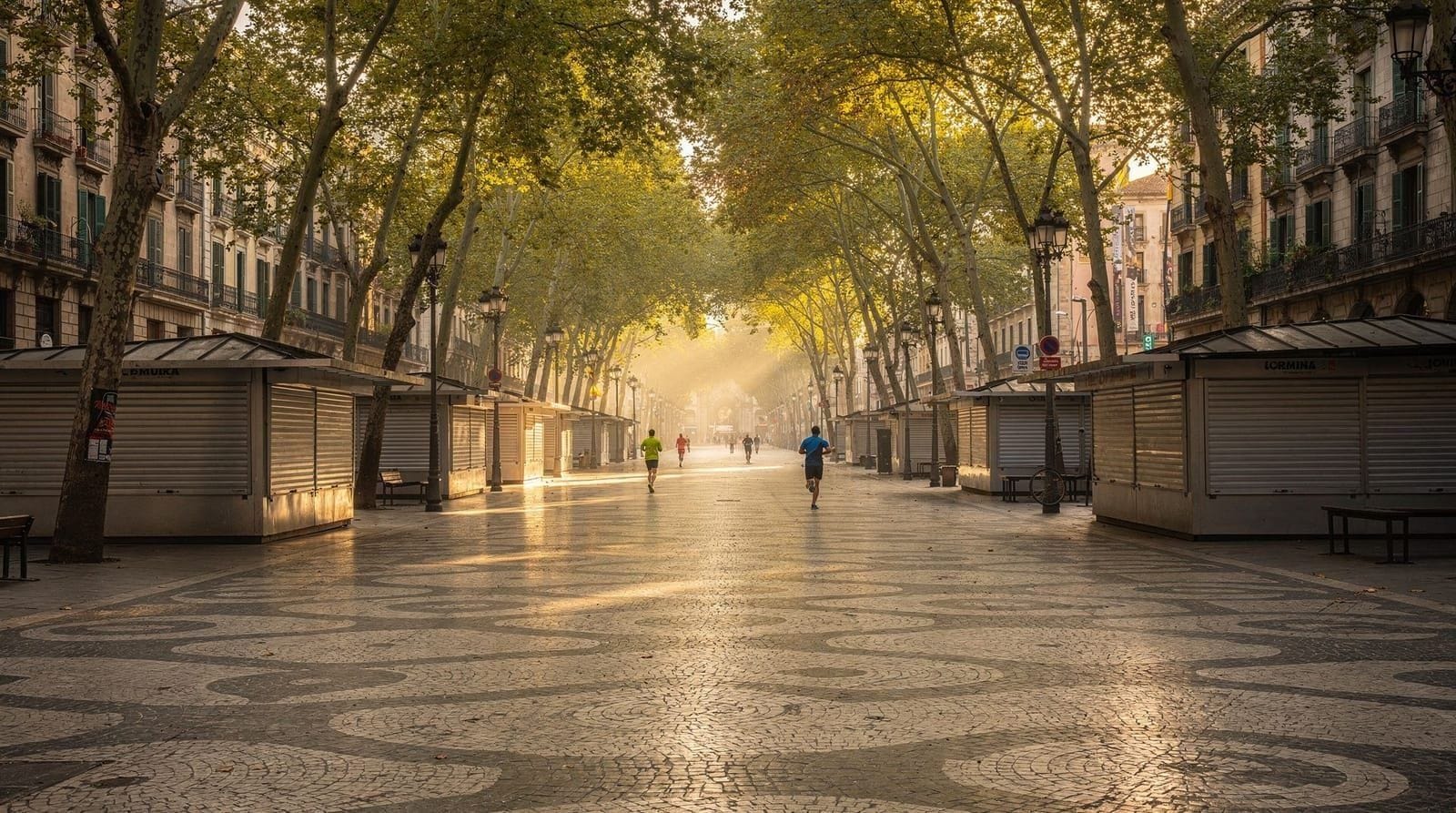
The single practical application of all the above: for your one-time La Rambla walk (which is worth doing — see the honest guide to La Rambla), go at 09:00 when the boulevard is quiet. Wear your bag in front. Keep your phone in a pocket except when you stop in a doorway to take a specific photo. Walk at a purpose-oriented pace — not rushing, but not lingering. Skip the human statue crowds. This approach is enjoyable and substantially low-risk.
The rule of thumb: the risk is in specific locations and techniques, not diffusely throughout the city. Gràcia, El Born residential streets, Poblenou, and most of Eixample are low-risk environments where normal city alertness is sufficient. La Rambla, the metro on specific lines, and Barceloneta beach in swimming season are where the specific mitigations outlined above pay off.
Frequently asked questions about Avoiding pickpockets in Barcelona
Where do pickpockets operate in Barcelona?
The highest-risk locations are: La Rambla (entire length, particularly at crowd concentrations around human statues and La Boqueria entrance), metro line L3 (Liceu, Drassanes, Barceloneta, Paral·lel stations and the carriages between them), Barceloneta beach (unattended clothing/bags while swimming), La Boqueria market (the crowded main approaches), and the Gothic Quarter narrow street network. Park Güell has increased in frequency in recent years.What are the most common pickpocket techniques in Barcelona?
The most common technique is distraction-then-reach: one or more people create a distraction (asking for directions, dropping something near you, pointing at something on your clothing) while a partner reaches into your bag or pocket. The metro turnstile press is another: someone pushes close at the gate as you go through. Phone snatching from hands — while you are using your phone on the street — has increased significantly since 2023.What is the most effective way to carry valuables in Barcelona?
Front-zip bag or crossbody bag worn in front of the body. For men, a front trouser pocket (not back pocket) for a wallet. A money belt under clothing is effective but inconvenient for access. The key principle is that you should be able to see or feel anything that could be removed. Nothing in an outside bag pocket or back trouser pocket in high-risk areas.Does dressing a certain way help avoid being targeted?
Minimally. Pickpockets in Barcelona operate at scale and are not primarily selecting targets by wealth appearance. A clearly distracted person with an accessible bag is the main target profile regardless of dress. The behaviours (phone out while walking, backpack worn on back in a crowd, looking at maps while standing still) matter more than clothing.Should I keep my passport on me?
No. Leave your passport in the hotel safe. Carry a photo of it on your phone (or a print if you prefer). EU ID cards are useful as street ID; non-EU visitors can carry a copy. Your original passport should only come out for airport departure or official requests by police. Passport replacement is a significant consular process that ruins trip days; bag theft of a wallet is annoying but recoverable within hours.What happens at the metro turnstiles?
The standard technique: two people time their approach to the turnstile with yours. One goes through immediately ahead of you, creating a slight slowdown. The other comes close behind. In the brief moment of compression, the person behind can reach into an outside bag pocket or touch your clothing. This works best when you are carrying a backpack that you cannot see. Turn so your bag faces the turnstile opening rather than backward toward the queue.Is there any risk at the Sagrada Família or Park Güell?
Yes, both are active locations. The queue management areas outside the Sagrada Família (before your timed entry) create a standing crowd of tourists who are focused on checking their phones for QR codes — an accessible moment for theft. Park Güell's main entrance area has become more active in the last two years as visitor numbers increased. Inside both sites, the enclosed environments with concentrated tourist crowds maintain some risk.What should I do immediately if I realise my wallet has been taken?
Call your bank immediately to freeze your cards — most banks have 24-hour card-blocking numbers and apps. Report to the Guàrdia Urbana (city police) for a denuncia (police report) within 24 hours — required for travel insurance claims. Do not expect item recovery. Cancel any loyalty cards or travel cards that were inside. If your phone was taken, use the remote-erase function of Find My iPhone or Google Find My Device as soon as possible from another device.