Tourist traps in Barcelona: the complete honest guide
What are the biggest tourist traps in Barcelona?
Reseller tickets for Sagrada Família and Park Güell (adding €5–15 to the real price), beachfront paella at tourist restaurants (frozen, €25 minimum), sangria (not a Catalan drink), flamenco shows near La Rambla (Andalusian import, not local culture), and La Rambla restaurants (overpriced, poor quality).
Barcelona has a well-developed tourist trap ecosystem that has evolved to extract money from the 32+ million annual visitors who move through a small number of concentrated locations. Most of the traps are not illegal — they are legal businesses exploiting price information asymmetry and the social pressure of unfamiliar surroundings. Here is the complete rundown.
Tourist traps at a glance
| Trap | Extra cost | The fix |
|---|---|---|
| Ticket resellers | €5–20 extra per ticket | Book only on the official site (sagradafamilia.org, parkguell.barcelona) |
| Beachfront/La Rambla restaurants | 30–40% markup | Walk one block inland |
| Sangria | Poor quality, tourist pricing | Order cava or vermut instead |
| Flamenco touts | €10–20 above real ticket price | Book direct through a verified platform |
| Unlicensed “free” walking tours | Pressured tips, weak content | Book a licensed guide with published pricing |
The ticket reseller trap: the most expensive mistake per transaction
The biggest financial tourist trap in Barcelona is not a restaurant or a scam artist — it is a legally operating website. Multiple third-party ticket resellers rank prominently in Google searches for “Sagrada Família tickets,” “Park Güell tickets,” and “Casa Batlló tickets.” These sites add €5–15 per ticket above the official price, under the guise of a “service fee” or “booking fee.”
For a couple buying Sagrada Família tickets with tower access (officially around €46 per person), a reseller charging €56 per person extracts €20 extra for the identical timed-entry ticket. For a family of four, €80 extra. These sites often look more polished and easier to use than the official sites, which is part of the trap.
The real prices and real booking points:
- Sagrada Família: from €26, official site sagradafamilia.org
- Park Güell Monumental Zone: €13, official site parkguell.barcelona
- Casa Batlló: from €29 (dynamic), official site casabatllo.cat
- La Pedrera: from €25 (dynamic), official site lapedrera.com
Dynamic pricing means the earlier you book, the less you pay. The resellers are not offering early-booking discounts — they are adding fees to whatever the current official price is.
See the booking guide for exact lead times and the complete no-reseller process for the Sagrada Família.
Airport transfer touts and taxi overcharging
El Prat airport has an official, metered taxi rank with fixed supplement rules published by the city — but the arrivals hall also has unofficial “taxi” touts approaching passengers before they reach the official queue, offering a flat “fixed price” transfer that is almost always higher than the metered fare would be. The tell is simple: anyone approaching you inside the terminal before you’ve reached the taxi rank or the Aerobus stop is not an official driver. Official taxis are white with a maroon stripe, have a visible meter, and queue at the marked rank outside. The Aerobus (€6.75 one-way, roughly 35 minutes to Plaça de Catalunya) and the R2 Nord train (€4.60, similar journey time) are both reliably cheaper than any taxi for solo travellers or couples without heavy luggage — see the airport transport guide for the full comparison.
SIM cards and currency exchange near tourist sites
Currency exchange booths (cambio) directly on La Rambla and around Plaça de Catalunya post exchange rates that are 8–15% worse than a standard bank card withdrawal or a mainstream fintech card, and some post a favourable headline rate while burying a commission in smaller print. Avoid exchanging cash at these booths for anything beyond small emergency amounts; ATMs attached to major Spanish banks (CaixaBank, Santander, BBVA, Sabadell) give a far better rate, particularly if you decline the ATM’s own “guaranteed” conversion rate (dynamic currency conversion) and let your home bank handle the conversion instead. The same logic applies to prepaid tourist SIM card kiosks near the Gothic Quarter, which routinely charge double what a Vodafone, Orange or MásMóvil shop a few streets away charges for the same data allowance.
La Rambla restaurants: legal overcharging with minimal effort
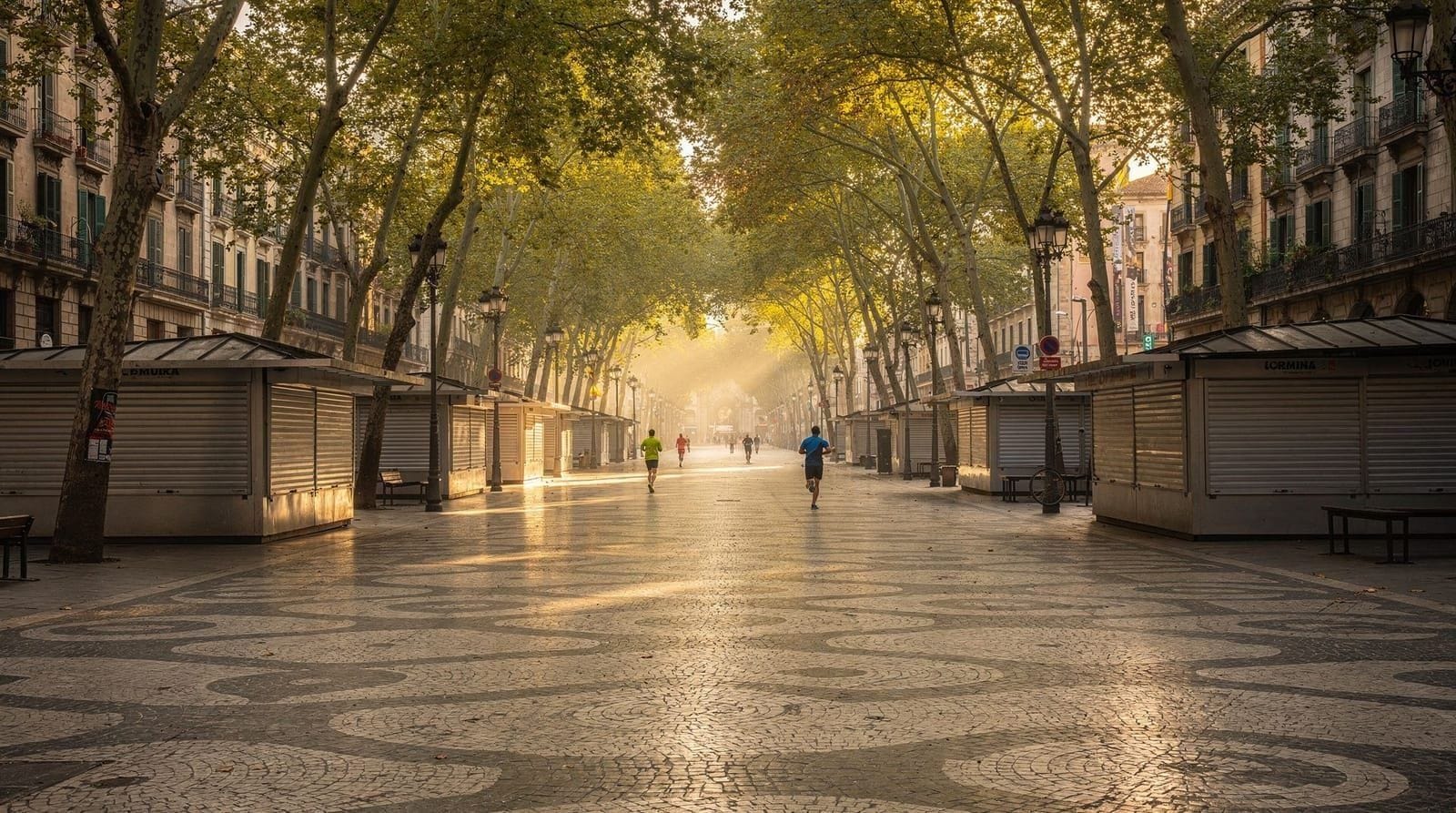
The restaurants on La Rambla itself — particularly those with pavement terrace seating on the central promenade — are uniformly overpriced for the quality they provide. A beer that costs €3.50 in a Gràcia bar costs €6–8 on La Rambla. A €15 lunch becomes a €25–30 tourist menu. The food quality rarely justifies the location premium.
The solution is immediate: walk one block east (toward El Born and the Gothic Quarter) or one block west (toward El Raval) and the price-quality ratio resets to normal Barcelona standards. The best café for coffee and breakfast at the start of a La Rambla walk is not on the boulevard but in the streets running parallel.
La Rambla is worth walking through once — the Miró mosaic embedded in the pavement, the Font de Canaletes, the Liceu opera house facade, and the general 19th-century boulevard character are genuine things worth seeing. Walk through it; do not eat on it.
Beachfront paella: the frozen version of a slow-food tradition
The restaurants lining the Barceloneta seafront charge €25–30 per portion for what is typically pre-made frozen rice reheated to order. The tell-tale signs:
- A photo of the dish prominently displayed outside
- “Minimum 2 portions” sign
- Staff actively inviting you in as you walk past
- “Paella” written without specifying Valenciana, Marinera, or Negra (a restaurant serving real paella knows which type it makes)
Authentic paella is from Valencia, not Barcelona. In its original form it is a Sunday lunch tradition cooked over a wood fire in a flat metal pan (the paellera) for 2–6 people — it takes 40–50 minutes and must be ordered in advance. No restaurant serving real paella accepts a walk-in order for one portion.
If you specifically want to eat proper paella in Barcelona, look for restaurants inland from the beach, in the Eixample, or in Poble-sec. Ask if it is made to order, which type, and how many people it requires. Good paella in a non-tourist restaurant runs €18–25 per person and is genuinely worth it. See the full paella and food traps guide and our best paella in Barcelona guide for specific restaurant guidance.
The Barceloneta fish restaurant trap in detail
Beyond the paella problem, the entire Barceloneta seafront strip — the row of restaurants directly on the Passeig Marítim facing the beach — deserves specific attention as a category of tourist trap.
These restaurants operate on high volume and tourist margins. A grilled sea bream that costs €18 in an inland Barceloneta restaurant costs €30–38 on the seafront strip. A plate of clams or mussels that runs €8 in the market area of Barceloneta runs €18–22 on the strip. The service is calibrated for tourist turnover — friendly, fast, and uninterested in whether you enjoyed your meal.
The alternative is immediate and requires walking only one or two blocks inland. The streets parallel to the beach — Carrer de la Balboa, Carrer del Mar, Carrer de Sant Carles, Carrer del Baluard — have working neighbourhood restaurants that serve the resident population of Barceloneta. These are genuine local restaurants where the seafood is fresher (smaller restaurants with faster turnover of daily catches), cheaper, and prepared with more care.
La Cova Fumada on Carrer del Baluard 56 is the local landmark — a cash-only bar credited with inventing the bomba (a potato and meat croquette), with excellent suquet de peix (fish stew). It has no menu, no sign beyond a small plate outside, and runs until it runs out of food. Arrive before 13:30. This is what eating in Barceloneta actually looks like.
Sangria: a drink locals do not drink
Sangria — red wine mixed with fruit, juice, and sometimes spirits — is served in tourist restaurants across Spain and is virtually unknown in Catalan households and neighbourhood bars. Ordering sangria in Barcelona marks you immediately as unfamiliar with the local culture, and restaurants that serve it are predominantly serving the tourist market rather than a local one.
What Catalans actually drink at bars:
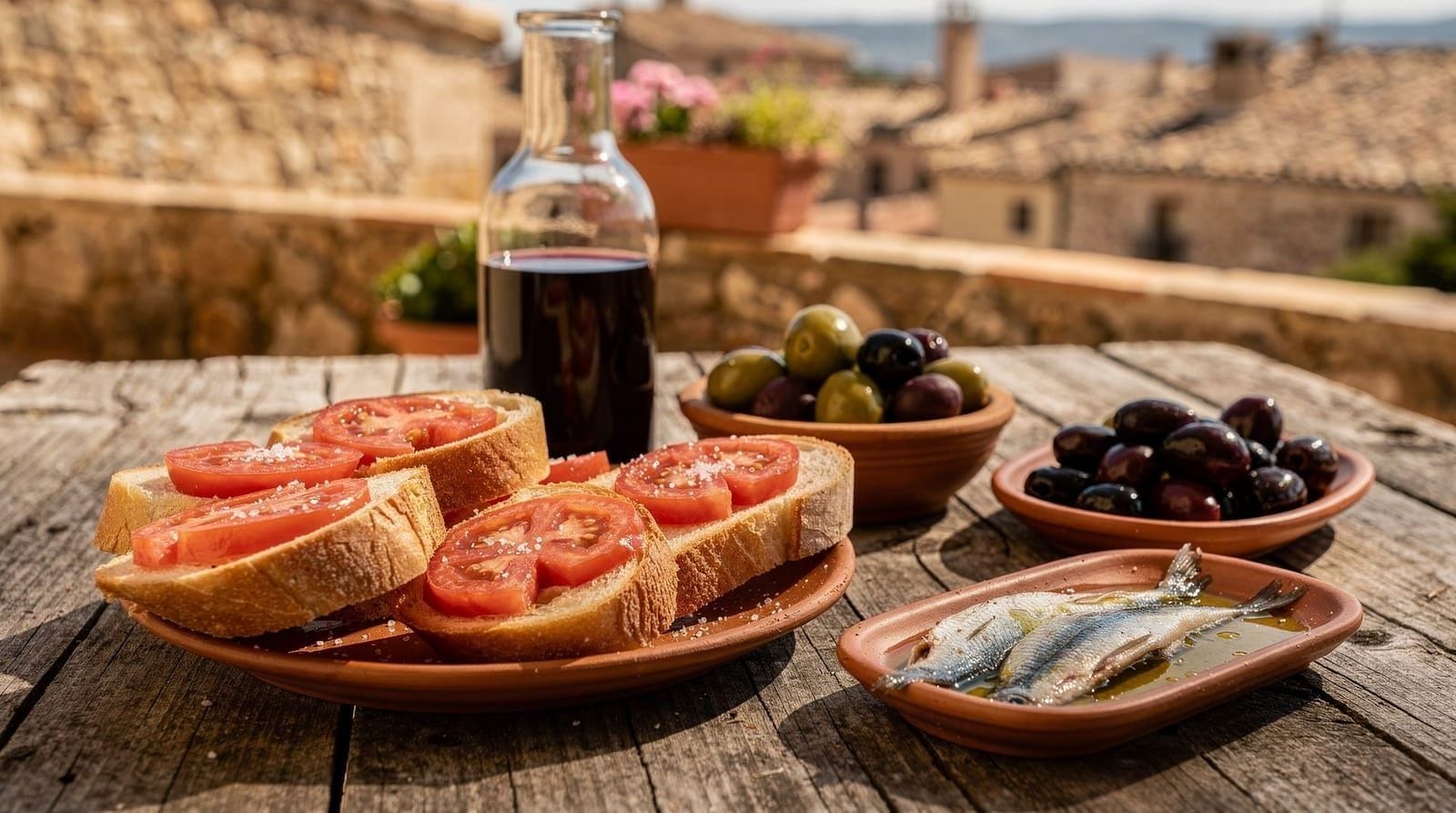
- Cava: Catalan sparkling wine made by the traditional method in the Penedès region, 50 km from Barcelona. Brut Natur and Brut are the good options. Around €3–5 per glass. World-class wine at a fraction of French Champagne prices.
- Vermut / Vermouth: A Sunday morning and early afternoon tradition across Barcelona and Catalonia. Drunk at a bar with olives and boquerones (anchovies), particularly in Gràcia and El Born. Around €3–4 per glass.
- Estrella Damm: The local Barcelona lager, brewed in the city. What everyone drinks at a bar.
Switching from sangria to cava at any restaurant is always the better choice: it is less expensive, significantly better quality, and genuinely from the region.
Flamenco near La Rambla: the cultural mismatch trap
Flamenco is an Andalusian art form, originating in the provinces of Sevilla, Cádiz, and Granada in southern Spain. It is as geographically distant from Barcelona’s culture as Irish dancing is from Italian opera. Catalans have their own performing arts traditions — sardana (the circular communal dance), castellers (human tower building), and the gegants (giant puppet figures at festivals) — none of which appear in tourist-facing shows.
The flamenco venues concentrated near La Rambla and in the Gothic Quarter range from genuinely professional productions by visiting Andalusian artists to tourist-assembly-line shows. The legitimate shows are real flamenco — it is a serious art form and a quality performance is worth seeing if that is your interest. The trap is the pricing: ticket touts outside venue entrances charge €10–20 above the real ticket price, and the “show with dinner” packages at lower-tier venues offer mediocre food at premium prices.
If you want to see genuine local Catalan performance culture: sardana dancing happens most Sunday mornings in front of the Cathedral (free, begins around 12:00, runs 30–60 minutes — see our sardana guide for the full picture). Castellers appear at the La Mercè festival in late September. Neither of these is a tourist production — they are events for local participants and the city population.
La Boqueria versus real food markets
La Boqueria on La Rambla is consistently in the top five tourist attractions in Barcelona. It is worth a visit. What it is not, in 2026, is a functional neighbourhood food market for locals. Most of the interior has transitioned to tourist-facing stalls: pre-packaged snacks, small plates at premium prices, and densely crowded approaches designed for the Instagram shot rather than the food purchase.
The stalls near the La Rambla entrance are the most tourist-facing; the interior fish, meat and vegetable vendors (at the back) are more authentically commercial. The cut fruit cups at €5–8 for a small serving are among the most overpriced items.
Mercat de Santa Caterina in El Born (10 minutes by foot from La Boqueria) is the best working food market for visitors who want to buy actual food at non-tourist prices. Better produce, lower prices, extraordinary mosaic roof designed by Enric Miralles, and almost no tourist crowds on weekday mornings.
Mercat de l’Abaceria in Gràcia (the neighbourhood’s main market, on Travessera de Gràcia) is even less visited by tourists and has an excellent mix of fresh produce vendors, cheese stalls, and a central space used by local restaurants for daily purchasing. Open Tuesday through Saturday.
What La Boqueria is actually good for: A brief walk-through to see the architecture and atmosphere, the genuine fish, meat and vegetable vendors at the back, and a visual impression of what a great market looks like. Go on a Tuesday or Wednesday morning before 11:00. Do not eat a meal there.
Fake “local” walking tours versus genuine ones
The growth of walking tour platforms has produced a two-tier market: licensed, knowledgeable guides with official credentials, and unlicensed operators who present as local-authentic without the substance.
The fake “local” version typically markets itself as “the tour the guidebooks don’t tell you about” or “hidden Barcelona with a local.” The guide is often genuinely a Barcelona resident, but the content rarely goes beyond information available in any standard travel guide, and the “local secrets” are tourist-facing spots relabelled as authentic. At the end, there is often pressure to purchase additional tours or products.
Signs of a genuine licensed guide: an official Barcelona tourism guide badge (a licensed card issued by the Catalan Tourism Board), willingness to show their credentials, transparent pricing published in advance, and a booking mechanism through a verified platform. The best walking tours of the Gothic Quarter — genuinely the area where human context adds the most to a visit — are available through verified GYG operators and consistently receive substantiated reviews.
For the Gothic Quarter specifically, a 2-hour walking tour with a licensed guide who covers the Roman temple of Augustus, the medieval layers of the Call (Jewish quarter), and the palace complex of the Generalitat is one of the better uses of the first afternoon in Barcelona. The history is genuinely layered and the visible remains require context that the naked eye cannot provide.
Pickpockets and the “distraction” scams
Barcelona’s pickpocketing problem is real and well-documented, concentrated almost entirely in the same high-footfall zones covered elsewhere in this guide: La Rambla, the metro (particularly line L3 through the city centre), and the areas immediately around Sagrada Família and Park Güell. The common patterns are worth knowing rather than fearing: a stranger pointing out a stain on your clothing while an accomplice takes your bag, a “petition” clipboard thrust in front of you while a hand goes for your pocket, or simple crowding on a packed metro carriage. None of this is unique to Barcelona among major European cities, but the volume of visitors makes it a numbers game for opportunists. Cross-body bags worn to the front, zipped pockets, and simply not keeping a phone in a back pocket on the metro remove most of the opportunity. Our Barcelona safety and scams guide covers this in full detail alongside other common scam patterns.
Souvenir shops on La Rambla versus authentic Catalan products
La Rambla’s souvenir shops sell merchandise that has no connection to Catalonia: generic Spain-branded items, flamenco paraphernalia, and mass-produced ceramics that are manufactured outside Spain. The prices are inflated by the location.
For authentic Catalan products that are actually made in or connected to the region:
El Born has the highest concentration of genuinely local boutiques and design shops. Carrer del Rec and the surrounding streets have shops selling locally designed clothing, ceramics, olive oils, and food products from Catalan producers.
The Eixample interior streets (west of Passeig de Gràcia, around Carrer del Consell de Cent and Carrer de Muntaner) have independent design shops and bookshops with Catalan-language books and local editions that make more interesting souvenirs than La Rambla merchandise.
El Raval around MACBA has design and bookshops connected to Catalan contemporary culture.
Food as souvenir: Catalan olive oil, cava from the Penedès, crema catalana mix, and local charcuterie (fuet, botifarra cured) are all available at supermarkets (Mercadona, Consum) and specialist food shops in the Eixample and Born at prices substantially below tourist shop levels.
A related trap worth flagging separately: souvenir cava sold on La Rambla in decorative bottles is frequently ordinary supermarket-grade cava repackaged at three or four times its actual retail price, sold on the assumption that visitors can’t distinguish a genuine Penedès producer’s label from a generic one. If cava is on your souvenir list, buy it at a supermarket or a specialist wine shop in the Eixample or Born, where the same bottle costs a fraction of the La Rambla price and you can actually read the DO Cava certification on the label.
Hotel booking traps
The online hotel booking landscape has specific traps worth knowing before you commit.
“Last rooms available” pressure: Many hotel booking sites display countdown timers (“Only 2 rooms left at this price!”) that are algorithmically generated rather than reflecting actual room availability. These timers reset regularly and are a sales pressure tactic rather than a genuine scarcity indicator.
Undisclosed location issues: Some hotels marketed as “Gothic Quarter” or “La Rambla” are located in the lower Raval or the Barceloneta periphery — technically adjacent to the named area but meaningfully further in walk time. Check the pin on the map against the address rather than relying solely on the neighbourhood label in the listing title.
Non-refundable rate traps: The cheapest advertised rates are frequently non-refundable. The spread between the cheapest non-refundable and the cheapest flexible rate at the same hotel is often €15–30/night. For visits three or more months ahead, the flexibility premium is worth calculating against the risk that your dates change.
Fake reviews: Several Barcelona hotels near La Rambla have boosted review counts with verified-fake positive reviews. Cross-reference review totals across multiple platforms (Booking.com, TripAdvisor, Google Maps) and weight recent reviews over historical ones — management and quality change over time.
The Park Güell free-zone confusion
A significant number of visitors pay €13 for the Park Güell Monumental Zone ticket without realising that the areas most people photograph — the terrace viewpoints, the viaducts, the upper forest paths, the portico columns on the hillside, and the gingerbread gatehouses at the entrance — are in the free zone of the park.
Only the central Monumental Zone is paid: the Hypostyle Room (the famous forest of pillars) and the main mosaic terrace (El Pla de la Natura with the famous wavy tiled bench). These are genuinely impressive and worth the €13 ticket. But many visitors come for the “Dragon Staircase” photo or the panoramic terrace view and discover afterwards that they were in the free zone the whole time.
For the full breakdown of what is free and what requires a ticket at Park Güell, see the dedicated Park Güell free vs paid guide.
The Camp Nou “renovation” trap
Camp Nou is under renovation through 2026, meaning the actual stadium — pitch, stands, the experience of being in the bowl — is not accessible. The “Barça Immersive Experience” is a museum relocated to temporary premises: 2,400 m² of interactive displays, trophies, and Espai Barça construction models. It is legitimately interesting for FC Barcelona fans. It is not a stadium tour in the traditional sense, and some visitors feel misled by marketing that does not make this distinction clearly.
If you are booking the Camp Nou experience specifically to be in the stadium atmosphere, adjust expectations: you are visiting a relocated museum. If the history and trophies are your interest, it is worth the €28 admission. Our FC Barcelona and Camp Nou guide covers what’s actually included during the renovation period and how it compares to the pre-renovation stadium tour, which is worth reading before booking rather than relying on the marketing copy alone.
What is not a trap
To be balanced: the major Gaudí sites are genuinely extraordinary and worth full admission price when booked from official sources. The tapas culture in El Born and Poble-sec is excellent value and authentic. The Picasso Museum permanent collection is one of the best Picasso collections in the world. Montserrat as a day trip is legitimate and impressive. The Penedès cava tastings are world-class wine at Spain prices. These are not traps — they are the real Barcelona that rewards visitors who arrive with honest information.
Avoiding the traps in Barcelona mostly comes down to booking attractions from official sites, eating one block off any tourist boulevard, substituting cava for sangria, and approaching “free” offers with realistic expectations about what “free” means. None of the traps require sophisticated counter-moves — they depend on visitors not having advance information, which this guide addresses.
Frequently asked questions about Tourist traps in Barcelona
What is the Sagrada Família ticket trap?
Third-party reseller websites charge €5–15 more per ticket than the official sagradafamilia.org price. Some add 'convenience fees' on top. For a family of four this can mean €20–60 extra for exactly the same timed-entry ticket. Always buy direct from the official site. The reseller sites rank highly in Google searches, which is how visitors end up there.Why is beachfront paella a tourist trap?
The restaurants lining the Barceloneta beach front serve paella that is typically made from frozen rice, microwaved to order, at €25–30 minimum (and often 'minimum 2 portions'). Authentic paella is a Valencian Sunday lunch tradition requiring advance ordering for 2+ people and a proper paellera. No legitimate paella restaurant will have photos of the dish displayed outside or accept walk-in orders for one person.Is flamenco in Barcelona authentic?
Flamenco is an Andalusian art form from southern Spain. It is not part of Catalan culture. The flamenco shows near La Rambla are tourist-facing productions of inconsistent quality, often sold by touts at inflated prices. Genuine Catalan performing arts are sardana (circle dancing, Sundays in front of the Cathedral, free) and the castellers (human towers, at La Mercè festival and other events).What should I drink instead of sangria in Barcelona?
Sangria is not a Catalan drink. Locals do not drink it. It is served almost exclusively at tourist restaurants. Drink cava (Catalan sparkling wine, around €3–5 per glass), local vermouth/vermut (traditionally drunk Sunday mornings at a bar in Gràcia or El Born), or Estrella Damm, the local Barcelona lager. Asking for cava immediately signals to any restaurant that you know what you are doing.Are 'free' walking tours a scam?
The model is tips-based, not truly free. Tips are expected and sometimes demanded assertively — €15–25 per person is the norm for a quality tour. The guides range from excellent to poorly informed. The scam version pressures people who tip under a specific amount in front of the group. Book through a verified platform with transparent pricing if you want a walking tour.What is the Park Güell confusion that costs visitors money?
Many visitors pay €13 for the Monumental Zone ticket without realising that the vast majority of Park Güell — the forested paths, viaducts, portico columns, gingerbread gatehouses, and upper terraces with the best city views — is entirely free. Some pay reseller prices of €18+ for tickets that cost €13 official. Full explanation at our dedicated guide to Park Güell free vs paid.Are there fake ticket sellers near tourist sites?
Yes. Counterfeit QR codes for Sagrada Família have been documented. Touts outside the basilica and near La Rambla occasionally offer 'discounted' tickets — these are either fraudulent or forged. Only buy from sagradafamilia.org, parkguell.barcelona, or verified platforms. Any ticket purchased from a person on the street is at serious risk of being invalid.What restaurant traps should I avoid?
La Rambla restaurants are consistently overpriced and poor quality — one block off the boulevard in either direction drops prices by 30–40% for equivalent food. The Barceloneta seafront strip (restaurants directly facing the beach) is another tourist price zone. The Gothic Quarter near Plaça Reial and at the main tourist crossroads applies tourist-menu pricing. Rule of thumb: if a restaurant has photos of food on a laminated menu outside and a person standing at the door inviting you in, walk past.