Barcelona safety and scams: an honest guide for visitors
Is Barcelona safe for tourists?
Barcelona is safe for the vast majority of visitors. The main risk is petty theft — pickpocketing on La Rambla, the metro, and Barceloneta beach. Violent crime against tourists is rare. Being aware of the specific scam formats is the main preparation needed.
Barcelona has a petty theft problem that is worth understanding plainly, without either dramatising it into something that should change your travel plans or dismissing it in a way that leaves you caught off guard. This guide covers the real situation as of 2026.
| Main risk | Petty theft (pickpocketing), not violent crime |
| Highest-risk spots | La Rambla, L3 metro, Barceloneta beach, La Boqueria |
| Emergency numbers | 112 (general), 092 (Guàrdia Urbana) |
| Common scams | Bracelet trick, shell game, fake free tours, QR fraud |
| Best single habit | Bag worn to the front, phone away in crowds |
The honest crime picture
Barcelona consistently ranks among the cities with the highest rates of petty theft from tourists in Europe. This is driven by the extraordinary volume of visitors (over 32 million arrivals in 2025), the concentration of tourist activity on a small number of streets, and a persistent pickpocket ecosystem that has operated on La Rambla for decades.
The important context: the overwhelming majority of visitors leave Barcelona without incident. Violent crime targeting tourists is rare and statistically low compared to most major European cities. The risk is almost entirely concentrated in non-violent theft — usually from bags, pockets, or clothing while you are distracted.
Being targeted does not require any particular behaviour on your part. Standing at a traffic light with a phone visible is sufficient. Being in a crowd at a human statue is sufficient. The incidents are opportunistic, fast, and professional.
Neighbourhood-by-neighbourhood safety assessment
Barcelona’s 73 neighbourhoods vary significantly in risk profile. Here is an honest breakdown of the areas most relevant to visitors.
La Rambla and Gothic Quarter: Highest tourist concentration and highest petty theft rate. The risk is non-violent but real. La Rambla has an active pickpocket presence during all daylight hours and into the night. The Gothic Quarter’s narrow streets concentrate foot traffic and limit peripheral awareness. Both areas are worth visiting — but with the specific mitigations outlined in the pickpocket guide.
El Raval (west of La Rambla): A working-class neighbourhood in active gentrification. The upper Raval (around MACBA and CCCB) is safe and interesting — a multicultural neighbourhood with excellent food options. The lower Raval (south of Carrer de Sant Pau, toward the port) has a higher concentration of late-night incidents than the rest of the centre. Stick to the main streets after 23:00 and the risk is manageable.
El Born and Sant Pere: Low theft risk compared to La Rambla. The neighbourhood is populated with locals and informed visitors; the streets are active until late but not in the concentrated-tourist-corridor way that creates pickpocket opportunity. The main streets (Carrer de Montcada, Carrer del Rec) are comfortable at any time.
Barceloneta: Low violent crime risk. Beach theft in summer is the main issue — valuables left with clothing while swimming are regularly taken. The beach promenade at night is generally safe but keep phones and bags secured.
Eixample: One of the lowest-risk areas for visitors. Wide, well-lit streets, active at all hours, with a resident population. The primary security issue is phone snatching on the wider boulevards (particularly Passeig de Gràcia and Diagonal) rather than pickpocketing.
Gràcia and Sarrià-Sant Gervasi: Very low risk. Residential neighbourhoods with minimal tourist density. Normal city awareness is sufficient.
Poblenou and Sant Martí: Low risk. The gentrifying former industrial district east of Barceloneta has active restaurants and bars but low crime concentration.
Risk by area at a glance
| Area | Daytime risk | Night risk | Main issue |
|---|---|---|---|
| La Rambla | High | High | Pickpocketing, bracelet scam |
| Gothic Quarter | Medium | Medium | Crowded narrow streets |
| El Born | Low | Low | Minimal |
| Barceloneta | Low | Medium | Beach theft, night gatherings |
| Eixample | Low | Low | Phone snatching on boulevards |
| Gràcia | Very low | Very low | Minimal |
| Lower El Raval / port | Medium | High | Late-night incidents |
This table is a summary of the fuller neighbourhood-by-neighbourhood assessment above — treat it as a quick reference before you plan an evening, not a substitute for reading the detail on the specific area you are visiting. The best neighbourhoods guide covers the same areas from a where-to-stay angle, which is worth cross-referencing if safety is a factor in your accommodation choice.
Where theft concentrates
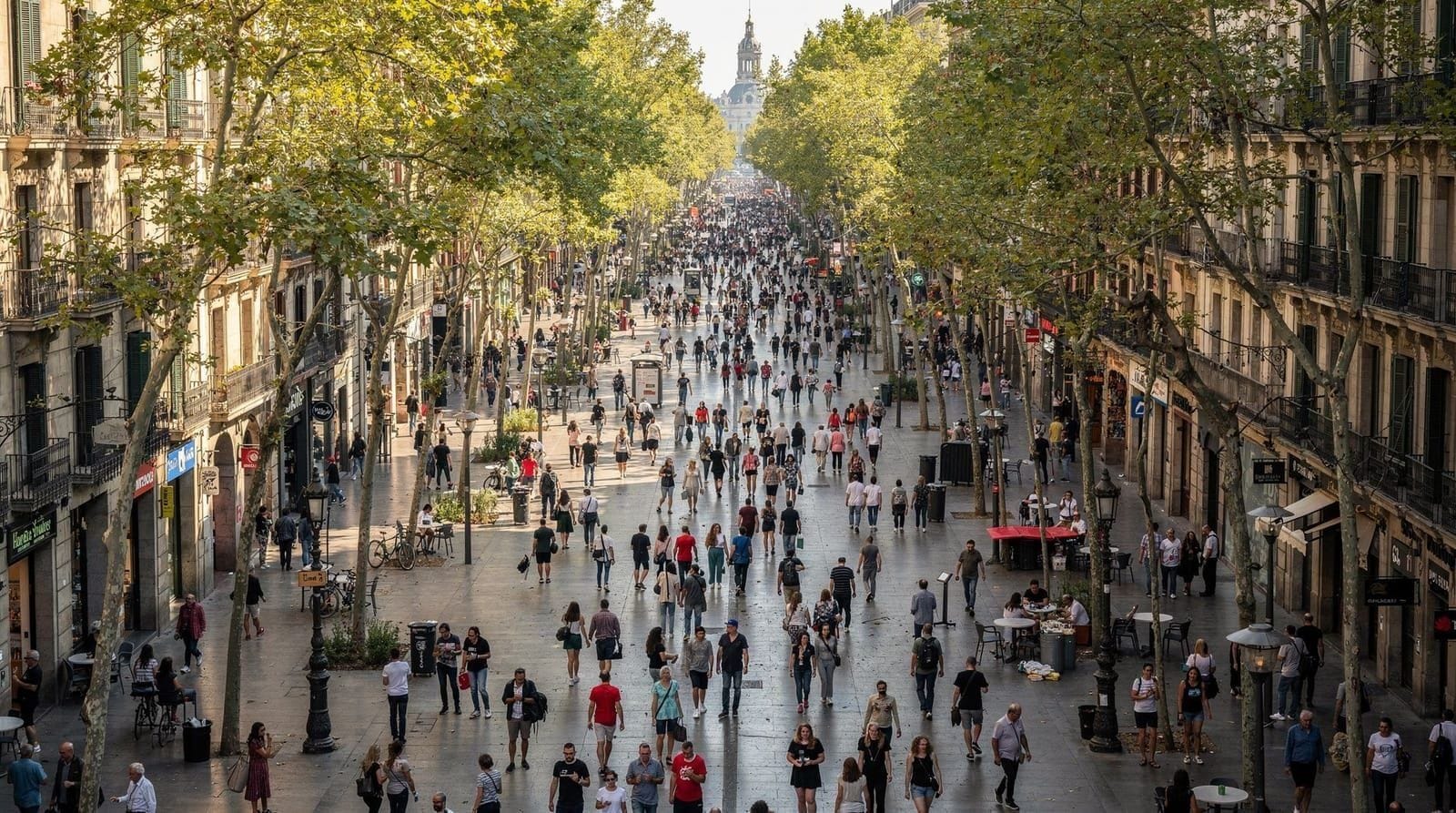
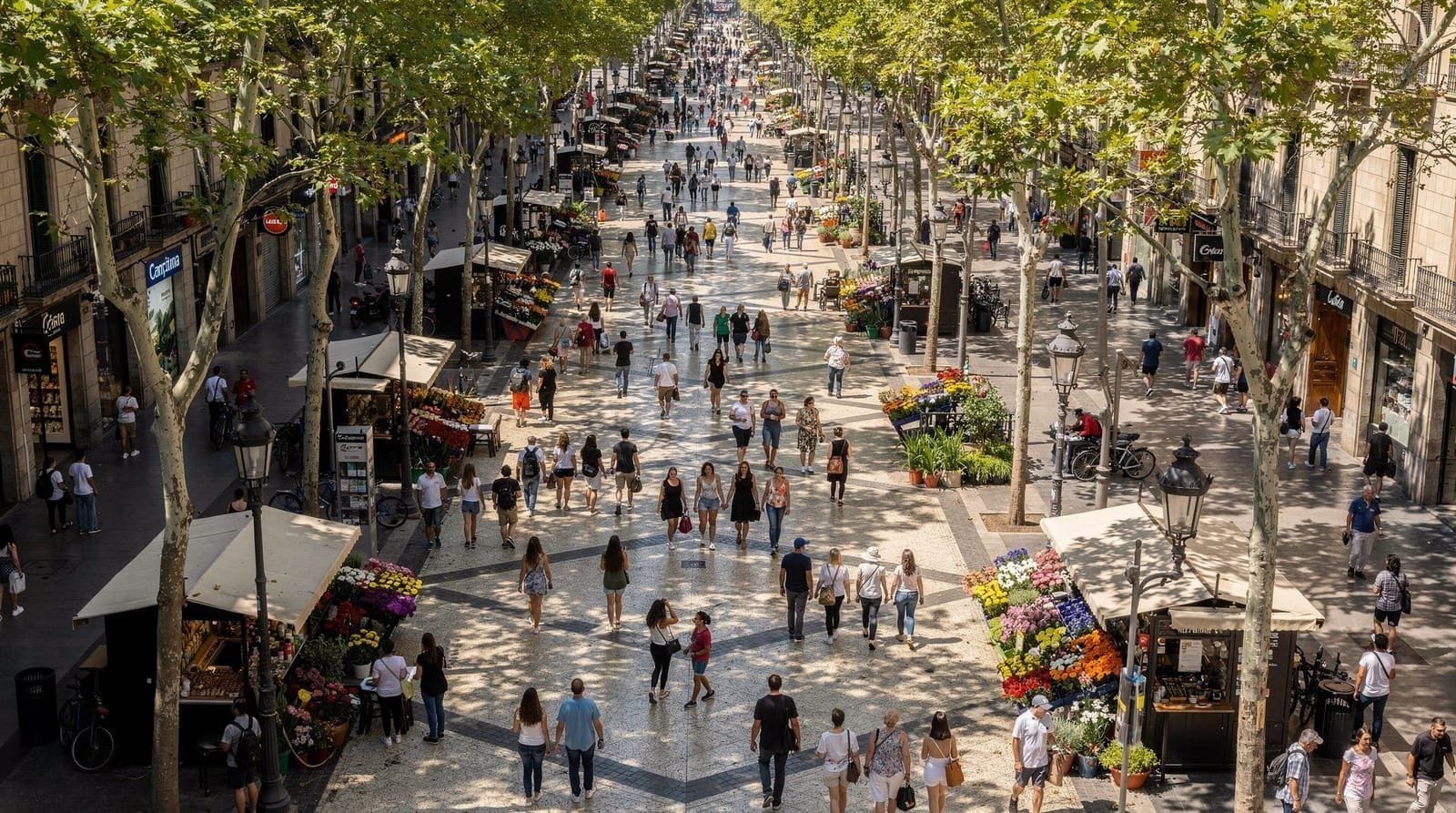
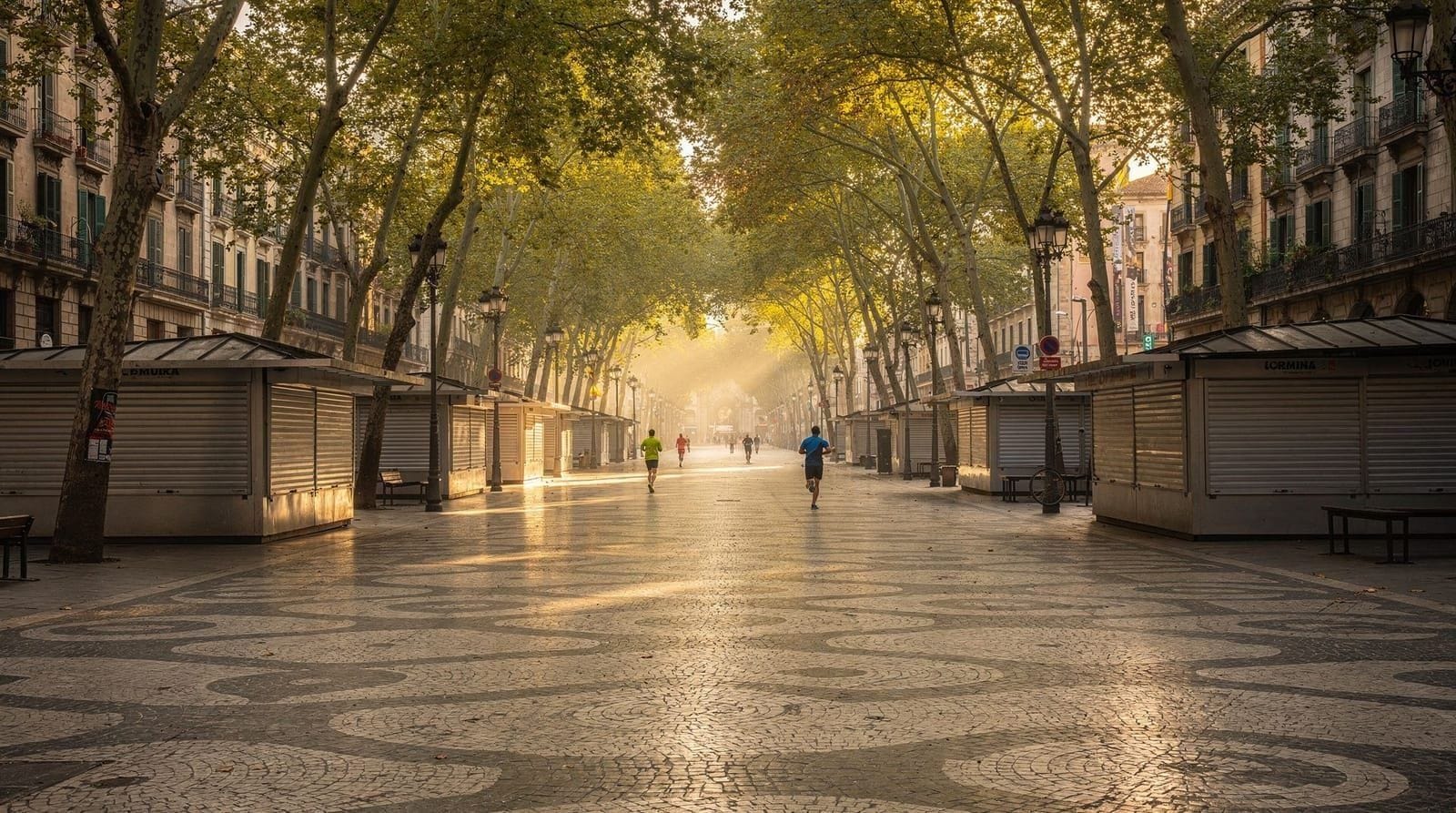
La Rambla is the highest-risk street. The entire 1.2 km boulevard from Plaça Catalunya to the port has an active pickpocket presence, concentrated particularly at the flower stalls (where transactions create distraction), the human statue areas (where stopping to look creates a crowd), and the La Boqueria market entrance. This does not mean you should skip La Rambla — it is worth walking once for the Miró mosaic in the pavement, the Liceu opera house facade, and the general character. But do not stop for anything, do not take your phone out, and do not carry a bag on your back.
The metro is the second highest-risk environment, particularly line L3 (the green line, which connects the airport and runs through the tourist centre). The stations Liceu, Drassanes, Barceloneta, and Paral·lel have active theft presence. The most common technique is working in pairs at the turnstiles, where bags are accessible during the movement through the gate.
Barceloneta beach in summer: valuables left with clothing on the beach while swimming are regularly taken. This is not complex — someone walks past and takes unattended items. Leave valuables in a hotel safe and take to the beach only what you are prepared to lose.
La Boqueria market — the narrow approaches and the deliberate jostling of the crowded stalls inside are a known theft environment. The market is worth visiting briefly; keep your bag in front, zipped.
The Gothic Quarter narrow street network — the tight passages make it easy for people to work in very close proximity.
Scam formats active in 2026
Friendship bracelet — the most commonly reported scam on La Rambla. Someone approaches (usually near the Liceu end), says something complimentary or asks where you are from, and begins making or tying a woven bracelet around your wrist before you register what is happening. Once it is on, they demand €5–20 with escalating social pressure. The technique is designed to create a sense of obligation before you have consented to anything. Firm, immediate refusal from the first contact — before any bracelet is started — is the only effective response. They will not become physically aggressive; they will move to the next person.
Shell game — illegal street gambling with three cups and a ball or three cards, operated near tourist entry points (Plaça Catalunya, outside La Boqueria, near Barceloneta). The game is mathematically unwinnable — the dealer uses sleight of hand. The people around the table appearing to win are accomplices. Participants who guide your betting are extracting your attention so a third person can reach your pocket. Never stop to watch.
Fake free tours — walking tours that advertise as free or “pay what you want” but operate with aggressive tip expectations and social pressure at the end. Some of these guides are genuinely knowledgeable and the tip model is legitimate. The scam version involves guides who provide poor information and then loudly shame people who tip under €20. The tell is the manner in the group at the end. Book through a verified platform where the price is fixed and transparent upfront, or use a licensed guide with an official badge.
QR code fraud — an increasing problem city-wide. Fake QR code stickers are placed over real QR codes on menus, parking meters, tourist information signs, and even some attraction entry points. Scanning them redirects to phishing sites or fake payment pages. Always verify the domain name after scanning before entering any payment information. Ask for a physical menu where offered — most legitimate restaurants have them.
Ticket reseller overcharging — not a crime but a consistent financial trap. Sagrada Família tickets through third-party reseller sites typically cost €5–15 more per ticket than the official price. For a family of four, this adds up to €20–60 of wasted expenditure. Buy Sagrada Família tickets only at sagradafamilia.org. Park Güell at parkguell.barcelona. Casa Batlló at casabatllo.cat. Full detail at the tourist traps guide.
Airport taxi touts — at El Prat Airport, unofficial drivers approach in the arrivals area or just outside the terminal door offering “taxi” service. These are unlicensed, unmetered, and routinely charge €60–80+ for journeys that should cost the official flat rate of approximately €39. The official taxi rank is always a clearly marked dedicated queue outside the arrivals exit. Any approach before the queue is unofficial. A pre-booked private transfer sidesteps the whole problem, since the driver waits for you by name inside the terminal rather than outside it.
Travel insurance and reporting a claim
Standard travel insurance covers theft, but only if you follow the correct reporting sequence. File the denuncia with the Guàrdia Urbana or Mossos d’Esquadra first — insurers require the official report number as evidence, not just a photo of the empty pocket or a description of events. Keep the reference number and a copy (paper or photographed) of the report, since some insurers request the physical document weeks later during claim processing. Photograph the affected item’s original purchase receipt or a bank statement showing the purchase if you have it accessible in email or cloud storage, as replacement-value claims move faster with proof of original cost. Most travel insurance excludes unattended valuables — the beach-towel-theft scenario common in Barceloneta specifically falls into this exclusion in many policies, so read the wording on “reasonable care” before assuming a beach theft is covered.
Transport safety: airport and night options
Airport buses and trains: The Aerobus is the safest and simplest airport connection — official, clearly marked, stops on Passeig de Gràcia and Plaça Catalunya. The Rodalies R2 Nord train from Terminal 2 is equally safe and cheaper (€4.90). The metro L9 from Terminal 1 is safe but slower. On all of these, keep bags in front and be alert at the El Prat station platforms and on busy trains.
Night buses (Nitbus): Barcelona’s network of night buses (N lines) runs from Plaça Catalunya through the night on most routes. They are safe and used by a mix of locals and visitors. The risk increases on lines serving the port and lower Raval in the early hours of the morning when the passenger mix shifts. Keep bags in front, stay near the driver or in populated carriage sections.
Arriving late at night: If arriving at El Prat after midnight, the Aerobus runs until 03:30 from Terminal 1 and 04:00 from Terminal 2. Official taxis are available at all hours. Avoid unlicensed driver approaches regardless of the hour.
Health safety: water, food, and sun
Water: Barcelona tap water is safe to drink and is regularly tested. It has a noticeable mineral taste from the desalination and treatment process, which some people find unpleasant — a Brita filter jug or a water bottle with a built-in filter resolves this. Bottled water is widely available but unnecessary from a safety perspective. Restaurant tap water (agua del grifo) is always safe to drink and most restaurants serve it on request.
Food: Food poisoning risks in Barcelona are low by European standards. The main risk environments are from peak-summer outdoor food stalls that may not maintain cold chain properly for shellfish and mayonnaise-based preparations. Beachfront restaurants with high turnover in July–August are more prone to occasional hygiene lapses than inland restaurants. The menú del día at a neighbourhood restaurant is consistently safe.
Sun and heat: The UV index in Barcelona from April through September regularly reaches 7–10. Heat exhaustion is a genuine risk for visitors doing full days of walking in July and August — particularly for older visitors, children, and those with cardiovascular conditions. Midday breaks (13:00–15:30) are culturally embedded for good reason. Hydration, SPF protection, and scheduling outdoor activities for the morning and evening are the practical mitigations.
Digital security: public Wi-Fi and card risks
Public Wi-Fi: Free Wi-Fi is available in many Barcelona cafés, hotels, and some public spaces. The security concern is man-in-the-middle attacks on unencrypted networks — particularly relevant if you are checking bank accounts, email with sensitive information, or entering payment details. Use a VPN on public networks, or use your mobile data connection for anything involving passwords or payment.
Card skimming: ATM card skimmers are documented at street-facing cash machines in tourist areas, particularly on La Rambla and near major tourist sites. The safest approach is to use ATMs inside bank branches (CaixaBank, BBVA, BBVA, Santander, Sabadell) rather than standalone machines on the street. Check the card reader for anything that appears loose or misaligned before inserting your card.
Contactless payment: Contactless card and phone payment is widely accepted in Barcelona and is safer than cash transactions in high-risk areas, as it does not require you to handle notes or coins visibly in a crowd.
Solo traveller considerations
Solo travellers are not materially at higher risk of violent crime in Barcelona than group travellers, but they are more exposed to petty theft techniques that rely on sole-attention distraction (one person approach, no companion maintaining awareness). The practical response:
Be more deliberate about bag position in high-risk areas. The distraction techniques used in Barcelona require your full attention to redirect — being in a group divides this. Solo travellers should keep bags actively in their field of vision at all times in the La Rambla and metro environments.
Solo female travellers in Barcelona face low risk of harassment by general European standards — the street harassment level is lower than Madrid or Naples, for example. The areas worth more caution after midnight are the lower Raval and the port zone south of La Rambla, where the late-night bar scene concentrates. El Born, Gràcia, and the Eixample are comfortable for solo travellers at any reasonable hour.
Women’s safety specifically
Barcelona is generally comfortable for women travelling alone. The specific considerations:
Night transport: Taxis (official, metered) are the safest option for late-night returns from bars and clubs. The metro runs 24/7 on weekends and until midnight on weekdays — L3 and L5 through the central tourist zone are well-lit and monitored. Night buses are safe but less monitored.
El Raval lower section after midnight: The streets south of Carrer de Sant Pau and around the port end of La Rambla have a different character after 01:00. This applies to all travellers but the general recommendation to use main streets and avoid unlit passages is more relevant here than in most of the city.
Beach: Barceloneta beach during the day is very safe. At night in summer, the beach attracts large outdoor gatherings that are generally convivial but involve alcohol; the same common-sense precautions that apply to any beach at night apply here.
Useful emergency contacts: The Guàrdia Urbana emergency line is 092. The general European emergency number 112 connects to all services. Many police stations in the tourist centre have English-speaking officers.
Phone security
Snatching of phones from hands — while you are using them on the street or at a pavement café — increased significantly in 2024–2025 in Barcelona. A person on a scooter or bicycle passes close and grabs the phone from your hand; the incident lasts under a second. Particular caution on La Rambla and the Barceloneta promenade. Use your phone in doorways or standing with your back to a wall when possible, or simply put it away while walking.
Some visitors use a wrist loop/leash on their phone. This is reasonable on La Rambla and the beach; slightly over-cautious in El Born or Gràcia.
What to do if you are a victim
Pickpocketing: Report to the Guàrdia Urbana within 24 hours. File a denuncia (police report) either at the nearest station or online at policia.es. The report is required for travel insurance claims. Do not expect the items to be recovered — these thefts almost never lead to recovery. Report your card stolen to your bank immediately by phone.
Scams: The bracelet and shell game are irritants rather than significant losses. If you feel threatened or if an amount was taken under duress, report to the Guàrdia Urbana. For significant QR code or online fraud, report to the Mossos d’Esquadra (Catalan regional police) who handle cybercrime.
Medical: The Hospital de la Santa Creu i Sant Pau and the Hospital Clínic are the main central hospitals. For non-emergency care, private clinics near the Eixample are fast and reliable. EU citizens with a European Health Insurance Card are entitled to emergency care on the same basis as Spanish residents.
Passports and valuables: what to actually carry
Leave your passport in the hotel safe and carry a photocopy or a photo of it on your phone (plus one emailed to yourself as backup) for identification purposes — Spanish law technically requires carrying ID, but in practice a photocopy satisfies any routine check, and the original is far more valuable to a thief than to you on a day out. The same logic applies to jewellery: leave anything with real sentimental or monetary value at the hotel, since it adds risk without adding to the day’s experience, and its loss is the one form of theft that insurance cannot meaningfully compensate for.
For a family with multiple passports and devices, splitting valuables between two bags rather than one — so a single theft does not remove everyone’s documents — is a small habit that meaningfully reduces the worst-case outcome of an otherwise low-probability event.
What mitigation actually works
Use a bag that closes at the front of your body, not on your back. Keep your phone in a front pocket or inside a closed bag rather than a back pocket. Carry only the cash you need for the day — leave the rest in the hotel safe. Use hotel Wi-Fi to download any tickets to your phone gallery before going out, so you are not opening apps that require internet on the street. Be more alert in crowds (market entrances, metro turnstiles, around human statues) than when walking open streets.
None of this requires paranoia. It requires the same modest awareness you would apply in any major tourist city.
Barcelona is a city that rewards confidence and awareness in roughly equal measure. The tourist infrastructure is excellent, the police presence in the centre is visible, and the vast majority of visits are incident-free. Knowing where theft concentrates and which scams are active in 2026 is adequate preparation for almost any contingency.
Where safety fits into your itinerary
These precautions are not a reason to avoid La Rambla, the metro, or Barceloneta — all three remain worth your time. The La Rambla honest guide explains how to walk it once for what it is actually worth, and the pickpocket guide goes deeper on bag and phone technique than this overview does. If you are travelling with children, the family-specific risks (mostly crowd separation, not theft) are covered in the Barcelona with kids guide. For ticket-buying safety specifically — the single most common way visitors lose money in Barcelona, ahead of pickpocketing — see the tourist traps guide.
Frequently asked questions about Barcelona safety and scams
Which areas of Barcelona have the highest pickpocket risk?
La Rambla (the entire 1.2 km boulevard), Barceloneta beach, the Gothic Quarter's narrow street network, the L3 metro line particularly at Liceu and Drassanes stations, and La Boqueria market entrance. These are not dangerous in any physical sense — they are high-theft-opportunity environments because of crowd density.What scams are active in Barcelona in 2026?
The most active scams: friendship bracelet (someone ties a bracelet on your wrist then demands payment), shell game (illegal street gambling outside the train station and parks), fake free tour (tips demanded aggressively at the end), QR code stickers (fake QR placed over real ones on menus and parking meters), ticket reseller overcharging (third-party sites add €5–15 to official prices), and the taxi-tout (unofficial drivers approaching at the airport).What should I do if something is stolen in Barcelona?
Report to the Guàrdia Urbana (city police) within 24 hours for insurance purposes. The police report (denuncia) can be filed online at policia.es or in person at the nearest police station. Do not expect recovery of the item, but the report is required for travel insurance claims. For passport theft, your country's consulate in Barcelona handles emergency replacement.Are Barcelona taxis safe?
Yes — official taxis (white with yellow and black stripe) are safe, metered, and reliable. The risks are unofficial touts: people approaching you in the arrivals hall or outside the airport terminal offering 'taxi service.' These are unlicensed and overcharge significantly. Use the official taxi rank (always a dedicated queue outside arrivals), or book via iTaxi or FREE NOW app. Uber now operates legally in Barcelona as of 2026.What is the bracelet scam on La Rambla?
A person approaches, sometimes complimenting you, and begins tying a woven bracelet around your wrist without your explicit consent. Once the bracelet is on, they demand payment — typically €5–20. The social pressure can be aggressive. The correct response is to firmly decline from the first contact: 'No, thank you' with deliberate movement away before they make contact. They typically approach from the flower stall area near Liceu metro.Is the shell game illegal?
Yes. The shell game (three cups, a ball moved between them, bet on where it is) is illegal street gambling. It operates near tourist areas and is always rigged — the dealer uses sleight of hand and accomplices in the crowd who appear to win. Participants near the tables directing your bets are in on the scheme. Never play. Report active tables to a nearby Guàrdia Urbana officer.Is Barcelona safe at night?
The tourist areas are active and reasonably well-populated until late. The Gothic Quarter and El Born are busy until midnight or beyond. The area around the southern end of La Rambla (near the port) and parts of El Raval have a higher night-time theft rate than the rest of the centre. Stick to the lit main streets in El Raval after 23:00. Barceloneta beach at night is generally fine but keep valuables secured.Should I use ATMs on La Rambla?
No. Use ATMs inside bank branches (CaixaBank, BBVA, Sabadell all have branches throughout the centre). Street-facing ATMs and machine clusters in tourist areas have higher rates of card-skimming devices and card-trapping fraud. If a stranger approaches offering 'help' at an ATM, cancel the transaction, secure your card, and move away.Does travel insurance cover theft in Barcelona?
Usually yes, but only if you file a police report (denuncia) with the Guardia Urbana or Mossos d'Esquadra first and keep the reference number — insurers require it as evidence. Many policies exclude unattended valuables, which matters specifically for the common Barceloneta beach-towel theft scenario, so check that clause before assuming a claim will be accepted.Is it safer to pre-book an airport transfer than take a taxi at El Prat?
Either is safe if you use the official channel: the marked taxi rank outside arrivals, or a pre-booked private transfer where the driver waits for you by name inside the terminal. Both avoid the unofficial touts who approach before the rank and charge €60-80+ versus the roughly €39 official flat rate.