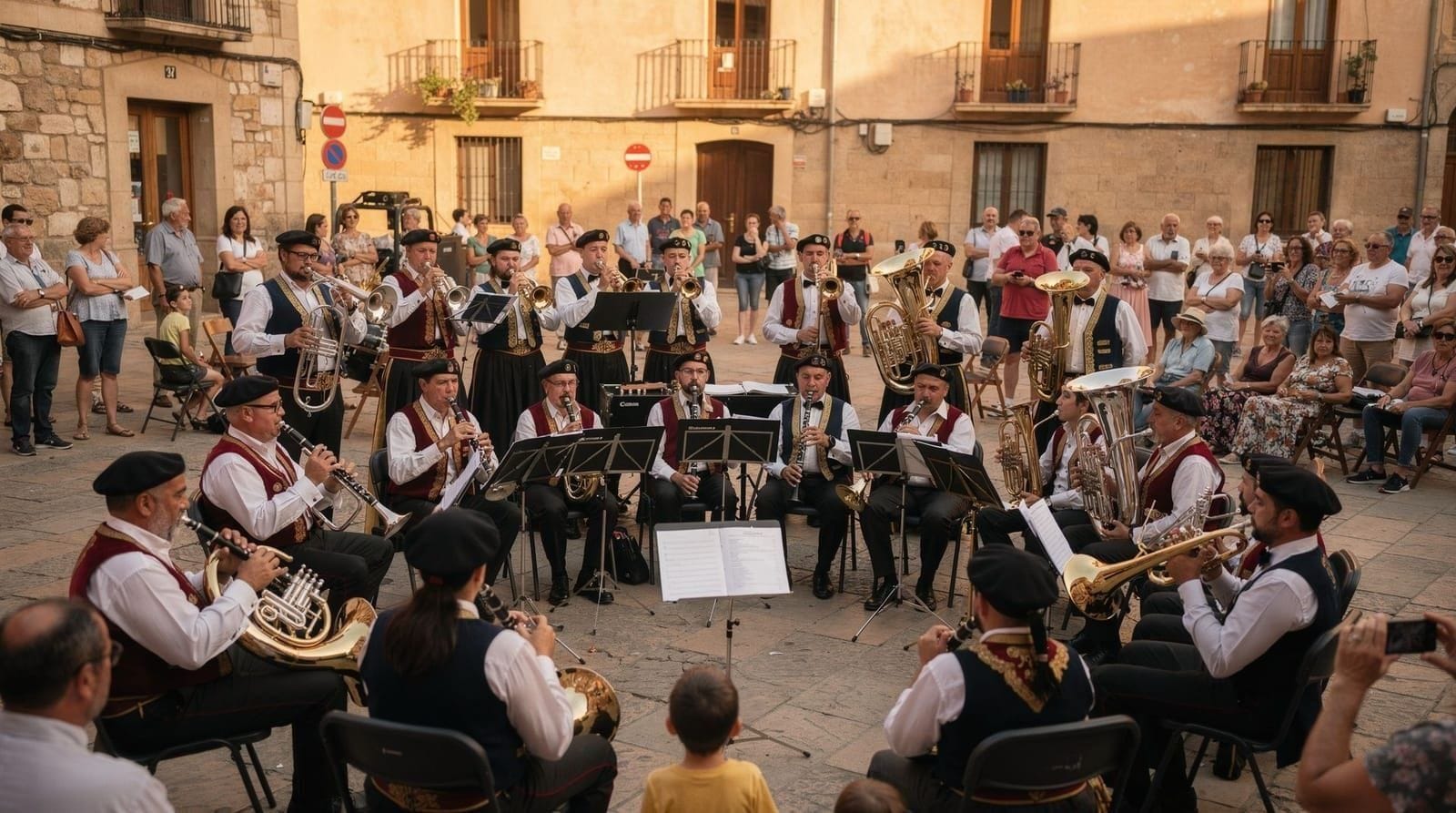
Best flamenco venues in Barcelona compared
Barcelona: flamenco show at Tablao Flamenco Cordobes
Duration: 1 hour
- Free cancellation
Which is the best flamenco venue in Barcelona for quality?
For the best balance of quality and value: Los Tarantos (Plaça Reial, from €18, 40 minutes). For the most professional full tablao experience: Tablao Flamenco Cordobes (La Rambla, from €45). For theatrical polish: Teatro Flamenco Barcelona (from €28). For a distinctive location: Tablao de Carmen in Poble Espanyol.
Barcelona has a reliable range of professional flamenco performance venues — the best of them staffed by artists genuinely trained in the Andalusian tradition. This guide compares the main venues honestly on quality, price, atmosphere, and who they suit best.
The essential context: flamenco is an Andalusian art form with no Catalan roots. This does not affect the quality of what you will see at the venues below, but it is worth knowing before you book. Our main flamenco guide covers this in detail.
| Best value | Los Tarantos — ~€18, 40 min, Plaça Reial |
| Best production | Teatro Flamenco Barcelona — ~€28, staged |
| Most established | Tablao Cordobes — ~€45, La Rambla since 1970 |
| Best full evening | Tablao de Carmen — dinner + show, Poble Espanyol |
| Booking | Weekends fill fast; book a few days ahead |
Tablao Flamenco Cordobes
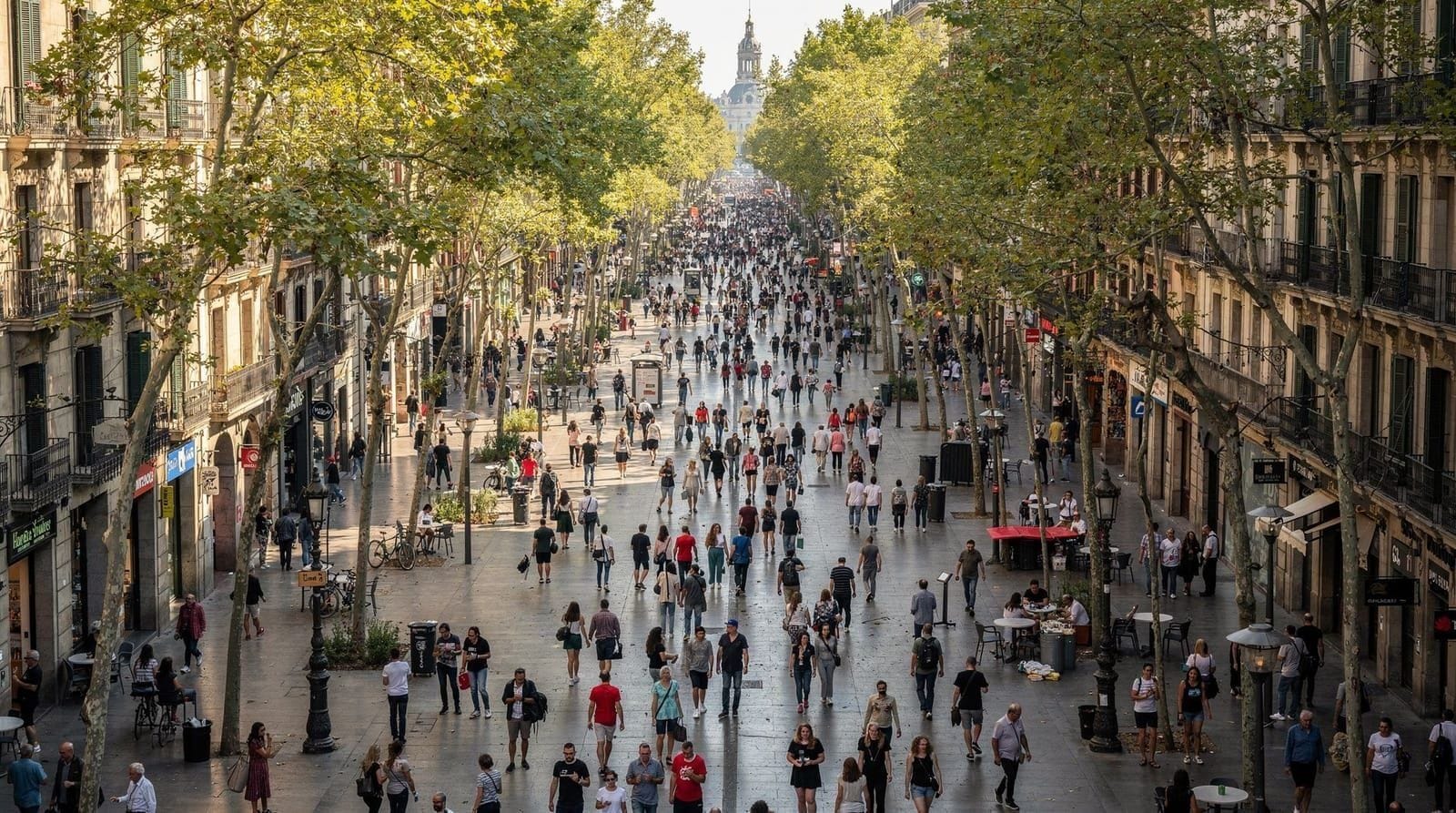
Location: La Rambla, 35, Barri Gòtic
Format: Traditional tablao, dinner and show or show-only
Price: From €45 (show only); dinner + show from approximately €75
Show duration: 60 minutes
Capacity: Approximately 200 people
The Tablao Cordobes has been on La Rambla since 1970 — one of the oldest continuously operating flamenco venues in Barcelona. The artistic direction prioritises bringing performers from Córdoba and the surrounding region, which gives the shows a specific Andalusian authenticity.
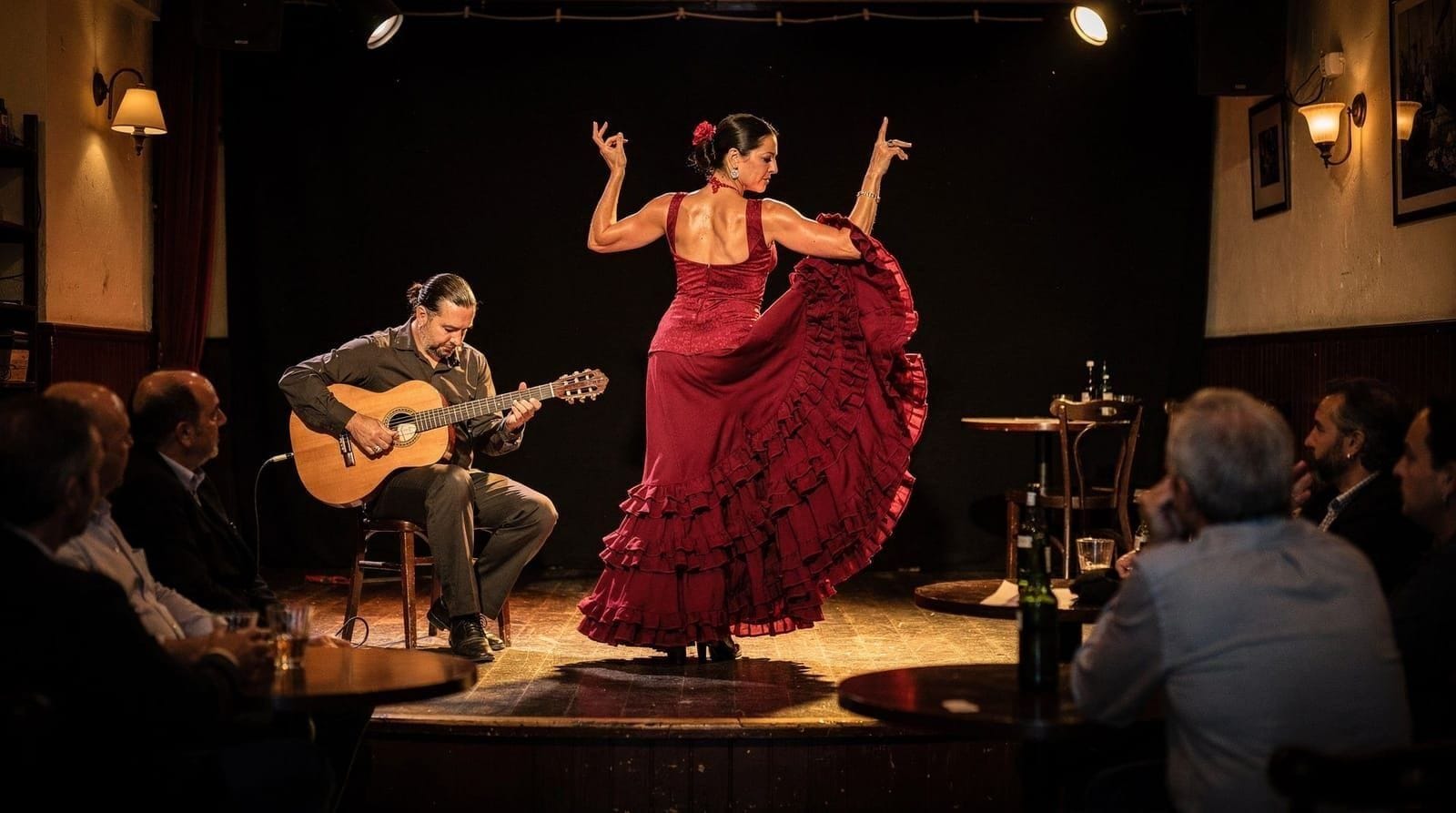
What you get: Professional guitarist, singer (cantaor/cantaora) and two to four dancers in rotation. The programme typically covers several styles — alegrías, soleá, bulerías — in an arc from restrained to fiery. Costume quality is high. Lighting is intimate tablao style.
Honest assessment: The La Rambla location means 100% tourist audience and prices that reflect the real estate. The show justifies the entry price more often than not, but you are paying for the location and the established reputation alongside the performance. Book well ahead for Friday and Saturday evenings.
Best for: Visitors who want the most established name in Barcelona flamenco and are comfortable paying the premium.
Los Tarantos (Plaça Reial)
Location: Plaça Reial 17, Barri Gòtic
Format: Small theatre, multiple shows per evening
Price: Approximately €18
Show duration: 40 minutes
Capacity: Approximately 80 people (standing and seated mix)
Los Tarantos has operated from Plaça Reial since 1963 — older than the Cordobes and with a different character. The format is more compact: 40 minutes, one or two performers per session rather than a full company, and multiple shows per evening at staggered times.
The intimate scale and the low entry price make Los Tarantos the best starting point for visitors who want a proper professional experience without committing to a full tablao production. Quality is good on the majority of evenings; some sessions are stronger than others (the performer rotation changes).
Honest assessment: The best value professional flamenco show in Barcelona. The 40-minute format is actually well-suited to travellers who want an introduction rather than a comprehensive evening of flamenco. The setting in Plaça Reial is the finest of all the Barcelona venues — an arcaded Neoclassical square that feels appropriately theatrical.
Best for: Value-conscious visitors, first-timers, those who prefer a shorter show format, anyone who wants to book a show without committing €45–75.
Teatro Flamenco Barcelona
Location: Carrer de les Ramelleres, 1, El Raval
Format: Purpose-built theatre, staged productions
Price: From approximately €28
Show duration: 60 minutes
Capacity: Approximately 250 (tiered seating)
Teatro Flamenco Barcelona is the most theatrical of the main venues — a proper stage with professional sound, lighting design and choreographed productions rather than the improvised-within-structure format of traditional tablaos. Shows are conceived as complete artistic works, with costume design and staging considered alongside the dance and music.
The performers are professional and the production values are high. The trade-off for the polish is some loss of the raw immediacy that makes flamenco at its best so powerful. A well-staged Teatro Flamenco show is beautiful; an excellent tablao at its peak is more viscerally affecting.
Honest assessment: The best option for those who respond to theatrical production and clear structure. The lower price point (from €28) relative to the quality makes it good value. Less atmospheric than Los Tarantos’ intimate setting, but more consistently polished.
Best for: Visitors who prefer theatrical production values, those unfamiliar with flamenco who want a clearly structured show, family groups.
Tablao de Carmen (Poble Espanyol, Montjuïc)
Location: Avinguda de Francesc Ferrer i Guàrdia, 13 (inside Poble Espanyol), Montjuïc
Format: Traditional tablao with dinner service
Price: Show + dinner approximately €65–70; show only also available
Show duration: 60 minutes
Capacity: 250 (tablao setting)
The Tablao de Carmen occupies a prime location within the Poble Espanyol — the outdoor museum of Spanish vernacular architecture built for the 1929 International Exposition on Montjuïc. The Poble Espanyol itself becomes an evening destination in its own right: restaurants, bars and craft shops open late, and the entire complex has a livelier, more local feel after 20:00.
The tablao itself is professional and well-regarded. The dinner is genuinely good — a cut above the functional dinner service at some other venues — which makes the combined package worthwhile if you want an evening out rather than just a show.
Getting there: Bus 150 from Plaça Espanya (10 minutes); taxi (~€8 from centre); cable car from Paral·lel metro station. The extra logistics are the main deterrent — the Montjuïc location requires planning.
Honest assessment: The best dinner-and-show option in Barcelona, in the most distinctive setting. The Poble Espanyol is worth visiting for its own sake; combining it with an evening flamenco show makes for an extended evening out. The transport logistics add a small amount of friction.
Best for: Visitors who want dinner as part of the experience; couples or groups looking for a full evening event; those who want to combine the show with Poble Espanyol.
Tapas and flamenco experiences
Several operators combine tapas tasting with a flamenco show — either a tapas tour followed by a show entry, or an evening in a bar setting with performers and small plates. These hybrid experiences vary widely in quality; the flamenco component is typically shorter and less polished than a dedicated tablao. They suit visitors who want a social evening with entertainment rather than a focused performance experience.
Price: Approximately €60–90 for combined tapas + show formats.
Comparative summary
| Venue | Price (entry only) | Duration | Best for |
|---|---|---|---|
| Los Tarantos | ~€18 | 40 min | Value, Plaça Reial setting |
| Teatro Flamenco | ~€28 | 60 min | Theatre production quality |
| Tablao Cordobes | ~€45 | 60 min | Established prestige, La Rambla |
| Tablao de Carmen | ~€40+ | 60 min | Dinner evening, Poble Espanyol |
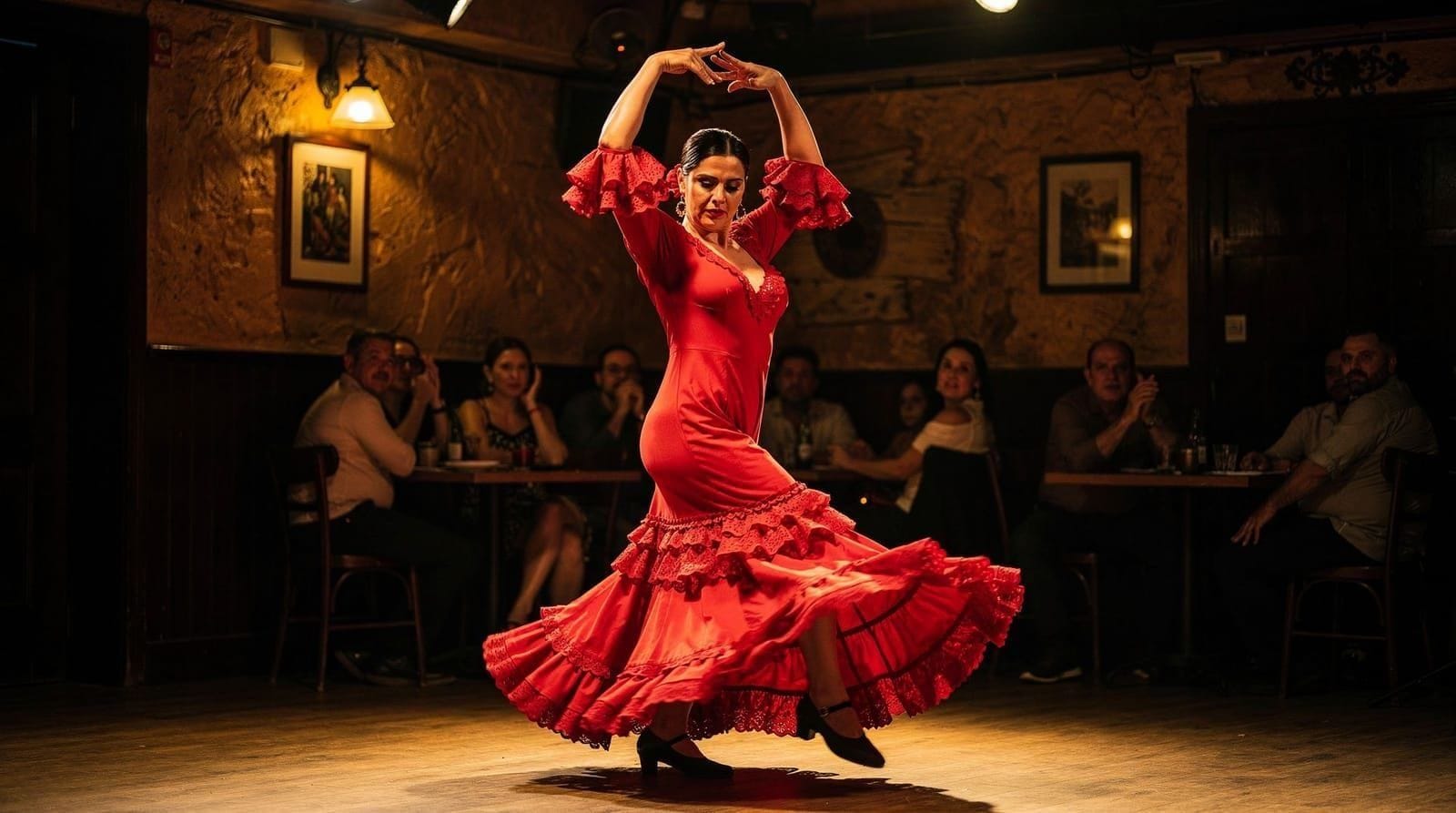
| Gran Gala Flamenco | ~€50 | 90 min | Long choreographic show |
The art of flamenco: brief guide for first-time viewers
Flamenco at its best operates on registers that are not immediately legible if you have never seen a live performance. Knowing what to watch for before you go into the tablao transforms what can seem like a spectacle into something considerably more complex.
The footwork: zapateado
The most immediately striking element for first-time viewers is the footwork — the percussive beating of heel, ball and toe on the wooden stage platform (tablado) that creates the rhythmic pattern of the dance. This is called zapateado, from zapato (shoe), and the flamenco shoe is specifically designed for it: a reinforced toe cap, a hard heel, and a set of nails across both surfaces to amplify the percussion.
The complexity of zapateado is not immediately apparent until you begin to hear the individual beats separately — what sounds at first like a rapid continuous sound is actually a sequence of differentiated strikes, each with its own timber and volume. Skilled dancers can produce 10–12 distinct beats per second, creating polyrhythmic patterns against the guitar and palm clapping.
Watch the dancer’s feet, not the dancer’s face, for the first minute of any piece. The footwork is where the technical language is most legible.
The hand movements: floreos
The arms and hands in flamenco are not decorative. The circular rotations of the wrists, the slow extension and contraction of the fingers, the sculpted positions of the arms overhead or at the sides are called floreos (literally “flowerings”) and constitute a distinct technical vocabulary parallel to the footwork.
The contrast between the violence of the zapateado and the languor of the floreos is one of the defining emotional dynamics of flamenco — the feet express urgency and percussive aggression while the arms and hands seem to operate in a completely different time. This contrast is intentional and difficult: it requires the dancer to maintain two completely different rhythmic and dynamic registers simultaneously.
The call-and-response between singer and dancer
In a traditional tablao performance, the relationship between the cantaor (singer) and the dancer is not the singer providing a backing track. They are in active dialogue: the singer responds to what the dancer does, accelerates when the dancer accelerates, drops to near-silence when the dancer becomes still, and can intensify a phrase to support a particular moment in the dance.
Watch this interaction rather than focusing entirely on the dancer. A good cantaor tracks the dancer’s body and adjusts the cante in real time. When a dancer pauses before a particularly intense sequence, the silence from the singer is part of the performance — a held breath before the release.
The jaleos: the role of the audience
The calls from the audience and the other performers during a flamenco performance — “olé!”, “agua!”, “así se hace!”, “eso es!” — are called jaleos and are not spontaneous reactions from enthusiastic tourists. Jaleos are a technical and structural element of the performance: they encourage the performer at specific moments, mark the successful execution of a difficult phrase, and participate in the call-and-response energy of the piece.
You will hear jaleos from the guitar player, the singer, and the palmeros (hand-clappers) rather than primarily from the audience. These are professional musicians affirming what they are hearing. The audience’s contribution — when it comes — should follow the same logic: a well-timed “olé” after a technically demanding sequence, not a continuous murmur of approval that competes with the music.
Clapping along is only appropriate in specific moments — certain bulerías and alegrías styles invite audience participation; other palos do not. Wait to see whether the performers invite participation before joining in.
Flamenco vocabulary
A brief glossary for visitors who want to understand what they are seeing without a music degree:
Palo (plural palos): A style or form within flamenco. There are more than 50 recognised palos, each with a specific rhythm, emotional register, and technical demands. Common palos in tablao performances include soleá (grave, slow, deeply serious), alegrías (joyful, from Cádiz), bulerías (fast, syncopated, the virtuoso form most associated with Jerez), and tangos (rhythmically insistent, not related to Argentine tango).
Cante jondo: Literally “deep song.” The most serious, emotionally intense forms of flamenco singing — soleá, siguiriyas, and related forms. Cante jondo is distinct from the lighter, more accessible forms (cante chico or “small song”) and is considered the heart of the flamenco tradition. The vocal technique is demanding and deliberately rough — trained Western classical voices are not the model; the emotional rawness is the point.
Duende: Untranslatable in a single word. Federico García Lorca gave the concept its most famous formulation in a 1933 lecture: duende is the spirit of the earth, of death and of life, that can briefly possess a performer and transform a technically correct performance into something overwhelming. Performers describe it as something that visits rather than something they summon. You will know when you encounter a performance that has it; the effect is immediate and physical. Most tablao performances do not achieve duende on any given night — it is a peak, not a baseline.
Tablao: The venue format — intimate, cabaret-style, audience close to the performers, small table seating or tiered close-in rows. Named for the tablado (wooden stage platform) on which the dancers perform.
Tablado: The raised wooden stage platform itself, which has acoustic properties specific to flamenco — the wood resonates and amplifies the zapateado in ways that a solid concrete stage does not. The tablado is the percussion instrument that the dancer plays.
Olé: The exclamation of affirmation from performers and audience. From the Arabic “Allah” — one of several flamenco terms with Moorish roots that trace the art form’s origins in Andalusia’s multicultural history.
All four major venues above offer professional flamenco performed by trained artists. The differences are atmosphere, price, duration and whether you want dinner included. For the cultural background and what flamenco means in the Barcelona context, read our flamenco shows guide and our Catalan music vs flamenco comparison.
Where to seat yourself, and how close is too close
Seating position genuinely changes the experience at a tablao. Front-row tables (usually the highest price tier at Cordobes and Tablao de Carmen) put you close enough to feel the vibration of the zapateado through the floor and see the sweat and effort on the performers’ faces — an intensity some visitors love and others find overwhelming for a 60-minute show. Mid-room seating gives a more balanced view of the full ensemble, including the guitarist and cantaor whose interplay with the dancer is easy to miss from a tight front angle. At Los Tarantos, the small scale of the room means even the back rows are close by most venues’ standards, which is part of why it works so well as a first flamenco experience.
If you are booking for a special occasion or simply want the most immersive night, pay the premium for a front table at Tablao Cordobes or Tablao de Carmen. If you are flamenco-curious rather than committed, Los Tarantos’ compact room removes the seating decision almost entirely.
Pairing a flamenco night with dinner elsewhere
Not every venue’s dinner package represents the best meal of your trip, and it is entirely normal to eat separately and attend a show-only slot. Barri Gòtic and El Born, both walking distance from Los Tarantos and Tablao Cordobes, have far stronger restaurant options than most tablao dinner menus — see our tapas tours guide for pairing ideas. For visitors going to Tablao de Carmen, the Poble Espanyol’s own restaurants outside the tablao package are a reasonable middle ground between the dinner package and eating elsewhere entirely, since travelling back into the centre afterward adds time you may not want on a show night.
For a broader sense of how a flamenco evening fits into a Barcelona itinerary, our 3-day classic itinerary slots an evening show into a typical first visit, and the tourist traps guide is worth a read before booking anything advertised as “authentic flamenco” at a price that looks too good — genuinely professional shows do not undercut the venues above by much.
Frequently asked questions about Best flamenco venues in Barcelona compared
What is a tablao flamenco?
A tablao is the traditional venue format for flamenco performance — intimate, cabaret-style, with the audience close to the performers. The word derives from the wooden platform (tablado) on which dancers perform. Tablaos developed in southern Spain in the mid-20th century as venues dedicated to flamenco performance; the format contrasts with the more theatrical, staged productions of large flamenco companies.Is flamenco from Barcelona or Spain?
Flamenco originates from Andalusia in southern Spain — primarily from the cities of Seville, Cádiz, Jerez de la Frontera and Córdoba. It has no roots in Catalonia or Barcelona. The shows available in Barcelona are performed by artists trained in Andalusian tradition, often from Andalusia itself. See our guide to Catalan music for the genuine local alternatives.Is Los Tarantos the most affordable professional show?
Yes — at approximately €18 for a 40-minute show, Los Tarantos provides the lowest entry point for a professionally performed flamenco experience in Barcelona. Quality varies by night, but the venue has decades of reputation and the performers are professional.Is the dinner-and-show package worth it at flamenco venues?
At the Tablao de Carmen (Poble Espanyol), the dinner is genuinely good and the combined package (~€65) represents fair value if you want an evening experience. At Tablao Flamenco Cordobes, the dinner package is competent but not what you would go to La Rambla for culinary excitement. Choose based on whether you want the dinner-as-event experience or prefer to eat elsewhere and attend the show only.Can children attend flamenco shows in Barcelona?
Most venues admit children of all ages. The shows are 40–90 minutes long — a manageable length for children with an interest in music and dance. The intense emotional register of deep flamenco (particularly the cante jondo singing style) can be surprising for very young children. Evening start times (20:00–22:00 for most shows) are the main practical constraint.Where should I sit at a flamenco tablao?
Front-row seating puts you close enough to feel the footwork through the floor - intense but not for everyone over a full show. Mid-room seating gives a more balanced view of the full ensemble, including the guitarist and singer. At Los Tarantos the room is small enough that even back rows are close by most venues' standards.Should I eat dinner at the tablao or book a show-only ticket?
Tablao de Carmen's dinner is genuinely good and worth the combined package. At other venues, Barri Gotic and El Born have stronger independent restaurant options within walking distance, so a show-only ticket paired with dinner elsewhere is a reasonable and common choice.
Top experiences
Bookable activities with verified prices and instant confirmation on GetYourGuide.
Barcelona: Los Tarantos flamenco show at Plaça Reial
- Free cancellation
Barcelona: Teatro Flamenco Barcelona authentic live show
- Free cancellation
Barcelona: flamenco show with dinner at Tablao de Carmen
- Free cancellation
- Dinner included
Barcelona: Gran Gala Flamenco show entry ticket
- Free cancellation
Barcelona: flamenco show with drink at La Rambla
- Free cancellation