Flamenco shows in Barcelona: what to book and what to know first
Barcelona: flamenco show at Tablao Flamenco Cordobes
Duration: 1 hour
- Free cancellation
Is flamenco from Barcelona or Catalonia?
No. Flamenco is an Andalusian art form from southern Spain — Seville, Cádiz and Jerez are its heartland. It has no roots in Catalonia or Barcelona. The shows in Barcelona are performed by talented artists (often from Andalusia or internationally), but presenting flamenco as a Barcelona cultural tradition is inaccurate. Genuine Catalan musical performance includes sardana dance and castellers (human towers).
Flamenco is one of the great art forms of the Iberian Peninsula — a fusion of Andalusian, Romani and Moorish musical traditions that developed over centuries in southern Spain. The guitar playing, the cante (singing) and the baile (dance) are inseparable from the culture of Seville, Cádiz and Jerez. It is a UNESCO-designated Intangible Cultural Heritage.
Flamenco is not Catalan. It has no historical or cultural roots in Barcelona or Catalonia. This is worth stating plainly because the city is saturated with flamenco shows marketed to tourists as if they were a local tradition — which they are not.
This does not mean the shows are bad. The best flamenco venues in Barcelona hire excellent professional artists, many from Andalusia specifically for their skill. If you want to see flamenco performed well, you can do that in Barcelona. What you should know is that you are watching an imported art form, not a local one — and that the city’s genuine musical and performance culture runs deeper and is harder to package.
| Where | La Rambla, Plaça Reial, Poble Espanyol (Montjuïc) |
| Cost | Around €18–30 entry-only; €60–90 dinner-and-show |
| Time needed | 40–90 minutes per show |
| Booking | 24–48 hours ahead; 3–5 days for dinner packages in peak season |
| Note | Flamenco is Andalusian, not Catalan — see it as an imported art form done well |
| Venue | Price | Format |
|---|---|---|
| Los Tarantos | around €18 | 40-min show, no dinner, best value |
| Teatro Flamenco Barcelona | from around €28 | 60-min theatrical production |
| Gran Gala Flamenco | around €50 | ~1.5hr choreographed production |
| Tablao Flamenco Cordobes | from around €45 (entry) | Tablao, dinner package ~€75–90 |
| Tablao de Carmen | around €65–70 (dinner) | Tablao inside Poble Espanyol |
The best flamenco venues
Tablao Flamenco Cordobes (La Rambla)
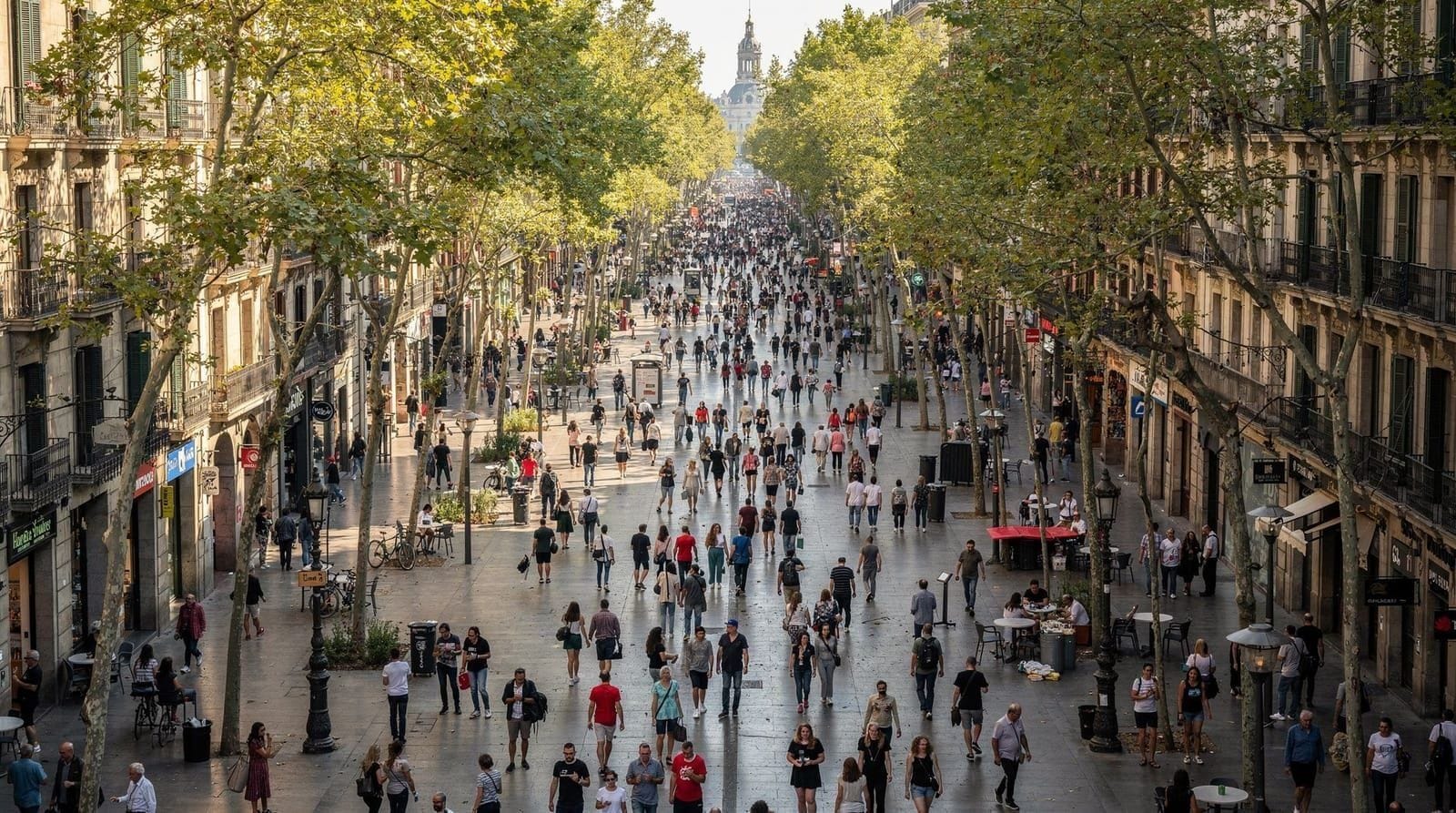
One of the oldest and best-established tablaos in Barcelona. Named for the Córdoba region, one of flamenco’s heartlands. The venue is on La Rambla itself — which makes the location convenient but also means it attracts a fully tourist audience. The show quality is professional: the artistic director recruits experienced performers from Andalusia.
Format: Intimate tablao setting, approximately 200-person capacity. Shows run 50–60 minutes. Dinner service is available (show + dinner package approximately €75–90).
Entry only: From approximately €45. Book online — the venue sells out on summer weekend evenings.
Honest note: La Rambla location means a tourist-oriented audience and higher prices. The performance quality justifies the price more consistently than the cheaper alternatives nearby, but you are paying a location premium.
Los Tarantos (Plaça Reial)
A historic flamenco performance space on Plaça Reial — the arcaded square behind La Rambla. Los Tarantos is one of the longest-running flamenco venues in the city and has historically attracted serious performers alongside tourists. Shows are 40 minutes and happen multiple times nightly.
Price: Approximately €18 — the best value for a professional flamenco show in Barcelona.
Format: Small theatre, standing and seated areas, intimate atmosphere. Not a dinner venue.
Honest note: Shows at Los Tarantos vary significantly by the evening and which performers are on rotation. The 40-minute format is good for those who want an introduction without committing to a full tablao experience. Book online for the specific session you want.
Teatro Flamenco Barcelona
A purpose-built flamenco theatre with proper staging, professional sound and lighting, and a curated programme. More theatrical in approach than the traditional tablao format — polished productions with costume and choreography conceived as a complete show rather than an informal cabaret.
Price: From approximately €28.
Duration: 60 minutes, typically one show per evening.
Best for: Those who want high production values and a more formal theatrical experience rather than the intimate tablao atmosphere.
Tablao de Carmen (Poble Espanyol)
Located inside the Poble Espanyol — the 1929 International Exposition village of replica Spanish architecture on Montjuïc — this tablao has a strong reputation for authenticity. The combination of the tablao with the Poble Espanyol entry (which becomes significantly livelier in the evening, with restaurants and bars open late) makes for a good evening out.
Format: Dinner and show packages are the main offering (approximately €65–70). Show-only entry also available.
Getting there: Montjuïc bus (bus 150 from Plaça Espanya), cable car, or taxi. The location adds transport logistics but the Poble Espanyol setting is distinctive. See the Poble Espanyol guide for the rest of what the site offers beyond the tablao.
Gran Gala Flamenco
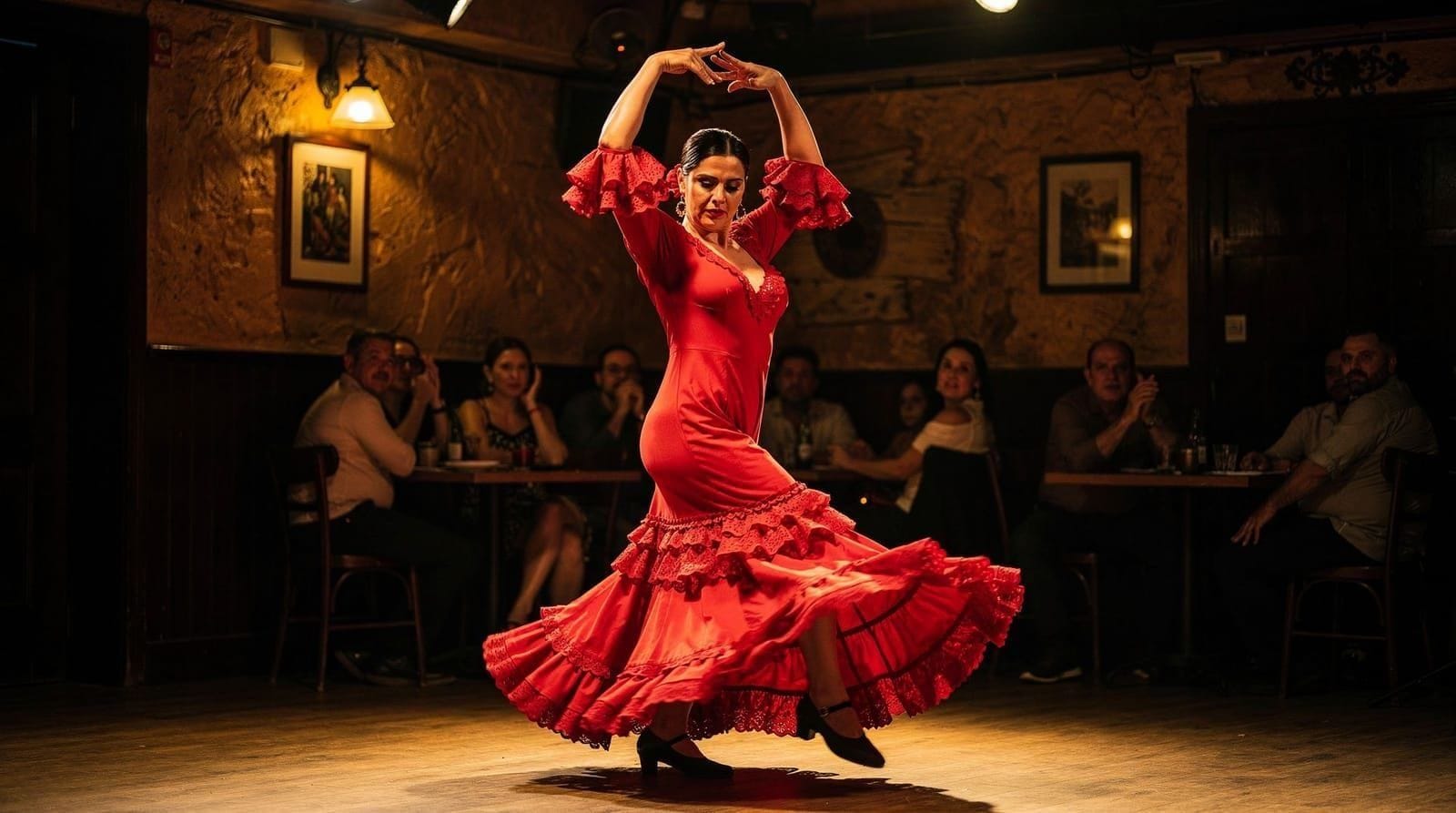
A theatrical production-format show with professional choreography, full costume design and an emphasis on dance performance over the more improvised tablao style.
Price: Approximately €50. Duration approximately 1.5 hours.
Best for: Visitors who want a polished, well-staged performance with a clear structure and strong visual presentation.
What to avoid
Street ticket sellers near La Rambla: Touts outside La Rambla who approach tourists offering flamenco tickets are selling either inflated-price access to shows you can book cheaper online, or access to poor-quality venues. Do not engage.
Unnamed “flamenco bar” shows: Venues advertising “flamenco tonight” without a clear tablao identity tend to be one-room bars with a performer doing 20 minutes between drinks orders. These are not representative of the art form.
Cheapest online listings without venue names: A €10–12 “flamenco show” in Barcelona is not professional flamenco. The art form requires years of training and experienced performers. Value benchmarks: a legitimate professional show starts at €18 (Los Tarantos).
Booking tips
- Book online at least 24–48 hours ahead for weekend shows at any of the established venues
- Summer (June–September) and long weekends fill the best shows quickly
- If you are flexible, midweek shows at the same venues are usually bookable with less advance notice
- Dinner packages require booking 3–5 days ahead at peak season — the kitchens have limited covers
The honest cultural context
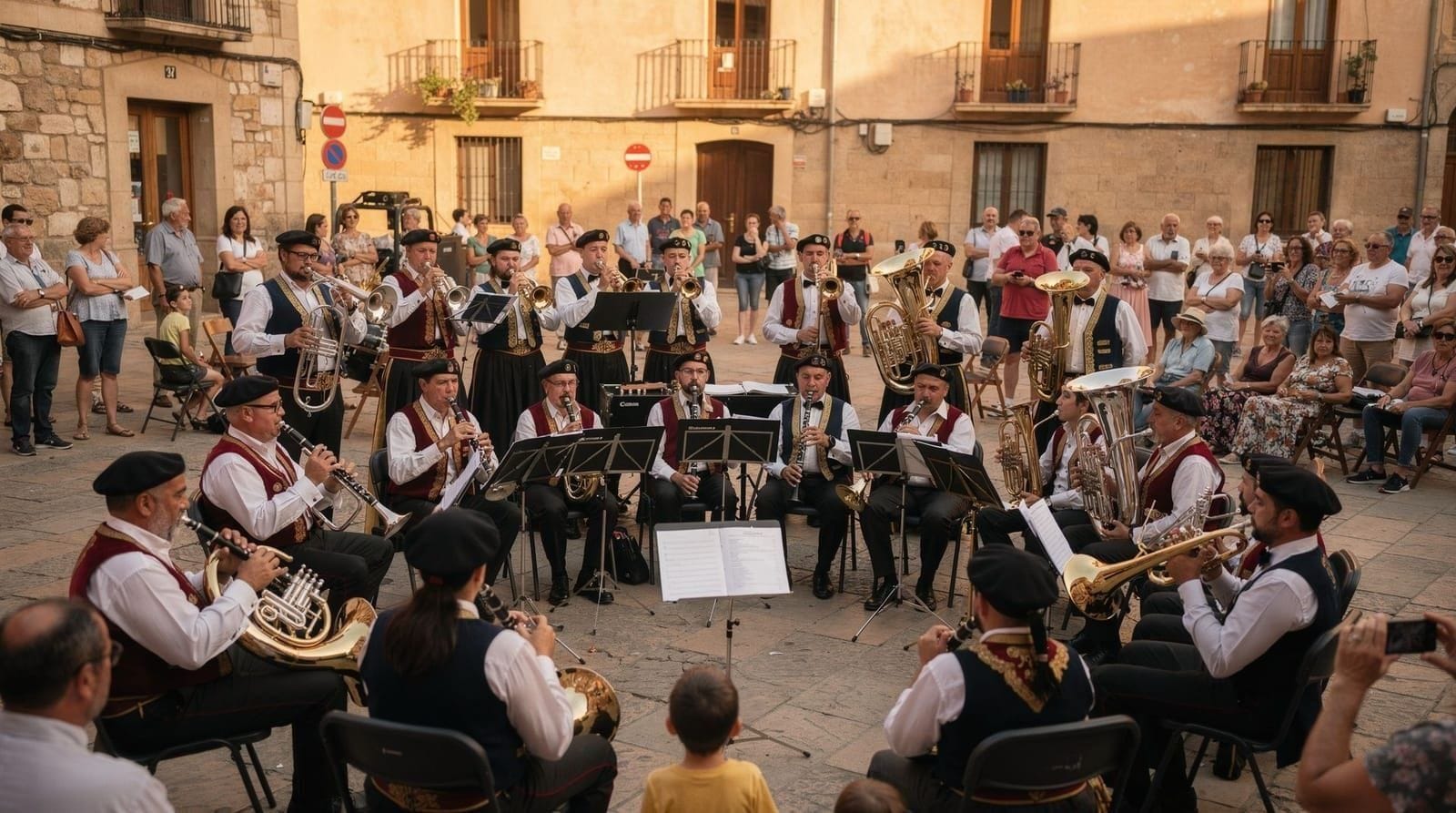
Barcelona’s residents do not attend flamenco shows. The city’s own musical and performance culture is rich and distinctive — the Palau de la Música Catalana (a UNESCO Modernisme landmark) hosts world-class classical and jazz concerts; L’Auditori is a major contemporary venue; the free sardana dancing outside the Cathedral on Sunday mornings is the living continuation of Catalan folk culture.
If flamenco interests you specifically as an art form, the shows in Barcelona can deliver a professional experience. If you want to experience something genuinely local to Catalonia, our Catalan music and culture guide covers what the city actually celebrates. For a full venue-by-venue comparison, see the best flamenco venues guide.
A brief history of flamenco: origins and styles
Where flamenco comes from
Flamenco developed in Andalusia — the southern region of Spain — over several centuries, with the clearest musical roots traceable to the 18th and early 19th centuries. Its cultural heritage is a fusion of at least three traditions: the Romani (gitano) communities who settled in Andalusia from around the 15th century and contributed the vocal and rhythmic heart of the form; the Moorish musical culture of the long Islamic presence in southern Spain; and Andalusian folk and Jewish musical traditions. The exact weighting is disputed by musicologists, but the synthesis is undeniably from the south.
The word “flamenco” itself has contested origins — theories link it to Arabic, Flemish court fashion, or a Spanish phonetic rendering of a Romani term. None of these etymologies is universally accepted.
The first documented cafés cantantes (singing cafés) where flamenco was performed publicly appeared in Seville in the 1840s. The tablao format — an intimate cabaret venue with food and drink service alongside performance — developed from this tradition. The form was designated UNESCO Intangible Cultural Heritage in 2010.
The palos — understanding flamenco’s forms
Flamenco is not a single style but a collection of forms (palos), each with its own compás (rhythmic cycle), mood and traditional performance context. The main palos that visitors are likely to encounter in a Barcelona show:
Soleá: Considered the deep mother of flamenco forms. Built on a 12-beat cycle with a melancholic, grave character. The soleá is the palo most associated with serious emotional depth — it is not entertainment music in the conventional sense but an exploration of sorrow and dignity. The guitar part in soleá is one of the most demanding in the tradition.
Bulerías: The opposite of soleá in energy — fast, rhythmically complex, often humorous or festive in character. The same 12-beat cycle as soleá but at three to four times the tempo, with deliberately displaced accents that make it difficult to follow without experience. Bulerías is where performers show off, where improvisation is most free, and where the interaction between dancer, singer and guitarist is most electric. The jaleos (shouts of encouragement) from performers are loudest here.
Alegrías: From Cádiz, one of the “joyful” palos. Built on a 12-beat cycle related to soleá and bulerías but in a major key and with an inherently lighter, more lyrical character. Alegrías from Cádiz has a maritime quality — the city’s sailors and dock workers shaped its evolution over centuries. It is often the most immediately accessible palo for new listeners.
Farruca: A sombre, rhythmically precise palo without improvisation in the singing — it is performed in its traditional form instrumental and danced. The farruca is the palo most associated with masculine dance styles in the tradition: controlled, architectural, grounded. Sabicas (the guitarist) and Antonio Gades (the dancer) are the artists most often cited in relation to the definitive farruca performances.
What to expect during the show
Before it begins
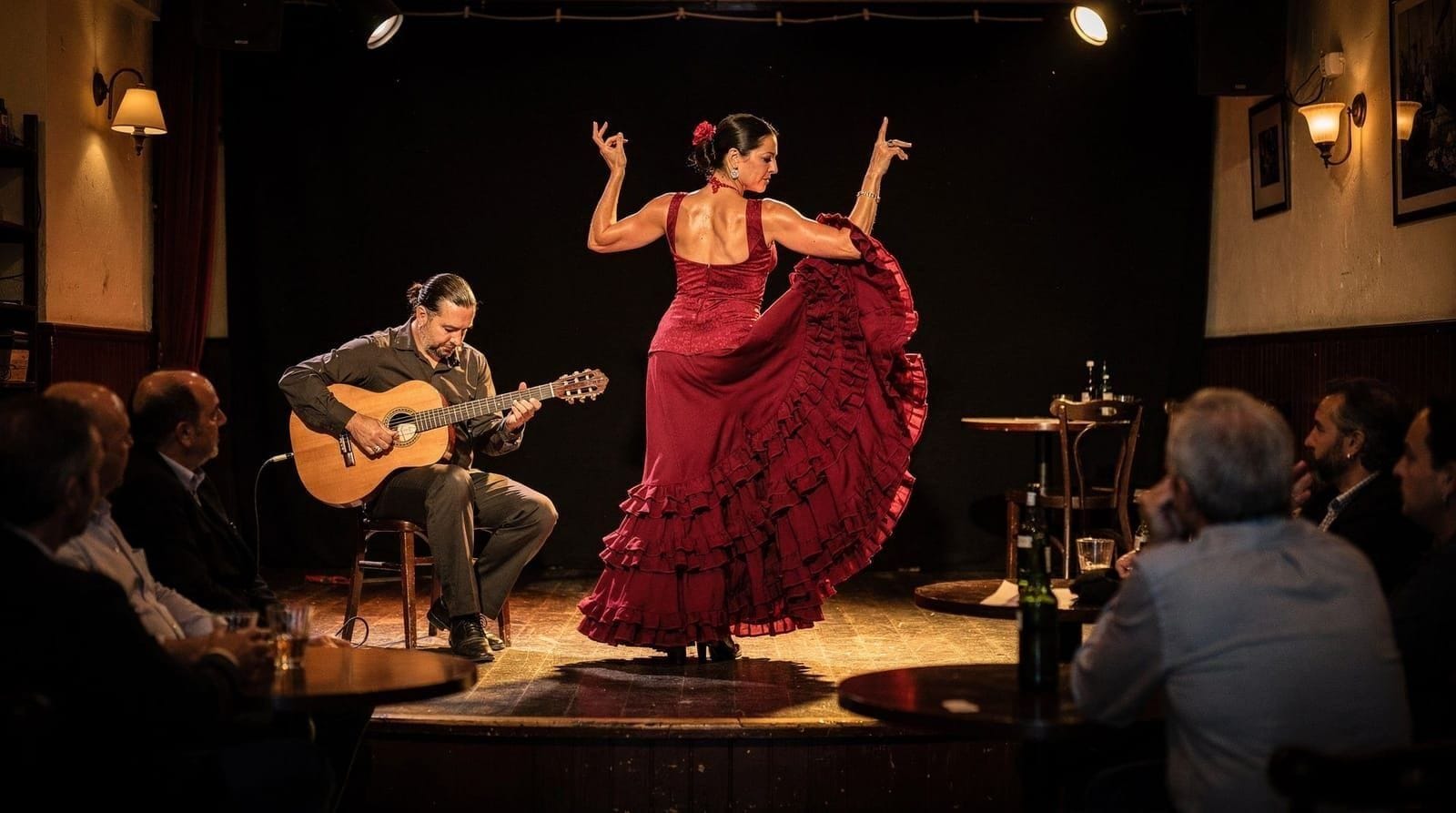
At a proper tablao, the performance begins with minimal fanfare — no announcement, no dimming of house lights (most tablaos are already dim). The performers take their positions on stage: typically the guitarist sits to one side, the cantaor (singer) stands or sits at the back, and the bailaora (dancer) enters once the guitar begins. The audience is close; in a small tablao, the first rows are 2–3 metres from the stage.
How to behave
The most common mistake made by tourists is applauding at the wrong moments. In flamenco, the silence during a soleá is not absence — it is part of the piece. Applauding to fill the silence is disruptive and marks you as someone who does not understand the form.
The correct time to applaud is at the end of a complete section (when the music pauses and the performer makes a gesture of completion) or during bulerías when the energy peaks. If you are unsure, watch what the Spaniards around you do and follow.
Jaleos are the shouts of encouragement from performers to each other — and from the audience when appropriate. “Olé!” is the most recognisable but the full vocabulary includes “Eso es!” (that’s it!), “Agua!” (water! — an exclamation of intensity), and various untranslatable calls of appreciation. These are not performed for tourists — they are the internal communication of performers in a shared artistic practice. Visitors may join if they feel the moment; they should not perform them as affectation.
Do not take photos or video during the show. Most venues ask specifically — the distraction is significant and the stage lighting means phone video captures nothing useful anyway.
The interaction of the three elements
What distinguishes a strong performance from a merely professional one is the quality of interaction between guitarist, singer and dancer — each responding to the others in real time. A skilled cantaor will adjust phrasing based on what the dancer is doing with their footwork; the guitarist will shift tempo or accent in response to the singer’s direction. In bulerías especially, this live negotiation between the three is the actual show — the human towers made of sound and movement rather than bodies.
A short glossary for first-time viewers
Knowing a handful of terms before the show starts makes the performance considerably more legible. Cante is the singing — usually the emotional core of the piece, even for viewers who don’t understand the Spanish or Andalusian dialect. Baile is the dance, and toque is the guitar playing; the three together (cante, baile, toque) are the essential elements of any performance. Compás refers to the rhythmic cycle underlying each palo — the internal clock that guitarist, singer and dancer all follow, often marked by handclaps (palmas) from seated performers not currently singing or dancing. A cantaor or cantaora is a male or female singer; a bailaor or bailaora is a male or female dancer. Duende is the harder-to-define concept — a state of heightened, almost trance-like artistic intensity that the best performers are said to achieve, and that audiences recognise even without being able to explain it. You do not need to know any of this to enjoy a show, but recognising these words when they appear in a venue’s programme notes helps you understand what you are being told about the performance you are about to see.
Finding sardana and castellers during your visit
For visitors who want to experience something genuinely Catalan rather than or in addition to an Andalusian art form imported for tourist consumption:
Sardana
Every Sunday at noon, the group of serious sardana dancers gathers in the square outside the Cathedral of Barcelona (Plaça de la Catedral, Gothic Quarter). This is not a tourist performance — these are regular participants who come every week. The cobla musicians are paid; the dancers are not. Visitors are welcome to watch from the perimeter or to join the circle if they can follow the counting.
The sardana season runs year-round but is fullest from May through September. A smaller gathering also happens on Saturday evenings at Plaça de Sant Jaume during summer. The Federació Sardanista de Catalunya (federacio.cat) publishes the current schedule of all public sardana events in Catalonia.
Castellers (human towers)
Casteller performances are concentrated around Barcelona’s major festivals. The most reliable access points for visitors:
La Mercè (September 23–27): This is the city’s main patron saint festival and the highest-profile casteller event in Barcelona. The best colles from across Catalonia — Castellers de Vilafranca, Minyons de Terrassa, Castellers de Barcelona — perform in Plaça de Sant Jaume in front of the Ajuntament. The competition-level towers here can reach 9 pisos. Free, outdoor, no booking.
Festa Major de Gràcia (second and third week of August): The Gràcia neighbourhood festival includes casteller performances alongside its famous street decoration competition (where neighbourhood associations decorate entire streets with elaborate art installations). Castellers de la Vila de Gràcia typically perform.
Sant Jaume day (July 25): A traditional performance day in Plaça de Sant Jaume.
Outside festivals, the Castellers de Barcelona practice publicly on Sunday mornings at their local in the Poble Sec neighbourhood. Check their website or social media for current schedules — practice sessions are open to spectators.
For the most dramatic casteller performances outside the city, the Concurs de Castells in Tarragona (held in October in even years) is the formal championship of the sport, bringing every major colla together for a full weekend of competitive tower building in the city’s bullring. It is one of the most extraordinary public events in Catalonia.
Flamenco is beautiful, and Barcelona has venues that present it well. Go into the experience knowing it is Andalusian in origin, book a professional tablao, avoid the street touts, and you will see something worth seeing. For the full contrast with Catalan performing culture, see our guide to Catalan music and alternatives to flamenco. To understand Barcelona’s full spectrum of tourist traps and honest alternatives, see our tourist traps guide.
Frequently asked questions about Flamenco shows in Barcelona
Are flamenco shows in Barcelona good quality?
Varies significantly by venue. The established tablaos — Tablao Flamenco Cordobes (La Rambla), Tablao de Carmen (Poble Espanyol), Teatro Flamenco Barcelona, and Los Tarantos (Plaça Reial) — hire professional artists, many of them from Andalusia. Tourist-oriented shows near La Rambla are inconsistent in quality; street tickets sold outside venues should be avoided.How much do flamenco shows cost in Barcelona?
Entry-only shows run €18–30 (Los Tarantos, Teatro Flamenco). Shows with drink included are €30–50. Dinner-and-show packages at the major tablaos run €60–90 per person. Book online — same-price or better than the door, and avoids last-minute disappointment.What is the difference between a tablao and a teatro flamenco?
A tablao is an intimate venue where flamenco is performed in a cabaret or club format — small stage, audience close to the performers, often including dinner service. A teatro flamenco is a proper theatre with a stage, tiered seating and higher production values. Tablaos are more authentic to the traditional flamenco setting; teatros are more polished performances.Are street ticket sellers for flamenco shows reliable?
No. Touts outside La Rambla selling flamenco tickets often represent poor-quality shows in unsuitable venues, charge inflated prices, or sell counterfeit entries to legitimate venues. Always book online directly or through a verified platform.What are genuine Catalan alternatives to flamenco?
Sardana dancing (Sundays at noon in front of the Cathedral, free — Catalan circle dance, participatory and open to all), castellers (human tower competitions at festivals), the Barcelona Symphony Orchestra (L'Auditori), and concerts at the Palau de la Música Catalana. La Mercè festival (September 23–27) includes free outdoor concerts of traditional Catalan music alongside the towers and fire runs.
Top experiences
Bookable activities with verified prices and instant confirmation on GetYourGuide.
Barcelona: Los Tarantos flamenco show at Plaça Reial
- Free cancellation
Barcelona: Gran Gala Flamenco show entry ticket
- Free cancellation
Barcelona: Teatro Flamenco Barcelona authentic live show
- Free cancellation
Barcelona: flamenco show with dinner at Tablao de Carmen
- Free cancellation
- Dinner included