Bunkers del Carmel: Barcelona's best free viewpoint
Barcelona: Gaudí highlights eBike tour
Duration: 3.5 hours
- Free cancellation
What are the Bunkers del Carmel and are they free?
The Bunkers del Carmel are the ruins of Civil War-era anti-aircraft gun emplacements on a hilltop above the Gràcia and Horta neighbourhoods at 262 metres. The view from the top is a complete 360-degree panorama of Barcelona and is completely free, open at all hours and requires no booking. It is consistently rated as the best free viewpoint in the city.
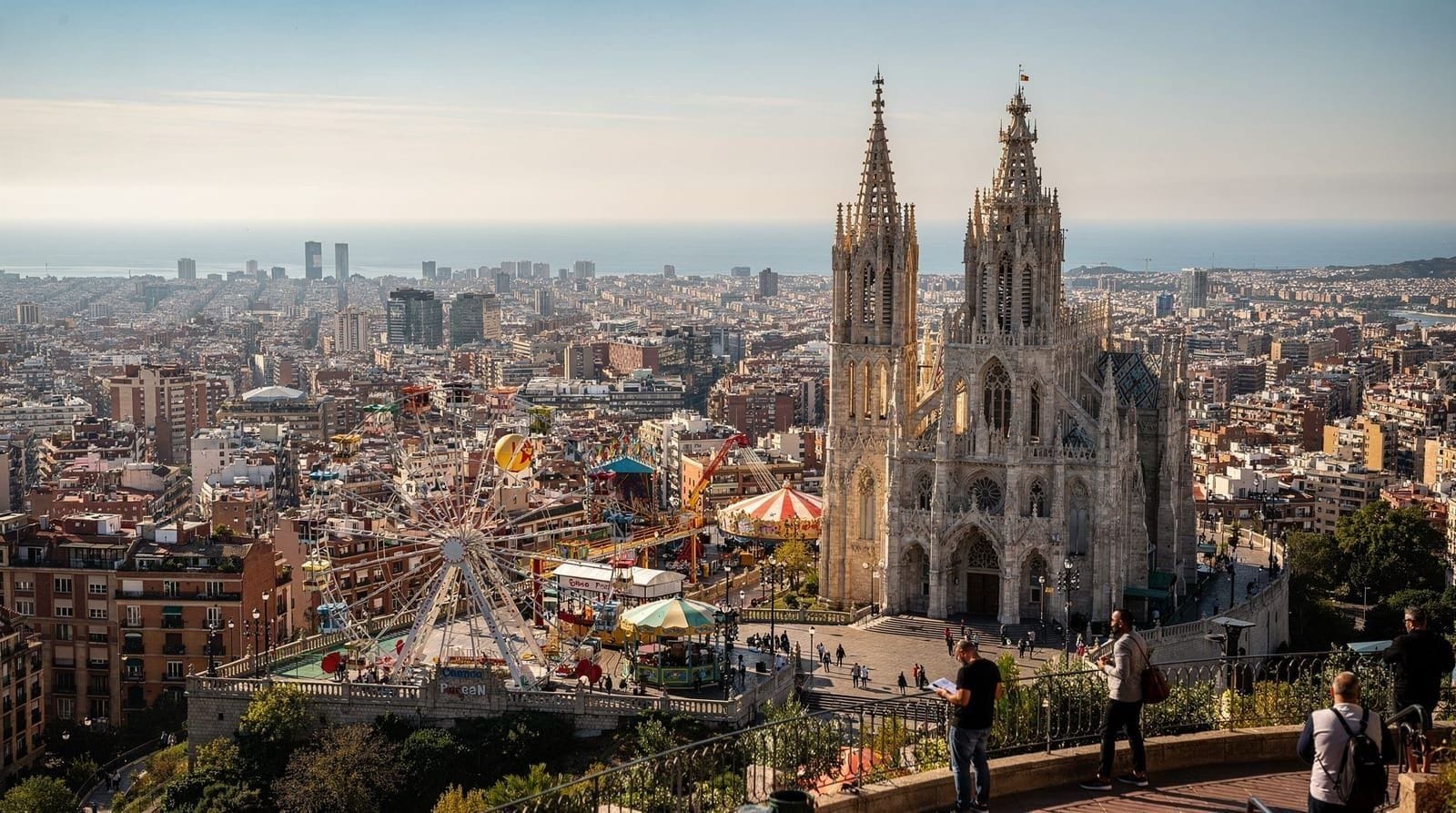
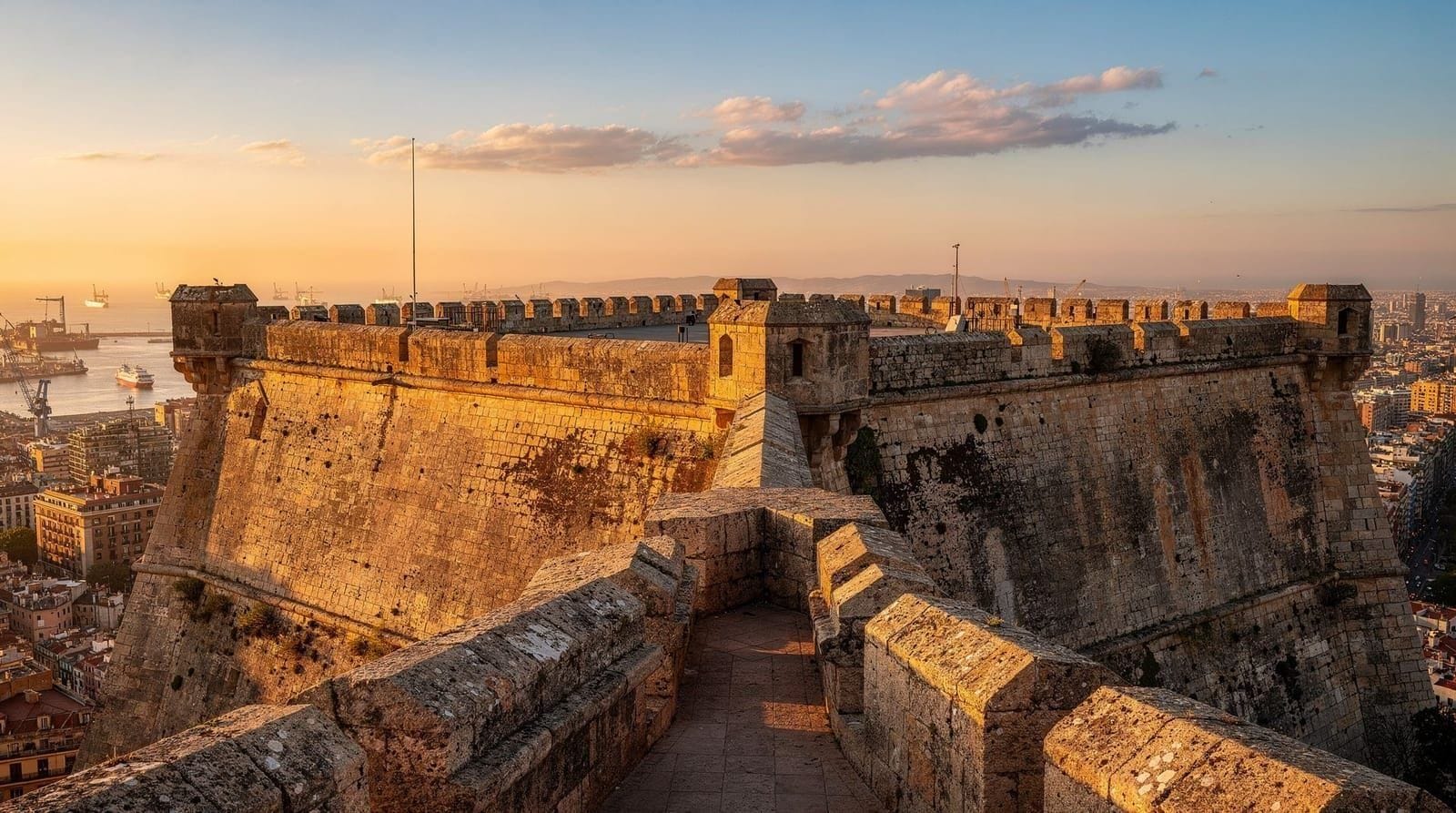
Every city has viewpoints. Barcelona has several good ones — the Sagrat Cor terrace on Tibidabo, the ramparts of Montjuïc castle, the Park Güell terrace — but the Bunkers del Carmel is consistently the one that visitors return from most affected. It is not the highest point accessible in the metropolitan area, but the combination of 360-degree panorama, Civil War history, zero entry cost and the informal social atmosphere of summer evenings makes it the kind of place that gets passed from one traveller to the next as a genuine secret, even though it is on every map.
| Where | Turó de la Rovira, above Carmel and Gràcia, 262m |
| Cost | Free, no ticket, no booking |
| Time needed | 1–2 hours, plus 20–25 min walk uphill |
| Getting there | Metro L4 to Alfons X, then walk; or bus V17 |
| Best time | Sunset (around 20:00–21:00 in summer) |
What you see from the top
The hilltop at 262 metres provides an unobstructed view across the entire city in every direction.
To the south: the complete Eixample grid, with the Sagrada Família’s towers clearly visible in the middle distance and Montjuïc hill beyond it. The geometry of the 19th-century city plan — identical octagonal blocks arranged in a perfect grid — is readable from here in a way that is impossible at street level.
To the east: the coast from Barceloneta beach through the Olympic Port to the Forum area, with the Mediterranean extending to the horizon. On very clear days, particularly in autumn and spring, the faint outline of Mallorca is visible approximately 250 km away.
To the north and northeast: the Besòs river delta and the beginning of the Costa Brava coastline. The Collserola range closes the horizon above the city, with the Tibidabo Ferris wheel visible to the northwest.
To the west: the forested slopes of Collserola, the Llobregat delta and the industrial plain extending toward the airport.
The Sagrada Família towers are the most photographed element from this position — they are visible from roughly the same distance as from Park Güell, but the angle is different, looking from the north rather than the northeast, and the scale relationship with the city grid is slightly more legible.
The Civil War history
The concrete emplacements on the hilltop were built in 1937–1938 by the Republican government. Barcelona was subjected to sustained aerial bombing by Nationalist forces (using Italian Savoia-Marchetti aircraft and German Heinkel bombers supplied to Franco’s side) from March 1937 onward. The Carmel hill was one of several anti-aircraft positions established to provide defence coverage over the city.
The guns could not prevent the bombing — the technology of the era was not capable of consistent interception — but the emplacements remained operational until the fall of Barcelona to Nationalist forces in January 1939.
After the war, the Franco regime did not demolish the emplacements but the site fell into unofficial use. From the 1940s onward, an unplanned shantytown developed around the ruins, housing migrant workers from Andalusia and Murcia who came to Barcelona for factory work. At its peak in the 1960s, the neighbourhood had approximately 2,000 residents. The last families were rehoused in apartments in the 1980s and 1990s; the structures were removed and the site cleared in 2010.
The information panel at the top gives this history in Catalan and Spanish; some English is available.
When to go
Sunset (roughly 20:00–21:30 in summer): The best single time. The city turns golden, the Sagrada Família towers catch the last light and the sky behind Montjuïc is spectacular. In summer, the hilltop fills with Barcelonans — primarily young people in groups — who bring drinks and food and stay for hours. This is authentic Barcelona evening culture, not tourism.
Sunrise (06:00–07:30 in summer): Near-empty hilltop, clear air, the city awakening in the early light. Requires getting up before the metro opens — taxi or walking from a nearby hotel.
Midday in summer: Hot, harsh light, crowded. Least rewarding.
Winter: The low-angle winter sun produces excellent directional light even at midday. Far fewer people; the views in November or February can be exceptionally clear after rain has washed the air.
How to get there
By metro and foot: L4 (yellow line) to Alfons X, then a 20–25 minute walk uphill. The route is signposted and the streets are quiet residential Carmel. The incline is moderate but sustained.
Bus V17: From Passeig de Gràcia, the V17 runs up through the Gràcia and Carmel neighbourhoods and stops closer to the base of the final hill. Takes about 25 minutes from Passeig de Gràcia.
Taxi: Approximately €8–12 from central Barcelona. Ask for “Turó de la Rovira” (the hill’s official name) — some drivers know “Bunkers del Carmel” but the official name is clearer.
On foot from Park Güell: Both sites are in the upper part of the city north of Gràcia. The walk between them takes about 40 minutes through residential streets. This is feasible as a half-day combination — Park Güell Monumental Zone in the morning, walk to the Bunkers for lunch and the afternoon. See the Park Güell free vs paid guide if you want to plan which zone to book.
An e-bike is a genuinely useful way to cover the climb without the uphill walk, and several routes through Gràcia and the upper city include the Bunkers as a stop.
Comparing Barcelona’s best viewpoints
The Bunkers del Carmel is not the only hilltop view in the city, and knowing how it compares helps decide whether it’s worth the uphill walk on a given day.
| Viewpoint | Cost | Best for | Downside |
|---|---|---|---|
| Bunkers del Carmel | Free | 360° panorama, sunset, local atmosphere | 20–25 min uphill walk, no facilities |
| Tibidabo (Sagrat Cor) | Free terrace; funicular/rides paid | Highest point, amusement park combo | Further from centre, more touristy |
| Montjuïc Castle | Paid entry to castle; grounds free | History plus views, cable car access | Queues at peak times |
| Park Güell terrace | Free (outside Monumental Zone) | Gaudí mosaics plus views | Crowded, Monumental Zone requires booking |
For a broader comparison of Tibidabo’s rides and views versus a family day out, the Tibidabo guide covers ticket options and the funicular in detail; families specifically may also want the Tibidabo and CosmoCaixa guide.
Combining the Bunkers with a Gràcia evening
Because the Bunkers sits just above Gràcia, the natural pairing is to walk down into the neighbourhood after sunset for dinner. Gràcia’s tapas bars and small squares are a five-to-ten-minute downhill walk from the base of the hill, and arriving there around 21:00–21:30 after sunset lines up naturally with when the neighbourhood’s bars start filling up. This avoids the awkward gap of finishing at the Bunkers too early for dinner and killing time.
What to bring
Water: The hill is exposed and the walk up is warm in summer. A minimum of 500ml.
Food: Many visitors bring picnic supplies from the neighbourhood below. There is nothing to buy at the top.
A jacket: Summer evenings cool down after sunset; the hilltop catches any wind.
A blanket or mat: For sunset and evening visits; the concrete emplacements provide seating but the ground around them is rough.
Practical notes
No ticket, no queues, no opening hours. The hilltop is publicly accessible at all times. The paved access road from the upper neighbourhood streets is open day and night.
Photography: Excellent in all directions. Wide-angle lens is useful; standard smartphone is sufficient for the city panorama.
Accessibility: The access road from the neighbourhood is partially accessible but steep in places. The final approach to the emplacement platform requires navigating uneven terrain. Not fully wheelchair accessible.
Crowds on summer evenings: Can become very busy from 19:00 onward on good-weather summer evenings. The space is large enough to absorb the crowd, but finding a clear vantage point requires arriving early or being patient.
The Bunkers del Carmel is a reliable recommendation for visitors who want the best view in Barcelona without a ticket and without a queue. The history adds depth to what would otherwise be just a hilltop; the summer evening atmosphere — locals picnicking on civil war ruins with the whole city below — is a distinctly Barcelona experience. Go for sunset, bring something to eat and allow at least an hour at the top. Pair it with best time to visit Barcelona to pick a season with clear evening light.
Frequently asked questions about Bunkers del Carmel
How do you get to the Bunkers del Carmel?
From the Alfons X metro station (L4 yellow line), it is a 20–25 minute walk uphill through the residential streets of the Carmel neighbourhood. Bus V17 from Passeig de Gràcia goes closer to the base of the hill. Taxi from central Barcelona: approximately €8–12. The walk from Alfons X is steep in sections but is the standard approach.What is the best time to visit the Bunkers del Carmel?
Sunset is the prime time — typically 20:00–21:00 in summer — when the golden light on the city is at its best and the Sagrada Família towers glow. Sunrise is equally good but requires a 06:00–07:00 arrival. Midday in summer is hot and the light is flat. On summer evenings, the hilltop fills with groups of young Barcelonans for informal picnics — this is entirely part of the experience.Can you see the Sagrada Família from the Bunkers del Carmel?
Yes — clearly and directly. The Sagrada Família is visible to the south from the Bunkers, as is the entire Eixample grid, the Barceloneta beach strip, the port cranes, Montjuïc and (on very clear days) the Balearic Islands. The Tibidabo hill is behind you to the northwest.What is the history of the Bunkers del Carmel?
The anti-aircraft gun emplacements were built during the Spanish Civil War (1936–1939) by the Republican government to defend Barcelona against Nationalist bombing raids. After the war, the Franco regime demolished most of the emplacement structures but the concrete platforms and access trenches remain. A shantytown grew around the ruins from the 1940s to the 1980s, housing immigrants from southern Spain. The last residents were rehoused in 1990; the site was cleared and opened as a public viewpoint in 2010.Is there anything to do at the Bunkers del Carmel besides the view?
The ruins themselves — the concrete gun platforms, the circular emplacement rings and the access trenches — are walkable and provide structural context for the Civil War history. A small information panel explains the history. Beyond that, the experience is the view and the atmosphere of a hilltop that locals use as a social space on summer evenings.How does the Bunkers del Carmel compare to Tibidabo or Montjuic for views?
The Bunkers offer the most complete 360-degree panorama and are free, but have no facilities and require a steep walk up. Tibidabo is higher and pairs the view with an amusement park, but is further from the centre and involves paid rides or funicular tickets. Montjuic Castle combines views with history and a cable car, with a small entry fee for the castle itself. For sunset atmosphere and cost, the Bunkers win; for a full day out with more to do, Tibidabo or Montjuic edge ahead.Can I combine the Bunkers del Carmel with Gracia in one evening?
Yes, and it's a natural pairing. The base of the hill is a five-to-ten-minute walk from Gracia's squares and tapas bars, so watching sunset at the Bunkers and then walking down for dinner around 21:00-21:30 lines up well with when Gracia's bars start filling up.
Top experiences
Bookable activities with verified prices and instant confirmation on GetYourGuide.