Montjuïc castle: history, views and how to visit
Barcelona: walking tour with Montjuïc castle and cable car
Duration: 3 hours
- Free cancellation
Is Montjuïc castle worth visiting and how much does it cost?
Entry to the castle is €5 for adults (free on Sundays after 15:00 and on the first Sunday of the month). The views from the ramparts over the port, city and sea are excellent. Allow 1–1.5 hours. The castle itself has a complicated and often brutal history as a military prison — the site where many Catalan republicans were executed, including the Catalan president Lluís Companys in 1940.
| Where | Summit of Montjuïc hill |
| Cost | Around €5, free Sundays after 15:00 |
| Time needed | 1–1.5 hours |
| Getting there | Cable car from Paral·lel funicular, or 20–25 min walk |
| Best time | Late afternoon (from 17:00) for the light |
The hill of Montjuïc rises 173 metres above the port of Barcelona and has been a defensive position, an Olympic venue, a garden and — for most of its modern history — a site of political repression. The castle at its summit is the most prominent building on the hill, but understanding what happened here is as important as the view from the ramparts.
A brief, honest history
A fortress has occupied the summit of Montjuïc since 1640, when it was built during the Catalan uprising against the Castilian crown (the same political crisis that gave Catalonia its national day, September 11). The current castle structure dates primarily from the 18th century, when the Bourbon monarchy reinforced it after winning the War of Spanish Succession.
Throughout its history, the castle was used less as a defence against external enemies than as a tool of political control. In 1840, the liberal general Baldomero Espartero bombarded Barcelona from the castle during a popular uprising. In 1909, after the Tragic Week of anti-conscription riots, 1,700 people were arrested and several executed, including the anarchist educator Francesc Ferrer i Guàrdia.
The darkest chapter came under the Franco regime. Between 1939 and the late 1950s, the castle served as a military prison and execution ground for political prisoners. The most prominent victim was Lluís Companys, the democratically elected president of the Generalitat de Catalunya, executed by firing squad here on October 15, 1940. A memorial in the moat honours him and the others who died.
In 2007, the Spanish government returned ownership of the castle to Barcelona city. Its current use as a cultural space and museum is the city’s attempt to reclaim the site from its associations. The process of historical reckoning is ongoing and acknowledged in the exhibition inside.
What to see at the castle
The ramparts: The most rewarding part of the visit. The outer walls and moat walk give a full circuit of the hilltop with views in every direction — the port and sea to the southeast, the city grid to the north, the industrial coast south toward the delta and, on clear days, the Balearic Islands as a faint blue line on the horizon. The late afternoon light from 17:00 onward is particularly good.
The interior exhibition: The permanent exhibition covers the castle’s military and political history across several rooms of the former barracks and guardhouse. The Catalan and Spanish texts are thorough; English is less comprehensive. The Franco-era sections include documentary photographs and personal histories of prisoners.
The moat and gardens: The dry moat on the south side has been partially converted into a garden with plantings that attract birds. It is a quiet contrast to the exposed ramparts and worth 20 minutes.
The governor’s residence: A restored 18th-century building within the inner courtyard. Often used for temporary cultural exhibitions.
The cable car: Telefèric de Montjuïc
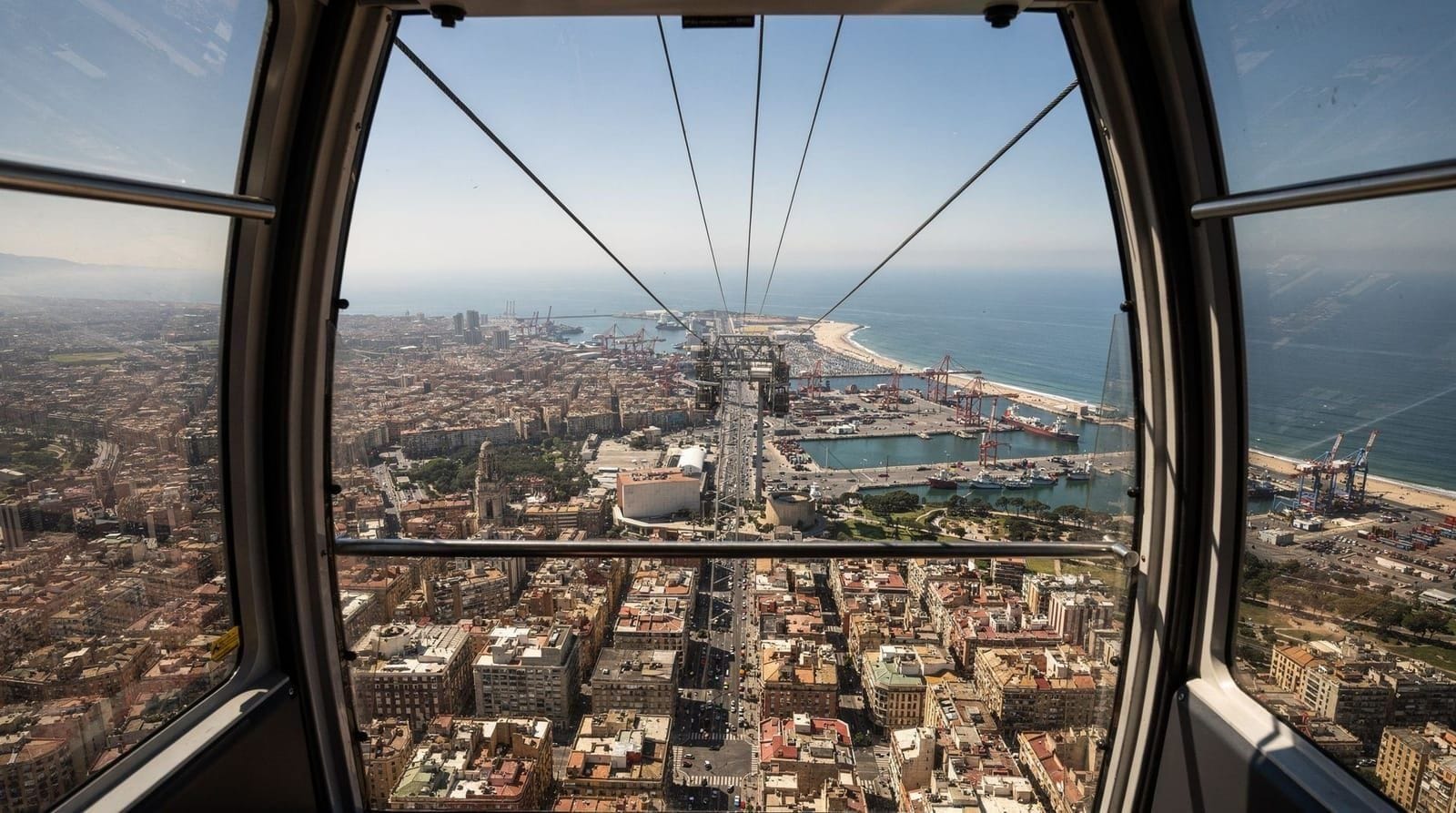
The Montjuïc cable car runs from the Paral·lel area (connected to Paral·lel metro station by the Funicular de Montjuïc, free with metro ticket) to the castle in two stages, with a middle station at Mirador de l’Migdia. The journey takes about 10 minutes total and offers excellent views over the city and port throughout.
Cost: €14 roundtrip (€10 one way). Children aged 4–12: €7 return.
Hours: Approximately 10:00–19:00 in winter, 10:00–21:00 in summer. Reduced hours on weekdays in low season. Check the TMB website for current schedules.
Queues: Can be significant in summer at peak times (11:00–15:00). Early morning or late afternoon departures are shorter.
The alternative is the Transbordador Aeri del Port — the historic aerial cable car that crosses the port from Barceloneta beach to the Mirador del Migdia on lower Montjuïc. It does not reach the castle directly but gives a completely different perspective: looking down at the harbour instead of over the city. Roundtrip cost approximately €13.
Walking routes
From the Funicular upper station, it is a 20–25-minute walk along a paved road through pine forest to the castle. The road is pleasant in spring and autumn; in July and August it is hot and exposed. The walk down through the Jardins de Laribal (botanical garden terraces cascading down the northern slope) to the MNAC and Fundació Joan Miró takes about 30–40 minutes and is consistently more rewarding than the service road.
Combining Montjuïc in one day
A well-sequenced full Montjuïc day:
| Time | Activity |
|---|---|
| 10:00 | Cable car or walk to castle |
| 10:00–12:00 | Castle visit, rampart circuit and exhibition |
| 12:00–13:00 | Walk down through Jardins de Laribal |
| 13:00–15:00 | Lunch in Poble-sec (Carrer de Blai pintxos bars, 10 minutes from the hill base) |
| 15:00–17:00 | Fundació Joan Miró or MNAC |
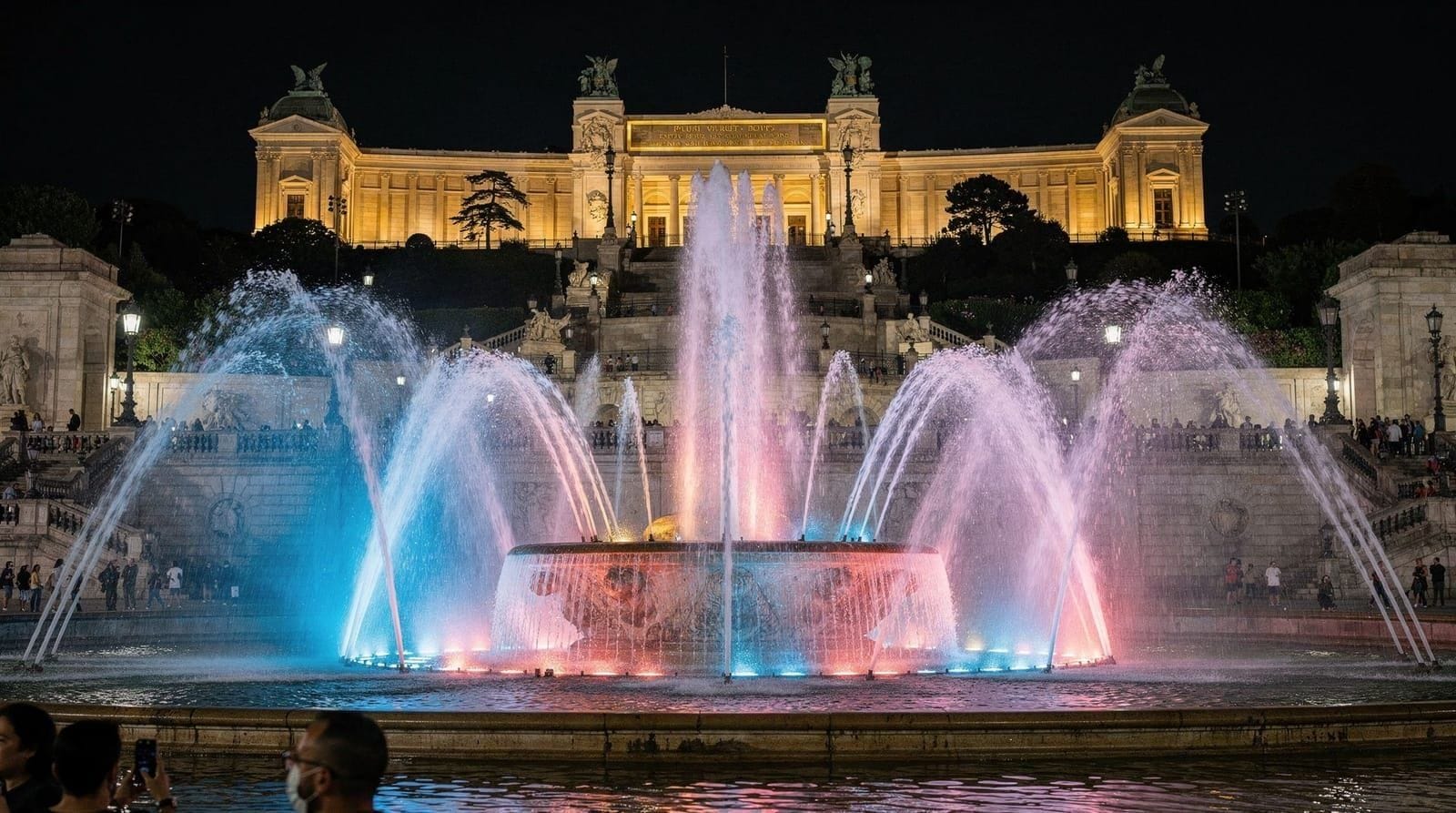
| 20:30–21:30 | Magic Fountain light show (Thursday–Sunday, May–October) |
This sequence uses the castle’s morning light for the rampart circuit, avoids the midday heat on the exposed walking paths, and ends with the free evening fountain show at the foot of the hill.
For the Magic Fountain timing and schedule, see the Magic Fountain guide.
For the cable car and scenic routes detail, see the Montjuïc cable car guide.
Practical notes
Entry: €5 adults. Free Sundays after 15:00 and on the first Sunday of every month. No advance booking required.
Getting there: Funicular de Montjuïc from Paral·lel station (L2/L3) then cable car (€14 roundtrip), or city bus 150 from Plaça Espanya, or on foot from multiple access points.
Accessibility: The cable car is accessible. The castle interior is partially accessible; the rampart circuit has uneven surfaces. Contact the castle in advance for specific requirements.
Photography: No restrictions. The ramparts are the best photography location; midday is the least interesting light.
Language: All signage in Catalan and Spanish; limited English. The audio guide (available at the ticket desk) covers English.
If you would rather have the castle’s history and the cable car ride bundled with the evening fountain show in one planned outing, a combined ticket covers all three without you having to work out the sequencing yourself.
For just the castle and cable car without the evening extension, a simpler combined ticket covers the ascent and entry in one purchase.
Montjuïc castle rewards visitors who engage with both the view and the history. The rampart circuit is genuinely excellent — comparable to the best fortification views in Europe — and the honest acknowledgement of the castle’s use as a place of political execution makes the visit more significant than a simple sightseeing stop. The cable car is the appropriate way up, and the walk down through the gardens is the appropriate way back.
Frequently asked questions about Montjuïc castle
How do you get to Montjuïc castle?
The scenic option is the Montjuïc cable car (Telefèric de Montjuïc) from the Paral·lel metro station area (there is a funicular connection from Paral·lel) or from the lower Montjuïc hill. The cable car costs €14 return (€10 one way). You can also walk up from the Jardins de Laribal, which takes about 20–25 minutes and is pleasant in spring or autumn. From Barceloneta, the Transbordador Aeri del Port (port cable car, €13 return) reaches the lower Montjuïc without the funicular step.What is the dark history of Montjuïc castle?
The castle was used as a military prison for several centuries. During the Civil War and Franco dictatorship, it was the site of executions of political prisoners. Lluís Companys, the elected president of the Generalitat de Catalunya, was shot here on October 15, 1940 after being extradited from France by the Gestapo. The castle was symbolically handed over to Barcelona city by the Spanish government in 2007. This history is acknowledged in the current exhibition.What are the opening hours of Montjuïc castle?
The castle grounds are open daily 10:00–20:00 in summer (approximately April–October) and 10:00–18:00 in winter (November–March). The moat and gardens are free to walk; the interior museum requires the €5 ticket.Is the view from Montjuïc castle better than other viewpoints?
The castle offers a unique panorama that combines the port, the entire city skyline and the sea in a single sweep — different from the city-inland views at Tibidabo or the Bunkers del Carmel. The southeast-facing position means morning light is behind you; afternoon and evening light makes the city glow.Can I combine Montjuïc castle with other Montjuïc sights?
Yes. The castle is at the top of Montjuïc hill; the MNAC, Fundació Joan Miró, the Olympic Stadium and the Magic Fountain are all on the slopes below. A full Montjuïc day would logically sequence: cable car to castle in the morning, walk down through the Jardins de Laribal to Fundació Joan Miró or MNAC in the afternoon, ending with the Magic Fountain in the evening.
Top experiences
Bookable activities with verified prices and instant confirmation on GetYourGuide.