La Boqueria market: what to actually do there (and what to skip)
Barcelona: exclusive Mercat de la Boqueria walking tour
Duration: 1.5 hours
- Free cancellation
- Small group
Is La Boqueria worth visiting and what should you buy?
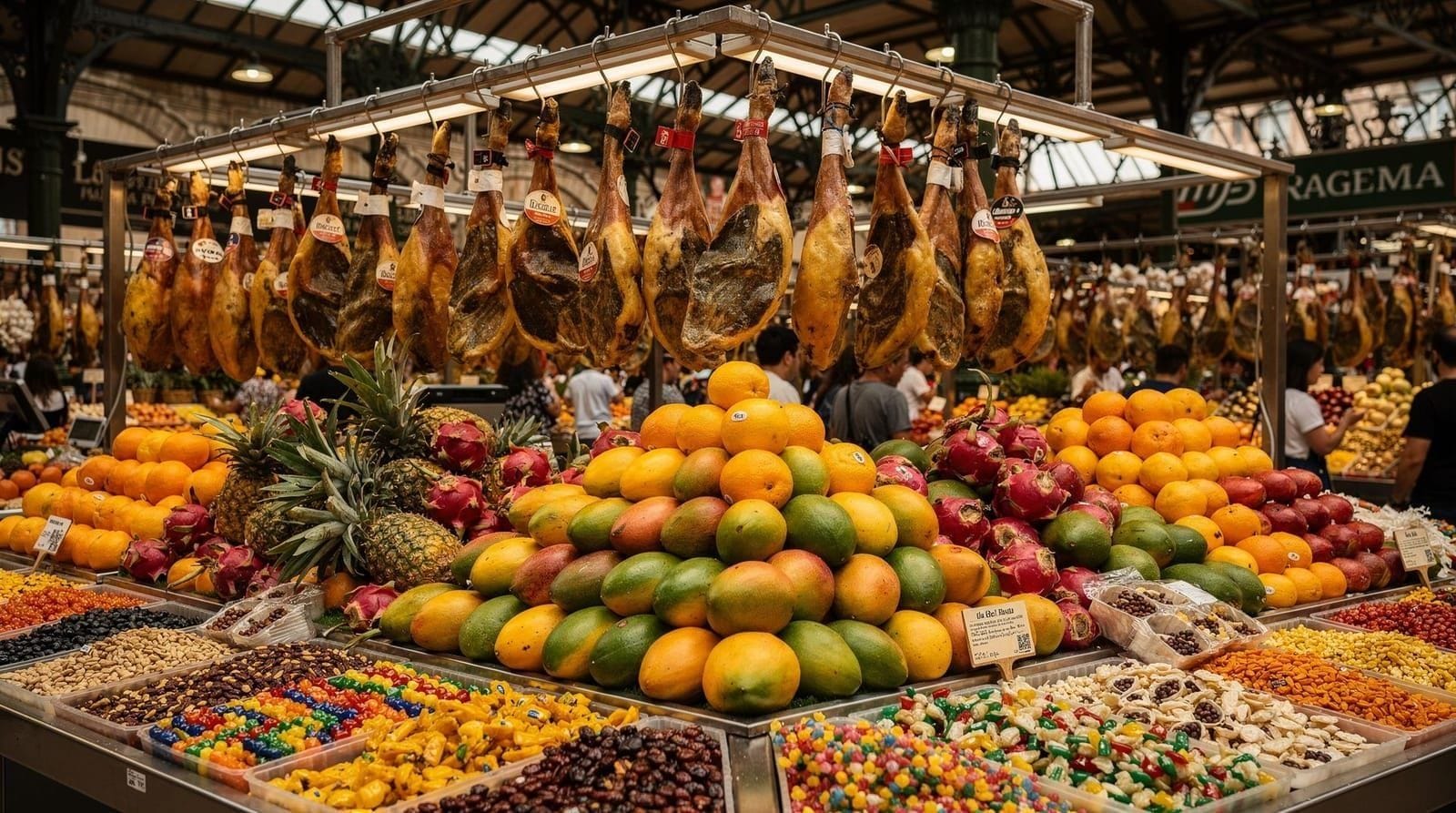
La Boqueria is worth a short visit as a visual spectacle, but the food stalls near the entrance are tourist traps with inflated prices. Buy: whole fruit, jamón from the interior stalls, olives. Avoid: cut fruit cups (€5–8 for a small portion, pay the same for a whole fruit), fish sold to tourists at inflated prices, anything at a stall with photos outside. Better for actual shopping: Mercat de Santa Caterina in El Born or Mercat de Sant Antoni in the Eixample.
Mercat de la Boqueria is one of the great food markets of Europe and simultaneously one of Barcelona’s most reliable tourist traps. Both things are true, and understanding which parts of the market correspond to which description is the difference between a genuinely good visit and an overpriced disappointment.
| Where | La Rambla, Metro L3 Liceu |
| Cost | Free entry; budget €10–25 for produce |
| Time needed | 30–60 minutes |
| Getting there | 2-min walk from Liceu metro |
| Best time | Weekday mornings, before 10:00 |
What La Boqueria actually is
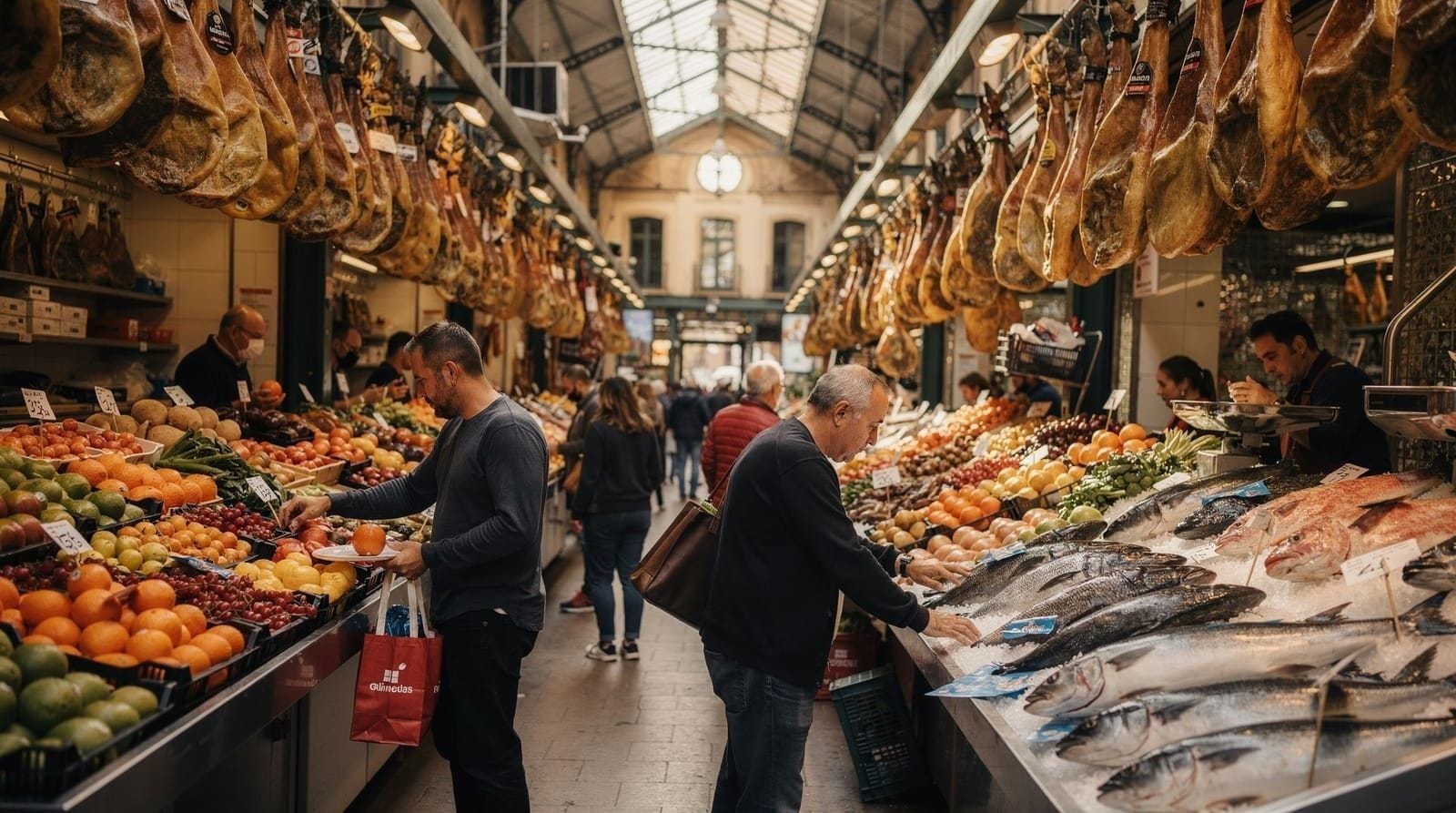
The Boqueria has operated as a market on this site since at least the 13th century, when open-air stalls occupied the edge of what was then the city wall. The current iron-and-glass market hall was built in stages from 1840 to 1914, and the structure visible today — a wide nave of cast iron and glass with radial wings — dates from 1914.
For much of the 20th century it was a working neighbourhood market supplying the restaurants and households of the Raval and Gothic Quarter. It became progressively tourist-oriented from the 1990s onward as La Rambla itself gentrified. Today, the entrance section along La Rambla is almost entirely tourist-facing; the interior still contains genuine food stalls, though even these have adjusted pricing to account for foot traffic.
The market receives approximately 50,000 visitors per day — a figure that says everything about its current character. Most of those visitors are not shopping; they are looking.
What to buy and what to avoid
The most useful rule is simple: the closer the stall to the La Rambla entrance, the higher the tourist markup.
Buy: Whole pieces of fruit from interior stalls (prices are reasonable and the quality is good). Jamón ibérico from the specialist stalls toward the back of the market (several excellent vendors with competitive prices). Whole cheeses. Olives from bulk vendors. Dried fruit and nuts. Local honey.
Avoid: Cut fruit cups near the entrance. These are typically €5–8 for a small paper cup of melon, pineapple and strawberry — prices that would get you a whole fruit at any neighbourhood stall. Seafood tapas plates displayed on ice at the entrance stalls: the portions are tiny, the prices are large and the quality is inconsistent. Any stall with tourist-menu photos outside.
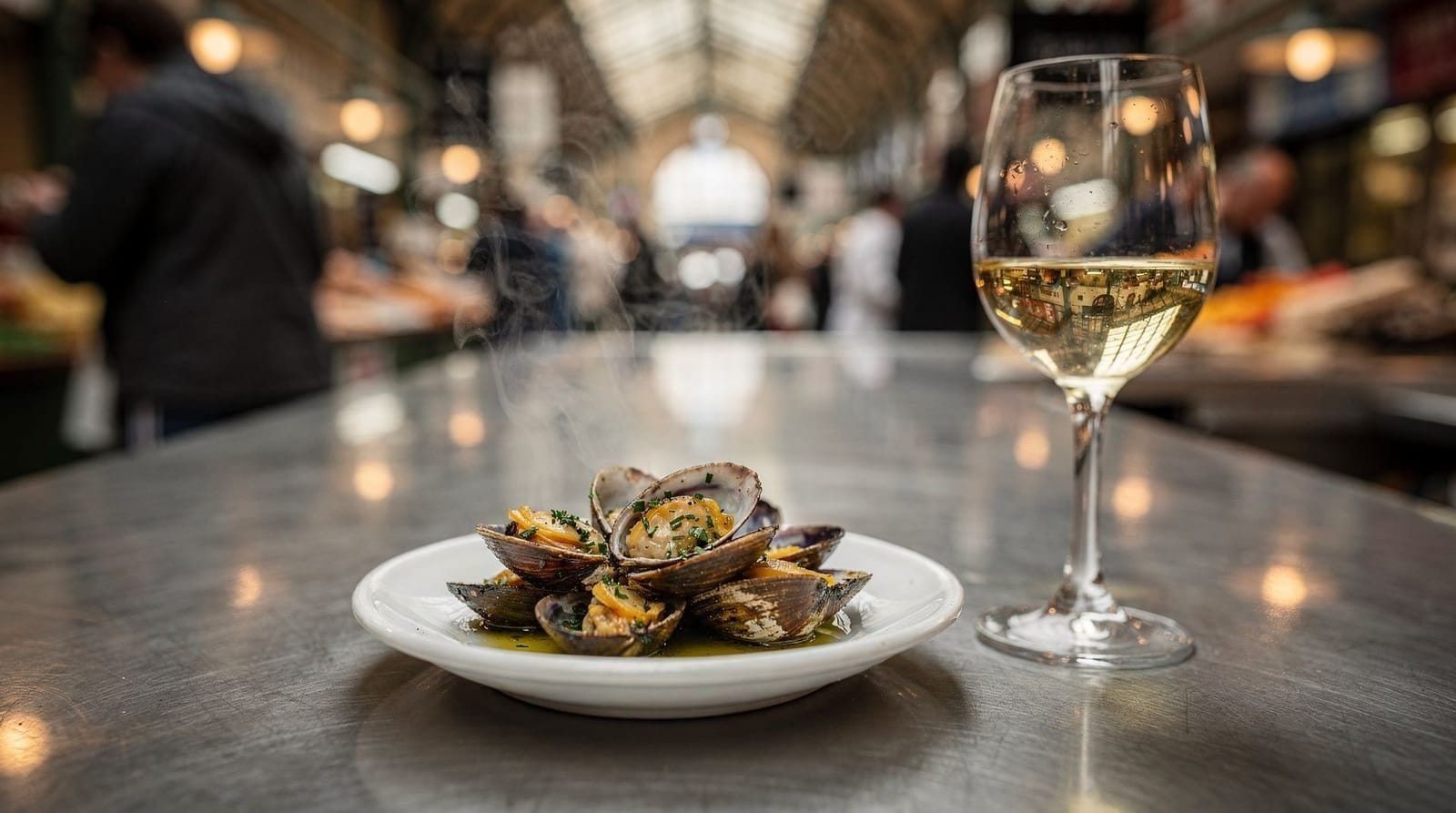
The best bars in the market: Bar Pinotxo (counter at the back left of the main hall, run by the Bayén family since 1940) is the most famous market bar in Spain and serves genuine market food — chickpeas with blood sausage, grilled squid, clams. The queue for counter space is real and the wait at peak time (10:00–13:00) can be 20–30 minutes. It opens around 06:30 and runs until about 16:00. Cash only. Worth the wait if you align with a mid-morning visit.
Honest context: the tourist trap
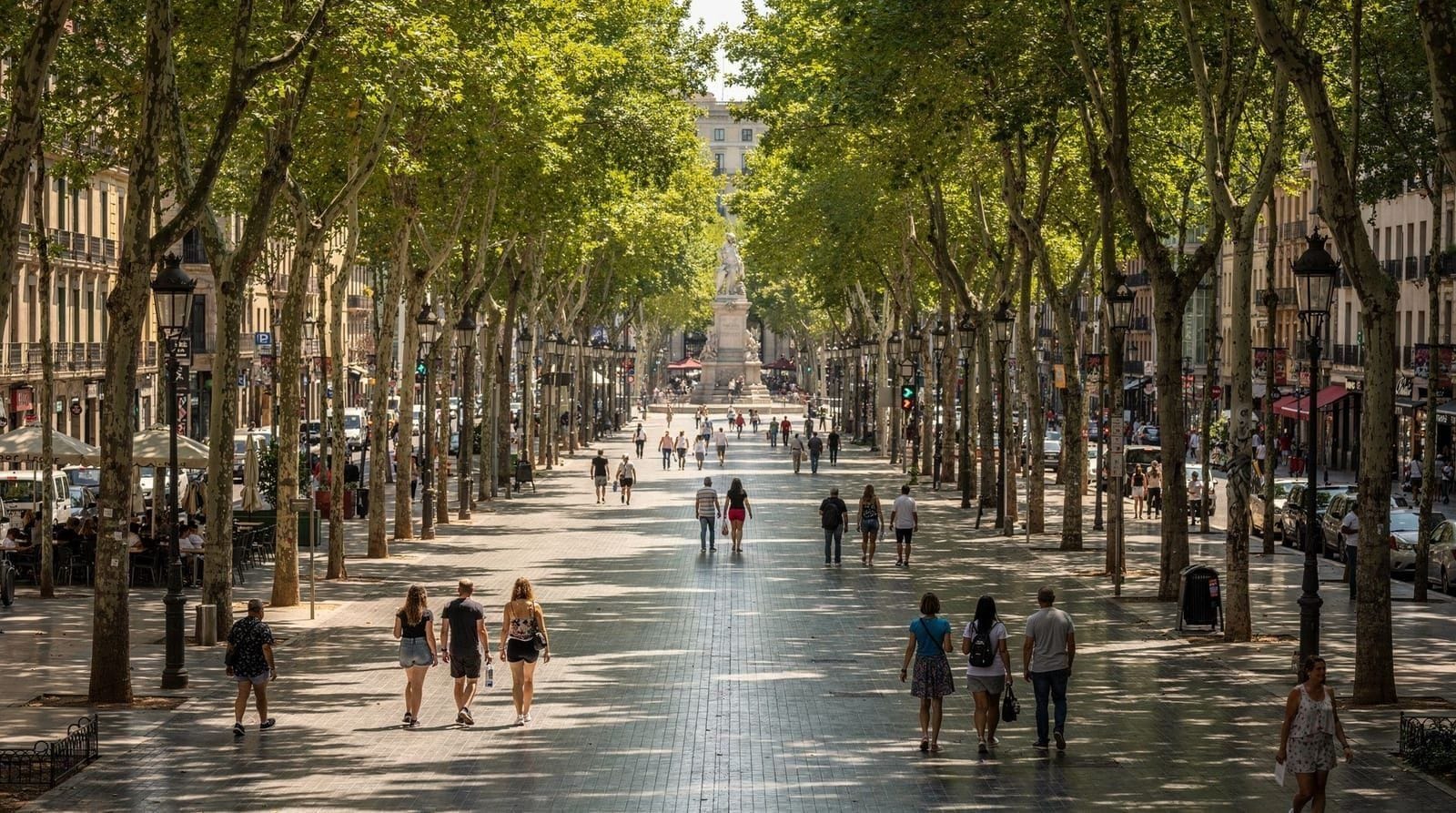
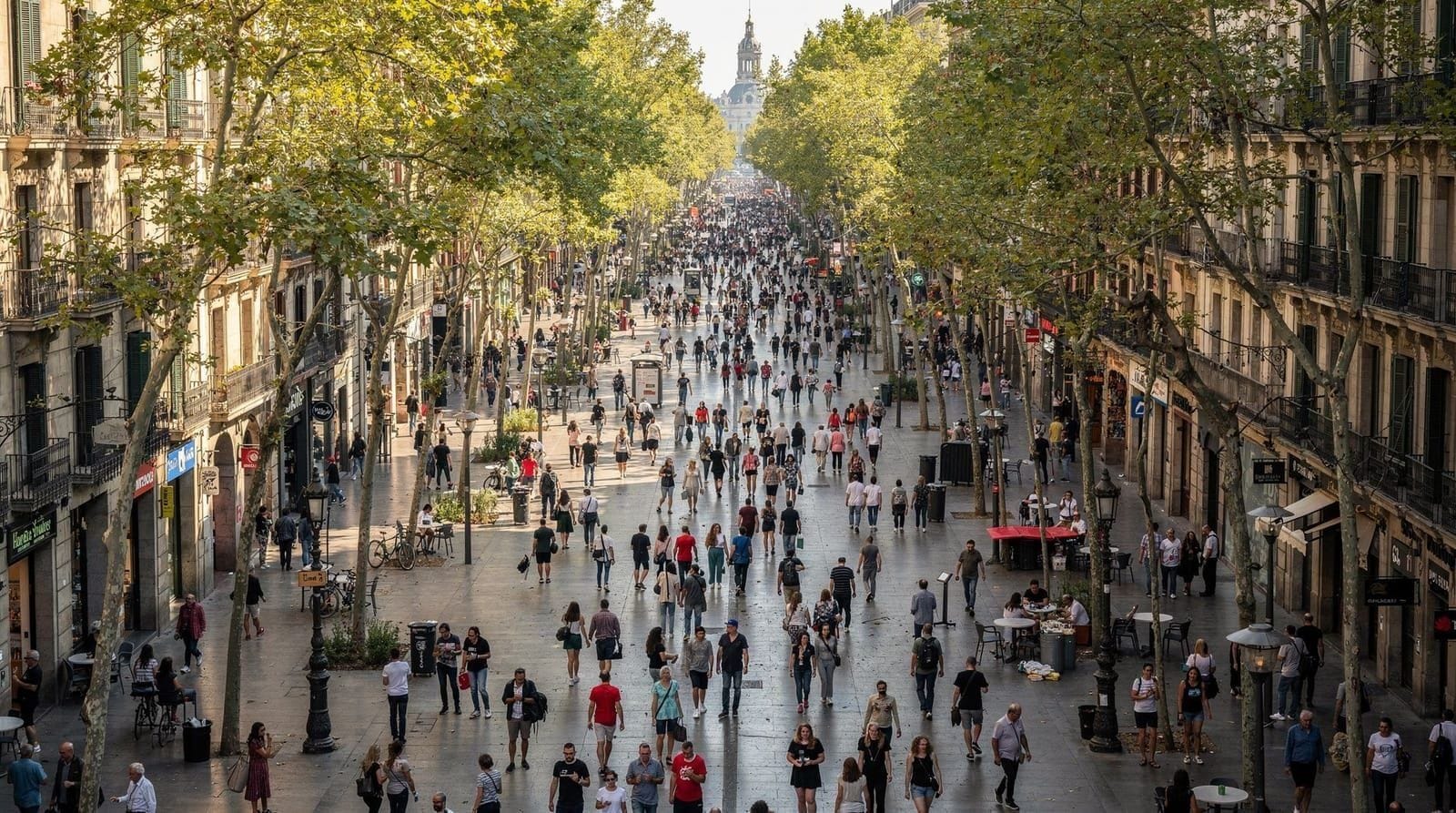
The entry section of La Boqueria exists in a relationship with La Rambla that intensifies the tourist dynamic. Visitors who have just run the pickpocket gauntlet of La Rambla enter the market ready to spend and to experience “authentic” Barcelona food. The stalls near the entrance are aware of this.
A cut-fruit cup at €8 represents approximately 4 times the price you would pay at a supermarket for the same ingredients. A small seafood tapa at one of the counter stalls near the entrance may cost €12–18 for what would be €5–8 in the neighbourhood markets. These prices do not represent fraud — they represent responsive pricing for a tourist economy — but they are worth knowing before you buy.
The tourist traps guide has more context on La Boqueria pricing and the broader La Rambla dynamic, and the Las Ramblas guide covers the boulevard’s pickpocket hotspots and genuine highlights beyond the market.
Better markets for actual shopping
Mercat de Santa Caterina (El Born, 5 minutes’ walk from the Picasso Museum): Same scale as La Boqueria, with a spectacular modern roof by architect Enric Miralles using coloured ceramic mosaic. Mostly serving the local El Born neighbourhood; genuine pricing; excellent tapas bar (Bar del Mercat). Open Monday to Saturday.
Mercat de Sant Antoni (Eixample, Metro Paral·lel or Sant Antoni): A restored 1882 iron market building. Regular produce market inside; on Sundays and Saturday mornings, a vintage book, magazine and antiques market operates on the exterior pavement. One of the best urban markets in Barcelona.
Mercat de l’Abaceria (Gràcia, Metro Fontana): The neighbourhood market of Gràcia. Less grand than La Boqueria but more genuinely local. The Sunday flea market section in the adjacent covered yard is excellent.
Cooking classes from La Boqueria
Several well-established cooking schools begin with a guided walk through La Boqueria before the cooking class. The market context is more useful in this format than as a standalone visit: a guide can explain what the quality indicators look like, why certain fish is seasonal and how to identify the tourist-priced stalls from the ones serving the restaurant trade.
Cooking classes including a Boqueria market visit run approximately €70–85 for 3–4 hours and typically include the meal produced in the class. See the tour options on this page for verified operators. For a broader food walk beyond the market, see the tapas tours guide.
What the entrance markup actually looks like
To make the pricing gap concrete rather than abstract: a small cup of pre-cut fruit at an entrance stall typically runs €5–8, while the same weight of whole fruit two aisles further in costs €2–3. A tapa-sized seafood plate at the entrance can run €12–18 for what a neighbourhood bar charges €5–8 for. None of this is a scam in the legal sense — prices are displayed — but it is worth internalising before you buy on impulse just inside the door.
| Item | Entrance price (approx.) | Interior/neighbourhood price |
|---|---|---|
| Cut fruit cup | €5–8 | €2–3 for whole fruit |
| Seafood tapa | €12–18 | €5–8 |
| Jamón ibérico (100g) | €18–25 | €8–12 (interior stalls) |
| Fresh olives (tub) | Similar city-wide | Similar city-wide |
A short walking sequence through the market
If you have 45 minutes, this sequence gets you past the tourist corridor efficiently and into the parts of the market worth your time:
- Enter from the Carrer de la Boqueria side entrance rather than the main La Rambla gate — it’s less crowded and puts you closer to the interior stalls immediately.
- Walk straight through the first 20–30 metres without stopping at the fruit-cup or seafood-tapa counters.
- Head for Bar Pinotxo at the back left of the main hall if you want a genuine market breakfast or early lunch — arrive before 10:30 to avoid the worst of the queue.
- Browse the jamón and cheese stalls in the interior aisles, tasting before buying where offered.
- Exit toward La Rambla only once you’re done, so you’re not tempted to linger in the tourist corridor with produce already in hand.
Getting there and practical notes
Metro: L3 (green line) to Liceu. The exit deposits you on La Rambla about 50 metres from the market entrance. Alternatively, L2 or L3 to Passeig de Gràcia and a 10-minute walk along Carrer del Carme to the secondary entrance.
When to go: The market is most active between 09:00 and 13:00 on weekdays. Weekend mornings are the most crowded. The market is closed on Sundays.
Crowds: Extremely dense at the entrance on summer weekend mornings. If you are claustrophobic, enter via the Carrer de la Boqueria side entrance rather than the La Rambla main gate.
Security: Keep valuables secured. The La Rambla entrance is a known pickpocket concentration point, and the market crowd provides cover for theft. A crossbody bag worn in front is standard practice.
Photography: Photography is generally tolerated; some vendors dislike cameras pointed at their products. Be considerate — many of the stall holders are working, not performing.
La Boqueria is worth 45 minutes of a Barcelona visit as a visual experience and for specific purchases (jamón, whole fruit, olives). It is not the place for a local market experience — for that, Santa Caterina or Sant Antoni are far better. And whatever you buy, walk away from the entrance stalls to the interior before committing to any price. The market improves substantially the further from La Rambla you go.
Frequently asked questions about La Boqueria market
Is La Boqueria overrated?
For shopping, yes. The market near the entrance is heavily oriented toward tourists and the prices for prepared food (cut fruit, tapas snacks, small seafood portions) are 2–3 times what you would pay in a neighbourhood market. The deeper interior stalls — selling whole products to local chefs and residents — are closer to genuine market pricing. The visual experience is genuine and impressive; the food deal is not.What are the opening hours?
La Boqueria is open Monday to Saturday 08:00–20:30. Closed Sundays. Many stalls selling fresh fish and meat close by around 15:00; prepared food stalls stay open until closing. The market is most active 09:00–13:00.Where is La Boqueria?
Mercat de la Boqueria is on La Rambla, between Carrer de la Boqueria and Carrer del Carme, approximately in the middle of the boulevard. The main entrance is directly off La Rambla; the secondary entrance is on Carrer de la Boqueria. Metro L3 to Liceu.What is a better alternative to La Boqueria?
Mercat de Santa Caterina in El Born (designed by Enric Miralles, with a remarkable mosaic roof) is a working neighbourhood market with genuine local pricing and a good tapas bar section. Mercat de Sant Antoni (recently renovated, 1882 iron structure) in the Eixample is excellent on weekends when a vintage book and antiques market operates outside. Both are far less crowded.Can I do a cooking class from La Boqueria?
Several cooking schools run classes that begin with a guided market walk through La Boqueria followed by a cooking session. These typically last 3–4 hours and cost €65–85. The market walk component is more educational than shopping, as guides point out quality indicators and explain seasonal produce. See the GYG cooking tours on this page for verified options.Is La Boqueria safe?
The market itself is generally safe during business hours. La Rambla outside is one of the highest pickpocket-density streets in Europe. Keep bags in front, phones in pockets and avoid the entrance crowds with a bag on your back. The worst concentration of incidents is at the main La Boqueria entrance from La Rambla.How much markup is there between the entrance stalls and the interior?
Significant. A cut-fruit cup at the entrance runs €5–8 versus €2–3 for the same weight of whole fruit a few aisles in. Jamón ibérico can be €18–25 per 100g near La Rambla versus €8–12 at interior specialist stalls. Walking 20–30 metres past the entrance corridor makes a real difference to what you pay.
Top experiences
Bookable activities with verified prices and instant confirmation on GetYourGuide.