Montjuïc cable car: tickets, routes and what to know before you ride
Barcelona: Montjuïc cable car roundtrip ticket
Duration: 1 hour
- Free cancellation
Which Montjuïc cable car should I take?
There are two separate cable car systems. The Telefèric de Montjuïc (from the Paral·lel funicular) goes up the hill to the castle — €17.10 roundtrip online (€19 at the ticket office). The Transbordador Aeri del Port crosses the harbour from Barceloneta beach to the lower Montjuïc; check current prices on its official website. They are different experiences: the Montjuïc cable car gives the city view; the port cable car gives the harbour view. Neither connects to the other without walking.
| Where | Montjuïc hill, from Paral·lel (Telefèric) or Barceloneta (Transbordador) |
| Cost | €17.10 roundtrip online, €19 at the ticket office (Telefèric); Transbordador: check official site |
| Time needed | 10–12 minutes each way, plus queue time |
| Getting there | Metro Paral·lel (L2/L3) or Barceloneta (L4) |
| Best time | Before 10:30 or after 17:00 to avoid queues |
Montjuïc hill is reachable by foot, bus, funicular and two entirely separate cable car systems. Each provides a different experience, a different view and a different relationship with the hill. Understanding which one to take — or whether to combine both — requires knowing what each actually does.
The two systems explained
Telefèric de Montjuïc (the hill cable car)
The Telefèric de Montjuïc runs from the Paral·lel area (reached via the funicular from Paral·lel metro) to the castle area at the summit, in two stages via the Mirador del Migdia station.
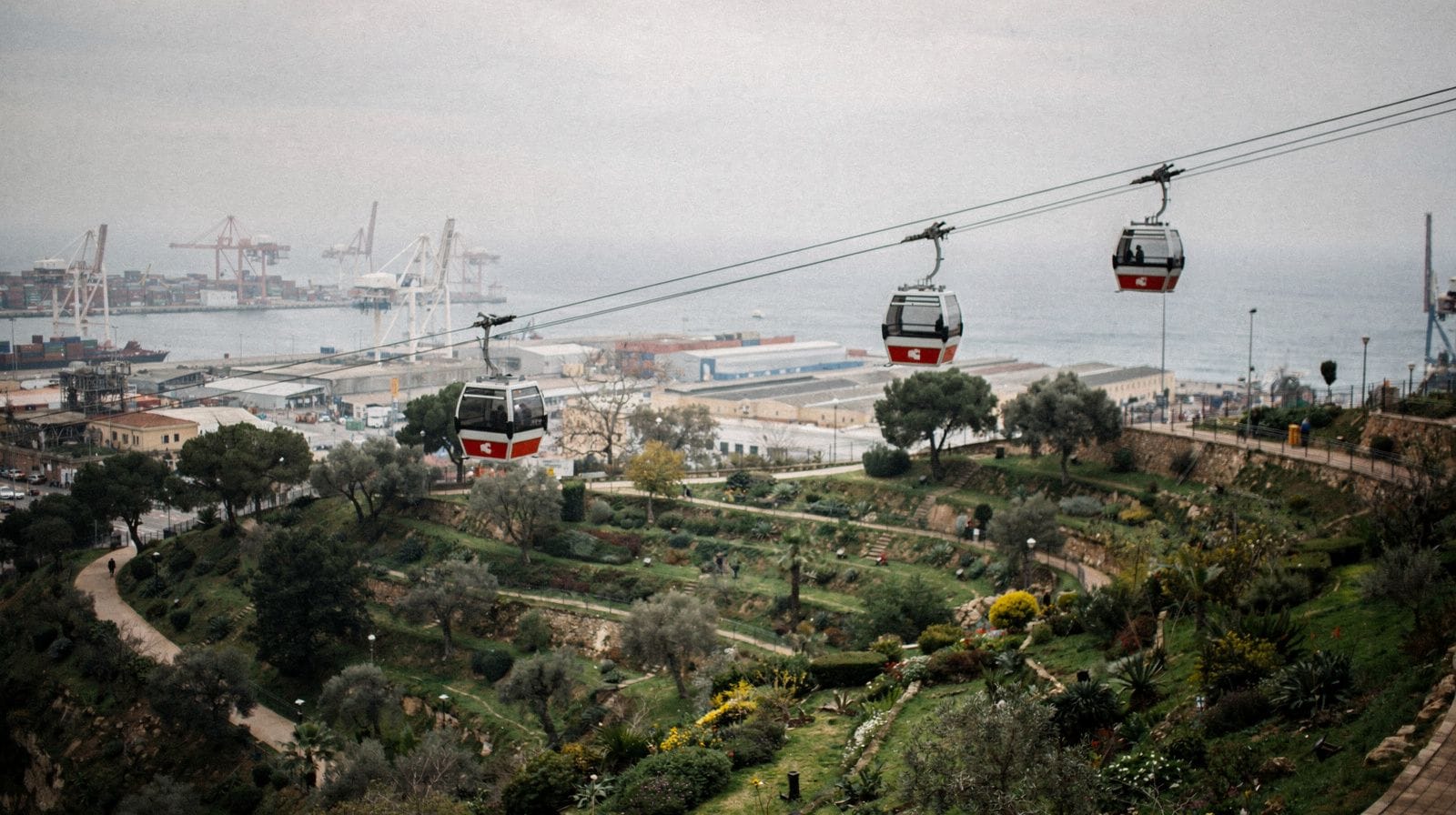
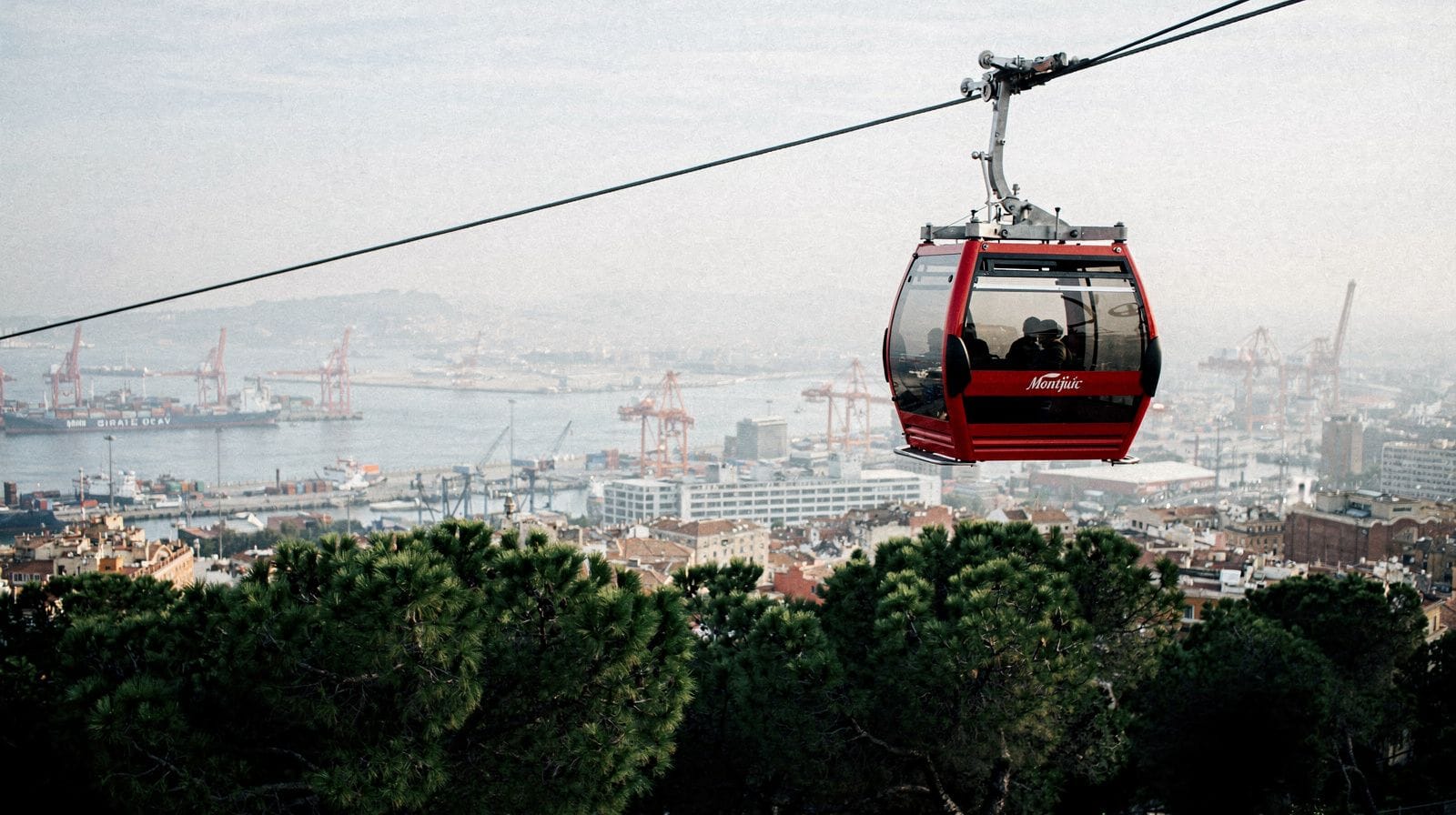
This is the main cable car for accessing Montjuïc castle and the upper hill. The gondola carries up to 6 people and rises steeply above the pine forest of the hill, giving views over the city, the port and the sea.
Stations:
- Lower station (Estació Paral·lel): Connected to Paral·lel metro by the Funicular de Montjuïc (underground, free with metro ticket).
- Mirador del Migdia: Middle station with views south toward the Llobregat delta.
- Castell station: Upper station near Montjuïc castle entrance.
Cost: €17.10 roundtrip online (€19 at the ticket office); €12 one way, sold at the ticket office only. Children (4–12): €11.70 roundtrip online (€13 at the ticket office), €10 one way. Under 4: free.
Hours: 10:00–18:00 (January, February, November, December), 10:00–19:00 (March–May, October), 10:00–21:00 (June–September); 10:00–14:30 on 25 December, 1 January and 6 January.
Queues: Can be significant in summer between 11:00 and 16:00. Arriving at opening time or after 17:00 significantly reduces wait time.
Transbordador Aeri del Port (the port cable car)
The Transbordador Aeri is older (built 1931, modernised in 2000s) and provides a different kind of experience: it crosses the entire port of Barcelona from sea level, giving views directly down onto container ships, pleasure craft and the city waterfront.
It connects three towers: Torre de Jaume I (at the Barceloneta end), Torre de Sant Sebastià (at the Old Port end) and Torre de Miramar (on the lower Montjuïc slope, not at the castle). Each gondola carries up to 7 people.
Cost: Check current prices on the official Transbordador Aeri website.
Hours: Check the current hours on the official Transbordador Aeri website.
Key point: The Transbordador Aeri does NOT reach the castle. It arrives at Mirador de Miramar on the lower slope, from which a 20–25 minute uphill walk or the Telefèric connection reaches the castle area.
Which to use and when
For reaching the castle: Telefèric de Montjuïc. Take Paral·lel metro, free funicular to the cable car lower station, then cable car roundtrip to the castle.
For the harbour view experience: Transbordador Aeri del Port. Take metro to Barceloneta, walk to the Torre de Sant Sebastià cable car station and ride to Mirador de Miramar. Best combined with a visit to lower Montjuïc (Fundació Joan Miró, MNAC) rather than the castle, or with a stop at the Barceloneta beach before or after.
For both: A full Montjuïc day can incorporate both by using the Transbordador to get to Miramar in the morning, walking up to the castle (or taking the Telefèric middle stage), then descending via the Telefèric to the funicular. This takes a full day.
The funicular connection
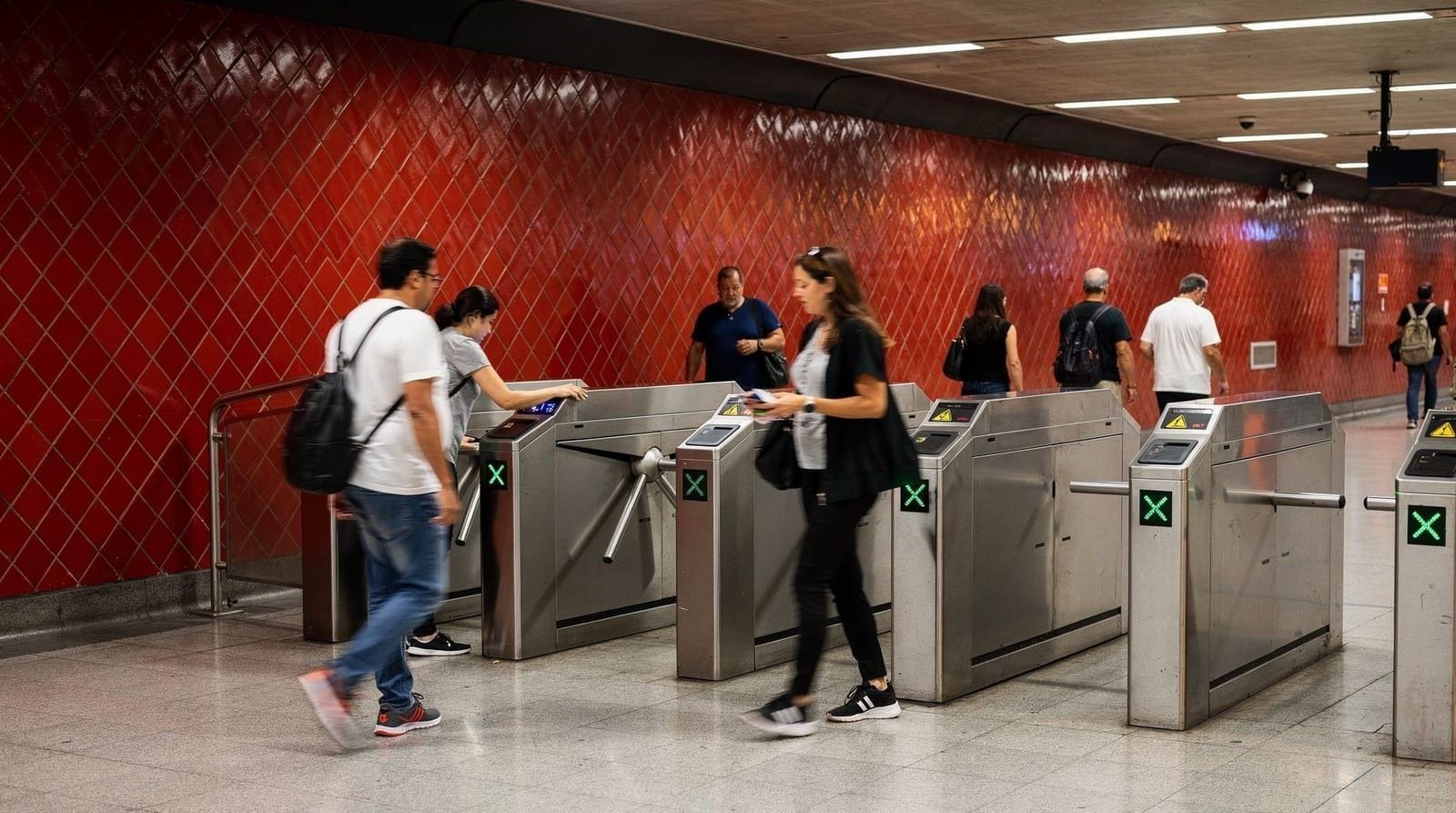
The Funicular de Montjuïc is a critical and often misunderstood element. It is a short railway (not a cable car) that runs from inside Paral·lel metro station to the lower Montjuïc station. It is part of the TMB network and is free with any valid metro ticket, including T-Casual, Hola BCN or a standard single metro ticket.
The funicular runs every 10 minutes approximately 07:30–22:00 on weekdays and continuously on weekends. Missing the detail that the funicular is free often leads visitors to pay extra for bus or taxi connections they do not need.
Getting to the cable cars
For Telefèric de Montjuïc: Metro L2 (purple) or L3 (green) to Paral·lel. The funicular entrance is inside the metro station.
For Transbordador Aeri: Metro L4 (yellow) to Barceloneta, then a 15-minute walk along Passeig de Joan de Borbó to the Torre de Sant Sebastià station. Alternatively, the Torre de Jaume I station is at the Port Vell end and accessible from La Barceloneta by a slightly different walking route. See the getting around Barcelona guide for how the metro lines connect if you are combining this with other parts of the city on the same day.
Practical notes
Queues: The Telefèric has the longest queues in summer. The gondolas are small (6 people) and the throughput is slow. Arriving before 10:30 or after 17:00 avoids the worst waits.
Photography: Both cable cars are excellent photography platforms. The Transbordador gives the best port and city shots; the Telefèric gives the best views of the forested hillside and castle. On sunny afternoons, shooting from the Telefèric gives backlit city views — the morning slot is better for photography.
Wind and closures: Both cable cars close in high winds. Gusty days (particularly the tramontana wind from the north) can result in unexpected closures. Always check the operator website or call before a special trip.
Accessibility: The Telefèric gondolas are accessible; the funicular is fully accessible. Contact TMB for the current accessibility configuration of the funicular entrance.
Combined with the e-bike tour: Several e-bike tour operators in Barcelona include a Montjuïc cable car segment, giving a scenic descent back into the city after cycling up through the park. This is a popular combination for those who want the cable car view without the queue.
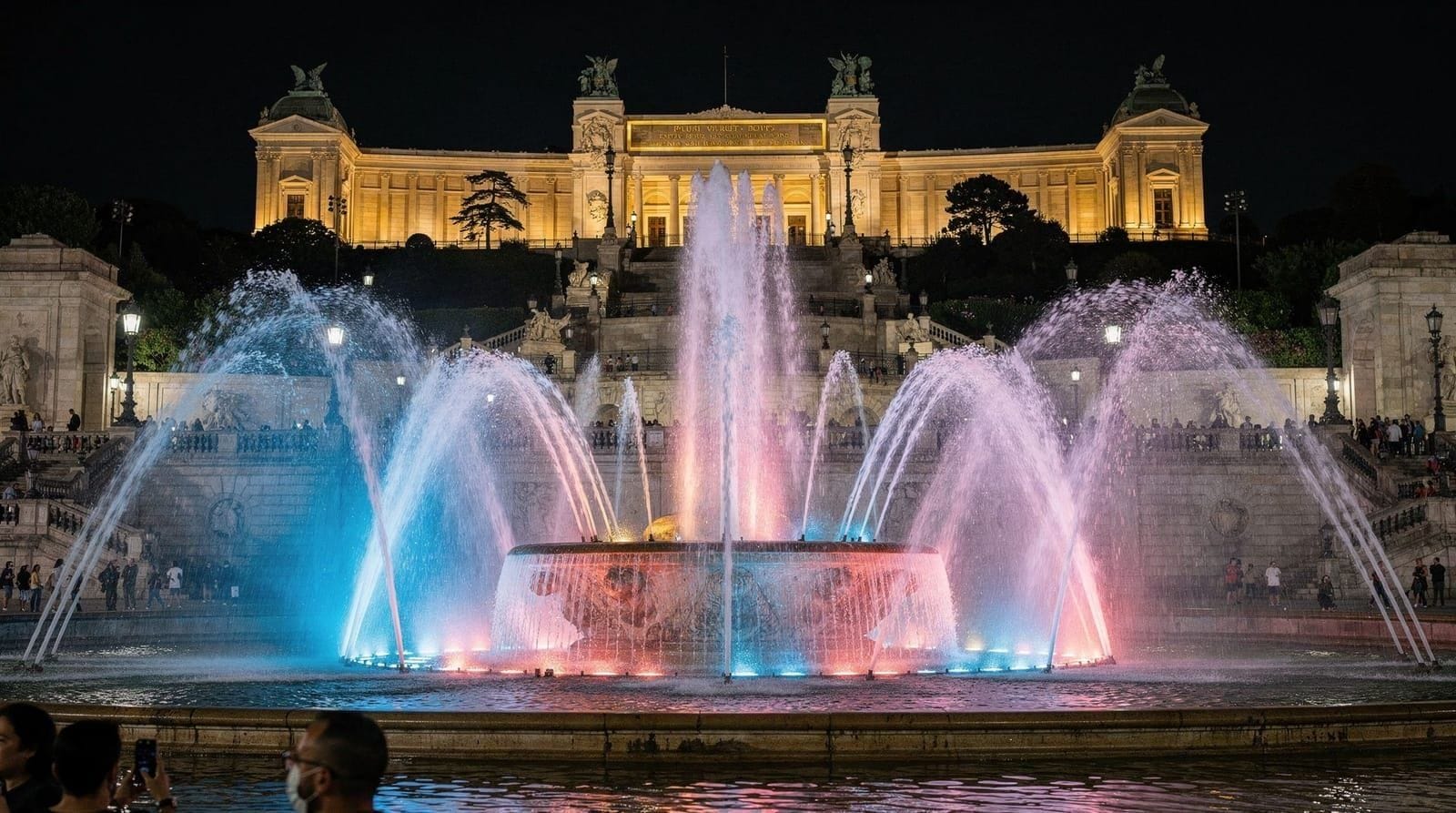
Combined with the evening fountain show: Coming down the Telefèric in late afternoon connects naturally to an evening at the Magic Fountain at the foot of the hill, a free show that makes a good end to a full Montjuïc day.
The view and what you see
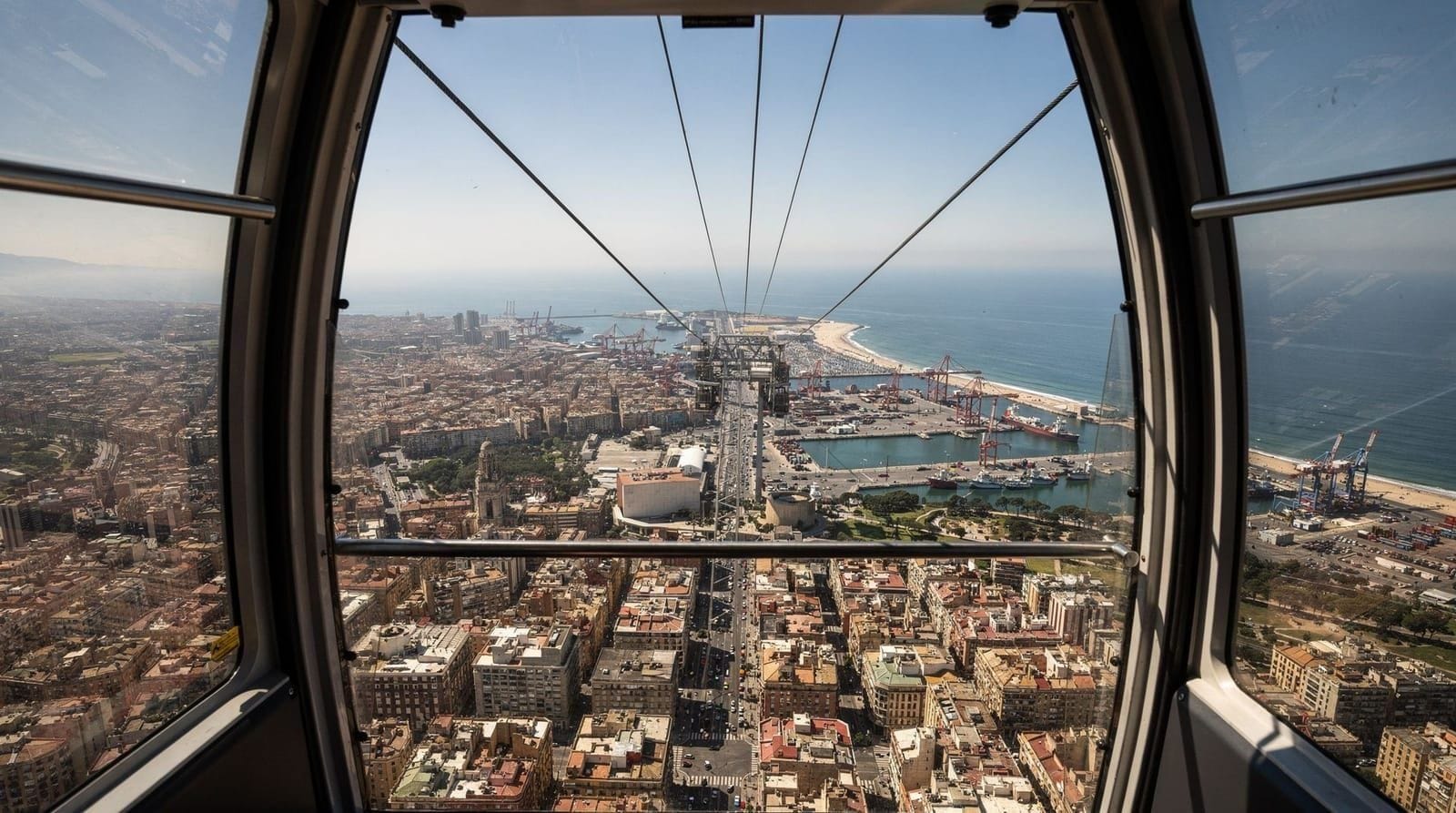
From the Telefèric, the view opens progressively as the gondola rises above the tree line. At the upper station, the view encompasses: the Eixample grid extending north; the Sagrada Família towers clearly visible; Barceloneta and the beach strip to the east; the Mediterranean beyond; and, looking west, the Llobregat plain and the airport runway on the coast.
From the Transbordador, the view is different in character: looking directly down into the port gives a bird’s-eye view of container logistics and the dense maritime activity that is not visible from any land viewpoint.
The Montjuïc cable car is a practical way to reach the castle and an enjoyable experience in itself. The Transbordador Aeri is a scenic attraction rather than a practical route — most visitors who take it do so for the harbour view rather than as the most efficient way to Montjuïc. Use the free funicular from Paral·lel, buy the roundtrip cable car ticket and allow 10 minutes of queuing on busy summer days.
Telefèric vs. Transbordador at a glance
| Telefèric de Montjuïc | Transbordador Aeri del Port | |
|---|---|---|
| Route | Paral·lel funicular to the castle | Barceloneta to lower Montjuïc |
| Cost roundtrip | €17.10 online, €19 at the ticket office | Check official site |
| View | City, castle, forested hillside | Port, container ships, waterfront |
| Reaches the castle | Yes, directly | No, 20–25 min walk from arrival point |
| Best paired with | Montjuïc castle | Barceloneta beach or a Montjuïc museum day |
Building a Montjuïc day around the ride
The cable car works best as a spine for the day rather than as the whole outing. The hill is large, and the ride saves legs for the things you actually came to see. A sensible shape is to arrive early, ride up while the queue is short, spend the middle of the day at one or two sights near the top, and let the afternoon drift downhill on foot. For the wider picture of what the hill holds, the Montjuïc destination page lists every sight in one place, and the neighbouring Poble-sec district at its foot is the natural place to eat afterwards.
If museums are the priority, treat the cable car as transport and not as an attraction. The MNAC and the Fundació Joan Miró both sit on the lower slopes, so you may not need the summit at all. If you want a more family-friendly stop on the way down, the Poble Espanyol is a short walk from the lower hill and gives children room to move after a morning of queuing and gondolas.
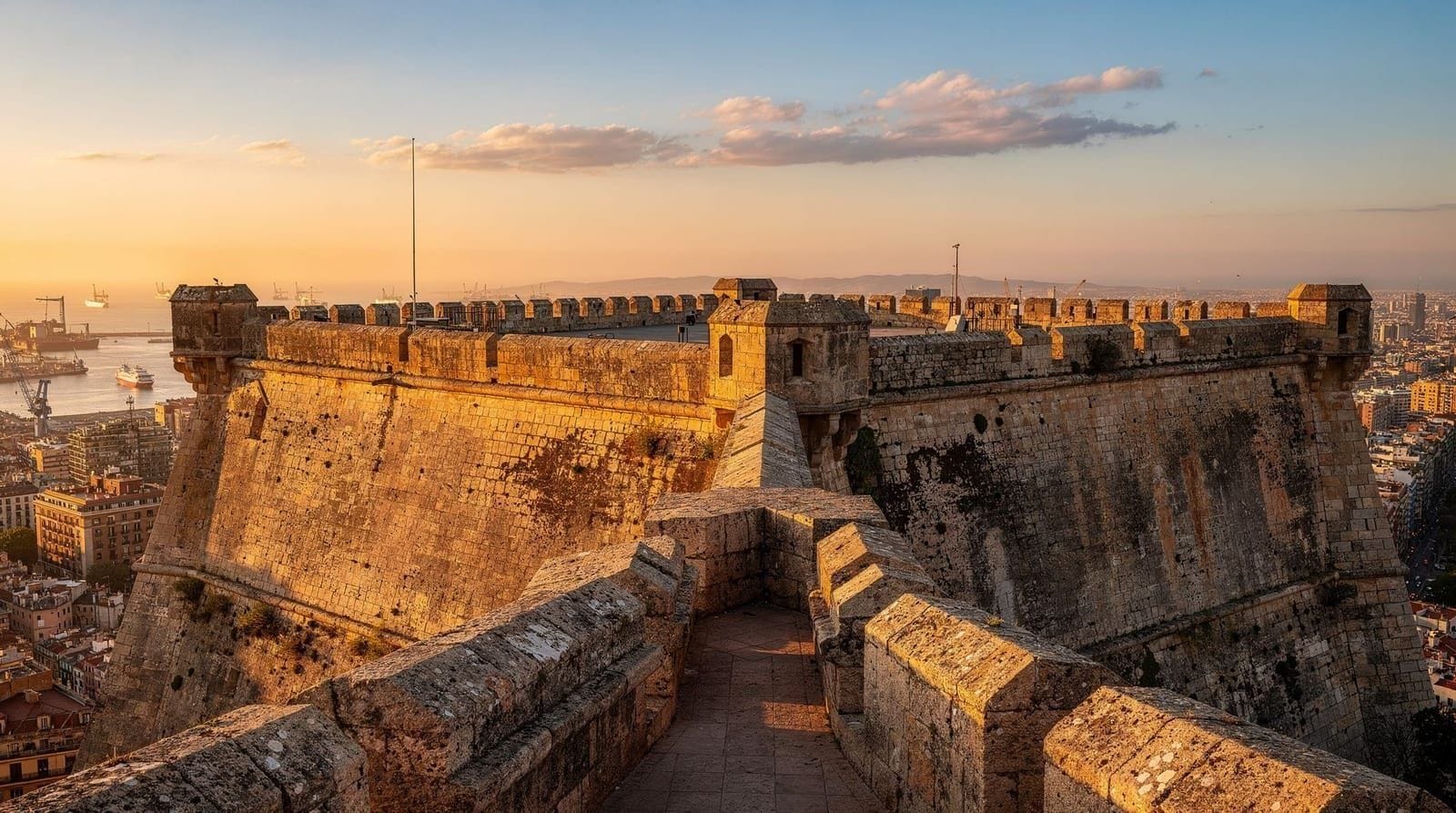
For the castle itself, read the Montjuïc castle guide before you go, so that you know what to look at once the gondola drops you at the upper station. The ride is only the approach; the ramparts, the courtyards and the sea views are the reason to arrive.
Choosing the right moment
Light changes the character of both rides. In the morning the city below is clear and the air is usually at its calmest, which suits anyone who wants photographs and fewer people in the cabin. In the late afternoon the sun lowers over the hill and the port takes on a warmer tone, which many visitors prefer for the Transbordador, since the harbour view is the whole point of that ride.
Season matters too. Summer brings the longest opening hours but also the longest queues, while winter days are quieter but shorter, so you have less margin if the weather turns. A clear, still day is the one to pick for either cable car; on a hazy or windy day the views flatten and closures become more likely. If your schedule is flexible, keep a spare day in your plan and choose the ride on the morning itself, after looking at the sky. The best time to visit Barcelona guide helps you weigh seasons if you are still deciding when to travel.
Fitting it into a longer trip
Montjuïc rarely needs more than half a day, which makes it easy to slot into a longer stay. It pairs well with a slow morning followed by an evening at the fountain, or with a lighter day built around the beach and the waterfront. Our 3-day classic itinerary shows how a first visit can balance the hill against the Gothic and Gaudí sights, and the Barcelona itinerary tips guide explains how to order your days so that the big sights do not collide.
Think about how you will move around as well. Since the funicular is covered by ordinary metro fares, a travel pass can make the whole outing smoother. The transport pass comparison sets out the options, and the Hola Barcelona card guide explains how that pass fits a day that starts on the metro and climbs the hill. Remember that the cable car ticket itself is bought separately from any pass.
Small details that help
- Travelling with children: the gondolas are small and enclosed, so younger children are usually happy, but hold hands on boarding and keep bags on your lap. The Barcelona with kids guide covers how to pace a day around little ones.
- Mixed groups: if one person dislikes heights, the Telefèric is the gentler choice, as it rises over trees and not over open water. The Transbordador crosses the harbour high above the water and feels more exposed.
- Combining with the sea: after a hilltop morning, a swim or a drink at the shore is an easy reward. The Barceloneta beach guide and the wider Barceloneta area page help you plan that second half.
- Layers and water: it is usually cooler and breezier at the top than at street level, so carry a light layer, and bring water since refreshments on the hill are limited.
- Patience on busy days: if the queue looks long, use the time to decide what you will do at the top. A clear plan lets you move off the platform quickly and keeps the line moving for everyone behind you.
Booking a combined ticket
If you would rather not manage the funicular, cable car and castle entry as three separate purchases, a combined ticket bundling the Telefèric roundtrip with castle admission and an audio guide covers the whole visit in one booking and is worth pricing against buying each piece separately, especially in high season when queues at individual ticket counters add up.
For visitors who want the cable car folded into a wider active day rather than a standalone visit, an e-bike tour that climbs Montjuïc by bike and descends by cable car is a popular way to see the hill without the uphill effort or the queue.
Frequently asked questions about Montjuïc cable car
How much does the Montjuïc cable car cost?
The Telefèric de Montjuïc costs €17.10 roundtrip online (€19 at the ticket office) or €12 one way (sold at the ticket office only) for adults. Children aged 4–12 pay €11.70 roundtrip online (€13 at the ticket office) or €10 one way; under-4s are free. The Funicular de Montjuïc that connects Paral·lel metro to the cable car lower station is free with a metro ticket (T-Casual or Hola BCN).What is the Funicular de Montjuïc?
The Funicular de Montjuïc is a rail car that runs from Paral·lel metro station underground to the Parc de Montjuïc lower station, where you transfer to the cable car. The funicular is part of the TMB (Barcelona metro) network and is included in the T-Casual, Hola BCN and single metro tickets. It is not a cable car — it runs on tracks in a tunnel for the first section.How long does the Montjuïc cable car journey take?
The Telefèric de Montjuïc has two stages: lower station (Mirador de Miramar) to middle station (Mirador del Migdia) takes about 5 minutes; middle station to castle takes another 5 minutes. Total journey from the funicular station to the castle: approximately 10–12 minutes.What is the Transbordador Aeri del Port?
The Transbordador Aeri is a historic aerial cable car crossing the port, built in 1931. It connects Torre de Jaume I at Barceloneta beach to Torre de Sant Sebastià at the beach end, with a middle stop at Torre de Sant Sebastià, and continues to the Mirador del Migdia on lower Montjuïc. Check current prices on the official Transbordador Aeri website. The view from inside the gondola — looking down at the port, the container cranes and the city — is completely different from the hilltop cable car.Can I take one cable car up and the other down?
Not directly — the two cable cars are in different parts of Montjuïc and are not connected by a direct path at the summit. You can visit both by taking the Transbordador Aeri up to Mirador del Migdia, walking 20 minutes across to the Telefèric middle station, taking the Telefèric up to the castle area, then returning via the Telefèric and funicular. This is a 4–5 hour combined programme.What are the opening hours of the Montjuïc cable car?
The Telefèric de Montjuïc operates 10:00–18:00 in January, February, November and December; 10:00–19:00 from March to May and in October; and 10:00–21:00 from June to September. On 25 December, 1 January and 6 January it runs 10:00–14:30. Check the official Telefèric de Montjuïc website for the current schedule before visiting. For the Transbordador Aeri, check the hours on its official website.
Top experiences
Bookable activities with verified prices and instant confirmation on GetYourGuide.