Magic Fountain Montjuïc: show times, schedule and how to watch
Barcelona: Montjuïc Magic Fountain night tour
Duration: 2.5 hours
- Free cancellation
When does the Magic Fountain show run and is it free?
The Font Màgica (Magic Fountain) show is free and runs on selected evenings, with days and times that change by season. In October 2026 it runs Thursday to Saturday from 21:00 to 22:00, with shows at 21:00 and 21:30. The fountain is closed for maintenance from 1 to 15 November 2026. Check the Barcelona City Council website for the current schedule.
| Where | Avinguda de la Reina Maria Cristina, foot of Montjuïc |
| Cost | Free, no ticket needed |
| Time needed | 45–60 minutes for 2–3 shows |
| Getting there | Metro Espanya (L1/L3) |
| Best time | Arrive 15–30 minutes before the first show |
At the foot of Montjuïc, where Avinguda de la Reina Maria Cristina broadens into the grand approach to the 1929 World Exposition site, the Font Màgica has been performing its water and light choreography since 1929. It was designed by Carles Buïgas for the exposition, using technology that was genuinely innovative for its era: coloured lights inside the fountain basin choreographed to synchronise with a music programme.
Today it remains one of the most consistently popular free events in Barcelona — not because it is technically sophisticated by modern standards but because the setting is magnificent and the show, whatever its kitsch elements, tends to work. Children reliably love it; adults are more variable, but few come away indifferent.
What the show actually is
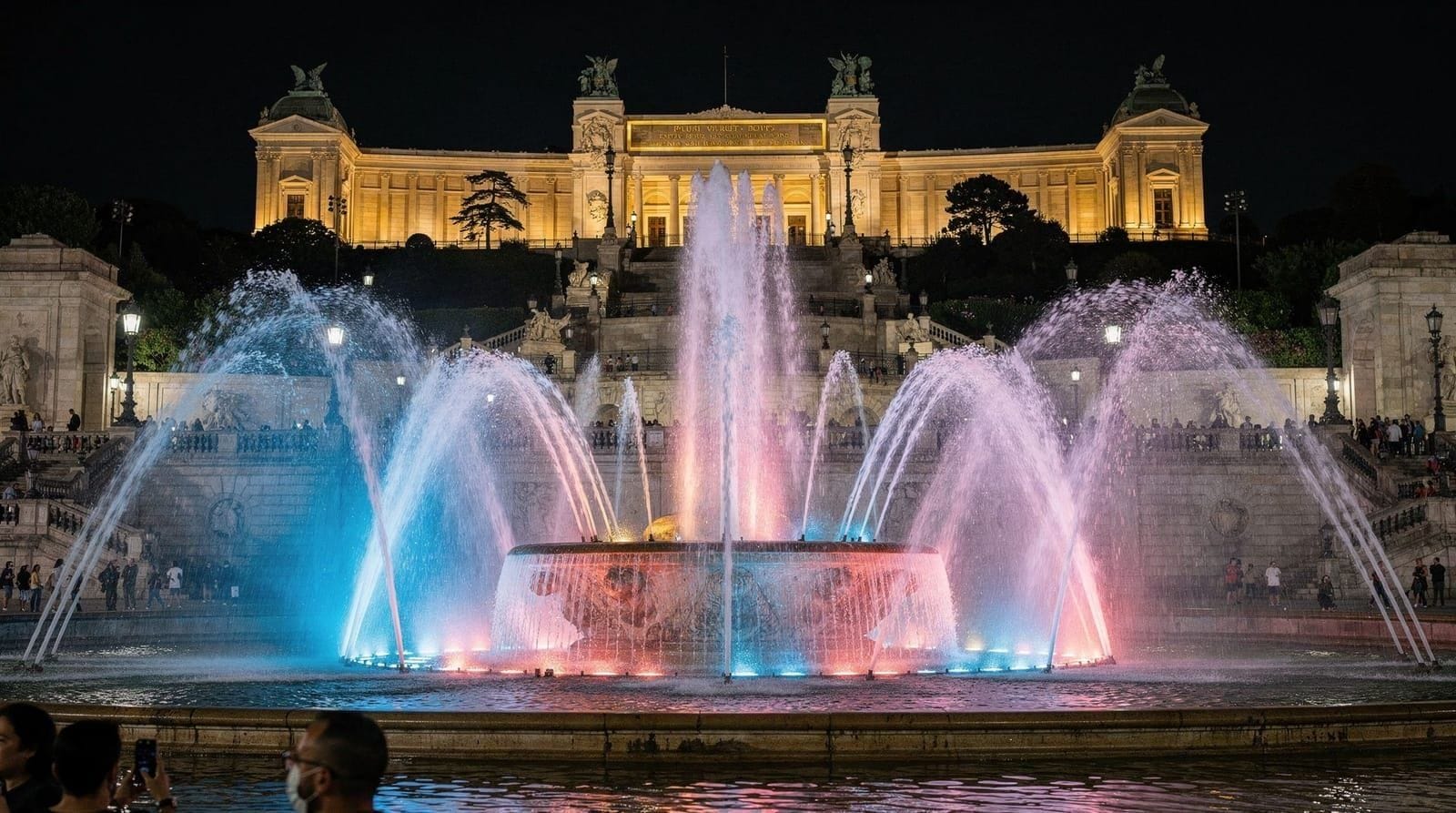
The fountain basin is approximately 50 metres in diameter. The show consists of water jets choreographed to move with music — rising, falling, fanning, converging — while the basin lighting cycles through colour sequences. The music is broadcast from speakers around the fountain area; programmes typically mix classical pieces with Barcelona-associated anthems and occasional contemporary tracks.
Each performance runs about 20 minutes. In a standard evening session, expect 2 or 3 performances with short intervals. The fountain itself is illuminated throughout the evening even between performances.
The quality of the show varies with the musical selection — some programmes are more tightly choreographed than others. The spectacle is the entire scene: the fountain, the Palau Nacional MNAC building illuminated on the hill above, the rows of 1929 exposition pavilions flanking the avenue, and the crowds gathering across a wide open area.
Show schedule 2026
The exact schedule changes by season and occasionally by special event. As a general guide for 2026:
October 2026: Thursday, Friday and Saturday, 21:00 to 22:00, with music and colour shows at 21:00 and 21:30. The fountain is closed for maintenance from 1 to 15 November 2026.
Other seasons: Days and times change through the year. Check the Barcelona City Council show-times page for the schedule and any closure dates.
February–April: Transitional schedule; check bcn.cat for current shows.
No entry required. The show is completely free and no tickets are necessary. The surrounding avenues and pavements provide ample viewing space. On very busy summer evenings, the main viewing area fills before the first show — arriving 30 minutes early gives a comfortable position.
How to get there
Metro: Espanya (L1 red line and L3 green line) is the main approach — a 5-minute walk up Avinguda de la Reina Maria Cristina from the metro exit brings you directly to the fountain.
Bus: Routes 9, 27 and 37 stop near Plaça Espanya. Bus 150 goes further up Montjuïc and passes the fountain. See the getting around Barcelona guide for how the metro and bus network fits together, especially if you are combining the fountain with other Montjuïc sights in one evening.
The approach from Espanya metro is one of the more theatrical arrivals in Barcelona: the twin 1929 red-brick towers flanking the avenue, then the progression of pavilions and the fountain basin appearing at the end.
Combining with a Montjuïc day
The Magic Fountain is the natural evening end to a full Montjuïc day. A practical sequence:
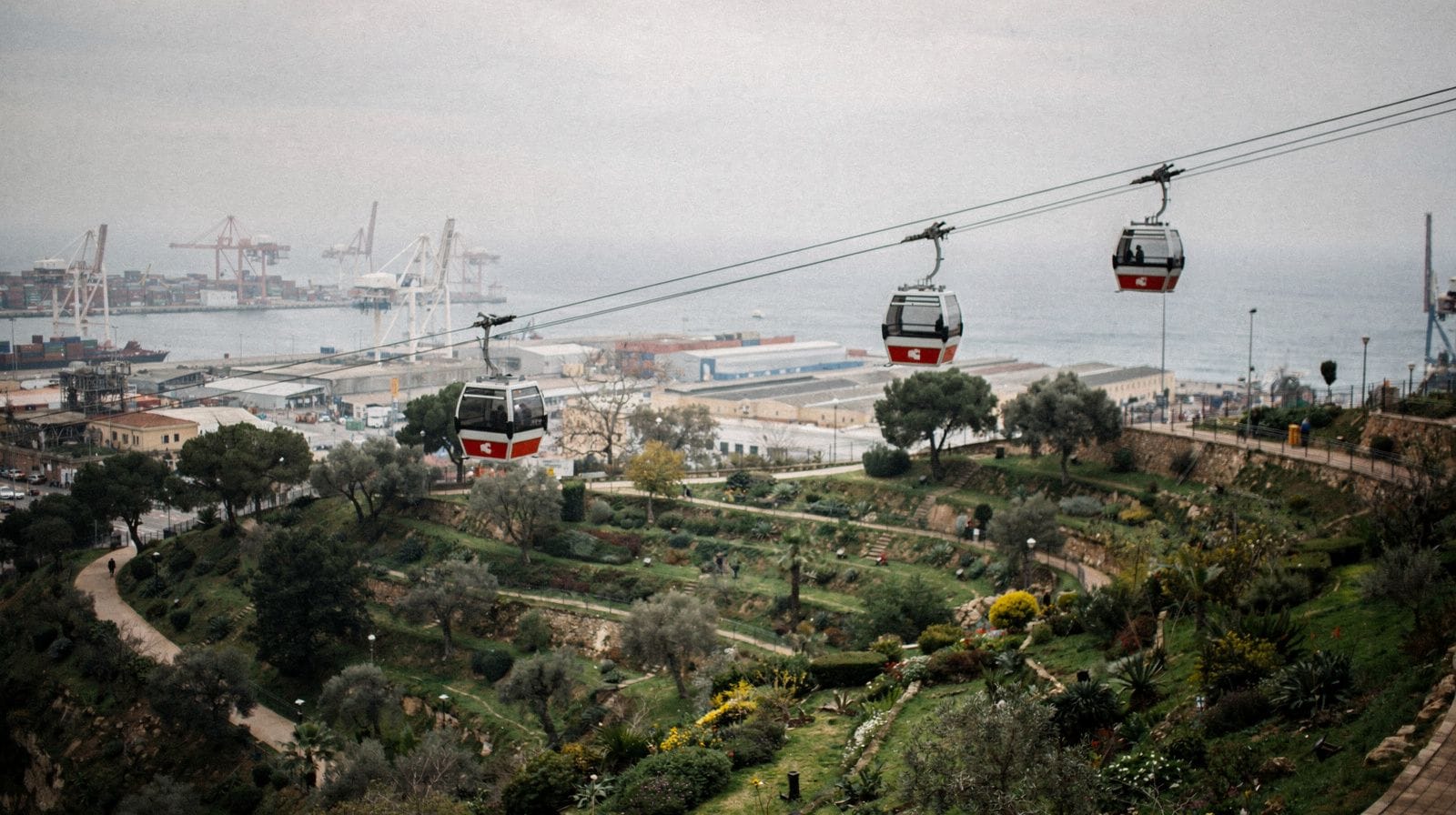
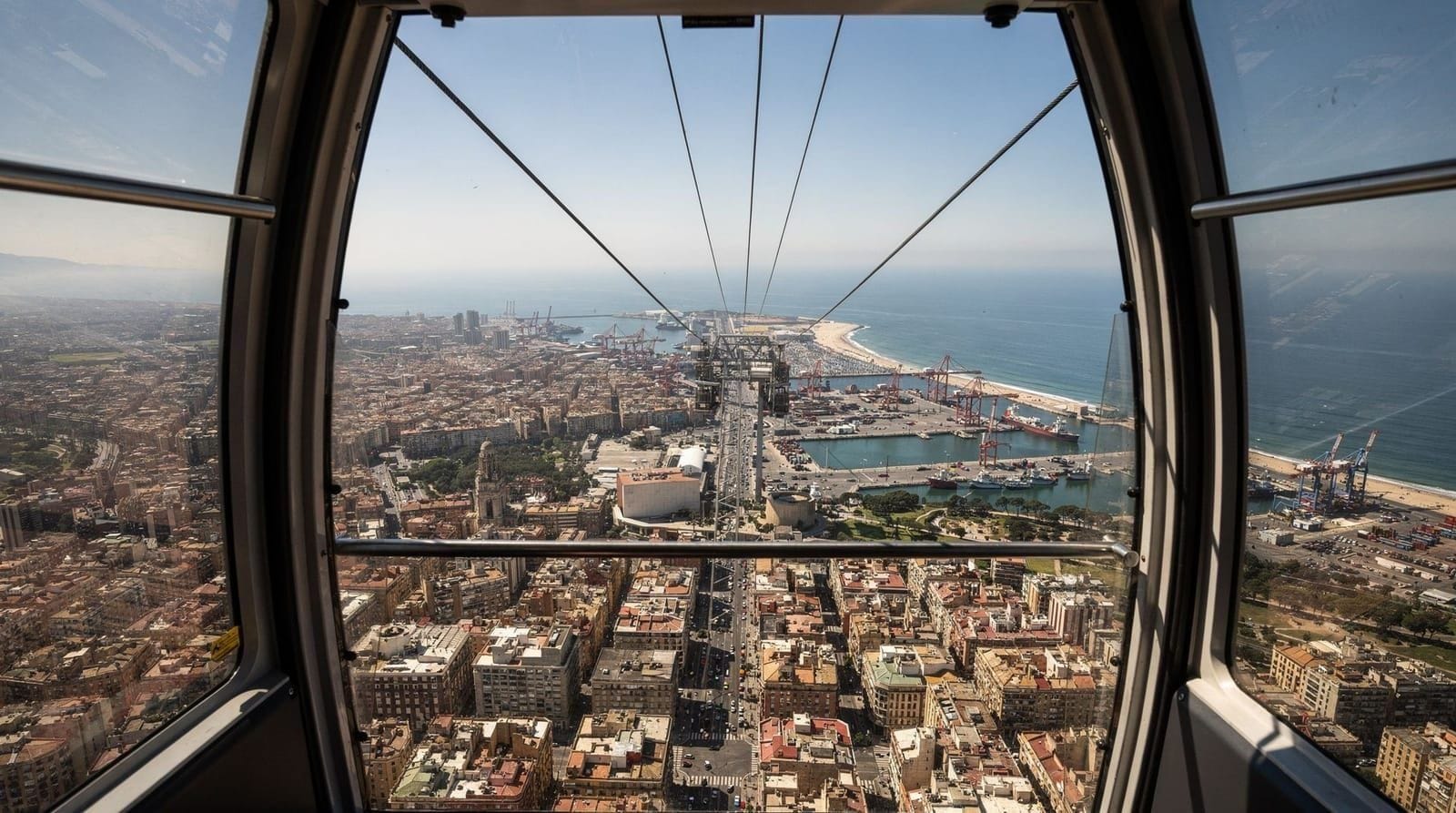
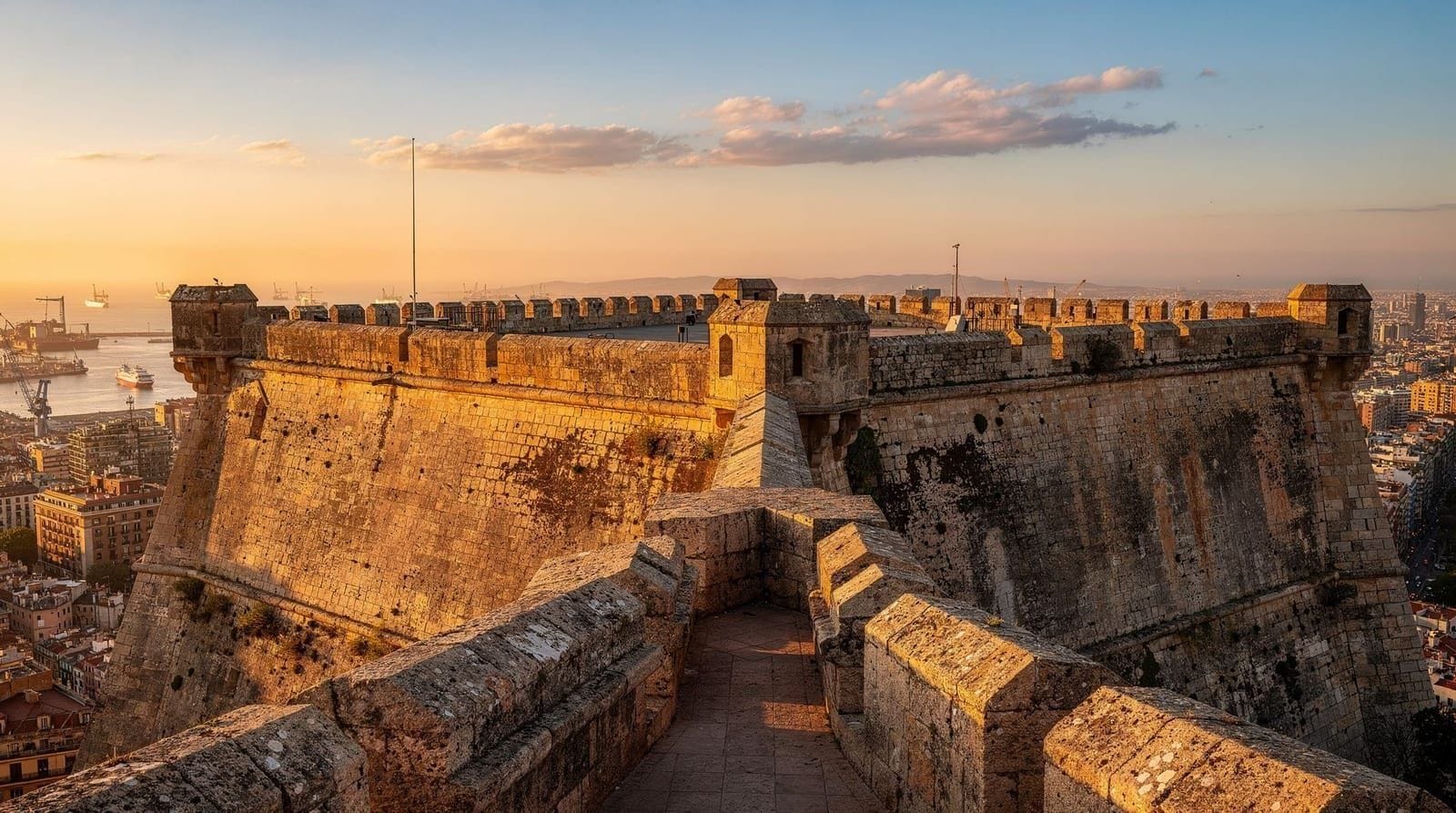
Morning: Montjuïc castle via the cable car (09:30–11:30).
Midday: Walk down through the Jardins de Laribal; lunch in Poble-sec.
Afternoon: Fundació Joan Miró or MNAC (check each official website for current prices and hours).
Evening: Walk or take bus 150 to the fountain area for the evening show (check the start time for the season).
The Pavillon Mies van der Rohe
Worth a mention: 200 metres from the Magic Fountain, the Barcelona Pavilion — reconstructed in 1986 on the original site of Mies van der Rohe’s 1929 German Pavilion for the World Exposition — is one of the most influential buildings of the 20th century. Entry is €11 (€5 reduced). It opens at 10:00 and closes at 20:00, so it cannot be combined with the evening fountain show, but a late afternoon visit pairs well. The pavilion’s minimalist interior, with its marble planes and the famous Barcelona Chair, is the antithesis of the Modernisme buildings across the hill.
What to expect practically
Crowds: Summer evenings bring large crowds, particularly for the first show. The area is wide and there is rarely a sense of dangerous density, but families with children should establish a clear meeting point before the show starts.
Photography: The show photographs well from street level with a standard smartphone; the coloured water and illuminated MNAC building behind create naturally dramatic compositions. A tripod is useful but not necessary in summer evening light.
Sound: The music volume is high enough to carry across the viewing area but is not overwhelming. The show has a slight Las Vegas quality that some visitors find charming and others find excessive.
Weather: The show runs in all weather except strong wind (which disrupts the water patterns) and very heavy rain. Cancellations are announced at the site and via bcn.cat.
Accessibility: The viewing area around the fountain is flat and fully accessible. The Espanya metro station has lifts. Families travelling with young children can pair the show with our Barcelona with kids guide for other early-evening options that fit around a late fountain bedtime.
Pairing the fountain with dinner
Because the show begins in the evening, dinner is the part of the plan that most often goes wrong. Eating before the show is the easier option: the Poble-sec streets close to the fountain are lively early in the evening, and our Poble-sec destination page explains what the neighbourhood is like and why it suits a pre-show meal. If tapas appeals more than a long sit-down dinner, the best tapas neighbourhoods guide helps you choose an area, and the Poble-sec pintxos crawl shows how a string of small bars can replace a formal meal and leave you free to walk to the fountain without rushing.
Eating after the show is also possible, but plan it rather than improvise. Crowds leave all at once, and the restaurants closest to the main avenues are not always the best value. Our paella and sangria traps guide is worth a quick read before you sit down at the first terrace that has a free table, and the tourist traps guide covers the wider pattern of places that rely on passing foot traffic rather than repeat customers. Walking a few streets away from the busiest corners almost always improves both the food and the bill.
If you would rather skip a full meal, a late snack plan works well: eat a proper lunch, take something light before the show, and finish with something small afterwards. For ideas on what to look for at the stalls and counters of the city, see the food markets guide, which pairs well with a daytime visit before you come back to the fountain in the evening.
Staying safe in the evening crowds
A large free event in the dark draws a crowd, and crowds are where pickpockets work. The fountain area is open and does not feel threatening, but it is sensible to keep phones, wallets and cameras out of back pockets and unzipped bags while everyone is looking up at the water. Phones held aloft for photos are an easy target, so keep a hand on yours and put it away between shows.
Our guide to avoiding pickpockets sets out the common techniques in detail, and the broader Barcelona safety and scams guide covers what to watch for at night, on the metro and around busy squares. The fountain itself is not a problem spot, but the walk back to the metro after the last show is exactly the moment when a tired group stops paying attention. Agree on a meeting point before the show, keep valuables close, and head for the station together once the music ends.
Getting home after the last show
Once the final performance finishes, thousands of people leave at the same time, and the avenue leading back to Espanya fills quickly. You have a few ways to handle that. The simplest is to wait: stay by the basin while the first wave clears, enjoy the illuminated pavilions in a calmer atmosphere, and then walk back at an easy pace. The metro and the bus network keep running into the evening, and the getting around Barcelona guide explains how the transport system works so you can plan your return before you leave your hotel.
If you are using a multi-trip ticket or a visitor card, the transport pass comparison helps you decide whether a pass makes sense for an evening like this, particularly when the fountain is one of several outings you are making that day. Travellers staying in another part of the city should think about the route home before the show begins rather than at 22:00 with tired children. If you are still choosing a base, the where to stay guide looks at which areas make evening outings like this easy.
Where the fountain fits in a wider trip
The fountain works best as one stop in a longer plan rather than a destination on its own. On a short stay, it slots naturally into the first or last evening, when you want something undemanding after a day of travel or sightseeing. Our how many days in Barcelona guide helps you decide how much time the city deserves, and the 3-day classic itinerary shows how an evening on Montjuïc can sit alongside the major sights without exhausting you.
Visitors who care about the history behind the exposition site will get more from the evening if they read a little first. The Barcelona history guide places the 1929 World Exposition in the longer story of the city, which makes the avenue, the pavilions and the fountain itself easier to read as you walk toward them. Likewise, if you are visiting the Poble Espanyol earlier in the day, you are already inside the exposition legacy, and the fountain becomes a natural finale rather than an unrelated detour.
For a different kind of evening view of the city, the best rooftop bars guide offers an alternative if the fountain is not running on your dates, and the nightlife guide covers what else is open when the show ends. A free show followed by a quiet drink is a perfectly good evening, and it does not need to cost much.
Season-by-season schedule at a glance
| Season | Days | Typical show times | Notes |
|---|---|---|---|
| October 2026 | Thursday–Saturday | 21:00, 21:30 | Closed 1–15 November 2026 for maintenance |
| Other seasons | Check the official schedule | Check the official schedule | Barcelona City Council website |
| February–April (transitional) | Varies | Check bcn.cat | Schedule shifts as daylight changes |
Because the fountain is genuinely free and needs no reservation, the practical planning question is really about season and day of week rather than availability. If your trip dates fall outside the peak May–October run, confirm the current week’s schedule on bcn.cat before building an evening around it — the winter programme in particular can change with little notice around the holiday closures.
Making the most of a full Montjuïc evening
If you want the day-long version with the history explained as you go rather than pieced together from signage, a guided evening tour covering the castle, the cable car and the fountain show removes the logistics entirely — useful if your visit is short and you would rather not work out bus 150’s timing yourself.
For the cable car specifically, paired with an audio guide covering the 1929 Exposition history that explains what you are looking at from above before you descend for the fountain show:
The Magic Fountain is not a substitute for the Sagrada Família or Park Güell, but as a free evening event it is consistently reliable. If you are in Barcelona on a show evening, arriving at Plaça Espanya a little before the first show is a straightforward addition to an already full day. The setting — the grand 1929 exposition axis, the illuminated MNAC above — does the heavy lifting.
Reading the scene as you watch
Many visitors treat the fountain as a thirty-second photo stop, then leave. It rewards a slower approach. Watch the first performance from a spot of your choice, then move for the second: try the higher ground near the MNAC museum if you began at the basin, or come down to the pavement if you began on the steps. The change of angle makes the two performances feel quite different, and it shows how the lighting was designed to be seen from the avenue rather than from above.
If you have time earlier in the day, the Montjuïc area has plenty to fill a long afternoon, from the gardens to the museums. The Joan Miró Foundation guide and the Montjuïc castle guide both make good daytime companions, and either one leaves you well placed to walk down for the evening show. Treat the fountain as the closing scene of a day on the hill and the whole outing feels planned rather than squeezed in.
Frequently asked questions about Magic Fountain Montjuïc
How long does the Magic Fountain show last?
Each individual show runs approximately 20 minutes. In a typical evening session, there are 2–3 shows with short breaks between them. Most visitors spend 45–60 minutes total at the fountain.Where is the Magic Fountain?
The Font Màgica de Montjuïc is at the foot of Avinguda de la Reina Maria Cristina, directly in front of the Palau Nacional (MNAC building) and the 1929 World Exposition pavilions. The nearest metro is Espanya (L1 and L3).What is the best spot to watch the Magic Fountain?
The best position is on the wide pavement at the same level as the fountain, about 20–30 metres back from the basin edge. This gives the full effect of the water and light. The steps of the Palau Nacional above provide a higher vantage point with a different perspective but you lose the sense of scale.Is the Magic Fountain show suitable for children?
Yes — it is one of Barcelona's most family-friendly free evening events. Children under about 10 tend to love the colour changes and music. The event runs late by the standards of younger children (starting in the evening), so it is best suited to families with older kids or those travelling on a flexible sleep schedule.Is there anything around the fountain worth combining?
The Pavillon Mies van der Rohe is 200 metres away and has evening openings some nights. The MNAC museum is closed by the time the fountain starts but the exterior cascade staircase is an excellent vantage point. Poble-sec neighbourhood (Carrer de Blai) is a 10-minute walk for dinner before the show.Does the Magic Fountain run year-round?
No. The programme changes by season and the fountain closes for annual maintenance (1 to 15 November in 2026). In October 2026 it runs Thursday to Saturday only. Check the Barcelona City Council website for the schedule of the season you are visiting.Can you watch the Magic Fountain from the Palau Nacional steps for free?
Yes. The steps and terraces of the Palau Nacional (the MNAC building) above the fountain are open public space and free to sit on during the show, with no ticket or reservation needed. The vantage point trades the up-close sense of scale for a wider view over the whole avenue and the illuminated pavilions, which some visitors prefer, especially with children who want to sit rather than stand in a crowd.Is the Magic Fountain worth combining with a guided Montjuïc tour?
It can be, if you want the history of the 1929 Exposition explained rather than pieced together yourself, or if you are combining the fountain with the castle and cable car in one planned evening rather than working out the logistics on the spot. For an independent visit, no guide is necessary — the show needs no ticket and the area is easy to navigate alone.
Top experiences
Bookable activities with verified prices and instant confirmation on GetYourGuide.