Poble Espanyol: what it is, what's inside and is it worth it
Barcelona: Poble Espanyol skip-the-line entry ticket
Duration: 2 hours
- Free cancellation
What is Poble Espanyol and is it worth visiting?
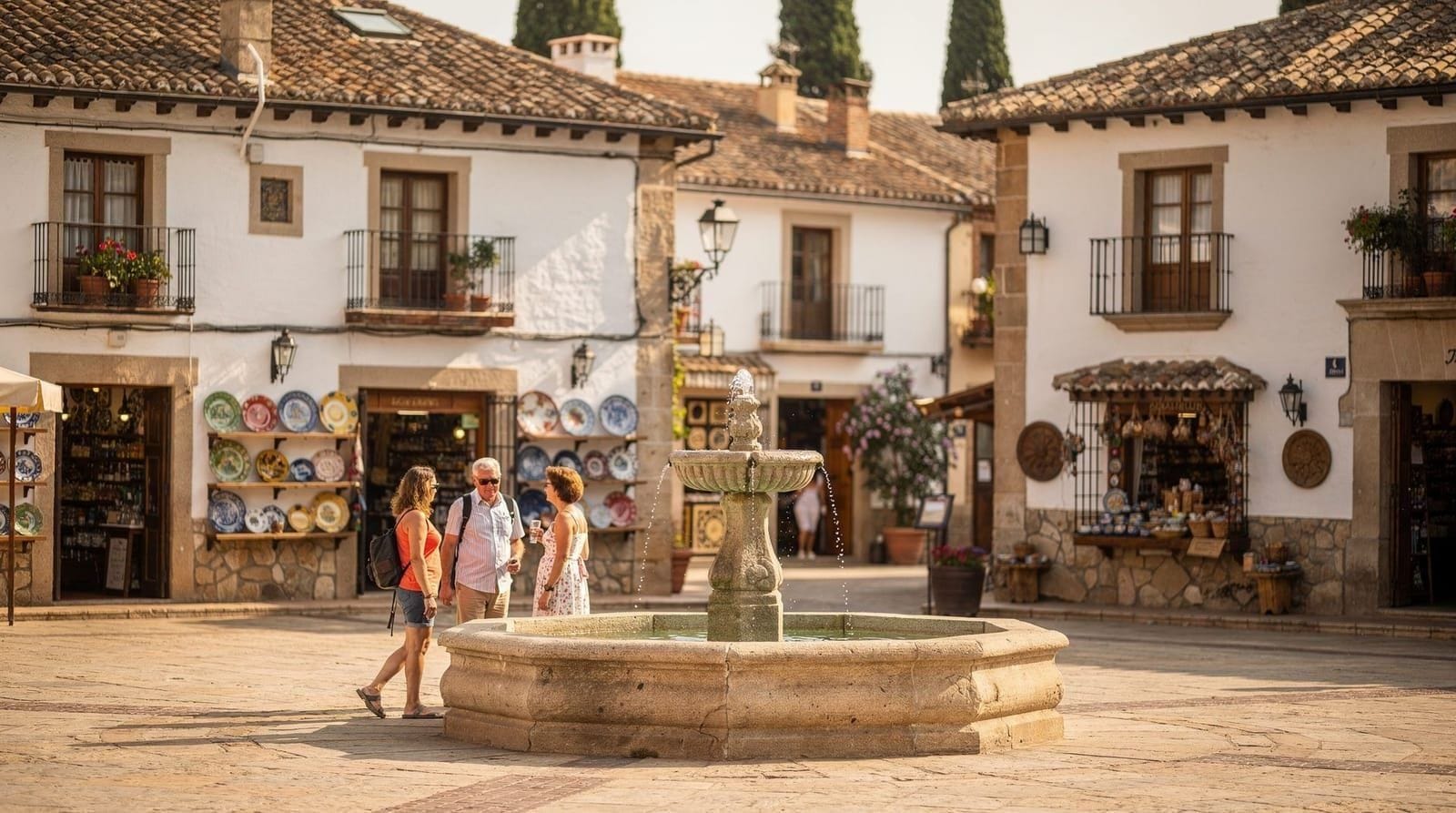
Poble Espanyol (Spanish Village) is a 1929 open-air architectural museum on Montjuïc, containing full-scale reproductions of buildings from every Spanish region — Castilian squares, Andalusian courtyards, Basque farmhouses, Catalan arcades — arranged as a walkable village. Entry is €15 (€22 with guided tour). It is worth visiting if you are interested in Spanish regional architecture or traditional crafts; less essential for visitors focused solely on Catalan or Gaudí content.
The idea behind Poble Espanyol was ambitious for 1929: commission two architects — Miquel Utrillo and Josep Puig i Cadafalch (one of the Modernisme triumvirate) — to build a full-scale open-air village assembling the best examples of architectural style from every region of Spain. The 116 buildings within the complex are not models or miniatures but full-scale reproductions, built by a team that spent six months travelling Spain to document the originals. Visitors walk through a Castilian plaza mayor, a Mallorcan courtyard, Andalusian whitewashed alleys, a Basque caserio (farmhouse) and Catalan arcaded streets within a 2-hectare site on Montjuïc hill.
| Where | Montjuïc, near the Magic Fountain and the 1929 Exposition site |
| Cost | Around €15 entry; around €22 with guided tour |
| Time needed | 1.5–2 hours; add an hour for workshops and a meal |
| Getting there | Bus 150 from Plaça Espanya, or 20-minute uphill walk |
| Best time | Late morning on weekdays, or early evening paired with the Magic Fountain show |
What the village actually contains
The entrance and main square: The entrance portal reproduces the Àvila city gate, leading into a main square (Plaza Mayor) modelled on various Castilian civic plazas. The arcaded perimeter, tiled facades and central open space create a convincingly Spanish plaza atmosphere — at least until you look up and notice the Barcelona skyline.
The craft workshops: Scattered through the village are approximately 60 working artisan workshops. Glass blowing, ceramics, leather goods, jewellery, sculpture and textile production all happen here in working conditions rather than as demonstrations. Several are open to observation; some offer short visitor workshops (bookable in advance). The quality of the craft production is genuinely high — Poble Espanyol developed a reputation as a serious craft incubator in the 1980s and 1990s.
The architectural variety: The most rewarding part of the visit for architecture-focused visitors is the density of different regional styles within a short walk. Aragonese Mudéjar brickwork, Extremaduran stone, Galician granite, Balearic limestone and Catalan terracotta tiles are all represented within a few minutes of each other. It is a deliberately compressed survey of Spanish building culture, and it works — even if the overall effect is slightly uncanny, in the way that faithful reproductions often are.
The Museu Etnogràfic: The museum inside the village holds a collection of Spanish folk art objects and ethnographic material. Smaller and quieter than the outdoor village experience; useful context for the craft workshops.
Restaurants and bars: Several restaurants and cafés operate within the village, ranging from a traditional Catalan restaurant to a pizzeria. Prices are moderate for a tourist site. The terraces in the village squares are pleasant for a late morning coffee.
Who a guided visit suits
Because the village compresses so many regional styles into a small area, it is easy to walk through quickly and register the atmosphere without understanding what you are looking at — the difference between Aragonese Mudéjar brick and Extremaduran stone construction, for instance, is not obvious without explanation. A guided tour adds real value here in a way it does not always at more famous single-building sites: a guide can point out which real town each street reproduces, explain how the six-month documentation trip worked in 1929, and steer you toward the workshops most worth stopping at that day. For visitors with a genuine interest in Spanish regional architecture rather than a general curiosity, the guided option is worth the premium over self-guided entry.
Honest assessment
Poble Espanyol occupies an awkward position in Barcelona’s tourist hierarchy. It is a thoughtful and well-executed concept that predates Disneyland by decades; the 1929 construction quality has held up well; the craft workshops give it a genuine living-culture dimension that a pure architectural museum would lack.
However, it is also somewhat outside the main Barcelona narrative that most visitors are pursuing. Someone who has spent two days on the Gaudí trail and one day in the Gothic Quarter will find Poble Espanyol an interesting change of pace but perhaps not their highest priority for a remaining half-day. The optimal visitor is genuinely curious about Spanish regional architecture and crafts, or is looking for a family-friendly half-day with something for children to see and do at every turn.
The late-night club element — completely invisible during the day — means the village occasionally gets recommendations for nightlife purposes that may mislead daytime visitors expecting a cultural emphasis.
Getting there
Bus 150 from Plaça Espanya is the simplest option — the stop is directly at the main entrance and the journey takes about 10 minutes.
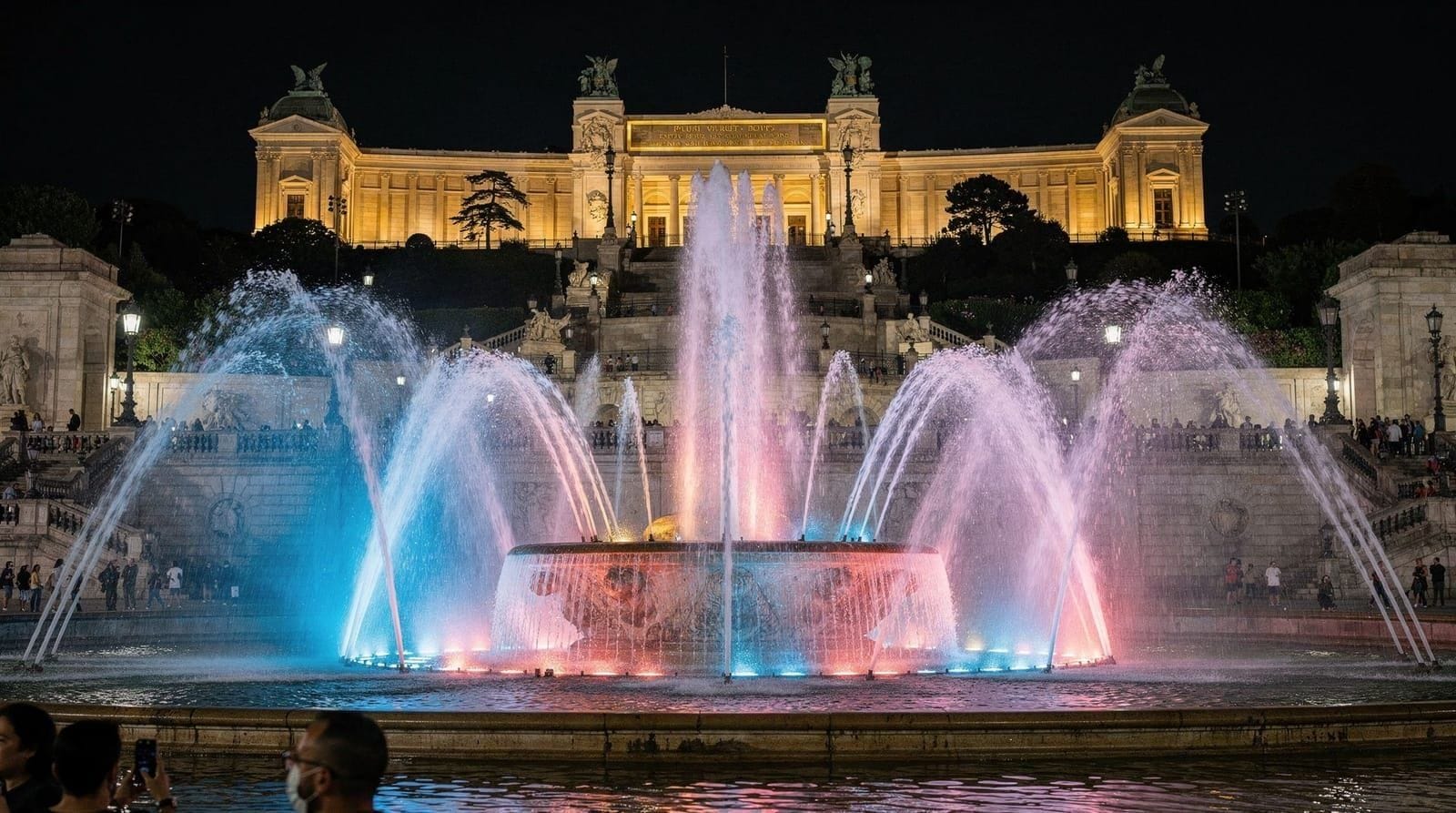
Walking from Plaça Espanya: The uphill walk takes about 20 minutes via the 1929 exposition approach road. Passing the Magic Fountain basin and the flanking exhibition pavilions on the way up provides useful context for the 1929 Exposition that created both Poble Espanyol and the broader Montjuïc cultural complex.
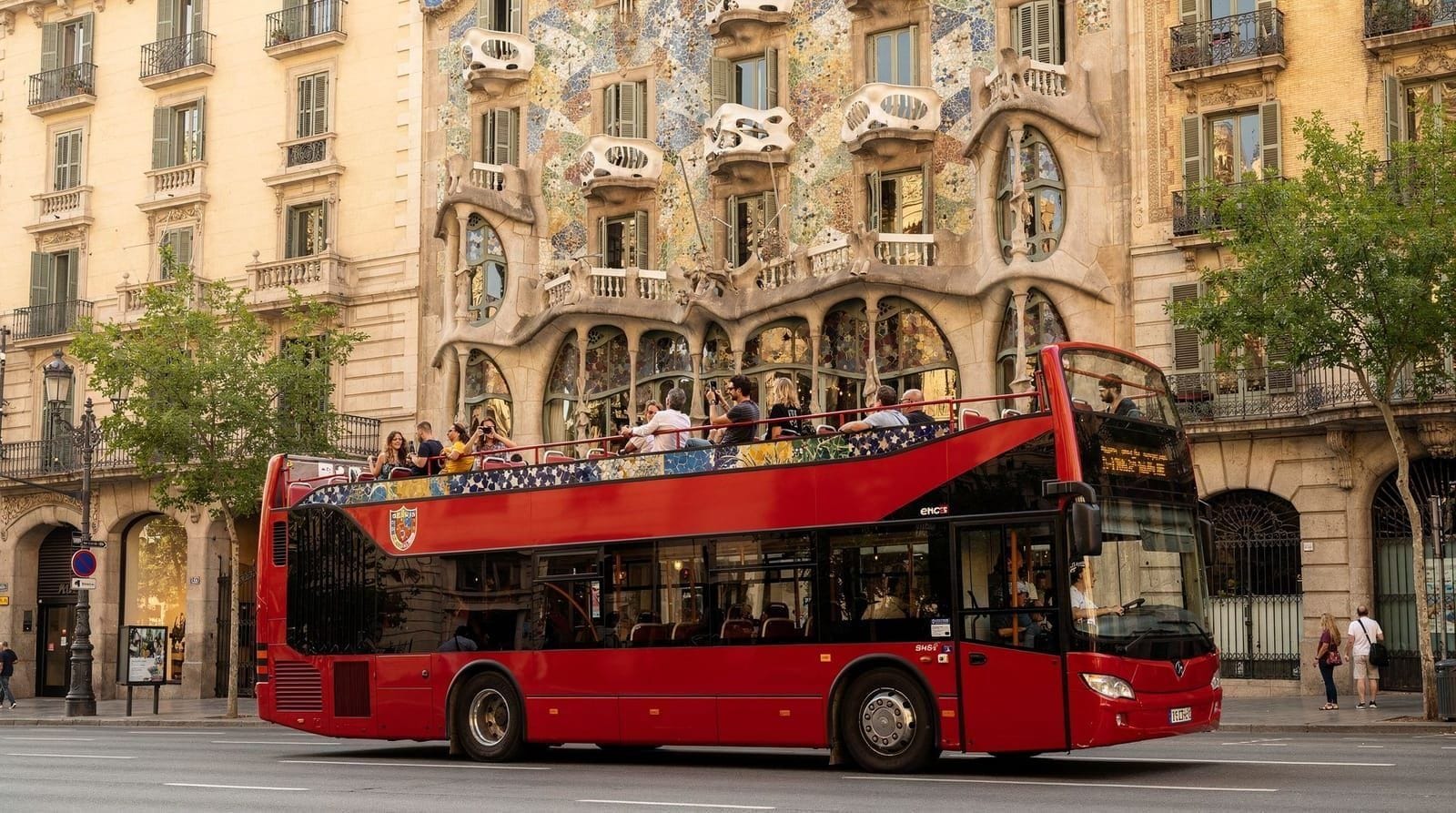
Hop-on hop-off Blue Route: Stops at Poble Espanyol; useful if you have a bus ticket and are combining with other Montjuïc sights.
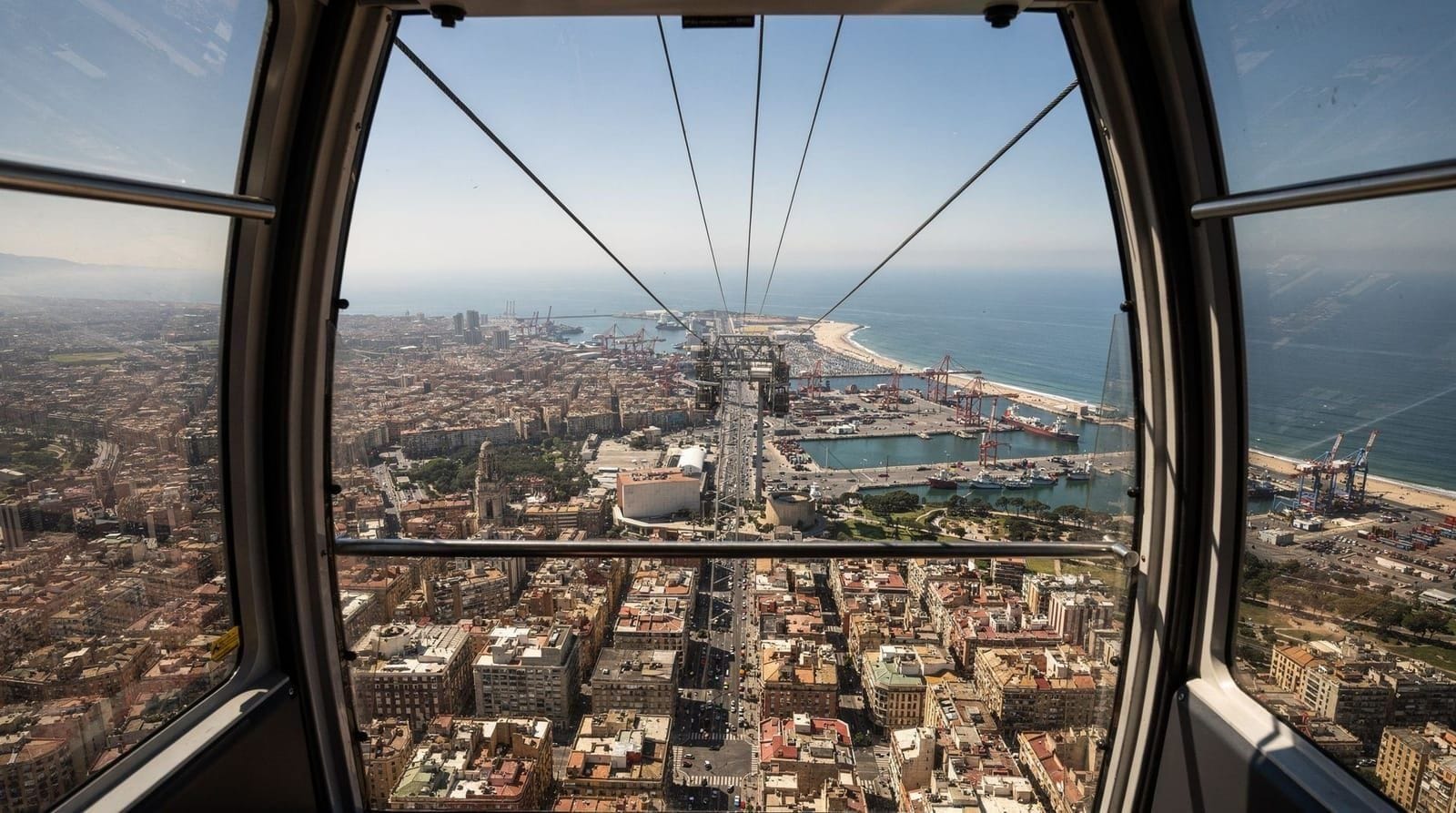
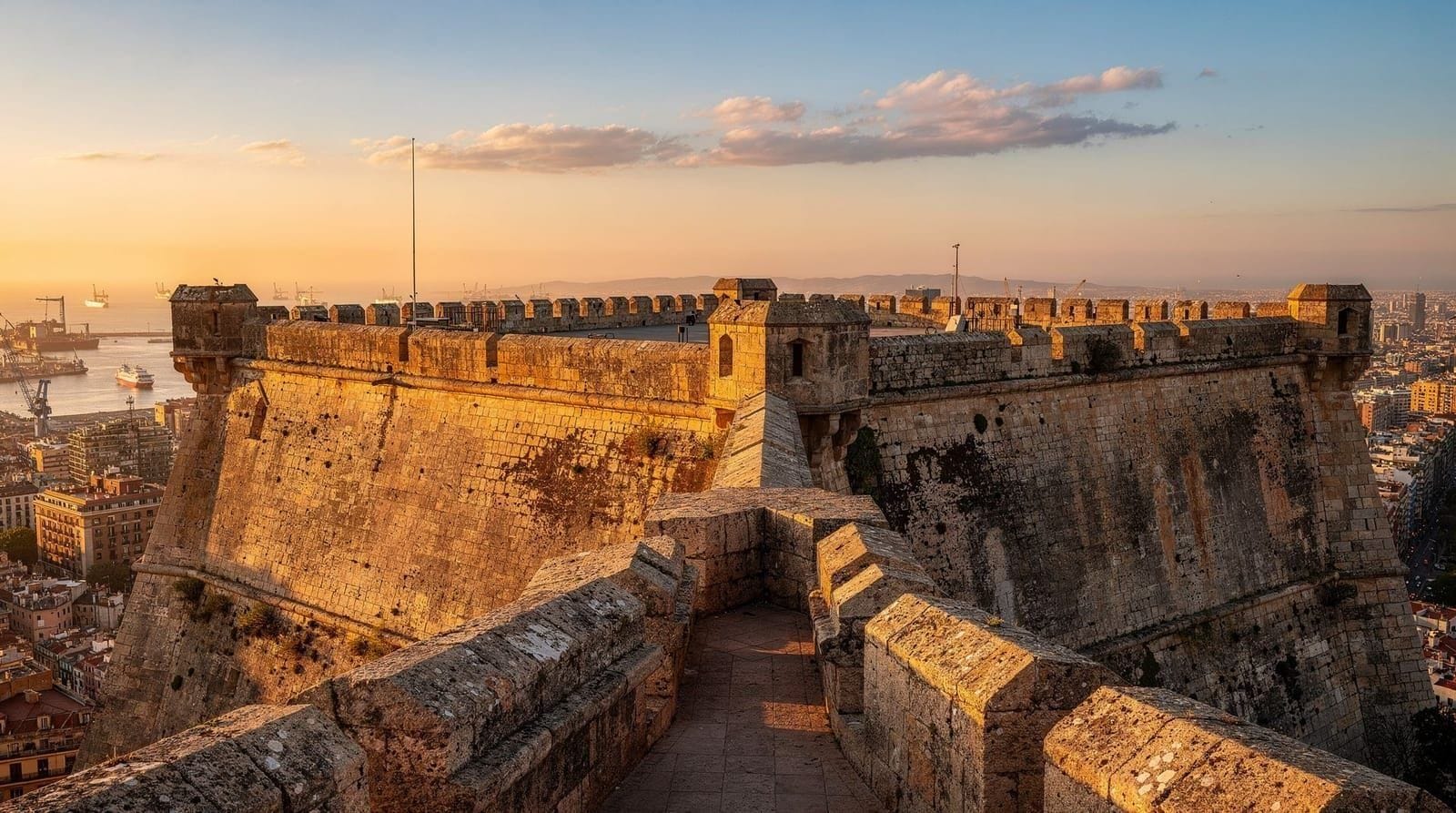
From Montjuïc castle: Poble Espanyol is about 800 metres below the castle, reachable on foot (downhill) in 15 minutes. A logical sequence is castle in the morning, Poble Espanyol in the early afternoon. The getting around Barcelona guide covers how the Montjuïc cable car and funicular connect these sights if you want to avoid walking the hill twice.
Practical notes
Entry: €15 adults (skip-the-line), approximately €22 with guided tour. Children aged 4–12 pay approximately €9; under-4s are free.
Opening hours: Monday 09:00–20:00; Tuesday–Sunday open until midnight or later. The daytime cultural experience is the same regardless; the late hours reflect the nightlife venues.
Photography: Permitted throughout. The varied architectural styles provide interesting compositional opportunities, particularly in the Andalusian-style alley sections.
Combining with Magic Fountain: Poble Espanyol is within 15 minutes’ walk of the Magic Fountain (Font Màgica). If you are visiting Montjuïc in the late afternoon, an early evening Poble Espanyol visit followed by the Magic Fountain show at 20:30 (Thursday–Sunday in summer) is a natural combination.
Poble Espanyol on a Montjuïc day
For visitors treating Montjuïc as a full-day hill rather than a single stop, Poble Espanyol slots naturally into a longer sequence: a morning cable car ride up to the castle, lunch overlooking the port, an early-afternoon walk down to Poble Espanyol, and an evening finish at the Magic Fountain once the light fades. Spreading it across a day like this avoids the fatigue of trying to see all three in a rushed few hours, and it uses the hill’s own transport — cable car, funicular, downhill walking paths — rather than backtracking through Plaça Espanya multiple times.
Poble Espanyol is underrated relative to its quality and overrated relative to what most Barcelona visitors are actually looking for. For the right visitor — families with children, those interested in Spanish regional architecture or craft production, or anyone who wants a change of pace from the Gaudí circuit — it is a genuine half-day. For visitors on a tight schedule focused solely on Catalan and Gaudí content, it is optional. The craft workshops and restaurant terrace alone justify the entry price for most.
Frequently asked questions about Poble Espanyol
How long does a visit to Poble Espanyol take?
A full visit takes about 1.5–2 hours at a comfortable pace. If you stop in the craft workshops or have a meal at one of the restaurants, allow 2.5–3 hours. The village is about 2 hectares of walkable streets.What are the opening hours of Poble Espanyol?
Monday 09:00–20:00; Tuesday to Thursday and Sunday 09:00–00:00; Friday 09:00–03:00 (nightclub); Saturday 09:00–04:00 (nightclub). The late hours on weekends reflect the club venues inside — the daytime cultural visit is completely separate from the nightlife element.How do you get to Poble Espanyol?
Bus 150 from Plaça Espanya takes about 10 minutes and stops at the main entrance. Alternatively, 20 minutes' walk from Plaça Espanya metro (L1/L3) up the exhibition hill. The hop-on hop-off bus Blue Route also stops here. Poble Espanyol is about 800 metres below the Montjuïc Castle cable car station.Are the craft workshops at Poble Espanyol genuine?
Yes. Approximately 60 working artisan workshops operate within the village — glass blowers, leather workers, ceramicists, jewellers and others. Most workshops allow observation of the working process; some offer short demonstrations or workshops for visitors. The crafts are genuinely produced here, not imported.Is Poble Espanyol good for children?
Reasonably so. The walkable streets with varied architecture and craft demonstrations engage children well; the scale of the place (you can genuinely get slightly lost in the warren of reproduced streets) is engaging for older children. There is a children's play area and the restaurants are family-friendly.Does Poble Espanyol have a nightclub?
Yes. Torres de Ávila is a club that operates in the entrance towers on Thursday to Sunday nights from around midnight. La Terrazza is an outdoor summer club (June to September) operating in the central square on similar nights. These are completely separate from the daytime cultural visit and do not affect the visitor experience during the day.Is a guided tour worth it at Poble Espanyol?
It adds genuine value if you have a specific interest in Spanish regional architecture, since the village compresses many distinct regional styles into a small area that is easy to walk through without understanding what you are seeing. A guide can identify which real towns each street reproduces and add context the on-site signage does not cover. For a general visit, self-guided entry is perfectly sufficient.
Top experiences
Bookable activities with verified prices and instant confirmation on GetYourGuide.