Sitges day trip from Barcelona: beaches, museums and art
Barcelona: Tarragona & Sitges guided day trip with transfers
Duration: Full day
- Free cancellation
- Hotel pickup
How do I get from Barcelona to Sitges by train?
Take Rodalies line R2 Sud from Passeig de Gràcia or Sants station. The journey takes 30–40 minutes. A T-Casual Zone 2 card (€25.50 for 10 trips) covers the fare — the cheapest way to reach any beach town from Barcelona.
Thirty-five kilometres south of Barcelona, the Rodalies train passes through a tunnel in the coastal hills and emerges above a horseshoe bay lined with Modernisme villas, a white church on a promontory, and 17 beaches stretching south along the Garraf coast. This is Sitges — and the fact that it takes under 40 minutes from Passeig de Gràcia makes it the easiest and cheapest coastal escape from the city.
Sitges day trip at a glance
| Where | 35 km south of Barcelona, on the Garraf coast |
| Cost | Around €5–6 per person round trip by train |
| Time needed | 4–6 hours for beach and old town; full day with Tarragona |
| Getting there | Rodalies R2 Sud from Passeig de Gràcia or Sants, 30–40 min |
| Best time | May–October for the beach; February for carnival |
Getting to Sitges from Barcelona
Take Rodalies line R2 Sud from Passeig de Gràcia or Sants. Trains run every 20–30 minutes from early morning. Journey time: 30–40 minutes depending on whether you board at Passeig de Gràcia or Sants.
Ticket: A T-Casual Zone 2 card covers the fare. The Zone 2 card costs €25.50 for 10 trips and can be shared between passengers — making the effective return cost around €5–6 per person if you are travelling with family or a group. This makes Sitges the least expensive day trip on the Barcelona day trip list.
Alight at Sitges station. The main beach and old town are a 5-minute walk downhill.
What makes Sitges different from Barcelona’s beaches
Barcelona’s urban beaches are good for their proximity but crowded, built-up and somewhat anonymous. Sitges is a resort in the proper sense: it developed in the late 19th century as a retreat for Barcelona’s artistic and bohemian class, and the architecture reflects that. The seafront promenade is lined with Modernisme villas, many now hotels or private homes, fronted by manicured gardens. The cliff-top church of Sant Bartomeu i Santa Tecla — white and solitary above the sea — has become one of the iconic images of the Catalan coast.
The town has resisted the worst of generic tourist development. There are no beachfront discos, no water slides, no megahotels blocking the sea. What you get instead is a small town with excellent restaurants, a vibrant old quarter, and enough beach space to find a relatively quiet spot outside the most crowded central strip.
The beaches
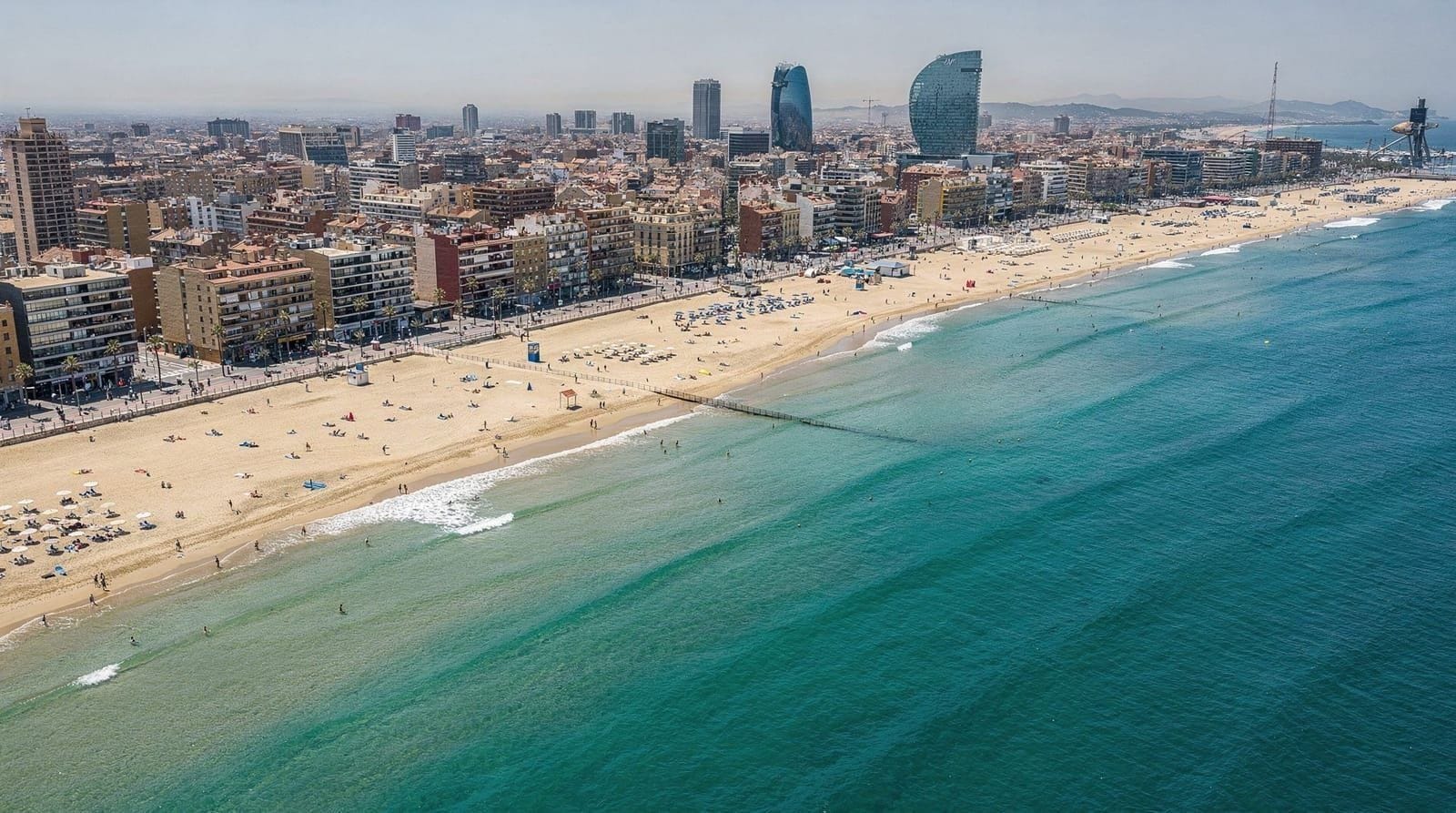
Sitges has 17 officially designated beaches stretching along 5 kilometres of coastline. The main central beaches:
Platja de la Ribera: The widest and most central beach, directly below the old town and the church promontory. This is where most visitors head. In summer it is busy but not unpleasant — backed by restaurants and bars rather than hotel walls. Water quality is consistently good (Blue Flag).
Platja de l’Anau: The beach on the other side of the church promontory, slightly quieter and favoured by families. Access via the steps at the base of the church cliff.
Platja del Garraf: Technically a separate village 3 kilometres west (one stop by train), this small cove is rockier, quieter, and backed by a 19th-century fishermen’s harbour with a wine cellar now used as a restaurant. Worth the extra 5 minutes if you want space.
Platja del Mort / Sant Sebastià: The easternmost beaches, beyond the golf course, tend to be less crowded and popular with naturists. A 25-minute walk from the centre.
The Cau Ferrat museum
Sitges owes its bohemian reputation largely to Santiago Rusiñol (1861–1931), Catalan modernista painter, playwright and the figure who turned the town into an artists’ colony in the 1890s. His house and studio — the Cau Ferrat — is the cultural heart of the visit.
Rusiñol was an obsessive collector of Gothic and Romanesque iron — inn signs, door knockers, crosses — and the museum houses one of the most remarkable collections of decorative ironwork in Spain. The rooms also contain paintings by El Greco, Rusiñol’s own Symbolist canvases and works by his contemporaries.
Entry: approximately €10 adults (combined ticket with the Museu Maricel next door available). Closed Mondays.
Museu Maricel: Adjacent to Cau Ferrat, occupying a Gothic-Baroque palace with a loggia overlooking the sea. Medieval and Renaissance decorative arts, Catalan ceramics, and a collection of Civil War posters. Entry included in combined museum ticket.
Eating in Sitges
The main tourist trap concentration is on the Carrer 1r de Maig strip parallel to the beach. Better options are one or two streets back, or along the Carrer del Pecat (Street of Sin) — the main bar and restaurant strip of the old town.
Local specialities: fideuà (noodle paella), fresh grilled fish, and local Garraf wines (a small DO worth seeking out). Rice dishes are the local strength — look for arròs a banda (seafood rice) or arròs negre (squid-ink rice).
For a good lunch with a sea view, the terrace restaurants on the Passeig Maritim at the far (eastern) end of La Ribera beach are generally better value than those closest to the train station.
Sitges carnival (February)
Sitges carnival is the biggest in Catalonia and one of the most spectacular in Spain. The Gran Rua (main parade) falls on the Saturday before Ash Wednesday and draws participants in elaborate costumes from across Europe. Hotels book out months in advance. If you are visiting Barcelona in February and carnival dates align with your trip, Sitges deserves a day or a weekend.
Combining Sitges with Tarragona
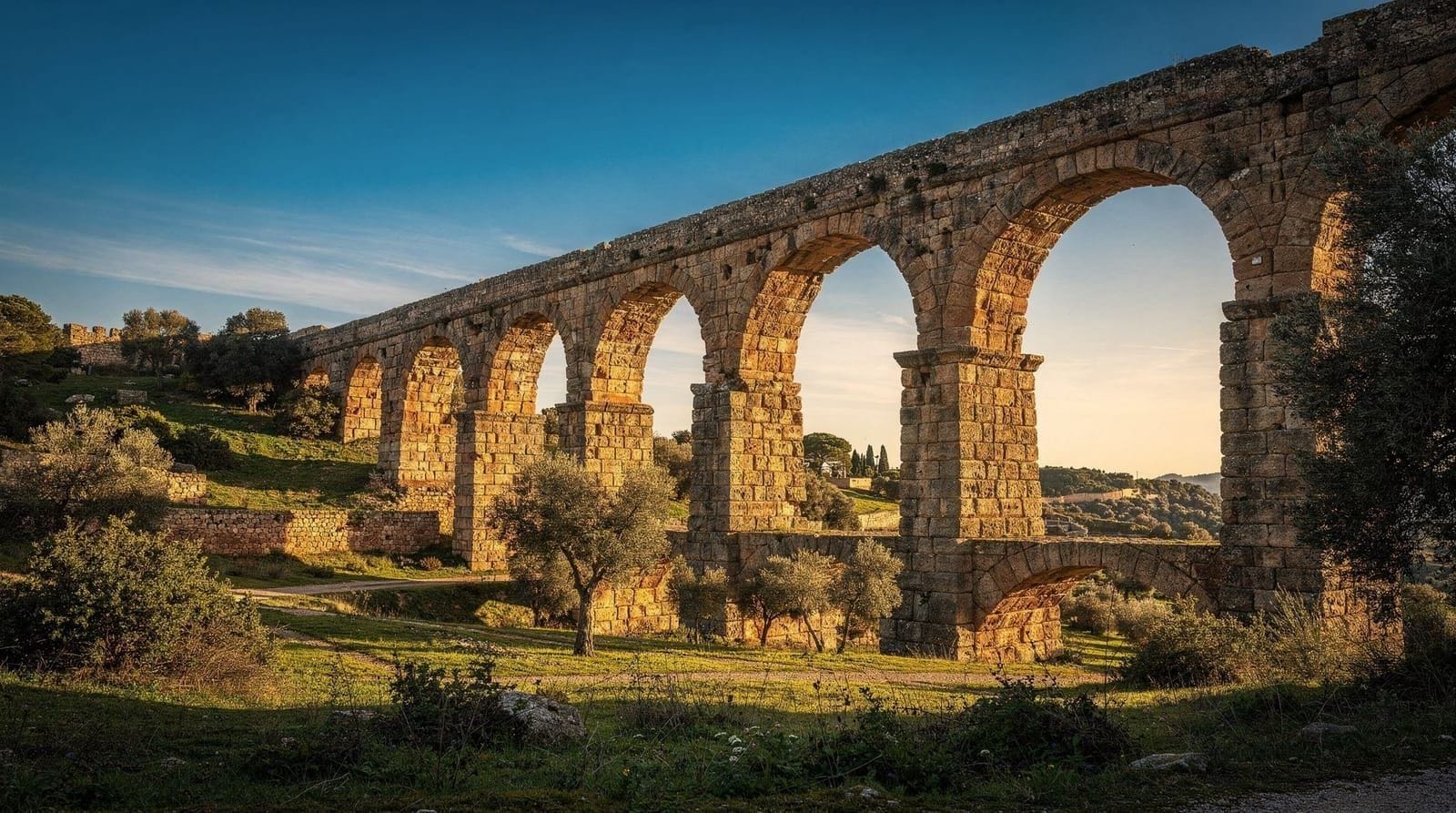
Sitges is 35–40 minutes south of Barcelona; Tarragona is 35–50 minutes further, and the Tarragona and PortAventura day trip guide covers that town’s Roman ruins in detail. A combined day (Tarragona Roman ruins in the morning, Sitges beach in the afternoon) is feasible if you take an early train to Tarragona (depart Barcelona by 08:30) and move to Sitges by early afternoon. Guided combined tours handle this logistics efficiently (~€65–70).
For visitors who would rather skip the train timing entirely, a small-group guided version covers both towns with a driver handling the connections, which is the easier option if your Spanish train-timetable reading is rusty or you are travelling with young children.
Practical tips
- Sitges is a resort: accommodation books far ahead for summer and carnival. Day trip only needs no pre-booking.
- Sunscreen and hat: the Garraf coast has high sun intensity from May onwards. The seafront offers minimal shade between the beach and the promenade.
- The old town streets are car-free and roughly cobbled — comfortable walking shoes preferred over flip-flops for exploring.
- Credit cards accepted in most restaurants. Street food stalls may be cash only.
Sitges for food and wine
The Garraf DO wines
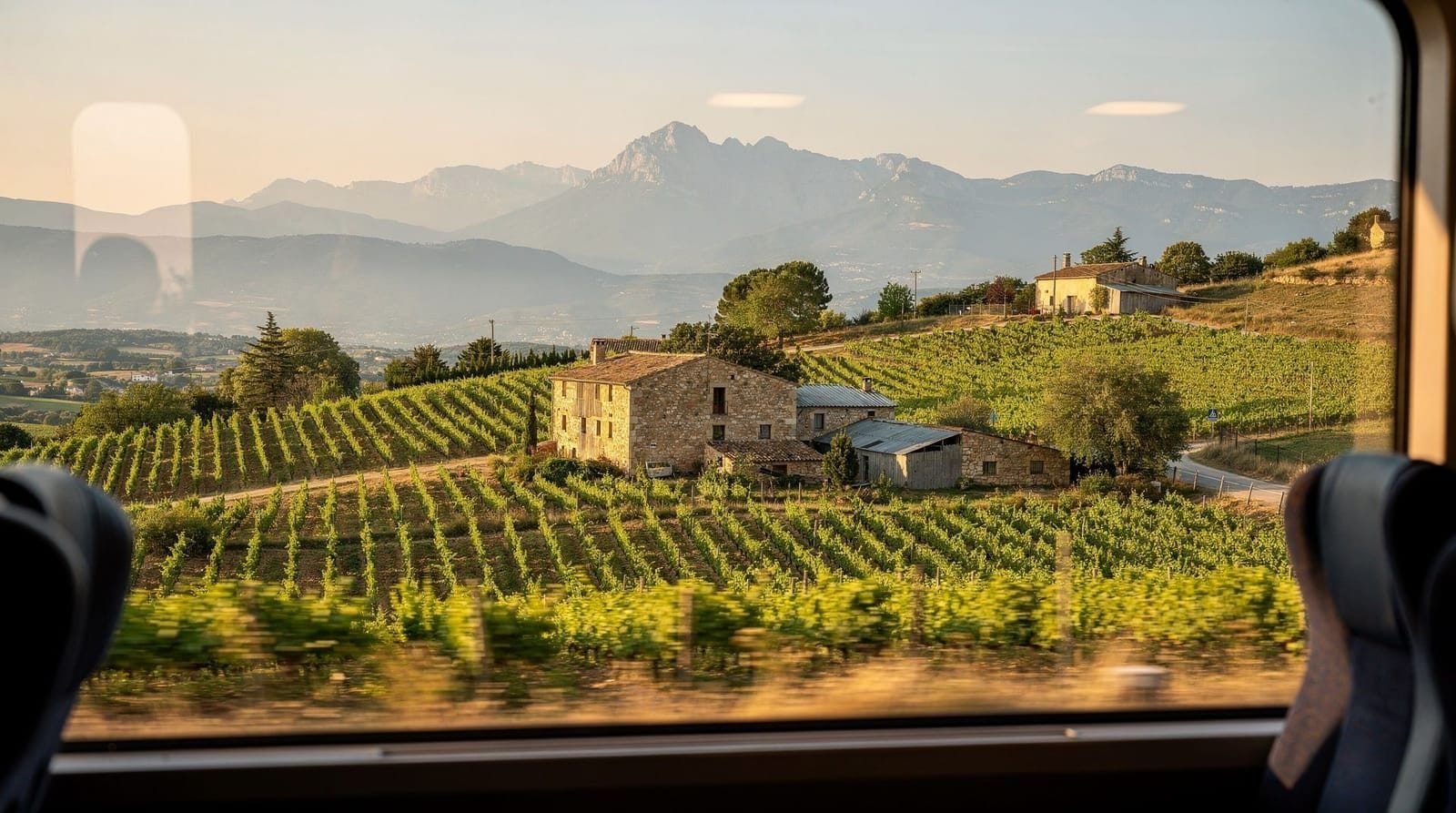
The Garraf denomination of origin (DO) is one of Catalonia’s smallest and least-known wine regions, centred on the limestone massif that runs south from Barcelona to Sitges and beyond. The terrain — thin soils over pure limestone, exposed to strong sea winds — produces whites and rosés with a particular mineral character that the inland Penedès wines do not replicate.
The indigenous Malvasía de Sitges grape variety, grown in tiny quantities around the town, produces a sweet amber wine used historically in the production of sweet wine for religious ceremonies and as a medicinal tonic. A handful of bodegas still produce it; the Bodega del Garraf at Platja del Garraf (housed in the old wine warehouse at the beach) stocks local production. It is not a mass-market wine and not widely available outside the immediate area — worth trying precisely because it exists nowhere else.
For current production, look for whites made from the Xarel·lo grape (the backbone of Catalan cava), which on the Garraf limestone takes on a briny, slightly saline quality. Several small bodegas in the hills above Sitges — including Celler Pardas and Celler l’Encastell — produce wines under the Penedès and Garraf appellations that restaurants in Sitges stock as local offerings.
Ask in any serious restaurant for “vi local” or “vi del Garraf” — some will have bottles from producers who do not distribute beyond the immediate coast.
Where to eat beyond the tourist strip
The Carrer 1r de Maig and the beachfront immediately adjacent to the main Ribera beach carry the tourist concentration. One or two streets back, the quality improves significantly.
Ricard Camarena-calibre dining is not what Sitges offers — this is a resort town, not a gastronomic destination — but the local seafood is genuinely excellent when ordered well.
- Bar Gallo (Carrer del Pecat, the old town): A traditional bar doing market-fresh seafood at lunch prices that haven’t caught up with the tourism around them. Packed with locals on weekends. Order the grilled cuttlefish or the clams in a garlic broth.
- La Salle (Carrer de la Davallada): A restaurant with a terrace in the Gothic quarter of the old town, doing modern Catalan cooking with local fish. Not cheap but proportionate to what it is.
- Bodega de Carmen (Carrer del Pecat): Wine bar with bar snacks and small plates, good local wine list, open from midday.
- El Cable (Port d’Aiguadolç, the marina): For serious rice dishes — arròs a banda, fideuà — at a marina location slightly outside the main tourist concentration.
For the finest local arròs, book ahead at any of the above rather than taking a walk-in tourist menu. The difference between a rice dish ordered at a booked table and one produced for a walk-in tourist in 10 minutes is complete.
The Pa amb tomàquet tradition
The defining Catalan bread ritual is pa amb tomàquet: grilled or toasted bread rubbed directly with a cut ripe tomato until the skin breaks and the juice saturates the bread, then finished with good olive oil and salt. In Sitges it appears in every serious bar and restaurant as the bread course — not as a novelty but as the routine.
The correct technique is rubbing the tomato on the bread rather than spreading tomato sauce; the texture and intensity are entirely different from a bruschetta or crostino. In summer, when Catalan tomatoes are at their ripest, it is extraordinary. The local olive oil used in Sitges tends toward the Arbequina variety from the Garraf hills — lighter and less aggressive than the Andalusian oils.
Order it as a starter anywhere; it should cost €2–3. If you are charged €8 for “pan con tomate,” you are on the tourist strip.
The five-town Garraf coast
For visitors with a car or those willing to extend the day beyond Sitges itself, the Garraf coast offers a compact sequence of distinct coastal towns and landscapes, each with a different character from the others.
The R2 Sud rail line connects them all in sequence from Barcelona, but road access or a car opens up beaches and viewpoints between the towns that the railway misses entirely.
Garraf
Three kilometres west of Sitges by road or one train stop, Garraf is a tiny fishing cove at the foot of a limestone ravine. The beach is pebbly and backed by the rail line, but the scene around the old wine cellar — a dramatic Modernisme building designed by Gaudí collaborator Francesc Berenguer, now operating as a restaurant — is unlike anything in the larger resorts.
The village has perhaps 200 permanent residents and a fishermen’s harbour. It functions as a lunch destination more than a beach day, particularly for the wine cellar restaurant which operates from a historic space of genuine architectural interest.
Canyelles
A quieter residential cove 3 km south of Sitges with a small sandy beach significantly less busy than any beach in Sitges proper. Limited facilities; reachable by car (no direct bus service) along the coast road. Worth the detour for visitors who want a peaceful afternoon without organisation.
Sitges (the hub)
The town that gives the coast its character. See the full guide above for details.
Vilanova i la Geltrú
Fifteen kilometres south of Sitges and accessible by R2 Sud train (20 minutes from Sitges), Vilanova i la Geltrú is a working port town with a genuinely local character that Sitges — now mostly resort — has partly lost. The fishing harbour is active; the Mercat de Sitges is excellent; and the Museu del Ferrocarril (Railway Museum) is one of the best of its kind in Spain, occupying a former locomotive roundhouse with a remarkable collection of 19th and 20th-century Spanish trains.
The main beach (Platja de Ribes Roges) is long, wide and less crowded than Sitges in July and August. Vilanova’s carnival is also one of the most important in Catalonia, rivalling Sitges in scale and spectacle.
Sant Pere de Ribes
In the hills above Sitges and Garraf, Sant Pere de Ribes is an agricultural village at the edge of the Garraf Natural Park — limestone uplands, pine and scrub oak, ravines and viewpoints above the coast. The village itself has a small medieval centre and a Saturday market. Most visitors who go there are heading into the natural park for hiking rather than visiting the village specifically, but for those with a car and a half-day to spare it adds a completely different dimension to the Garraf coast.
None of the towns along this stretch require the crowds or planning that a trip further afield to the Costa Brava demands — the whole Garraf coast sits within a single Rodalies fare zone of Barcelona, which is precisely what makes it worth treating as a single loose day rather than a single-destination errand.
DIY train vs guided tour: which suits you
| DIY by train | Guided tour | |
|---|---|---|
| Cost | ~€5–6/person round trip | ~€65–90/person, includes Tarragona |
| Flexibility | Full control of timing and beaches | Fixed schedule and stops |
| Best for | Independent travellers, beach-focused days | First visit, combining with Tarragona, no car-free planning hassle |
| Effort | Minimal — trains run every 20–30 min | None — pickup and commentary included |
If your priority is simply the beach and old town, the train is cheaper, faster to start, and gives you full control over how long you stay. If you want Roman Tarragona included without juggling two train timetables in one day, the guided option removes the planning risk entirely. Families travelling with young children or anyone visiting Barcelona for the first time with limited days often find the guided route worth the premium simply because it removes the risk of missing a return connection and having to improvise an evening in an unfamiliar town.
Sitges for a quieter alternative to Barcelona’s beaches
Visitors staying in the city who find Barceloneta beach or the wider Barcelona beaches guide too crowded in July and August often use Sitges as a half-day escape rather than a full day trip — the train frequency makes a 14:00 departure and an 19:00 return entirely realistic. This works particularly well paired with an early morning at Park Güell or the Gothic Quarter before heading to the station, splitting the day between Gaudí architecture and open sea.
Sitges takes under an hour of total travel time and costs around €5 in transport. That makes it the most accessible and cost-efficient beach escape from Barcelona. Compare it with the other options in our day trips guide to choose the right excursion for your priorities.
Frequently asked questions about Sitges day trip from Barcelona
Is Sitges worth a day trip from Barcelona?
Yes, especially between May and October. It has 17 beaches of varying size, a beautiful 19th-century seafront promenade, the Cau Ferrat museum, and a genuinely elegant resort character. Unlike many coastal towns, Sitges has kept its architectural quality.Which beach is best in Sitges?
Platja de la Ribera, directly in front of the old town, is the most atmospheric. Platja del Garraf (northwest, quieter and reached by a short train ride) and Sant Sebastià are also recommended. Avoid the most crowded strips directly in front of hotel complexes.What is the Cau Ferrat museum?
The former home and studio of Catalan artist Santiago Rusiñol, converted into a museum in 1933. It holds one of the finest collections of Romanesque iron in Spain alongside paintings by El Greco and Rusiñol himself. Entry approximately €10. Closed Mondays.Is Sitges LGBTQ+ friendly?
Sitges is one of Europe's most established and welcoming LGBTQ+ destinations, with a long history dating to the 1960s. The carnival (February) and summer circuit parties are international events. The old town and beaches are welcoming year-round.Can I combine Sitges with Tarragona in one day?
Guided tours do combine them (Tarragona + Sitges full day, ~€65–70). DIY is possible but requires good timing: Tarragona is 35–50 minutes further south by train, giving you 2–3 hours in each town if you start early.
Top experiences
Bookable activities with verified prices and instant confirmation on GetYourGuide.