Barcelona with kids: honest family travel guide 2026
Barcelona: Tibidabo amusement park admission ticket
Duration: Full day
- Free cancellation
What are the best family activities in Barcelona?
Tibidabo amusement park, Barcelona Zoo, L'Aquàrium, CosmoCaixa science museum and Barceloneta beach cover most ages well. Parc de la Ciutadella is the best free option for a morning with young children. For a full-day thrill-ride trip, PortAventura in Salou is 50 minutes away by train.
Barcelona is a genuinely enjoyable city to visit with children, provided you go in with realistic expectations. It is not a theme-park destination — it is a functioning city of 1.6 million people with a dense network of paid attractions, excellent public green spaces and a summer heat that will defeat anyone who tries to do too much between noon and 4pm. Plan intelligently and you will find that children have a full, varied week without touching the same art museums that preoccupy adult itineraries.
This guide covers what actually works for families, neighbourhood by neighbourhood and attraction by attraction, with honest advice on logistics, costs and timing.
| Best base | Eixample — flat, central, easy metro |
| Top free option | Parc de la Ciutadella and the Park Güell free zone |
| Best for ages 3-8 | Tibidabo, Zoo, Aquarium |
| Best for ages 8+ | Tibidabo thrill rides, PortAventura |
| Under-4s | Ride free on all public transport |
How family-friendly is Barcelona, really?
The honest answer is: quite family-friendly, but not effortlessly so.
The city’s major family attractions are spread across different neighbourhoods rather than clustered together, which means you will spend time on transport. The metro system is reliable and mostly accessible — most central stations have lifts — but a handful of older stops still require navigating stairs with a stroller. The Eixample district is almost entirely flat, which makes it the easiest base for families. The old city (Gothic Quarter, El Born) is atmospheric but uneven underfoot, with medieval lanes that are uncomfortable with pushchairs.
Heat is the other planning factor. In July and August, daytime temperatures regularly reach 30-35°C. This does not make the city unvisitable, but it does mean outdoor activities are better done in the morning, with indoor time (museum, cinema, a long lunch) built into the midday hours. Spring and early autumn are significantly more comfortable and still warm.
With those caveats in place: the attractions are good, public transport is fast and cheap, restaurant culture is flexible toward children (particularly at lunch), and the city’s parks — Parc de la Ciutadella especially — are among the nicest urban green spaces in Spain.
Where to stay with children
Eixample is the most practical choice for most families. The grid layout means flat walking, every major metro line passes through it, and there is genuine residential infrastructure (pharmacies, supermarkets, laundromats) within a short walk of any hotel or apartment. The central Eixample is 15-20 minutes by metro from Tibidabo, the Zoo, the Aquarium and Barceloneta beach.
Gràcia works well for families who want a quieter neighbourhood feel. It borders the Eixample to the north and is genuinely village-like in atmosphere, with pleasant plaças (squares) where children play in the evenings. It is a short walk from CosmoCaixa and well connected by FGC for Tibidabo.
El Born / Sant Pere is appealing but requires accepting cobblestones and narrower streets. It is close to the Zoo and makes sense if you are spending significant time in Parc de la Ciutadella.
Avoid the Gothic Quarter as a base if you are travelling with a stroller or young children who need afternoon naps. The noise levels at night are high and the walking is awkward.
For transport, a T-Casual 10-trip card at €13 is the most cost-efficient option for adults. Children under 4 travel free on all public transport. The card works on metro, bus, FGC and tram within Zone 1, which covers almost all family destinations. For more context on transport options, see our transport pass comparison guide and the Hola Barcelona Card guide.
Tibidabo amusement park
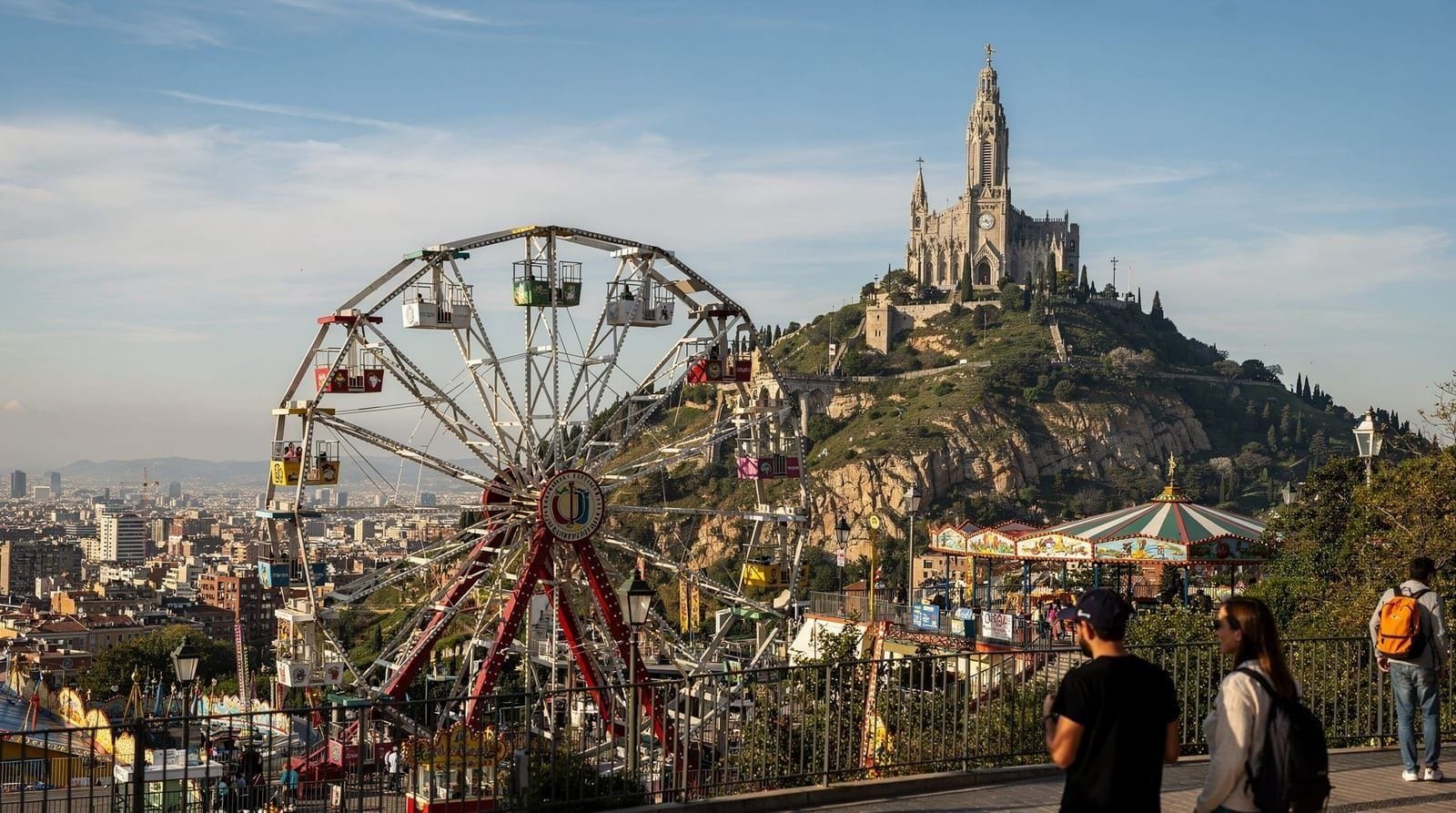
Tibidabo is genuinely one of the better family experiences in Barcelona — a historic hilltop amusement park that opened in 1901, sitting at 512 metres above sea level with unobstructed views across the city and out to the sea. The Temple Expiatori del Sagrat Cor, a neo-Gothic church that sits at the very summit, is visible from most of the city and provides an extraordinary backdrop to the rides.
The park’s age is part of its charm. There is a vintage carousel, a 1928 biplane ride and a museum of automata that delights children aged 3-8 in a way that modern thrill parks often fail to. For older children and teenagers, the Muntanya Russa roller coaster, the Péndulo (a giant pendulum swing) and the free-fall tower deliver proper thrills. The park is compact enough that you can cover it comfortably in a half-day, though most families stay for a full day.
Adult admission is €35; children 3-12 typically pay around €10-12 (check for current rates when booking); under 3 is free. Booking in advance online reduces queuing.
Getting there is part of the experience. From Plaça Catalunya, take FGC line S1 or S2 to Peu del Funicular — around 20 minutes. A connecting funicular rises up to Avinguda Tibidabo. From there, the Blue Tram (Tramvia Blau), one of the last remaining heritage trams in the city, runs up the Avenue de Tibidabo to the base of the Tibidabo funicular. The final funicular carries you to the park entrance. The whole journey from Plaça Catalunya takes 45-60 minutes and is itself an activity — children tend to enjoy the succession of different vehicles. Combined tickets covering FGC, Blue Tram and funicular are sold at Peu del Funicular.
Our guide to CosmoCaixa and Tibidabo for families covers both attractions in detail, including how to combine them in a single day.
Barcelona Zoo
The Zoo sits inside Parc de la Ciutadella, a 17-hectare public park in the Sant Pere neighbourhood — the same park that contains an ornamental lake, a waterfall cascade and extensive lawns that are popular with families on weekends.
The Zoo itself covers 13 hectares and houses over 400 species. The headliner exhibits are the Komodo dragons, the western lowland gorillas, and the dolphin show (times: 11:30, 13:30 and 16:00; worth timing your visit around). There are significant reptile and big cat areas, and a well-designed farmyard section aimed at the youngest visitors. In summer the zoo stays open until 20:00, which makes late-afternoon visits more comfortable in hot weather.
Admission is €22 for adults and €14 for children aged 3-12; under 3 is free. The Zoo requires a full day to see properly — it is larger than it appears on a map. If you are visiting with children under 5, you will naturally slow down at the farmyard and play areas and may not reach the further sections, which is fine.
Getting there: Metro L4 to Ciutadella-Vila Olímpica, then a 5-minute walk into the park. The hop-on hop-off bus stops near Parc de la Ciutadella if you are using that for the day.
For a detailed comparison of what each attraction offers and how to plan your day, our Zoo and Aquarium guide has full practical information.
L’Aquàrium Barcelona
L’Aquàrium is in Port Vell, around 15 minutes’ walk from the Zoo (or one metro stop — L4 to Barceloneta). It is a self-contained 2-3 hour experience, which makes it easy to combine with the Zoo on the same day if you have the energy, or to do separately as a standalone afternoon.
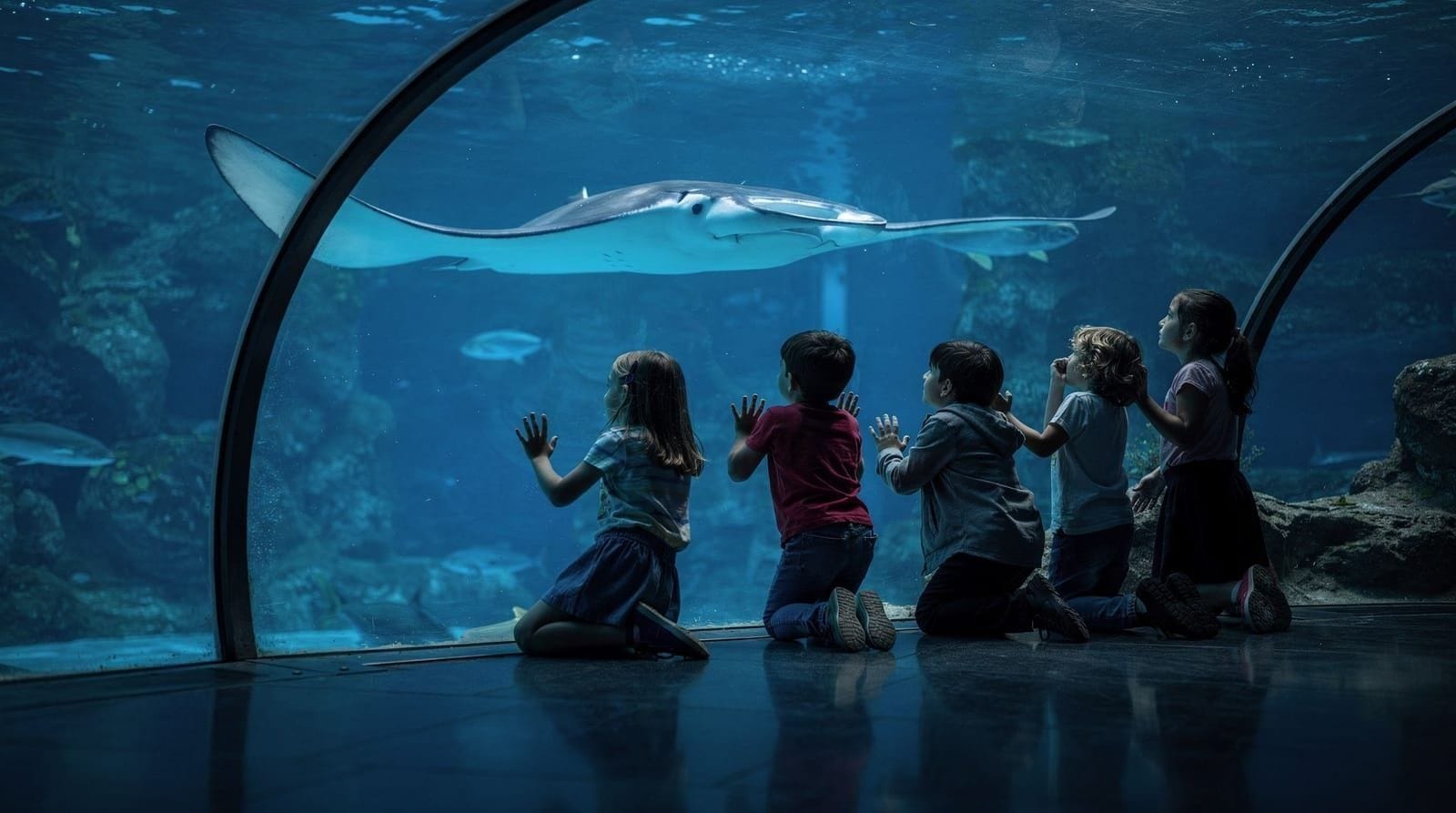
The centrepiece is an 80-metre underwater tunnel where sharks, rays and a variety of large fish pass overhead. The effect on children — and most adults — is genuine. The 35 tanks cover Mediterranean species, tropical fish and interactive rockpool areas designed for young children to touch sea creatures. The feeding sessions, when they happen, draw crowds around a central tank.
Adult admission is €22; children aged 3-10 pay €17; under 3 is free. The combination ticket that includes Aquarium entry with the hop-on hop-off bus (€40) can represent good value if you want a day that covers several parts of the city without working out metro logistics.
Opening hours are 10:00-19:30 in winter and 10:00-21:00 in summer. It is air-conditioned throughout, which makes it a practical choice during hot midday hours.
CosmoCaixa science museum
CosmoCaixa is on the upper fringe of Gràcia, just below the hills. It is frequently overlooked by families focused on the Zoo and Aquarium, which is a mistake — for children aged 6 and above, it is one of the best things to do in Barcelona.
The signature exhibit is the Bosc Inundat (Flooded Forest), a 1,000 square metre recreation of a live Amazonian ecosystem inside the building, complete with real vegetation, capybaras, anacondas and other species. It is genuinely impressive. The broader museum covers geology (an extensive mineral collection), palaeontology (including dinosaur skeletons), physics and astronomy, with interactive exhibits throughout. There is also a strong children’s science area for ages 3-6.
Entry is €7 for adults; under 16 is free with an adult. This makes it one of the best-value attractions in the city for families. It is particularly useful as a cooler-weather or bad-weather option — the building is large and entirely covered.
Getting there: FGC from Plaça Catalunya to Peu del Funicular (same line you would take for Tibidabo), or Tramvia Blau from Avinguda Tibidabo. Many families combine CosmoCaixa with Tibidabo on the same day since they share transport infrastructure.
Parc de la Ciutadella
The park surrounding the Zoo is a destination in itself, and entry to the park is free. The ornamental lake has rowboat rentals (around €6-8 for 30 minutes) which children reliably enjoy. The spectacular waterfall cascade (La Cascada), partly designed by a young Antoni Gaudí while he was still a student in the 1870s, is one of the better pieces of ornamental architecture in the city and is worth finding. The lawns are large and well maintained, and the park fills with local families on weekend mornings in good weather.
The combination of free park, paid Zoo and nearby paid Aquarium makes this corner of Barcelona the most practical for a multi-day family program.
Barceloneta beach
The main city beach is functional rather than beautiful, but it is large, well serviced (showers, lifeguards, beach bars) and within easy reach of the city centre — L4 metro to Barceloneta. For families with children who simply need a few hours in the sea after days of museums and walking, it is perfectly adequate. The water is generally clean; the beach gets crowded in July and August, with the western end (closer to the W Hotel) slightly less so than the central stretch.
The Barceloneta neighbourhood itself has good beach restaurants and is one of the more relaxed parts of the city to have lunch. Avoid the very tourist-facing places directly on the Passeig Marítim; walking one block inland usually means better quality at lower prices.
Park Güell: the free zone
The famous Gaudí park charges entry (around €13 per adult) for its central monumental area, but the larger park surrounding it is entirely free and open at all hours. For families, the free section — which includes wooded paths, columns and elevated viewpoints — is often more enjoyable with young children than the ticketed area, which is concentrated and crowded. The free zone is good for a morning walk, particularly combined with a visit to the Gràcia neighbourhood below.
For families planning a broader Gaudí itinerary, our Gaudí trail guide covers the full route.
PortAventura for a full day of thrill rides
For families with older children (roughly 8 and above) who want a full theme-park day, PortAventura World in Salou is worth the trip. It is around 120 km south of Barcelona — 35-50 minutes on the Renfe train from Barcelona Sants or Passeig de Gràcia to Tarragona, then a shuttle bus to the park entrance. The park is significantly larger than Tibidabo and oriented toward conventional thrill rides, with a Ferrari Land area attached.
Entry from the park’s own website runs €40-60 in advance (prices vary by season and date); a combined ticket with coach transfer from Barcelona costs around €65. The transfer ticket removes the train navigation, which can be convenient with children.
We cover the full logistics, train timetables and park recommendations in our PortAventura with kids guide.
La Mercè festival (23-27 September)
If your visit overlaps with the Festa de la Mercè — the city’s main festival, held annually in the last week of September — it is one of the best free family experiences in Barcelona.
The core events include castellers, human tower competitions where teams build towers of up to nine or ten human storeys — a Catalan tradition dating to the eighteenth century that is listed by UNESCO as an Intangible Cultural Heritage. These typically happen in Plaça de Sant Jaume and draw large crowds. The gegants (giant puppets, some up to four metres tall) parade through the old city streets on several evenings. The correfoc (fire run), in which participants carry fire-breathing dragon effigies through the streets in the dark, is spectacular but should be watched from a safe distance with children; you will see families lining the route with goggles and wet scarves.
Almost all Mercè events are free and they are genuinely popular with local families, which means they have a very different atmosphere from the ticketed tourist attractions.
Practical tips for families
Strollers: largely fine across the city. The Eixample and waterfront are flat and easy. The Gothic Quarter and parts of El Born require navigating cobblestones. The Metro L4 (the main family-destination line) is well equipped with lifts. Always check the TMB website for lift outages at specific stations before you go, as maintenance closures happen.
Food timing: Catalan dining culture runs late — lunch from 14:00, dinner from 21:00. This does not work for young children. The practical solution is to either use the tourist-friendly restaurants that serve earlier, find a supermarket for flexible eating, or simply adapt lunch as the main meal (which aligns better with local culture anyway) and eat something simple and early for dinner.
Heat management: In July and August, plan outdoor activities for 9:00-12:00 and 17:00-20:00. Use the midday hours for air-conditioned attractions (L’Aquàrium, CosmoCaixa) or a long, shaded lunch.
Pharmacy access: Pharmacies (farmacias) are common throughout the Eixample and are reliable for children’s medications. Spanish pharmacists are trained to dispense without prescription for common complaints and are generally helpful.
Budget planning: A realistic family daily budget (2 adults + 2 children, ages 5 and 10) assuming one paid attraction, metro, lunch and dinner, and incidentals runs to €120-180 depending on the attraction chosen. Our daily budget calculator can help model your specific itinerary. For a broader cost overview, see our Barcelona on a budget guide.
For getting to and from the city, our Barcelona airport transfer comparator compares taxi, bus and train options including with children.
Attractions compared by age and cost
| Attraction | Best age | Adult price | Time needed |
|---|---|---|---|
| Tibidabo | 3+ (thrills from 8+) | ~€35 | Half to full day |
| Barcelona Zoo | 3+ | ~€22 | Full day |
| L’Aquàrium | 3+ | ~€22 | 2-3 hours |
| CosmoCaixa | 6+ | ~€7 | Half day |
| Parc de la Ciutadella | All ages | Free | 1-3 hours |
| Park Güell free zone | All ages | Free | 1-2 hours |
| PortAventura | 8+ | €40-60 | Full day trip |
Use this alongside the itinerary below to swap days around your children’s ages and energy levels — a family with a toddler and a ten-year-old will naturally split time differently between the farmyard at the Zoo and the Muntanya Russa at Tibidabo.
Feeding a family: what actually works with kids
Catalan restaurant culture is not built around early dinners, and this is the single biggest friction point families report. The practical fix used by most local families with young children is to treat lunch, not dinner, as the main meal — the menú del día (set lunch, typically 13:00-15:30) is affordable, fast, and available at almost every neighbourhood restaurant, so a proper two-or-three-course meal at midday takes the pressure off the evening. For dinner, look for restaurants that open at 19:30 rather than the more typical 20:30-21:00 — these exist, concentrated in more tourist-facing areas and increasingly in the Eixample, but they are the exception rather than the rule, so check opening times before you commit a hungry group to a specific place.
Supermarkets (Mercadona, Consum, Bon Preu) are a reliable fallback for early or picky-eater dinners, particularly if your accommodation has a kitchenette. A simple pasta-and-fruit dinner at 18:30 followed by an ice cream walk is a genuinely common pattern among visiting families, and nobody in Barcelona will think it strange.
Toilets, naps and the logistics nobody mentions
Public toilets are not abundant in the old city, which matters more with children than adults tend to expect. The reliable options are inside paid attractions (Zoo, Aquarium, CosmoCaixa, Tibidabo all have facilities), inside any café or restaurant where you are a paying customer, and at metro stations on the more modern lines (L9, L10) — the older central stations mostly do not have public facilities. Plan toilet stops around paid attraction visits rather than assuming you will find one on a Gothic Quarter walk.
Nap logistics work best around the Eixample’s flat streets and the wide pavements of Passeig de Gràcia, both stroller-friendly for a sleeping child, versus the Gothic Quarter’s cobblestones, which make for a bumpy and often unsuccessful nap attempt. If your schedule depends on an afternoon stroller nap, route that portion of the day through the Eixample or along the Barceloneta seafront promenade rather than the old city.
Rainy-day and off-season options
Barcelona is not immune to rain, mostly concentrated in October-November and again in spring showers. CosmoCaixa and L’Aquàrium are the two fully indoor, weather-proof options among the major family attractions, and both work equally well as a planned midday heat-break in summer or a full rainy-day plan in shoulder season. For a broader list of what to do when the weather turns, our rainy day in Barcelona guide covers indoor options beyond the family-specific ones here, including museums that work surprisingly well with school-age children (MACBA and the Maritime Museum among them).
Winter (December-February) is genuinely underrated for families: Tibidabo and the Zoo are far less crowded, hotel rates drop, and the Christmas in Barcelona markets around the Cathedral add a seasonal layer that late-summer visits do not have. The trade-off is that some outdoor rides at Tibidabo close in the coldest weeks — check the park’s calendar before planning a winter visit around it specifically.
A sample 5-day family itinerary
Day 1: Arrive, settle in, Barceloneta beach and Port Vell walk. Light evening in the neighbourhood.
Day 2: Morning at Zoo (open from 10:00, aim to arrive early to beat heat and crowds). Lunch in Barceloneta. Afternoon at L’Aquàrium, air-conditioned and manageable in the heat.
Day 3: CosmoCaixa in the morning (opens 10:00). Take FGC on to Peu del Funicular, Blue Tram and funicular to Tibidabo amusement park in the afternoon. Allow time for the return journey.
Day 4: Parc de la Ciutadella in the morning (free, rowboats, the cascade). Park Güell free zone in the afternoon, with a walk through Gràcia. Dinner in Gràcia.
Day 5: Day trip to PortAventura, or a relaxed morning on Barceloneta if the children need a quieter day before departure.
This leaves room for flexibility. A day of rain or heat pushes naturally toward CosmoCaixa or L’Aquàrium. A day everyone wakes up energetic pushes toward Tibidabo or PortAventura.
Barcelona consistently rewards families who plan around the city’s rhythms rather than against them. The key is to front-load outdoor activities in the morning, use public transport on a T-Casual card for maximum flexibility, and treat the midday hours as rest or indoor-attraction time. The paid attractions are genuine quality — Tibidabo’s hilltop setting, the Zoo’s scale, CosmoCaixa’s Amazonian ecosystem — and the free options, from Parc de la Ciutadella to the beach to La Mercè in September, fill any remaining gaps without additional budget. With those building blocks in place, a week in Barcelona with children is comfortably achievable and genuinely enjoyable. For the safety side of family travel here, our Barcelona safety and scams guide covers what actually matters for a group with children (mostly crowd separation at busy sights, not theft targeting).
Frequently asked questions about Barcelona with kids
Is Barcelona a good destination for families with young children?
Yes, with caveats. The city has excellent paid attractions and genuinely good free green spaces. The downsides are heat in July and August (plan indoor time after midday), hilly terrain in the older neighbourhoods (the Eixample is flat), and metro stairs without lifts at some stations. None of these are deal-breakers, but they are worth planning around.What age is Tibidabo amusement park suitable for?
The park has rides for children from around age 3, including a vintage carousel and puppet theatre aimed at the youngest visitors. The more thrilling rides (roller coasters, freefall tower) are better from age 8 upward. The views from the hilltop are spectacular at any age.Are strollers practical on the Barcelona metro?
Largely yes. Most central metro stations have lifts, though coverage is not universal. The L4 line (yellow), which serves the Zoo and Aquarium area, is well equipped. The T-Casual 10-trip card works for adults and is the cheapest way to travel; children under 4 ride free.What is the best neighbourhood to stay in with kids?
The Eixample is the most practical: flat streets, easy metro access, supermarkets and pharmacies on almost every block, and a 15-minute metro ride to most attractions. El Born is atmospheric and walkable but has more cobblestones. Avoid staying in the Gothic Quarter with a stroller — the lanes are narrow and uneven.Is the hop-on hop-off bus worth it with children?
It can be, particularly the combo that includes Aquarium entry. The bus keeps children entertained between stops and removes the hassle of working out metro connections. In peak summer it can be slow in traffic; if you are visiting in spring or autumn, the metro is faster and cheaper for most journeys.How much does a family day out in Barcelona typically cost?
A family of two adults and two children (ages 5 and 9) visiting Tibidabo would pay roughly €94 (2 x €35 adults + 2 x €12 children, with the youngest under 3 being free). The Zoo would cost around €72 (2 x €22 + 2 x €14). Budget an additional €10-15 per person for food, plus transport. Using the T-Casual card, a metro journey costs €1.30 per ride when using the 10-trip card.When is La Mercè festival and is it suitable for families?
La Mercè runs from 23 to 27 September and is excellent for families. Free events include castellers (human tower competitions), gegants (giant puppet parades), correfoc fire-running spectacles (watch from a safe distance with children), and outdoor concerts. It is one of the best free experiences in the Barcelona calendar.How do you get to Tibidabo from the city centre?
Take FGC line S1 or S2 from Plaça Catalunya to Peu del Funicular (around 20 minutes). A connecting funicular rises to Avinguda Tibidabo. From there, the historic Blue Tram (Tramvia Blau) runs to the base of the Tibidabo funicular, which takes you to the park entrance. Allow 45-60 minutes total from Plaça Catalunya. A combined FGC + Blue Tram + funicular ticket is available.Is Barcelona good for families in winter?
Yes, and it is underrated. December-February brings far smaller crowds at Tibidabo and the Zoo, lower hotel rates, and the Christmas markets around the Cathedral add a seasonal layer summer visits miss. Some outdoor Tibidabo rides close in the coldest weeks, so check the park calendar if that is the main draw.What should families do on a rainy day in Barcelona?
CosmoCaixa and L'Aquàrium are the two fully indoor, weather-proof family attractions and both work well as a full rainy-day plan. MACBA and the Maritime Museum are also manageable with school-age children if you want to add a second indoor stop.
Top experiences
Bookable activities with verified prices and instant confirmation on GetYourGuide.