Hola Barcelona Travel Card: is it worth it in 2026?
Barcelona: Hola Barcelona public transport travel card
Duration: 48-120 hours
- Instant confirmation
Is the Hola Barcelona Travel Card worth buying?
Usually yes, if you arrive or leave by metro (L9 Sud from El Prat airport) and plan to use public transport regularly. The airport metro saves €5.70 each way versus buying separate tickets, and unlimited rides remove the need to count trips. For stays of 2-3 days with moderate transit use, it typically breaks even or saves money compared to a T-Casual top-up card.
Barcelona’s public transport network is one of the most extensive in southern Europe. Navigating it well from day one — especially if you land at El Prat airport — requires understanding what each pass actually covers and when unlimited travel is genuinely better than paying per trip. The Hola Barcelona Travel Card is the city’s main unlimited transit pass for visitors, and it is a sound choice for many trips. It is also a bad choice if your usage pattern does not match what it offers. This guide gives you the numbers and the honest call.
| Covers | Metro (incl. airport L9 Sud), bus, tram, Rodalies zone 1, FGC zones 1–6, Montjuïc funicular & cable car |
| Cost | €18.70 (2-day) to €43.60 (5-day) |
| Best for | Visitors arriving by airport metro or doing 4+ transit trips/day |
| Not included | Aerobus, Bus Turístic, Port Vell gondola |
| Buy at | Metro vending machines, tourist offices, online |
What the Hola Barcelona card actually covers
The card works across five different transit networks, which is more than most visitors expect. Understanding each one helps you assess the value properly.
TMB metro: All 12 metro lines, including the entire underground network from Zona Universitària to Badalona, from Trinitat Nova to El Prat de Llobregat. Crucially, this includes the L9 Sud line that connects the airport terminals directly to the city. Without the Hola Barcelona card, an L9 Sud airport ticket costs €5.90 per journey — airport connections are not included on the standard T-Casual card.
TMB buses: All city buses operated by TMB across Barcelona. This covers the Nitbus night bus network as well, which runs from 22:00 until around 06:00 and fills the gaps when the metro closes. For late-night returns to your accommodation after dinner or an evening out, this has real value.
Tram (TRAM): The Barceloneta tramway running along the seafront and through the lower Diagonal area. Useful for reaching the beaches from Ciutadella-Vila Olímpica and for the Diagonal corridor southwest of the city.
Rodalies (RENFE) zone 1: The suburban rail network operated by RENFE within zone 1 only. This covers lines R1, R2, R3, R4, R7, R10, R11 and R12 within the central zone. The Rodalies runs through Sants, Passeig de Gràcia and Clot stations and offers an alternative to the metro for some cross-city journeys — faster on specific routes, emptier in high season.
FGC (Ferrocarrils de la Generalitat) zones 1 through 6: The regional rail network operated separately from RENFE. Within the city, the FGC is most useful for reaching Gràcia and the upper residential areas, and for the Funicular de Vallvidrera. The Hola card covers up to zone 6, which takes you well into the outskirts.
Funicular de Montjuïc: The funicular between Paral·lel metro station and the Montjuïc mid-station is included. This is the connection point for both the Joan Miró Foundation and the Montjuïc Castle.
Telefèric de Montjuïc: The cable car from the mid-station up to Montjuïc Castle. Without the Hola card, the return cable car ticket costs €12.70. If you visit Montjuïc once during your trip, this single inclusion already adds measurable value.
What the card does NOT cover
This list matters. Several popular Barcelona transport options look like they should be covered but are not:
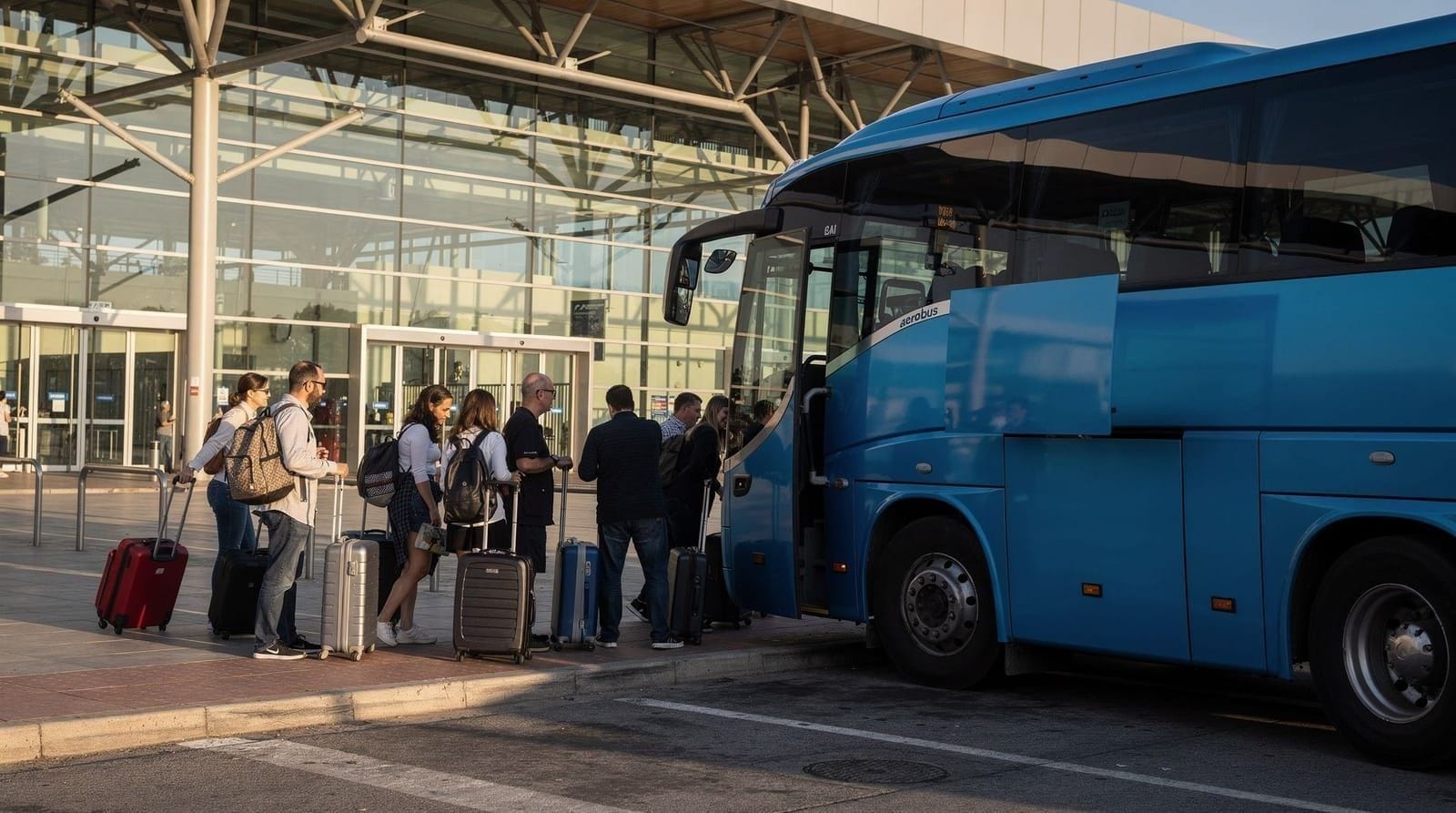
Aerobus: The dedicated coach service between El Prat airport (T1 and T2) and Plaça Catalunya. It is a separate private operator. A single Aerobus journey costs €6.75 regardless of what transit pass you hold. Our guide on getting to Barcelona airport covers all the options in detail, including when the metro beats the Aerobus on both cost and convenience.
Bus Turístic (tourist bus): The hop-on hop-off red, blue and green route tourist buses have no connection to the regular TMB network. You cannot board them with the Hola Barcelona card or any other standard pass.
Port Vell Gondola: The old aerial cable car crossing the harbour between Barceloneta and Montjuïc is a separate paid attraction (around €12).
FGC beyond zone 6: Trips to destinations further out — Igualada, Manresa, Terrassa — require additional payment even with the Hola card. For most visitors this is irrelevant.
The four durations and their prices
The Hola Barcelona card comes in four versions. These are continuous hours from first activation, not calendar days:
| Duration | Hours | Price (2026) |
|---|---|---|
| 2-day | 48 hours | €18.70 |
| 3-day | 72 hours | €27.30 |
| 4-day | 96 hours | €35.60 |
| 5-day | 120 hours | €43.60 |
One detail worth emphasising: 48 continuous hours means that if you first use the card at 09:00 on a Monday, it expires at 09:00 on Wednesday — regardless of whether you slept through Tuesday afternoon. It is not two full calendar days of use.
The T-Casual comparison: honest arithmetic
The T-Casual is the standard 10-trip reloadable card that most Barcelona residents use day-to-day. It costs €13 for 10 journeys, which works out to €1.30 per trip. You can buy additional loads at the same rate.
The T-Casual does not cover the L9 Sud airport metro. An airport metro trip costs €5.90 separately with a single-journey ticket.
Here is the honest comparison for a typical visitor profile:
3-day trip, arriving and leaving by airport metro
Airport metro in + airport metro out = 2 journeys at €5.90 each = €11.80 outside the T-Casual.
If you add moderate metro use during the trip — say, 3 journeys per day — that is 9 additional trips over 3 days, costing €11.70 on T-Casual (just under one full card).
Total T-Casual route: €11.80 airport + €11.70 city trips = €23.50.
Hola Barcelona 3-day: €27.30.
In this scenario, T-Casual is €4.20 cheaper. But the Hola card gives you unlimited city trips — if you take 4 or more per day instead of 3, the gap closes fast.
3-day trip, moderate metro use, 5 trips/day
5 trips × 3 days = 15 city trips = €19.50 on T-Casual. Plus airport metro: €11.80. Total: €31.30 versus Hola’s €27.30.
Here the Hola Barcelona card saves €4 and removes the need to count trips.
2-day trip, no airport metro, light metro use
If you arrive by Aerobus or private transfer and only take the metro 2-3 times per day, the T-Casual is clearly cheaper. 6 trips at €1.30 = €7.80 versus Hola 2-day at €18.70. The Hola card loses by a large margin here.
The key variable is the airport metro. It is the single biggest factor in the value calculation because it saves €5.90 per journey that the T-Casual cannot recapture.
When the Hola Barcelona card genuinely pays off
The Hola card works best in these situations:
You are arriving and departing by metro L9 Sud. Two airport journeys alone offset €11.80 of the card cost versus individual tickets. For a 2-day stay, that brings the effective premium over T-Casual (for moderate city use) down to almost nothing — and you get unlimited city trips as a bonus.
You are doing Montjuïc by cable car. The €12.70 Telefèric de Montjuïc return is included. For someone planning a Montjuïc visit, this one activity makes the 2-day card economically viable for almost any trip length.
You are in Barcelona for 4-5 days with active transit use. Over five days with 5+ metro trips per day, the maths become clear: 25+ trips at €1.30 = €32.50 plus any airport costs. The 5-day Hola at €43.60 gives you an unlimited pass for a similar price with no counting.
You have a group. Each person needs their own Hola card — it is not transferable between travellers. But the airport metro saving applies to each family member, making it proportionally more attractive for groups.
When to use T-Casual instead
Short visit, no airport metro. If you arrive by Aerobus, Renfe or private transfer and only do a handful of metro rides, T-Casual is cheaper. A 1-day visitor doing 4 trips pays €5.20 versus any Hola card at minimum €18.70.
Longer stay with light transit use. If your hotel is in the Gothic Quarter and you walk to most sights, buying a T-Casual and topping it up costs far less than a 5-day unlimited card. The transport pass comparison guide works through more visitor profiles in detail.
Mixed party with different schedules. The Hola card is personal. If one traveller uses transit heavily and another rarely, it is worth buying a Hola card for the heavy user and a T-Casual for the other.
Where to buy and how to activate
At metro vending machines: Available at every metro station including both airport terminals (T1 and T2). Machines accept cash and chip-and-pin credit cards. The interface is available in Catalan, Spanish, English, French, German and others.
Online via GetYourGuide or TMB website: You book online and collect the card at a metro vending machine using your booking reference. There is no pricing advantage to booking online but it confirms availability and can save time at busy machines in summer.
At tourist information offices: Points de Benvinguda (tourist offices) at Plaça Catalunya and Sants station also sell the card.
Activation: The card is dormant until you validate it at the first gate. It does not start counting from purchase. This means you can buy it the night before your trip and activate it at the start of your first transit journey — typically the metro from the airport to the city, or your first city-centre ride if you arrive by other means.
The activation mistake most visitors make
The single most common error is validating the Hola Barcelona card at the airport metro gate immediately on arrival — which is the correct thing to do if you are using the metro into the city. The mistake is doing it at 06:00 on a morning flight and then sleeping until midday before going out. You have burned six hours of your card’s continuous clock.
There is no perfect solution to this, but awareness helps. If you arrive very early and your main transit use will start later in the day, consider whether a taxi or Aerobus for the airport leg makes financial sense so you can activate your Hola card at your first genuine city journey.
Conversely, if you want to maximise the card, validate it at the airport on arrival (typically the best use of the L9 Sud saving) and plan your last trip for shortly before the card expires.
Family and group considerations
Children under 4 travel free on all TMB networks — metro, bus, tram, funicular and Montjuïc cable car — regardless of what pass adults hold. No ticket or card is required for them. Children aged 4 and over need their own card at the same adult price (there is no child-reduced rate on the Hola Barcelona card).
For a family of two adults and two young children (under 4), the adults each need their own Hola card. The children ride free. This makes the family economics of the Hola card better than they first appear — two airport metro journeys per adult (saving €23.60 in total) plus unlimited city rides covers a significant amount of a 2-3 day family trip.
Our Barcelona with kids guide covers family transport and sightseeing logistics in more detail.
The Montjuïc cable car inclusion
It is worth stopping on this specific benefit because it is often missed. The Telefèric de Montjuïc cable car runs between the Funicular mid-station and Montjuïc Castle. A return ticket bought separately costs €12.70 for adults. If your trip includes Montjuïc Castle or the views from the summit, the Hola card inclusion effectively subsidises the cable car — and the Funicular below it.
The combined saving of airport metro (once each way, €11.80) plus cable car return (€12.70) adds up to €24.50 in equivalent individual fares. For a 3-day Hola card at €27.30, that leaves just €2.80 covering all city metro trips, bus rides and everything else for three days. At that point the card is almost certainly better value than the alternatives.
How it compares to the Barcelona Card
The Barcelona Card includes the same transport coverage as the Hola Barcelona card but adds 25 museums. A 3-day Barcelona Card costs €59 versus €27.30 for the 3-day Hola card. The premium of €31.70 is worth paying only if you genuinely plan to visit enough of the included museums to recover that cost. If your trip is primarily Gaudí-focused — Sagrada Família, Park Güell, Casa Batlló — the Barcelona Card makes little sense because none of those sites are included in it.
For most visitors prioritising transport efficiency and budget clarity, the Hola Barcelona card is the cleaner, cheaper option. The Barcelona Card is worth considering separately for art-focused travellers who will visit multiple free museums. The two passes are not in competition for the same visitor profile.
Combining with a private airport transfer
If you decide the airport metro is not right for your trip — early morning arrival with heavy luggage and children, or a very late-night return — a private transfer from El Prat to the city centre costs around €35 and removes the transit calculation entirely. Our airport transfer comparator works through the options side by side.
In that case, you lose the L9 Sud saving that makes the Hola card easiest to justify. The decision then becomes purely about city metro volume: if you will take 4 or more metro trips per day for 3+ days, the Hola card still works. Below that, T-Casual is cheaper.
Quick reference
- 2-day Hola: €18.70 — good for a long weekend if you arrive by metro
- 3-day Hola: €27.30 — the most common purchase, breaks even easily with airport metro use
- 4-day Hola: €35.60 — suits a 4-night stay with active transport use
- 5-day Hola: €43.60 — worth it for a full week if you transit regularly
- Not included: Aerobus, tourist hop-on hop-off buses, Port Vell cable car
- Best single justification: L9 Sud airport metro (€5.90 each way not charged)
- Activate at: first transit gate, preferably the airport metro on arrival
Use the daily budget calculator to model your specific trip and see whether the Hola card saves money versus alternatives.
The questions above in the guide cover the core decisions. A few remaining points are worth addressing for completeness.
The Hola Barcelona card is validated per journey, not per tap, so transferring between metro and bus within 75 minutes on a standard journey counts as one zone-based trip on a T-Casual — but this transfer benefit does not apply on the Hola card in the same way because the card is unlimited regardless. You do not need to think about it: simply validate at each gate or reader and the card charges nothing additional.
If your card is lost or stolen, there is no refund or replacement process. The card holds no registered user information. Treat it like cash once activated.
Finally, check the card reader display at the gate after validation. It will show the expiry time. Making a note of this on your phone removes any ambiguity about when you need to buy a top-up or switch to a T-Casual for remaining journeys.
The getting around Barcelona guide covers the full metro map, bus network tips and navigation strategies that help make the most of whichever pass you choose. If you are thinking about the hop-on hop-off tourist bus as an alternative, bear in mind it uses a separate ticketing system and the Hola card does not apply to it. And if you are weighing up your overall Barcelona spend, the Barcelona on a budget guide covers where the real savings are across accommodation, food and entry fees.
Frequently asked questions about Hola Barcelona Travel Card
What does the Hola Barcelona Travel Card cover?
All TMB metro lines (including the L9 Sud airport connection), TMB buses, Barceloneta tram, Rodalies suburban rail in zone 1 (lines R1, R2, R3, R4, R7, R10, R11, R12), FGC commuter rail in zones 1-6, Funicular de Montjuïc and the Telefèric de Montjuïc cable car. It does not cover the Aerobus coach or the Bus Turístic tourist buses.What are the 2026 prices for the Hola Barcelona Travel Card?
2-day (48 hours): €18.70. 3-day (72 hours): €27.30. 4-day (96 hours): €35.60. 5-day (120 hours): €43.60. The card gives continuous hours from the moment of first use — not calendar days.Does the Hola Barcelona card cover the airport metro?
Yes. The L9 Sud metro line runs from El Prat airport (T1 and T2) to the city centre. Without the Hola Barcelona card a single L9 Sud ticket costs €5.90 each way. Two airport journeys on the Hola card save €11.80 compared to individual airport metro fares, and €0 compared to spending that money on additional T-Casual trips.When does the Hola Barcelona card activate?
The card activates on first use — the moment you validate it at any gate or reader. From that instant, the 48, 72, 96 or 120 hours run continuously. Do not validate the card at the airport if you want to maximise city transit time; activate it at your first city-centre journey instead.Where can I buy the Hola Barcelona Travel Card?
At TMB vending machines in any metro station (including T1 and T2 terminals), at Sants or Passeig de Gràcia stations, and online via the TMB website or GetYourGuide. Online purchases are collected at metro vending machines using the booking reference. The machines accept cash and credit cards.Can I use the Hola Barcelona card for the Montjuïc cable car?
Yes. The Telefèric de Montjuïc cable car between the mid-station (Paral·lel metro exit) and the castle summit is included. So is the Funicular de Montjuïc that connects Paral·lel station to the mid-station. Without the card, the cable car costs €12.70 return.Do children need a Hola Barcelona card?
Children under 4 years old travel free on all TMB networks — metro, buses, tram and funicular. For children aged 4 and over, the same Hola Barcelona prices apply as for adults. There is no child-reduced rate on the travel card.Is the Hola Barcelona card better than the T-Casual?
It depends on your trip. The T-Casual costs €13 for 10 trips at €1.30 each and does not cover the airport metro. If you are skipping the airport metro and doing fewer than 7 metro trips per day, T-Casual is usually cheaper. If you arrive and depart by metro L9 Sud, the Hola card pays off much faster because you immediately offset €11.80 in airport fares.
Top experiences
Bookable activities with verified prices and instant confirmation on GetYourGuide.