CosmoCaixa and Tibidabo: how to combine both in one day
Barcelona: Tibidabo amusement park admission ticket
Duration: Full day
- Free cancellation
Can you visit CosmoCaixa and Tibidabo in the same day?
Yes, and it works well. CosmoCaixa opens at 10:00 and takes two to three hours, leaving a comfortable mid-morning slot before you head uphill to Tibidabo. The two attractions are under 1 km apart on foot, or a short bus ride. Plan for a full day — six to eight hours combined — and check Tibidabo's seasonal opening hours before you book.
Barcelona’s upper city — the hillside neighbourhoods between the Eixample grid and the Collserola ridge — contains two of the best family destinations in Catalonia. CosmoCaixa, one of the finest science museums in southern Europe, sits on the slope below the Tibidabo summit. Tibidabo itself, at 512 metres, is a historic amusement park with panoramic views over the city and the Mediterranean. They are less than a kilometre apart and share the same transport axis, which makes combining them in a single day genuinely practical rather than just theoretically possible.
This guide covers both in detail: what each offers, which ages get the most from each, how to reach them, and how to structure a day that makes good use of the geography without exhausting everyone before lunchtime.
| Where | Sarrià-Sant Gervasi / Collserola ridge, above the Eixample |
| Cost | Around €8 adult / €5 child (CosmoCaixa); around €35 adult (Tibidabo full ticket) |
| Time needed | Full day (6–8 hours combined) |
| Getting there | Metro L7 to Av. Tibidabo, then Tramvia Blau + funicular for Tibidabo |
| Best time | Weekday mornings; check Tibidabo’s seasonal calendar first |
CosmoCaixa: Barcelona’s science museum
CosmoCaixa sits at Carrer d’Isaac Newton 26, in the upper reaches of the Sarrià-Sant Gervasi district near the boundary with Gràcia. The building — a converted early twentieth-century asylum extended by the architects Domènech i Montaner in the 1990s — is substantial and somewhat easy to miss from the street, tucked behind a tree-lined esplanade with outdoor science installations.
It is, by any reasonable measure, the best science museum in Catalonia and one of the better ones in Spain. The combination of genuinely interactive exhibits, a live-ecosystem centrepiece and a well-run planetarium sets it apart from most regional science museums, which tend to offer either dusty static displays or child-oriented play spaces without much intellectual content. CosmoCaixa manages both: it engages children and does not bore adults who accompany them.
The Flooded Forest
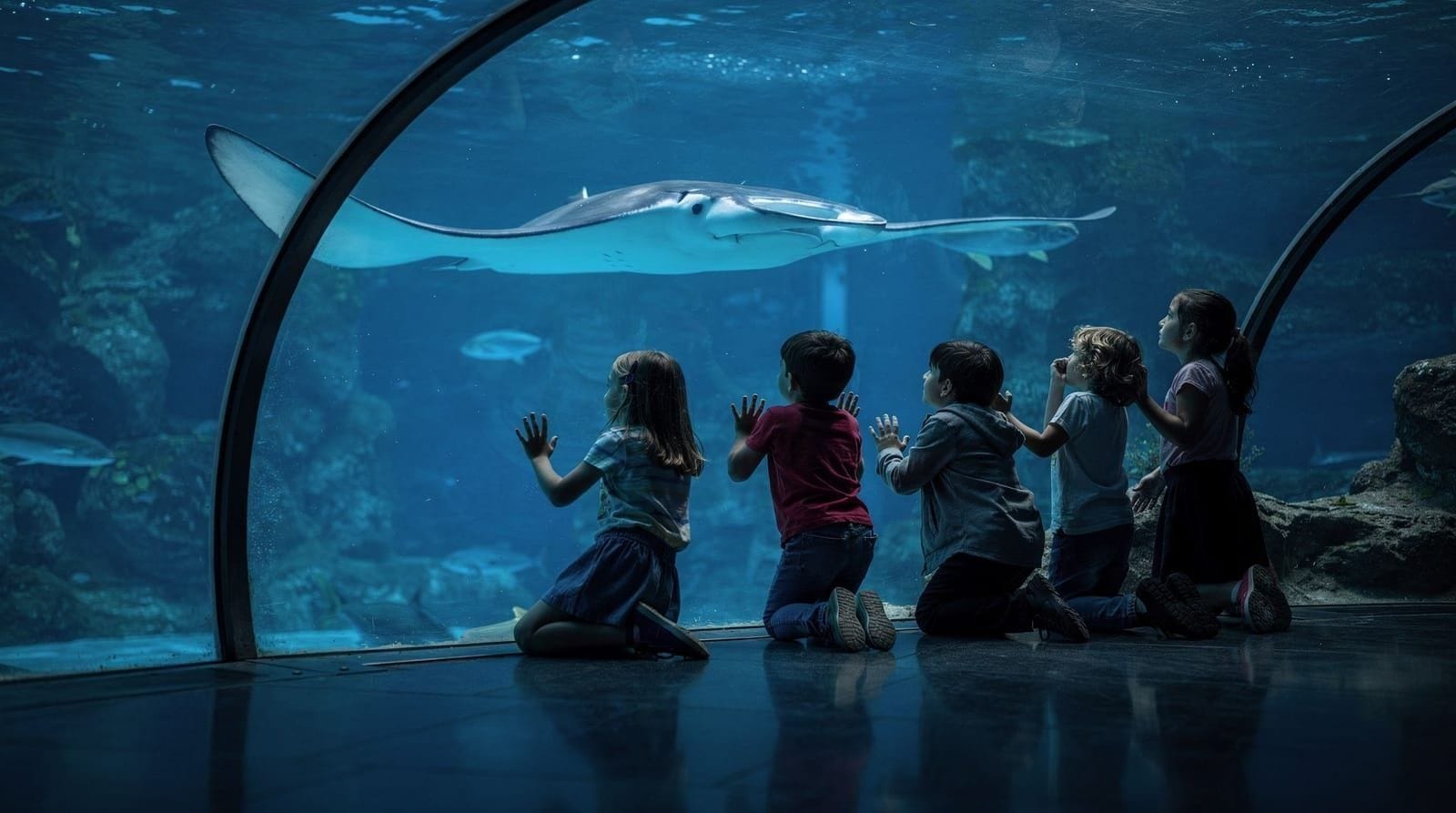
The centrepiece of CosmoCaixa is the Bosc Inundat — the Flooded Amazon Forest — and it earns its billing. A 450-square-metre section of genuine Amazonian ecosystem, with actual living trees, plants, fish, caimans, anacondas and more than a hundred other species of real animals, occupies a sunken chamber running through the lower floors of the museum. This is not a terrarium or a display case: it is a living slice of the Amazon rainforest imported and maintained in Catalonia.
The engineering required to keep it alive — humidity, temperature, light cycles, water quality and the complex food relationships between species — is itself an exhibit. Interpretive panels explain the ecosystem rather than just listing what you are looking at. Children who are not yet old enough for the more technical exhibits often spend disproportionate time here, watching the caimans submerged near the viewing windows or spotting the giant river turtles.
Plan at least 30 to 45 minutes in this section alone, more if your children are engaged by the animals. The space is tiered with multiple viewing levels, so even with a pram or pushchair (there are ramps and a lift) you can see most of it.
The Matter Room and interactive science floors
The upper floors of CosmoCaixa house the main interactive science exhibits. The Matter Room (Sala de Matèria) is a substantial permanent installation covering physics, chemistry and biology through hands-on demonstrations — static electricity displays, optics experiments, mechanical models showing how things move and break. The quality varies exhibit by exhibit, as it does in any large science museum, but the density of things to touch and operate is high enough that children from about age seven will find the time passes quickly.
The geological wall — a cross-section of rock layers showing deep time — is one of the more thoughtful geology displays you will encounter in a public museum. The earthquake simulator (a platform that mimics seismic motion) is popular and works well as a demonstration of what earthquakes feel like at different magnitudes.
There is a dedicated space for younger children (the Clik zone, for ages three to six) with scaled-down experiments and water play. For family groups that span a wide age range, this allows parents to split time without leaving anyone bored.
The planetarium
CosmoCaixa has a digital planetarium with a domed screen and regular scheduled shows. Shows vary in content and recommended age — some are designed for young children from about age five, others for older audiences. The programme changes seasonally. Sessions run throughout the day, typically every 45 to 60 minutes, and are usually conducted in Catalan or Spanish. Check the current schedule on the museum website when booking, as certain sessions sell out on weekends.
The planetarium show is included in the standard admission ticket. There is no separate booking fee, but it is worth planning your arrival time to catch a session in the first half of your visit, as the main interactive floors can be done after.
Practical information for CosmoCaixa
CosmoCaixa is open Tuesday to Sunday, 10:00 to 20:00. It is closed on Mondays (except public holidays). Adults pay €8, children aged 3 to 14 pay €5, children under 3 enter free. The café on the ground floor is reasonable and not overpriced by museum standards — a useful option for an early lunch before heading uphill.
To reach CosmoCaixa by public transport: Metro L7 to Av. Tibidabo is the most convenient option for the combined day described in this guide, as it puts you on the same axis as both attractions. Bus routes 196 and V13 also stop near the museum. From the city centre, the journey takes roughly 25 to 35 minutes.
There is a small car park, but it fills quickly on weekend mornings. If you are planning this as a two-attraction day, public transport is more practical.
Tibidabo: Barcelona’s historic summit park
Tibidabo Amusement Park sits at the top of the Collserola ridge, at 512 metres above sea level. On a clear day — which Barcelona provides often enough — the views from the summit take in the entire urban grid below, the Llobregat and Besòs river deltas on either side, and a Mediterranean horizon that stretches south toward the Costa Daurada. On exceptional days you can see Mallorca. The views alone are worth considering, separate from the park itself.
History and character
Tibidabo opened in 1901, which makes it one of the oldest amusement parks in the world still in operation. That age is visible throughout in the best possible way. The original 1928 Avió — a replica biplane suspended on a gantry that swings riders out over the city — is still operating. The historic carousel, installed in the early twentieth century, still runs. An automaton museum in one section of the park contains mechanical figures from the late nineteenth century.
The park is not trying to be PortAventura. It does not compete on the scale of its rides or the height of its roller coasters. What it offers instead is a combination of genuine history, a theatrical setting on a real mountain summit, and a family atmosphere that feels different from a purpose-built theme park. The Museu d’Autòmates alone — a collection of coin-operated mechanical automata from the late 1800s onward — is the kind of thing you do not find anywhere else.
That said, there are modern rides too. The Muntanya Russa roller coaster, the bumper cars, the haunted house, the 4D cinema and a number of other attractions suit children from about age five or six and up. The park is spread across the summit area, and the terrain means there is some uphill walking between sections. Very young children in pushchairs can manage, but check the park map for the steeper connections.
The Temple Expiatori del Sagrat Cor
At the very top of Tibidabo, above the amusement park, stands the Temple Expiatori del Sagrat Cor — a neo-Gothic church in a style that would not look out of place in a Victorian illustration of a fairy tale. Construction began in 1902 and continued into the 1960s. A bronze statue of Christ stands on the highest tower, visible from much of Barcelona on clear days.
The church is separate from the amusement park and freely accessible. The crypt inside is open to visitors. The viewing terraces around the church base offer some of the highest accessible viewpoints in Barcelona. Even if your children’s interest in church architecture is limited, the view from here explains the city’s layout in ways that a map cannot — you see the Eixample grid, the old city, Montjuïc, the port and the littoral in a single panorama.
Getting to Tibidabo
The traditional and most enjoyable route combines Metro L7, the Tramvia Blau and the Funicular del Tibidabo. From the city centre, take the Metro L7 to the final stop, Av. Tibidabo. From there, the Tramvia Blau — a historic blue tram that has been running this route since 1901 — runs up Avinguda del Tibidabo to the Peu del Funicular stop, taking about 10 minutes. The funicular then climbs the final section to the summit in around 5 minutes.
Note: the Tramvia Blau and the Funicular del Tibidabo are not included in standard T-Casual metro and bus tickets. There is typically a supplement. If you want to save on the tram section, bus 196 runs an alternative route from Av. Tibidabo to the funicular base. The funicular supplement is usually worth paying for the experience.
An alternative: FGC commuter lines S1 or S2 to Peu del Funicular, which is the same funicular base station, approaching from the Sarrià direction rather than the Gràcia direction. This can be faster from the city centre depending on where you start.
Honest notes on Tibidabo
Tibidabo is genuinely one of the more distinctive theme park experiences in Spain. But it comes with caveats worth knowing before you book.
The price is real. At €35 for adults and proportional prices for children, a family of four pays a significant sum. If your main goal is the views and the church, the reduced-access ticket (€13) covers the summit without park rides. If the rides are the point, the full ticket makes sense — unlimited rides are included.
The seasonal hours are real. Tibidabo does not operate on a standard daily schedule. In the off-season it typically opens Saturdays and Sundays only, plus public holidays. In July and August it opens on weekdays too, but not always all seven days. It can close without notice in high winds or extreme weather — the exposed summit at 512 metres catches weather badly. The official Tibidabo website publishes a monthly calendar. Check it, especially if you are travelling mid-week or in spring or autumn. Our best time to visit Barcelona guide covers seasonal patterns for the city generally, which is useful context for planning when Tibidabo is most reliably open. Do not assume it will be open the day you plan to visit without verifying.
It is busy on sunny weekends. Arrive by mid-morning if visiting at the weekend. The funicular queue can lengthen significantly by midday.
Combining both in one day
The practical sequence is almost always CosmoCaixa first, Tibidabo second. Here is why: CosmoCaixa opens at 10:00, which is the natural start time for a family day out. Tibidabo opens later (typically 12:00 on weekdays in season, 11:00 at weekends — check the current calendar). By starting at CosmoCaixa and spending two to three hours there, you arrive at Tibidabo around or just after opening, when the park is least busy.
A workable day plan:
- 10:00 — CosmoCaixa opens. Start with the Flooded Forest while the museum is quietest.
- 10:30 — Planetarium session (check the day’s schedule in advance).
- 11:15 — Interactive science floors — Matter Room, geological wall, earthquake simulator.
- 12:30 — Lunch at the CosmoCaixa café or at the outdoor terrace if weather permits.
- 13:00 — Walk from CosmoCaixa to the funicular base (under 1 km, mostly flat, or take bus 196 for two stops).
- 13:15 — Funicular to Tibidabo summit.
- 13:30 to 18:00 — Tibidabo park, including the church and summit viewpoint.
- 18:00 — Return by funicular and tram.
The walk between CosmoCaixa and the Peu del Funicular station is the part that surprises some visitors — it is modest and manageable with children, though the terrain slopes gently. If anyone is tired after CosmoCaixa, bus 196 covers it in a few minutes.
Parc de Collserola
If your day has room for it, the Parc de Collserola surrounds the Tibidabo summit on all sides. It is the largest metropolitan park in the world by area — 8,000 hectares of Mediterranean forest running along the Collserola ridge. For a picnic or a short walk between the two attractions, the park’s lower edges near the funicular base offer shaded paths and benches that see far fewer visitors than the tourist areas above.
The Torre de Collserola communications tower — designed by Norman Foster and visible from most of Barcelona — also sits in the park and has a public viewing deck, though this is a tertiary attraction best left for another visit.
Tickets and transport costs
For planning a combined day, the rough costs at 2026 rates:
- CosmoCaixa: €8 adults, €5 children 3-14
- Tibidabo (full): €35 adults, proportional child rates on the official site
- Metro L7: covered by T-Casual (€13 for 10 trips) or single fare (€2.90)
- Tramvia Blau and Funicular: supplement charged separately, check current rates
- Total for two adults and two children (school age): approximately €110-€120 for both attractions, not including transport supplements or food
| Item | Adult | Child (3–14) |
|---|---|---|
| CosmoCaixa | around €8 | around €5 |
| Tibidabo (full, unlimited rides) | around €35 | proportional child rate |
| Tibidabo (reduced, summit + church only) | around €13 | proportional child rate |
| Metro single fare | around €2.90 | — |
For families already planning multiple Barcelona activities, the Barcelona pass calculator can help you model whether a city pass makes sense across your full itinerary. The daily budget calculator is useful for building a realistic day-total before you go.
For public transport options and what a T-Casual card covers, our transport pass comparison and getting around Barcelona guide have the current details. The Hola Barcelona card covers unlimited public transport including the FGC trains used on the Tibidabo approach.
Accessibility and prams
CosmoCaixa is fully accessible: ramps and a lift connect all levels of the Flooded Forest, the interactive floors have wide walkways, and staff are used to families with pushchairs navigating the tiered viewing areas. Budget slightly extra time if travelling with a pram, mainly because the Flooded Forest’s lower levels get busy with school groups on weekday mornings during term time. Tibidabo is more mixed: the amusement park itself is on relatively flat ground at the summit, but the connections between CosmoCaixa, the funicular base and the summit involve some uphill walking and steps at certain points, particularly around the Tramvia Blau stop. A pram can generally make the journey, but check the current accessibility notes on the Tibidabo website if mobility is a significant concern, since the historic tram and funicular were not originally designed with modern accessibility standards in mind.
Rainy-day value
This combination day has a genuine rainy-day advantage that is easy to overlook when planning: CosmoCaixa is almost entirely indoors, which makes it one of the best wet-weather options in Barcelona for families, alongside the aquarium. If rain is forecast, consider flipping the usual order — spend a longer morning and early afternoon at CosmoCaixa if the weather is poor, and check the Tibidabo forecast before committing to the funicular, since the summit is genuinely exposed and can close in high wind or heavy rain regardless of conditions in the city centre. Building in this flexibility, rather than fixing both halves of the day rigidly in advance, is the single most useful piece of practical advice for this itinerary.
How this day fits into a Barcelona family trip
A CosmoCaixa and Tibidabo day works best in the middle section of a Barcelona trip, after the central sights (Sagrada Família, Park Güell, Gothic Quarter) have been covered. The relative calm of CosmoCaixa and the physical distance from the tourist centre make it a good counterpoint to busier days.
For other family-focused days in Barcelona, our Barcelona with kids guide covers the full range of family activities and how to sequence them across a multi-day trip. If the children’s preference runs toward live animals rather than rides or science exhibits, the zoo and aquarium guide covers both of Barcelona’s main wildlife attractions with honest comparisons of what each offers at different ages.
For the most ambitious family day trip from Barcelona — a full theme park day at 120 km distance — our PortAventura with kids guide covers the logistics, costs and ride highlights at the Costa Daurada’s major park.
Both attractions come with genuine logistical questions that are worth working out in advance, because both have conditions — seasonal opening at Tibidabo, timed planetarium shows at CosmoCaixa — that can affect your plan if you do not check them.
The most important pre-visit checks are: confirm Tibidabo’s opening hours for the specific day of your visit on their official calendar, and look at CosmoCaixa’s planetarium schedule to time your arrival around a suitable show. Both of these take five minutes online and prevent the main frustrations families encounter with this combination day. Everything else — the sequence, the transport, the split of time — falls into place once those two anchors are confirmed.
The hill above Barcelona is less visited than the seafront and the Gothic Quarter. On a clear day, the view from the Tibidabo summit looking back over the city is one of the perspectives on Barcelona that stays with you. Combined with a morning of genuine science engagement at CosmoCaixa, it makes for one of the more memorable full days a family can spend in the city.
Frequently asked questions about CosmoCaixa and Tibidabo
How much does CosmoCaixa cost?
Adults pay €8, children aged 3 to 14 pay €5, and children under 3 enter free. The ticket covers the permanent collection including the Flooded Forest, planetarium shows, earthquake simulator and all interactive labs. It is one of the better-value science museums in Spain.How much does Tibidabo cost?
The standard adult ticket is €35 and covers unlimited rides on all attractions in the park. A reduced ticket (€13) covers access to the summit, views and the church but no rides — useful if your children are too young for the attractions or you mainly want the panorama.How do you get to Tibidabo by public transport?
The classic route is Metro L7 to Av. Tibidabo, then the Tramvia Blau (Blue Tram) for about 10 minutes to the base station, then the Funicular del Tibidabo for 5 minutes to the summit. An alternative is FGC lines S1 or S2 to Peu del Funicular, then the funicular directly. The tram and funicular are not covered by standard T-Casual cards — check the current supplement.Is Tibidabo open every day?
No. Tibidabo operates on a seasonal and weekend-heavy schedule — typically Saturdays, Sundays and public holidays most of the year, with additional weekday openings in July and August. It can also close in high winds since the site is exposed at 512 metres. Always check the official opening calendar before travelling, especially if you are visiting mid-week or outside summer.What age is CosmoCaixa best suited to?
The museum works across a wide age range. The Flooded Forest and live animals engage children from around age four. The matter lab and earthquake simulator are more interesting from age seven or eight. The planetarium shows vary in complexity — the family-specific sessions are suitable from age five. Older teenagers often find it genuinely interesting rather than just educational.Is it worth doing both in one day or are they too tiring?
It depends on your children's ages and energy levels. CosmoCaixa is calm and self-paced, so it makes a good morning activity before the stimulation of Tibidabo in the afternoon. Arriving at CosmoCaixa at opening (10:00) and leaving by 12:30 to 13:00 gives you time for lunch at the museum café before heading up. Very young children or those prone to overstimulation may do better choosing one.Is there parking near CosmoCaixa and Tibidabo?
Yes, but it is limited and can fill up on busy weekend mornings. CosmoCaixa has a small car park. If you are driving, Tibidabo has parking near the funicular base, but buses and the funicular are generally easier. Public transport avoids the hill road's steep bends.
Top experiences
Bookable activities with verified prices and instant confirmation on GetYourGuide.