Sagrada Família: tickets, tips and how to visit
Barcelona: Sagrada Família skip-the-line ticket with audio guide
Duration: 2 hours
- Free cancellation
- Instant confirmation
How far ahead should I book Sagrada Família tickets?
Book as soon as your dates are set. Basic entry can sell out 1–2 weeks ahead on weekdays; tower tickets go 4–6 weeks out, and 8–12 weeks in summer. Tickets release on a rolling three-month window.
Antoni Gaudí’s unfinished basilica is the single most-booked sight in Barcelona, and the one most likely to derail an otherwise smooth trip if you leave it to chance. With the 2026 centenary of Gaudí’s death driving record demand, timed-entry slots disappear faster than ever.
Sagrada Família at a glance
| Tickets from | €26 (basic entry) |
| With one tower | €36 |
| Time needed | 1.5–2 hours (2.5 with a tower) |
| How far ahead to book | 1–2 weeks basic, 4–12 weeks for towers in summer |
| Nearest metro | Sagrada Família (L2/L5) |
Why it sells out before you arrive
The Sagrada Família admits a fixed number of visitors per time slot, and releases tickets on a rolling three-month window. In practice that means basic entry can vanish one to two weeks ahead on a normal weekday, while tower tickets are gone four to six weeks out — and eight to twelve weeks ahead across the summer. The fix is simple: the booking strategy is to reserve the moment your dates are confirmed.
A straightforward skip-the-line entry is the cheapest way in and includes the superb audio guide.
Ticket types, decoded
Basic adult entry starts at €26. Adding one tower brings it to €36. The official guided tour that explains Gaudí’s symbolism costs €30 (€40 with a tower), and full Gaudí combos with Park Güell or Casa Batlló run higher.
For most first-time visitors, this is the cleanest choice: a fixed time slot, the included audio guide, and no need to weigh a guided narration against your own pace.
Comparing the main ticket types
| Ticket type | Around | Best for |
|---|---|---|
| Basic entry + audio guide | €26 | Budget-conscious, self-paced visitors |
| Entry + one tower | €36 | Anyone comfortable with heights wanting the best views |
| Guided tour (no tower) | €30 | Visitors who want Gaudí’s symbolism explained in person |
| Guided tour + tower | €40 | First and only visit, want the full context and the climb |
| Gaudí combo (with Park Güell) | €70–130 | Compressing two must-see sights into one booked day |
Towers: which one and is it worth it
Tower access is a separate timed add-on. The Nativity façade tower looks out over the medieval city; the Passion tower faces the modern grid and the sea. You take a lift up and a narrow spiral staircase down, so skip it if you dislike heights or tight spaces. Otherwise it is a memorable add for around €10 over the base price.
If you would rather have someone point out the details of the façades rather than rely on the audio guide alone, a small-group guided visit with tower access covers both in one booking — useful if this is likely to be your only visit to Barcelona.
Best time of day to visit
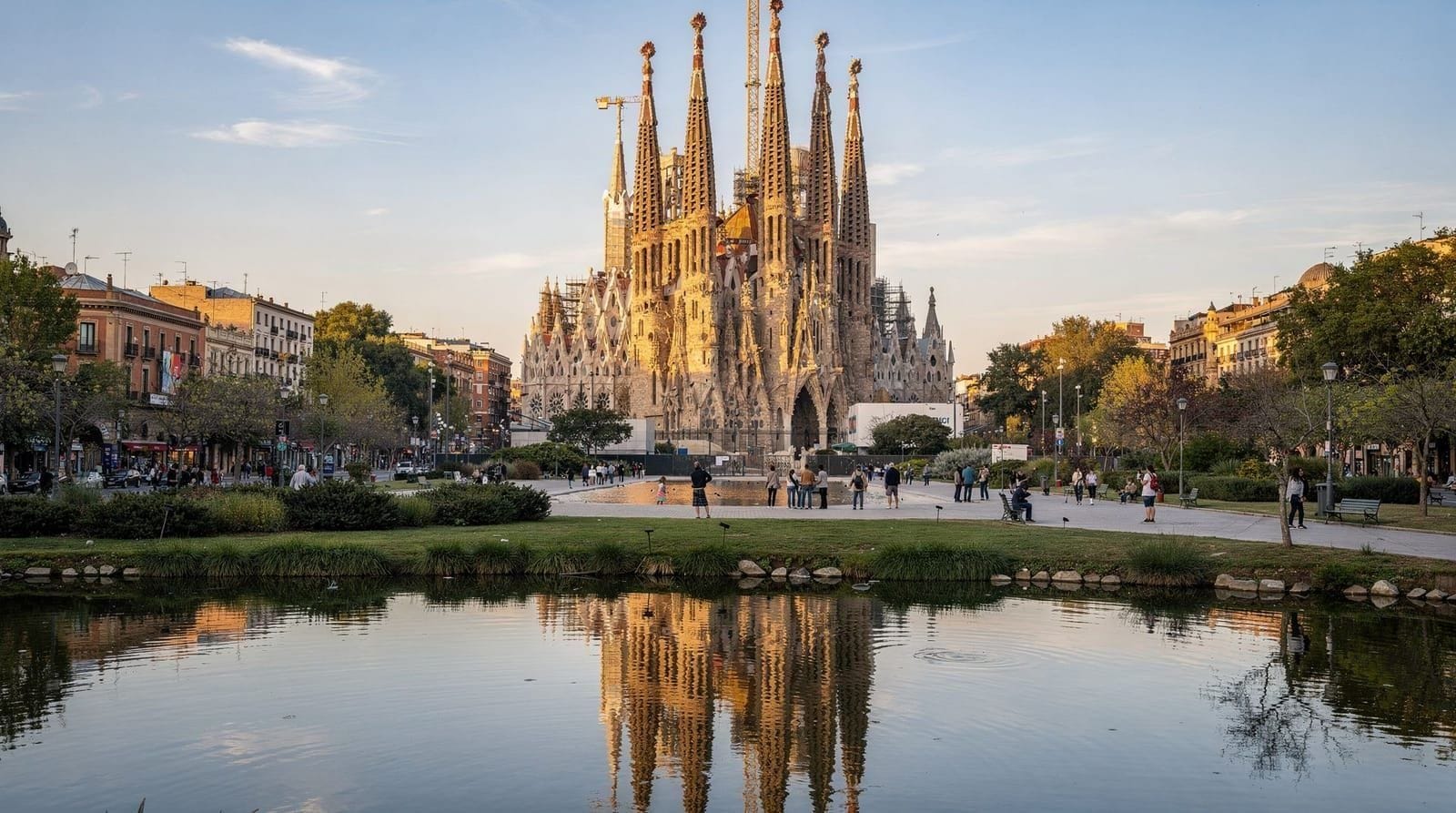
Opening time (usually 9:00) is the single best slot: light streams through the stained glass at a low angle and the nave is close to empty for the first 30–45 minutes. Late afternoon, an hour or two before closing, is the second-best option and often has shorter queues at security. Midday (12:00–15:00) is consistently the busiest window, especially May through September, when cruise-ship and day-tour groups arrive together. If you can only get a midday slot, the crowding is manageable — just budget extra time and expect the Nativity façade courtyard to be full of coach groups. Sunset views of the towers are best from the small park directly across Carrer de Mallorca, no ticket required.
Avoiding the queues — and the scams
Even with a timed ticket, arrive 15 minutes before your slot and have the QR code ready offline. Ignore anyone selling “cheap” tickets on the surrounding streets — reseller markups of €5–15 are common, and counterfeit QR codes circulate. For the full rundown of city scams, see our honest tourist-trap guide.
What to look for once you are inside
Most people walk in, look up, and forget everything else. A little attention to detail makes the visit richer, and none of it needs a guide.
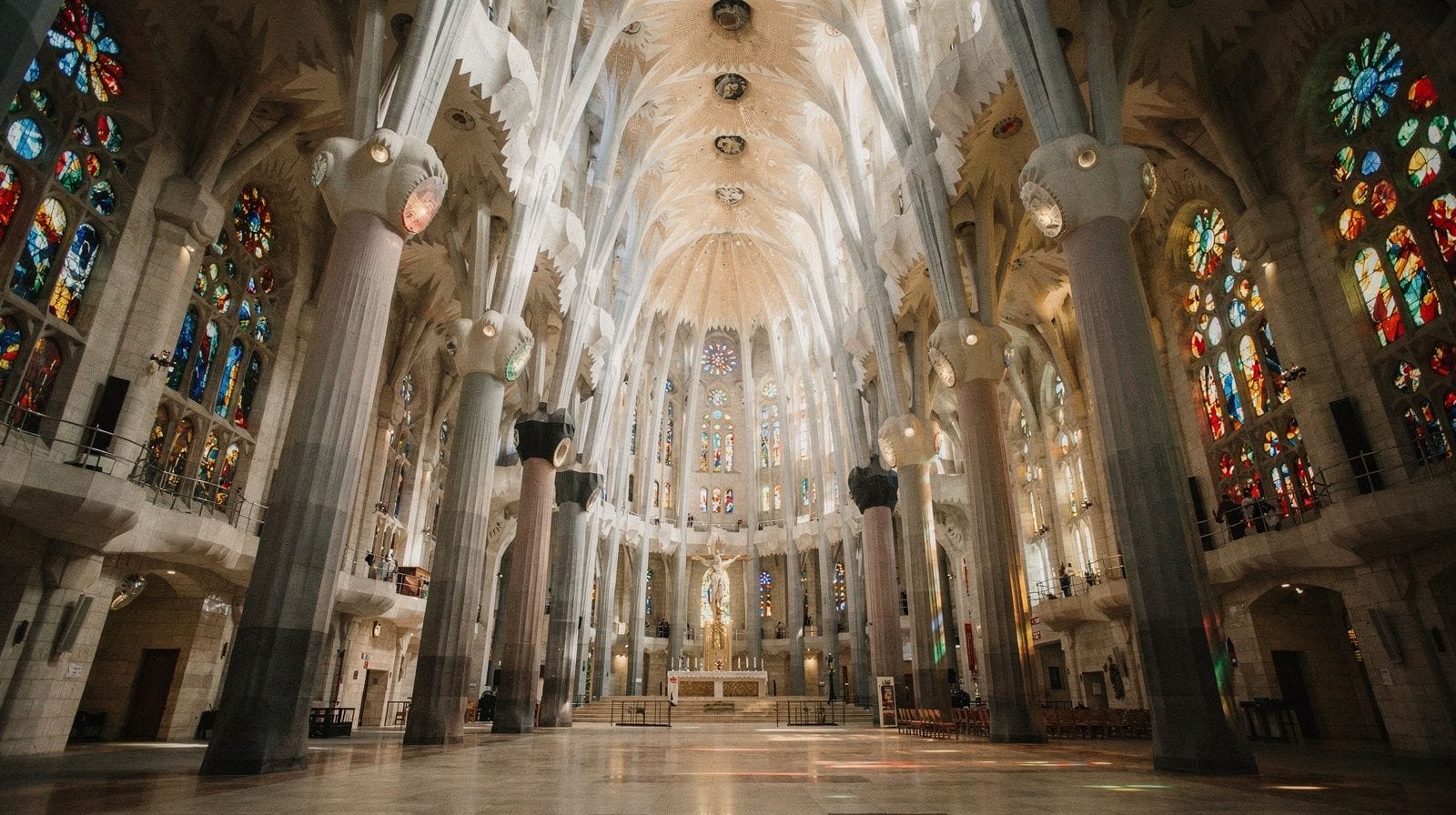
Start with the light. The stained glass is arranged so that the colours on one side of the nave lean warm and on the other lean cool, and the effect shifts as the day moves on. That is one more reason to think about your time slot, as covered in the section on the best time of day above. Stand still near the middle of the nave for a few minutes before you start taking photos; the space is designed to be read as a whole, not as a series of postcards.
Then look at the columns. They branch like trees, and the canopy overhead is meant to evoke a forest rather than a conventional church vault. Gaudí studied natural forms obsessively, and once you notice the logic, the whole interior makes more sense. If you enjoy this kind of observation, the same thinking shows up in his townhouses, which you can compare in our guides to Casa Batlló and La Pedrera.
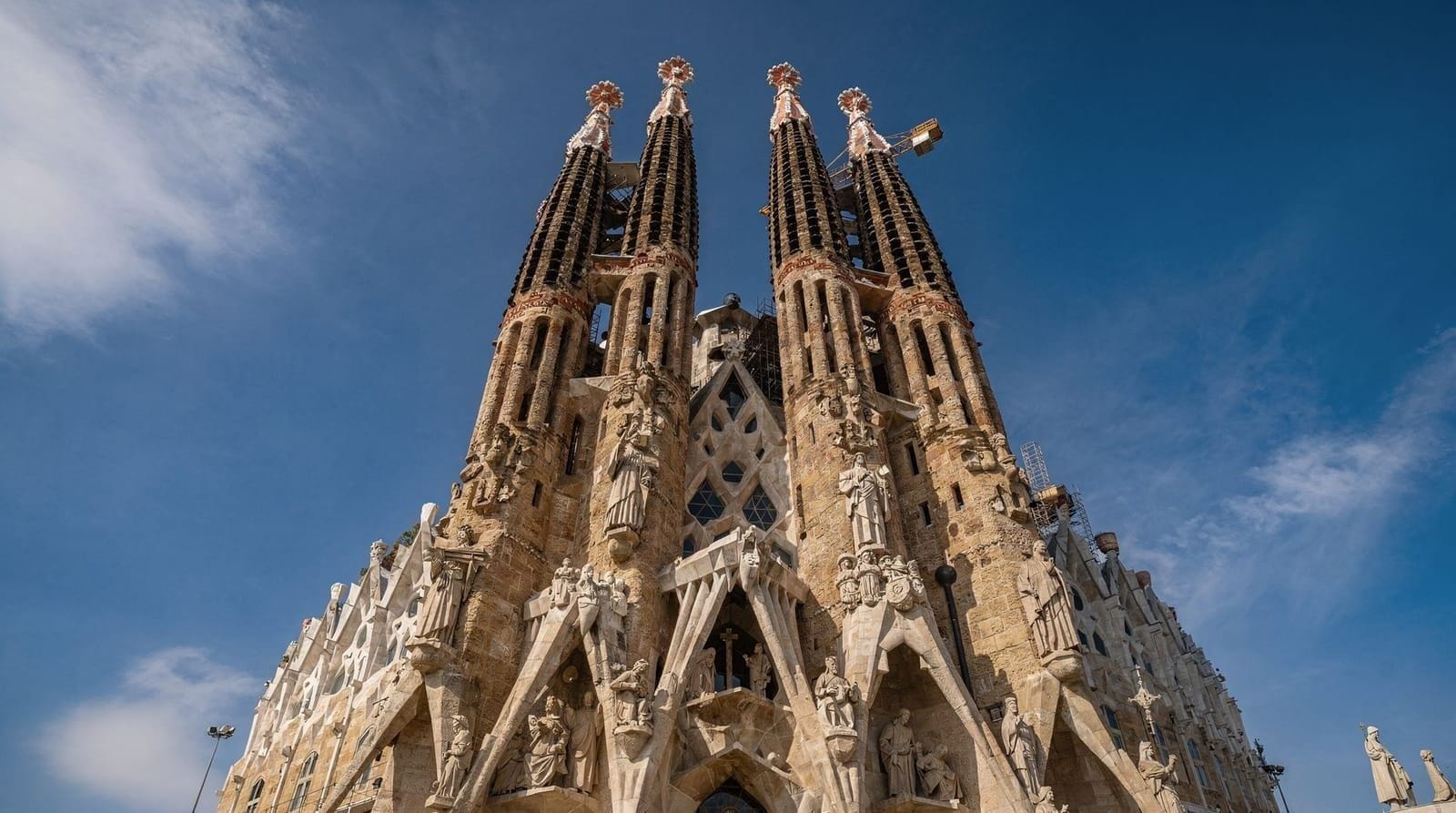
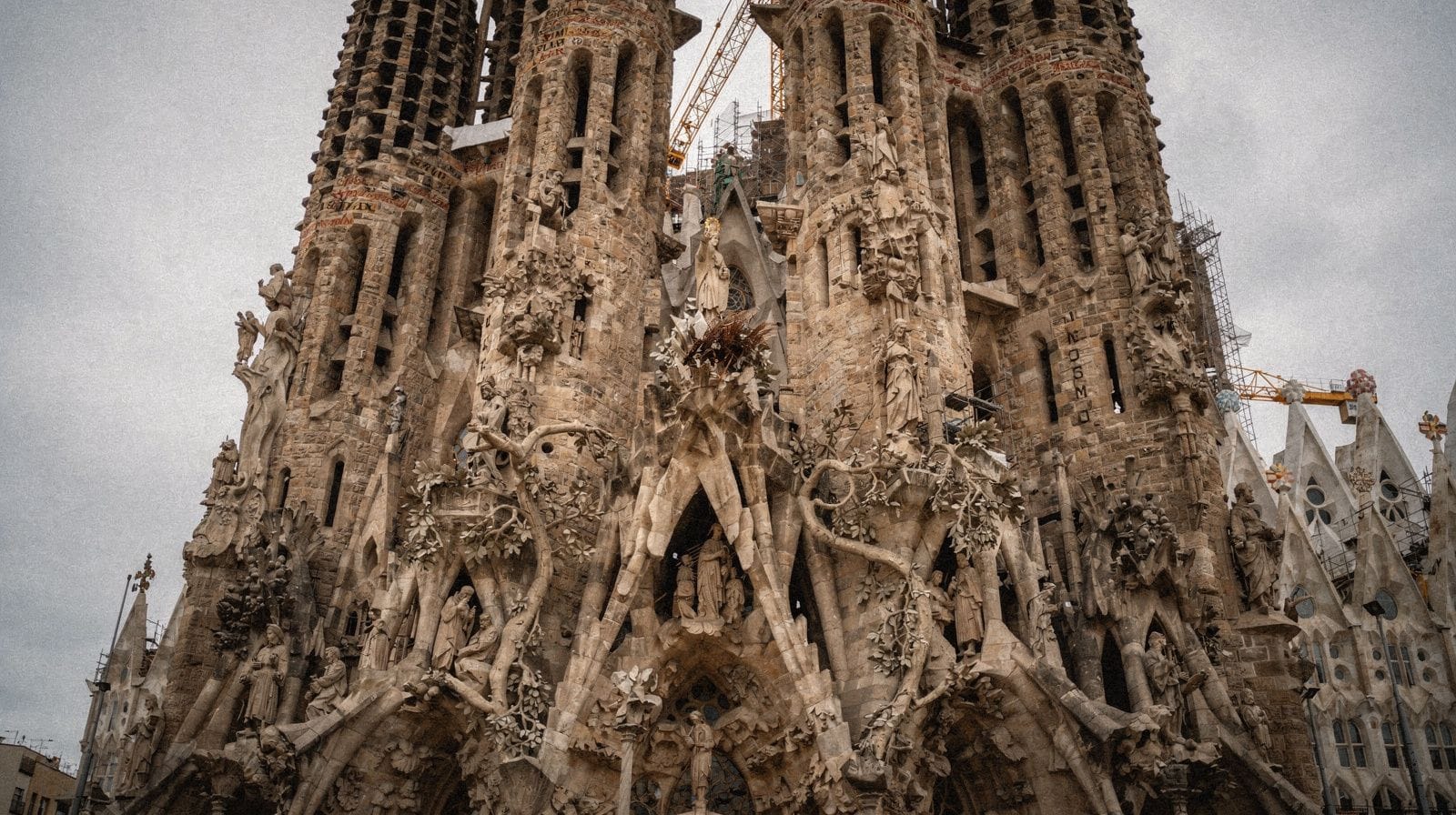
Finally, give the façades real attention rather than only the interior. The Nativity side is dense with sculpted scenes, while the Passion side is stark and angular. The contrast is deliberate, and it is far easier to appreciate when you slow down outside before you go in, or after you come out.
Choosing the right ticket for your trip
The best ticket is the one that fits how you travel, not simply the most complete one. If you like wandering at your own pace and reading a little in advance, basic entry with the audio guide is plenty. If this is your only day in the city, a guided visit takes the planning off your shoulders; our three-day classic itinerary and the Gaudí-focused itinerary show how that slot can fit into a wider plan.
If you are travelling in a group with mixed ages or fitness levels, think about whether everyone really wants the tower. It is perfectly reasonable for some of you to stay at ground level while others climb, provided you book the slots so that the timing works. For travellers watching their budget, the Barcelona on a budget guide explains where it is worth spending and where it is not, and the Barcelona Card guide helps you decide whether a city pass changes the maths for your trip.
If your preferred date is sold out
It happens, especially in summer. Do not panic and do not buy from the first site that promises availability. A few calm options usually work:
- Look at neighbouring days, and at the very first and very last slots of the day, which people often overlook.
- Check the official site again regularly, since returned tickets can reappear.
- Consider a guided option, which sometimes uses a different allocation from standard entry.
- Reorder your itinerary so that Sagrada Família lands on the day with room to spare, and move the more flexible sights around it.
If nothing works, it is better to see the exterior and enjoy the surrounding streets than to pay an inflated price to a reseller. The booking guide goes through these fallbacks in more detail, and the Barcelona itinerary tips page explains how to build a flexible plan around fixed bookings.
Planning the rest of your day around the visit
A timed slot is a fixed point, so build the rest of the day around it. Eat before you go rather than hunting for lunch afterwards; the streets right around the basilica are busy and aimed at passing visitors, and the honest advice on tourist traps in Barcelona applies here as much as on La Rambla. Wear comfortable shoes, carry a small bag, and keep valuables close, as outlined in our guide to avoiding pickpockets.
Afterwards, a relaxed walk through the Eixample is the natural way to digest what you have seen. The grid of broad streets is full of Modernisme details above eye level, so look up as you wander. If you want a longer view of how the style developed, the Modernisme route is a good companion read. For something completely different in the evening, you could head to a tapas neighbourhood instead of another sight.
Getting there
The basilica has its own metro stop, Sagrada Família, served by lines L2 and L5, with exits that put you within a couple of minutes’ walk of the entrance. From most Eixample or Gràcia hotels this is a straightforward 10–20 minute ride with no changes. If you are coming from the Gothic Quarter or El Born, allow 25–30 minutes door to door. Taxis and rideshares work fine but rarely save time once you factor in traffic around Carrer de Mallorca during the morning and afternoon peaks — the metro is usually faster and always cheaper. Cyclists can use the Bicing docking stations a block away, though the surrounding streets get busy with tour buses.
Visiting with kids and accessibility notes
Families generally do well here: the interior’s scale and color impress children as much as adults, and the included audio guide has a simplified option in some languages. The tower climb is not recommended for very young children or anyone with mobility concerns, since it involves a narrow spiral staircase with no lift down; if that is a concern, the ground-floor visit alone is still a full experience and avoids the queue for tower access entirely. Step-free routes exist through the main nave and museum, and staff can point out the accessible entrance on request — worth confirming when you book if wheelchair access matters, since routing can shift during ongoing construction work on the site.
Pairing it with the rest of the Gaudí trail
The basilica sits in the Eixample, walkable to Casa Batlló and La Pedrera on Passeig de Gràcia. Most visitors pair it with Park Güell (a short bus or taxi north) on the same day or the next. Our Gaudí trail guide sequences all the Modernisme sites efficiently.
Why the visit stays with people
An unfinished building is an unusual thing to love, but that is part of the appeal. The basilica is still a living project, and what you see reflects decades of builders and craftspeople continuing a vision rather than a finished monument frozen in time. Many visitors say the interior is the moment that justifies the whole trip, and the sense of calm inside contrasts nicely with the busy city outside.
If it inspires you to learn more, the history of Barcelona puts the building in context, and the Catalan culture guide explains why Gaudí’s work feels so rooted in the place. For a first visit to the city overall, how many days in Barcelona will help you decide how much time to give the big sights, and where to stay shows which areas make the basilica easiest to reach.
Book early, go with a timed slot, and the Sagrada Família is the highlight of any Barcelona trip — leave it to walk-up luck in summer and you will likely miss it entirely.
Frequently asked questions about Sagrada Família
How much does a Sagrada Família ticket cost?
Basic adult entry starts at €26. Entry with one tower is €36. The official guided tour is €30, or €40 with a tower; Gaudí combos run higher.Is the tower access worth it?
Yes if you are comfortable with heights and tight spaces. The Nativity tower gives the best views over the old city; the Passion tower faces the modern skyline. You descend most of the way on a narrow spiral staircase.Can I buy tickets at the door?
Rarely a good idea. The basilica uses timed entry and on-the-day tickets are usually sold out in peak season. Always book online at the official site or a verified reseller.How long do you need inside?
Allow 1.5 to 2 hours for the interior and museum, or 2.5 hours with a tower. The included audio guide is excellent and worth the time.Beware cheap third-party tickets?
Yes. Reseller sites often add €5–15 per ticket for the same entry. Buy from sagradafamilia.org or a clearly verified affiliate, and ignore touts outside the basilica.
Top experiences
Bookable activities with verified prices and instant confirmation on GetYourGuide.
Barcelona: Sagrada Família fast-track guided tour with tower access
- Free cancellation
- Tower access
Barcelona: Sagrada Família guided tour and entry tickets
- Free cancellation
- Small group
Barcelona: Sagrada Família and Park Güell tickets combo
- Free cancellation
Barcelona: Sagrada Família skip-the-line guided tour
- Free cancellation