Park Güell: tickets, free zones and how to visit
Barcelona: Park Güell skip-the-line admission ticket
Duration: 2 hours
- Free cancellation
Do you need to book Park Güell tickets in advance?
Yes, for the Monumental Zone. Walk-up entry is not available — the 1,400-visitor-per-hour cap fills up weeks ahead in summer. Book at least 3–5 days out in low season; 2–4 weeks ahead from June to August. The rest of the park is free and needs no ticket.
Antoni Gaudí spent nearly two decades shaping Park Güell into the most distinctive public garden in the world. Commissioned by the industrialist Eusebi Güell as a residential garden city that never fully opened to the public, the park became a municipal property in 1923 and a UNESCO World Heritage Site in 1984. The result is one of the few places in Barcelona where Gaudí’s ideas about nature, architecture and the integration of organic form with function are visible on the grandest scale.
| Where | Gràcia/Carmel hillside, about 3km from Plaça de Catalunya |
| Cost | Monumental Zone €18 (tickets sold 9:30–19:30); rest of the park free |
| Time needed | 1.5–2 hours; add 30–45 minutes for the free zones |
| Getting there | Metro L3 to Lesseps/Vallcarca + uphill walk, or bus H6 |
| Best time | First slot (9:30) or last afternoon slot for fewer crowds |
The free vs paid confusion — cleared up
The single most important thing to understand before visiting is that Park Güell has two very different zones with very different rules.
The Monumental Zone — about 9 hectares at the heart of the park — is where you find the dragon staircase, the Hypostyle Room of 86 Doric columns, the famous mosaic bench terrace (El Pla de la Natura) and the two Hansel-and-Gretel gatehouses. This zone requires the €18 timed ticket and admits a maximum of 1,400 visitors per hour. No walk-up tickets are sold.
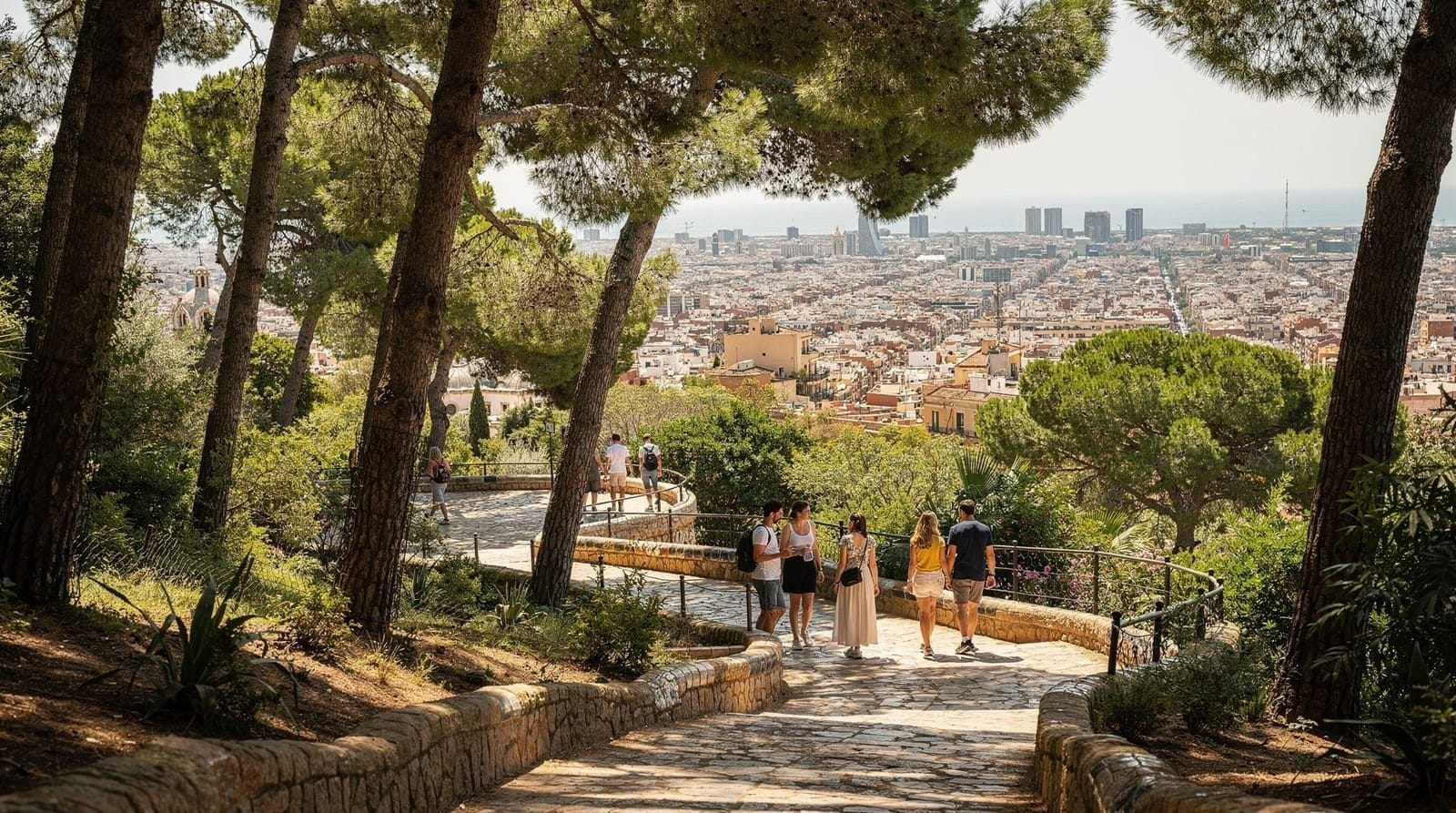
The rest of the park — roughly 17 hectares of forested hillside, viaducts of rough stone, open terraces and Mediterranean pines — is completely free and open at all times. You can walk from the free zone directly to the gates of the Monumental Zone. Visitors who simply want the sweeping Barcelona skyline view often do that from the free upper terraces and come away satisfied without paying anything.
Unofficial sites exploit this confusion. Buy on the official site, parkguell.barcelona.
What to see inside the Monumental Zone
The route through the zone is loosely choreographed and takes 45–60 minutes at a comfortable pace.
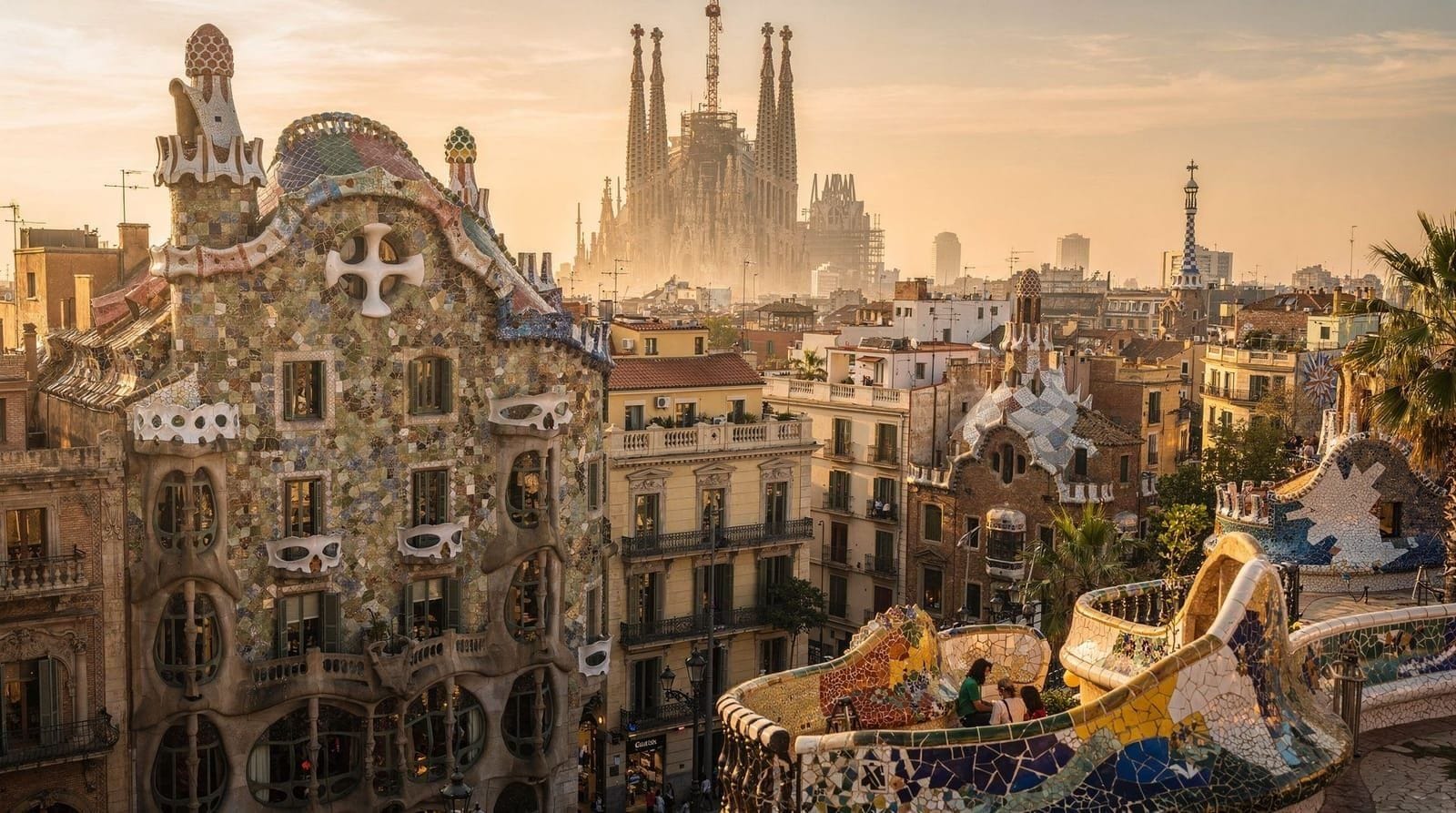
The gatehouses flank the main entrance on Carrer d’Olot. One contains the Visitor Centre; both are covered in the broken-tile mosaic technique Gaudí called trencadís — a method he developed partly from the ceramics of Moorish Spain and partly from his own obsession with wasting nothing. The rooftops are crowned with distinctive cap-mushroom forms that have appeared on Barcelona’s skyline in photographs since the 1900s.
The dragon staircase connects the entrance to the Hypostyle Room via a cascade of steps centred on a multicoloured mosaic dragon. Photographs of it appear in every guide to the city, but the geometry looks better in person than in any image. The dragon was originally designed as a water feature; the pipes still exist beneath the structure.
The Hypostyle Room was designed as the marketplace for the never-built residential community. Its 86 Doric columns support the main terrace above; the ceiling between them is decorated with circular ceramic medallions by Josep Maria Jujol, Gaudí’s collaborator. The room is surprisingly cool even on hot days.
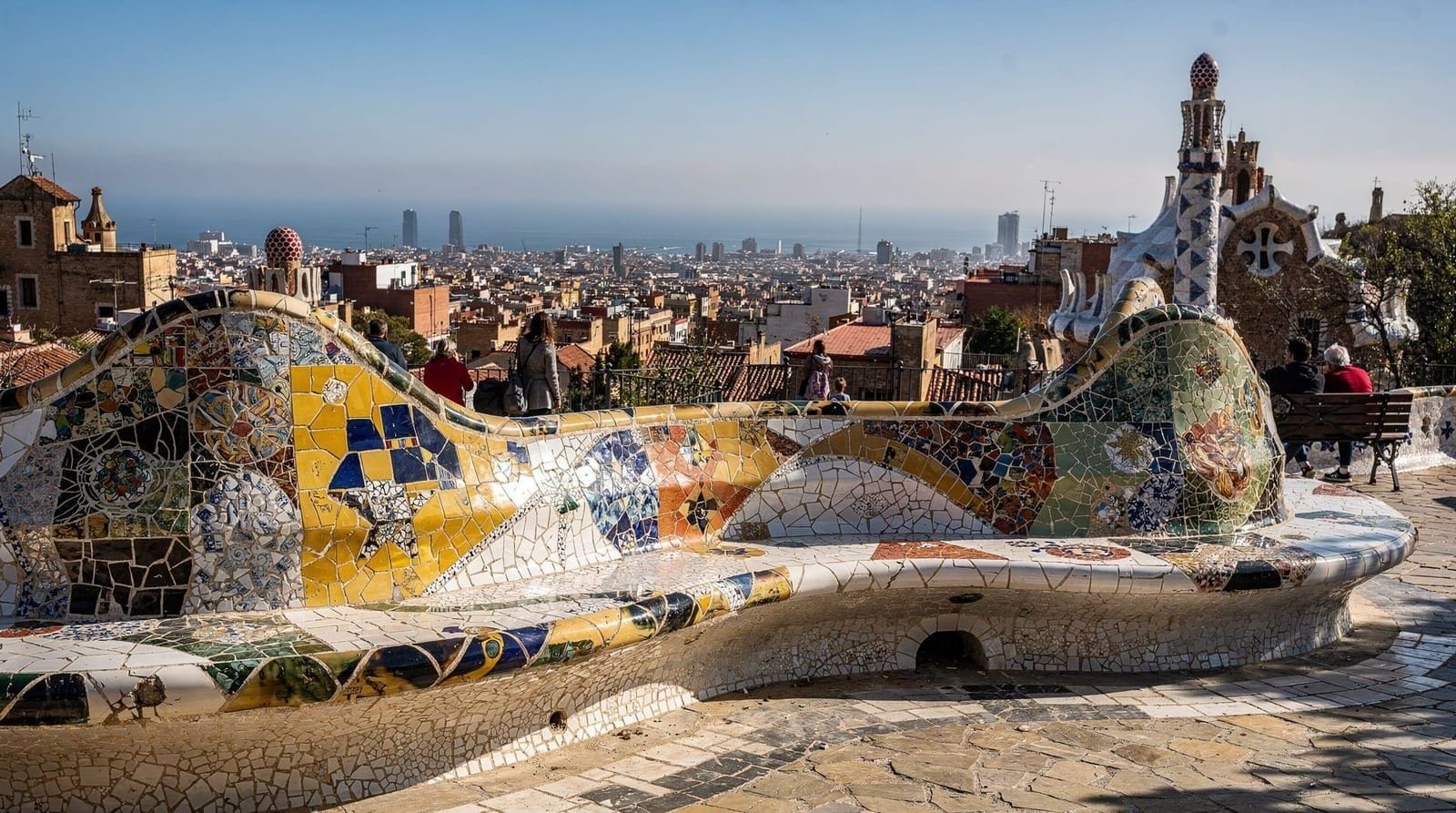
El Pla de la Natura — the great serpentine terrace — wraps around the top of the Hypostyle Room and is arguably the defining image of the park. The continuous bench of blue, green and white trencadís was designed to follow the ergonomic contours of a seated human body (according to one popular story, Gaudí had a workman sit in wet plaster to derive the ideal cross-section). The panoramic view from here over the Eixample grid, the port and the sea is among the best in the city.
The free zones worth exploring
Most visitors queue for the Monumental Zone and leave. The upper park is quieter and rewards a slower visit.
The viaducts are three elevated walkways on Doric columns made from the rough local stone of the hillside. They look like something between ancient Rome and a fairy tale. Walk along any of them to experience Gaudí’s idea of blending engineered paths into a landscape so completely that they feel almost geological.
The upper terraces above the Monumental Zone offer unobstructed views north toward the Serra de Collserola, away from the city — a contrast to the famous southward panorama. They are reached in about 15 minutes from the free entrance on Carrer del Carmel.
The Gaudí House Museum (Casa del Guarda path, €9 separate or €22 combined) sits within the free zone. Gaudí lived in this house from 1906 until shortly before his death in 1926. Inside are his bed, his personal altar, his work chair and some original design drawings. It is a modest but unexpectedly moving space.
Who this park suits and who it doesn’t
Park Güell rewards patient visitors more than rushed ones. If you are the kind of traveller who wants to linger over the mosaic detail, sit on the serpentine bench for a while and take in the panorama slowly, the park delivers fully — arguably more than any single Gaudí building, because the scale lets his ideas about landscape and architecture unfold over an hour rather than a few rooms. If your Barcelona time is genuinely tight and you have to choose one Gaudí site, most visitors find the Sagrada Família’s interior more immediately overwhelming; Park Güell’s appeal is quieter and more cumulative.
Families with young children generally do well here — the open terraces, the playful mosaic dragon and the general sense of a garden rather than a museum keep children engaged in a way that indoor sites do not always manage. The uphill walk from the metro is the main friction point for families without a stroller-friendly route; a taxi directly to the entrance removes that problem for a modest cost.
How to book and when
The Monumental Zone ticket is €18 for adults (children 7–12 €13.50, over-65s €14.50, under-7s free); timed tickets are sold between 9:30 and 19:30. The booking window is typically 3 months ahead. In practice:
- October to March: 3–5 days’ notice is usually enough, though Christmas and Easter fill faster.
- April to June: Book 1–2 weeks ahead; weekends fill soonest.
- July to September: Allow 2–4 weeks, ideally more. Slots at popular times (10:00–14:00) evaporate quickly.
Tickets are timed to the half-hour and carry a 30-minute grace period. Missing your slot means losing the ticket — there is no rescheduling.
Getting there and honest transport notes
Park Güell sits in the northern fringe of the Gràcia neighbourhood, roughly 3 km from Plaça de Catalunya.
Metro (L3 green line) to Lesseps or Vallcarca: then a 15–20 minute uphill walk through residential streets. The Vallcarca exit is marginally closer to the main entrance. Both walks are steep enough to be tiring in summer heat.
Bus H6 runs from the city centre and has a stop near the upper Carmel entrance — useful if you want to start at the top and work downhill, exiting via the main gate.
Taxi from the Eixample: €8–12, 10–15 minutes. From the Gothic Quarter add 5 minutes.
The hop-on hop-off bus route passes near the main entrance and is worth considering if you have a two-day ticket and are also visiting the Sagrada Família the same day.
Pairing Park Güell with the Gaudí trail
Park Güell and Sagrada Família are the two most visited Gaudí sites. They pair naturally into a single morning-afternoon combination.
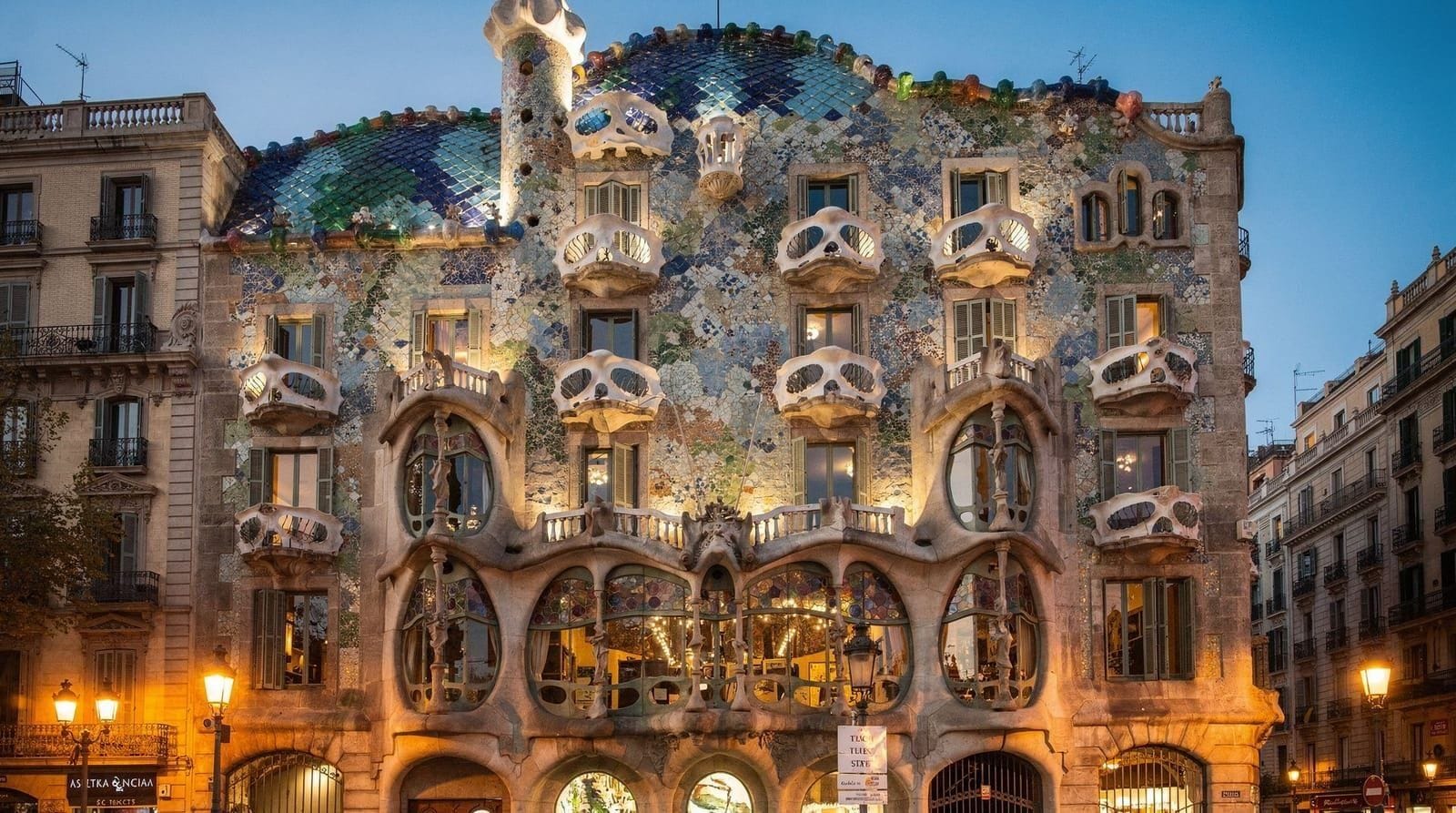
For the full modernisme experience across two or three days, the Gaudí trail guide sequences the six key sites — Sagrada Família, Park Güell, Casa Batlló, La Pedrera, Casa Vicens and the Palau Güell — with honest estimates of how long each takes and which combinations work on a single day.
The Modernisme route also covers Palau de la Música Catalana and Hospital de Sant Pau — both UNESCO sites within the same city grid.
If you are deciding between sites and time is limited, the Articket pass covers six art museums but does not include Park Güell or Sagrada Família. For those, pre-book individually.
Building a day around the park
Park Güell sits high on its hillside, so the sensible way to plan the day is to treat it as one anchor and let the rest of the schedule flow around it. A morning slot leaves the afternoon open for something low-effort and low-altitude, where your legs and your attention can recover. The Barcelona itinerary tips guide explains how to avoid stacking too many headline sights back to back, and the same logic applies here: one big Gaudí stop, then something quieter.
If you are working from a fixed number of days, the how many days in Barcelona guide helps you decide whether the park deserves a dedicated half-day or can share a day with another site. The ready-made Gaudí in 3 days itinerary and the 3-day classic itinerary both slot the park in at a sensible point, so you do not need to reinvent the order yourself.
After the park, the natural next step is a slow descent into the neighbourhood below. The Gràcia district has the kind of village-like squares where you can sit with a drink and let the morning settle; the best restaurants in Gràcia article is a good place to choose a lunch spot, and the tapas neighbourhoods guide helps if you would rather graze than sit down for a long meal. Travellers who prefer to keep climbing can combine the park with the Bunkers del Carmel viewpoint, which gives a very different, unframed panorama of the city and is a good alternative if the Monumental Zone slots are full.
How the park fits Gaudí’s wider story
Park Güell is easier to appreciate once you have seen how Gaudí’s thinking developed elsewhere. The Casa Vicens guide covers an earlier private house where his fascination with colour and ceramics first shows, while the Sagrada Família booking guide explains how to see his unfinished life’s work. Visitors who enjoy the industrial-estate side of the story can look at the Colònia Güell guide, which follows the same patron and some of the structural experiments that fed into the park’s viaducts.
For a broader sense of the period, the Catalan culture guide and the Barcelona history overview give context for why a wealthy industrialist, an architect and a movement of Catalan identity all converged on this hillside. Reading a little before you go turns the mosaics from pretty surfaces into a statement about place, craft and ambition.
Practical comfort tips for the visit
The park is a walking experience, so comfortable shoes matter more than any camera gear. The paths are uneven in places, and the slopes between the entrance and the upper terraces add up over a morning. Carry water, wear a hat and plan a break on one of the shaded stretches rather than pushing on through the hottest part of the day.
Getting to and from the hillside is half the effort. The getting around Barcelona guide explains how the metro and buses work together, and the transport pass comparison helps you decide whether a pass is worth buying if you will be riding several times in a day. If you are travelling with children, the Barcelona with kids guide has ideas for pacing, snacks and rest stops that make a hillside visit easier for small legs.
Finally, keep an eye on your belongings in the busiest parts of the Monumental Zone. Crowds around the mosaic terrace and the dragon staircase are exactly where opportunistic thieves work, and the avoiding pickpockets guide lists the habits that keep you safe without spoiling the visit. If you want a wider list of places that disappoint, the tourist traps in Barcelona guide is worth a read before you book anything else.
Honest notes on visiting
Crowds: Even with timed entry in the Monumental Zone, the space feels busy between 10:00 and 16:00 in summer. The first slot of the day remains the best option.
Weather: The park is fully exposed. In July and August, direct sun on the main terrace is intense by 11:00. Bring water, a hat and sunscreen.
Tickets: Buy on the official site, parkguell.barcelona. Entry is not possible again once you have left the Monumental Zone.
Accessibility: The Monumental Zone is partially accessible; the dragon staircase has an adjacent accessible path. The upper park paths are uneven and challenging for wheelchairs. Call ahead to confirm current access routes.
Photography: The mosaic bench terrace is the most-photographed spot. For a cleaner shot, aim for the first morning slot or the final evening slot. Midday provides harsh shadows and thick crowds.
Whether you are visiting for the famous mosaic terrace or just the free terraces and city views, Park Güell rewards early planning. Book the Monumental Zone ticket as soon as your Barcelona dates are set, arrive at the start of your time slot and leave time to explore the free zones that most visitors skip entirely.
Frequently asked questions about Park Güell
How much is a Park Güell ticket?
The official Monumental Zone ticket is €18 for adults. Children aged 7–12 pay €13.50, over-65s €14.50; children aged 0–6 enter free. Timed tickets are sold between 9:30 and 19:30 — buy from the official site, parkguell.barcelona.What is free at Park Güell?
Large areas of the park are completely free: the forested paths, the viaducts, the gingerbread gatehouses seen from outside, the terrace pavilions and most of the upper hill. Only the Monumental Zone — the dragon staircase, Hypostyle Room and the famous mosaic bench terrace — requires the €18 timed ticket.How long do you need at Park Güell?
Allow 1.5–2 hours for the Monumental Zone. Add 30–45 minutes if you want to explore the free upper terraces and forested paths, which offer excellent city views without the crowds.How do I get to Park Güell?
Metro L3 to Lesseps or Vallcarca, then a 15–20 minute walk uphill through the Gràcia neighbourhood. Bus H6 or 24 reach the upper entrance directly. Taxi from central Barcelona takes around 10–15 minutes and costs roughly €8–12.What time should I visit Park Güell?
The first slot of the day (9:30) is the least crowded and has the best morning light. Alternatively, the final afternoon slots (around 17:30–18:30 in summer) are cooler and emptier. Midday in summer is both hot and overcrowded.Is the Gaudí House Museum worth visiting?
Yes, if you have a particular interest in Gaudí's life. The house where he lived from 1906 to 1925 displays his personal furniture, religious objects and design drawings. A combined ticket covers the Monumental Zone and the museum for around €22.Can I combine Park Güell with Sagrada Família in one day?
Easily. Sagrada Família is about 2 km directly downhill — a 20-minute taxi or bus ride. Book your Sagrada Família slot in the morning and Park Güell in the early afternoon, or vice versa. Our Gaudí trail guide sequences both efficiently.Is Park Güell suitable for a family visit with young children?
Yes, generally. The open terraces, playful mosaic details and garden-like layout keep most children engaged, and the free zones give room to run around without ticket pressure. The main friction point is the uphill approach from the metro, which is tiring with a stroller — a taxi directly to the entrance avoids this.
Top experiences
Bookable activities with verified prices and instant confirmation on GetYourGuide.
Barcelona: Park Güell guided tour with fast-track ticket
- Free cancellation
- Small group
Barcelona: Park Güell and Gaudí House Museum entry ticket
- Free cancellation
Barcelona: Park Güell ticket with in-app audio tour
- Free cancellation
- Mobile ticket
Barcelona: Sagrada Família and Park Güell tickets combo
- Free cancellation