Sitges Carnival: the guide to Spain's most colourful festa
In February, something happens to the quiet seaside town of Sitges that transforms it from a genteel Catalan resort into one of Europe’s most exuberant street parties. The Sitges Carnival — Carnestoltes in Catalan — has been running continuously since the 19th century, and in recent decades it has grown into something quite spectacular: twelve days of events culminating in two main parades that draw crowds of tens of thousands to a town that normally has a population of around 30,000.
This is not a tourist-only event, though tourists come in large numbers. The local associations that build the floats and sew the costumes take it extremely seriously. The floats are elaborate, sometimes outrageously so. The costumes are detailed. And the atmosphere — which is LGBTQ+-welcoming in a very open, Catalan way — is genuinely different from the Carnival you might know from other cities.
| Where | Sitges, 35km south of Barcelona |
| Getting there | Rodalies R2 Sud train, 30–40 min from Barcelona Sants |
| Cost | Free to watch; hotels €150–250/night during Carnival |
| Key dates | Friday (main parade), Saturday (night parade), Tuesday (funeral of the sardine) |
| Book ahead | Hotels 3+ months ahead if staying overnight |
Dates and how they work
Carnival dates shift each year because they’re tied to the Catholic calendar — specifically to Ash Wednesday and Lent. The main events typically fall in February, though occasionally they can slip into early March. Always check the official Sitges website for the current year’s exact dates before planning travel.
The key dates to know within the full twelve-day programme:
The Rua de la Disbauxa (Parade of Debauchery) takes place on the Friday night before Ash Wednesday. This is the main event: the big floats, the most elaborate costumes, the brass bands, the spectacle. It begins in the evening and goes for several hours. If you’re only coming for one day, this is the one.
The Rua del Carnaval de Nit (Night Parade) on Saturday night has a different character — longer, wilder, less structured, with participation more from local groups and the general public than from the official float associations.
The final event is the Rua de l’Extermini on Tuesday night — the funeral of the sardine, an old Spanish Carnival tradition in which a mock sardine is buried with theatrical mourning, marking the end of excess before Lent. It’s absurdist, funny, and very local.
Getting there from Barcelona
Sitges is 35 kilometres south of Barcelona along the coast, making it one of the most straightforward day trips from the city under normal circumstances. The Rodalies R2 Sud train runs regularly from Barcelona Sants and Passeig de Gràcia stations, with the journey taking 30 to 40 minutes. A standard Zone 2 T-Casual card covers the journey, making it inexpensive.
During Carnival, however, things are different. Trains are crowded, particularly on Friday and Saturday nights when the main parades run. Extra services are added but they fill up fast in both directions. Plan to arrive 30 to 60 minutes before you want to be in position for the parade, and expect to wait for a train home if you’re leaving with the crowds after the event ends.
The Sitges day trip guide covers the standard transport options in more detail.
Where to stand and what to expect
The main parade routes run through the town centre and along the Passeig de la Ribera seafront. The best spots fill up 30 to 45 minutes before the parade starts. Arriving earlier gives you a front-row position; arriving later means watching from behind the crowd, which is still fine for the larger floats.
The floats are genuinely large — double-decker, in some cases, with dozens of performers. Music comes from marching bands, from the floats themselves, and from the general crowd. The performances on and around the floats range from dance routines to comedy to political satire (Catalan Carnival humour can be sharply political, though this is less immediately apparent to non-Catalan-speakers).
Come in costume. This is not compulsory, but it’s strongly encouraged, and you’ll feel more like a participant than a spectator. The costume culture in Sitges is serious — some locals spend months on their outfits. You don’t need to match that level; a wig and a sequinned jacket is perfectly sufficient and puts you in the spirit of things.
Where to stay: book very early
This is where people get caught out. Sitges has a limited number of hotels, and during Carnival they fill up completely — often months in advance. If you want to stay overnight (which makes the whole experience much easier, avoiding the late-night train scramble), start looking at accommodation at least three months before the event. Prices are significantly higher than normal weekend rates; expect to pay €150-250 per night for a decent hotel that usually costs €80-120.
Staying in Barcelona and coming by train for the evening parades is a perfectly workable alternative. The last trains back to Barcelona run past midnight, which is usually enough to see the main parade and have a drink before heading back. Check the Rodalies timetable close to the event for the exact last train times during Carnival weekend.
The Sitges town itself
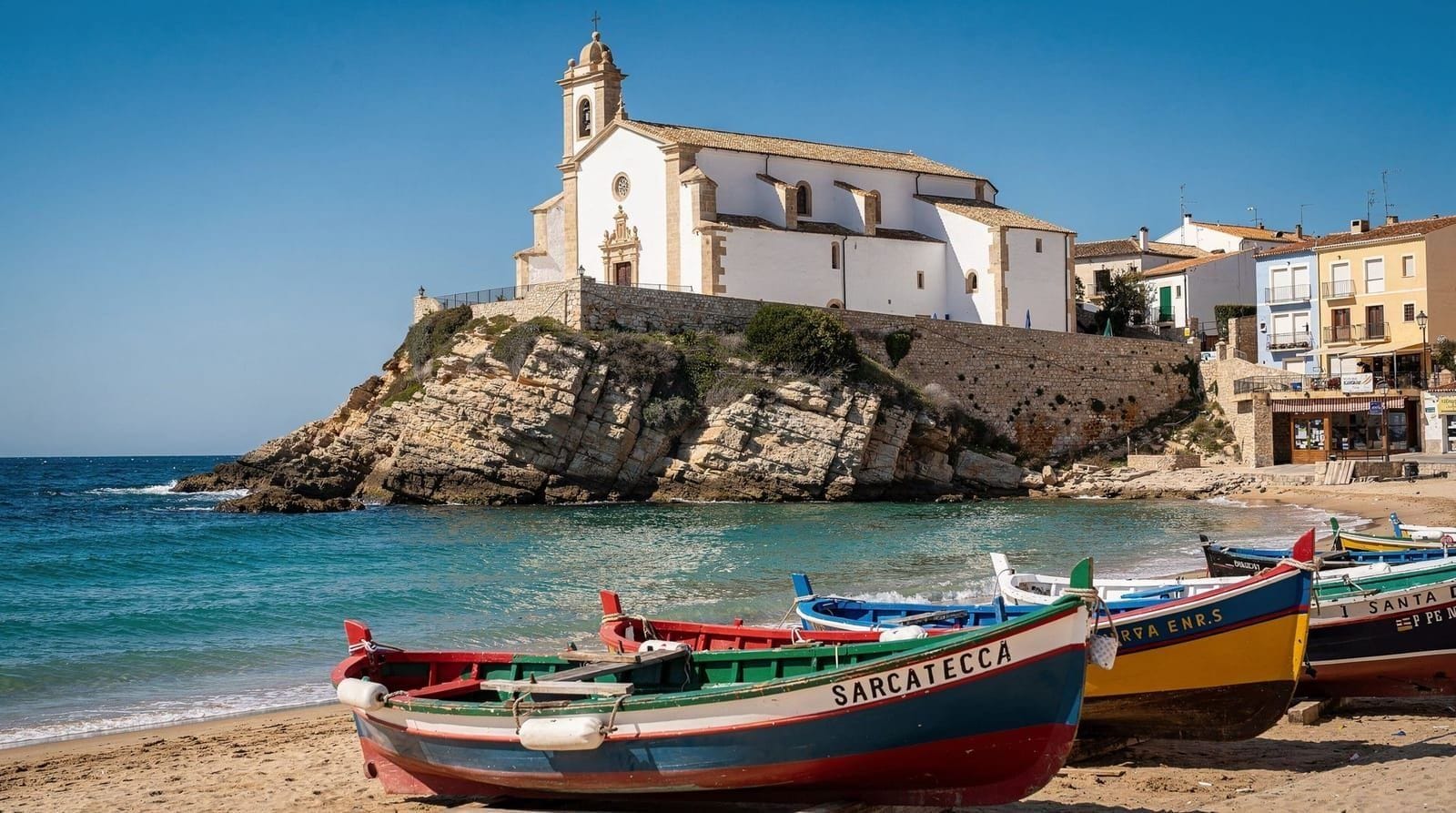
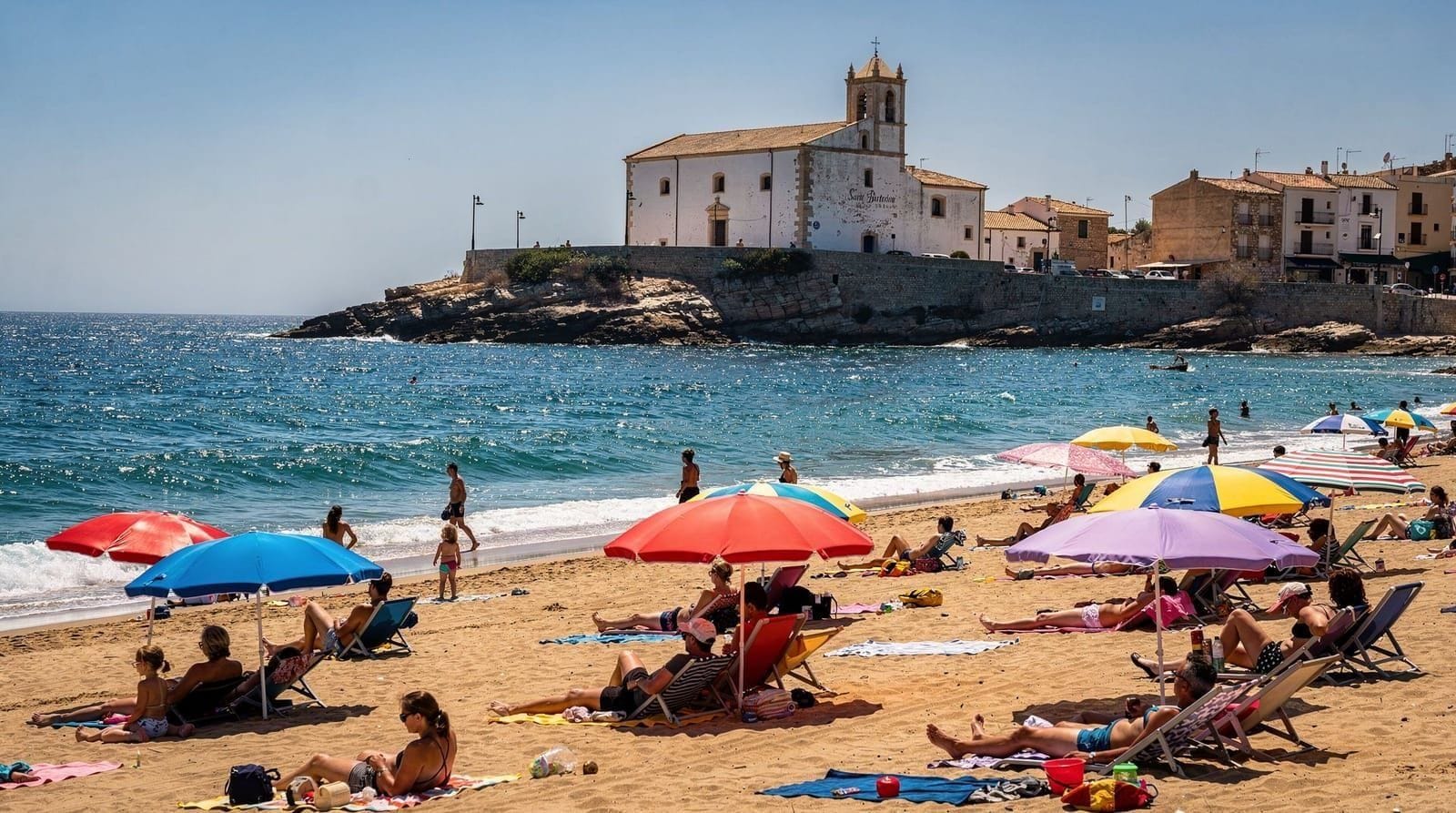
Even if the Carnival were not happening, Sitges would be worth visiting. It is one of the most attractive towns on the Catalan coast: a 19th-century resort built around an older fishing village, with a long elegant promenade, seventeen beaches, a notable Moderniste church on a rocky promontory, and the Museu Cau Ferrat — the former studio of artist Santiago Rusiñol, now a museum holding works by Rusiñol himself, El Greco, and a young Picasso, in an extraordinary house that hangs over the sea.
The town is reliably LGBTQ+-welcoming year-round, not just during Carnival — there is a strong local tradition of that going back decades, and the social atmosphere reflects it without making it into a performance for tourists. People just get on with it, which is actually the nicest way for a place to be.
After Carnival, best time to visit Barcelona covers the full-year calendar for the region, including shoulder season visits to Sitges when it’s quieter and the beaches are clear.
Practical tips
Dress warmly. February in Sitges is mild by northern European standards — temperatures typically range from 8°C to 14°C — but waiting in the street for a parade that starts at 9pm and runs for three hours requires more than a Carnival costume. Layers under the costume are the answer.
Arrive by afternoon. The town before the evening parades is worth seeing — there are smaller daytime events, outdoor bars and restaurants are open, and the general carnival atmosphere is building all day. Arriving at 6pm and rushing to a parade position is a lesser experience than spending the afternoon there first.
Cash helps. Street food, drinks stalls and some bars run cash-only during the event. Barcelona’s ATMs near Sitges train station get busy; draw cash before you go.
Sunday in Sitges. If you stay the night, Sunday morning is a good time to walk the nearly empty promenade, eat breakfast in a café on the seafront, and visit the Cau Ferrat museum before the crowds return for Sunday’s daytime events. The Sitges destination page has suggestions for the town’s calmer pleasures.
Which night to pick, if you can only do one
| Night | Character | Best for |
|---|---|---|
| Friday — Rua de la Disbauxa | The biggest floats, most elaborate costumes | First-timers, the classic spectacle |
| Saturday — Rua del Carnaval de Nit | Wilder, more public participation | Repeat visitors wanting a looser night |
| Tuesday — Rua de l’Extermini | Absurdist, funny, very local | A short, quirky finale close to home |
How Sitges Carnival compares to Barcelona’s own festivals
Sitges Carnival is different in flavour from Barcelona’s big local celebrations — it’s costume and float spectacle rather than the human-tower tradition of the Festa Major de Gràcia or the fire runs and free concerts of La Mercè in late September. If you enjoy one, the others are worth building future trips around; Barcelona’s festival calendar runs almost year-round. Getting to Sitges and back is straightforward the rest of the year too — see our getting around Barcelona guide for the wider transport picture beyond the Rodalies line.
FAQ
Do I need to book tickets to watch Sitges Carnival? No — watching the parades from the street is free and doesn’t require tickets. The only bookings that matter are the train (a standard T-Casual/Zone 2 fare works) and, if you want to stay overnight, a hotel booked well in advance.
Can I do Sitges Carnival as a day trip from Barcelona without staying overnight? Yes. The Rodalies R2 Sud train takes 30–40 minutes from Barcelona Sants, and trains run late enough on parade nights to get back to Barcelona after the main event, though they get crowded — see our Sitges day trip guide for the standard transport options.