Eixample travel guide
Eixample is Barcelona's Modernisme heart: Casa Batlló, La Pedrera, Sagrada Família, the best hotels and a grid that is easy to navigate on foot.
Barcelona: Casa Batlló fast-track tickets and architecture tour
Duration: 2 hours
- Free cancellation
Quick facts
- Metro
- L2/L3/L4 Passeig de Gràcia; L2/L5 Sagrada Família
- Character
- Elegant, wide boulevards, Modernisme concentration
- Best for
- First-timers, architecture, high-end hotels
- Key street
- Passeig de Gràcia (the Manzana de la Discordia)
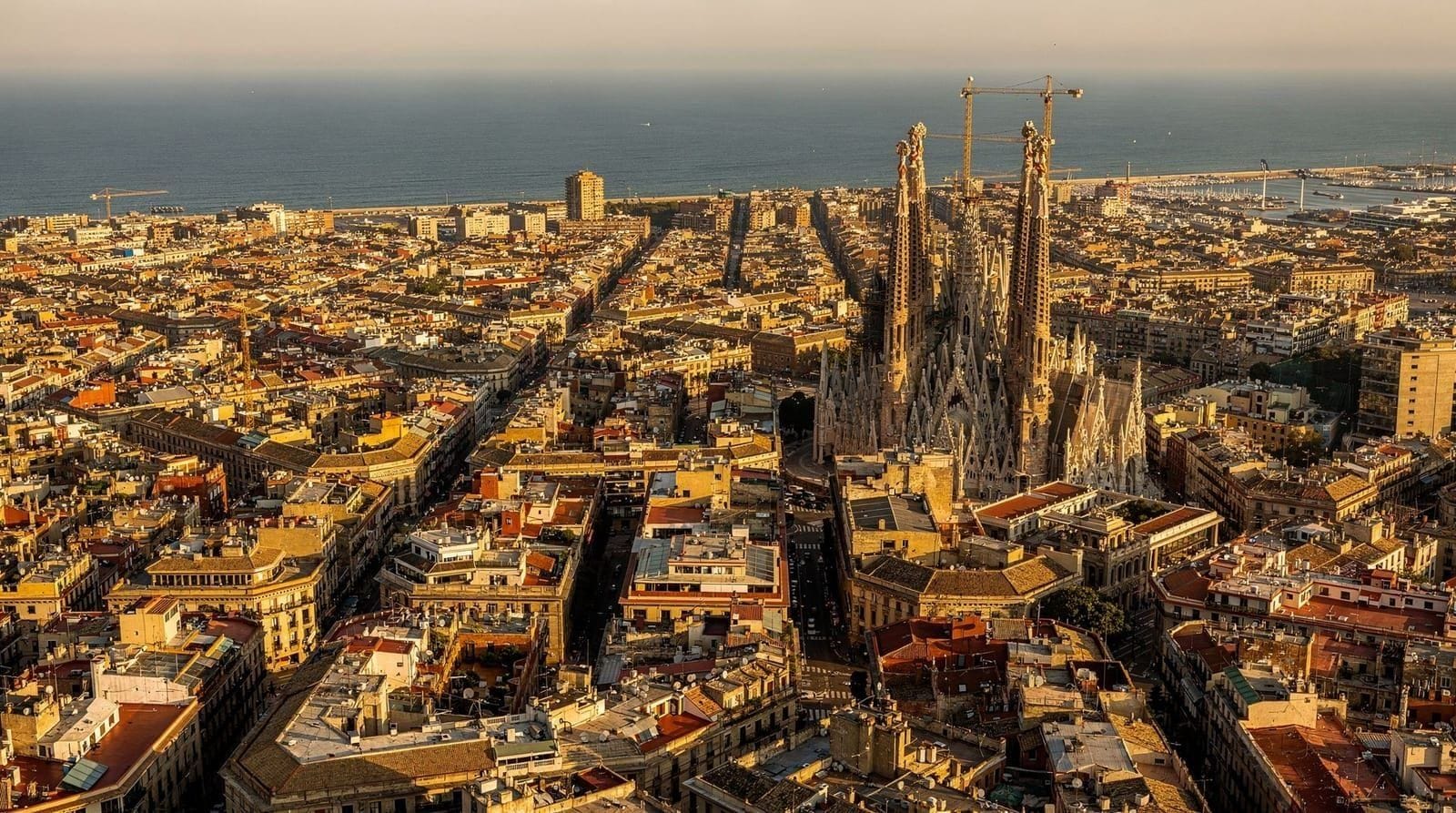
Ildefons Cerdà designed the Eixample in 1859 as a rational response to the medieval city’s overcrowded unhealthy conditions: a perfect grid of octagonal blocks with chamfered corners that allowed light into intersections and carriages to turn. What he could not have anticipated was that the wealthy bourgeoisie who built their homes in this new district would commission Catalan Modernisme’s greatest architects to compete with each other block by block. The result is the densest concentration of Art Nouveau architecture anywhere in the world.
Eixample at a glance
| Where | Central Barcelona, north of Plaça de Catalunya |
| Cost | Casa Batlló from €29; La Pedrera from €25; Sagrada Família from €26 |
| Time needed | 1–2 days |
| Getting there | Metro L2/L3/L4 Passeig de Gràcia, or L2/L5 Sagrada Família |
| Best time | Year-round; May and September ideal |
The grid and how to navigate it
Eixample means “expansion” in Catalan, and the neighbourhood is exactly that: a vast, methodical extension of the old city that stretches from Plaça de Catalunya north to Gràcia and west towards Montjuïc. It divides into Right Eixample (Dreta, east of Passeig de Gràcia — the wealthier, more tourist-heavy side with most of the Modernisme buildings) and Left Eixample (Esquerra — more residential, lower prices, the city’s main LGBTQ+ neighbourhood).
The octagonal block design that seems decorative is actually functional: those chamfered corners create additional pavement space at each intersection, making the grid feel more open than a conventional right-angle layout. Passeig de Gràcia, the main boulevard, runs north-south through the heart of the district, flanked by some of the city’s most expensive real estate and its most photographed facades.
Navigation is simple: Eixample streets follow a consistent grid pattern with most named for Catalan towns, historical figures or categories. The address numbering system is logical. Get oriented at Passeig de Gràcia and everything becomes straightforward.
The Manzana de la Discordia
The most important 100 metres in Catalan architectural history run along Passeig de Gràcia between Carrer d’Aragó and Carrer del Consell de Cent. In the early 20th century, three rival architects each built a mansion for wealthy clients on adjacent plots — a competition so visible and pointed that Barcelona immediately named the block the “Manzana de la Discordia” (Block of Discord).
Casa Lleó Morera (no. 35, Lluís Domènech i Montaner, 1906) is the most restrained of the three — a floral, curvilinear facade that rewards close examination of its ceramic details. Much of the ground floor was destroyed during building works in the 1940s; the upper floors are now offices but sometimes accessible during open-house events. Casa Amatller (no. 41, Josep Puig i Cadafalch, 1900) is the Netherlands-meets-Catalonia hybrid: stepped gable, Gothic tracery and a famous chocolate shop in the lobby (the Amatller family made their fortune in chocolate, and the ground-floor café and the Espai Amatller exhibition are open to the public for a small fee).
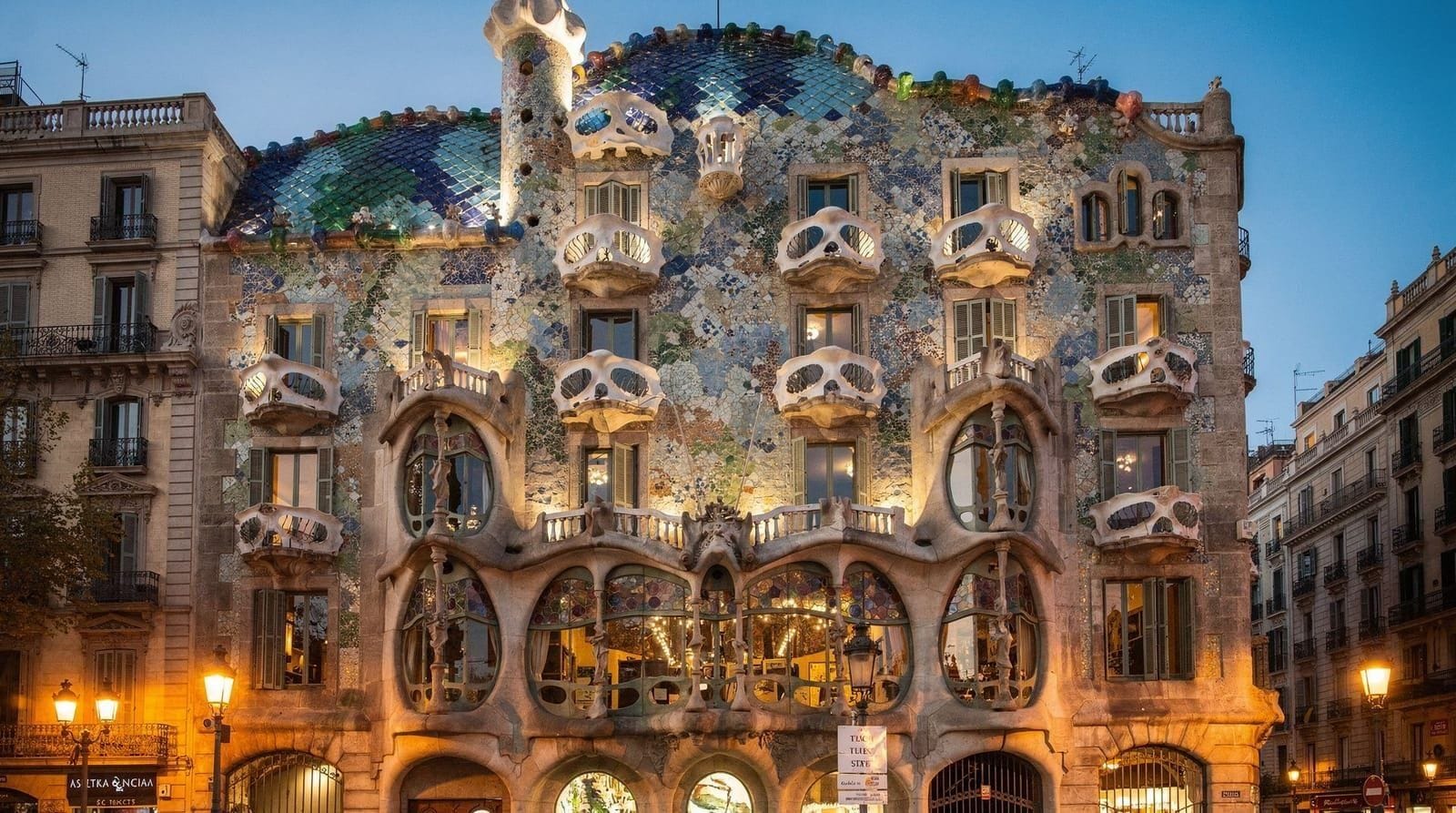
Casa Batlló (no. 43, Antoni Gaudí, 1906) is the one that stops pedestrians in their tracks. Gaudí stripped and rebuilt a conventional apartment building into something that resembles a dragon’s skeleton clothed in fragments of sea glass: the facade is encrusted with scales of broken blue-green ceramic, skulls and bones form the balcony railings, and the roof ridge is a living creature’s spine. Inside, the building continues the marine metaphor with ceilings like coral and a light shaft that shifts from deep blue at the base to white at the top to maintain even illumination throughout the stairwell. Tickets from €29 online (dynamic pricing — book early for the cheapest rates); the Magic Nights evening experience (rooftop DJ set, from €39) is worth considering if you want the building in a different register.
La Pedrera (Casa Milà)
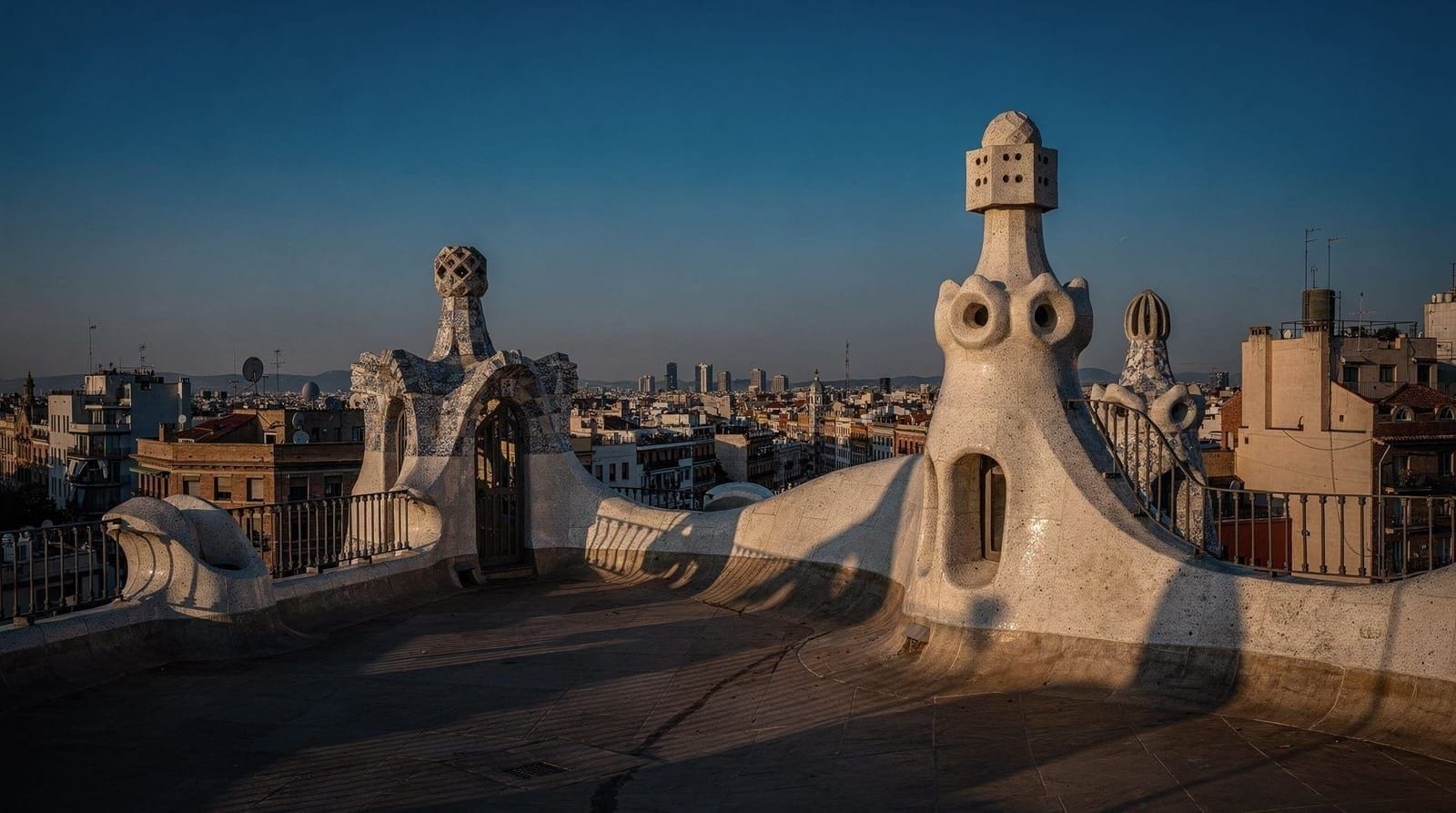
Four blocks north on Passeig de Gràcia, Antoni Gaudí built La Pedrera (Casa Milà, no. 92) between 1906 and 1912 for the Milà family. It was his last civil project before devoting himself entirely to the Sagrada Família. Where Casa Batlló is theatrical, La Pedrera is structural: the undulating limestone facade has no load-bearing interior walls (everything hangs from a system of iron columns), and the famous rooftop — covered with white-rendered chimneys and ventilation towers that look like space helmets or hooded monks — was the first non-religious space Gaudí designed as a three-dimensional sculpture.
Tickets from €25 (essential daytime visit, dynamic pricing; book as early as possible for the lowest rate). The rooftop visit is the essential element — factor at least 90 minutes for the full experience including the Espai Gaudí exhibition in the attic and the furnished Pis de la Pedrera (a recreated 1910s bourgeois apartment). The Night Experience (from €38, multimedia show on the rooftop after dark) is a different and also worthwhile option.
Note: La Pedrera closes January 12–18 for annual maintenance.
Casa Batlló vs La Pedrera: which to prioritize
| Casa Batlló | La Pedrera (Casa Milà) | |
|---|---|---|
| Character | Theatrical, marine-inspired facade | Structural, sculptural rooftop |
| Price | From €29 | From €25 |
| Best for | First-time visitors, photos | Architecture enthusiasts, rooftop chimneys |
| Crowds | Busier, especially midday | Slightly less crowded |
| Time needed | 60–90 minutes | 90 minutes with exhibition |
The Sagrada Família
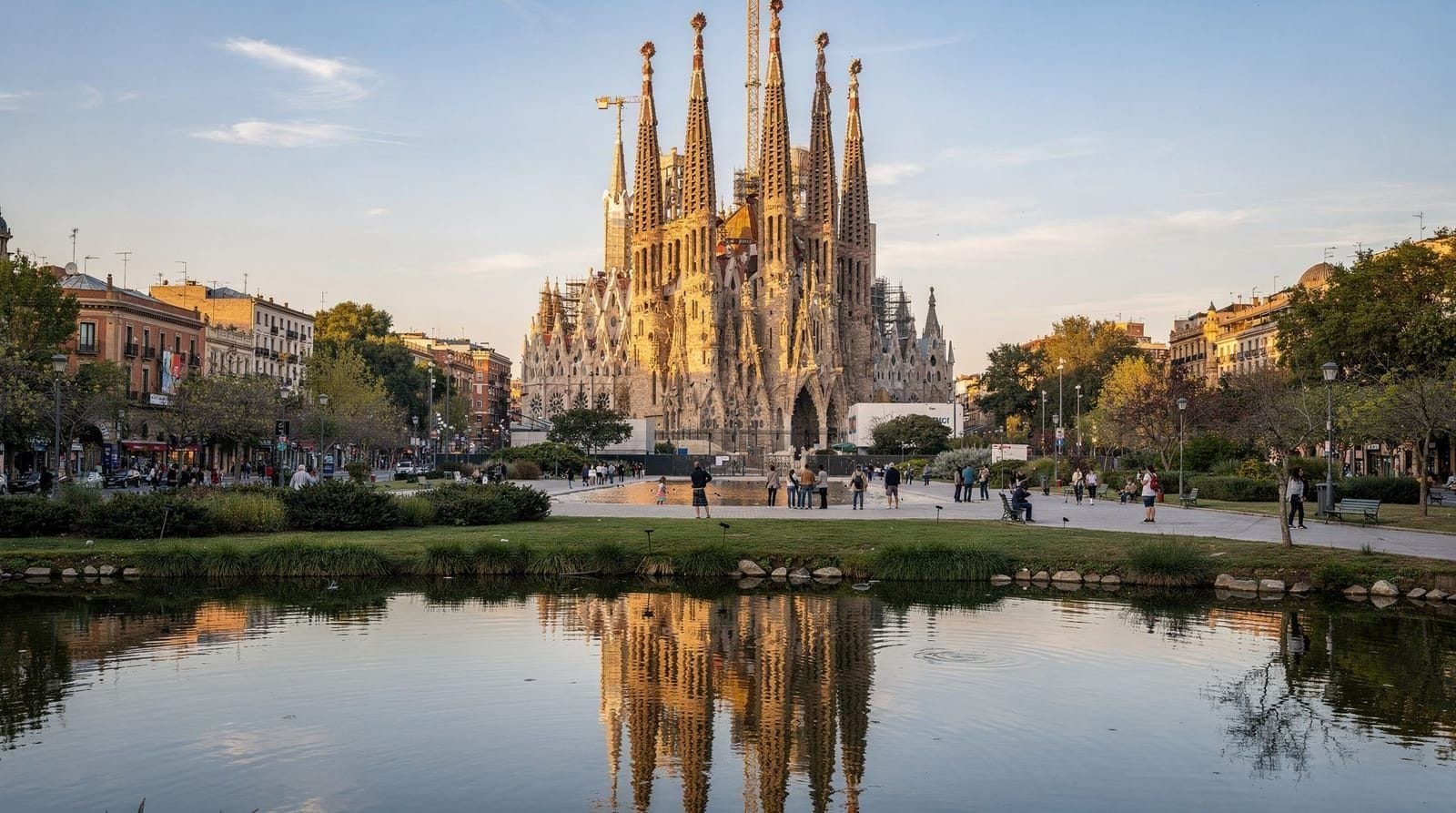
Gaudí’s defining work sits in the northern part of Eixample near the border with Gràcia. He began work on the Sagrada Família in 1883 and devoted the last 43 years of his life to it. The basilica remains under construction 143 years later and is scheduled for full completion in 2026 — the centenary of Gaudí’s death — though “completion” in this context means the main architectural elements; the surrounding plaza and some interior fittings will take longer.
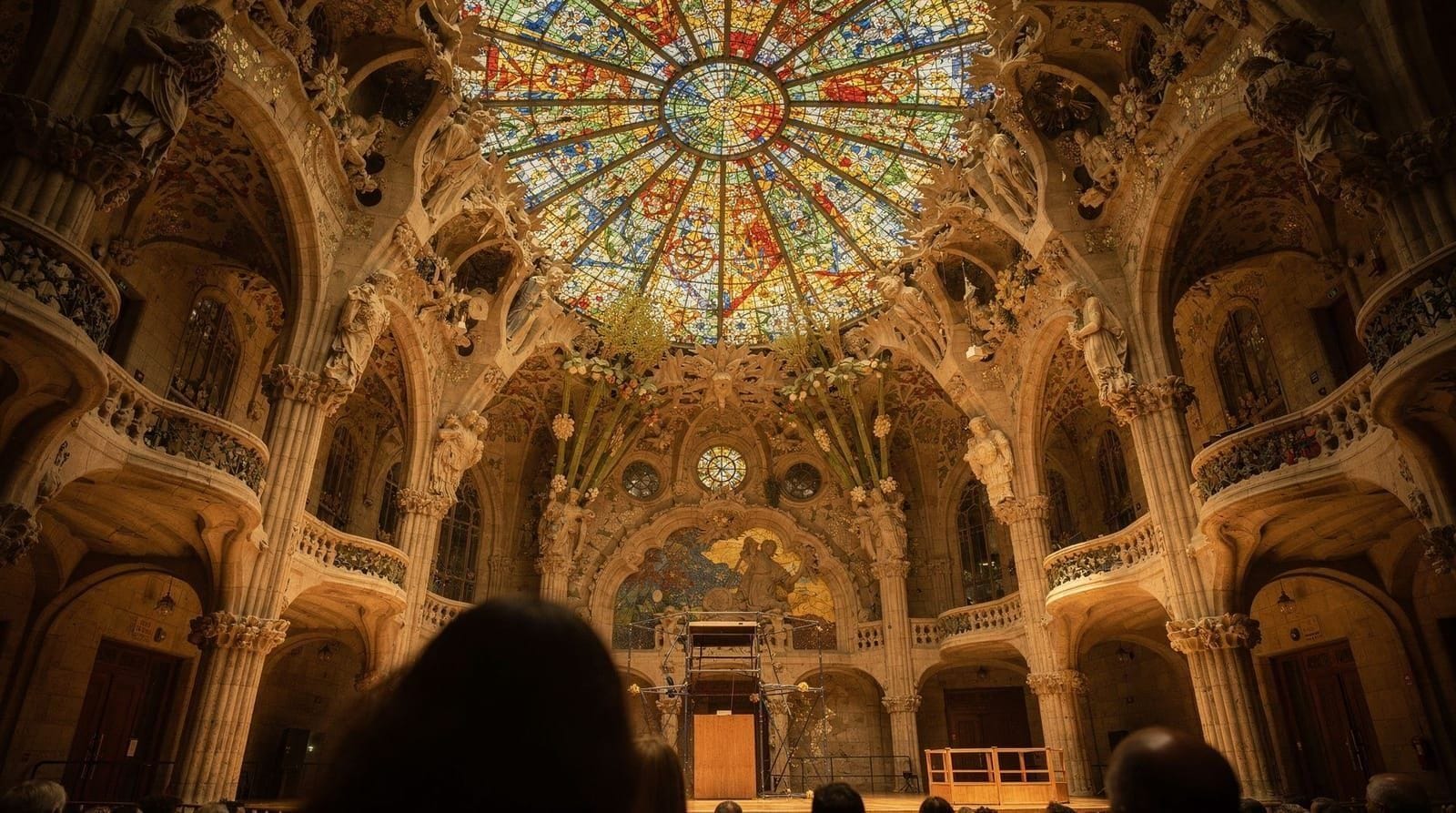
See the full Sagrada Família guide for the booking reality, ticket comparison and what the towers access adds. The short version: book the moment your dates are confirmed, choose a morning slot for the best light through the stained glass, and add tower access (€46 for both towers vs €26 basic entry) if budget allows.
Sant Pau Recinte Modernista
Often missed by visitors focused on the Gaudí buildings, the former Hospital de Sant Pau (Carrer de Sant Antoni Maria Claret 167) is a UNESCO World Heritage site designed by Lluís Domènech i Montaner between 1902 and 1930. It is arguably the best Modernisme building that is not by Gaudí: a garden city of pavilions connected by underground tunnels, each pavilion covered in mosaics and terracotta. Entry is €16 (skip-the-line tickets available via GYG) and the building is significantly less crowded than Casa Batlló or La Pedrera. From the front of Sant Pau you can see the Sagrada Família directly down Avinguda de Gaudí — the two buildings form a visual axis that Domènech i Montaner planned deliberately.
Where to eat
Eixample has the city’s broadest restaurant scene, from corner bar set lunches (€12–14, three courses) to Michelin-starred establishments. For everyday eating on a mid-range budget, the set lunch menus (menú del día) available at most neighbourhood restaurants weekdays 13:00–15:30 are excellent value and the best way to eat well for under €15. Cervecería Catalana (Carrer de Mallorca 236) is a reliable, popular spot for montaditos and tapas without tourist prices. For a more special meal, the streets around Carrer d’Enric Granados (a pedestrianised boulevard) have a cluster of better restaurants.
Avoid the tourist-facing restaurants immediately around the Sagrada Família — the two or three blocks in every direction from the basilica have a La Rambla-adjacent pricing problem. Walk five minutes in any direction for a proper neighbourhood restaurant.
Where to stay
Eixample has the city’s widest hotel selection: Passeig de Gràcia houses most of the 5-star properties, the streets between Passeig de Gràcia and Rambla de Catalunya have the best mid-range options, and Left Eixample offers good-value 3-star and boutique hotels. For practical advice on choosing between Eixample and other neighbourhoods as a base, see where to stay in Barcelona and the neighbourhood guide.
Eixample offers the most logical base for first-time visitors and the city’s best architecture — but book the headline Modernisme sites well in advance, especially between June and September when demand peaks sharply with the 2026 Gaudí centenary.
Top experiences
Bookable activities with verified prices and instant confirmation on GetYourGuide.
Barcelona: La Pedrera–Casa Milà skip-the-line ticket with audio guide
- Free cancellation
Barcelona: Sagrada Família skip-the-line ticket with audio guide
- Free cancellation
- Instant confirmation
Barcelona: the 3 Gaudí houses tour (Vicens, Milà and Batlló)
- Free cancellation
- Small group
Barcelona: Modernisme and Gaudí architectural walking tour
- Free cancellation