Gràcia travel guide
Gràcia is Barcelona's most liveable neighbourhood: bohemian squares, independent cafés, no chain stores and Park Güell at the top of the hill.
Barcelona: Park Güell skip-the-line admission ticket
Duration: 2 hours
- Free cancellation
Quick facts
- Metro
- L3 Fontana, L3 Diagonal
- Character
- Bohemian, local, village-like
- Best for
- Slow travel, repeat visitors, families
- Don't miss
- Park Güell, Festa Major de Gràcia (Aug)
Gràcia resisted incorporation into Barcelona for years. When the city finally absorbed it in 1897, locals hung black flags from their balconies in protest. More than a century later, the neighbourhood still carries the DNA of an independent village: five main squares (plaças) where people actually sit and talk, no chain stores on the main streets, and a political culture that tends to run its own way. For visitors who want to understand Barcelona beyond the tourist circuit, Gràcia is the essential counter-programme.
| Where | North of Eixample, uphill towards Park Güell; Metro L3 Fontana |
| Cost | Free to walk; Park Güell Monumental Zone €13, Casa Vicens from €28 |
| Time needed | Half a day to a full day |
| Getting there | Metro L3 to Fontana, or 15-minute walk from Passeig de Gràcia |
| Best time | Year-round; August for Festa Major (book accommodation early) |
A village that resisted the city
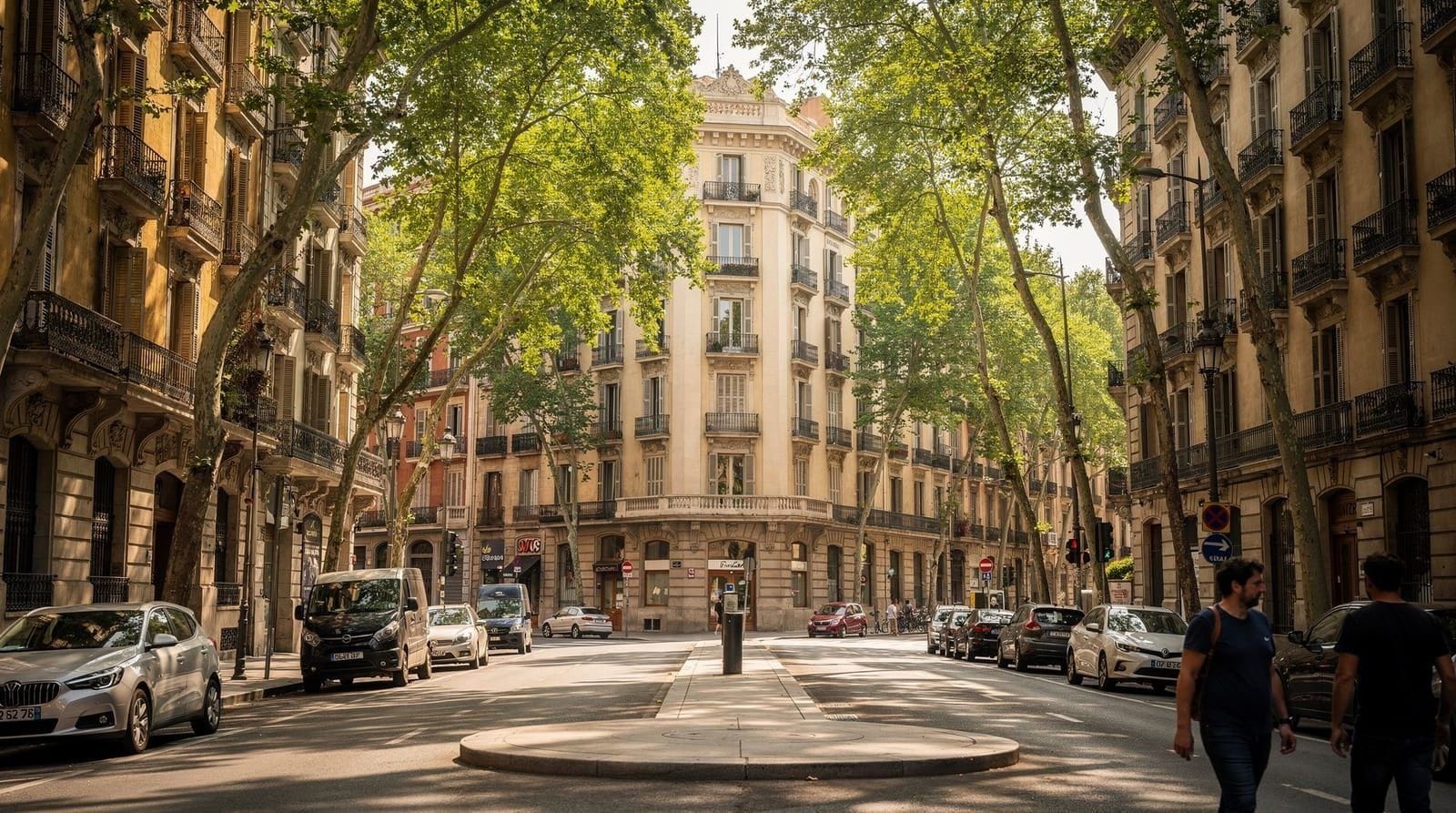
The neighbourhood sits immediately north of Eixample, climbing gradually uphill from Passeig de Gràcia towards Park Güell. The transition between Eixample’s broad grid and Gràcia’s narrower, less regular streets is immediate and unmistakable — within a single block, the scale changes, the noise level drops, and the shop signs shift from English-Spanish to Catalan-only.
Gràcia’s population includes a higher-than-average concentration of Catalan independence movement supporters, artists, university-educated professionals and families who have lived in the same streets for generations. The neighbourhood has gentrified steadily since the 1990s but has maintained its character better than comparable neighbourhoods in Madrid or London largely because local commercial associations actively campaign against chain stores and retain ground-floor space for independent businesses.
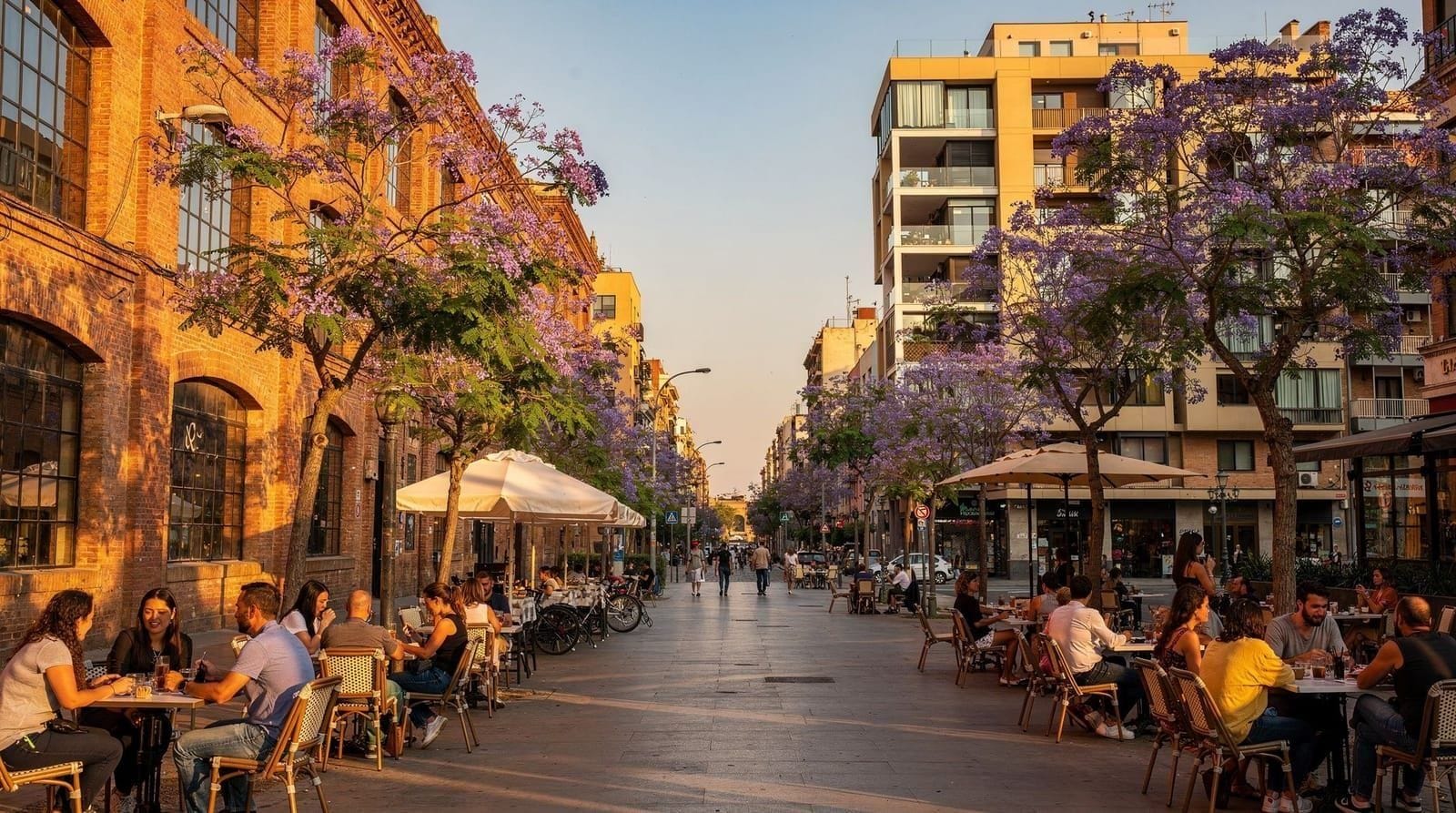
The five main squares anchor daily life. Plaça del Sol (the most visited, with tram terraces and a tendency towards noise in the evenings) and Plaça de la Vila de Gràcia (the neighbourhood’s civic centre, with the clock tower and a more residential character) are the busiest. Plaça de la Virreina is smaller, quieter and has some of the neighbourhood’s best café options. Plaça del Diamant has literary resonance: it is where Mercè Rodoreda’s novel La plaça del Diamant begins — the most celebrated Catalan novel of the 20th century.
Park Güell: what is free and what is not
The most important piece of planning intelligence for Park Güell is the distinction between the free areas and the ticketed Monumental Zone. The park was designed by Antoni Gaudí between 1900 and 1914 as a garden city for sixty luxury homes (only two were built — one of which Gaudí himself lived in). The entire park — terraced paths, stone viaducts with carved columns, the palm-leaf pavilion roofs, the forested walks, the gingerbread gatehouse exteriors — is free and open at all hours.
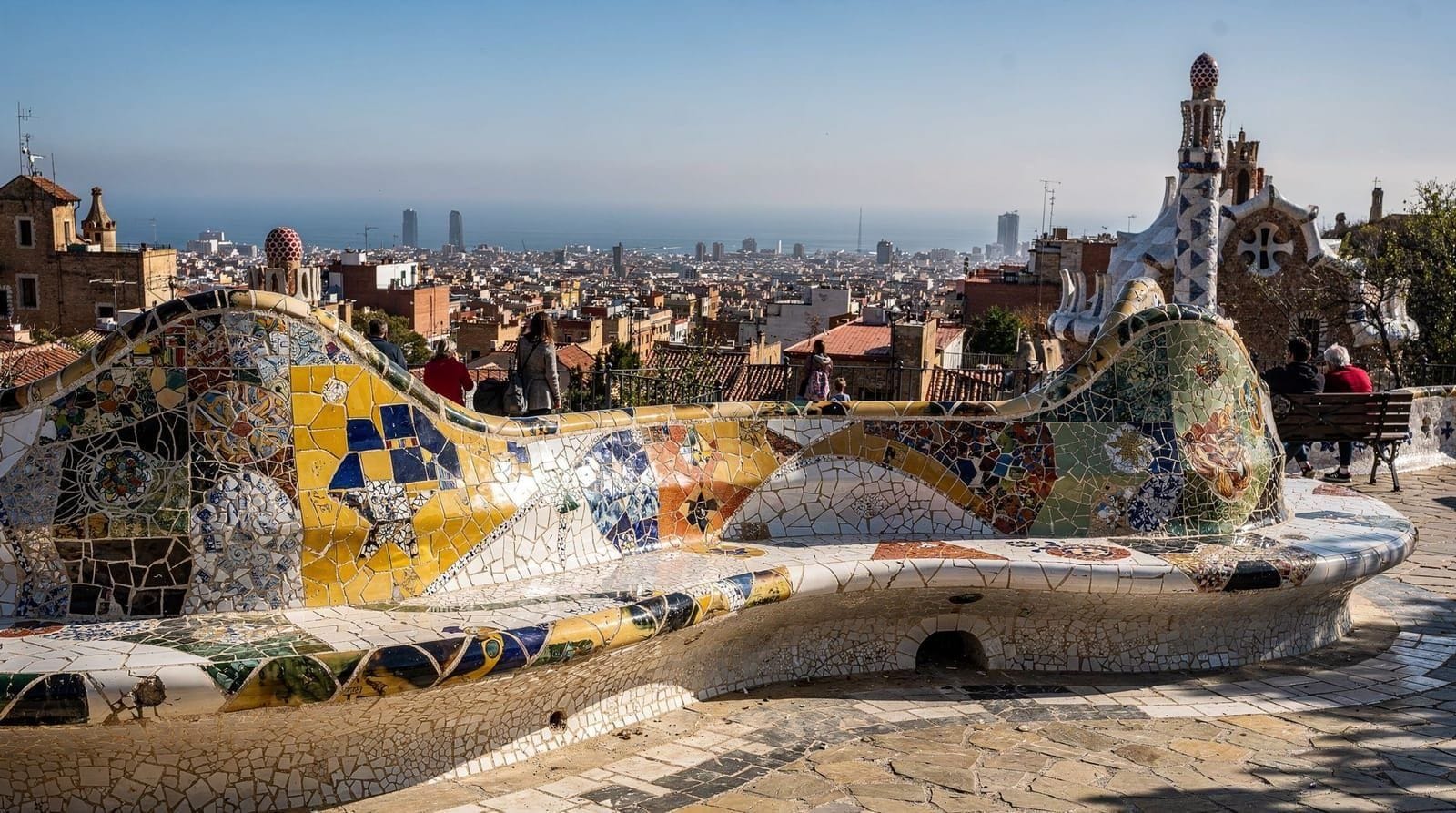
Only the central Monumental Zone requires a ticket: this is the Hypostyle Room (a forest of 86 Doric columns supporting the main terrace) and the Gran Plaça de la Natura above it, with Gaudí’s famous mosaic serpentine bench and panoramic views over the city. Adult admission to the Monumental Zone is €13 (official price; avoid resellers who charge €18+). The timed entry system allows 1,400 visitors per 30-minute window. Book at the official parkguell.barcelona website; advance booking is mandatory (no walk-up tickets for the Monumental Zone).
Practical timing: the earliest morning slot (around 08:00 in summer) gives the best photographs and the lowest crowds. By 10:00 the terrace becomes congested. Arriving before your time slot opens is recommended — the free areas around the gatehouse are worth exploring before entering the Monumental Zone.
For the full booking strategy, see the Park Güell guide, which also explains the Gaudí House Museum option and the best route through the free areas.
Casa Vicens: Gaudí’s forgotten first
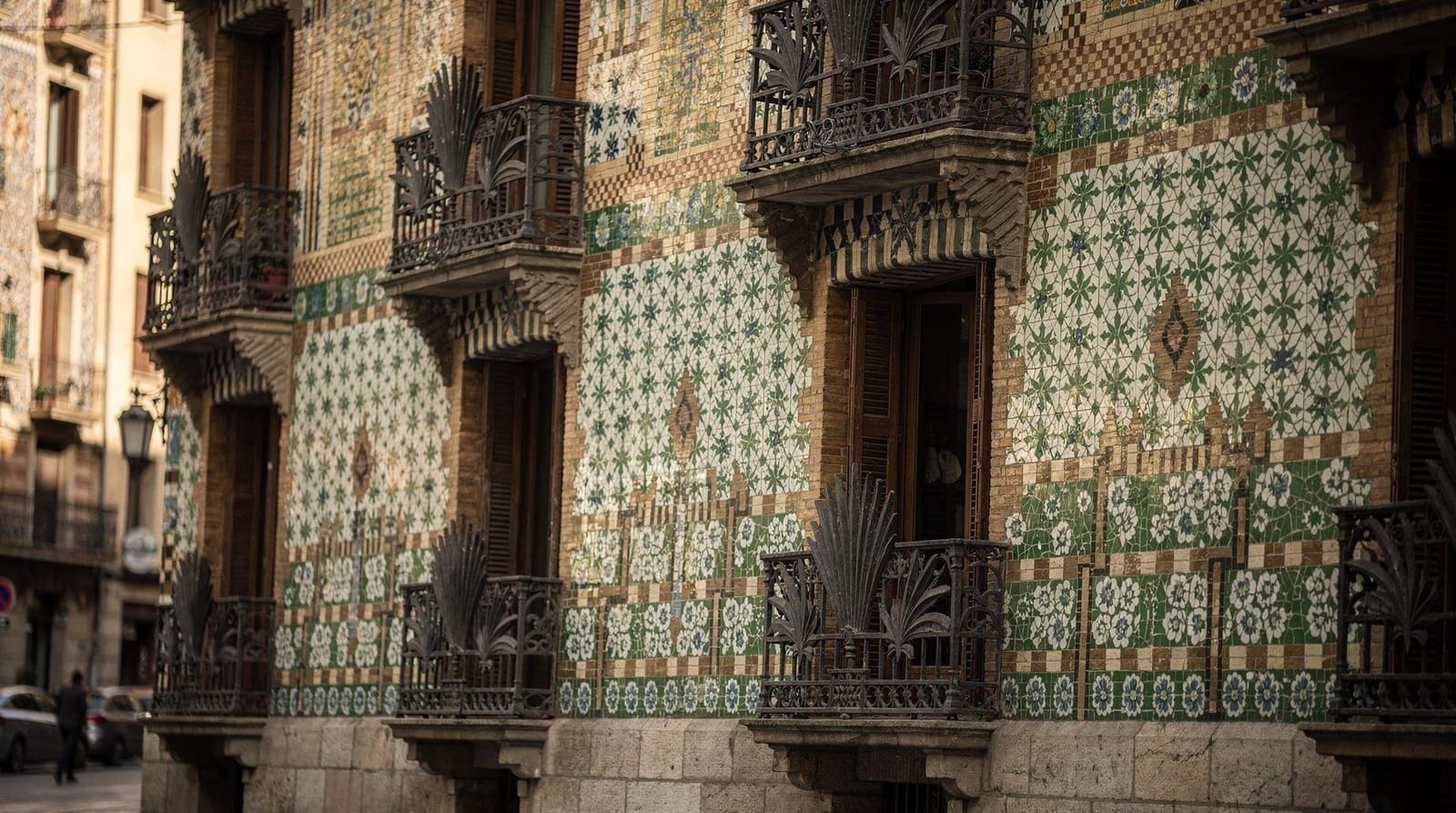
Casa Vicens (Carrer de les Carolines 20) sits in the heart of Gràcia and is Gaudí’s earliest significant building, commissioned when he was 31 years old. The house is covered in green palm-leaf ceramic tiles and terracotta — a riot of Moorish and Japanese influences that preceded his mature organic style. It lacks the fame of Casa Batlló or La Pedrera and consequently the queues are manageable, making it an attractive option when the Passeig de Gràcia houses are fully booked. Admission from €28; timed entry. The building was opened to the public only in 2017 after serving as a private residence for its entire life.
From Casa Vicens it is a 20-minute uphill walk to Park Güell, making these two Gaudí buildings a natural Gràcia circuit. The Casa Vicens guide and Gaudí trail guide cover how it fits alongside his other Barcelona buildings.
Festa Major de Gràcia
For one week every August (usually the 14th–20th), Gràcia hosts one of Barcelona’s best free events. Residents of each street compete to build elaborate, entirely handmade decorations from recycled materials, transforming their block into an immersive installation — a specific street theme changes every year, and past editions have included underwater worlds, space stations and forests built from plastic bottles and cardboard. The streets close to traffic, live music plays nightly on outdoor stages, and traditional Catalan activities — castellers (human towers) and the correfoc fire-run — punctuate the week. The Festa Major blog post has a first-person account of what a night on the streets actually feels like. Book accommodation well ahead if visiting during the festival — Gràcia and the surrounding neighbourhoods fill up months in advance.
The Mercat de l’Abaceria
Gràcia’s market (Travessera de Gràcia 186) is the neighbourhood’s working food market and one of the least touristy markets in central Barcelona. A cast-iron 19th-century structure that has operated continuously since 1892, it sells fresh produce, fish, cheese and charcutería to locals at realistic prices. The upper floor has a flea market section (antiques, second-hand clothing, vintage goods) particularly active on weekend mornings. Worth a 30-minute visit alongside the Mercat de Santa Caterina in El Born for a cross-section of how Barcelona’s market culture actually functions.
Eating and drinking like a Gràcia local
The neighbourhood’s food scene runs more independently and less expensively than the old city. Vermut (vermouth) culture is strong — several bars on the main squares have been serving house vermouth from the barrel since the 1970s, and Sunday late-morning vermut is a Gràcia institution. Bar Calders (Carrer del Parlament 25, just south on the Left Eixample boundary) is the most celebrated vermouth spot in the wider area.
For meals, Gràcia’s set lunches represent the best value in central Barcelona — most neighbourhood restaurants offer three courses with wine for €12–15 Monday to Friday. The streets between Plaça de la Virreina and Carrer de Verdi have the densest concentration of honest-value restaurants. Carrer de Verdi itself is a bar strip — lively from around 22:00, particularly on weekends.
A note on pricing: Gràcia has not escaped gentrification entirely, and some restaurants near the Park Güell entrance now charge tourist prices. The further from the park entrances you eat, the more realistic the menus.
Connecting to the rest of the city
Metro L3 (Fontana station) is the primary access point, two minutes from Plaça de la Vila de Gràcia. From Eixample, walk north up Carrer de Gràcia (the extension of Passeig de Gràcia inside the old village) — 15 minutes from Passeig de Gràcia metro. From the Gothic Quarter, take L3 from Liceu to Fontana (three stops, 8 minutes) or the pleasant 30-minute walk up Via Laietana and through Eixample.
For advice on using Gràcia as a base for the whole trip — it is particularly good for longer stays and repeat visitors — see where to stay in Barcelona and the neighbourhood guide.
Gràcia rewards visitors who slow down, combine Park Güell with an afternoon of square-sitting and neighbourhood eating, and use it as a base for understanding a Barcelona that most short-stay visitors never find. The free vs paid Park Güell guide is worth reading before you book, and the neighbourhood comparison covers how Gràcia stacks up against Eixample and the old city as a base.
Top experiences
Bookable activities with verified prices and instant confirmation on GetYourGuide.