Gothic Quarter travel guide
Navigate the Gothic Quarter honestly: Roman ruins, the cathedral, best tapas bars and how to avoid the tourist traps on every corner.
Barcelona: 2-hour Gothic Quarter walking tour
Duration: 2 hours
- Free cancellation
Quick facts
- Metro
- L3 Liceu, L4 Jaume I
- Character
- Historic, touristy, atmospheric
- Best for
- First-time visitors, history lovers
- Budget alert
- Many restaurants here are overpriced
Barcelona’s oldest neighbourhood rewards those who arrive before the crowds and leave the tourist menus alone. The Gothic Quarter packs two thousand years of history into roughly one square kilometre — Roman walls, a medieval cathedral, a Jewish quarter that predates the Reconquista, and lanes so narrow that neighbours on opposing balconies could reach out and touch each other. The catch is that its beauty is now shared with enormous crowds, and its restaurants have largely abandoned the local market.
| Where | Old city, between La Rambla and Via Laietana; Metro L3 Liceu, L4 Jaume I |
| Cost | Free to walk; cathedral combined ticket ~€9; Temple d’August free |
| Time needed | Half a day to a full day |
| Getting there | Metro L3 or L4, or a 15-minute walk from Plaça Catalunya |
| Best time | Before 09:00 or after 19:00 to avoid the worst crowds |
Two millennia of history in one square kilometre
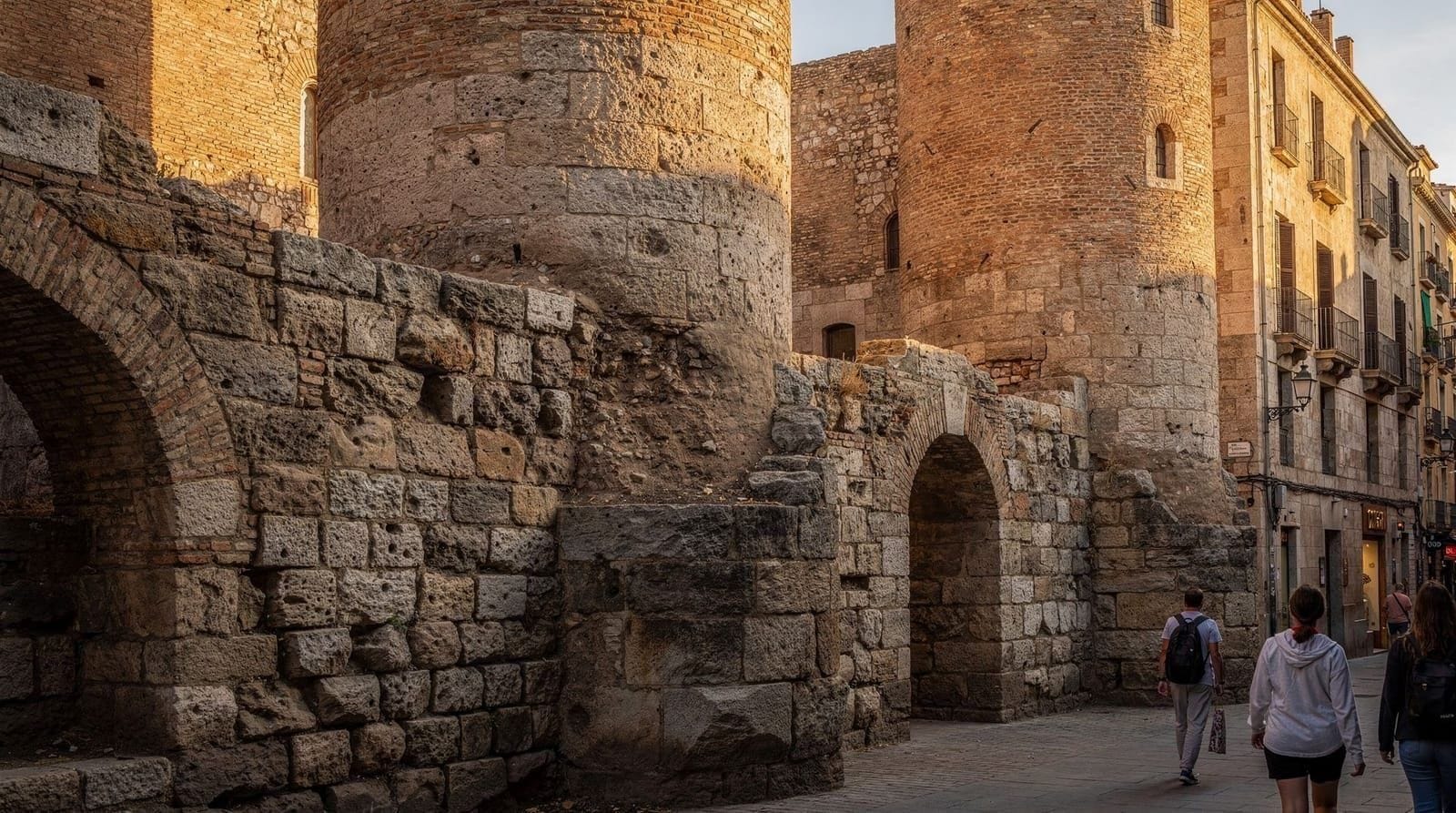
The Romans founded Barcino around 10 BC, and you can still see the original walls. The four columns of the Temple d’August (Carrer del Paradís 10; free entry, Tue–Sat 10:00–19:00, Mon closed) stand in a medieval courtyard and are among the best-preserved Roman remains in Iberian Spain. A short walk away, the medieval aqueduct fragments embedded in buildings along Carrer de la Tapineria tell the story of the city’s water supply.
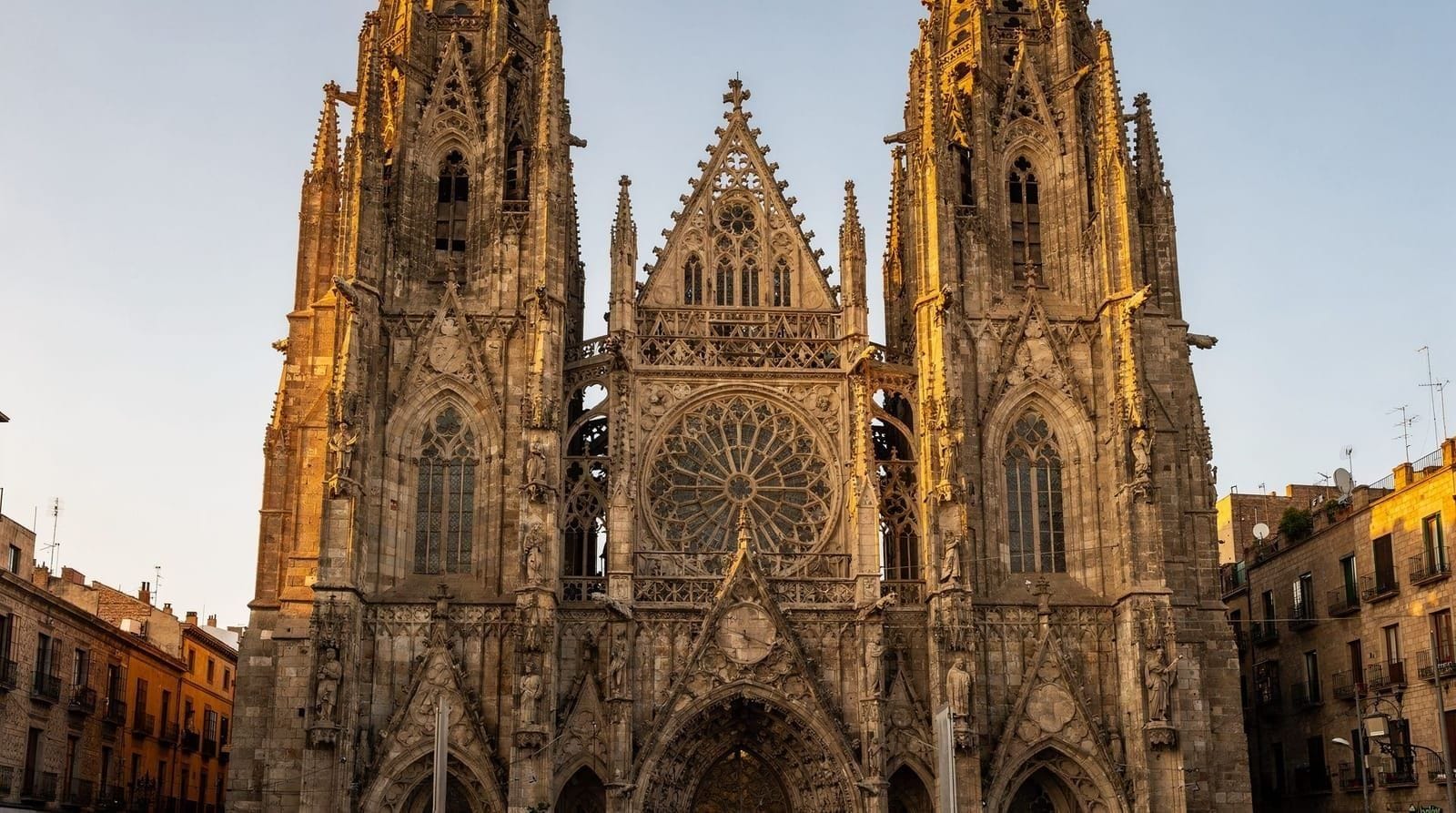
The neighbourhood’s centrepiece is the Catedral de la Santa Creu i Santa Eulàlia, built between the 13th and 15th centuries on the site of a Roman temple. The cloister — home to 13 white geese, one for each year of the life of Barcelona’s patron saint Eulàlia — is one of the most memorable spaces in the city. Arrive during the free morning window (08:00–12:30 on weekdays) to avoid paying the €9 combined ticket and to see the space without the afternoon rush.
Nearby, Plaça de Sant Jaume is the civic heart where the Ajuntament (City Hall) and Palau de la Generalitat (Catalan government) face each other across a square that has witnessed every significant event in Catalan history. On Sunday mornings, traditional sardana dancing sometimes takes place in front of the cathedral — free, spontaneous and one of the most authentically Catalan things to see in Barcelona.
The Jewish quarter and lesser-known lanes
The Call, Barcelona’s medieval Jewish quarter, occupies a dense grid of streets west of the cathedral. The neighbourhood was dissolved during the pogroms of 1391, and the community never returned. The Centre d’Interpretació del Call (Placeta de Manuel Ribé; €2.20) explains the history with modest but worthwhile exhibits. Look for the Hebrew inscription embedded in the wall at the corner of Carrer de Marlet and Sant Domènec del Call.
Away from the main tourist circuit, Carrer dels Banys Nous, Carrer de la Palla and the streets around Plaça de Sant Felip Neri (a small, quiet square pockmarked by Civil War bullet holes) give a sense of how the neighbourhood felt before mass tourism. Sant Felip Neri is particularly striking at dusk when the light falls across the baroque church facade.
Roman Barcino beyond the Temple d’August
The Temple d’August is the best-known Roman survival, but the layers underneath the neighbourhood run deeper. The Museu d’Història de Barcelona (MUHBA), entered through the Plaça del Rei, gives access to an extraordinary underground walk through the excavated Roman city — streets, a laundry, a wine-making facility and early Christian basilica remains, all beneath the modern street level. It is one of the largest underground Roman sites open to the public anywhere, and consistently underrated against the cathedral and Picasso Museum. Combined ticket with other MUHBA sites around €7; free first Sunday of the month.
Eating well without getting overcharged
The Gothic Quarter has a stark two-tier food economy. Restaurants on La Rambla, Carrer de la Boqueria and immediately around Plaça Reial charge tourist prices — €14–18 for a set lunch that would cost €10 in Gràcia or El Born. The honest-planner rule: if the menu has photos and is displayed outside facing the street, keep walking.
Better options sit on the less-trafficked streets. Bar Celta Pulpería (Carrer de la Mercè 16) serves traditional Galician pulpo (octopus) and raciones at fair prices to a mix of locals and visitors. El Xampanyet in adjacent El Born (just across Carrer de la Princesa) is technically not the Gothic Quarter but worth the 3-minute walk for cava and anchovies. For breakfast, head to one of the neighbourhood’s traditional granja cafés rather than the chain coffee shops on the main pedestrian routes.
Plaça Reial is photogenic and lively — its neoclassical arches, palm trees and Gaudí-designed lampposts (two of his earliest commissions) make it one of Barcelona’s most recognisable squares. It is also ringed by bars that are expensive and poorly reviewed. Enjoy the square from a distance, buy a drink at a street stall, and move on.
Getting here and around
Metro L3 (green) stops at Liceu, which drops you at La Rambla on the western edge of the Gothic Quarter. Metro L4 (yellow) stops at Jaume I on the eastern edge, closer to the cathedral and more useful for most sightseers. The neighbourhood is entirely pedestrianised, so you walk once inside.
For a broader orientation to the old city, a guided walking tour saves considerable time — the lanes have no logic to an outsider and the historical layers are genuinely easier to understand with context. The getting around Barcelona guide covers metro and walking options in more detail.
Connecting to the rest of the city is simple: El Born is a 3-minute walk east for better food and the Picasso Museum; Barceloneta beach is a 15-minute walk south through the Born and the Port Vell. For Eixample and the Gaudí houses, take the metro from Liceu or Jaume I — it is too far to walk comfortably.
What to skip
La Boqueria market is technically in El Raval, just outside the Gothic Quarter on La Rambla, but most visitors visit it on a Gothic Quarter circuit. The market is architecturally beautiful but overwhelmingly tourist-oriented — most stalls sell overpriced cut fruit and jamón to visitors who will be charged €4 for a piece of melon. For a genuine market experience, use El Born’s Mercat de Santa Caterina or the Mercat de l’Abaceria in Gràcia.
Flamenco shows near La Rambla and the Gothic Quarter advertise aggressively. Flamenco is Andalusian, not Catalan. The shows range from passable to poor, and ticket touts outside sell overpriced or counterfeit entries. If you want a show, book a reputable venue through a platform and understand you are attending a cultural import rather than a local tradition. For genuine Catalan performance culture, wait for a castellers event during La Mercè (September 23–27) or Sant Jordi (April 23).
The friendship bracelet scam is concentrated on La Rambla between the Liceu metro and the port. Someone ties a woven bracelet on your wrist unprompted, then demands payment. Decline firmly, do not engage, and keep walking.
See our Barcelona safety and scams guide for a full rundown on what to watch for in the old city.
When to visit
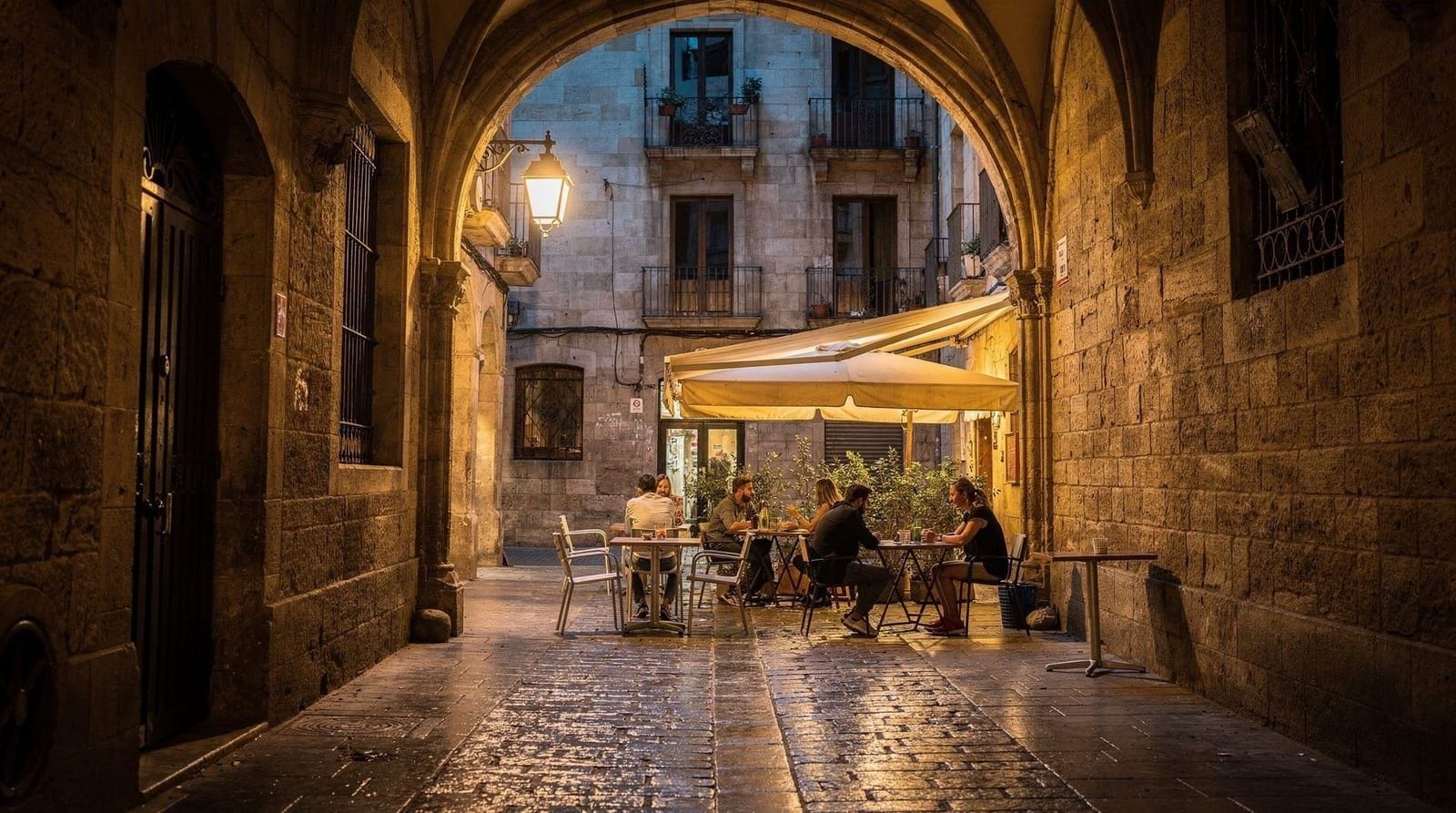
The Gothic Quarter is tolerable at any time of year but genuinely enjoyable only when the cruise-ship crowds are absent. Arrive before 09:00 for the best photographs and quietest lanes. By 11:00 in summer the main streets are saturated. Late evening (after 20:00) also works well — the neighbourhood is well-lit, lively with restaurant-goers, and the day-tripping crowds have departed.
For seasonal advice across the whole city, April–May and September–October offer the best balance of weather and manageable crowd levels.
The Gothic Quarter connects naturally to the broader neighborhood comparison — if you are deciding where to base yourself, the Gothic Quarter gives maximum historic atmosphere but at the cost of higher prices and more petty theft. Eixample offers a quieter, safer base with easier metro access to the Gaudí sites.
The Gothic Quarter is worth a half-day on almost any Barcelona itinerary, but plan your visit around the crowds, eat away from the main drags, and combine it with El Born for a fuller picture of Barcelona’s historic core. If you are planning a first visit, the 3-day classic itinerary and the how many days in Barcelona guide both slot the Gothic Quarter into a wider trip plan.
Top experiences
Bookable activities with verified prices and instant confirmation on GetYourGuide.
Barcelona: Gothic Quarter night walk – mysteries and legends
- Free cancellation
Barcelona: old town and Gothic Quarter walking tour
- Free cancellation
Barcelona: 1-hour Gothic Quarter and El Born walking tour
- Free cancellation
Barcelona: Ramblas, old town & Gaudí houses walking tour
- Free cancellation
Barcelona: Gothic Quarter ghosts and legends walking tour
- Free cancellation