El Born travel guide
El Born is Barcelona's most fashionable old-city neighbourhood: Picasso Museum, Palau de la Música, independent restaurants and the city's best tapas bars.
Barcelona: 1-hour Gothic Quarter and El Born walking tour
Duration: 1 hour
- Free cancellation
Quick facts
- Metro
- L4 Jaume I, L1 Arc de Triomf
- Character
- Fashionable, food-focused, authentic
- Best for
- Foodies, couples, design travellers
- Main draw
- Picasso Museum, tapas bars, boutiques
Where the Gothic Quarter handles medieval history, El Born handles it better — and adds a food scene, a design sensibility and a resident population that has not entirely fled to the suburbs. The neighbourhood (formally Sant Pere, but universally known by the former market that once occupied its heart) sits between the cathedral quarter and the Parc de la Ciutadella, with the best independent restaurant strip in the old city and two of Barcelona’s most impressive cultural buildings.
El Born at a glance
| Where | Old city, east of the Gothic Quarter, metro L4 Jaume I |
| Cost | Picasso Museum €15; Palau de la Música from €23 |
| Time needed | Half a day to a full day |
| Getting there | Metro L4 Jaume I or L1 Arc de Triomf |
| Best time | April–June and September–October |
The neighbourhood’s distinct character
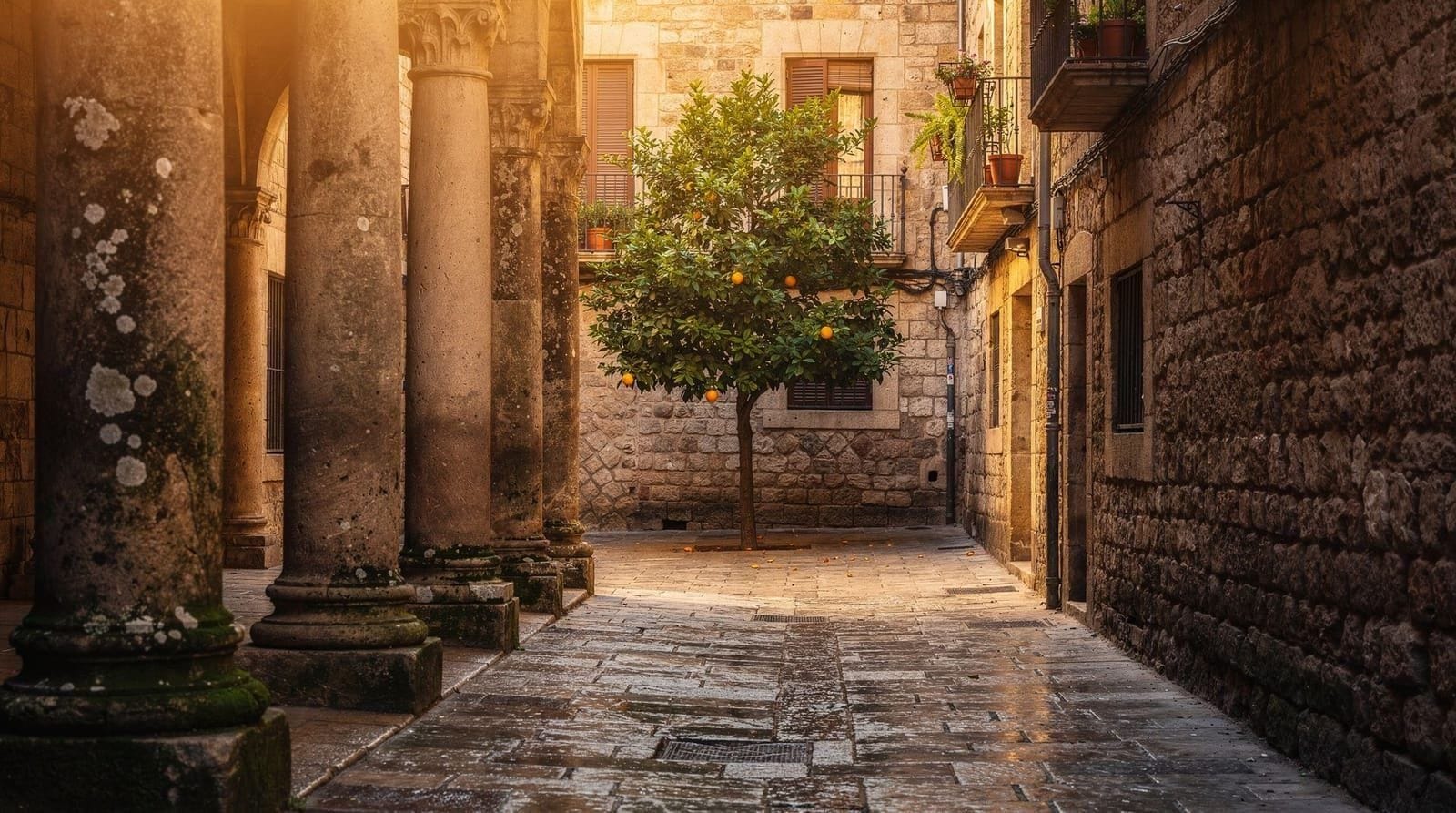
El Born feels different from the Gothic Quarter within a single block. Souvenir shops give way to independent clothing boutiques, wine bars and ceramic studios. The streets — Carrer del Rec, Carrer dels Flassaders, Carrer de la Montcada — are narrow and medieval but lack the crushing tourist density of the lanes around La Rambla. There are still tourists, of course, but also locals doing their shopping, children on bikes and neighbourhood cafés where a cortado costs €1.80 rather than €4.50.
This is partly demographic luck (El Born gentrified in the 1990s and 2000s, pushing out the rougher elements that had made it edgy, but attracting independent businesses rather than souvenir chains) and partly the absence of a La Rambla equivalent to funnel mass-market visitors. The result is the most liveable slice of the old city.
The Picasso Museum
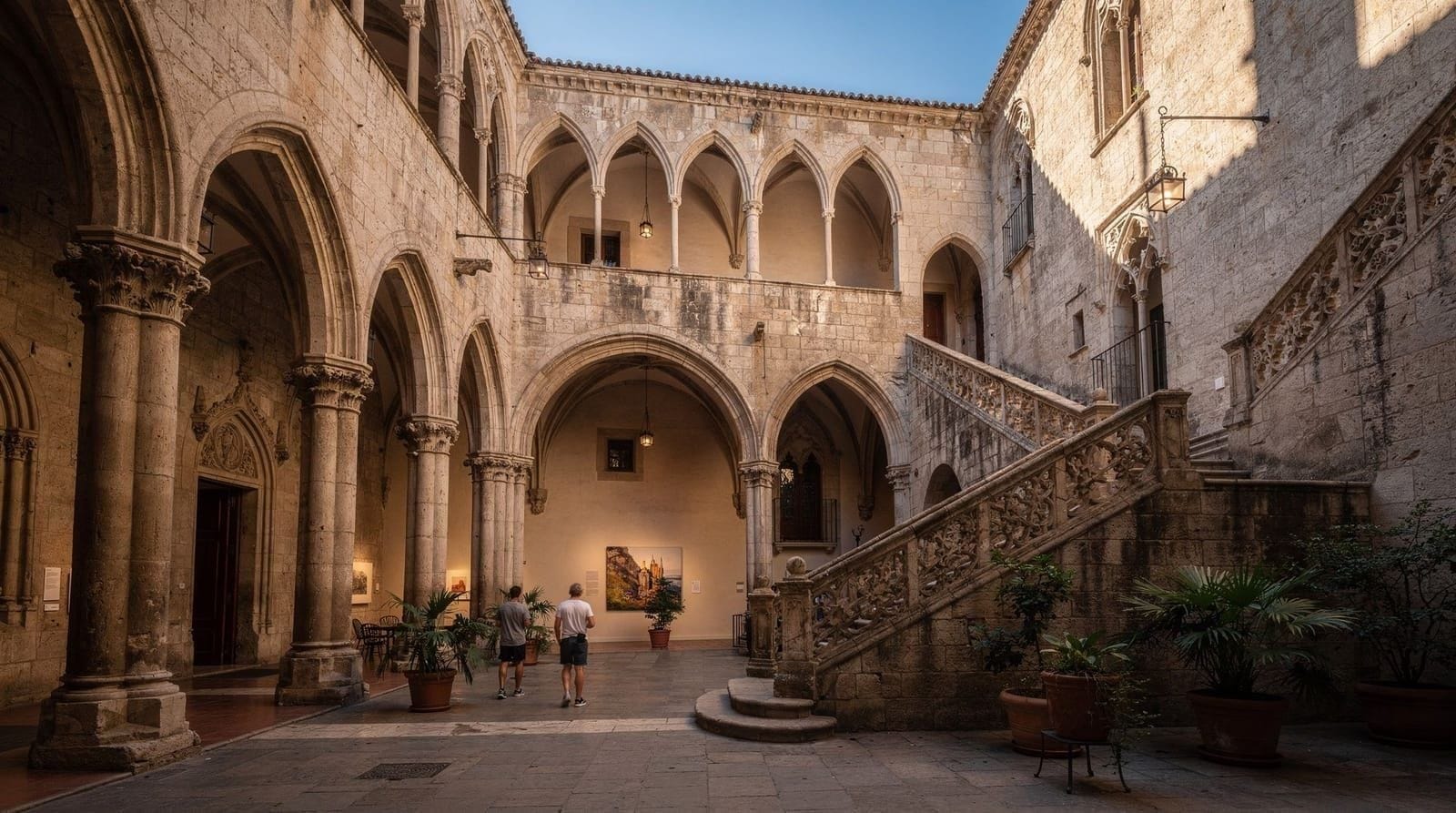
The Museu Picasso (Carrer de Montcada 15–23) occupies five connected medieval palaces and contains over 4,000 works documenting Pablo Picasso’s early development, with particular focus on his Barcelona years (he lived here as a teenager and young man, and the city clearly marked his visual imagination). The museum’s strength is precisely what other Picasso museums lack: the juvenilia, the academic exercises, the copies of old masters — all the evidence of how an extraordinary technical command was built before it was abandoned.
General admission is €15 for the permanent collection, €19 combined with temporary exhibitions. Free entry on the first Sunday of each month and Thursday evenings from 19:00 (May–October) — but these free slots attract long queues, so arrive 30 minutes before opening. Online booking with a time slot is strongly recommended for any visit; the museum is compact and sells out on summer afternoons. See the transport guide for the fastest route from your hotel.
Carrer de Montcada itself, where the museum sits, is one of the finest medieval streets in the city — a succession of 15th-century merchant palaces with internal courtyards now converted into galleries and bars. Worth walking slowly even without entering any building.
Palau de la Música Catalana
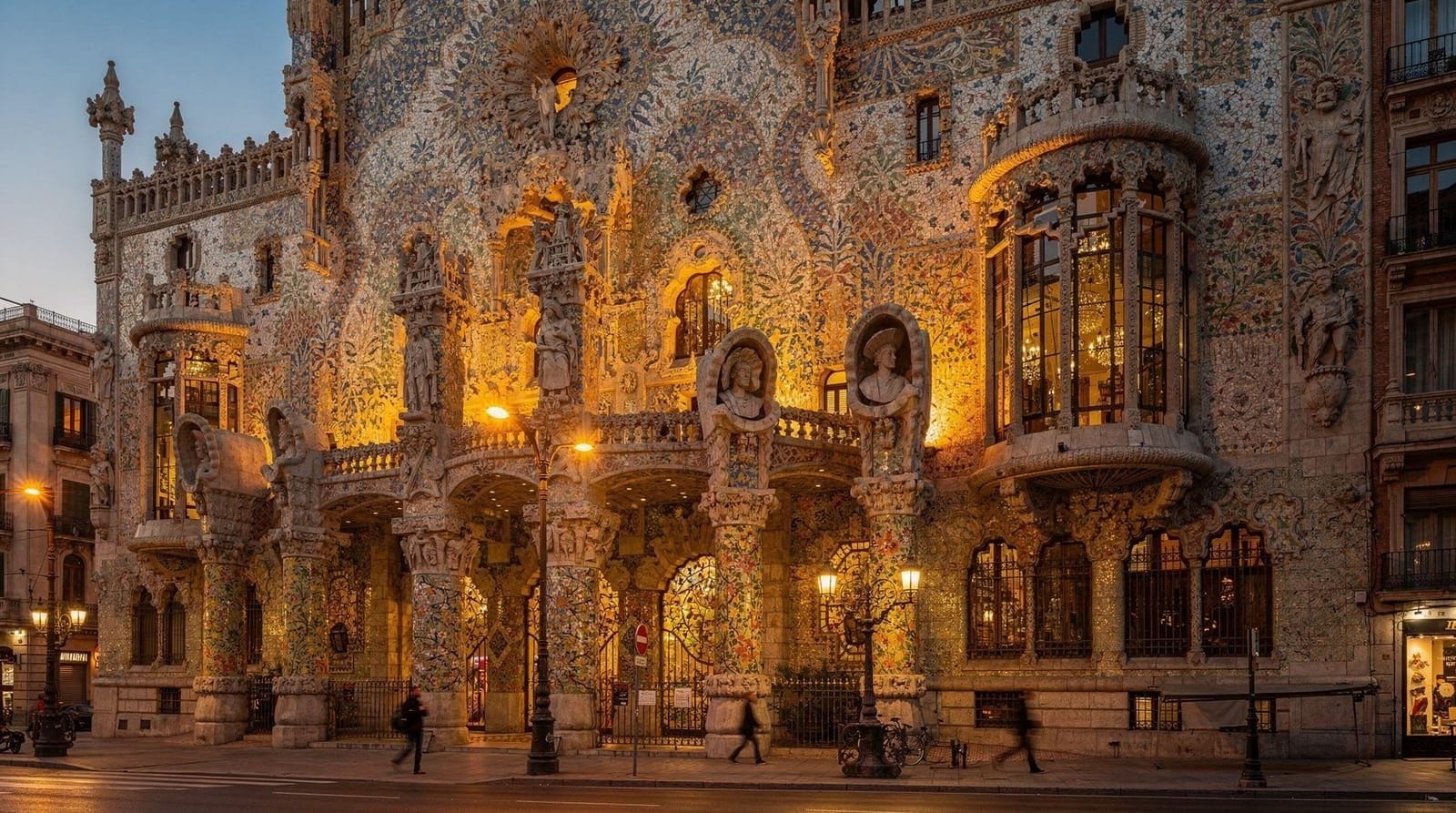
Two minutes north of El Born’s core, the Palau de la Música Catalana is among the most extraordinary buildings in a city full of extraordinary buildings. Lluís Domènech i Montaner built it between 1905 and 1908 for the Orfeó Català choral society, and it remains a working concert hall with a programme running year-round. The interior — stained glass, ceramic mosaics, a skylight that pours coloured light across the audience during daylight performances — has no real equivalent in European architecture.
Entry by guided tour (€30, 1 hour) or self-guided visit (€23) runs throughout the day. An evening concert is the best way to experience the building as intended: the acoustics are excellent and tickets for mainstream events start around €20. Book early for any weekend performance. The Palau is UNESCO World Heritage, jointly listed with the Hospital de Sant Pau — another Domènech i Montaner building worth visiting nearby in Eixample.
Mercat de Santa Caterina
Just north of the Picasso Museum, Mercat de Santa Caterina (Avinguda de Francesc Cambó 16) has a sculptural mosaic roof — designed by Enric Miralles and completed by Benedetta Tagliabue after his death — that makes it one of Barcelona’s most visually striking buildings from the outside. The market itself is thoroughly local: fresh produce, fish and butcher stalls that serve the neighbourhood rather than performing for tourists. Prices are realistic and the atmosphere is entirely different from La Boqueria’s managed chaos. Worth a 20-minute visit for context on how Barcelona’s food culture actually works at street level.
Eating and drinking
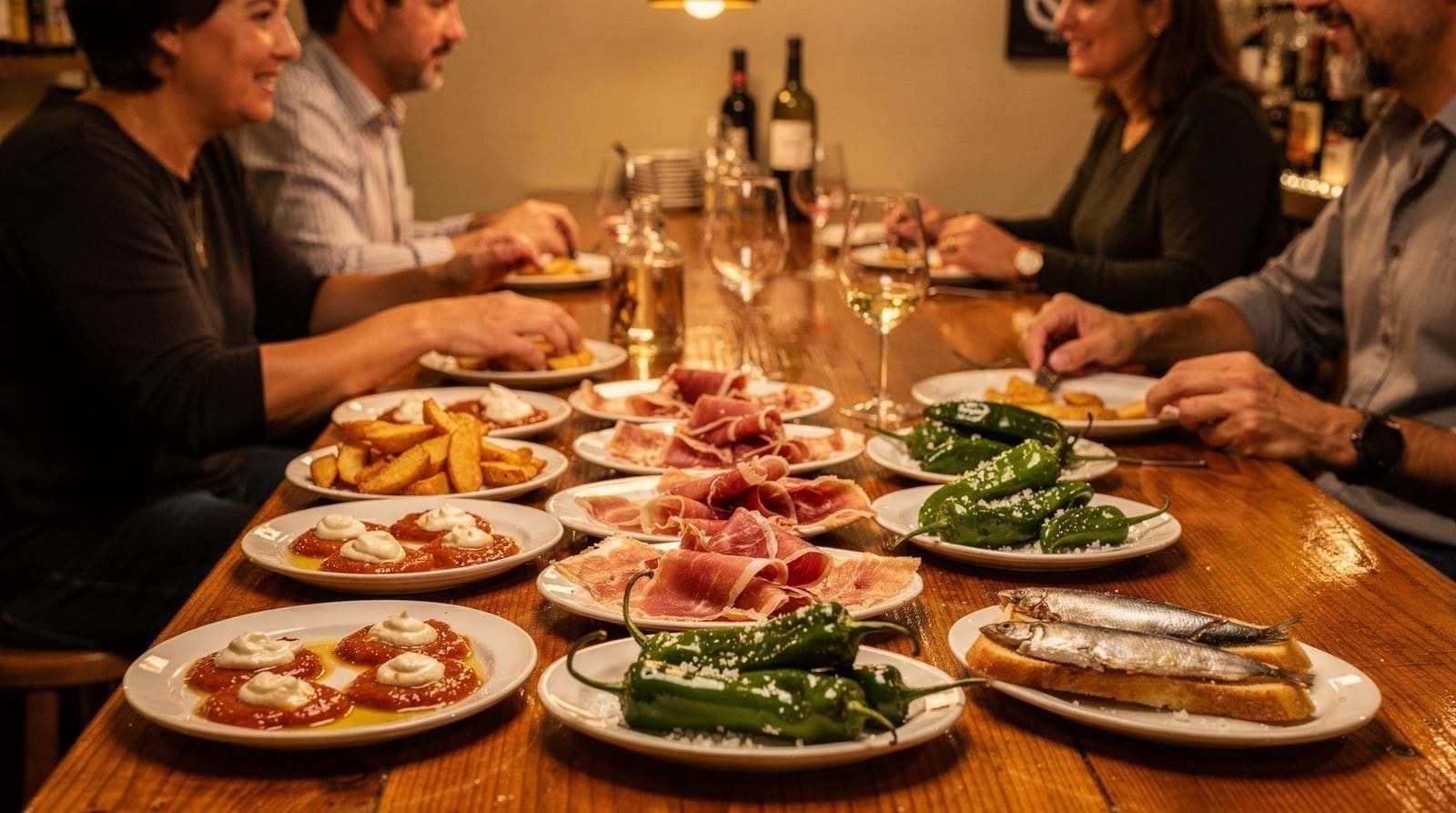
El Born has the best eating of any neighbourhood in the old city. The key distinction is choosing between the tourist-facing restaurants on the main pedestrian routes and the proper neighbourhood spots one street further in.
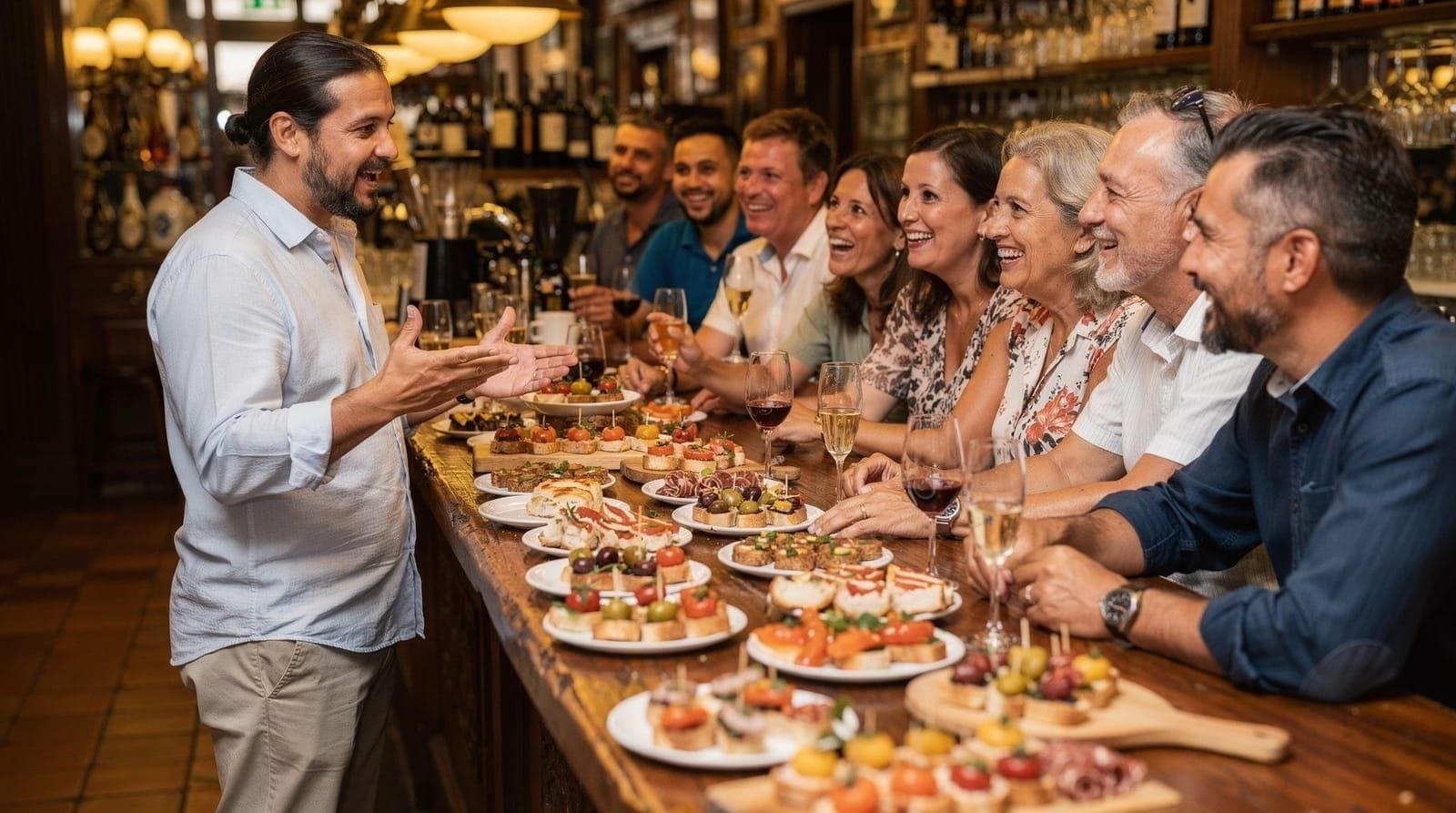
Bar del Pla (Carrer de la Montcada 2, across the street from the Picasso Museum) serves traditional Catalan cuisine — patatas bravas, croquetes de pernil, mandonguilles — in a bar that manages to be both busy and genuinely good. El Xampanyet (Carrer de Montcada 22) has been serving house cava and anchovies from wooden barrels for decades; always crowded, cash only, no reservations, worth the wait. For a higher-end meal, Dos Palillos (Carrer d’Elisabets 9, technically El Raval but accessible) combines Japanese technique with Catalan ingredients in a way that has earned it considerable critical attention.
The neighbourhood’s best coffee is at Nomad (Carrer del Parlament 24, in Poble Sec, but a short metro ride) or the several independent third-wave cafés along Carrer del Rec and side streets. Skip the chain coffee shops on Passeig del Born.
Passeig del Born itself — the main boulevard cutting through the neighbourhood — is lined with bar terraces that are expensive by local standards but useful for an evening cava or vermut while watching the neighbourhood circulate. The former market hall at the end of the boulevard (El Born Centre de Cultura i Memòria) was excavated in 2001 and revealed an entire neighbourhood buried after the 1714 siege of Barcelona; the remains are visible from walkways above and explain a great deal about Catalan identity.
El Born vs the Gothic Quarter
| El Born | Gothic Quarter | |
|---|---|---|
| Character | Fashionable, food-focused, local | Historic core, dense medieval lanes |
| Best for | Foodies, design travellers, couples | First-time history sightseeing |
| Crowds | Moderate, more locals | Heaviest tourist density in the old city |
| Restaurants | Best independent scene in the old city | More tourist-facing options |
| Cultural sights | Picasso Museum, Palau de la Música | Cathedral, Plaça Reial, Roman remains |
Combining with adjacent areas
El Born shares a metro stop (Jaume I, L4) with the Gothic Quarter, making the two natural companions. Most visitors find a morning in the Gothic Quarter followed by an afternoon in El Born — lunch at Bar del Pla, Picasso Museum, Palau de la Música, evening tapas — covers the old city comprehensively without backtracking.
Barceloneta beach is a 15-minute walk south through the Port Olímpic area, making El Born a useful base for days that mix culture and swimming. The Parc de la Ciutadella — Barcelona’s main green space and home to the zoo — is immediately east of El Born and provides a park walking circuit worth combining with the neighbourhood.
For the broader picture on where to stay and how neighbourhoods compare, see the neighborhood comparison guide and where to stay in Barcelona.
Getting around
Metro L4 (Jaume I) is the primary station, directly under the Picasso Museum. From Eixample and the Gaudí sites, take L2 to Passeig de Gràcia then transfer to L4 — or take the 20-minute walk down Via Laietana. From Barceloneta, walk north along Passeig Joan de Borbó (15 minutes) or take the L4 one stop to Jaume I.
El Born is the most balanced neighbourhood in Barcelona for visitors who want atmosphere, honest food and genuine cultural sights — without the Gothic Quarter’s tourist saturation or the Eixample’s corporate hotel feel.
Top experiences
Bookable activities with verified prices and instant confirmation on GetYourGuide.