Barcelona itinerary tips: how to plan your visit without wasting time
Barcelona: Sagrada Família skip-the-line ticket with audio guide
Duration: 2 hours
- Free cancellation
- Instant confirmation
What are the most important Barcelona itinerary tips?
Book Sagrada Família and Park Güell before anything else — ideally 4–8 weeks ahead in summer. Sequence Gaudí sites on the same day (Sagrada, then Park Güell is one natural pair). Leave La Rambla for a quick morning walk and put your evenings in El Born or Poble-sec.
Most Barcelona itinerary advice treats the city as a list of attractions. This guide focuses on the logistics that actually determine whether your visit flows or fragments: sequencing, timing, what to pair together, and the specific mistakes that derail days that looked good on paper.
| Book first | Sagrada Família and Park Güell, 4–8 weeks ahead in summer |
| Best day-1 sequence | Sagrada Família (09:00) then Park Güell (afternoon) |
| Rainy-day fallback | Picasso Museum, MNAC, MACBA, El Born Centre |
| Transport | T-Casual for 3–4 days centrally; Hola Barcelona if using L9 airport metro |
| Rule of thumb | 3 major attractions per day comfortable, 5 means mostly transit |
The booking-first principle
Before you plan a single day, lock in two bookings: Sagrada Família and Park Güell. These are the only two attractions in Barcelona where advance booking is genuinely mandatory (not just recommended). Park Güell Monumental Zone has no walk-up ticket option — the capacity is capped at 1,400 visitors per hour and the tickets must be booked online. Sagrada Família operates on timed entry with a rolling three-month booking window; in summer, tower tickets sell out 8–12 weeks ahead.
Everything else in Barcelona can be sorted within a week or two of arrival, or even on arrival. Sagrada Família and Park Güell cannot. See the full Sagrada Família booking guide for specific lead times by season.
Morning versus afternoon allocation for each site
The time of day you visit each attraction determines how good the experience actually is. Here is the honest allocation.
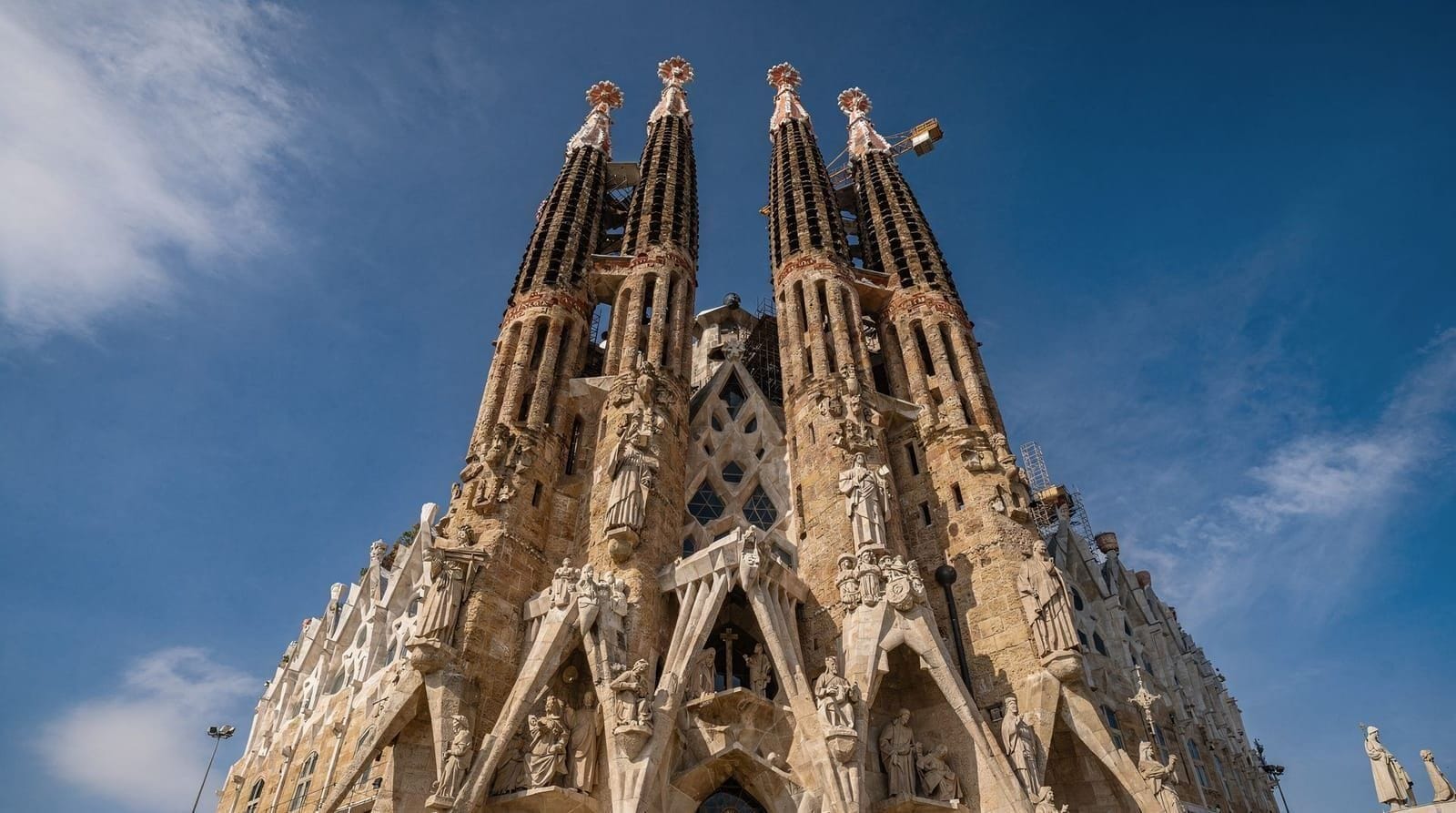
Sagrada Família: morning only. The interior of the basilica is at its most spectacular in the first two hours after opening (09:00–11:00). The Nativity façade faces east, and the morning sun drives columns of coloured light through the stained glass windows in the apse and nave — reds, blues, and yellows projected in shifting patterns onto the stone columns. By noon, the angle changes and the interior becomes less dramatic. The 09:00 or 09:30 entry slot is not a convenience tip — it is a quality decision. An afternoon visit to the Sagrada Família is a diminished version of the morning experience.
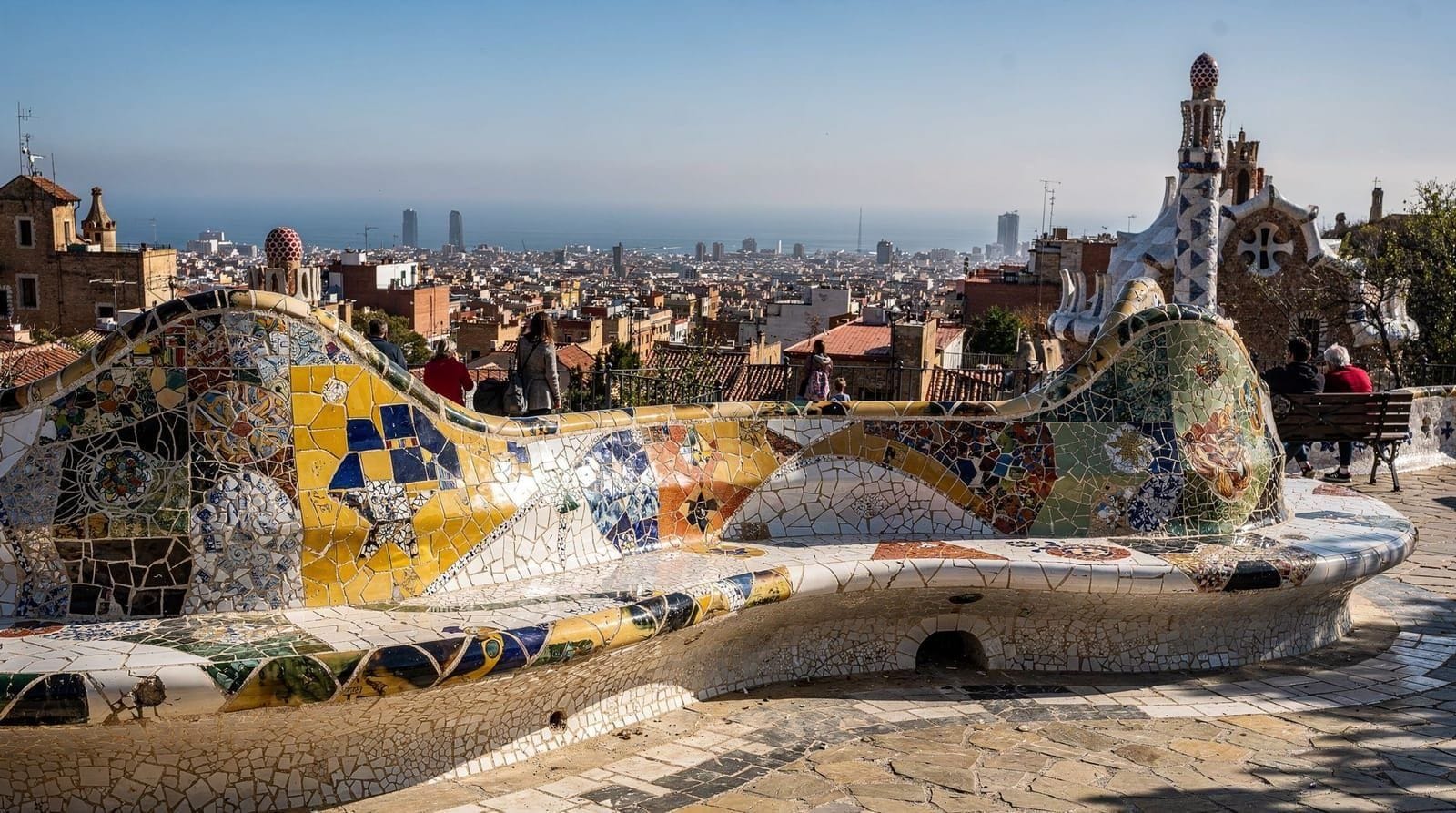
Park Güell: morning for the Monumental Zone, any time for the free zone. Book your Monumental Zone slot for 09:00 or 09:30 to see the main esplanade before it reaches maximum capacity (which happens quickly after 10:30). The free forested paths and terraces are pleasant all day and look good in afternoon light.
Gothic Quarter: afternoon and evening. The Gothic Quarter in the morning feels thin and slightly grey — the cleaning trucks are finishing, the boutiques are opening, and the streets lack the human energy that defines the neighbourhood. By 15:00 it is alive in a way that morning visits never achieve. By 19:00, when the shops close and the restaurant terraces fill, it is at its best. This is the reverse of the usual tourist instinct to “do museums in the morning” — the Gothic Quarter is not a museum, it is a living neighbourhood, and it rewards afternoon and evening visits.
Barceloneta beach: morning on weekdays. The beach fills progressively from mid-morning in summer. An 09:00 or 09:30 arrival in June–September means light crowds, the best light for photos, and comfortable swimming before the beach becomes a solid crowd of bodies. Avoid weekend afternoons in July and August unless crowd density is not a concern for you.
Montjuïc: mid-morning to late afternoon. The Fundació Joan Miró and MNAC are both better visited mid-morning (10:00–13:00) when they are open but not yet at lunchtime capacity. The Font Màgica show (Thursday–Sunday, May–October) runs at 20:30, so if you time a Montjuïc visit for the show, plan to arrive at the hill around 15:00, visit the museums, eat dinner in Poble-sec, and return for the show.
La Boqueria market: early weekday morning only. 09:30–11:00 on a Tuesday to Thursday is the window when the market functions as a market rather than a tourist crowd. The genuine vendors — fish, meat, produce, cheese — are active. The tourist-facing stalls near the entrance are open but not yet at full volume. After 11:00 on any day, and all day on weekends, the experience is primarily crowd management.
Sequencing the Gaudí trail
The five main Gaudí sites in Barcelona (Sagrada Família, Park Güell, Casa Batlló, La Pedrera, Casa Vicens) are distributed across the city and cannot all be visited in a single day without rushing. Here is the most natural grouping:
Gaudí day 1: Sagrada Família + Park Güell Start at the Sagrada Família at 09:00 for the best morning light through the Nativity façade windows. Allow 2–2.5 hours including the tower if you booked it. Then take bus 116 north to Park Güell (about 15 minutes). Spend 30 minutes in your Monumental Zone slot and another hour walking the free forested areas above. Return to the centre by early afternoon.
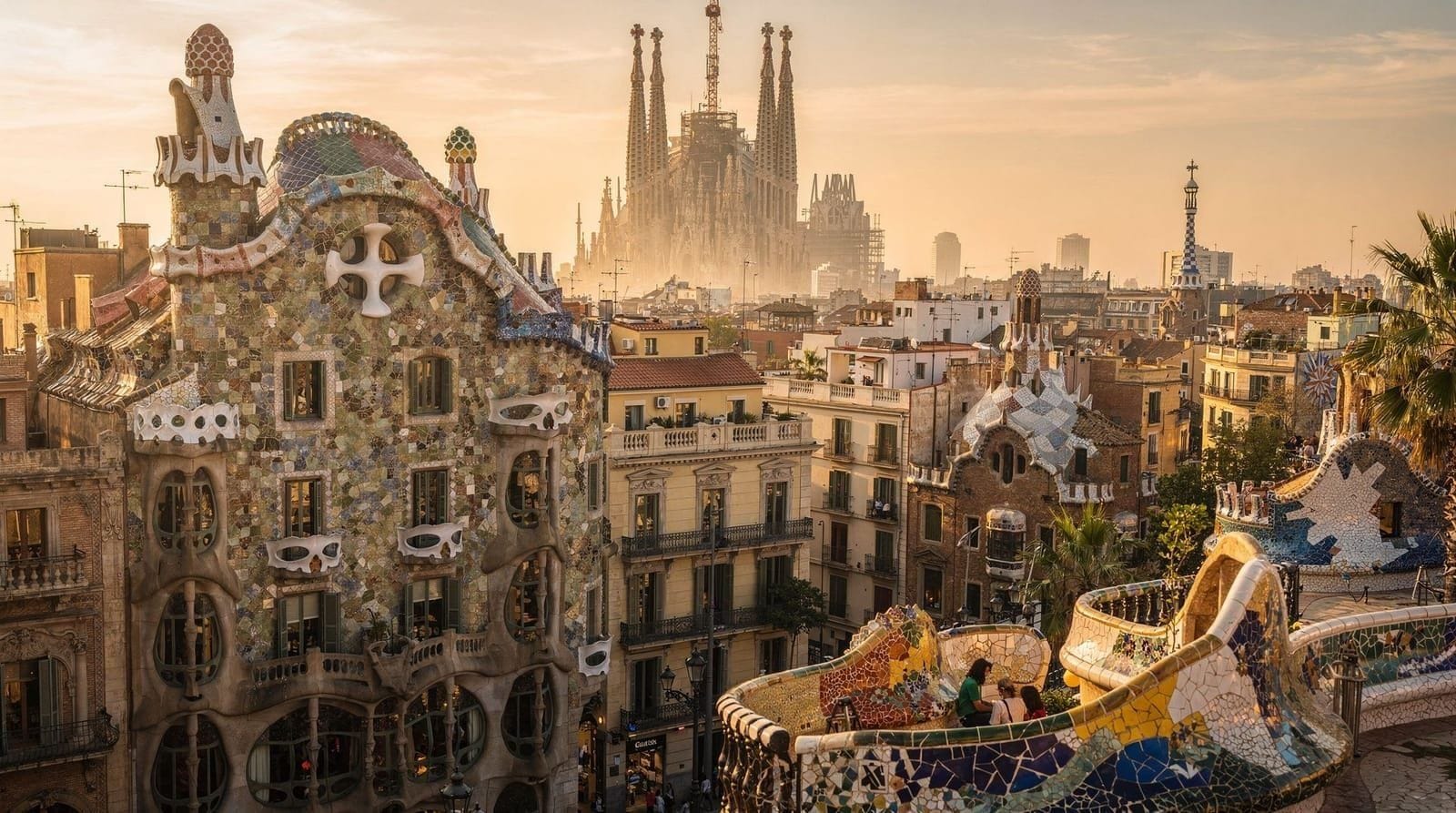
Gaudí day 2: Passeig de Gràcia corridor Casa Batlló and La Pedrera (Casa Milà) sit at opposite ends of the same block on Passeig de Gràcia. Book consecutive time slots — La Pedrera in the morning (09:00–12:00) and Casa Batlló in the afternoon (14:00–17:00), or reverse order. Between them, the three facades of the Manzana de la Discordia are free to admire from the pavement. Casa Vicens (Gaudí’s first major work, in Gràcia) is 20 minutes by foot from La Pedrera and can be added as a third stop.
If your trip is only three days, prioritise Sagrada Família with tower access and Park Güell as the non-negotiables, then pick one of Casa Batlló or La Pedrera rather than rushing both.
Weather contingency planning
Barcelona’s weather is reliable enough that full rain days are rare — only 78 rainy days per year, and most rain falls in short showers rather than all-day downpours. However, planning a contingency for a wet morning or afternoon is worth doing before you arrive.
If it rains in the morning: Move your indoor activities to the rain window. The Sagrada Família interior is actually better on an overcast day in some respects — the stained glass shows its colours without direct sun glare. The Picasso Museum, MNAC, MACBA, and the Fundació Joan Miró are all full-day indoor destinations that are completely unaffected by weather.
If it rains at the beach: Barceloneta is not appealing in rain. Substitute a morning in El Born — the covered market building (El Born Centre de Cultura i Memòria, free entry) covers a full city block of covered medieval ruins. The Mercat de Santa Caterina is partially covered. The Picasso Museum on Carrer de Montcada is three minutes by foot from the best streets in El Born.
If Park Güell is wet: The Monumental Zone terrace becomes slippery and less comfortable in rain; the forested paths are pleasant in light rain. If you have a Monumental Zone slot booked during rain, you cannot transfer the time slot without cancellation. Heavy rain is rare enough that the risk is low, but light showers are worth pushing through — the terrace dries quickly.
Good rainy-day alternatives:
- MACBA (contemporary art, Plaça dels Àngels, €12 or free on some Saturdays after 15:00)
- CCCB (Centre de Cultura Contemporània de Barcelona, adjacent to MACBA, €6–8)
- El Born Centre de Cultura i Memòria (covered medieval ruins, free)
- Palau de la Música Catalana guided tour (1 hour, book in advance)
- La Boqueria market in the morning (partially covered, though note the caveats above)
- Any of the major museums listed in the budget guide’s free-entry schedule
Packing and preparation for the climate
Being physically prepared for Barcelona’s conditions makes a meaningful difference to daily enjoyment. Here is what actually matters.
Footwear is the most important single choice. The Gothic Quarter is almost entirely cobblestone, the Eixample has wide flat pavements but long distances, and Park Güell has uneven stone paths with significant inclines. A single day in Barcelona can cover 12–18 km on foot. Comfortable, broken-in walking shoes are not optional. New shoes should not be worn on the first day. Sandals work for Barceloneta and the Eixample but are poor choices for the Gothic Quarter cobblestones.
Hydration in summer. Barcelona tap water is drinkable and safe. A refillable water bottle is useful — public drinking fountains are scattered throughout the city including in the Gothic Quarter and at Park Güell. In July and August, serious dehydration risk exists during midday hours when walking between sites. The traditional midday break (lunch from 14:00–15:30 in a restaurant) is not just cultural — the heat justifies the break.
Sun protection in spring and summer. The UV index in Barcelona from April through September regularly reaches 7–10 (very high to extreme). The Eixample walks and the time at the Sagrada Família exterior (where you should spend 20–30 minutes examining the Nativity façade before entering) involve sustained exposure without shade. SPF 50 applied before leaving the hotel is not excess caution.
Lightweight layer for evenings. Even in summer, evenings at the beach and on terrace bars in August can drop to 22–24°C by midnight, which feels cool if you have been sweating through a hot day. A thin cardigan or light jacket adds negligible weight to a day bag and solves the “cold after dinner” problem that catches many visitors off guard.
Multi-day transport pass calculation
Choosing the right transport card is worth calculating against your specific itinerary, not just buying whatever sounds good at the airport.
T-Casual (€13 for 10 trips, Zone 1): The right choice for most 3–4 day trips where you are staying centrally and arriving/departing by taxi or Aerobus. 10 trips covers: 2 airport-adjacent transfers by metro or bus + 8 in-city trips. For a 3-day trip averaging 2–3 metro rides per day plus some walking, a single T-Casual is often sufficient.
Hola Barcelona (€18.70 for 48h / €27.30 for 72h / €35.60 for 96h): Includes airport metro L9, which the T-Casual does not cover. If you plan to arrive and depart by metro (L9 Sud from El Prat), calculate whether the two airport trips (€11.40 total if paying separately) plus your in-city travel tips the balance toward the Hola card. For a 2-day intensive visit arriving and leaving by metro, the 48h Hola card at €18.70 usually wins.
Zone 2 T-Casual (€25.50 for 10 trips): Worth buying if your itinerary includes Sitges (35 minutes south) or the Montserrat rack railway connection from Monistrol (the Zone 2 card covers the Rodalies leg, though not the rack railway supplement). For a 4–5 day trip that includes one day trip, Zone 2 is better value than buying separate tickets.
When a day pass is not worth it: The Hola Barcelona cards look attractive but only make financial sense if you are making at least 5–6 transport trips per day consistently. A typical 3-day trip with central accommodation does not reach this frequency on most days. Calculate your expected trips before buying.
The Gothic Quarter and El Born: afternoon and evening territory
The Gothic Quarter and El Born are best explored from 15:00 onward. In the morning, the narrow streets are being cleaned and the atmosphere is thin. By afternoon, the neighbourhood fills with locals going about their day alongside tourists, which gives it its proper character.
An afternoon in the Gothic Quarter typically runs:
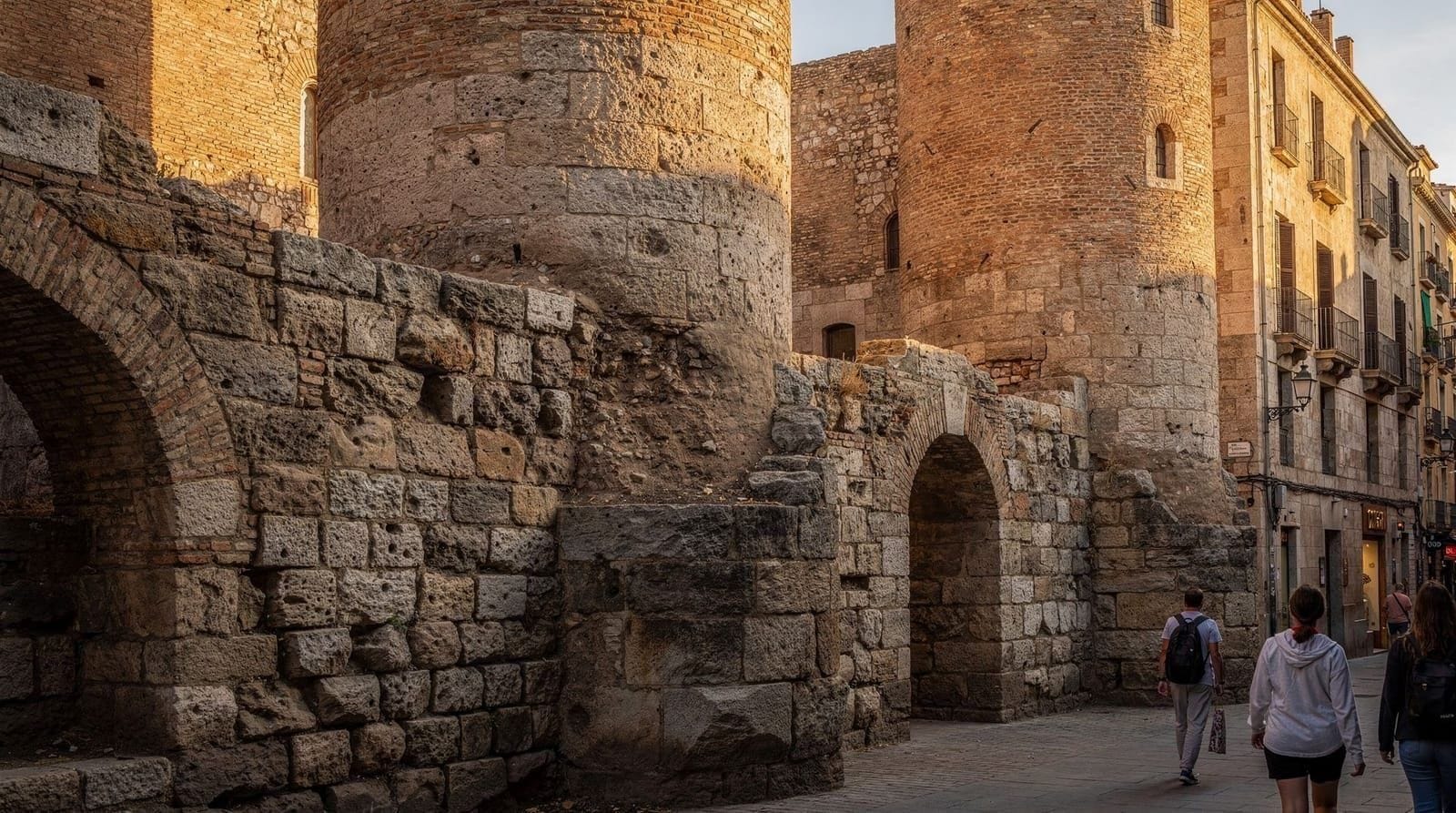
- Roman temple of Augustus (free, inside the courtyard of the Centre Excursionista de Catalunya on Carrer del Paradís)
- The Cathedral — free in the morning, €9 in the afternoon; the Gothic cloisters with resident geese are accessible both times
- Pont del Bisbe — the Gothic bridge connecting the Palace of the Generalitat across a narrow alley
- Plaça Reial — the arcaded square; best as a 15-minute pass-through rather than a destination (restaurant prices on the square are high)
Cross into El Born and finish at the Picasso Museum if you have a ticket, or just walk the streets around Carrer del Rec and Carrer dels Flassaders, which have the highest density of good independent restaurants in the city.
How to handle queues at attractions even with timed entry
Pre-booking a timed entry slot does not mean there is no queue — it means your queue is at the bag security check and QR code scan, not at a ticket window. Here is how to handle this efficiently.
Have your QR code offline. Download your confirmation email’s QR code to your phone gallery (not just in the booking app) before leaving your accommodation. Venue Wi-Fi at peak entry times is overloaded; app-dependent QR codes that require an internet connection fail regularly. The phone gallery version always works.
Arrive 10–15 minutes before your slot. The security bag scan at the Sagrada Família, Casa Batlló, and La Pedrera all take 3–5 minutes per group. Arriving exactly at your slot time means the first 10 minutes of your visit are still in the entrance queue. Arriving early puts you through security before your slot time so you enter the attraction the moment it opens.
At Park Güell: The main entrance check at the Monumental Zone is often faster than at the Sagrada Família because the security footprint is smaller. However, the walk from the bus stop to the entrance takes 8–10 minutes up a slope. Account for this in your arrival timing.
Large bags and backpacks: All major Barcelona attractions require bag checks. Large backpacks slow the security process for your group. Bring a small day bag rather than a full backpack; leave luggage at the hotel.
If you miss your slot: Sagrada Família allows a 15-minute grace period on most ticket types. Park Güell’s Monumental Zone has a 30-minute grace period. If you miss beyond the grace period due to circumstances outside your control (metro delay, illness), contact the attraction’s customer service — cancellation policy allows rescheduling in some circumstances, though not in peak season.
The Montjuïc block: a half-day that often becomes a full one
Montjuïc (the hill south of the city centre) is more time-consuming to reach than it appears on the map. Allow a full half-day minimum if you plan to visit more than one thing there. The combination that works well:
Paral·lel metro → Funicular de Montjuïc → Fundació Joan Miró (allow 1.5–2 hours) → walk across to MNAC for the Romanesque collection (1–2 hours) → cable car back or walk down to Barceloneta. Total: 4–5 hours.
The Montjuïc cable car from Barceloneta offers a scenic approach from the port side, though it adds time. The Font Màgica show (Thursday–Sunday evenings, 20:30, May–October) is worth engineering your timing around if you are in the area in the evening.
Day-trip logic: which ones work in how long
Day trips from Barcelona are excellent but require realistic timing:
Works as a half-day: Sitges (30–40 min by Rodalies; beach town, easy return by evening train)
Needs a full day but is worth it: Montserrat (50 km, 1 hour by FGC + rack railway; monastery, Black Madonna, trails), Girona (37–40 min by fast train; medieval Jewish quarter, city walls, cathedral)
Too far for a comfortable day trip: Figueres/Dalí Museum (1h50 each way by regional train); Cadaqués (2h30 by car or bus); Andorra (3h30+ by bus). These need an overnight or should be left to a dedicated Catalonia circuit.
For three-day visits, skip day trips unless Montserrat is a specific priority. For four-day visits, one day trip is natural. Five days supports two.
What kills a Barcelona day
The most common single-day failure modes, in order:
Not having offline access to your QR ticket. Venue Wi-Fi is unreliable at peak times; several travellers per day at every major Barcelona site discover their ticket app won’t load when they reach the gate. Download QR codes to your phone gallery before leaving the hotel.
Underestimating La Boqueria congestion. The market is worth seeing but is genuinely uncomfortable between 11:00 and 14:00 on weekends. If you want to buy from the produce and cheese stalls, go on a weekday at 10:00. If you want to eat at the counter stalls, expect long waits and tourist-facing prices. Mercat de Santa Caterina in El Born is a better food market with a quarter of the crowds.
Planning too many attractions per day. Barcelona’s distances are deceptive on maps. Sagrada Família to Park Güell looks short but requires a bus or taxi and 20–30 minutes. Park Güell to the Gothic Quarter is metro-only, another 30–40 minutes including the walk. Three major attractions in a day is comfortable; four is pushing it; five means you spend more time in transit than at any destination.
Booking reseller tickets. Third-party reseller sites add €5–15 per ticket for the same timed entry slots. For a family of four at the Sagrada Família, that is €20–60 extra for nothing. Always use official sites: sagradafamilia.org for the basilica, parkguell.barcelona for Park Güell, casabatllo.cat for Casa Batlló, lapedrera.com for La Pedrera. See the tourist-trap guide for the full picture.
Beaches and seafront: when to build them in
Barceloneta and the city beaches are best on weekday mornings in June and September — crowded but manageable. Weekend afternoons in July and August are not recommended unless you enjoy being packed in. The beach itself is pleasant at most times; the restaurants directly on the beach front are uniformly overpriced and mediocre. Walk one block inland from the sand for dramatically better quality at lower prices. For the full honest picture of Barceloneta dining, see the paella and food trap guide.
Building a 3-day, 4-day and 5-day skeleton
Different trip lengths call for genuinely different itinerary shapes, not just “the same plan with extra padding.” Here is a realistic skeleton for each.
3 days: Day 1 — Sagrada Família (09:00) and Park Güell in the afternoon. Day 2 — Casa Batlló or La Pedrera in the morning, Gothic Quarter and cathedral in the afternoon, El Born or Poble-sec in the evening. Day 3 — Montjuïc (Miró and MNAC) in the morning, Barceloneta beach in the afternoon if weather allows, or the Picasso Museum as an indoor alternative. This skeleton front-loads the two non-negotiable bookings and leaves the third day flexible.
4 days: Add either a half-day trip to Sitges or a full day dedicated to slower exploration — Gràcia’s neighbourhood streets, a longer Eixample Modernisme walk taking in the full Manzana de la Discordia, or a more relaxed beach day. Four days is also the point where booking Casa Vicens as a third Gaudí stop starts to make sense without feeling rushed.
5 days: A genuine day trip becomes worthwhile — Montserrat or Girona rather than the shorter Sitges option. Five days also allows a proper split between the two Gaudí days described above rather than compressing them, plus a dedicated food-and-market day combining La Boqueria, El Born tapas and a cooking class if that interests you.
The common thread across all three lengths: the two mandatory bookings (Sagrada Família, Park Güell) anchor day one and two regardless of total trip length, and everything else scales up or down around them.
What changes across the seasons
Barcelona’s itinerary logic shifts meaningfully with the season, beyond the obvious swimming-weather question.
Spring (April–May): The best all-round season for itinerary flexibility — mild temperatures make full days of walking comfortable, crowds are lighter than summer at every major site, and queue times drop noticeably. Sant Jordi (23 April) is worth timing a trip around if you can; it is one of Barcelona’s most charming annual traditions, with book and rose stalls filling Las Ramblas and the Rambla de Catalunya.
Summer (June–August): Heat becomes the dominant planning constraint. Structure days around the coolest hours for walking (morning and evening), reserve the hottest midday hours for indoor museums or a shaded lunch, and expect every major site to be at or near capacity. Water and shade planning genuinely matters in July and August in a way it does not the rest of the year.
Autumn (September–October): A slightly overlooked season that combines summer-warm sea temperatures (see the beaches guide) with cooling air temperatures and thinning crowds after early September. La Mercè (late September) adds a major free festival to the mix if your dates align.
Winter (November–March): The quietest season by a wide margin — shorter queues, lower accommodation prices, and a genuinely different, more local atmosphere in the Gothic Quarter and Gràcia. The trade-off is shorter daylight hours (plan outdoor sightseeing for the middle of the day) and beach-adjacent activities becoming purely a walking, not swimming, proposition. Christmas markets around the cathedral (Fira de Santa Llúcia) and the Three Kings Parade in early January are worth building a winter itinerary around if your dates fall in that window — both are genuinely local traditions rather than tourist-oriented add-ons.
Solo travellers versus groups: itinerary adjustments
A solo traveller’s Barcelona itinerary benefits from slightly different pacing than a couple’s or family’s. Meals are the main adjustment: Spanish restaurant culture is built around shared plates and late dinners in groups, which can make solo dining feel more exposed than in cities with a stronger counter-seating or solo-dining tradition. Tapas bars with bar-height counter seating (common in El Born and Gràcia) solve this naturally — you eat facing the action rather than at an empty table for one. Booking guided tours for the major sites also gives solo travellers a built-in social element that independent visits do not.
Groups of four or more should budget extra transition time between sights that independent duos do not need — coordinating bag checks, bathroom breaks and photo stops at each attraction adds up across a full day. If you are travelling as a larger group, building in a 15–20 minute buffer between each booked time slot avoids the cascading lateness that a large group’s naturally slower pace can create, and consider splitting into two smaller groups for time-sensitive bookings like Sagrada Família’s early slot if coordinating everyone at once proves difficult, and nominate one person to hold all the QR codes offline rather than relying on each person’s own signal at the entrance — a single phone with everyone’s tickets saved is more reliable than five phones each hoping for a connection.
The Eixample grid as navigation shortcut
The Eixample’s distinctive chamfered-corner grid was engineered by Ildefons Cerdà in the 1850s. The diagonal cuts at every intersection create octagonal blocks that are genuinely useful for navigation: every block is the same size (113 metres per side), the streets run consistently at 45 degrees to the compass, and the wide boulevards are easy to walk with minimal obstruction. If you are staying in or near the Eixample, learn two cross-streets and you can navigate the whole grid without a map.
The main Eixample orientation markers: Sagrada Família is at the top-right of the grid (northeast); Plaça Catalunya at the bottom-left (southwest); Passeig de Gràcia runs diagonally through the middle. Walking from Sagrada Família to Passeig de Gràcia takes about 25 minutes at a moderate pace.
Good itinerary planning in Barcelona comes down to one rule: book before you plan. Lock in Sagrada Família and Park Güell timed slots first, then build the rest of your days around those anchors. Everything else in the city is flexible.
Frequently asked questions about Barcelona itinerary tips
In what order should I visit Barcelona's major sites?
Start with Sagrada Família first thing (09:00 slot) — best light and shortest queues. Park Güell works well same-day in the afternoon or first thing on day 2. Casa Batlló and La Pedrera are walkable from each other on Passeig de Gràcia; pair them on a single afternoon. Save the Gothic Quarter and El Born for late afternoon and evening when the atmosphere peaks.Can I combine Sagrada Família and Park Güell on the same day?
Yes, though it makes for a full day. From the Sagrada Família, bus 116 reaches Park Güell in about 15 minutes. Allow 2–2.5 hours for the basilica and 1.5–2 hours at Park Güell (30 minutes in the Monumental Zone, the rest exploring the free areas). Add travel time and you have a 6–7 hour Gaudí day.What is the best time of day to visit Sagrada Família?
The first morning slot (09:00) has the best light through the stained glass, particularly the Nativity façade's interior. The Nativity side faces east and is flooded with coloured light in the morning hours. By noon the diffusion is less dramatic.Should I book a guided tour or go independently to the major sites?
For Sagrada Família, the included audio guide is genuinely excellent — a guided tour adds context on symbolism but is not essential. For Park Güell, independent visits work well with the audio guide app. For the Gothic Quarter, a 2-hour walking tour is valuable because the layers of history (Roman, medieval, 20th-century) are not obvious without context.How do I avoid the worst queues in Barcelona?
Pre-book timed entry for every major attraction — there are no worthwhile walk-up options at the big four (Sagrada Família, Park Güell, Casa Batlló, La Pedrera). Arrive 10–15 minutes before your slot with the QR code available offline. For La Boqueria market, go at 10:00–11:00 on a weekday, not at midday or on weekends.Which neighbourhood is best for tapas in the evening?
El Born for a slightly upscale local experience (€20–30/head with drinks). Poble-sec's Carrer de Blai for pintxos at €1.50–2 each — Barcelona's best budget eating street. Gràcia for a neighbourhood feel with lower tourist density. Avoid the Gothic Quarter tourist corridor in the evening where menu prices double.Is it worth spending a morning on La Rambla?
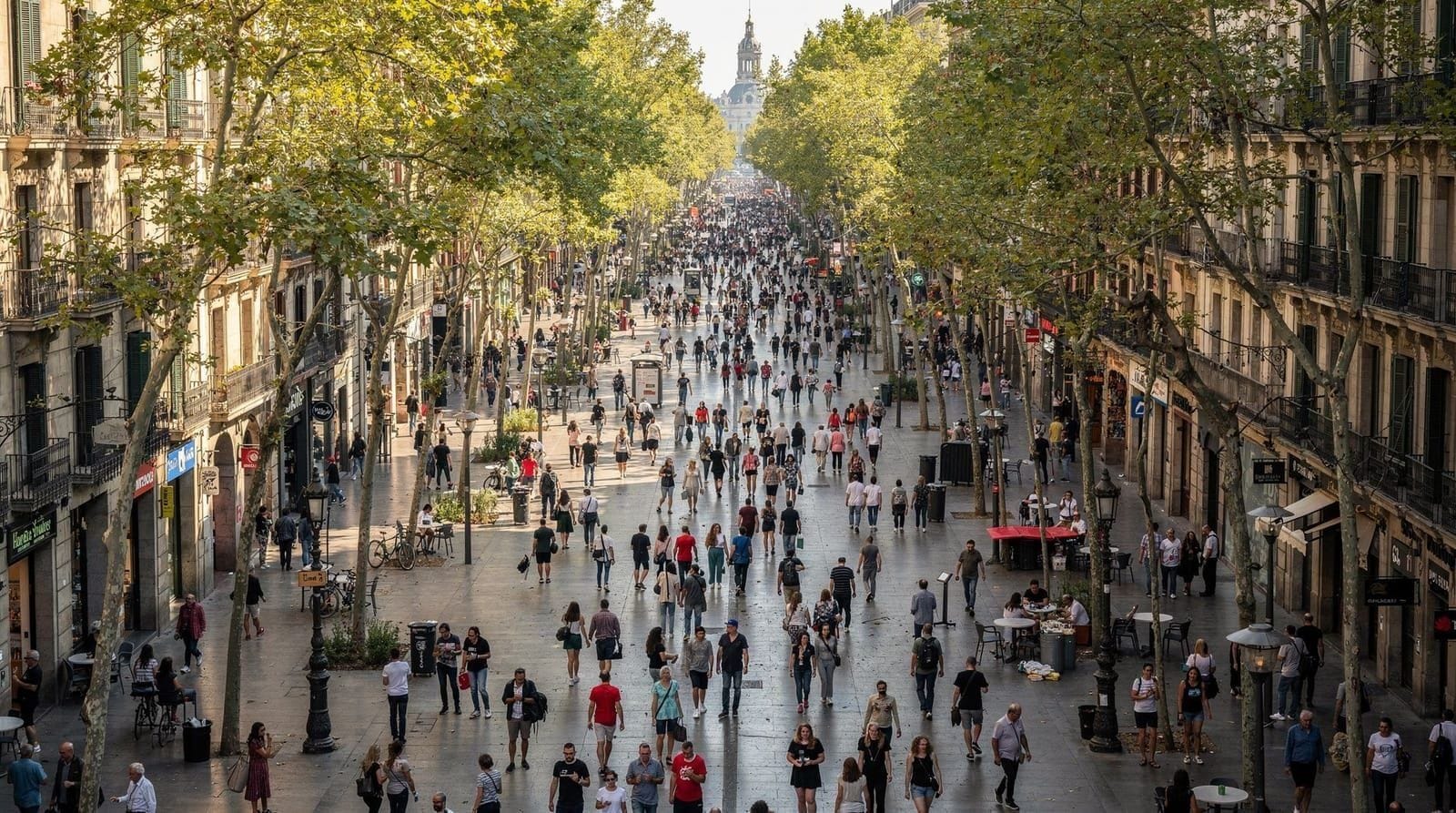
A 20-minute walk from Plaça Catalunya to the port is worthwhile — the Miró mosaic in the pavement, the Font de Canaletes, and the architecture of the Liceu opera house are genuine sights. But do not linger, do not eat at any restaurant on the boulevard, and keep your phone and bag secured. One morning pass is plenty.
Top experiences
Bookable activities with verified prices and instant confirmation on GetYourGuide.
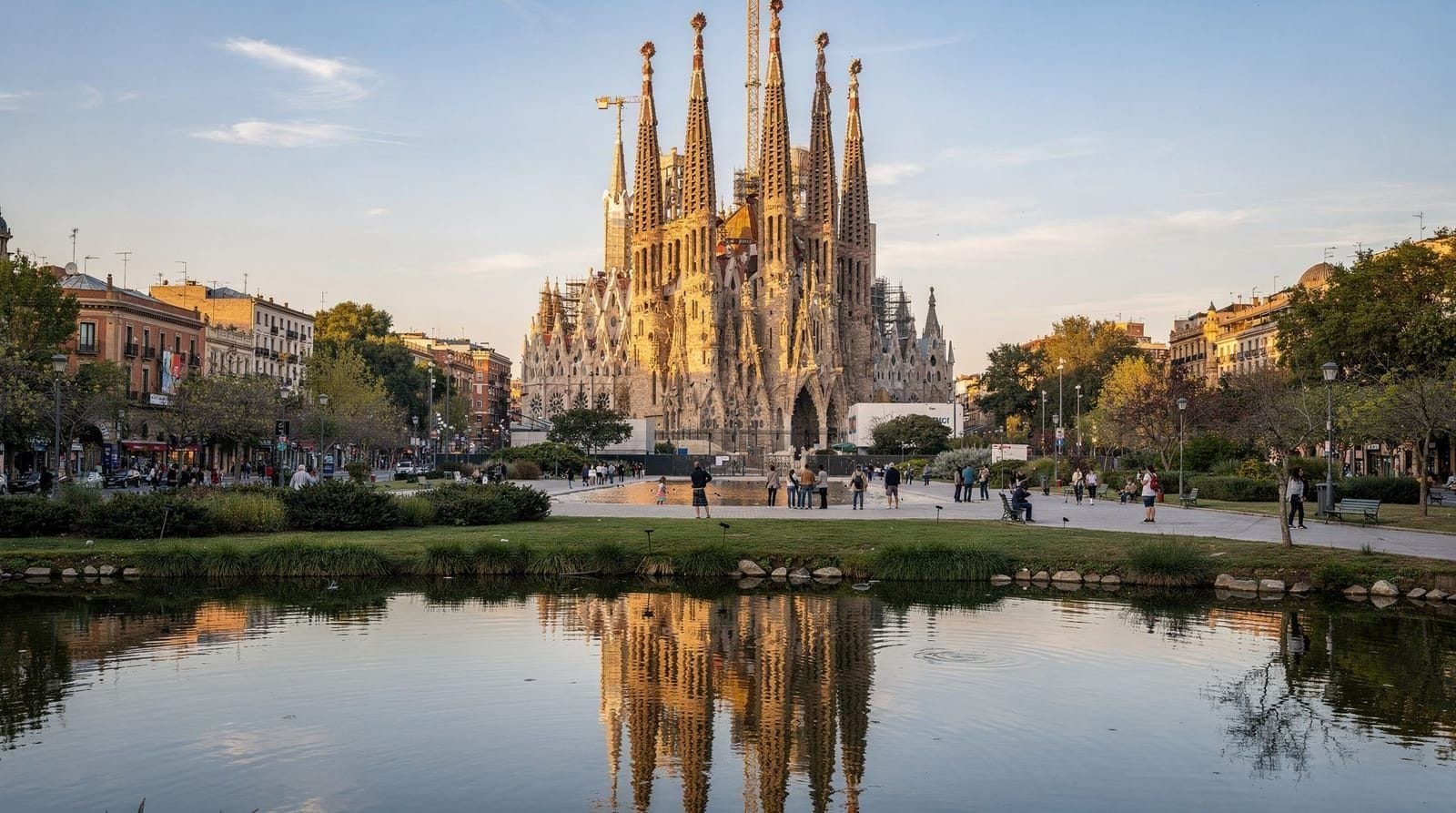
Barcelona: Sagrada Família skip-the-line ticket with audio guide
- Free cancellation
- Instant confirmation
Barcelona: Park Güell guided tour with fast-track ticket
- Free cancellation
- Small group
Barcelona: 2-hour Gothic Quarter walking tour
- Free cancellation
Barcelona: Gaudí highlights eBike tour
- Free cancellation