How many days in Barcelona do you need?
Barcelona: City Sightseeing hop-on hop-off bus 1 or 2-day ticket
Duration: Full day
- Free cancellation
How many days should I spend in Barcelona?
Three full days covers the major Gaudí sites, the Gothic Quarter, El Born, and Barceloneta. Four to five days adds day trips and proper neighbourhood exploration without rushing.
The single most common planning mistake in Barcelona is underestimating the city’s size and the logistics of pre-booking timed-entry sites. Three days is the minimum that makes the trip worthwhile; more days compound the return significantly.
| Minimum | 3 full days for the essentials |
| Sweet spot | 4–5 days, adds day trips and neighbourhood depth |
| Cost driver | Fixed costs (airport transfer, transport card) amortise better on longer stays |
| Book ahead | Sagrada Família, Park Güell — always |
| Best base | Eixample or El Born |
Trip length at a glance
| Days | What fits | Who it suits |
|---|---|---|
| 2 days | Sagrada Família, Park Güell, Gothic Quarter — rushed | Layover or add-on to another city |
| 3 days | Gaudí sites, Gothic Quarter, El Born, Barceloneta | First-time visitors on a standard trip |
| 4 days | All of the above plus Montjuïc properly and one day trip | Most comfortable first-time pace |
| 5+ days | Adds Gràcia, Sant Pau, Montserrat or Girona, deeper museums | Repeat visitors or slow travellers |
What 3 full days in Barcelona actually looks like
Three days is the right baseline for a first visit. Here is what fits realistically, with honest time allocations.
Day 1 — Sagrada Família and the Eixample
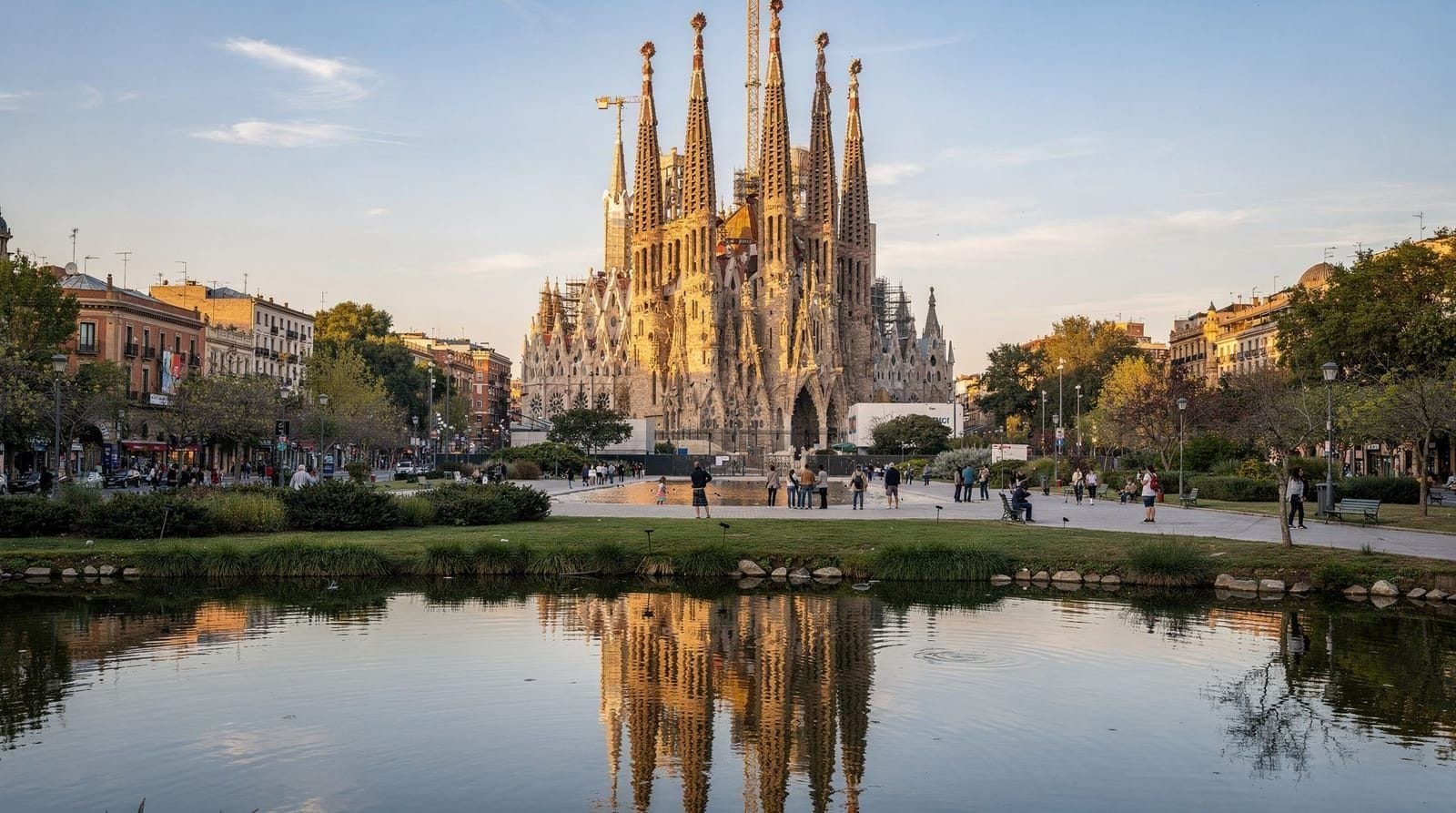
Start at the Sagrada Família (allow 2–2.5 hours including tower access if you booked it). The audio guide is superb and worth the time. From there, walk southwest along Carrer de Provença to Passeig de Gràcia, where the three Modernisme masterpieces sit within one block: Casa Batlló, Casa Amatller, and Casa Lleó Morera — the so-called Manzana de la Discordia. You can admire all three facades for free; Casa Batlló entry is a separate timed ticket if you booked it.
Lunch on Passeig de Gràcia or in the Eixample interior streets (avoid the boulevard restaurants themselves — overpriced for the quality). Afternoon at La Pedrera if you have a ticket, or a walk through the wider Eixample grid. Evening tapas in the Eixample or nearby Gràcia neighbourhood.
Day 2 — Park Güell, the Gothic Quarter and El Born
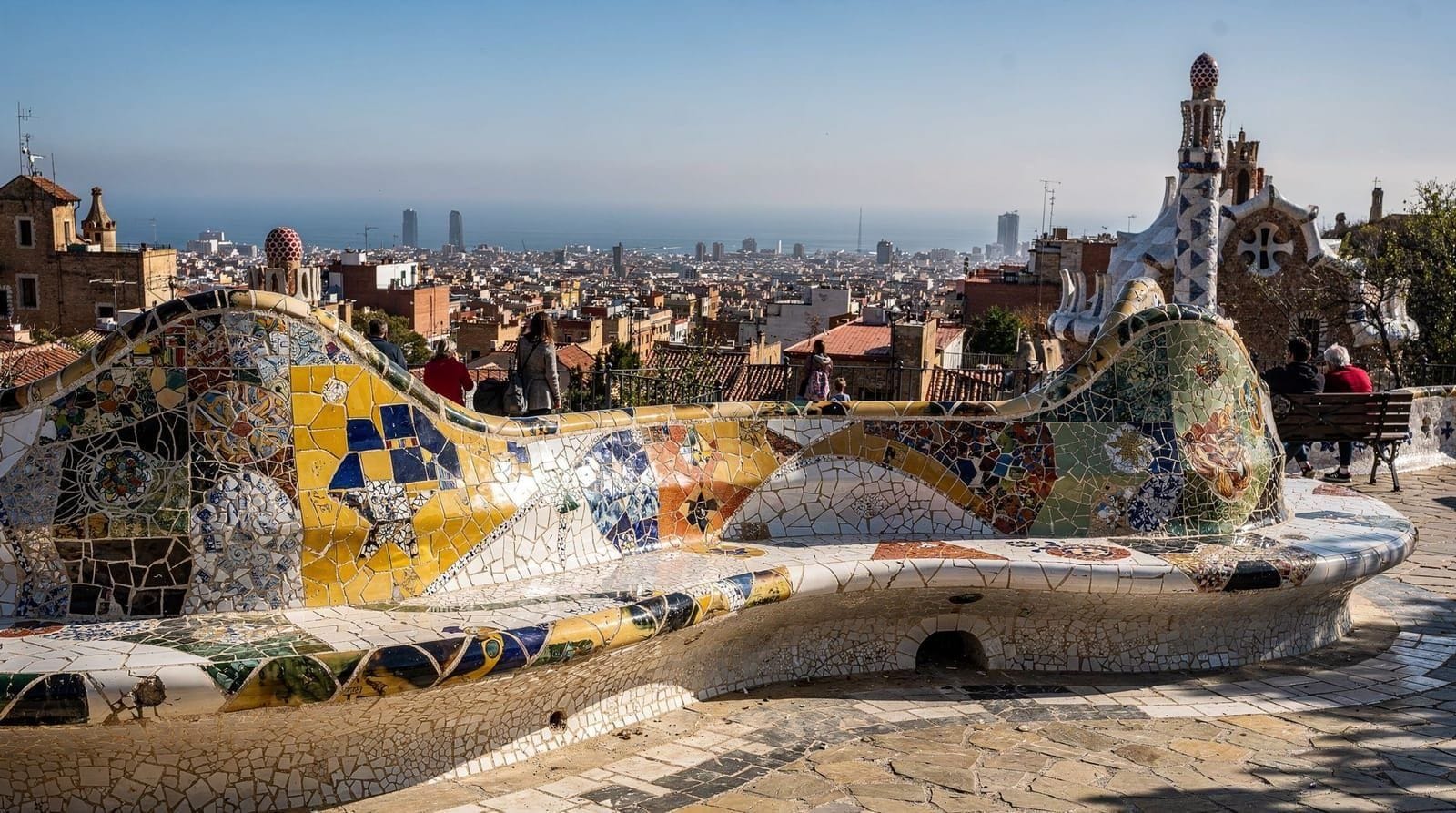
Early morning at Park Güell is the right approach. Your Monumental Zone timed slot should be booked for 09:00 or 09:30 before crowds build (see what is free versus paid). After your 30-minute Monumental Zone visit, explore the free forested paths and terraces. Head back to the centre by late morning.
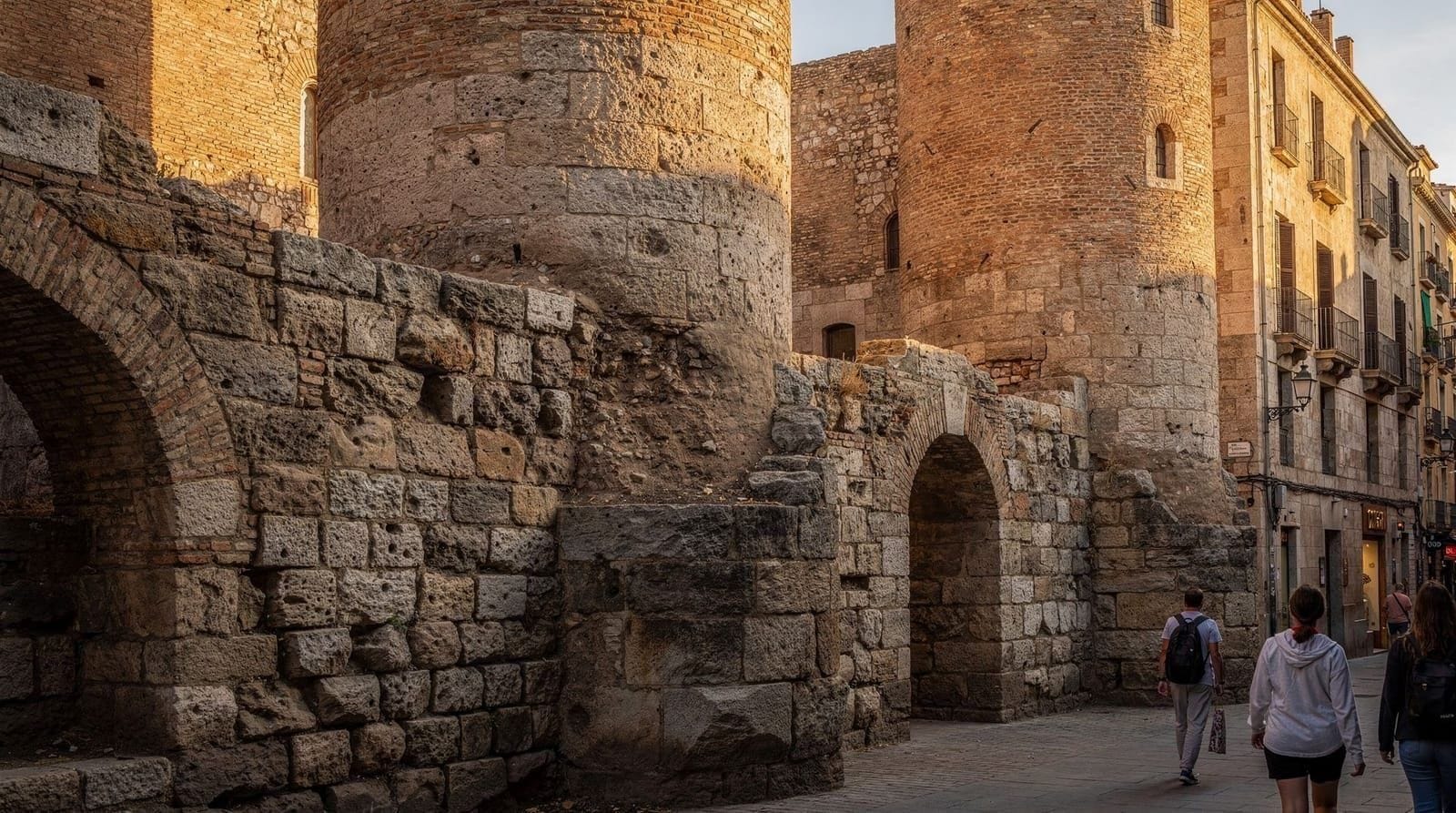
Afternoon in the Gothic Quarter: the Roman temple of Augustus (free), the Cathedral, Pont del Bisbe, Plaça Reial. Cross into El Born for the Picasso Museum (book timed entry or visit on a free Thursday evening if timing allows). Dinner in El Born, which has the densest concentration of genuinely good mid-range restaurants in the city.
Day 3 — Barceloneta, Montjuïc and a neighbourhood evening
Morning at Barceloneta — the beach, the seafront promenade, and if you want to eat, the small streets inland from the beach rather than the overpriced strip directly on the sand. Afternoon up to Montjuïc by cable car or funicular: the MNAC collections, Fundació Joan Miró, and the views over the port from the Castell. The Font Màgica (Magic Fountain) runs Thursday–Sunday evenings 20:30–21:30 from May through October, free.
Evening in Poble-sec on Carrer de Blai — the best pintxos street in the city, significantly cheaper than the Gothic Quarter tapas circuit.
Travel times between attractions: the honest numbers
Barcelona looks compact on a map but is larger in practice than first-time visitors expect. Here are the realistic travel times between the main sites, including walking from metro or bus stops to the entrance.
Sagrada Família to Park Güell: Bus 116 from Avinguda de Gaudí takes approximately 15–20 minutes door to door, including the walk to the bus stop and up to the park entrance. By taxi, 10–12 minutes. By metro, there is no direct route — the combination L2 to Lesseps then 15 minutes on foot uphill totals 35–40 minutes.
Park Güell to the Gothic Quarter: Metro from Lesseps (L3) to Liceu takes 20 minutes including the downhill walk to the station. Direct taxi 15 minutes. No direct bus.
Sagrada Família to Passeig de Gràcia: On foot 25 minutes along Avinguda Diagonal or Carrer de Mallorca. By metro L2/L3 three stops, 8 minutes. Easily walkable.
Gothic Quarter to El Born: On foot 8–10 minutes through Carrer de la Boqueria or Via Laietana. The two neighbourhoods share a border.
City centre to Barceloneta beach: On foot from the Gothic Quarter, 15–20 minutes. By metro L4 to Barceloneta, 10 minutes including walking time.
City centre to Montjuïc: Metro to Paral·lel then funicular, total 20–25 minutes to the funicular top station. From there, 10 minutes on foot to the Fundació Joan Miró.
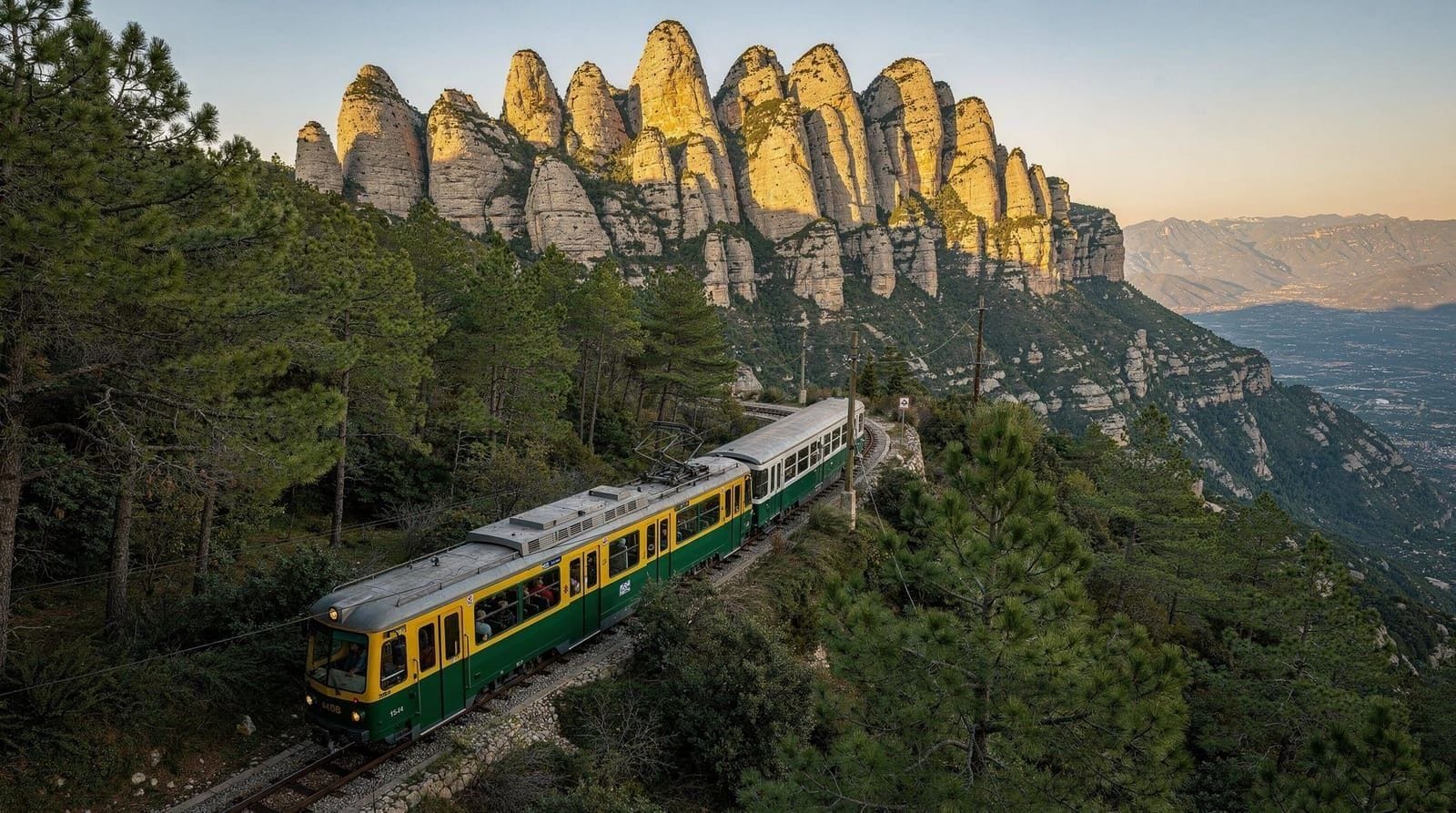
City centre to Montserrat: FGC train from Plaça Espanya to Monistrol de Montserrat, then rack railway or cable car to the monastery. Total: approximately 75–90 minutes each way depending on connection timing.
These times compound through a day. Three attractions across different neighbourhoods typically means 45–75 minutes of transit time. Factor this when planning: a day with four attraction visits across the city is a transit-heavy day.
Neighbourhood-by-neighbourhood time allocation
Different areas of the city demand different time budgets. Here is an honest allocation for each major zone.
Sagrada Família and surrounds: The basilica alone is 1.5–2.5 hours depending on whether you have tower access. The exterior walk-around requires another 20–30 minutes. There is little else in the immediate vicinity worth time — the surrounding streets of the Eixample are residential and commercial rather than tourist-facing. Budget 2.5–3 hours total for this zone.
Eixample (Passeig de Gràcia corridor): Casa Batlló interior (if you have a ticket) is 1–1.5 hours. La Pedrera interior 1–1.5 hours. The three free facades on the Manzana de la Discordia is 20–30 minutes. Budget 3–4 hours for a full Passeig de Gràcia afternoon with both major paid interiors.
Gothic Quarter: A thorough exploration of the Roman ruins, Cathedral, Jewish Quarter (El Call), Pont del Bisbe, and Plaça Reial takes 2–3 hours of walking at a cultural pace. An additional hour if you enter the Cathedral. The Gothic Quarter is also an evening destination — the streets have a completely different character after 19:00 when the light drops.
El Born: The Picasso Museum alone is 1.5–2 hours if you engage with the permanent collection properly. The surrounding streets — Carrer de Montcada, Carrer del Rec, the Mercat de Santa Caterina — add another hour of wandering. El Born is also the best dinner neighbourhood, so factor 2 hours for an evening meal.
Barceloneta beach: A morning at the beach — arriving at 09:30, swimming, coffee on the promenade, and a light lunch in the inland streets — is a natural 3-hour block. Extending to a full beach day in summer adds another 2–3 hours.
Montjuïc: This is the area that consistently takes longer than visitors plan. Fundació Joan Miró is 1.5–2 hours. MNAC (particularly the Romanesque collection) is 2–3 hours. Adding the castle and cable car, the route becomes a 5–6 hour full day rather than a 2-hour afternoon.
Gràcia: A morning or afternoon of coffee, Mercat de l’Abaceria, independent shops on Carrer de Verdi, and the squares (Plaça del Sol, Plaça de la Vila de Gràcia) is a comfortable 2–3 hours. Gràcia does not have major paid attractions — it is a neighbourhood experience.
Budget comparison by trip length
The length of your stay significantly affects your per-day cost, mostly through fixed arrival/departure costs.
3 days: Airport transfers represent a larger fraction of total spend. If you are arriving and departing by metro or Aerobus, two airport round trips (€15.50 via Aerobus) divided over 3 days is €5.17/day in transfer costs. Hotel rates for a 3-night stay are generally the same nightly rate as for 5 nights. Total daily budget comparable to baseline estimates.
4–5 days: The fixed costs (airport transfers, initial supermarket run, city transport card) amortise over more days. A T-Casual metro card (€13 for 10 trips) used over 5 days works out to €1.30/trip versus the same 10 trips used in 3 days. Day trips in this range add a fixed day-trip cost (Montserrat is approximately €30–35 all-in for train, rack railway and monastery) spread against what would otherwise be a city day.
Budget summary by stay length:
- 3 days: approximately €70–180/day depending on tier, not including flights
- 4 days: the same total budget stretched more efficiently per day
- 5 days: the fixed-cost dilution is meaningful, particularly for budget travellers
Hotel location advice by trip length
Where you stay determines how much time you lose to transit. The right choice varies by trip length and priorities.
For a 3-day trip focused on Gaudí and the old city: The Eixample is the strongest base. The block between Passeig de Gràcia and Carrer d’Urgell, roughly centered on Carrer d’Aragó or Carrer de Provença, puts you within 20 minutes on foot of both Sagrada Família and the Gothic Quarter. Metro access to everything else is easy. Mid-range hotels in this zone run €80–130/night outside peak season.
For a 3-day trip focused on food and culture: El Born is the superior base. You are 5 minutes from the Picasso Museum, 10 minutes from the Gothic Quarter, 15 minutes on foot from Barceloneta, and surrounded by the best restaurant concentration in the city. The neighbourhood is louder at night than the Eixample; rooms facing internal courtyards are quieter.
For a 4–5-day trip: The Eixample remains the most practical base for longer visits because of its centrality to all areas. At four or five nights, the occasional longer metro or taxi journey to reach Gràcia or Montjuïc does not impede the itinerary significantly.
What to avoid: The Gothic Quarter itself, while atmospheric, has narrow streets that are luggage-unfriendly and accommodates hotels that are often louder and less well-lit than their stars suggest. Hotels directly on La Rambla command a location premium with significant noise drawbacks. The Barceloneta neighbourhood is pleasant but requires 20–25 minutes of transit to reach the Gaudí sites.
What first-time versus repeat visitors prioritise
The difference between a first and repeat visit determines which attractions to prioritise and what to skip in favour of depth.
First visit priorities: Sagrada Família with tower access is non-negotiable — there is nothing comparable in Europe. Park Güell Monumental Zone is worthwhile. One of Casa Batlló or La Pedrera (not necessarily both on a short trip). The Gothic Quarter on foot and El Born for dinner. A morning at Barceloneta beach in season. La Rambla for one 25-minute walk, not more.
Repeat visitor priorities: The second visit typically reveals Barcelona’s neighbourhood character. Gràcia for a morning of genuine local life. Poblenou — the former industrial district east of Barceloneta, now home to restaurants, design studios, and the Rambla del Poblenou — is a completely different urban texture from the tourist centre. Sant Pau Recinte Modernista (the former hospital complex by Domènech i Montaner, contemporary with Sagrada Família and arguably as impressive architecturally) is consistently overlooked on first visits. The Palau de la Música Catalana interior is extraordinary. Montserrat or Girona as a day trip.
What first-time visitors often skip but should not: The Gaudí Crypt Museum in the basement of the Sagrada Família (included with entry, low crowds, excellent). The free forested paths of Park Güell beyond the Monumental Zone. The MNAC Romanesque collection (one of the most important in the world; takes a full 2 hours to appreciate). Sardana dancing on Sunday mornings in front of the Cathedral.
The honest logistics warning
Pre-booking is not optional on a 3-day trip — it is the difference between seeing the Sagrada Família and standing outside it. At minimum, book:
- Sagrada Família timed entry (and tower tickets if you want them) — see the full booking guide for specific lead times
- Park Güell Monumental Zone (mandatory advance booking; no walk-up tickets available)
- Casa Batlló or La Pedrera (dynamic pricing means earlier booking = lower price)
Do not leave these for arrival. Do not assume you can buy them at the gate. And be aware that reseller sites add €5–15 per ticket for the same entry — buy from the official sites. For the full scam picture see tourist traps in Barcelona.
Internal transport time
Barcelona is walkable within districts but not between them. From Sagrada Família to Park Güell is 15 minutes by taxi or 25 minutes on bus 116. From Park Güell to the Gothic Quarter is 30 minutes by metro (with a change). Factor these into your day plans — the tendency to assume you can walk everywhere leads to either rushed visits or missed attractions.
The T-Casual card (€13 for 10 trips, Zone 1) is the right purchase for most 3–4 day trips. For longer stays or airport-to-hotel travel, the Hola Barcelona card (from €18.70 for 2 days) includes airport metro. See the budget guide for the full transport cost comparison.
Managing meals and breaks across a multi-day visit
One of the practical challenges of a Barcelona visit is the gap between tourist meal timing and local restaurant timing. Most mid-range restaurants in the city do not serve lunch before 13:30 and close between 15:30 and 16:00, then reopen for dinner from 20:30 or 21:00. This creates a window in the mid-afternoon where food options narrow to tourist-facing spots that are open continuously.
The practical solution for a 3-day visit: Build your itinerary around the menú del día. Plan to be in a neighbourhood restaurant for lunch between 13:00 and 15:00 — this is the cheapest, highest-quality, and most typically Catalan eating experience available. Two or three courses with wine for €12–16 is the baseline. This also means planning your morning activities to end naturally around 13:00, which works well with the morning-heavy attraction schedule (Sagrada Família at 09:00, Park Güell at 09:30) that the guide above suggests.
Evening eating: The flip side of the late lunch culture is late dinners. Restaurants in El Born, Gràcia, and Poble-sec fill from 21:00 onward. Going to dinner at 19:00 in a neighbourhood restaurant will often find you sitting alone; going at 21:00 puts you alongside the local clientele. For visitors on European or North American schedules, a small snack — pintxos at Carrer de Blai from 19:30, or tapas at a bar — bridges the gap between the afternoon and a 21:00 dinner without discomfort.
Coffee culture: Barcelona coffee is overwhelmingly espresso-based and drunk standing at the bar. A café amb llet (coffee with milk, similar to a flat white) or tallat (coffee with a small splash of milk) at a neighbourhood bar costs €1.30–1.80. The extended sitting with a laptop model that works in north European cities is less natural here — ordering a coffee is expected to take 10–15 minutes, not two hours. This matters for planning: if you want a sit-down mid-morning break, look for a bar with tables (taules) or a terrace (terrassa) rather than a standing bar.
Handling the visit practically: logistics that save time
A few practical logistics that are consistently underestimated on short visits.
Hotel luggage on arrival day: Most hotels allow luggage storage from when they open (typically 10:00) even if your room is not ready until check-in time (usually 15:00). Arriving from the airport, dropping bags at the hotel, and beginning your visit by 11:00 effectively creates a free morning on what would otherwise be a wasted travel day. Confirm this in advance by email — most hotels confirm luggage storage requests the day before.
Pharmacy access: Spanish pharmacies (identified by a green cross) are well-stocked, open until 21:00 or later in central neighbourhoods, and the pharmacists speak sufficient English in tourist areas to advise on common ailments. They dispense some medications available only on prescription in other countries. For sunburn, insect bites, minor injuries, and headaches from walking too far in heat, the nearest pharmacy is faster and cheaper than any tourist first-aid alternative.
SIM cards and connectivity: Physical SIM cards for EU data are available at El Prat Airport (Vodafone, Orange, and others in the arrivals hall) and at phone shops throughout the Eixample and El Born. A 10-day Spanish data-only SIM runs €10–15. Alternatively, EU roaming from a home SIM (if your home country is in the EU/EEA) makes this unnecessary. Airport Wi-Fi at El Prat is free and functional enough for downloading tickets before leaving the terminal.
Cash versus card: Barcelona is almost entirely card-friendly — metro, taxis, restaurants, and shops all accept contactless payment. The main exceptions are La Cova Fumada in Barceloneta (cash only), some smaller pintxos bars on Carrer de Blai, and occasional market vendors. Having €40–60 in cash per day is more than sufficient; there is no need to carry or withdraw large amounts.
Three days is the minimum for a satisfying first visit. Four days is the sweet spot. Five days or more suits those who want day trips and depth. Whatever your timeline, book the Sagrada Família and Park Güell before anything else.
Frequently asked questions about How many days in Barcelona do you need?
Is 2 days enough for Barcelona?
Two days is feasible but tight. You can do Sagrada Família, Park Güell and the Gothic Quarter, but you will feel rushed and miss significant parts of the city. Aim for at least 3 full days.What can you do in 3 days in Barcelona?
A well-planned 3-day trip covers Sagrada Família with tower access, Park Güell Monumental Zone, Casa Batlló or La Pedrera, the Gothic Quarter, El Born with the Picasso Museum, Barceloneta beach and a proper neighbourhood tapas evening. Pre-booking all timed tickets is essential.Is 5 days too long in Barcelona?
Five days is ideal for visitors who want depth: add Montserrat or Sitges as a day trip, explore Gràcia properly, and have time for cooking classes, sailing or one of the deeper museum collections like MNAC or Joan Miró Foundation.Should I combine Barcelona with other Spanish cities?
Barcelona to Madrid by AVE is 2h30 and a natural combination for 7–10 day trips. Alternatively, Barcelona pairs well with Girona, Sitges, or a Costa Brava segment for a Catalonia-focused itinerary without flying.How far is the airport from the city centre?
El Prat Airport is 14 km from the city centre. By Aerobus it is 30–35 minutes to Plaça Catalunya (€7.75). By Rodalies R2 Nord train from Terminal 2, approximately 26 minutes to Passeig de Gràcia (€4.90). By taxi, a flat rate of around €39 applies for journeys to/from the Eixample area.What is the best neighbourhood to stay in for a short trip?
For a 3-day trip, stay in the Eixample or El Born. The Eixample puts you within walking distance of Sagrada Família and the Passeig de Gràcia Modernisme sites. El Born is ideal for Gothic Quarter access and the best restaurant concentration in the city.Can I do day trips from Barcelona on a short visit?
On a 3-day trip, a day trip leaves only 2 days for the city itself — which feels rushed. Save day trips for 4-day-plus itineraries. Montserrat (1 hour each way) is the most efficient day trip if you must choose one on a short visit.
Top experiences
Bookable activities with verified prices and instant confirmation on GetYourGuide.
Barcelona: Sagrada Família skip-the-line ticket with audio guide
- Free cancellation
- Instant confirmation
Barcelona: Park Güell guided tour with fast-track ticket
- Free cancellation
- Small group
Barcelona: 2-hour Gothic Quarter walking tour
- Free cancellation
Barcelona: Montserrat monastery and natural park day trip
- Free cancellation
- Hotel pickup