Best beaches near Barcelona: beyond the city sand
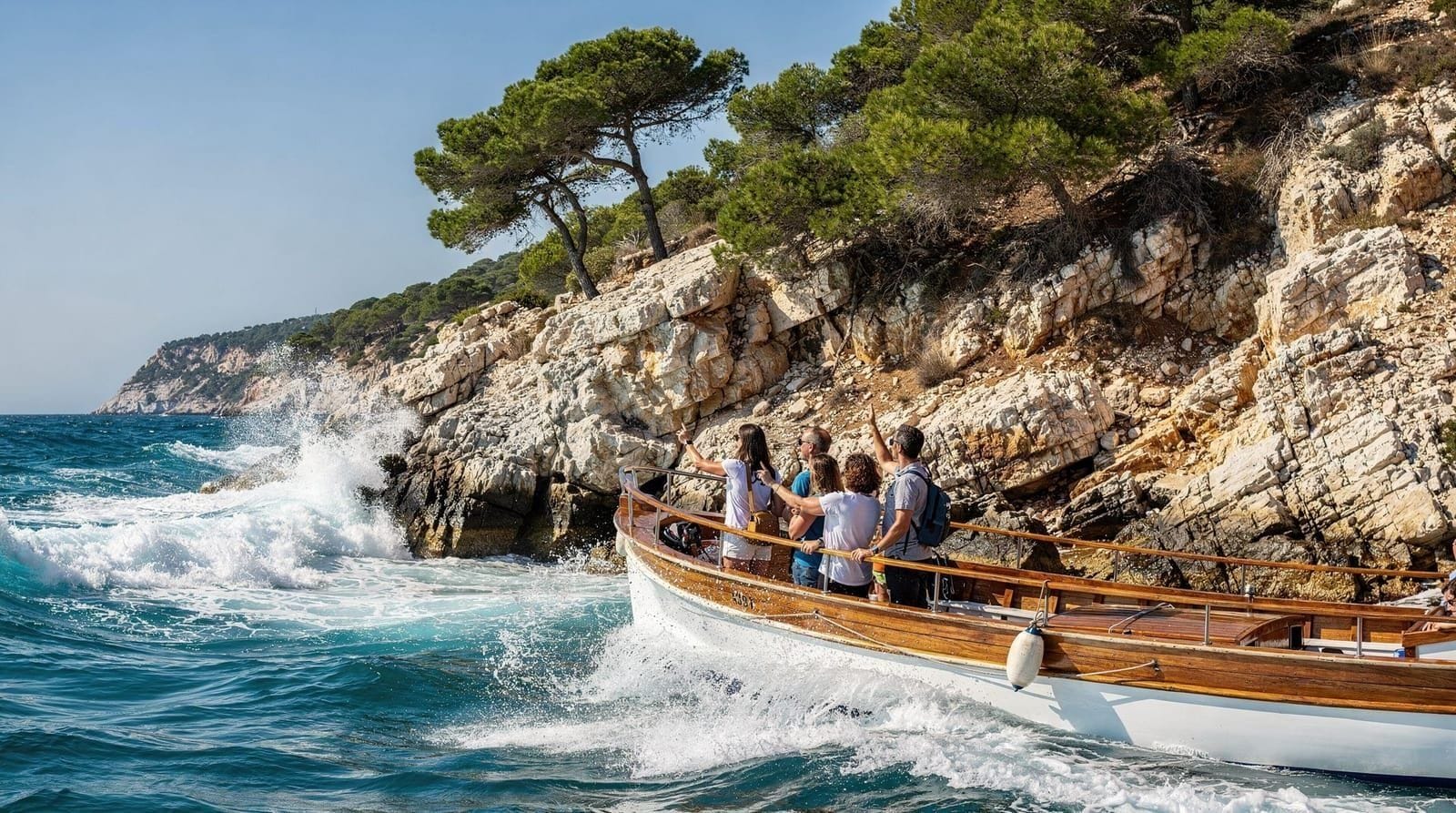
Barcelona: Costa Brava boat ride and Tossa de Mar visit
Duration: 9 hours
- Free cancellation
- Hotel pickup
What is the best beach near Barcelona?
For a combination of scenery, medieval character and accessibility, Tossa de Mar (Costa Brava, 100 km northeast, 1h15 by bus). For sheer ease and elegance, Sitges (35 km south, 30–40 min by train). For isolation and dramatic rocky coves, the beaches around Begur — but these require a car or guided tour.
Barcelona’s city beaches are excellent for their proximity but crowded in high summer and entirely urban in character. The Mediterranean coast north and south of the city offers a different beach experience entirely: fishing villages with medieval fortifications, rocky coves accessible only by boat, long sandy stretches backed by Garraf limestone and pine, and resort towns elegant enough to visit for their own sake.
Within two hours of Barcelona you can reach beaches ranging from the graceful 19th-century resort of Sitges to the medieval castle coves of Tossa de Mar to the isolated rocky inlets of the Costa Brava. This guide ranks them honestly by access, scenery and what kind of day you want.
| Easiest day trip | Sitges — 30–40 min by train |
| Best scenery | Tossa de Mar or the Begur coves |
| Needs a car | Aiguablava, Tamariu, Sa Riera |
| Best month | September — warm sea, thin crowds |
| Budget pick | Castelldefels — same Zone 2 T-Casual fare as Sitges |
Sitges (35 km south, 30–40 min by train)
The easiest and most elegant coastal escape. Sitges has 17 beaches along 5 km of coastline, a Modernisme seafront, and a town that rewards wandering for its architecture and museum quality as much as its sand.
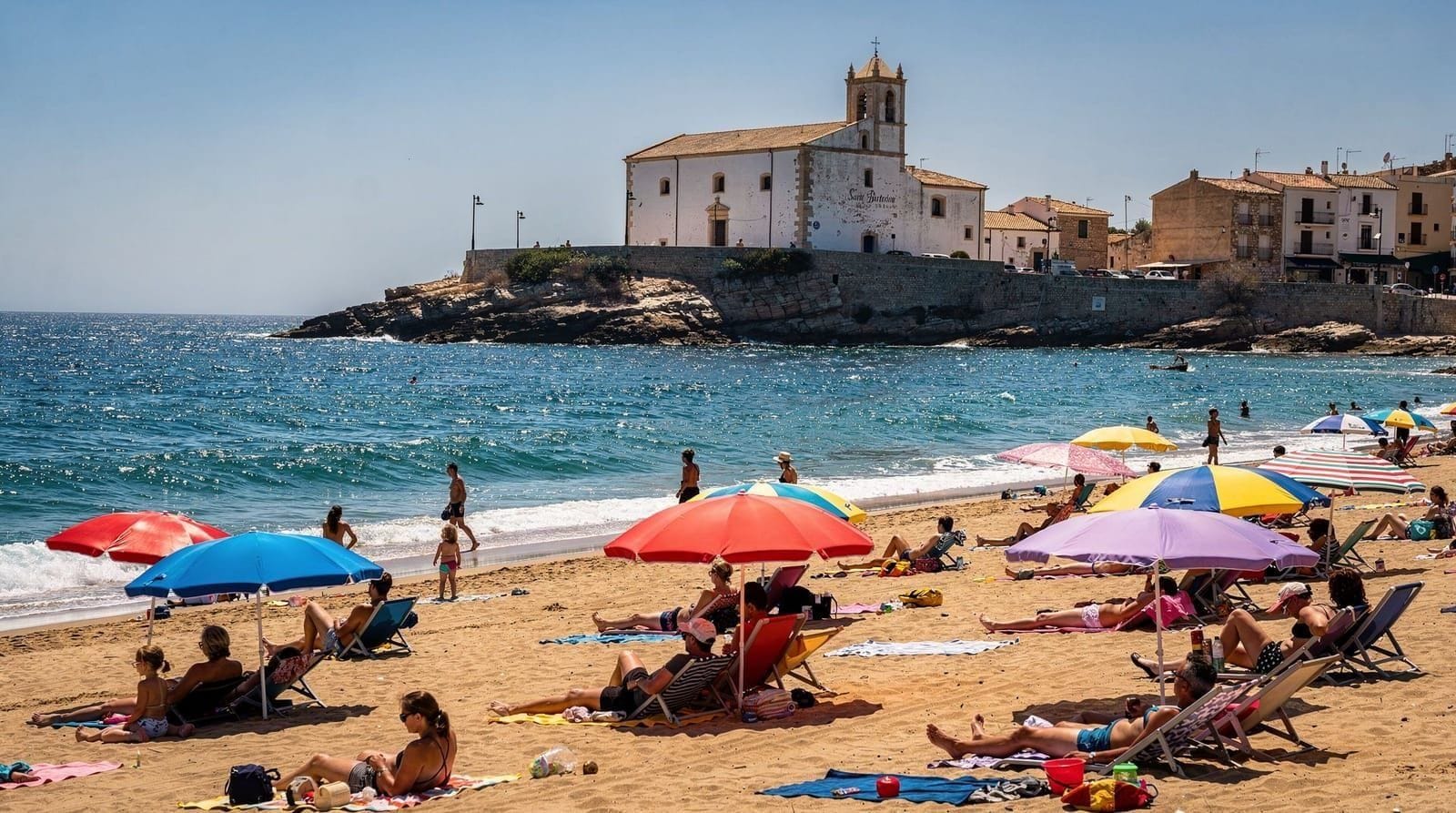
Platja de la Ribera (the main beach): Wide, Blue Flag, backed by the Modernisme promenade and the distinctive white Sant Bartomeu church on its headland. Crowded in August but more manageable than Barceloneta.
Platja del Garraf: One stop west of Sitges on the R2 Sud, a small pebble cove with limited facilities but a dramatic limestone backdrop. The former wine bodega at the beach (19th century, designed by Gaudi’s collaborator Francesc Berenguer) is now a restaurant.
Access: Rodalies R2 Sud from Passeig de Gràcia — 30–40 minutes. T-Casual Zone 2 covers the fare. Simplest beach day trip from Barcelona.
Best for: Architecture lovers, elegant resort beach, LGBTQ+ travellers, museum interest (Cau Ferrat), families wanting a relaxed day.
Tarragona beaches (120 km south, 50 min by train)
Tarragona’s urban beaches sit below the Roman city walls. The main Platja del Miracle, directly below the amphitheatre, is one of the more dramatically situated urban beaches in Spain. Not the finest sand, but the setting with Roman walls above is singular.
Further south towards Salou and Cambrils (15–20 minutes by local train), wider sandy beaches with calmer family character. Cambrils is a pleasant fishing town with good seafood restaurants and a beach less overwhelmed by package tourists than Salou.
Access: AVE from Sants (35 min) or regional train (50 min). Day trip combining Roman Tarragona with beach swimming is very feasible.
Best for: History + beach combinations, families, those already doing the Tarragona day trip.
Tossa de Mar (100 km northeast, 1h15–2h by bus)
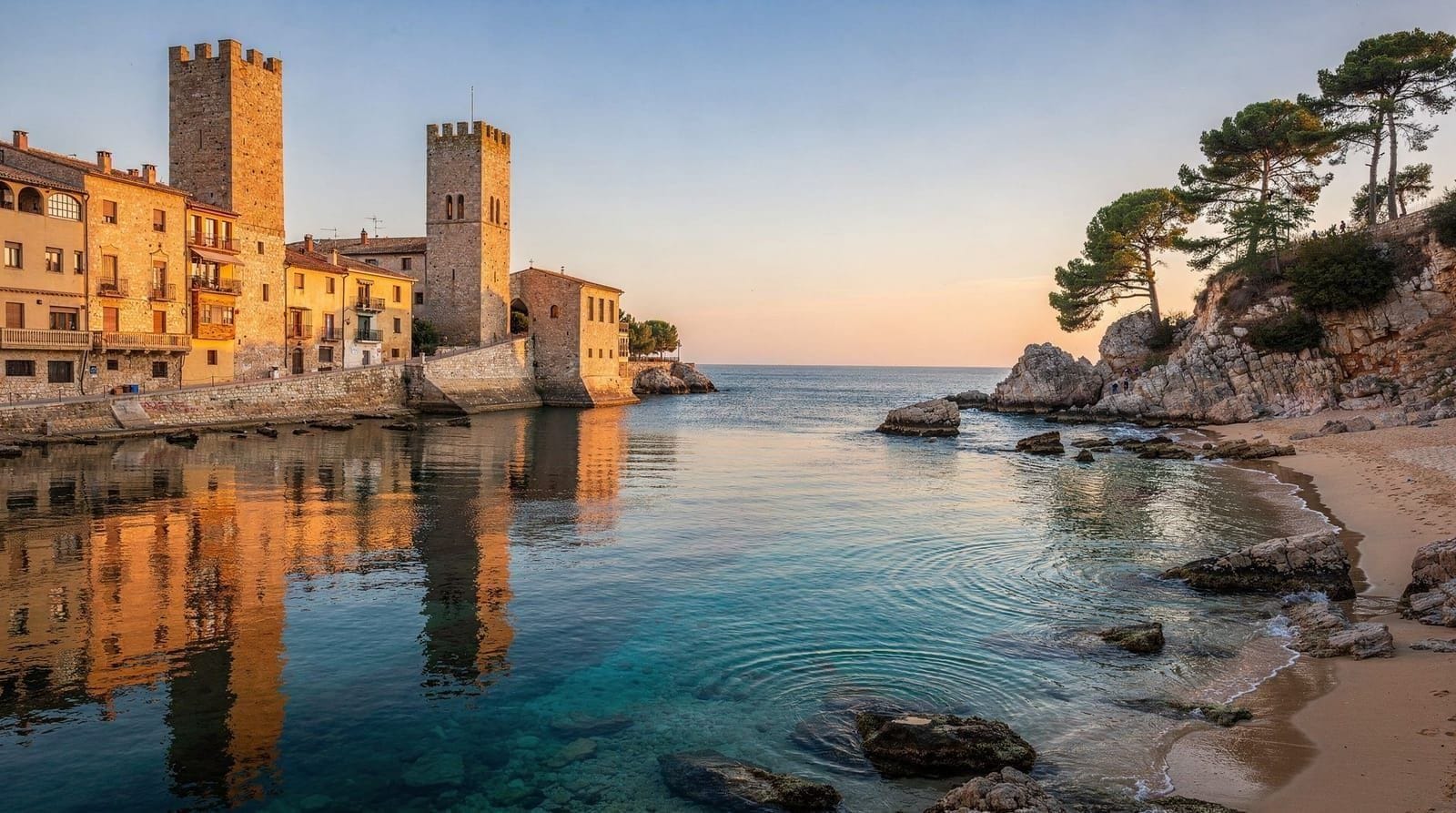
The finest beach town within day-trip range of Barcelona, full stop. The medieval Vila Vella — a 12th-century walled headland with three intact towers above the bay — frames the main beach (Platja Gran) in a way that nothing else on the Catalan coast replicates. The water in the bay is sheltered and clear.
Platja Gran: The main beach below the castle walls. Sandy, Blue Flag, moderately busy in summer but nothing like Barceloneta.
Es Codolar: A small cove on the other side of the castle headland, accessed by a short walk through the Vila Vella. Rockier, quieter, more intimate.
The boat excursions along the coast from Tossa (see our Costa Brava boat trips guide) reveal sea caves and isolated coves inaccessible from land.
Access: SARFA bus from Barcelona’s Estació del Nord — approximately 2 hours. Or train to Girona (37 min by AVE) + bus from Girona to Tossa (45 min) — faster total journey. No car required, but the bus times require planning.
Best for: Medieval beach town character, photography, snorkelling, history-beach combination. The complete Costa Brava experience in one accessible town.
Costa Brava coves (Aiguablava, Tamariu, Begur) — requires car or tour
The finest individual beaches on the entire Catalan coast are clustered around Begur and Cadaqués in the northern Costa Brava. These are rocky pebble coves between limestone cliffs with pine trees to the water’s edge and water in shades of turquoise that seem implausible until you are standing in them.
Aiguablava: A sheltered cove near Begur with a small beach hotel and notoriously clear water. Pine-scented, quiet except in August.
Tamariu: A fishing village cove with a single beach, a handful of restaurants and a beach that still belongs to the village character rather than the tourist industry.
Sa Riera and Aiguafreda: Small coves north and south of Begur accessible on foot from the village (20–30 minutes downhill). Pebble beaches with spectacular limestone surroundings.
Access: No realistic public transport option without a car. From Barcelona, the drive takes approximately 1h45–2h. By guided tour with a boat section, the coves are accessible from the water.
Best for: Serious beach connoisseurs, snorkellers and divers, families with a car, those staying on the Costa Brava for multiple days.
Castelldefels (20 km southwest, 30 min by train)
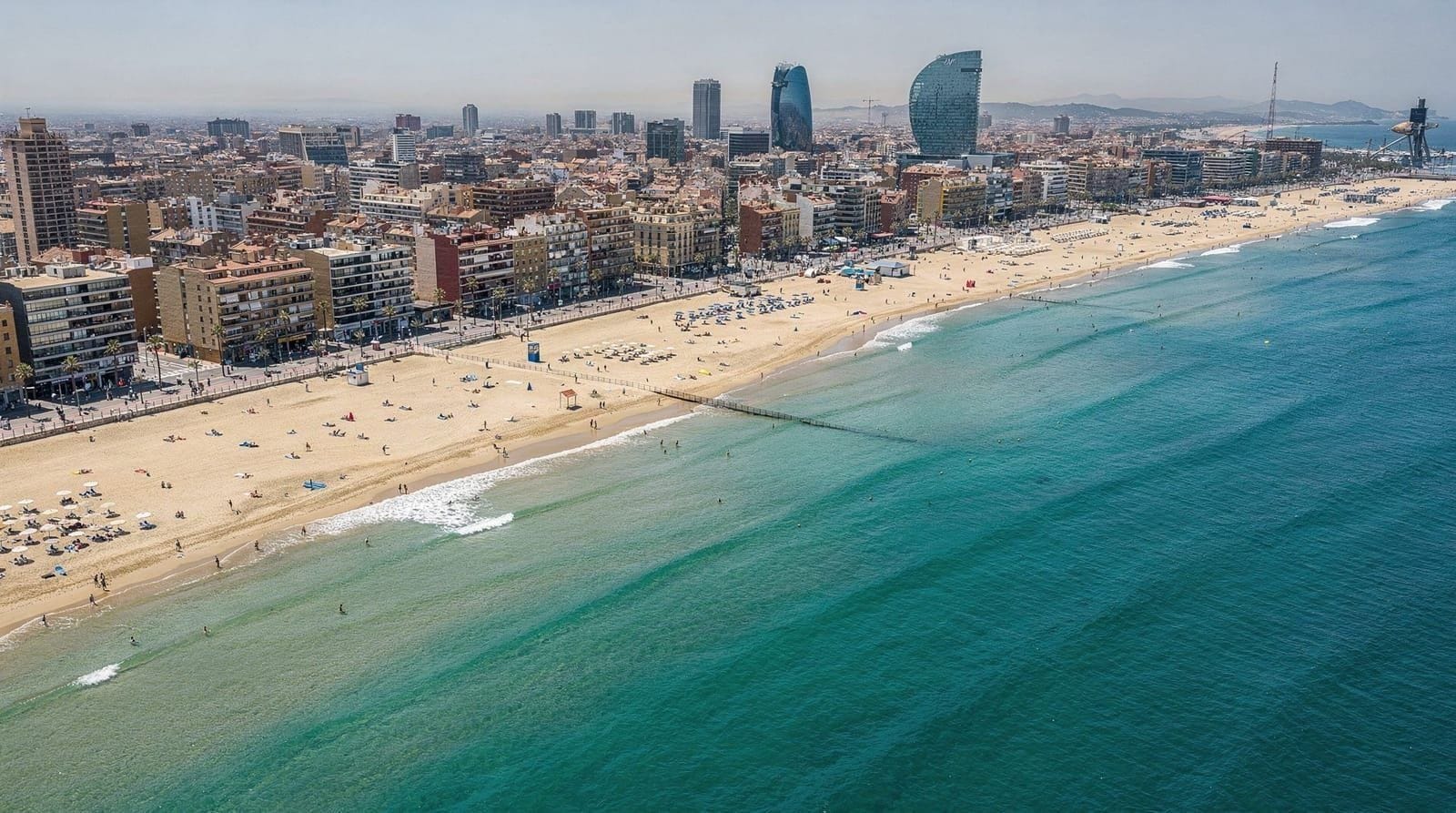
A long, flat sandy beach immediately south of the airport (the planes overhead are audible). Castelldefels is popular with Barcelona residents who want a long sandy beach without the Barceloneta crowds. The beach itself is wide and functional. The town is not beautiful. The water is clean.
Access: Rodalies R2 Sud from Passeig de Gràcia or Sants — approximately 30 minutes. T-Casual Zone 2 covers it.
Best for: Budget beach day with space, families wanting more sand than Barceloneta, residents who know the trade-offs.
Practical comparison
| Beach | Distance | Train time | Car time | Crowd level | Scenery |
|---|---|---|---|---|---|
| Barceloneta | 0 | — | — | Very high | Urban |
| Sitges | 35 km | 30–40 min | 35 min | Moderate | Excellent |
| Castelldefels | 20 km | 30 min | 25 min | Moderate | Adequate |
| Tarragona | 120 km | 35–50 min | 1h | Low | Historic |
| Tossa de Mar | 100 km | 1h15+ | 1h15 | Moderate | Outstanding |
| Aiguablava / Begur | 130 km | Car only | 1h45 | Low | Outstanding |
Month-by-month beach calendar
The Mediterranean coast around Barcelona has a long beach season, but conditions vary significantly by month. Here is what to expect at different times of year.
April: Sea temperature 14–16°C — cold for anything other than a brief wade for most visitors. Beaches are empty, atmospheric, and excellent for walking. The vegetation around the Costa Brava coves is at its spring green peak. Worth visiting the beach towns for their character; not worth going in the water.
May: Water reaching 17–19°C — manageable for those who are not cold-sensitive, particularly in the sheltered rocky coves of the Costa Brava which warm faster than open sand beaches. The beaches are uncrowded, the towns are open but not overwhelmed. The best month for visiting the beach towns without beach priority — Sitges, Tossa de Mar, Tarragona — when you can combine culture and coast without the summer crowds.
June: The first genuinely comfortable swimming month for most people — water reaching 20–22°C by late June, air temperature 24–28°C. Beaches begin to fill on weekends. The Sant Joan bonfire night on June 23 is the defining Barcelona beach event of the year: bonfires are lit along every accessible beach and promenade, fireworks are fired from beach parties, and the city descends to the coast to mark the summer solstice. Barceloneta and the city beaches become extremely crowded from late evening; Sitges and Castelldefels have their own bonfire celebrations. Access to the city beaches is difficult by public transport on this night — consider walking or cycling.
July: Peak beach season. Water 24–25°C. Every beach near Barcelona at its busiest. Barceloneta is crowded from 11:00; Sitges from midday. Tossa de Mar and the Costa Brava beaches are busy but more manageable. Water temperature is excellent for all-day swimming. Go early or late; avoid the midday peak.
August: Sea at its warmest: 25–27°C in the best years. The ideal swimming temperature — the sea is warm enough for genuine pleasure rather than just endurance. The trade-off is the density of visitors; the Costa Brava coves reach their annual visitor maximum. For the warmest water, August is the month. For space and peace, it is not.
September: The best overall beach month. Water temperature 24–25°C (warmer than July, still excellent for swimming). School holidays end in early September and the crowds drop sharply from the second week. Sitges on a September weekday is close to empty; the Costa Brava coves are accessible. The beach towns regain something of their local character. September is the recommendation for first-time visitors who have any flexibility in travel dates.
October: Water temperature falling from 22°C early in the month to 18°C by the end. Still pleasant on warm days; not reliable for cold-sensitive swimmers by mid-October. The beaches are quiet. The coast road to Tossa de Mar and the Costa Brava becomes easily drivable. Good for visiting beach towns for their own sake with no beach commitment required.
Getting the ticket and transport right
Rodalies and R2 trains use the standard T-Casual Zone system rather than separate beach-town tickets, which trips up first-time visitors who assume they need a special ticket. A Zone 2 T-Casual (around €25.50 for 10 trips) covers Sitges, Castelldefels and Garraf on the same card as city metro journeys — buy it once at any metro machine and it works for the whole trip, including your return journeys into the city. For Tarragona, the AVE is faster (35 minutes) but requires a separate reserved-seat ticket booked ahead; the regional Rodalies service is slower (50 minutes) but usable with the same zone-based ticketing.
For Tossa de Mar and the Costa Brava, there is no equivalent unified ticket — the SARFA bus and the Girona train-plus-bus combination are booked separately, and neither integrates with the T-Casual system. Booking the bus a day or two ahead in peak summer avoids the risk of a sold-out service on a Saturday. If you would rather not manage two separate bookings and a connection, a guided day tour with transport included removes that friction entirely, at a higher cost than doing it independently.
Beaches for specific interests
Best for snorkelling
The rocky coves of the Costa Brava — particularly the north-facing coves around Tossa de Mar and Begur — offer the finest snorkelling conditions near Barcelona. Water visibility in calm conditions is 10–20 metres over rocky seafloor; the marine life is diverse and accessible even in shallow water.
For day-trippers from Barcelona, the most accessible snorkelling is from the rocky edges of Es Codolar cove at Tossa de Mar (the small beach on the far side of the castle headland) and the coves north of the castle reachable only by boat. Bring your own mask and fins — equipment rental is available in Tossa but unreliable in quality.
Closer to Barcelona, Garraf cove has reasonable snorkelling around its rocky edges in calm conditions. The Barceloneta and Castelldefels beaches are unsuitable for snorkelling — sediment and shallow sandy seafloor limit visibility to 1–2 metres.
Best for families with young children
Castelldefels (20 km south, 30 min by train) offers a long, flat, sandy beach with very gradual depth increase — ideal for children who need to walk 30–40 metres from the water’s edge before the water reaches waist height. The beach is wide enough that children can run without immediately reaching other visitors’ towels.
Platja de la Ribera, Sitges has similar gentle entry and is backed by a promenade with cafés and ice cream, making the logistics of a beach day with children simpler. The town is safe and walkable for families.
Platja del Garraf (one train stop past Sitges) is smaller and quieter than Sitges, with calm water and the drama of the limestone cliffs as a backdrop. The small scale makes it easy to supervise young children.
The Costa Brava coves are less suitable for very young children — pebble beaches, deeper water close to shore, and limited facilities. They become excellent family destinations from age 6–7 upward.
Best for swimming long distances
Open-water swimmers looking for distance and clear water are best served by the Costa Brava coves north of Tossa de Mar, where the combination of good water quality, minimal boat traffic (away from the tour boats), and reliable calm conditions in summer allows for genuine distance swimming.
For city swimming, the beach at Badalona (15 minutes north of Barcelona by metro L2, then a short walk) is less busy than Barceloneta and has a longer stretch of open beach for lane swimming. Not scenic but practical.
Organised open-water swims are held at various Costa Brava locations throughout summer — the Travessia Costa Brava series (swims of 2 to 5 km along the coastline) runs from June through September and is open to non-competitive participants with reasonable swimming ability.
Best accessible by public transport only
Sitges remains the clear answer for the combination of beach quality, ease of access, and what you get on arrival. Train from Passeig de Gràcia, 30–40 minutes, T-Casual Zone 2 ticket.
Tossa de Mar is accessible by bus from Barcelona’s Estació del Nord (SARFA service, approximately 2 hours) or by train to Girona then bus from Girona bus station (37 minutes by AVE + 45 minutes by bus — faster total journey than the direct bus). The two-stage route to Tossa is more complex but reliably achievable without a car.
Castelldefels is the simplest option for a no-planning beach day — R2 Sud from Passeig de Gràcia or Sants, 30 minutes, same Zone 2 ticket. The beach is adequate and the access could not be simpler.
The Costa Brava coves around Aiguablava, Tamariu and Begur are not realistically accessible by public transport. This is the only section of the coast near Barcelona where a car or a guided boat trip is genuinely the only option for reaching the finest beaches.
The beaches immediately beyond Barcelona’s city limits offer experiences that the urban beaches cannot: medieval castle views, isolated rocky coves, resort elegance. Our Sitges day trip guide and Girona and Costa Brava guide cover the logistics in full detail.
Combining a beach day with other Costa Brava sights
Several of these beach towns work well as part of a wider day rather than a beach-only trip. Girona’s old town and cathedral pair naturally with a Costa Brava beach stop on the same day — see the Girona and Costa Brava day trip guide for how the timing works. Tarragona’s Roman sites (amphitheatre, city walls) combine with its beach for a history-and-swim day that needs no car. For a multi-day version that treats the coast as a destination rather than a day trip, our Barcelona and Costa Brava 7-day itinerary builds several of these beaches into a longer route, and the day trip stories from Girona blog post covers what a first-time visit there actually feels like.
If you are staying in Barcelona itself and comparing where a beach day fits against everything else on your list, the best day trips from Barcelona guide ranks beach and non-beach options side by side.
Frequently asked questions about Best beaches near Barcelona
How far do I need to go from Barcelona to find a less crowded beach?
The beaches immediately north of the city (Badalona, El Masnou) are moderately quieter than Barceloneta. For genuinely uncrowded beaches, go to Sitges (35 km, 30 min by train) or the Costa Brava coves around Tossa de Mar or Begur (100+ km, 1–2 hours).What is the best beach accessible by public transport from Barcelona?
Sitges by train is the best balance of quality, accessibility and relative calm. Tossa de Mar requires a bus connection but is worth the effort for the medieval castle setting. The Costa Brava coves around Aiguablava and Tamariu are accessible only by car or guided tour.Can I swim at Costa Brava beaches in June?
Yes — sea temperature in June is approximately 20–22°C, which most people find comfortable for swimming. By September the sea reaches its annual peak of 24–25°C. The Costa Brava coves tend to be slightly warmer than the open city beaches due to their sheltered position.Is Garraf beach worth visiting from Barcelona?
Garraf is a small pebble cove with a 19th-century wine cellar (now a restaurant) at the water's edge, 3 km west of Sitges on the railway. Quieter than Sitges main beach, limited facilities, good for a relaxed afternoon. 30 minutes from Barcelona by R2 Sud train.Which Costa Brava beaches are easiest to reach without a car?
Tossa de Mar (bus from Barcelona or Girona) and Lloret de Mar (bus from Barcelona) are the most accessible by public transport. The finer, more isolated coves around Begur, Aiguablava and Tamariu genuinely require a car or guided boat trip to reach comfortably.Can I combine a beach day with sightseeing in Girona or Tarragona?
Yes, and it works well for both. Girona's old town and cathedral pair naturally with a Costa Brava beach stop on the same day. Tarragona's Roman amphitheatre and city walls sit directly above its beach, making a history-and-swim day fully achievable by train with no car needed.What is the warmest month to swim near Barcelona?
August, when the sea reaches 25-27C in the best years. September is close behind at 24-25C with noticeably smaller crowds, which makes it the better overall choice for most visitors even though August is marginally warmer.
Top experiences
Bookable activities with verified prices and instant confirmation on GetYourGuide.