Hop-on hop-off bus Barcelona: honest guide for 2026
Barcelona: City Sightseeing hop-on hop-off bus 1 or 2-day ticket
Duration: Full day
- Free cancellation
Is the hop-on hop-off bus worth it in Barcelona?
For a specific type of visitor, yes: first-time visitors using day 1 for orientation, families with young children who prefer above-ground sightseeing over underground metro, and anyone with reduced mobility who benefits from minimal walking between stops. For point-to-point travel or daily commuting around the city, no — the metro is three times faster and a fraction of the price.
Barcelona’s hop-on hop-off tourist bus is one of those products that generates strong opinions in both directions. Locals dismiss it as an overpriced tourist trap. Some visitors swear by it as the best day they spent in the city. Both reactions make sense because the bus is genuinely useful for a specific type of trip and genuinely poor value for another. This guide covers the routes in detail, does the price comparison honestly, and gives you a clear steer on whether it fits your plans.
| Routes | Red (city centre), Blue (Gaudí/Diagonal), Green (coastal) |
| Cost | Around €30–33 (1-day), €40–44 (2-day) |
| Time needed | Full Red + Blue circuit uninterrupted: ~3–3.5 hrs |
| Best for | First-time visitors, families, reduced mobility |
| Hours | Around 09:00–19:00 (shorter in low season) |
The three routes: what each one covers
Barcelona’s Bus Turístic operates three colour-coded circular routes that connect at several points. A single ticket gives access to all three, so you can switch between them freely during your ticket’s validity.
Red Route: City Centre
The Red route is the core of the system and the one most visitors use exclusively. Starting from Plaça Catalunya, it circles the major central neighbourhoods in roughly 120-150 minutes if you ride without hopping off. Key stops:
Plaça Catalunya — The central interchange point. Most visitors start here. All three routes connect at Plaça Catalunya or its immediate vicinity.
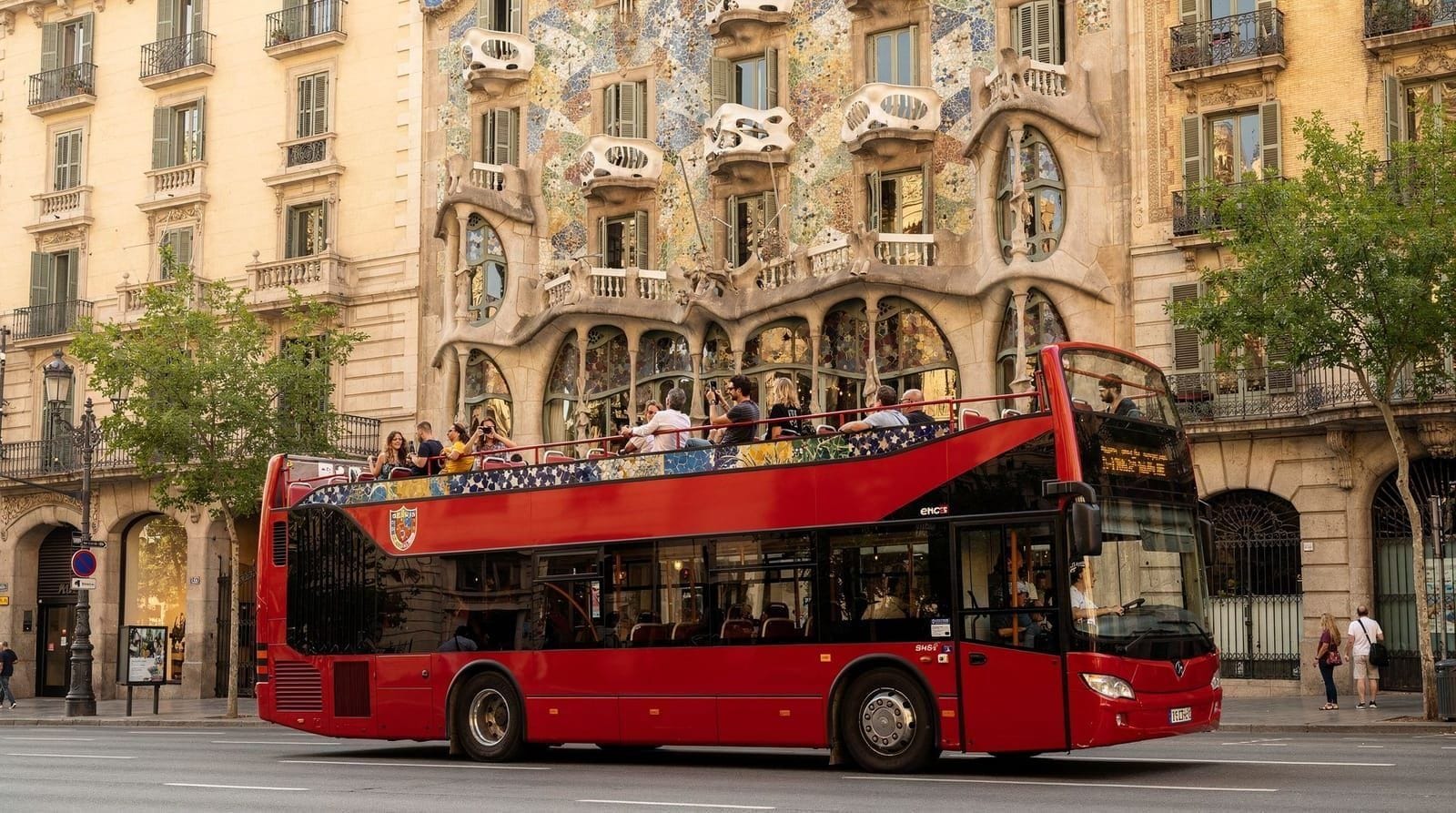
Passeig de Gràcia — The stop closest to the two main Gaudí buildings on the boulevard. Casa Batlló is a two-minute walk from the bus stop; La Pedrera (Casa Milà) is about four minutes further along the same street. This is also the strip of competing Modernista architecture including the Casa Lleó Morera and Casa Amatller. Even if you are not going inside, the exterior walk along Passeig de Gràcia is worthwhile.
Sagrada Família — The Red route passes close to Gaudí’s basilica. Note that the bus stop is a short walk from the entrance, and the queues for entry are entirely separate from the bus. You need a pre-booked timed entry ticket for Sagrada Família regardless of whether you arrive by tourist bus, metro or foot.
Paral·lel / Montjuïc — The Red route stops near Paral·lel, where you can connect to the Funicular de Montjuïc up to the Montjuïc sights. If your Hola Barcelona card is not covering the funicular, or if you are using only the tourist bus, note that the funicular is a separate TMB service. The bus itself does not go up Montjuïc hill.
Port Vell / Barceloneta — The waterfront stop gives access to the old harbour, Las Ramblas southern end and the beginning of the Barceloneta beach neighbourhood.
Las Ramblas — The bus passes along or near Las Ramblas on the Red route, with a stop near the Boqueria market. Our guide on safety in Barcelona has relevant context for the Ramblas area.
Blue Route: Gaudí and Barceloneta via Diagonal
The Blue route covers the upper residential areas and the coast, with the longest journey time of the three (around 80-100 minutes uninterrupted). Key stops:
Tibidabo — The Blue route goes up toward the Tibidabo area at the top of the city, passing through the residential zones of Sant Gervasi and Sarrià. Tibidabo itself (the amusement park and church on the summit) requires a separate ticket and a funicular from the Tibidabo stop — neither is included in the bus ticket.
Camp Nou — The FC Barcelona stadium stop is one of the Blue route’s most popular. The exterior of Camp Nou is visible from street level; the museum and tour require a separate ticket. Combination bus plus Camp Nou tour tickets are available if you plan to visit the stadium. See the combination ticket options below.
Barceloneta — The Blue route descends from the upper city toward Barceloneta and the beach, approaching from a different direction than the Red route. This overlap at Barceloneta means you can seamlessly switch between Red and Blue if you are doing a full-day circuit.
Barceloneta Beach — One of the coastal stops gives access to the beach directly. The Barceloneta neighbourhood itself is walkable from the beach stop — bars, seafood restaurants and the beachfront promenade are all within a few minutes on foot.
Green Route: Coastal Seafront
The Green route is the shortest of the three and runs along the coastal strip north of Barceloneta toward the Fòrum area. It covers the Olympic Port, Poblenou and the Forum waterfront. For most first-time visitors, the Green route is the least essential — the sights it serves are more local and residential than the main tourist circuit. It becomes useful if you are specifically interested in the Olympic Village area or want to see the northern beaches beyond Barceloneta.
Prices in 2026
1-day tickets: from approximately €30-33. 2-day tickets: from approximately €40-44.
The price difference between providers can be a few euros depending on whether you book directly with the operator (Barcelona City Tour / Hola BCN City Tour) or through a platform like GetYourGuide. Online advance booking is typically cheaper than buying on the bus, and guarantees boarding on busy summer days when popular stops get crowded.
Children under 4 ride free. Children aged 4-12 typically qualify for a reduced fare — check at booking.
Metro comparison
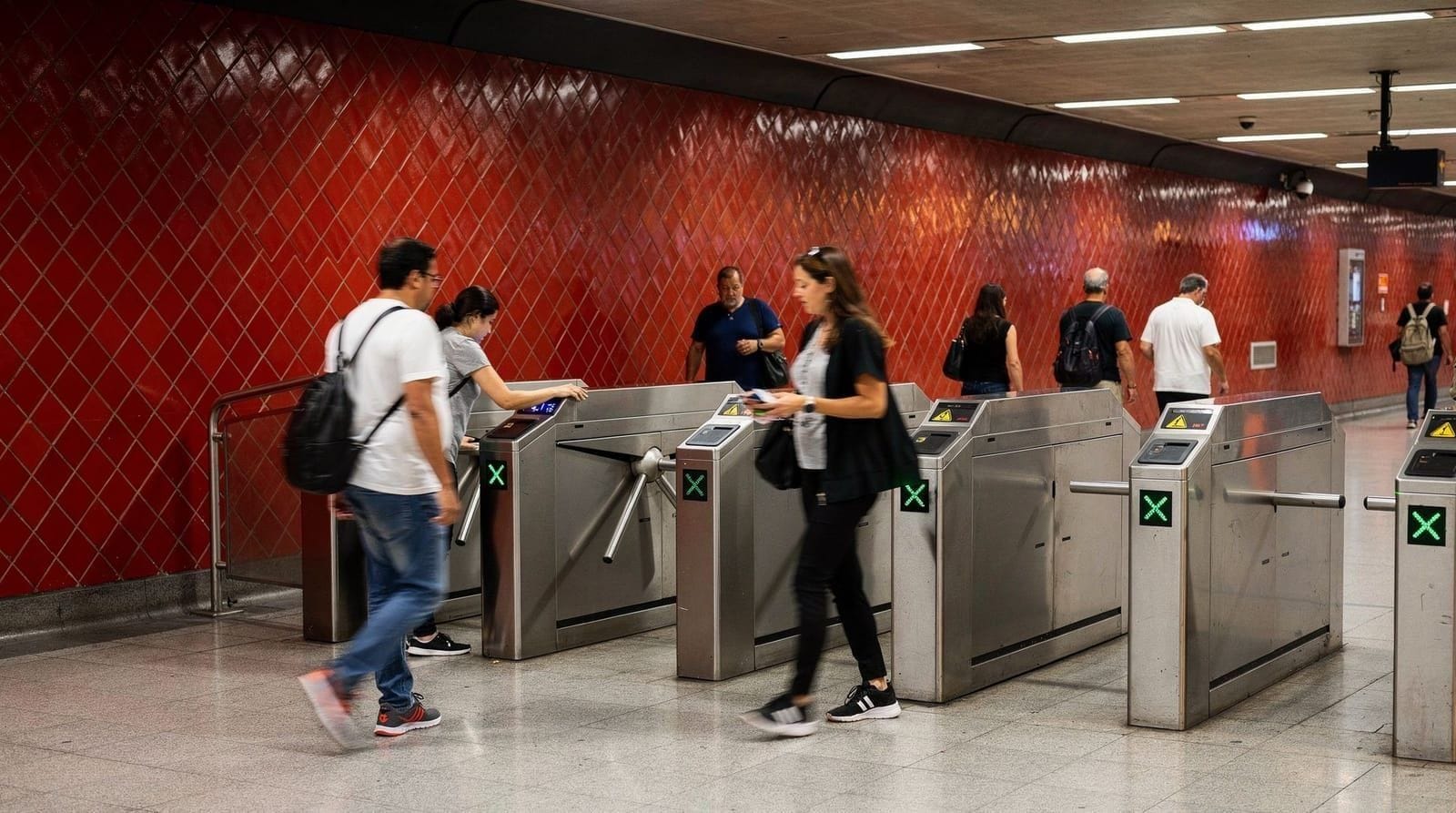
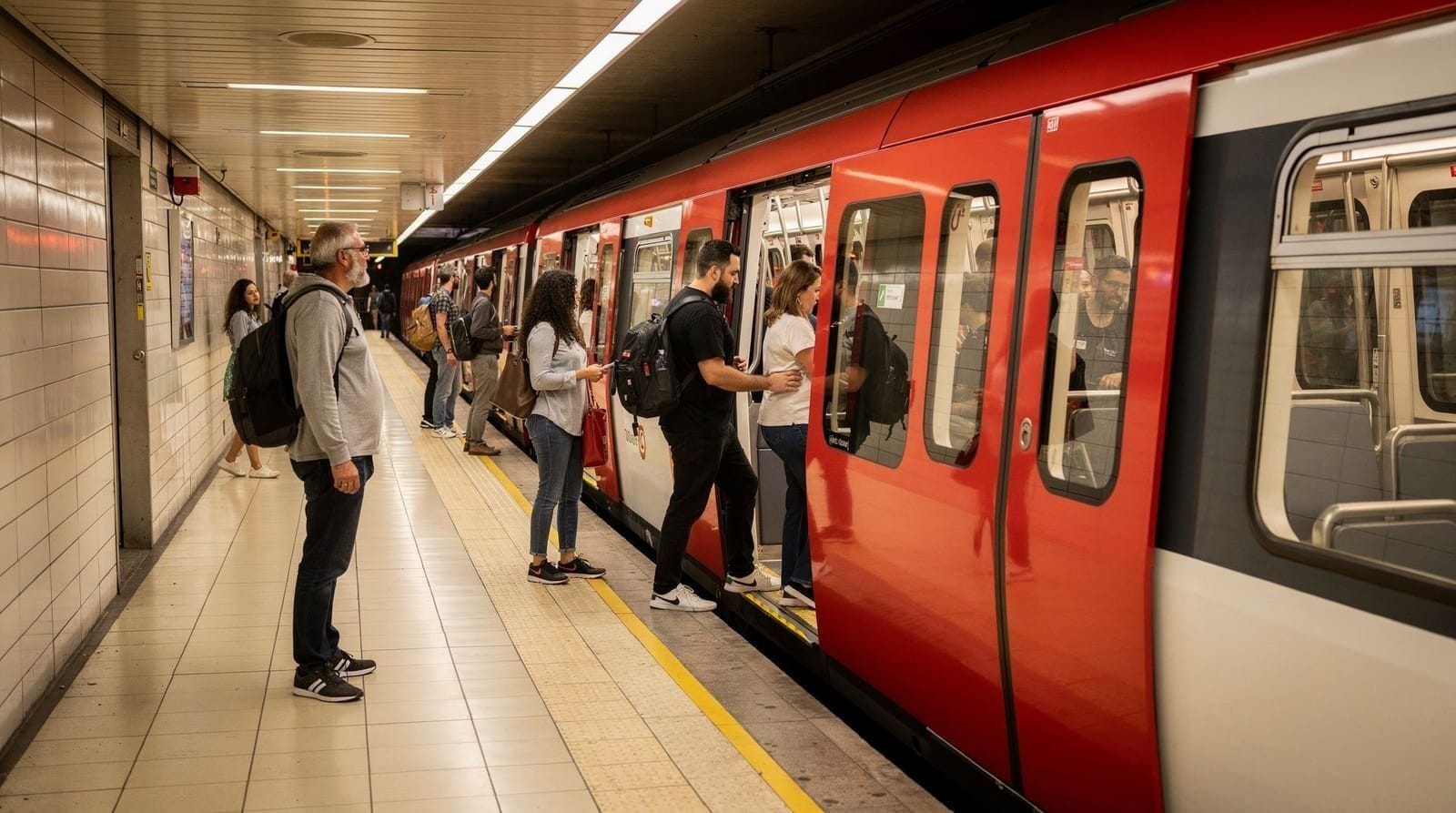
A single metro journey costs €2.90. A T-Casual 10-trip card costs €13 (€1.30 per trip). The Hola Barcelona Travel Card (€18.70 for 48 hours) gives unlimited metro and bus rides plus the airport connection — for visitors using transit heavily, it undercuts the tourist bus on both price and speed.
If you use the metro instead of the tourist bus and take 6-8 metro journeys per day to reach the same sights, you spend €7.80-€10.40 per day — versus €30-33 for the bus.
The metro is not a substitute for the scenic above-ground experience of the tourist bus, but the price gap is significant. For visitors who primarily want to get between attractions efficiently, the metro wins on cost by a factor of three or more. See the transport pass comparison guide for a side-by-side view of all Barcelona transit options.
How to use the bus
Boarding is straightforward. You can board at any stop on any of the three routes. At busy stops in high season — Plaça Catalunya in particular — there may be a short queue. Validate your ticket by scanning the QR code or showing the printed/digital ticket to the driver on boarding. Once validated, you can board and re-board freely for the rest of your ticket’s validity.
Audio commentary is available through headphone sockets at each seat, with track selection by language. Sixteen languages are included. An app version of the commentary is also available for smartphones, synced by GPS position. WiFi is available on board, though signal quality varies by route section.
Luggage: there is no dedicated luggage storage on board. Large suitcases can technically be taken on but make boarding awkward at busy stops. If you are doing a sightseeing day before or after hotel check-in, using a luggage storage service near Sants or Plaça Catalunya is more practical.
The best stops to hop off at
If you are doing one day on the bus and want maximum value from the experience, these are the stops worth actually leaving the bus:
Sagrada Família (Red route) — Essential for first-time visitors. Budget 1.5-2 hours inside if you have booked entry. The towers require a separate ticket upgrade. Our Sagrada Família booking guide explains which timed slots sell out earliest and how far in advance to book in high season.
Passeig de Gràcia (Red route) — Even without going inside Casa Batlló or La Pedrera, the block of Modernista buildings is worth walking at street level for 20-30 minutes.
Park Güell (Blue route) — The bus stop is some distance from the main entrance. The ticketed Monumental Zone (dragon staircase, hypostyle room, terrace) costs €10 and requires separate booking. The free areas surrounding the park are accessible without a ticket but involve a uphill walk.
Barceloneta Beach (Blue or Green route) — For a beach break mid-day. The stops give direct access to the promenade. Cafés and restaurants are plentiful.
Montjuïc connection (Red route, Paral·lel stop) — For visiting Montjuïc: the Funicular de Montjuïc, Joan Miró Foundation and MNAC. These are not directly served by the tourist bus but are reachable by connecting at Paral·lel.
Combination tickets
Several combination tickets bundle the hop-on hop-off bus with additional attractions. These make practical sense if you were planning to visit the added attraction independently:
Bus plus Barcelona Aquarium: The L’Aquàrium de Barcelona is one of Europe’s largest aquariums and a popular choice for families. A combination ticket avoids the separate booking process and typically costs around €40-45 in total — often competitive with buying the two tickets separately. The aquarium is accessible from the Port Vell / Barceloneta stop on the Red route.
Bus plus Camp Nou tour: The FC Barcelona museum and stadium tour runs independently of match days and is one of the most-visited attractions in Spain. The combination ticket bundles bus access with stadium entry. Camp Nou recently completed a significant renovation, making the stadium itself a more interesting visit than in previous years. Cost around €45 as a combination.
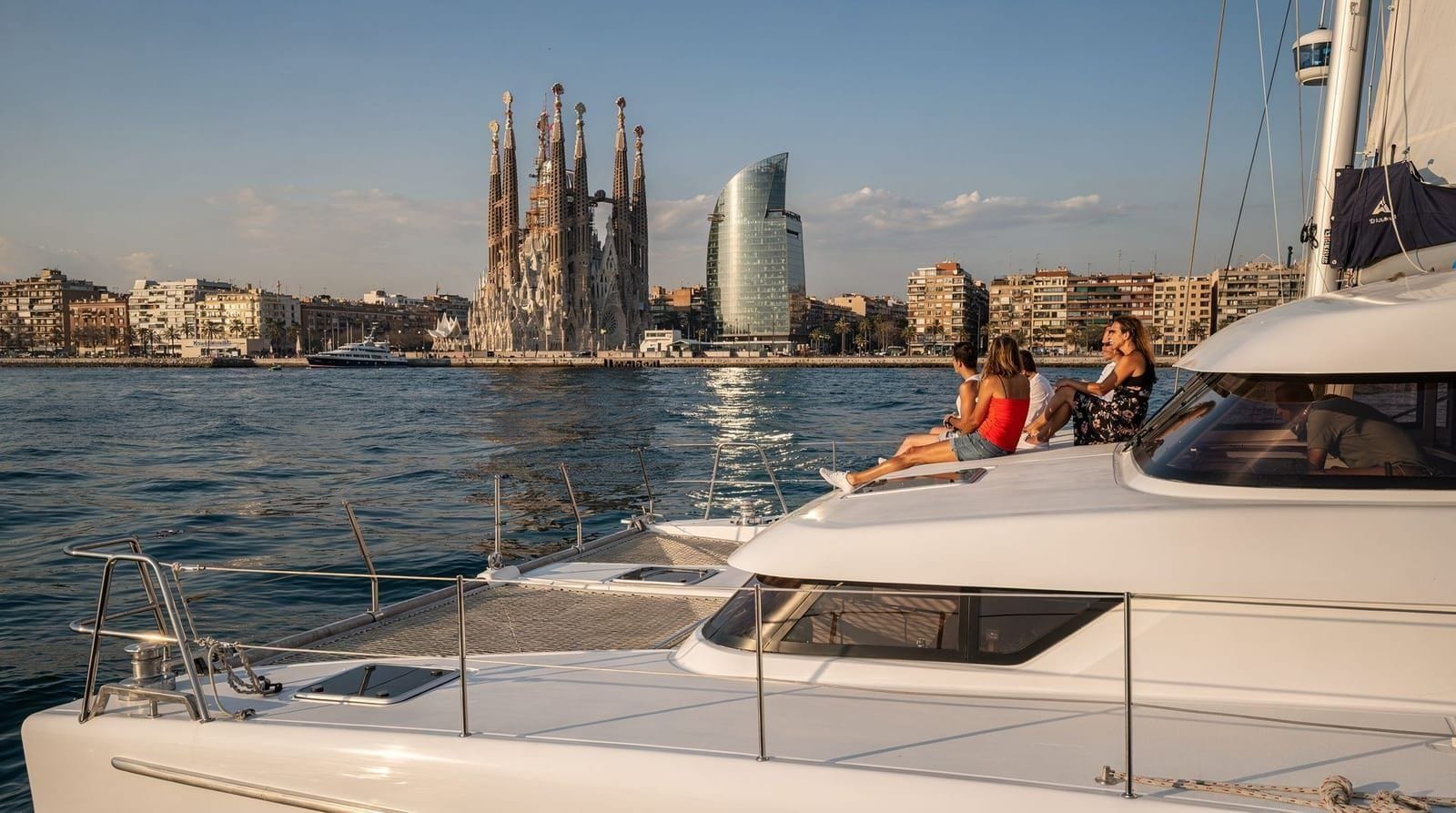
Bus plus sailing cruise: A combination that bundles the bus ticket with a 1-hour harbour sailing trip departing from Port Vell. The cruise gives a perspective of the Barcelona waterfront and the Barceloneta towers from the water. Total cost around €45. Best suited to visitors who want a mix of land and sea sightseeing on the same day.
These combinations are booked as single tickets and are not available as a mix-and-match — you pick the specific pairing at purchase.
When the hop-on hop-off bus genuinely makes sense
Day 1 orientation for first-time visitors: Riding the full Red and Blue circuits without hopping off (around 3-3.5 hours total) gives a useful geographic overview of where major sights are in relation to each other. Many visitors find this valuable at the start of a trip before navigating independently by metro. The audio commentary provides context that a metro journey cannot.
Families with young children: The above-ground experience, the open-top sections (in good weather) and the novelty of the double-decker bus are genuine entertainment for children aged 3-10. The bus also removes the logistical pressure of metro navigation with pushchairs, bags and small children. Our Barcelona with kids guide discusses family transport in more detail.
Visitors with reduced mobility: Metro stations in Barcelona vary significantly in accessibility — not all have lifts, and some involve substantial walking between lines. The tourist bus offers consistent, step-free boarding (at accessible stops) with no underground navigation. For visitors who find metro transfers tiring or difficult, the bus is a more comfortable option despite its slower pace.
When the weather is good and you are not in a rush: Barcelona’s hop-on hop-off bus is genuinely pleasant in good weather from an open-top deck, passing Modernista buildings at street level. In February rain or August heat, the experience is less appealing.
When not to use the tourist bus
Getting between two specific places quickly: The metro is consistently faster for point-to-point travel within the city. Even allowing for walking to and from metro stations, the metro beats the tourist bus on journey time for almost every city-centre trip by a factor of two or three.
Using it as your primary daily transport: The bus runs from 09:00 to 19:00. For evening dinners, night transport or early-morning departures, you will need the metro or Nitbus regardless. The tourist bus covers a subset of daily transport needs.
Budget-focused trips: At €30-33 per day per person, the bus is a significant daily expense. For a couple spending three days in Barcelona, three days of tourist bus (if you used it daily) would cost €180-200. For context, that same budget covers entry to Sagrada Família, Park Güell, MNAC and the Picasso Museum for two adults, plus several days of metro transport.
If you are comfortable on the metro: Barcelona’s metro is well-signposted in English, the lines are colour-coded, and the network is not complex by major European city standards. First-time Barcelona visitors who are comfortable with London Underground or Paris Métro will find the Barcelona metro straightforward within an hour of using it.
Honest verdict
The hop-on hop-off bus is a well-run product. The routes are well-designed, the audio guide is genuinely informative, and the combination tickets offer fair value for specific attraction pairings. The criticism it receives for being expensive and slow is accurate but slightly unfair — it was never designed to compete with the metro for speed or the T-Casual for price. It is a sightseeing vehicle, not a commuter service.
The key question is whether your trip matches the use case. One day on the bus at the start of a Barcelona trip, combined with metro travel for the remaining days, is a pattern that many visitors find genuinely useful. Buying a 2-day bus ticket and using it as primary transport for your entire stay is usually not worth the cost.
For the full overview of Barcelona’s transport options — metro, bus, taxi, cycling, walking routes and the T-Casual versus Hola Barcelona comparison — the getting-around guide covers everything in detail. The transport pass comparison puts all the passes side by side for any visitor type.
Visitors planning to use the tourist bus most often ask about which route to start with and what to do about the gap between bus stop and entrance at popular sights.
For the route question: start on the Red route from Plaça Catalunya. It covers the densest concentration of sights and gives the most useful orientation in the least time. If your ticket has two days, spend the second day combining Blue route stops (Park Güell, Barceloneta approach) with independent metro travel to the sights that are faster to reach underground.
For the gap issue: the bus drops you near but not at the entrance of several major attractions. Sagrada Família, Park Güell and Camp Nou all require a short walk from the bus stop. The commentary will tell you where to walk. The distances are generally 5-15 minutes on foot — manageable for most visitors, less so in extreme heat or with young children. Check the map at each stop before walking.
One frequently misunderstood point: your bus ticket does not give any queue priority or discounted entry at any of the included stops. You will queue with everyone else and pay full price for Sagrada Família, Park Güell, Casa Batlló and every other paid attraction. The bus is the transport layer only — sightseeing entry is always separate.
Finally, check the weather forecast before buying. An open-top bus in Barcelona’s summer heat (regularly 32-36°C in July-August) can be uncomfortable without shade for extended periods. The lower deck is covered, but the upper deck is the main appeal. A well-shaded morning ride followed by metro travel through the hottest part of the afternoon is a practical way to use the bus comfortably in high season. The best time to visit Barcelona guide covers seasonal conditions in detail, including the months when open-top sightseeing is at its most pleasant. If you are budgeting the whole trip, the daily budget calculator lets you model transport costs alongside accommodation and entry fees to see where your money goes.
Frequently asked questions about Hop-on hop-off bus Barcelona
How much does the hop-on hop-off bus cost in Barcelona in 2026?
1-day tickets start from around €30-33 depending on provider and booking method. 2-day tickets start from around €40-44. Combination tickets (bus plus aquarium, or bus plus Camp Nou) typically cost €40-45. Booking online in advance is usually cheaper than buying on the bus.How many routes does the Barcelona hop-on hop-off bus have?
Three routes: Red (City Centre), Blue (Gaudí and Barceloneta via Diagonal) and Green (Barceloneta coastal seafront). In practice, most visitors use Red and Blue together, as these two cover the majority of major sights. The Green route is shorter and connects the beach areas.What are the operating hours for the Barcelona hop-on hop-off bus?
Buses typically run from 09:00 to 19:00, with the last bus departing from the start point around 19:00. Frequency at peak times is every 10-20 minutes per route. In low season (November to February) the last bus is often earlier at around 17:00-17:30. Always check the timetable at the stop or on the app.Can I use my Hola Barcelona card or T-Casual on the tourist bus?
No. The hop-on hop-off tourist buses (Bus Turístic) are entirely separate from the TMB public transport network. You cannot use the Hola Barcelona card, T-Casual or any other standard transit pass on them. They require their own dedicated ticket.Which stops are most useful on the Barcelona tourist bus?
On the Red route: Sagrada Família, Passeig de Gràcia (Casa Batlló and La Pedrera), Plaça Catalunya and Paral·lel (Montjuïc). On the Blue route: Park Güell, Camp Nou, Barceloneta beach. The Green route covers the coastal strip from Barceloneta to Fòrum.Is there an audio guide on the hop-on hop-off bus?
Yes, audio commentary is included in the ticket price in 16 languages, accessible via headphones at each seat or through a companion app. The commentary gives brief descriptions of landmarks as you pass them and suggests what to see at each stop.What combination tickets are available?
The most popular combinations include the bus plus Barcelona Aquarium (saving you booking both separately) and the bus plus an FC Barcelona Camp Nou stadium tour. A bus plus sailing cruise combination is also available for visitors who want a harbour perspective. These combos are usually worth it if you were planning to visit the added attraction regardless.
Top experiences
Bookable activities with verified prices and instant confirmation on GetYourGuide.