Costa Brava's best beaches: a day trip guide from Barcelona
The Costa Brava stretches for nearly 200 kilometres north of Barcelona, from the suburbs of Blanes all the way up to the French border. Saying you want to “visit the Costa Brava” is a bit like saying you want to “visit the Mediterranean” — you need to be more specific. Some parts are easily reachable without a car, genuinely beautiful, and well-suited to a day trip from the city. Other parts — the ones the travel brochures tend to feature — require your own transport or a guided tour, and are worth the extra effort.
| Easiest without a car | Tossa de Mar (bus, ~1h15) |
| Most beautiful | Begur coves (car or boat trip needed) |
| Most remote | Cadaqués (best with an overnight stay) |
| Cost | Bus return €15–18; boat trips roughly €40–70/person |
| Best time | June or September for good weather with fewer crowds |
What the Costa Brava actually is
The name means “wild coast” in Catalan, and the rugged northern stretches earn it. Ancient pine forests tumble down to rocky coves with water that shifts between green and impossible blue. Medieval towns like Tossa de Mar and Cadaqués sit dramatically above the sea. Further south, the coast gets busier and flatter — Lloret de Mar is technically Costa Brava but feels like a different world.
The beaches divide roughly into three categories: accessible by public bus from Barcelona (Tossa, Lloret, some of Platja d’Aro), accessible by car or tour (the Begur coves, Aiguafreda, Aiguablava), and technically reachable but genuinely challenging without a vehicle (Cadaqués — buses run but infrequently and slowly).
For context on the rest of the region, the Costa Brava destination page has an overview of the whole stretch. For day trip planning from the city, the best day trips from Barcelona guide compares distances and transport options across the region.
The main options compared
| Destination | Getting there without a car | Beach type | Best for |
|---|---|---|---|
| Tossa de Mar | Direct bus, ~1h15, easy | Sandy, medieval backdrop | First-timers, no car |
| Lloret de Mar | Direct bus, ~1h, easiest | Sandy, resort-style | Simplicity, families |
| Begur coves | Difficult — car or boat/guided tour | Small coves, dramatic cliffs | The best scenery, worth the effort |
| Cadaqués | Infrequent direct bus, ~2h30+ | Pebbly, artistic village | An overnight stay, not a rushed day trip |
Tossa de Mar: the most accessible beauty
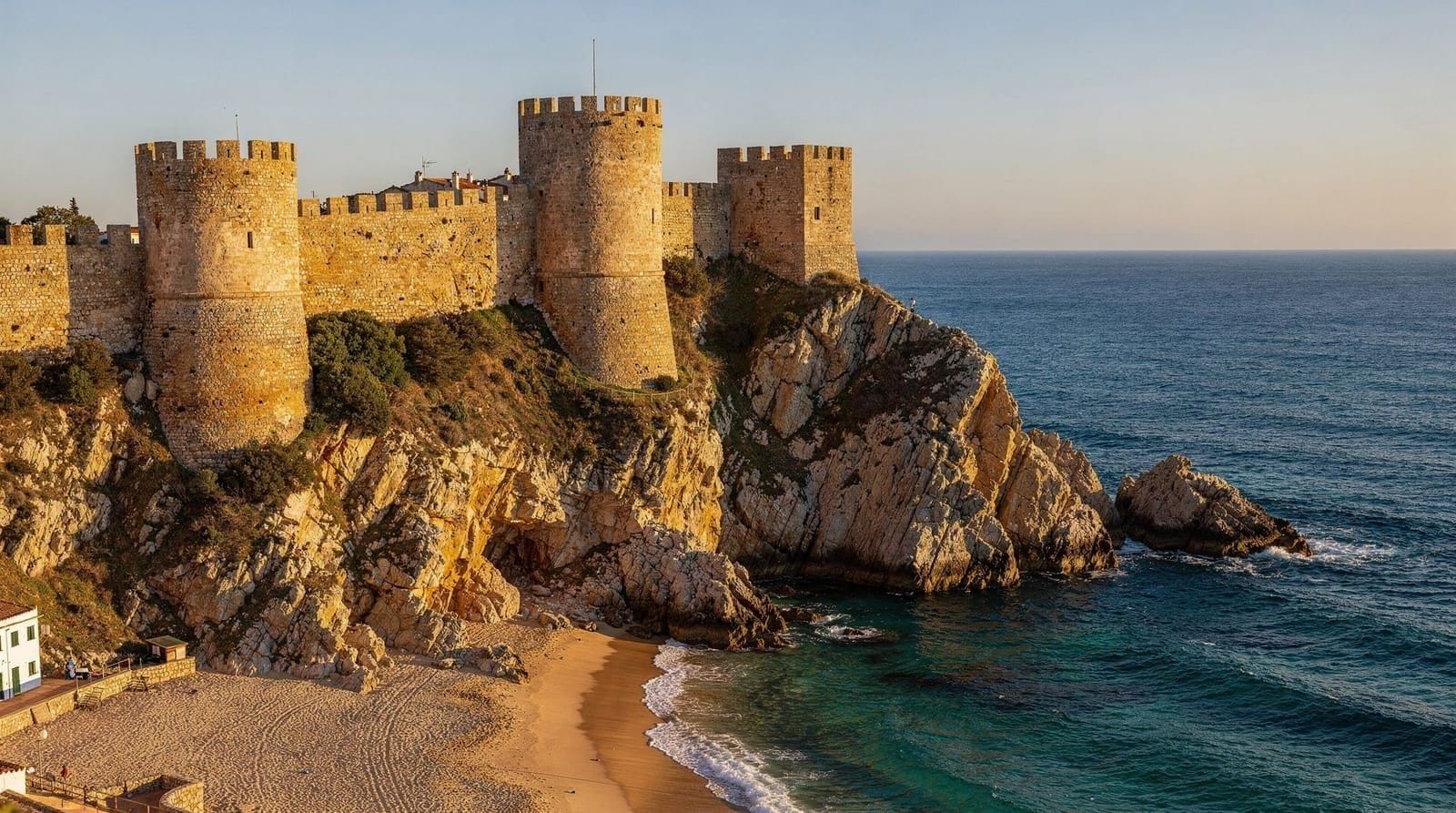
Tossa is the one to choose if you want the authentic Costa Brava feel without renting a car. Buses run from Barcelona’s Estació del Nord roughly every hour in summer, the journey takes about 1 hour 15 minutes, and a return ticket costs around €15-18. The town has a genuine medieval walled quarter — the Vila Vella — sitting on a headland above a long sandy bay, and the combination of castle walls, pine-covered cliffs and turquoise water makes it the most photographed spot on the coast.
The main beach directly below the town walls is beautiful but gets busy in July and August. Walk ten minutes south along the coastal path and you reach Es Codolar, a smaller cove that’s far less crowded. Continue further and you can reach Platja de Mar Menuda if you’re up for a 20-minute walk along the cliff path.
Arrival and departure: the Sarfa/Moventis bus from Estació del Nord is the simplest option. Book tickets online during peak season — the buses fill up. Aim to arrive before 10am if you want a beach spot, or after 4pm when the day-trippers start heading back. If you’d rather not manage bus timetables, guided options that combine the coastal path with a swim stop from the water exist too, though the independent bus route is genuinely simple enough that most visitors don’t need one for Tossa specifically.
Lloret de Mar: bigger, busier, easier
Lloret gets a bad reputation — it’s associated with package holidays, British stag groups and strip-bar tourism — but the beaches themselves are objectively good: over a kilometre of sand, clear water, and a palm-lined promenade. If you just want a beach day without worrying about crowds, Lloret is easier to reach than Tossa (more frequent buses, slightly shorter journey at about 1 hour from Estació del Nord) and has more facilities.
The areas north of the main town beach, around Cala Canyelles and Cala Banys, give you rocky inlets away from the main crowds. But honestly: if beauty over convenience is your priority, go to Tossa instead. Lloret is for people who want easy logistics and don’t mind sharing space.
The Begur coves: the most beautiful and the hardest to reach
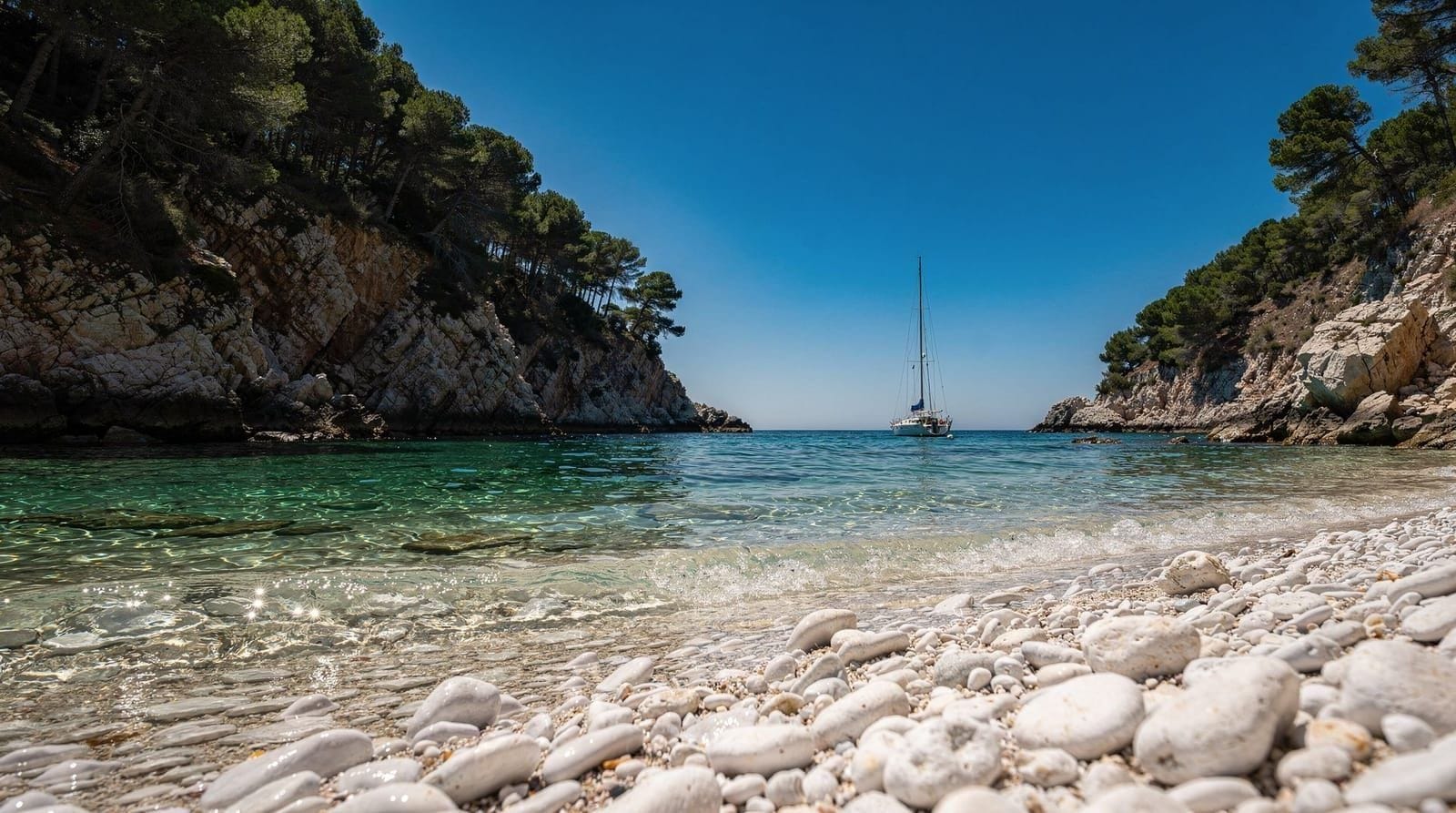
This is where things get honest. The coves around Begur — particularly Aiguafreda, Aiguablava and Sa Tuna — are among the most beautiful stretches of coastline in the western Mediterranean. The water is extraordinary: calm, clear, with a colour somewhere between emerald and sapphire depending on the time of day. The cliffs are dramatic and covered in pine. The coves are small enough to feel private, large enough to swim comfortably.
Getting there without a car is genuinely difficult. Begur village is on a hilltop, about 130 kilometres from Barcelona (roughly 2 hours by car). There are buses from Girona to Begur, but connecting from Barcelona to Girona by train and then catching the bus to Begur and then walking or getting a local taxi down to the coves is a full morning of logistics. In peak summer, local buses between the coves run, but they’re infrequent.
The practical options for car-free travellers: a guided tour from Barcelona that includes the Begur coves, or a Costa Brava boat trip that visits multiple coves from the water. The boat trip approach is actually the better experience — you see more coves, you can swim directly from the boat, and you avoid the summer parking chaos in the villages.
Cadaqués: the most special, the most remote
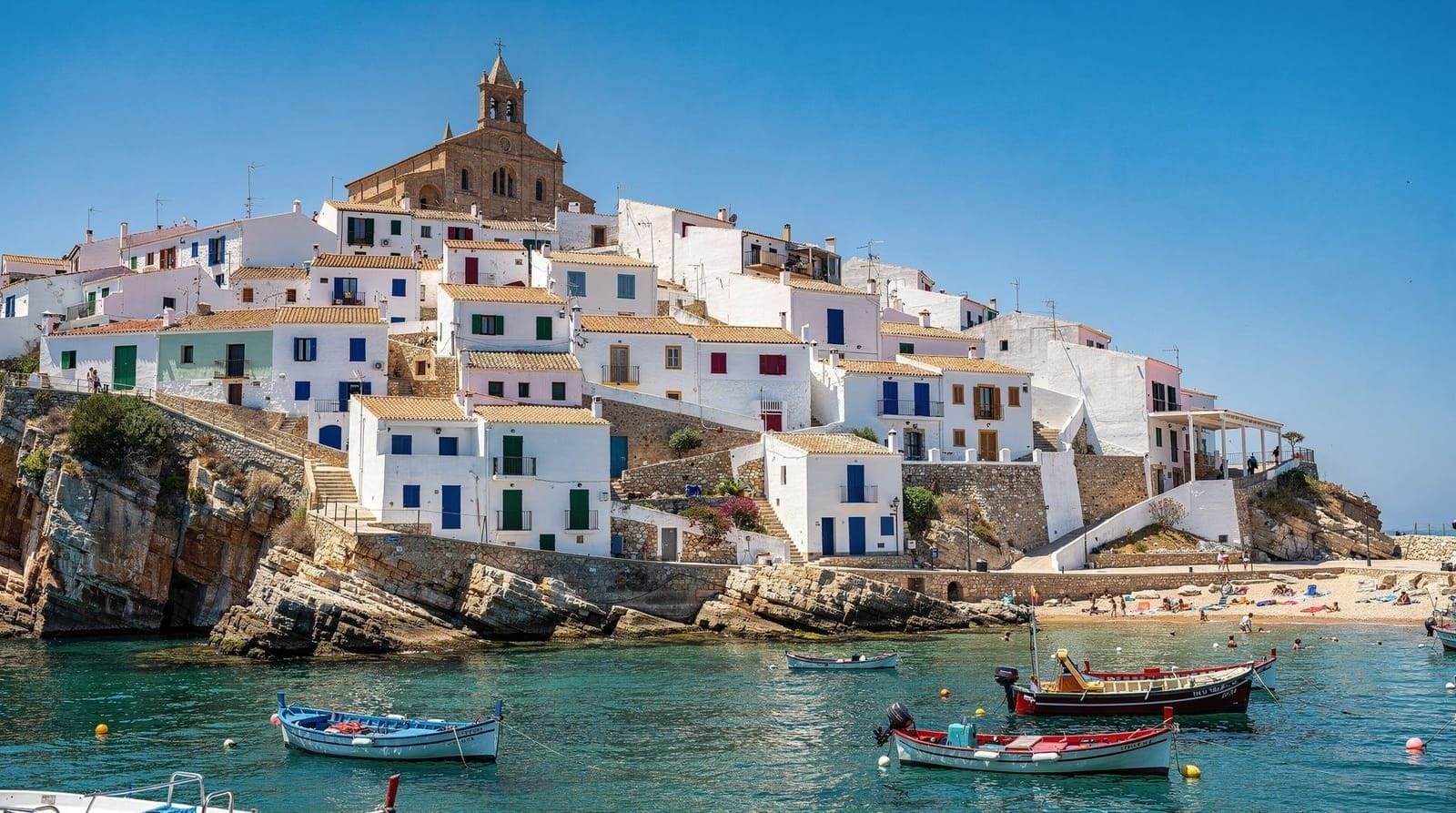
Cadaqués is the village that painters fell in love with. Salvador Dalí lived nearby in Portlligat for decades; Pablo Picasso visited; Marcel Duchamp played chess here in his final years. The village is whitewashed and piled up on a rocky bay, accessible only by winding mountain road, which has kept it from the worst of mass tourism despite being famous. The beach itself is pebbly, not sandy, but the swimming is good and the setting is incomparable.
Getting there from Barcelona takes about 2 hours 30 minutes by car and longer by bus. There are direct buses from Barcelona’s Estació del Nord, but they run infrequently (often just two or three daily in summer) and the timetables make a comfortable day trip difficult — you arrive around midday and need to leave in the late afternoon. A night’s accommodation in Cadaqués is a much better option if the village interests you.
What Cadaqués rewards is slowness. A rushed day trip means you spend more time travelling than being there. If your main goal is beaches, go to Tossa. If Cadaqués calls you — the artistic heritage, the Dalí house in Portlligat, the isolated lanes — book a night.
A guided day tour that combines Cadaqués with the Dalí Museum in Figueres is a practical middle ground for those who can’t stay overnight but want more than a rushed bus connection:
Platja d’Aro and the central coast
Between Tossa and Begur lies a stretch that doesn’t get much attention from day-trippers but is perfectly pleasant: Platja d’Aro (large resort beach, easy parking), Calella de Palafrugell (lovely village, short coves, popular with Catalan families) and Llafranc (pretty bay, pricier restaurants). This area is best reached by car or by joining the regional bus network from Girona.
If you want a quieter Costa Brava experience and have a car, the small road south of Palafrugell leading to Calella and Llafranc is worth a morning. The beaches are family-friendly and the villages have a more local feel than the big resorts. Neither village has a direct bus from Barcelona, which is precisely why they stay quieter than Tossa or Lloret.
The boat trip alternative
One option worth taking seriously: instead of picking a single beach and trying to get there independently, join a Costa Brava boat trip that departs from a port closer to Barcelona (often Lloret or Blanes) and visits multiple coves along the coast. These run in summer, typically half-day or full-day, and cost roughly €40-70 per person depending on the operator and what’s included.
The advantage is obvious — you see more of the coast, you don’t have to drive or figure out local buses, and anchoring in a cove for swimming is a different experience from fighting for a towel space on the beach. The disadvantage is that you don’t linger anywhere and can’t explore the villages.
Honest advice: what to choose
If you want to visit the Costa Brava on a day trip from Barcelona and you don’t have a car, go to Tossa de Mar. It’s the most beautiful easily reachable beach, the bus connection is reliable, the medieval town is genuinely worth exploring, and the swimming is good. Everything else requires a car or tour and significant extra planning.
If you have a car or are booking a guided trip, the Begur coves are worth the extra effort — they’re the Costa Brava at its best. Cadaqués is worth visiting but deserves more than a day.
Check the Barcelona beaches guide for an honest comparison between the city beaches and the Costa Brava, and remember that Sitges — just 30 minutes from Barcelona by train — offers a much easier beach day for those who don’t want the 1h15 bus journey north. For the city’s own beaches, barcelona beaches in summer covers what to expect if you decide a Costa Brava trip is more than you want to take on.
FAQ
Which Costa Brava beach is best for a day trip without a car? Tossa de Mar — a direct bus from Estació del Nord takes about 1h15, the medieval old town is genuinely worth exploring, and the main beach plus quieter coves along the coastal path give you real variety in one visit.
Can I visit the Begur coves without a car? It’s difficult. Public transport from Barcelona to Begur involves a train to Girona, a bus to Begur, and then local transport to the individual coves — a full morning of logistics. A guided tour or a Costa Brava boat trip that visits the coves from the water is the practical alternative.