Festa Major de Gràcia: Barcelona's most photogenic festival
There is a week in August when a neighbourhood in Barcelona turns its streets into something between an art gallery, a theatre set and a village party, and all of it costs you nothing to see. The Festa Major de Gràcia runs from August 14 to 20, and it is, without much competition, the most visually spectacular free event in Barcelona’s calendar.
| Where | Gràcia, especially around Carrer de Verdi and Plaça del Sol |
| Cost | Free — no tickets, no wristbands |
| Dates 2026 | August 14–20 |
| Best time | From around 8pm, when the street lighting comes on |
| Getting there | Metro Fontana (L3) or Diagonal (L3/L5); FGC to Gràcia |
How the Festa Major works
The Gràcia district holds its own neighbourhood festival every August. The main event is the street decoration competition: each block — each calle — organises itself into a commission, raises money from residents throughout the year, agrees on a theme, and then spends weeks building elaborate installations that completely transform the street. By the time the festival opens, entire streets are encased in constructions made from recycled materials, recycled plastic, paper, wire, light and imagination.
The themes are as varied as the streets themselves. One year a street might recreate a deep-sea environment with hanging jellyfish and bioluminescent lights. Another might become an Amazonian jungle, or a 1970s Barcelona tavern scaled to street size, or a tribute to a particular Catalan artist. The materials are almost always recycled or low-cost; the ingenuity applied to them is consistently extraordinary.
Residents vote, and a jury awards prizes to the best-decorated streets. The competition element drives quality — winning streets from previous years become points of local pride. But even the streets that do not place are worth seeing.
The best streets to visit
The streets change year to year, and the rankings vary, but certain streets in Gràcia consistently produce outstanding decorations:
Carrer de Verdi is one of the longer and more elaborately decorated streets in most years. It runs through the heart of Gràcia and connects to the neighbourhood’s main cinemas and many of its restaurants.
Carrer de la Perla and Carrer del Torrent de les Flors are often among the prize-winners for scale and ambition.
Carrer Gran de Gràcia is the main commercial street and tends toward more accessible, popular themes; the side streets off it often show more creative ambition.
Plaça del Sol and Plaça de la Vila de Gràcia are the main squares and host concerts, gegants (giant papier-mâché figures), and the main festival activities throughout the week.
The festival publishes a map of decorated streets each year; pick it up at the neighbourhood information points at the start of the festival or find it on the Associació de Festes de Gràcia website.
When to go
Timing matters significantly. The streets look very different at different times of day.
During the day, you get the full visual clarity of the decorations — you can see the construction and materials, read the thematic elements, and understand what the street commission built. It is also hot in Barcelona in August; daytime visits can be draining.
Evening is the better choice for most visitors. From around 8pm, the streets light up — every installation has its own lighting plan — and the transformation is dramatic. Streets that looked impressive in daylight become genuinely magical at night. The crowds also multiply in the evening, which sounds like a downside but actually adds to the atmosphere; these are streets packed with people eating, drinking, listening to music, watching performances.
The peak evenings are Friday August 14 (opening night), the middle weekend, and the final weekend. If you want the experience with slightly fewer people, visit on a weekday evening — Tuesday, Wednesday or Thursday.
Late August nights are warm in Barcelona, typically 24–26°C at 10pm. The festival runs late; streets do not empty until well after midnight.
What to eat and drink
One of the underrated pleasures of the Festa Major is eating in Gràcia during festival week. The neighbourhood’s restaurants are excellent under normal circumstances; many set up street terraces during the festival and extend their menus with festival dishes. Crowds mean that popular spots fill early — aim for 8pm rather than 10pm for dinner if you want to sit down without a long wait.
Street food and drinks stalls set up throughout the neighbourhood. Prices are reasonable by Barcelona standards — a beer around €3–4, a plate of croquetes €5–7. The stalls run by neighbourhood associations often serve local dishes with more character than the commercial offerings.
Gràcia has some of the better vermouth bars in the city. If you visit in the early evening before the main crowds arrive, a stop at one of the neighbourhood bodegas for a copa of vermut with some olives is a perfect beginning. Our vermut guide explains the tradition. Cava is also very much appropriate for a celebration of this kind — it is Catalan, it is festive, and it costs a fraction of what Champagne would.
Combining Gràcia with the rest of Barcelona
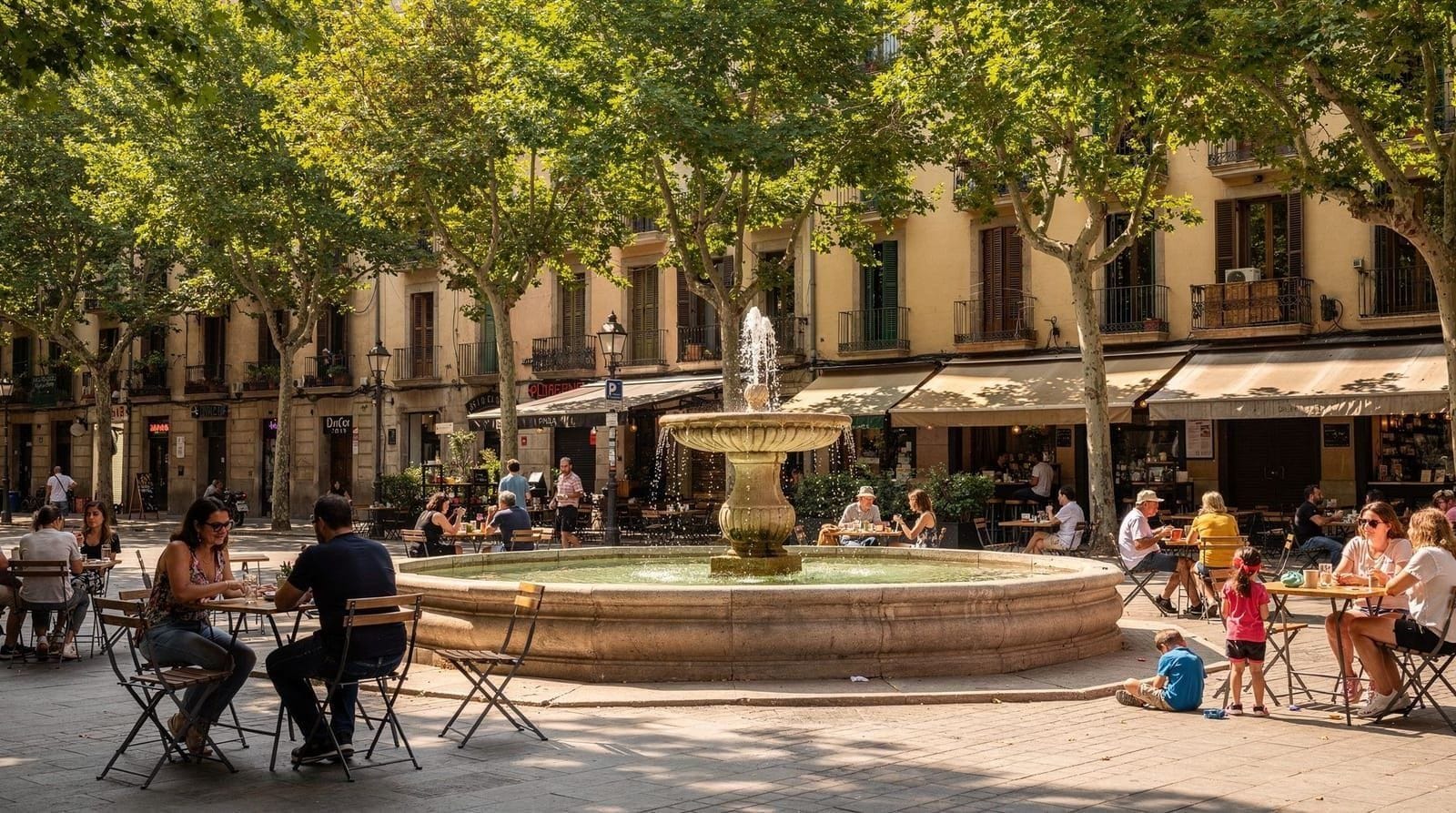
The Festa Major de Gràcia is reason enough to visit in August, but the neighbourhood rewards exploration beyond festival week. Our Gràcia guide covers what makes it distinctive: the village-within-a-city feeling, the plazas that function as outdoor living rooms, the independent shops and restaurants that give it a character different from the tourist-heavy centre.
During festival week specifically, if you are visiting for a day or two, a practical itinerary might be: morning at Park Güell (book timed entry in advance — it is immediately above Gràcia and connected by several paths), lunch in the neighbourhood, afternoon rest or beach, evening return to Gràcia for the decorated streets and dinner.
The best neighbourhoods guide positions Gràcia well in relation to the rest of the city — it is served by the FGC trains from Plaça de Catalunya (ten minutes), the metro Lines 3 and 5, and numerous buses. It is not far from Eixample and within easy reach of everything in the upper part of the city.
Practical details for 2026
- Dates: August 14–20, 2026
- Cost: completely free. No tickets, no wristbands
- Best time to visit: 8pm onwards on any evening; Friday or Saturday for peak atmosphere
- How to get there: Metro to Fontana (Line 3) or Diagonal (Lines 3 and 5); FGC to Gràcia from Plaça de Catalunya
- Weather: August in Barcelona is hot (daytime 28–32°C, evenings 24–26°C). Dress accordingly. Stay hydrated
A note on August more broadly: Barcelona in August is the peak of the tourist high season. Hotels and apartments are expensive, beaches are crowded, and tourist trap risks are at their highest. But the Festa Major de Gràcia is precisely the kind of local, neighbourhood event that reminds you why the city is worth visiting despite all of that. You will be surrounded by people who live here, celebrating something they built themselves, in streets that exist for one week and then come down. It is authentically Barcelonin in the best sense.
The Catalan culture dimension
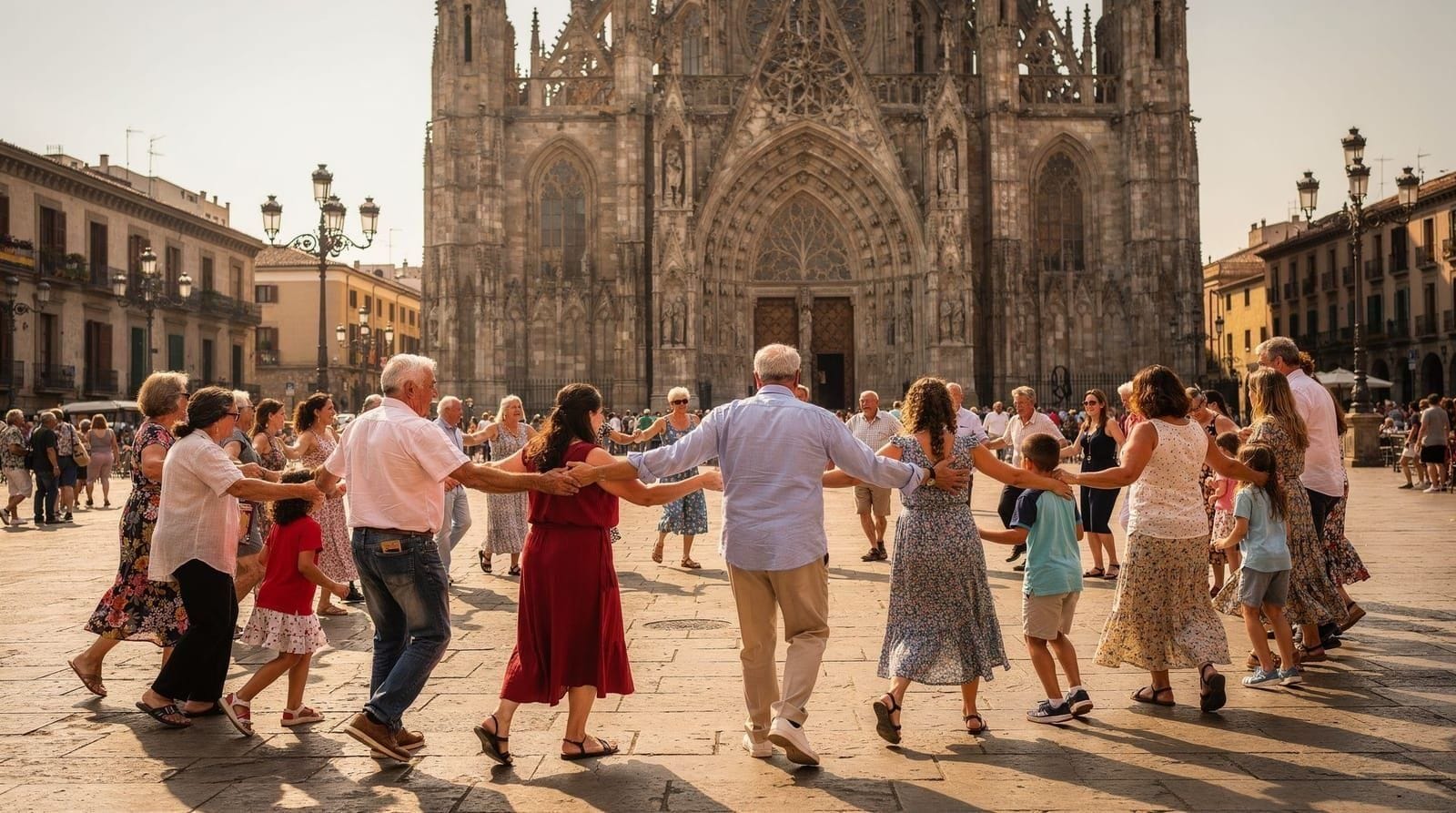
The Festa Major de Gràcia, like all the grans festes of Barcelona’s neighbourhoods, is an expression of Catalan civic culture: the idea that a neighbourhood is a community that organises itself, makes things together, and celebrates together. The gegants, the gralls (traditional wind instruments), the cercaviles (street processions) — these are elements that appear at every major Catalan festival, from La Mercè in September to Sant Joan in June. Seeing them in Gràcia in August, in a neighbourhood context rather than a civic one, is a different and more intimate experience.
A short history of the tradition
The Festa Major de Gràcia dates back to at least 1817, well before Gràcia was absorbed into Barcelona as a district in 1897 — for most of its history, this was an independent town’s own celebration, not a Barcelona event. The street-decoration competition in its current, elaborate form developed through the 20th century, with the neighbourhood associations (comissions de festes) forming for each street to organise fundraising, design and construction over the preceding months. That independent-town identity is still legible today: Gràcia residents talk about “our festa” in a way that is proprietary and proud, and the festival remains almost entirely resident-run rather than municipally produced, unlike the more official La Mercè in September.
Where to stay for festival week
Gràcia itself gets loud during festival week — expect music and crowds well past midnight on the peak nights, which makes it a poor choice if you need to sleep. A short walk away, the upper streets of Eixample offer a reasonable compromise: close enough to walk to Carrer de Verdi in fifteen minutes, far enough to get real sleep. If quiet matters more than proximity, El Born or Barceloneta are unaffected by the Gràcia noise entirely, at the cost of a metro or FGC ride each evening. Booking early matters regardless — August is already high season, and festival week adds further pressure on the neighbourhood’s limited apartment stock.