Vermut in Barcelona: the Catalan vermouth tradition explained
Barcelona: tapas walking tour with food, wine and vermouth
Duration: 3 hours
- Free cancellation
What is vermut in Barcelona and when do locals drink it?
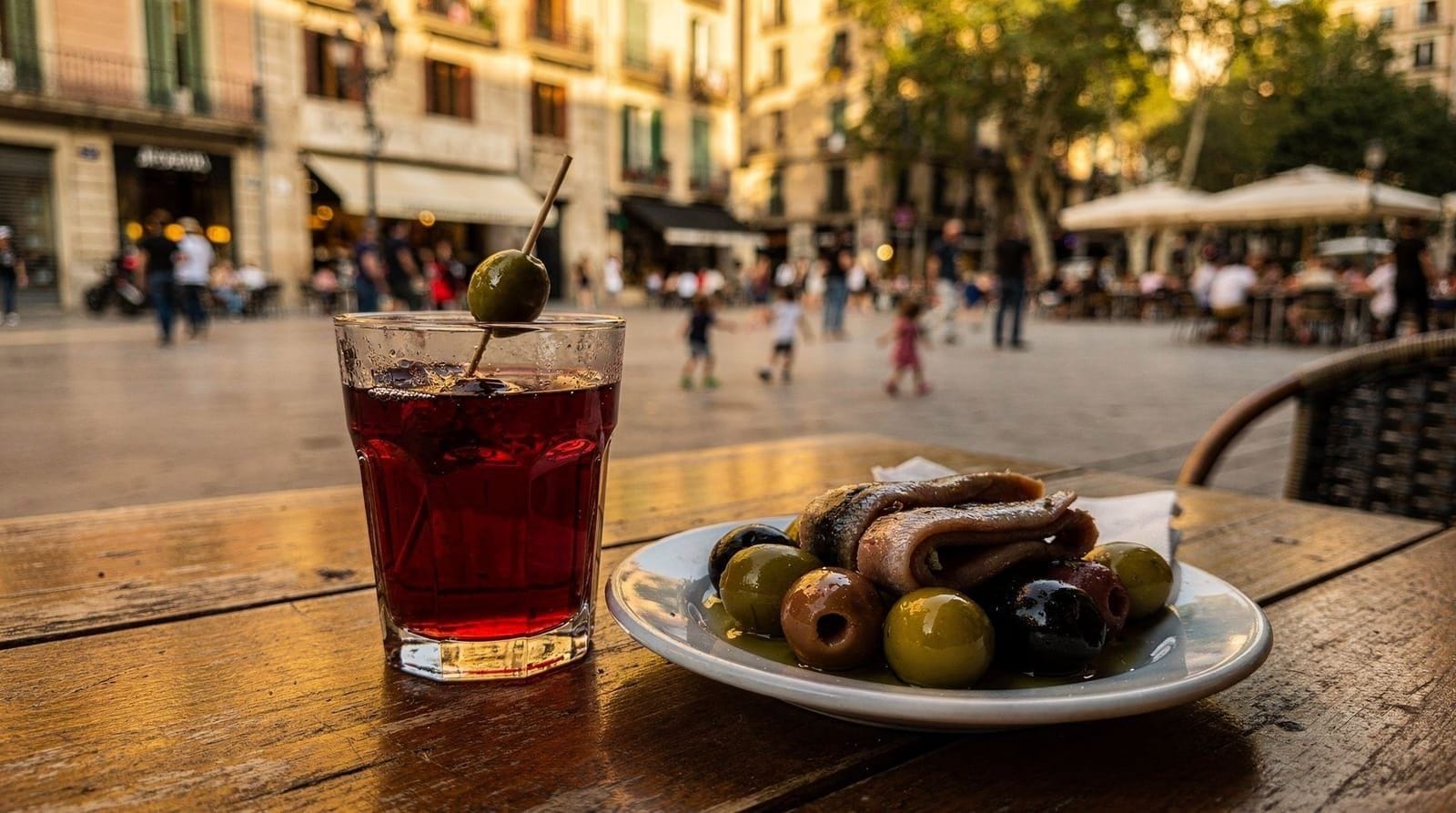
Vermut is a fortified wine aperitif that is central to Catalan drinking culture. Locals drink it on Sunday mornings between 12:00 and 14:00 — a ritual called l'hora del vermut. It is served chilled with a splash of soda, an olive, and sometimes a small tapa.
What tourists miss and locals know: the art of the Barcelona vermut
Walk into almost any neighbourhood bar in Barcelona on a Sunday morning between noon and two in the afternoon and you will find something that does not appear in most tourist itineraries: a room full of locals with glasses of dark red liquid, small plates of olives and chips on the bar, and absolutely no urgency to go anywhere.
This is l’hora del vermut — the vermouth hour — and it is one of the most genuinely distinctive aspects of Catalan food and drink culture. It is not a trend. It is not a cocktail bar phenomenon. It is a weekly social ritual that has been embedded in the rhythm of Barcelona life for over a century, and it is available to any visitor who knows where to look.
Most tourists in Barcelona are steered toward sangria — a drink that is perfectly pleasant but that no Catalan considers a cultural expression of anything. Vermut is the drink that locals actually choose when they want something to drink before a meal. Understanding the difference between the two, and knowing which bars to visit, transforms how you experience the city’s drinking culture.
Vermut in Barcelona at a glance
| When | Sundays, roughly 12:00–14:00 (l’hora del vermut) |
| Cost | Around €2.50–4/glass in a neighbourhood bar; €5–8 near La Rambla |
| Where | Poble-sec, El Born, Barceloneta, the Gothic Quarter |
| What comes with it | Olives, chips or anchovies, usually included, unordered |
| Booking | None needed — walk in, though the best bars fill up by 13:00 on Sundays |
What vermut actually is
Vermut is fortified wine — white wine or red, depending on the style — infused with a blend of botanicals, herbs, and wormwood (artemisia absinthium, from which the name derives via the German Wermut). The fortification brings the alcohol content to roughly 15–18%, and the botanical infusion adds bitterness, sweetness, and aromatic complexity.
The style most common in Barcelona is the Catalan rojo (red/dark) vermut — richer, darker, and less sharply bitter than Italian rosso vermouth. It is sweeter than you might expect if your vermouth experience comes from cocktails, and the aromatic profile tends toward dried fruit, vanilla, and warm spice rather than the sharp herbal hit of a French or Italian vermouth.
Catalan vermut is always served cold — over ice, or chilled in the glass — with a small splash of soda water (gasosa or sifon), an olive or two, and sometimes a thin slice of orange. The soda dilutes the sweetness slightly and makes the drink more refreshing. It is not a cocktail; it is an aperitif in the purest sense, designed to open the appetite rather than satisfy it.
The food that accompanies vermut is deliberate and simple: olives, potato chips, anchovies, small crackers. The point is not to eat a meal but to have something in your hand while you talk. The drinking and eating are secondary to the social act.
The Catalan brands worth knowing
Understanding Catalan vermut producers helps when you are reading a bar menu or buying a bottle to take home.
Yzaguirre is the most important name. Produced in Terra Alta (a DO wine region in southern Catalonia), Yzaguirre has been making vermouth since 1884 and is the reference standard for the Catalan style. The rojo is the version you will encounter most often — rounded, rich, with notes of dried fruits and vanilla. The reserva aged versions are excellent if a bar stocks them.
Miró is produced in Reus (Tarragona province) and has been continuous since 1914. The style is slightly lighter than Yzaguirre, more citrus-forward. Miró is widely available and often the house vermut at mid-range bars.
Perucchi is the third major Catalan producer, made in Barcelona itself and one of the oldest. The style is more complex and slightly more bitter than the other two. Less widely distributed but worth seeking out at specialist bars.
Beyond these three, several smaller producers have emerged in recent years, including natural-wine producers experimenting with lower-intervention vermouth. The Penedès wine region — which supplies much of the base wine for Catalan vermouth production — has several producers now making premium vermouths worth seeking at wine-focused bars.
These newer, smaller-batch vermouths tend to appear on the menu at natural wine bars in Gràcia and El Born rather than the classic institutions listed below, and they are worth trying if you’ve already had the standard Yzaguirre or Miró house pour and want to see how the category is evolving. They are typically drier and less sweet than the classic Catalan style, closer in spirit to a French vermouth, and priced a euro or two above the neighbourhood-bar standard.
L’hora del vermut: the Sunday ritual
The vermut hour typically runs from 12:00 to 14:00 on Sundays, though in practice it bleeds into the early afternoon in a way that no one tracks too closely. The underlying logic is simple: Sunday lunch in Catalonia is the main meal of the week, eaten at home with family or at a restaurant, typically starting at 14:00 or 14:30. The hour before lunch — when the meal is being prepared, when family members are arriving, when there is time for conversation — is when you go to the bar for a vermut.
The ritual has a specific social structure. You do not go to the vermut bar alone. You go with your partner, your parents, your friends who are also killing time before Sunday lunch. You stand at the bar or sit at a table. You have one glass, occasionally two. You eat the chips and olives that arrive without being ordered. You talk.
The bars that do this best — and do it authentically, not as a performance for visitors — are the places that have been doing it for decades. They have their regulars. They know what those regulars drink. The vermut arrives before it is fully ordered.
Visitors are genuinely welcome to participate in this ritual. You do not need to speak Catalan or Spanish, though a “bon dia” and a “gràcies” are always appreciated. You simply go to one of the right bars, order a vermut, and be present in the room.
Where to drink vermut in Barcelona
Quimet & Quimet — Poble-sec
The most famous vermut bar in Barcelona is also the smallest. Quimet & Quimet on Carrer del Poeta Cabanyes in Poble-sec holds perhaps 30 people standing and has been run by the same family since 1914. It serves its own house vermouth alongside an extraordinary selection of conservas — tinned fish, shellfish, and cured products — arranged in creative montaditos (small canapé constructions) that have made the bar famous in their own right.
This is a lunch-only operation. It opens around 12:00 and closes when the food runs out, typically by 16:00. It is closed on Sundays during summer. Check current opening hours before going; it does not behave like a restaurant. The crowd is mixed — genuine locals alongside visitors who have done their research. The combination of vermouth and tinned anchovy on bread with a specific house preparation is what the bar is known for, and it lives up to the reputation.
Bar Calders — Poble-sec
Also in Poble-sec, on Carrer del Parlament, Bar Calders is the neighbourhood living room — a slightly more spacious, more relaxed version of the classic vermut bar. It has a good wine list in addition to its vermut selection, serves simple tapas and sandwiches, and is genuinely mixed in its clientele: young couples, older residents, people working on laptops, groups having an extended Sunday lunch preparation drink. The terrace opens when weather permits.
El Xampanyet — El Born
El Xampanyet on Carrer de Montcada in El Born is principally known for its house cava, but its vermut selection and its anchovy-focused tapas make it one of the best spots in the old town for the whole aperitif ritual. The setting — a narrow bar with walls covered in tiles and old bottles — has not changed appreciably since the 1930s. It is significantly more crowded than the Poble-sec options, but the atmosphere on a busy Sunday lunchtime is hard to beat.
Bar Marsella — Gothic Quarter
Bar Marsella on Carrer dels Escudellers in the Gothic Quarter is the oldest bar in Barcelona — open since 1820, still run by the same family. It is primarily an absinthe bar, but it stocks vermut and serves it correctly. The atmosphere is extraordinary: bottles with decades of dust on the shelves, foxed mirrors, furniture that has not been replaced since anyone can remember. It is not the right place for a casual Sunday morning vermut; it is the right place for a late-night drink in a room where Picasso and Hemingway reputedly drank.
Bodega Manel — Barceloneta
In Barceloneta, Bodega Manel is a traditional wine bar and vermut spot that has been operating in the neighbourhood for generations. It is away from the tourist strip, on one of the interior streets, and has the classic bodega character: barrels, bottles, a straightforward menu, serious regular clientele. The Sunday vermut here, with a plate of anchovies from the market, is as close to the textbook version of l’hora del vermut as you will find.
Comparing the five bars
| Bar | Neighbourhood | Character | Best day/time |
|---|---|---|---|
| Quimet & Quimet | Poble-sec | Tiny, famous montaditos, standing-room | Weekday lunch, arrive early |
| Bar Calders | Poble-sec | Relaxed neighbourhood living room | Sunday midday |
| El Xampanyet | El Born | Old-town classic, house cava + vermut | Sunday lunchtime, expect a crowd |
| Bar Marsella | Gothic Quarter | Historic, atmospheric, late-night | Evening, not a Sunday-morning spot |
| Bodega Manel | Barceloneta | Traditional bodega, local regulars | Sunday midday, away from the seafront |
If you can only visit one, Bar Calders or Bodega Manel give the most textbook version of l’hora del vermut without the crowds that El Xampanyet or Quimet & Quimet now draw from their reputations.
Vermut versus sangria: the important distinction
Tourists in Barcelona are consistently offered sangria — particularly at restaurants near La Rambla and the beach. It is worth understanding why locals almost never drink it.
Sangria is not a Catalan or even particularly Spanish drinking tradition in its modern form. It exists, and it is made and consumed, but it is not what anyone in Barcelona would choose when they want to drink before a meal or celebrate with friends. It is what restaurants serving tourist menus put on their drinks list because it is sweet, visually dramatic, and easy to sell.
Vermut is what those same restaurateurs drink when they go to a bar on their day off.
The price differential makes the point clearly. A glass of vermut in a neighbourhood bar costs €2.50 to €4.00. A glass of house sangria at a tourist-facing restaurant near the beach costs €7 to €12 and is likely made with cheap wine and fruit juice. The vermut is better, cheaper, and what you should be drinking.
The same logic applies to cava versus prosecco. Catalonia produces cava — sparkling wine made by the traditional method in the Penedès region — at a quality level that significantly exceeds most Italian prosecco at similar price points. Ordering cava in Barcelona is the locally correct choice; ordering prosecco is importing an Italian product when you are sitting on top of a world-class domestic alternative. The Penedès cava tours guide covers this in more detail.
Wine and vermut: the broader Barcelona drinking context
Barcelona’s relationship with wine is shaped by its geography. The city is surrounded by serious wine country: the Penedès, Priorat, Montsant, Terra Alta, Garnacha country. The house wine at a neighbourhood bar here is frequently better than what passes for a special-occasion bottle in many other European cities, and it costs €3 to €5 a glass.
Natural wine has been enthusiastically adopted by the city’s bar and restaurant scene. Several wine bars in Eixample, El Born, and Gràcia specifically focus on natural, biodynamic, and low-intervention wines from Catalan producers. This is a genuinely excellent drinking scene if you know where to look.
Vermut fits into this context as a gateway drink — something that opens a meal or a Sunday afternoon, that transitions into a glass of white wine with lunch, that makes the hour before eating into something worth having in its own right.
The wine tasting guide covers Barcelona’s broader wine culture, including the natural wine bars and the wine-focused restaurants that have transformed the city’s drinking scene over the past decade.
Ordering and etiquette
A few practical notes on ordering vermut in Barcelona:
Language: In a neighbourhood bar, Catalan is the first language. “Un vermut, si us plau” (Catalan) is the correct form and will be appreciated. “Un vermú, por favor” (Spanish) is equally understood everywhere. Both are correct; the Catalan form shows you know where you are.
Specify the style: Most bars will give you a glass of their house vermut without additional specification. If you want to try a specific brand, you can ask — “Yzaguirre, si us plau” — but it is equally normal to accept whatever the house pours.
With soda or without: The standard Catalan serve is amb gasosa — with a small splash of soda. You can ask for it sol (without soda) if you prefer it neat. Both are correct; the soda version is slightly more refreshing in warm weather.
Do not ask for ice separately: It will arrive with ice unless you specify sinó amb glaçons.
The food: In most traditional vermut bars, a small plate of olives or chips arrives with your drink without being ordered. This is included in the price of the vermut. Do not feel obligated to order a full tapa; the bar snacks are the correct accompaniment.
Group size and standing room: Many of the best vermut bars, including Quimet & Quimet, are standing-room only with limited table space. Groups larger than four should expect to split across the bar rather than finding a single table, and this is entirely normal — the format is designed around mingling rather than a seated group booking.
Paying: Most neighbourhood vermut bars still run on a pay-as-you-go tab system where the bartender remembers what you’ve had rather than issuing a receipt after each round; ask “quant és?” (how much is it?) when you’re ready to leave rather than expecting a printed bill to appear automatically.
Combining vermut with a food tour
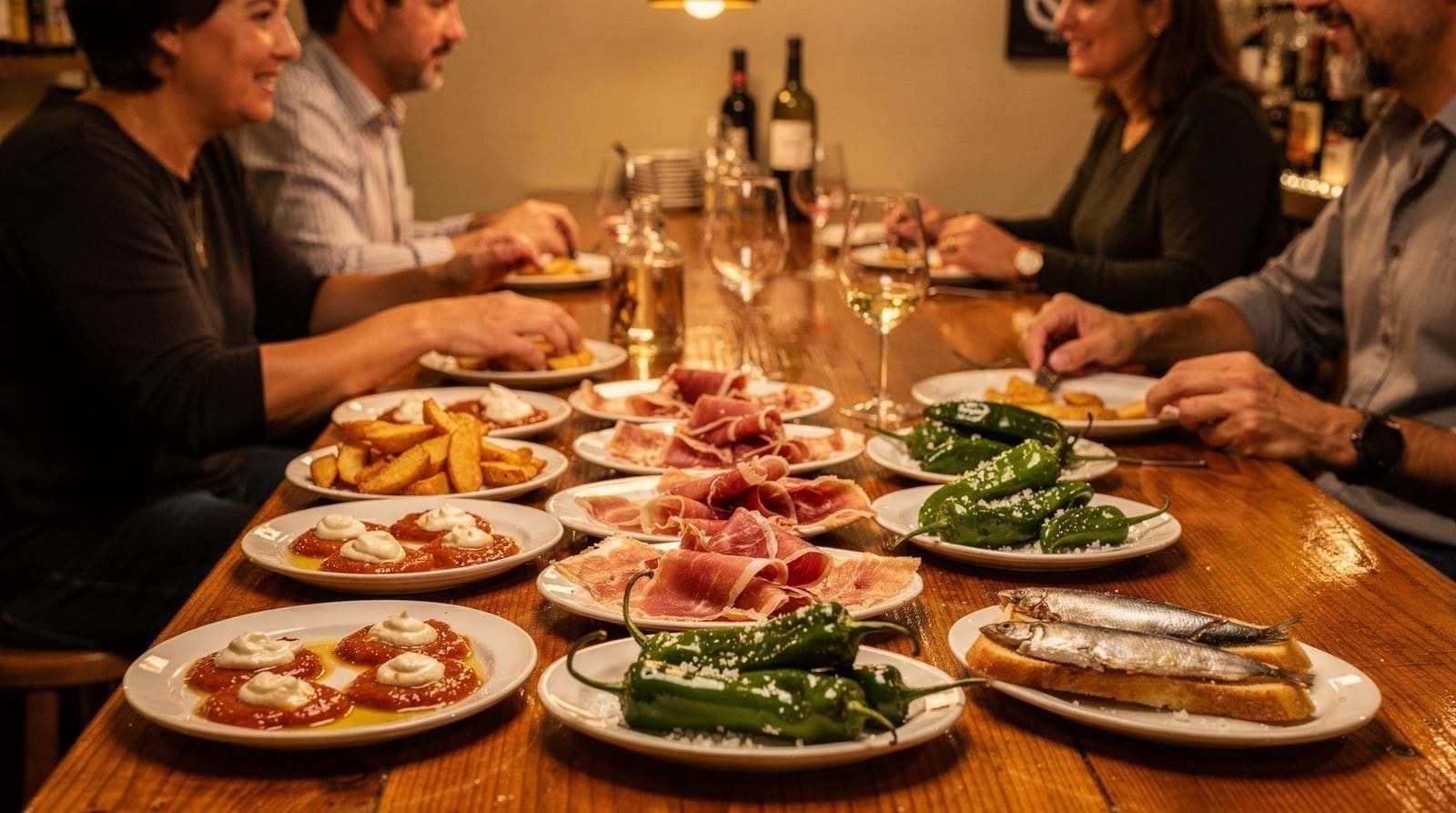
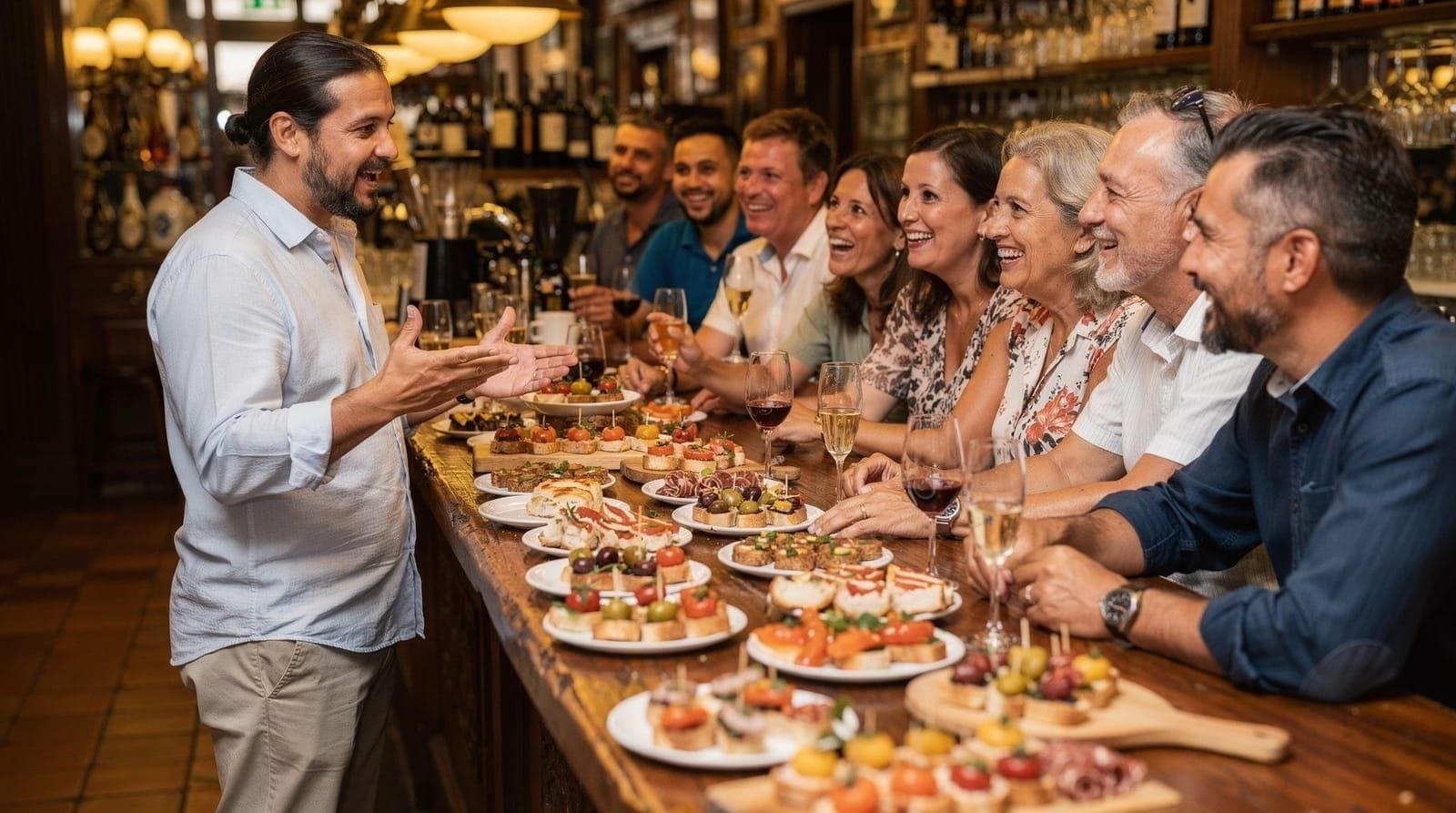
Several of Barcelona’s guided food tours incorporate vermut stops as part of a broader tapas and drinking walk. This is one of the more efficient ways to experience l’hora del vermut culture as a visitor — a guide who knows the neighbourhood will take you to bars that would take independent research to find, explain the cultural context in real time, and ensure that the vermut stop is followed by the kind of tapas that make the pairing make sense.
The tapas tours guide covers the main food tour options in more detail, including which ones specifically incorporate vermut as part of the experience.
For something on the water, a sunset sailing with vermouth and drinks combines the ritual with a view of the coastline you won’t get at a bar counter.
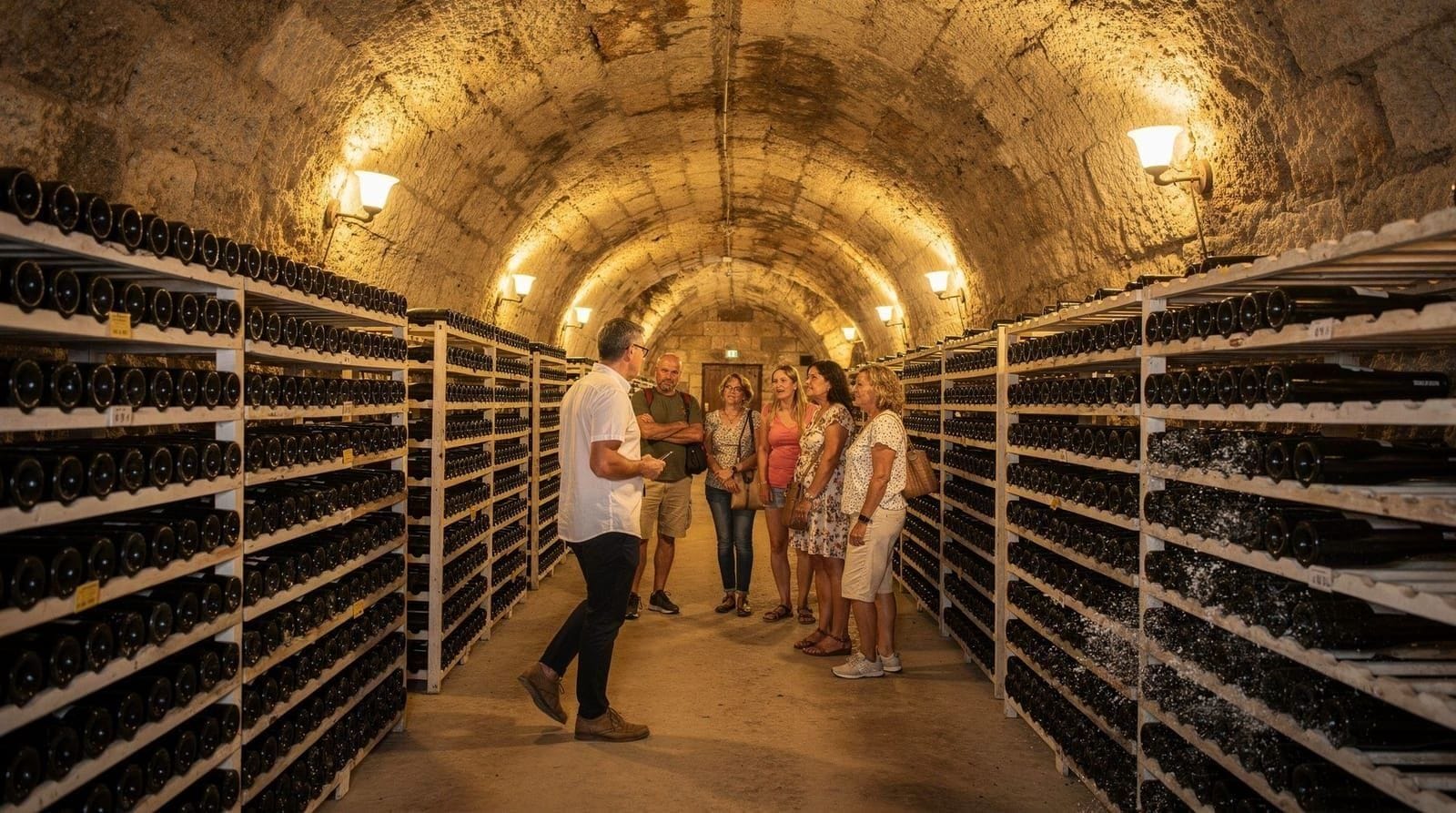
If you want to extend the drinking culture exploration to the wine country outside the city, the Penedès wine region is an easy day trip — the Penedès cava tours guide covers how to get there and what to do. Many of the same producers that make the wine used in Catalan vermouth production operate wineries that are open for visits.
Making vermut part of the season
Vermut culture shifts slightly with the calendar. In winter, bars lean into the indoor, wood-panelled character of places like Bar Marsella and Bodega Manel — the drink itself does not change, but the atmosphere gets cosier and the crowd skews older and more local. In summer, terraces open at Bar Calders and several Gràcia and Eixample bars, and the vermut hour stretches later as the heat delays the traditional Sunday lunch by 30–60 minutes in many households. Around festivals — La Mercè in September, Sant Jordi in April — informal vermut gatherings spill into the streets around the main squares, an extension of the ritual rather than a separate tradition. None of this changes how you should approach it as a visitor: turn up on a Sunday, order confidently, and let the room set the pace.
Can I visit Barcelona’s vermut bars on a weekday? Yes — most vermut bars are open daily. But the full cultural experience of l’hora del vermut is fundamentally a Sunday ritual. A Tuesday vermut at Bar Calders is perfectly pleasant; a Sunday noon vermut at the same bar, with the neighbourhood filling the space around you, is a different thing entirely.
Is there a non-alcoholic alternative? Most bars serve Fanta Limón (lemon Fanta) or agua con gas as non-alcoholic aperitifs. These are culturally accepted alternatives. A few bars serve non-alcoholic vermut alternatives, but these are not widely available.
Can I buy Catalan vermouth to take home? Yes — Yzaguirre, Miró, and Perucchi are all available at El Corte Inglés (the large department store) and at specialist wine and spirits shops in Eixample and El Born. Prices are €8–15 for a 1-litre bottle. Airport duty-free stocks Yzaguirre.
What food pairs best with vermouth? Anchovies (anxoves) are the canonical pairing — the saltiness and umami of the anchovy counterbalances the sweetness of the vermut. Olives, potato chips, salt cod preparations, and charcuterie all work well. Avoid anything sweet.
How is Catalan vermut different from a Negroni? A Negroni is a cocktail — gin, sweet vermouth, and Campari in equal parts. Catalan vermut as drunk at l’hora del vermut is simply the vermouth, served cold, with a splash of soda. The vermouth is the drink, not a cocktail component. Negronis are available at cocktail bars; they are not what you order when you walk into Bar Calders.
For a broader look at Barcelona food and drink culture, the neighbourhood guides for El Born and Poble-sec give context on the areas where Barcelona’s vermut tradition is most alive.
Frequently asked questions about Vermut in Barcelona
What is l'hora del vermut?
L'hora del vermut (the vermouth hour) is a Catalan Sunday ritual, typically observed between 12:00 and 14:00. Families and friends gather at neighbourhood bars for a glass of vermouth and light snacks before the main Sunday lunch. It is a social institution, not just a drink.How do you order vermouth in Barcelona?
In Catalan: 'Un vermut, si us plau.' In Spanish: 'Un vermú, por favor.' Specify if you want it amb gasosa (with soda, the standard Catalan style) or neat. It is usually served over ice with an olive and a slice of orange.What are the best Catalan vermouth brands?
Yzaguirre, Miró, and Perucchi are the main Catalan producers. Yzaguirre (from Terra Alta) is the most widely served and the standard reference for the Catalan style — richer and less botanical than Italian vermouths.How much does vermouth cost in Barcelona?
At a neighbourhood bar: €2.50–4.00 per glass. In tourist-facing areas near La Rambla: €5–8. The cheapest and best vermouth is always found in neighbourhood bars away from the tourist centre.Is Catalan vermouth different from Italian vermouth?
Yes. Catalan vermut tends to be darker, sweeter, and less sharply botanical than Italian vermouth. It is drunk as a standalone aperitif with simple accompaniments, not used primarily as a cocktail mixer.
Top experiences
Bookable activities with verified prices and instant confirmation on GetYourGuide.