Catalan culture guide: identity, language, food and festivals in Barcelona
Barcelona: 2-hour Gothic Quarter walking tour
Duration: 2 hours
- Free cancellation
Is Barcelona culture Spanish or Catalan?
Barcelona is the capital of Catalonia, an autonomous community with its own language (Catalan), cuisine, architecture, festivals and national symbols. While Catalonia is part of Spain politically, Catalan culture is distinct from Castilian Spanish culture and predates the Spanish state by centuries. Most residents identify as Catalan first. Visitors are warmly received when they engage with this identity respectfully.
Barcelona sits at the intersection of two identities: it is Spain’s second city by population and economic output, but it is also the capital of Catalonia — a nation within a state, with its own language, history, cuisine, festivals and architectural tradition stretching back more than a thousand years. To visit Barcelona purely as a Spanish city is to miss the most interesting half of it.
This guide is an honest introduction to Catalan culture as you will encounter it on the street, in restaurants, at festivals and in conversation. It is not a political document. The question of Catalan independence is genuinely contested and deeply felt; as a visitor your role is to observe and respect, not to adjudicate. What is not contested is the distinctiveness of the culture itself.
| Language | Catalan (co-official with Spanish) |
| Key symbol | Senyera flag — four red stripes on gold |
| Best festivals | Sant Jordi (23 Apr), La Mercè (23–27 Sep) |
| Cost to engage | Mostly free — festivals, sardana, castellers |
| Common mistake | Assuming Catalan culture = generic Spanish culture |
Understanding Catalan identity
The Senyera — four red horizontal stripes on a gold background — is everywhere in Barcelona. On apartment balconies, lampposts, football shirts, festival banners. It is one of the oldest flags in Europe, documented from the 12th century, and it is the flag of Catalonia, not of Spain. The Spanish flag is a different object. Noticing the distinction, and not conflating them, is the smallest act of cultural respect you can offer.
Catalonia was an independent political entity — the County of Barcelona, later the Crown of Aragon — from the 10th century until the early 18th century. The War of the Spanish Succession ended in 1714 with the fall of Barcelona and the abolition of Catalan self-government under Philip V. The date of that fall, 11 September 1714, is still commemorated annually as the Diada Nacional de Catalunya, Catalonia’s national day. This is not ancient history; it is lived memory and active politics. You will see it referenced in murals, demonstrations and conversations.
The contemporary independence movement that reached its peak between 2012 and 2017 remains a significant part of local political life, though its intensity has shifted. You do not need to have an opinion on it. You do need to understand that when a Catalan resident says they are Catalan rather than Spanish, they are making a statement about culture and identity that deserves to be taken at face value, not corrected.
The yellow ribbon, worn by many residents and displayed on buildings, is a symbol of solidarity with imprisoned or exiled independence leaders. The blue and white estelada flag (with a triangle and star) is the pro-independence variant of the Senyera. Neither requires a response from visitors; both are part of the visual landscape of the city.
Language: Catalan, not Spanish
Catalan is a Romance language descended from Latin, related to but distinct from Spanish, French and Italian. It is spoken by approximately 10 million people across Catalonia, Valencia, the Balearic Islands, Andorra (where it is the sole official language) and parts of southern France. It is not a dialect of Spanish; the two languages are no more mutually intelligible than Spanish and Portuguese.
In Barcelona, Catalan and Spanish are co-official languages and most residents are genuinely bilingual. Street signs, metro announcements, school instruction and official documents use Catalan by default or alongside Spanish. In tourist-facing contexts — hotels, restaurants, major attractions — English is spoken as a matter of course.
The phrase “do you speak Spanish?” addressed to a Catalan speaker carries a particular edge that “do you speak English?” does not. The first implies that Spanish is the correct language and Catalan a local quirk; the second is simply a practical request for communication. English is always the better choice for a visitor who does not speak either language.
A few words of Catalan go a long way:
- Bon dia — good morning
- Bona tarda — good afternoon
- Bona nit — good night
- Gràcies — thank you
- Moltes gràcies — thank you very much
- Si us plau — please
- De res — you’re welcome
- Perdona — excuse me / sorry
- Sí / No — yes / no
No one expects visitors to be fluent, and attempting even one or two words is received with genuine warmth. See the full guide to Catalan language basics for pronunciation and a wider phrase list.
Catalan food culture: what to eat and where
Catalan cuisine is a regional tradition with deep roots, distinct from both Castilian and Andalusian cooking. Understanding a few fundamentals will help you eat well and avoid tourist traps.
Pa amb tomàquet
The foundation of Catalan eating. A slice of toasted country bread — ideally pa de pagès, the round Catalan loaf — is rubbed vigorously with the cut face of a ripe tomato until the flesh is absorbed into the bread, then drizzled with olive oil and sprinkled with sea salt. The result is flavoured bread, not bruschetta and not a sandwich. It appears at breakfast with coffee, at lunch under charcuterie and cheese, at dinner under grilled fish. It is on every Catalan table. If a restaurant charges extra for it or serves it with commercial tomato paste from a tube, find another restaurant.
Crema catalana
Catalonia’s custard dessert predates crème brûlée by at least two centuries. A set custard of egg yolks, milk, sugar, lemon zest and cinnamon is topped with a thin layer of sugar that is caramelised with a hot iron — traditionally a branding iron, not a blowtorch. Served cold beneath the warm sugar layer. The flavour profile — citrus and cinnamon in the custard, rather than vanilla — is what distinguishes it from its French relative.
Vermut culture
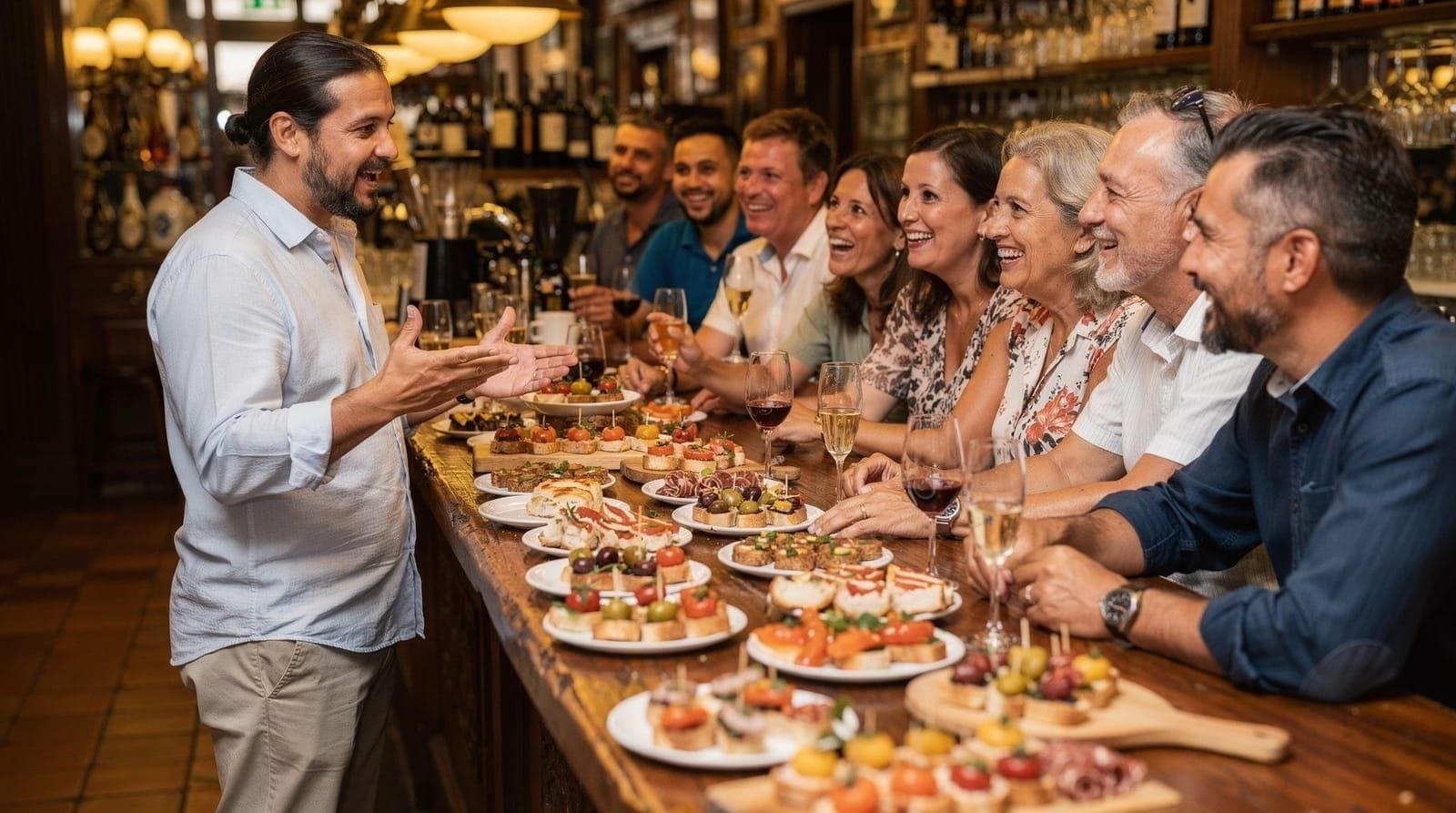
The l’hora del vermut (vermouth hour) is one of the most pleasant expressions of Catalan social life and largely invisible to visitors who arrive after lunch. Between 11:00 and 14:00, particularly on Sundays, neighbourhood bars fill with locals drinking vermut — typically served over ice with a splash of soda water, an olive and a slice of orange. Accompanied by small snacks (patatas bravas, olives, chips, a few anchovies), it is a pre-lunch ritual rather than a cocktail.
The best neighbourhoods for vermut are Gràcia, Sant Antoni, Poblenou and the Barceloneta. A classic vermut costs €2.50–4 in a neighbourhood bar. Avoid the tourist-facing bars on La Rambla, which charge double for the same drink. Many neighbourhood bars still make their own house vermut, a tradition that goes back generations in some families, and asking whether a bar’s vermut is casero (house-made) is a reliable way to find the better ones.
Cava vs sangria
Catalonia produces cava — méthode champenoise sparkling wine from the Penedès region, made primarily from the Macabeu, Parellada and Xarel·lo grape varieties. Cava Brut from producers like Gramona, Recaredo or Raventós i Blanc is exceptional wine. Catalans drink cava at celebrations, family lunches and as an aperitif. You can explore local production on a Penedès cava tour from Barcelona.
Sangria is not drunk locally. It exists, it is available in every tourist bar on La Rambla, and ordering it will not cause offence. But it is not Catalan and it is not what anyone around you is drinking. Order cava, local wine, cervesa (beer — Estrella Damm is the Barcelona brewery, founded in Poblenou in 1876) or vermut and you will be drinking what the city actually drinks.
Other dishes worth knowing
Fideuà: A pasta-based dish cooked in the same manner as paella — in a wide flat pan, with stock and seafood — but using thin noodles (fideus) instead of rice. Originally from the Valencia region but deeply embedded in Catalan coastal cooking. The best is served in the Barceloneta neighbourhood.
Escalivada: Roasted aubergine and red pepper, peeled and dressed with olive oil and salt. A classic Catalan side dish and one of the best things to eat in summer.
Botifarra: The principal Catalan sausage, made from pork and spiced simply with salt, pepper and sometimes nutmeg. Available fresh (for grilling) or cured. Botifarra amb mongetes — sausage with white beans — is a definitive Catalan dish.
Canelons: Catalan cannelloni. Made traditionally with leftover roast meat (veal, pork, chicken) combined with béchamel, stuffed into pasta tubes and baked. Served at Christmas by every Catalan grandmother. Finding them outside the holiday season requires a genuine neighbourhood restaurant.
Where to eat well: the food markets of Barcelona remain the best orientation point. Mercat de Santa Caterina in El Born and Mercat de l’Abaceria in Gràcia are less touristic than La Boqueria and have more neighbourhood life. For a meal that reflects honest Catalan cooking, look for menus in Catalan first and short menus with seasonal dishes.
Festivals: the calendar of Catalan life
Sant Jordi — 23 April
Sant Jordi is the patron saint of Catalonia and the day named after him has become the most purely Catalan celebration of the year. Couples exchange a red rose and a book — roses for women, books for men originally, though the custom has evolved into both giving both. La Rambla and the Gothic Quarter become a vast outdoor flower and book fair from early morning until evening. Booksellers and florists set up stalls along every major street; publishers release their most important books of the year on this date; authors sign copies in public.
The legend of Sant Jordi is the familiar dragon-slaying story: the knight kills the dragon, from whose blood springs a rosebush with red roses, one of which he gives to the princess. The festival has been celebrated in Barcelona since at least the 15th century. It is more intimate than La Mercè and more genuinely loved by locals — a day of gifts, books and flowers rather than spectacle.
La Mercè — 23–27 September
La Mercè is the festa major of the city of Barcelona, honouring the Virgin of Mercy (La Mare de Déu de la Mercè), co-patron of the city. Four full days of free outdoor events spread across the entire city, concentrated in the Gothic Quarter, Sant Pere, La Barceloneta and Montjuïc.
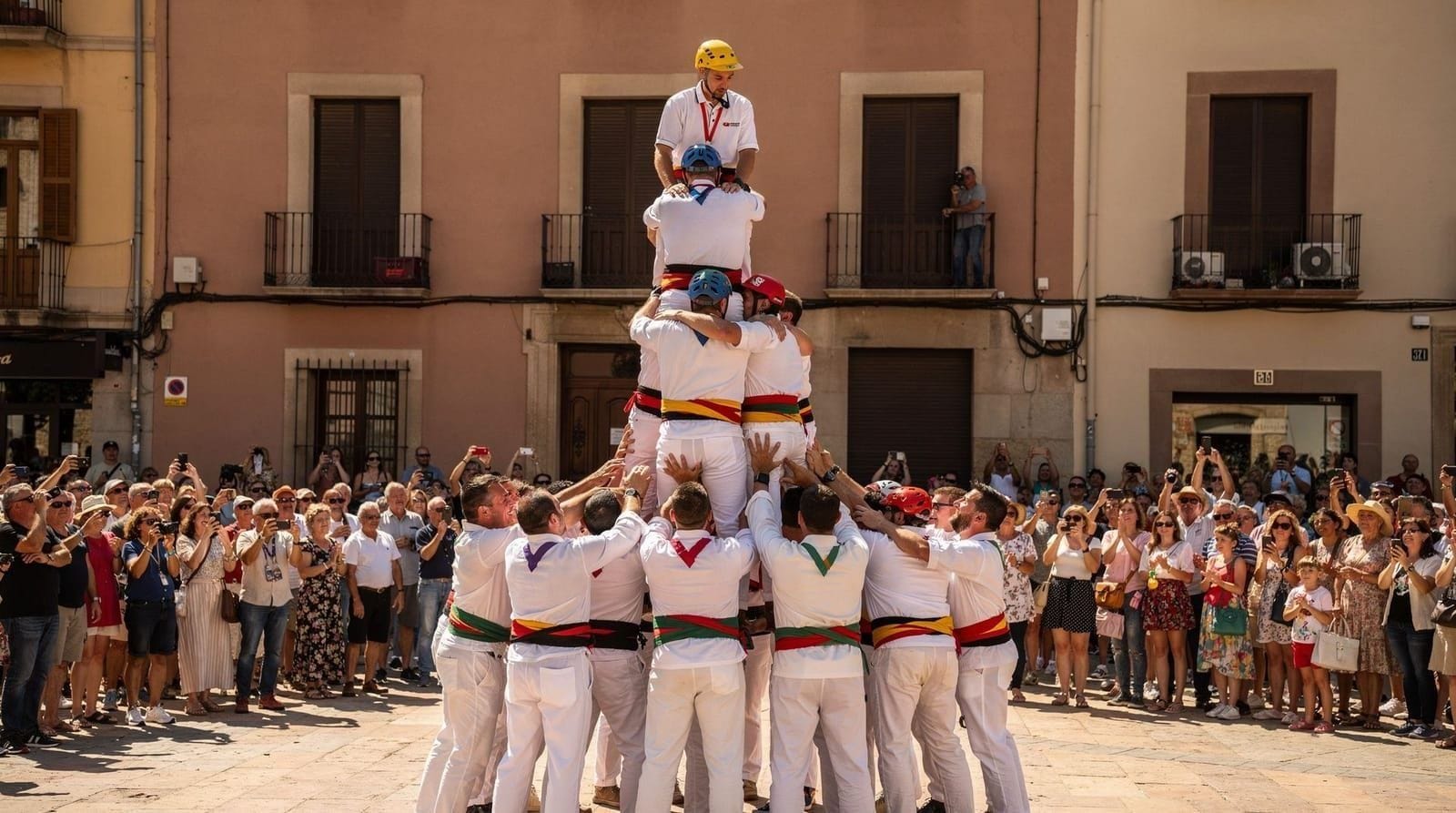
Key events: castellers (human tower competitions in Plaça de Sant Jaume — see the dedicated castellers guide), correfoc (the fire run, in which participants in devil costumes dance beneath fireworks and sparklers, and spectators are invited to join wearing protective clothing), gegants (processions of giant papier-mâché figures representing historical and mythological characters), free concerts ranging from traditional cobla music to international pop, and open days at institutions normally closed to the public.
Everything is free. The dates and programme are published on the Barcelona City Council website in July. La Mercè is the single best event for first-time visitors wanting an immersive experience of Catalan culture without any cost.
Festa Major de Gràcia — 14–20 August
The neighbourhood festival of Gràcia takes place across all the major streets and squares of the Gràcia district. Residents spend months constructing elaborate themed street decorations — each street competes for the best installation, using recycled materials, neon, natural elements, whatever concept the street committee has chosen that year. The results are extraordinary: entire streets transformed into underwater worlds, ancient ruins, tropical jungles, outer space.
The festival is free to walk through. Gràcia district (see the Gràcia neighbourhood guide) becomes impassable on weekend evenings as tens of thousands of visitors fill the decorated streets. Arrive on a weekday afternoon for a calmer experience. The installations are dismantled immediately after the festival ends.
Carnaval
Catalonia’s Carnaval season runs in February. Barcelona’s own carnival is modest by comparison to Sitges, a coastal town 40 kilometres south of Barcelona, whose Carnaval is one of the largest and most exuberant in southern Europe — particularly known for its LGBTQ+ celebrations and elaborate costumes. Easily reached by train from Passeig de Gràcia.
Castellers: the human towers
Every major Catalan festival features castellers: teams of people (colles castelleres) building human towers of seven to ten floors in public squares. The practice was inscribed on UNESCO’s Representative List of the Intangible Cultural Heritage of Humanity in 2010.
The structure has specific terminology. The pinya is the broad human base — dozens of people packed tightly together to form a stable foundation. The tronc is the trunk of the tower, rising from the pinya. The pom de dalt is the upper section. At the very top, a child — the enxaneta — climbs to the crown, raises one arm with four fingers extended (a gesture with specific meaning in Catalan tradition) and descends. When the enxaneta raises that hand, the tower is considered complete.
Different colles wear different colours: the Castellers de Barcelona wear blue; the Castellers de Vilafranca wear green; the Minyons de Terrassa wear red. Rivalry between colles is intense and affectionate, conducted at major festivals across Catalonia. The full guide to castellers covers the history, terminology and best places to see them in Barcelona.
Sardana: the circle dance
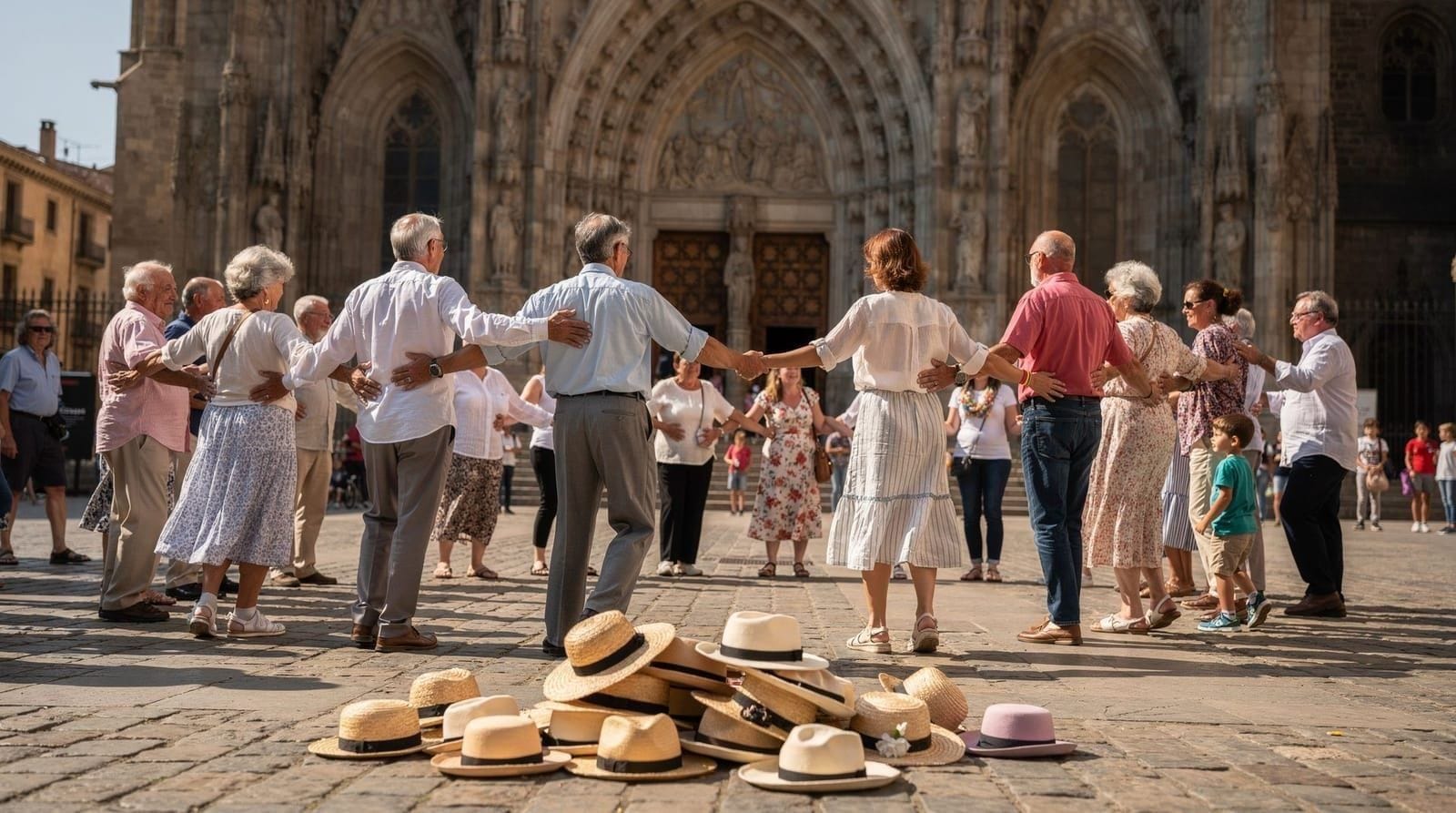
The sardana is Catalonia’s traditional circle dance — danced outdoors, for free, open to anyone who wishes to join. Participants hold hands in an expanding circle, following specific step patterns while a cobla (a traditional Catalan brass-and-wind ensemble) plays.
Unlike flamenco, sardana is not a performance. It is a community ritual. The circle is not a stage and the participants are not dancers in any professional sense; they are neighbours. Observers are welcome to watch and are actively invited to join. The steps can be learned in minutes, though the full pattern takes longer to master; locals will help. The dance itself carries symbolic weight in Catalan identity: the circle represents equality (no leader, no hierarchy, hands joined) and unity, which is why it was specifically discouraged during periods when Catalan cultural expression was suppressed, and why its continued practice today is understood locally as a small act of cultural continuity rather than mere folklore.
Traditionally danced on Sunday mornings in the square in front of the Barcelona Cathedral (Plaça de la Seu) and in Plaça de Sant Jaume. The frequency of public sardana events has declined since 2020; Sant Jordi and La Mercè remain the most reliable opportunities. The full sardana guide explains the music, the cobla instruments and how to join in.
Modernisme: a Catalan architectural movement
The architecture that defines Barcelona’s visual identity — Gaudí’s Sagrada Família, Casa Batlló and Park Güell; Domènech i Montaner’s Palau de la Música Catalana and Hospital de Sant Pau; Puig i Cadafalch’s Casa Amatller — belongs to the Catalan Modernisme movement, a late 19th and early 20th century flowering of architecture, design and the applied arts in Catalonia.
Modernisme was not a Spanish movement. It emerged specifically from Catalan cultural and economic confidence at the turn of the century; the industrial bourgeoisie of Barcelona commissioned buildings that expressed a specifically Catalan identity, incorporating Catalan symbols, medieval Catalan craft traditions, organic forms derived from the Catalan landscape and a rejection of the French and Italian styles dominant elsewhere. Understanding this context changes how you see the buildings.
Antoni Gaudí i Cornet (1852–1926) was born in Reus, Catalonia. He spent his entire career in Catalonia. He was a committed Catalan nationalist and a deeply devout Catholic. The Sagrada Família — still under construction, funded entirely by public donations — is his life’s central work and a building of Catalan religious nationalism as much as architectural innovation. Its towers are named after apostles and evangelists; the facades narrate the life of Christ in Catalan artistic tradition.
The Palau de la Música Catalana, designed by Lluís Domènech i Montaner and completed in 1908, is possibly the finest concert hall in Europe — a UNESCO World Heritage Site where the building itself is the performance. Guided tours and concerts are both available; a guided tour of the Palau de la Música is one of the most rewarding hours you can spend in Barcelona.
The term Modernisme itself is often mistranslated. It shares a root with “Art Nouveau” and “Jugendstil” but was never a simple import of either movement — Catalan architects drew heavily on medieval Catalan Gothic forms, on the craft guild traditions of ceramic tiling and wrought iron that had continued uninterrupted in Catalonia, and on an explicitly nationalist ambition to demonstrate that Catalan culture could produce a modern architectural language equal to anything in Paris or Vienna. Recognising Modernisme as a specifically Catalan political and cultural statement, not merely a decorative style, changes the experience of walking past building after building on the Eixample grid.
Catalan literature and the Sant Jordi book tradition
Catalan literature has its own canon separate from Spanish-language literature, and Sant Jordi’s book tradition is partly a celebration of that fact. Modern Catalan literature’s foundational period, the Renaixença of the 19th century, revived Catalan as a literary language after centuries in which Castilian dominated formal writing. Poets like Jacint Verdaguer and later novelists such as Mercè Rodoreda (whose novel “La Plaça del Diamant” is considered one of the great Catalan novels of the 20th century, set partly in Gràcia) wrote in a language that was, at various points in its history, actively suppressed. Today Catalan-language publishing is a substantial industry in its own right, and Sant Jordi remains its single biggest sales day of the year — publishers hold back major releases specifically for the date, and Catalan authors are treated with the kind of public attention that literary figures rarely receive elsewhere in Europe.
Regional identity beyond Barcelona
Catalan culture is not confined to Barcelona, and a fuller picture includes towns and regions closely tied to the traditions described above. Montserrat, the mountain monastery an hour from the city, is a significant pilgrimage site and home to the Escolania boys’ choir, one of the oldest music schools in Europe. The Penedès wine region, source of Catalonia’s cava, has its own strong local identity built around wine-making families going back generations. Girona and the towns of the Costa Brava carry distinct medieval and coastal traditions within the same broader Catalan cultural framework. Visitors with more than a long weekend benefit from seeing at least one of these areas alongside Barcelona, since Catalan identity is regionally varied rather than uniform.
Music: rumba catalana and the cobla
Barcelona has two indigenous musical traditions worth knowing.
Rumba catalana is a street music born in the Gypsy (Romani) community of the Raval and the Barceloneta in the 1950s and 1960s. It blended Flamenco rhythms brought from Andalusia with Latin American influences (particularly Cuban son and Colombian cumbia), producing a fast, percussive, guitar-driven music that became the soundtrack of working-class Barcelona. The guitarist Peret is its foundational figure; the Gipsy Kings emerged from the related French Catalan rumba tradition. It is still played in certain bars in the Raval. It is joyful, loud and entirely its own thing.
Cobla music is the ensemble music that accompanies sardana. A cobla consists of eleven musicians playing traditional Catalan instruments: the tenora and tible (oboe-like double-reed instruments), the flabiol (a small flute), the tamborí (a small drum), the fiscorn (a valved horn), trombones and trumpets. The sound is unmistakable — slightly reedy, slightly brassy, rhythmically precise. Hearing a cobla play for the first time at a sardana is one of those sounds that locates you immediately in a specific place.
Everyday Catalan customs worth knowing
Beyond festivals and food, a handful of everyday habits shape how Barcelona actually functions, and knowing them helps a visit go more smoothly. Shops in residential neighbourhoods (as opposed to the tourist-facing centre) often close for a few hours in the early afternoon, particularly smaller family-run businesses — this “siesta” pattern is less universal than the stereotype suggests but still real outside the main shopping streets. The greeting custom of two kisses on the cheek (starting with the right side) is standard between people who know each other, including in professional and semi-formal contexts, though a handshake is entirely acceptable and expected from visitors who aren’t sure. Meal times run later than in most of northern Europe: lunch from 13:30–15:30 and dinner rarely before 21:00, which affects everything from restaurant opening hours to when a neighbourhood actually feels lively. Sunday is still meaningfully a day of rest in residential areas — many small shops close entirely, and family lunches (often running two to three hours) are a genuine institution rather than a stereotype.
A note on Barcelona’s relationship with mass tourism
Any honest guide to Catalan culture should acknowledge that Barcelona’s relationship with tourism is more strained than in many European capitals. Housing costs driven partly by short-term rentals, crowding in the Gothic Quarter and Barceloneta, and the sheer volume of annual visitors relative to the city’s size have generated real local frustration, occasionally visible in graffiti or protest. This isn’t a reason to avoid the city, but it is a reason to travel with some awareness: staying in licensed accommodation, spreading time and spending across neighbourhoods rather than only the most-photographed streets, and generally behaving as a considerate guest rather than a consumer of a backdrop all make a genuine, if modest, difference. Engaging with the culture described throughout this guide — rather than treating the city as a stage set for Sagrada Família photos — is itself part of that respect.
What locals appreciate and what they find tiring
Appreciated: Attempting Catalan greetings. Asking genuine questions about Catalan history rather than assuming everything is Spanish. Engaging with festivals rather than photographing them from the outside. Eating in neighbourhood restaurants rather than La Rambla. Understanding that flamenco is from Andalusia and not seeking it in Barcelona as representative of local culture.
Tiring: The question “isn’t this really Spain?” (yes, politically; that is not the relevant question). Using “Spanish culture” as an umbrella term for everything on the Iberian Peninsula. Wearing beachwear in residential neighbourhoods. Noise after midnight in the Gothic Quarter, which is also a residential neighbourhood. Treating the sardana circle or the castellers event purely as photo content without any engagement.
None of these are grave errors. Barcelona is an enormously welcoming city with long experience of tourism. But Catalan culture rewards the visitor who approaches it with some curiosity — and the city is noticeably richer when you do.
Planning your visit
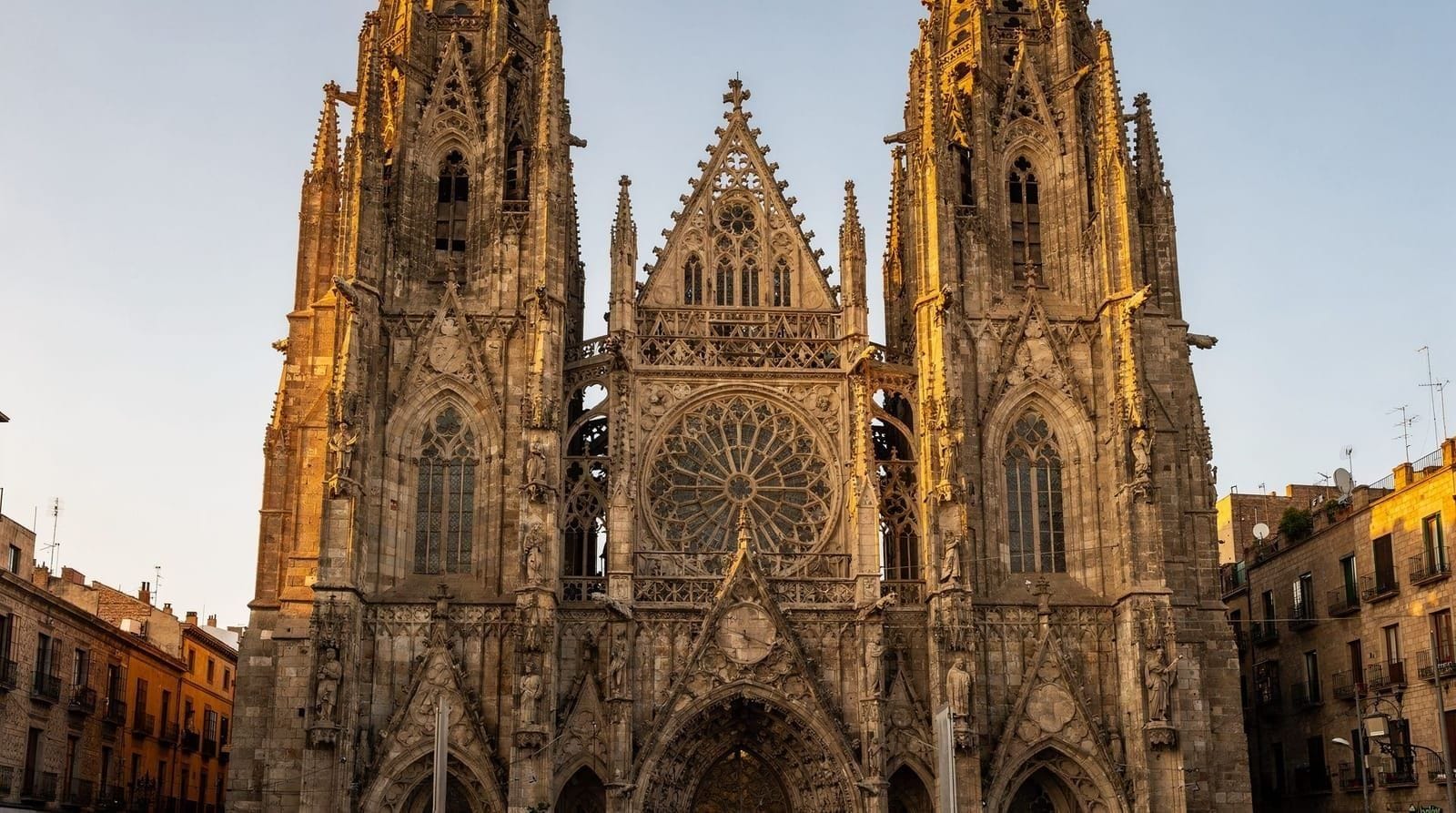
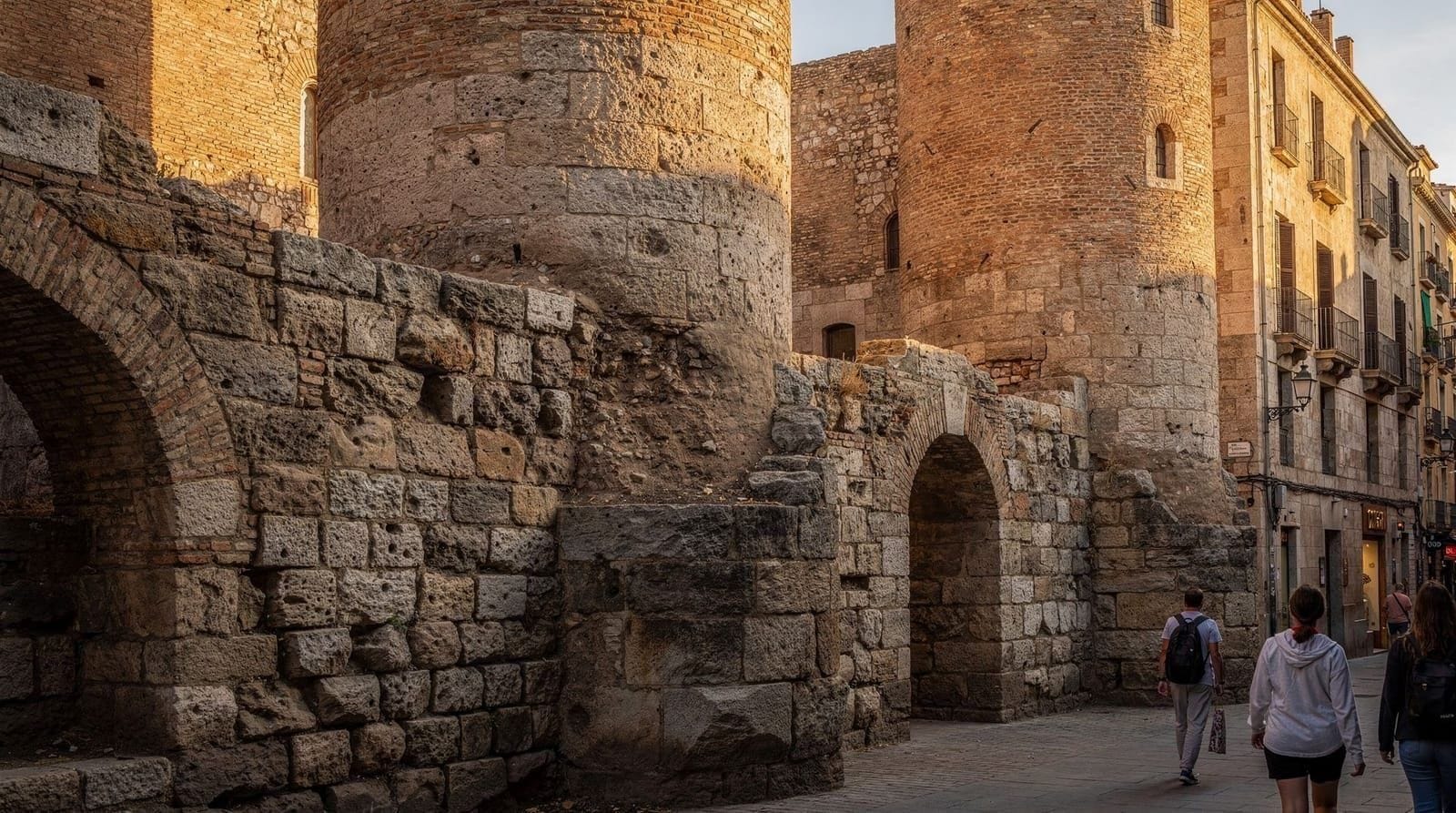
The Gothic Quarter walking tour is the practical starting point for understanding the historic city. The 2-hour Gothic Quarter walking tour covers the medieval streets, the Roman walls and the key monuments of the Barri Gòtic; the private version allows more time for questions and detours. The Gothic Quarter legends tour adds tapas and storytelling to the historical walk.
For budget planning, the daily budget calculator helps estimate realistic costs for meals, transport and entry fees. The best time to visit Barcelona guide gives a month-by-month breakdown that factors in festivals, crowds and prices.
A complete picture of Catalan culture requires time. La Mercè in September, Sant Jordi in April and the Festa Major de Gràcia in August each reveal a different register of the same underlying identity. Even a long weekend gives you enough time to eat well, walk the Gothic Quarter seriously and understand what you are looking at.
For quick answers to the most common questions about Catalan identity, language and festivals, see the FAQ section above.
Catalonia is a culture with depth, specificity and a great deal of warmth for visitors who arrive with genuine curiosity. The Senyera flying from a balcony in the Eixample, the cobla playing sardana in front of the Cathedral on a Sunday morning, the smell of pa amb tomàquet at a neighbourhood breakfast bar, the roar of a crowd watching a castle of human bodies rise against the sky at La Mercè — these are not tourist attractions. They are the life of a city that has kept its own identity intact for more than a thousand years and continues to do so. That is worth understanding before you arrive, and worth paying attention to when you do.
Frequently asked questions about Catalan culture guide
What language do people speak in Barcelona?
Catalan (català) is the co-official language alongside Spanish (castellano). Most residents are bilingual in both. Street signs, menus and official communication are often in Catalan first. English is widely spoken in tourist areas. Visitors who try a few words of Catalan — gràcies (thank you), bon dia (good morning), si us plau (please) — are always appreciated.What is the Catalan flag?
The Senyera is the traditional flag of Catalonia: four red horizontal stripes on a yellow background. It is one of the oldest flags in Europe, used since the 12th century. You will see it everywhere in Barcelona, on balconies, buildings and festivals. The Spanish flag is a separate symbol; do not confuse the two.What is pa amb tomàquet?
Pa amb tomàquet (bread with tomato) is the cornerstone of Catalan food culture. A slice of country bread is rubbed with the cut face of a ripe tomato, drizzled with olive oil and sprinkled with salt. It is served with almost every meal and is eaten at breakfast, lunch and dinner. Simple, outstanding and irreducibly Catalan.Do locals in Barcelona drink sangria?
No. Sangria is a tourist export, not something Catalans drink. Locals drink cava (the Catalan sparkling wine from the Penedès region), vermut (vermouth, especially during Sunday's l'hora del vermut), Estrella Damm beer or local wine. Ordering sangria in a neighbourhood bar is perfectly acceptable but marks you immediately as a tourist.What is Sant Jordi?
Sant Jordi (23 April) is Catalonia's most beloved festival: the day of the patron saint of Catalonia. Couples exchange a red rose and a book — roses for women, books for men, though the tradition has loosened. La Rambla and the Gothic Quarter become a vast flower and book market. It combines Valentine's Day and World Book Day into a single Catalan celebration.What is La Mercè festival?
La Mercè (23–27 September) is Barcelona's main patron-saint festival, celebrating the Virgin of Mercy. It offers four days of free outdoor events: castellers (human towers), correfoc (a fire run in which participants dance under fireworks), gegants (giant puppet processions) and free concerts. It is the single best event for first-time visitors wanting to experience authentic Catalan culture.Is Gaudí Spanish or Catalan?
Antoni Gaudí i Cornet (1852–1926) was Catalan. He was born in Reus, Catalonia, worked entirely in Catalonia and was a committed Catalan nationalist. His architecture — Sagrada Família, Casa Batlló, Park Güell — belongs to the Catalan Modernisme movement, not to any pan-Spanish tradition. Referring to his work as 'Spanish architecture' misrepresents both the man and the movement.What do tourists do that locals find rude?
The most common irritants: saying 'do you speak Spanish?' to someone who has just addressed you in Catalan (better: 'do you speak English?'); treating Catalan festivals as photo opportunities without engaging; wearing beachwear in the Gothic Quarter and Eixample; and assuming Barcelona culture is interchangeable with Andalusian or Castilian culture (especially regarding flamenco — flamenco is from Andalusia and is not a Catalan tradition).
Top experiences
Bookable activities with verified prices and instant confirmation on GetYourGuide.