Gaudí centenary 2026: what it means for visiting Barcelona
On June 7, 1926, Antoni Gaudí was struck by a tram on the Gran Via de les Corts Catalanes and died three days later, aged 73, in the Hospital de la Santa Creu. He had spent the final years of his life living almost monastically in a workshop at the Sagrada Família site, devoting himself entirely to the building that had consumed him for over four decades. He was identified with difficulty at the hospital — poorly dressed, carrying almost nothing — and was initially taken for a beggar.
A century later, 2026 is the year Barcelona turns all of that into a cultural moment of significant proportions. The Gaudí centenary is real, and it has real implications for anyone visiting the city this year.
| What | Centenary of Gaudí’s death (June 7, 1926) |
| Effect | Longer booking lead times, small ticket surcharges (~€3–5) |
| Book Sagrada Família | 8+ weeks ahead for summer, 6 weeks for spring/autumn |
| Book Park Güell | Same day as Sagrada Família |
| Programming | Exhibitions and architecture events run through October 2026 |
What the centenary actually means in practice
The headline practical impact: higher demand, longer booking lead times, and a centenary surcharge on tickets at the main Gaudí sites.
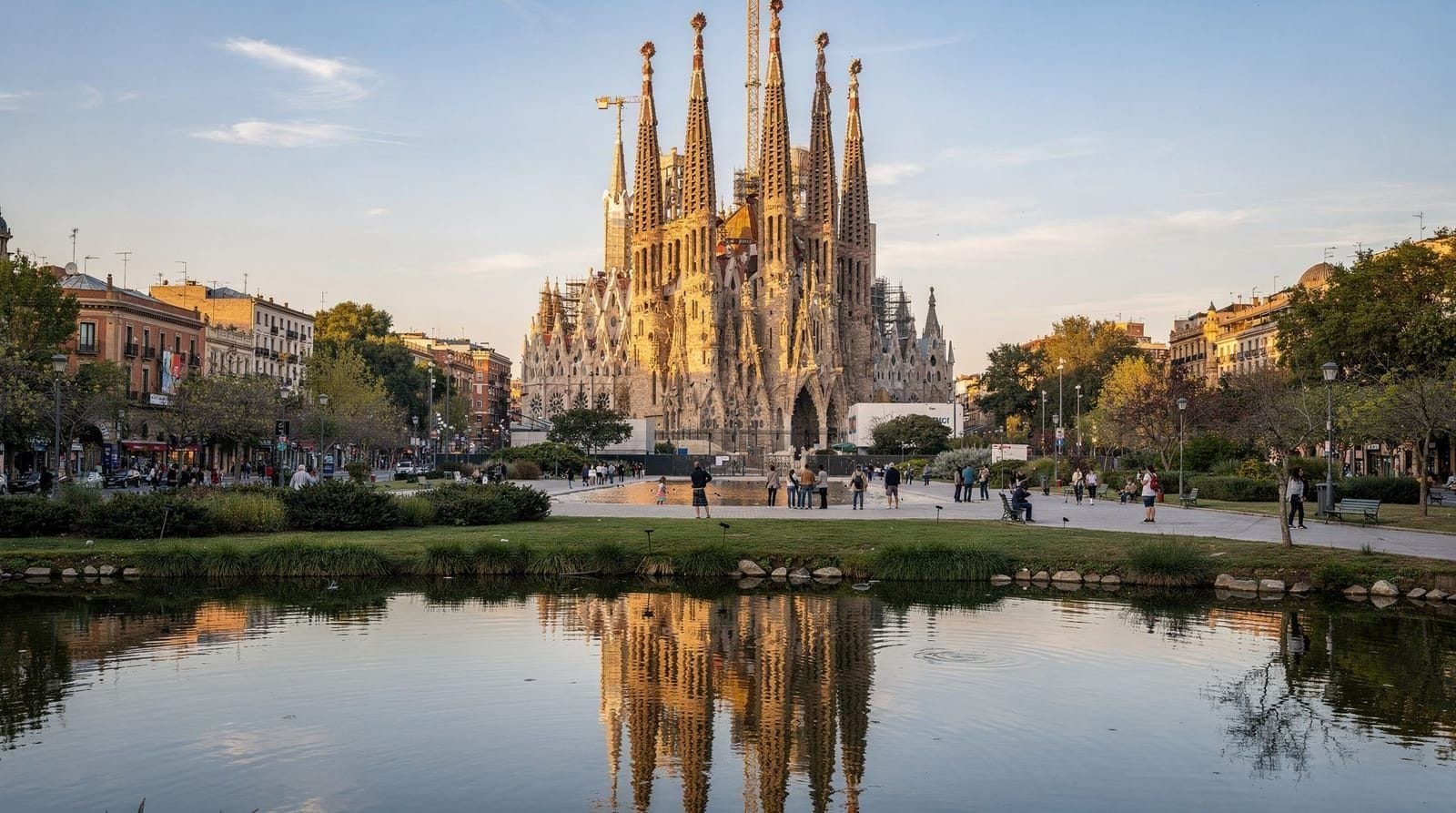
Sagrada Família has been selling out its peak-period visit slots 10 to 14 weeks in advance in 2026, compared to 4 to 6 weeks in a typical year. The centenary surcharge of approximately €3-5 per ticket has been applied across most ticket categories. The building itself continues its now-completed central nave phase and has moved into work on the towers — 2026 is genuinely a meaningful year to visit because the construction is at a particularly photogenic stage.
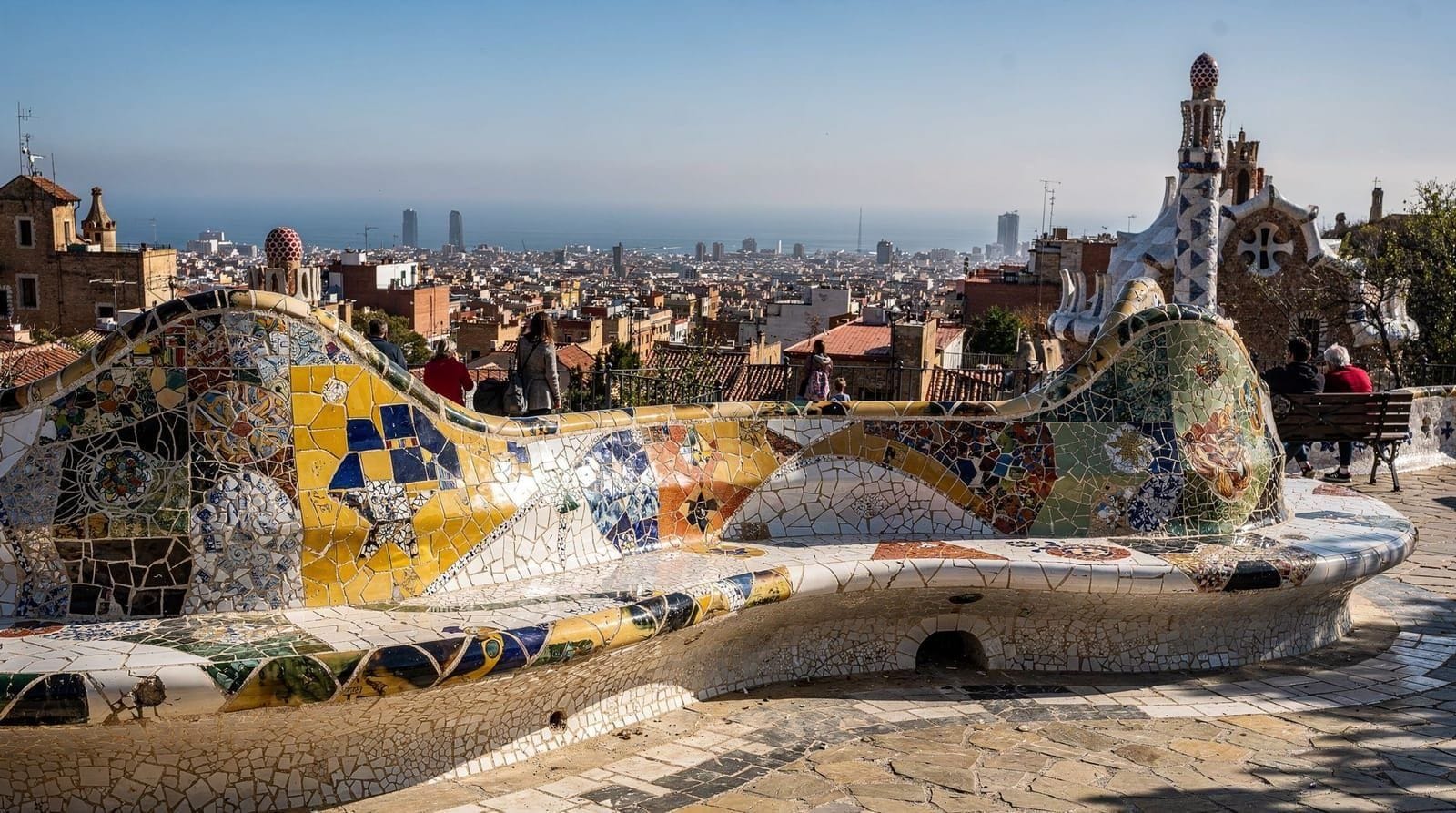
Park Güell sees similar pressure. The ticketed Monumental Zone — the Dragon Staircase, the Hypostyle Hall, the main terrace — is sold out weeks ahead for weekend visits and busy weekday slots throughout the summer. Book the moment your dates are confirmed.
Casa Batlló and La Pedrera (Casa Milà) both have limited nightly capacity and have been operating at near-full bookings for peak slots throughout the centenary year. Candlelit and evening experiences at both are worth seeking out — check their respective websites for availability.
The Sagrada Família guide and Gaudí trail have been updated for the centenary context.
The full Gaudí architecture inventory
Most visitors to Barcelona know three Gaudí buildings: the Sagrada Família, Park Güell, and either Casa Batlló or La Pedrera. The complete picture is richer.
Sagrada Família (Eixample, 1882–present): Gaudí took over the project in 1883 and worked on it until his death. The central nave, opened in 2010, is complete; work continues on the final towers, including the central Torre de Jesucrist which will be the tallest religious building in Europe when complete.
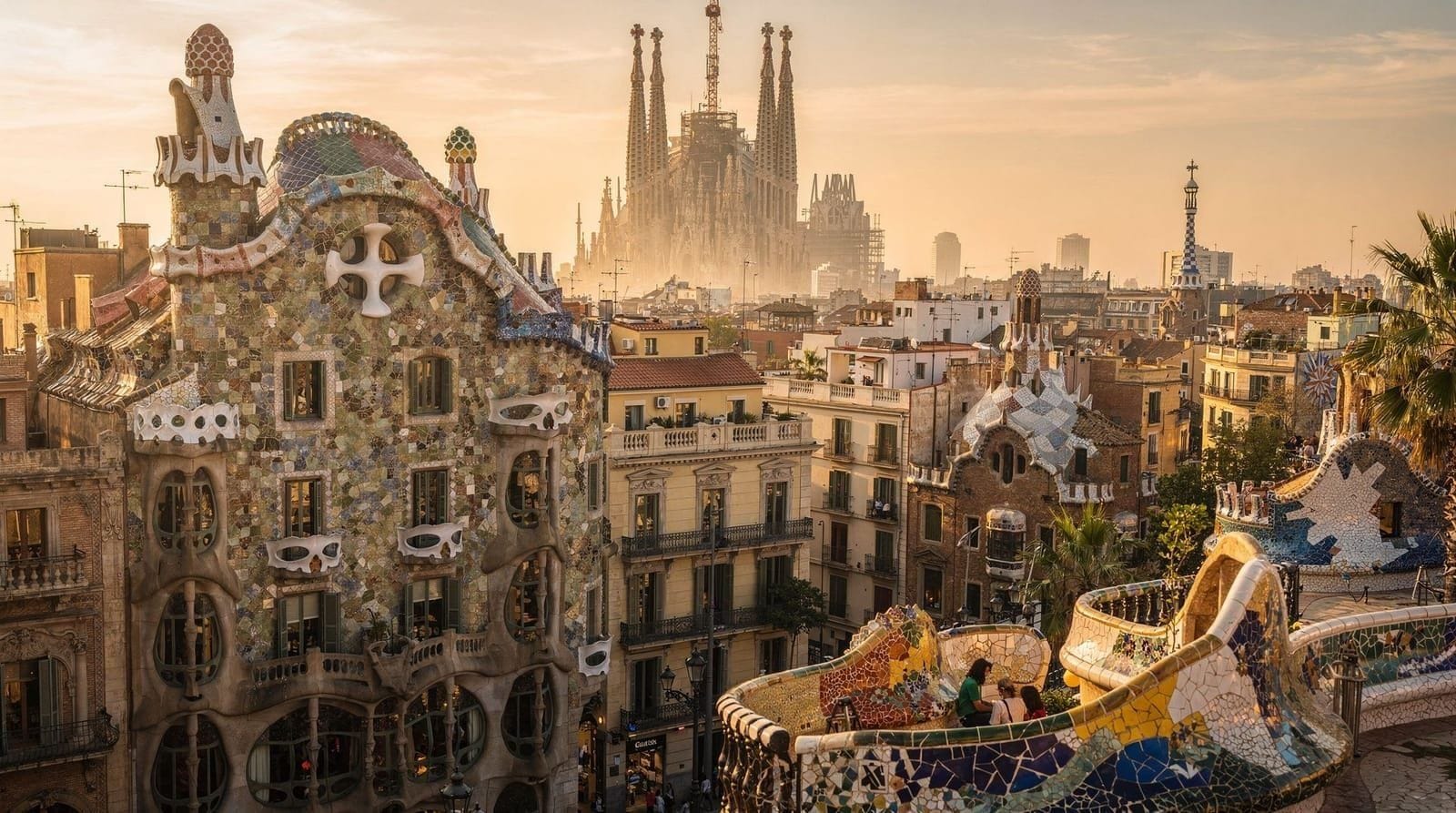
Park Güell (Gràcia, 1900–1914): Originally conceived as a private housing development that never sold, now a UNESCO World Heritage Site. The ticketed Monumental Zone covers the main terrace, the Hypostyle Hall and the dragon staircase. The surrounding wooded park is free.
Casa Batlló (Passeig de Gràcia, 1904–1906): A complete renovation of an existing building for the Batlló family. The facade — scaled like a dragon’s back, the roof a sea of blue-green ceramic — is one of the most photographed buildings in Europe. Interior visits with audio guide or immersive evening experience.
La Pedrera / Casa Milà (Passeig de Gràcia, 1906–1912): Gaudí’s last secular building, named for its stone quarry-like facade. The rooftop with its warrior-chimneys is the principal attraction; the restored interior period apartment is absorbing.
Casa Vicens (Gràcia, 1883–1885): Gaudí’s first major commission, a private house in the Gràcia neighbourhood that shows the Moorish and Orientalist influences of his early career. Less visited than the Passeig de Gràcia landmarks, quietly excellent.
Palau Güell (El Raval, 1886–1890): The first major commission from Eusebi Güell, the industrialist who became Gaudí’s principal patron. The rooftop chimneys prefigure La Pedrera; the interior has been faithfully restored.
Colònia Güell and the Crypt (Santa Coloma de Cervelló, 1908–1914): A workers’ village built for a Güell textile factory, 20 kilometres from Barcelona. The crypt — never completed — was Gaudí’s structural laboratory for Sagrada Família, where he developed the hanging chain models that allowed him to design the cathedral’s structures. Worth the trip for serious Gaudí interest.
Bellesguard (upper Barcelona, 1900–1909): A private house built on the site of a medieval palace of the Catalan Crown, combining Gothic historical reference with Gaudí’s structural innovations. Now open for guided visits; far less crowded than the main sites.
Why 2026 is genuinely worth visiting for the context
The centenary matters beyond the crowds and the surcharges. There is cultural programming throughout the year that puts Gaudí’s life and legacy into context that typical tourism doesn’t provide.
The major exhibition at the Institut Nacional d’Educació Física de Catalunya (INEFC) near Montjuïc covers Gaudí’s architectural philosophy and his spiritual beliefs — he was deeply Catholic, and the Sagrada Família was a religious project first and an architectural one second, in his own understanding. The exhibition runs through October 2026.
The Diocesi de Barcelona has opened archival materials relating to Gaudí’s beatification cause — the Catholic Church has been advancing the cause for his beatification since 1998, and centenary year has brought renewed attention to it. Whether or not you have any interest in the religious dimension, the story of the man is more complex and more interesting than “eccentric genius designed unusual buildings.”
Barcelona was also designated UNESCO-UIA World Capital of Architecture for the 2024–2026 cycle, which has brought a series of architecture events, open building days and temporary installations to the city. The centenary and the architecture capital designation overlap by design.
Booking order of priority in 2026
If you are visiting Barcelona in 2026 and want to see the Gaudí works, book in this order:
-
Sagrada Família — book as far in advance as possible, minimum 8 weeks for summer visits, 6 weeks for spring/autumn. Do not assume you can buy on the day; you cannot.
-
Park Güell Monumental Zone — book at the same time as Sagrada Família. Tickets are time-slotted; allow flexibility in timing if possible to find open slots.
-
Casa Batlló or La Pedrera — choose one for a thorough interior visit; attempting both in the same day feels rushed. Casa Batlló’s Magic Nights evening experience is worth looking for if your schedule allows.
-
Palau Güell and Casa Vicens — these can typically be booked with one to two weeks’ notice even in 2026, as they are slightly off the main tourist circuit. Visit one on arrival day to orient yourself.
-
Colònia Güell and Bellesguard — for serious Gaudí visitors. Each requires a half-day; both are significantly less crowded than the main sites.
The Park Güell guide has specific ticketing notes for the Monumental Zone.
A 2-3 day Gaudí route in 2026
Day 1: Sagrada Família in the morning (9am entry; book the tower access for the best views), Palau Güell in the afternoon, dinner in El Raval or El Born.
Day 2: Casa Vicens in Gràcia mid-morning (the surrounding neighbourhood is pleasant to walk), Park Güell in the ticketed time slot, walk the Eixample to La Pedrera or Casa Batlló in the late afternoon.
Day 3: Day trip to Colònia Güell (1 hour by FGC train to Molí Nou station, then a short taxi), return via Bellesguard in the late afternoon. Or replace with the Hospital de Sant Pau — the Modernisme masterpiece by Domènech i Montaner that Gaudí’s contemporary and architectural rival built across the street from the Sagrada Família.
The Gaudí trail guide maps the full route with timing.
The honest verdict on visiting in the centenary year
Yes, it is more crowded and more expensive than a standard year. The centenary surcharges are not enormous — €3-5 extra on a ticket you’d likely pay anyway — and the additional booking lead time is manageable if you plan early.
What 2026 adds: cultural context, exhibition programming, and the particular quality of visiting a building at a historically significant moment. The Sagrada Família in 2026 is objectively interesting to visit because the construction is further along than it has ever been and because the centenary has brought renewed attention to what Gaudí was trying to achieve. If you’re visiting anyway, the year is a bonus, not a deterrent.
Book early. The rest takes care of itself.
How this compares to visiting in a normal year
For anyone who has visited Barcelona before the centenary buzz, it’s worth being precise about what’s actually different. The buildings themselves haven’t changed in character — Sagrada Família still closes its central nave to new visitors during services, Park Güell’s free zone is exactly as accessible as ever, and Casa Vicens and Palau Güell remain comparatively easy to book even in centenary year. What’s changed is concentrated almost entirely at the two headline sites: Sagrada Família and Park Güell. If your itinerary already includes both, plan around the longer lead times above. If your interest runs to the wider Gaudí catalogue — Casa Vicens, Colònia Güell, Bellesguard — the centenary changes very little about how you book or when you go.
What if you can’t get tickets in time
If Sagrada Família or Park Güell slots are genuinely sold out for your dates, don’t panic and don’t pay a reseller markup. Officially licensed guided tours often hold a small separate ticket allocation and can secure entry even when the general booking calendar shows nothing available — this is the practical reason to book a guided option rather than waiting for a self-guided slot to reappear. Failing that, Casa Vicens and Palau Güell are excellent standalone Gaudí visits that rarely sell out, and either makes a satisfying centrepiece for a Gaudí day even without the two headline sites.