Poble-sec pintxos crawl: the best bars on Carrer de Blai
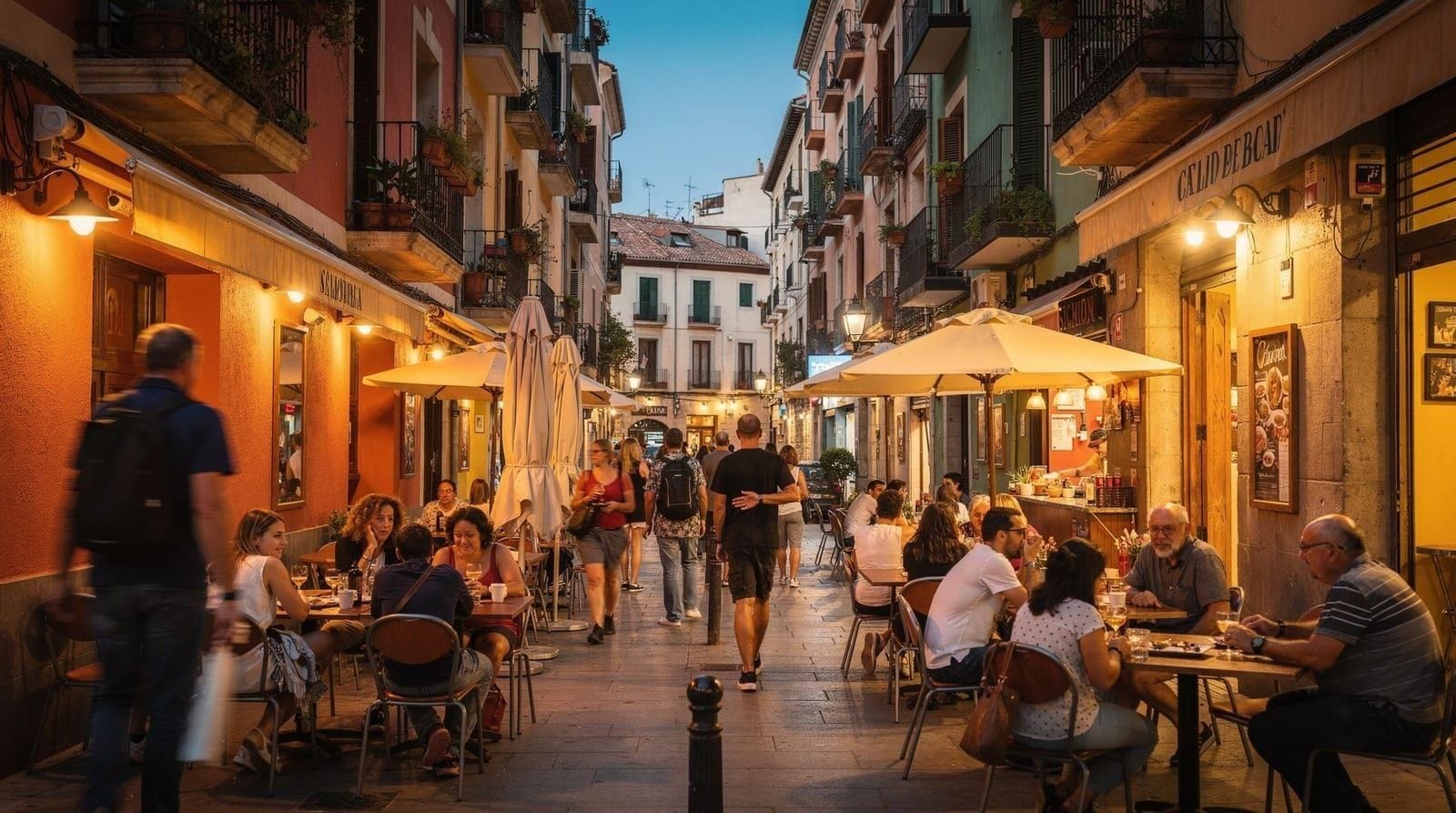
Barcelona borrowed the pintxos crawl from the Basque Country and made it its own, and the place where it happens best is a single street in Poble-sec: Carrer de Blai, a pedestrianised lane of about three hundred metres lined with bars that open their counters to the street and pile them high with small bites on bread.
It is not sophisticated. It is not meant to be. A pintxos crawl is an early evening ritual — arrive hungry, pick your way along the street, eat standing up, drink something cold, move on to the next bar. Done well, it is one of the most enjoyable things you can do in Barcelona for under €20.
| Where | Carrer de Blai, Poble-sec |
| Cost | €12–20 per person for 3–4 bars |
| Best time | From 19:00, before the freshest pintxos run out |
| Avoid | Saturday evening in summer (very crowded) |
| Getting there | Metro Paral·lel (L2/L3) or Poble Sec (L2/L3) |
What pintxos actually are
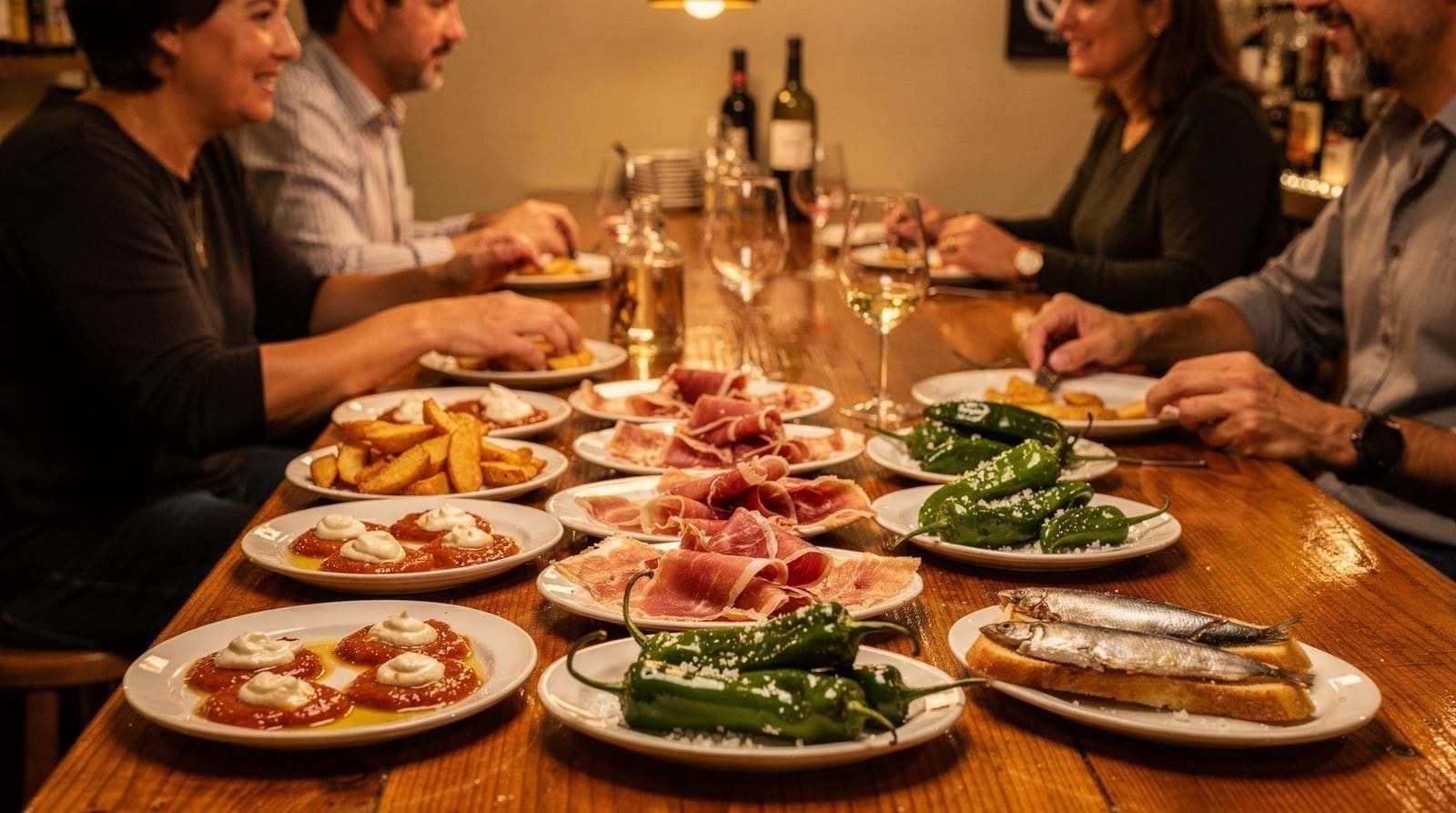
The name comes from the Basque word for spike — a pintxo (or pincho in Castilian) is traditionally a small piece of food anchored to a slice of bread by a toothpick. In San Sebastián, the Basque capital of this tradition, pintxos can be extraordinarily elaborate: tiny architectural constructions of smoked fish, cured meat, cheese and pickles that happen to rest on a piece of bread.
On Carrer de Blai, the tradition is more relaxed. The cold pintxos sitting on the bar are simpler — slices of bread with various toppings, a toothpick through the middle, made fresh at the start of service — while the hot pintxos, ordered from a chalkboard and cooked to order, are where the real eating happens: fried squid, pimientos de padrón, small portions of octopus with paprika, croquetes.
Cold pintxos cost €1.50–2.50 each. Hot pintxos from the chalkboard are €3–5 per portion. A drink (beer, wine, cava) costs €2–4 in most of these bars. Budget roughly €12–18 per person for a proper crawl across three or four bars.
When to go
Timing matters. The pintxos on the bar are laid out fresh at the start of the evening service — typically around 19:00 — and they are at their best in the first hour or two. By 21:00, the ones that haven’t been eaten are showing their age. Arriving at opening time gets you the freshest batch, the least crowded bar, and the best chance of finding the hot pintxos you want before everything runs out.
The street runs later on weekends, and there is a lunchtime pintxos culture too — the bars open around noon and the pattern repeats. But the evening crawl from 19:00 to 21:00 is the classic version.
Avoid Saturday evening if you are crowd-averse. Carrer de Blai is genuinely packed on summer Saturday nights: shoulder-to-shoulder, difficult to move between bars, hard to find a spot at the counter. A Tuesday or Wednesday evening is a different, quieter experience.
The best bars on Carrer de Blai
Bar Electricitat
The anchor of the street — the bar that is most representative of what Carrer de Blai does, without being the most famous or the most crowded. Bar Electricitat covers all the basics competently: a wide range of cold pintxos on the bar, a solid hot pintxos list, honest drinks prices, staff who have been doing this long enough not to be flustered by a full counter. Good first stop for the crawl because it gives you the reference point against which to judge the rest.
La Tasqueta de Blai
One of the busier bars on the street, particularly for hot pintxos. The chorizo with cider is worth ordering if it’s on the board; so are the fried mushrooms. The bread used for the cold pintxos is slightly better here than at some of the competition — properly toasted, not soggy. Gets crowded quickly; ideally visit early or be prepared to eat standing in the street rather than at the counter.
Bodega Blai 9
A slightly more wine-focused version of the pintxos bar concept: the drinks list here is better than average for the street, with more attention paid to Catalan wines and cavas alongside the standard beer-and-house-wine offering. The pintxos are good rather than exceptional. Worth stopping at primarily if you want to slow down and drink something interesting between the food-forward bars.
The institution nearby: Quimet and Quimet
Not on Carrer de Blai itself — a couple of streets away on Carrer del Poeta Cabanyes — but essential to any serious visit to Poble-sec’s food scene. Quimet and Quimet is a family-run bar that is a genuine Barcelona institution: tiny, entirely standing, stacked floor to ceiling with tins and bottles, and famous for its montaditos — small open sandwiches assembled with ingredients from the bar’s extraordinary collection of Spanish conservas.
The combinations are creative and specific: smoked salmon with yoghurt and truffle honey, tuna belly with sun-dried tomato, anchovies with things that have no business being as good together as they are. The canned seafood (conservas) here is high-quality stuff — this is not the cheap tinned fish of other bars, but good sardines, razor clams, sea urchin in season.
Critical note: Quimet and Quimet is midday only, closing in the early afternoon. It does not do evenings. If you are planning a pintxos crawl in the traditional evening slot, Quimet is a lunch or early-afternoon stop — combine it with the Blai crawl as a late-afternoon prelude, or plan a separate midday visit. It is worth the separate trip.
Poble-sec as a neighbourhood
Carrer de Blai is the reason most visitors come to Poble-sec, but the neighbourhood is worth understanding more broadly. It sits between Montjuïc to the south and the Avinguda del Paral·lel to the north, a working-class area that has been slowly gentrifying over the past decade without fully tipping over into the kind of neighbourhood where coffee costs €6 and the bars have no prices on the menu.
This gives it a particular character: independent restaurants that have to be good to survive, a local crowd that actually lives here, and prices that are noticeably more reasonable than El Born or the upper end of Eixample. If you are looking for where Barcelona’s food culture exists outside the tourist circuit, Poble-sec is one of the best answers.
Combining Blai with Montjuïc
The natural pairing for a Carrer de Blai evening is Montjuïc either before or after. The hill is immediately uphill from the neighbourhood and accessible by funicular from Paral·lel metro station (L2 and L3) or by cable car from Barceloneta.
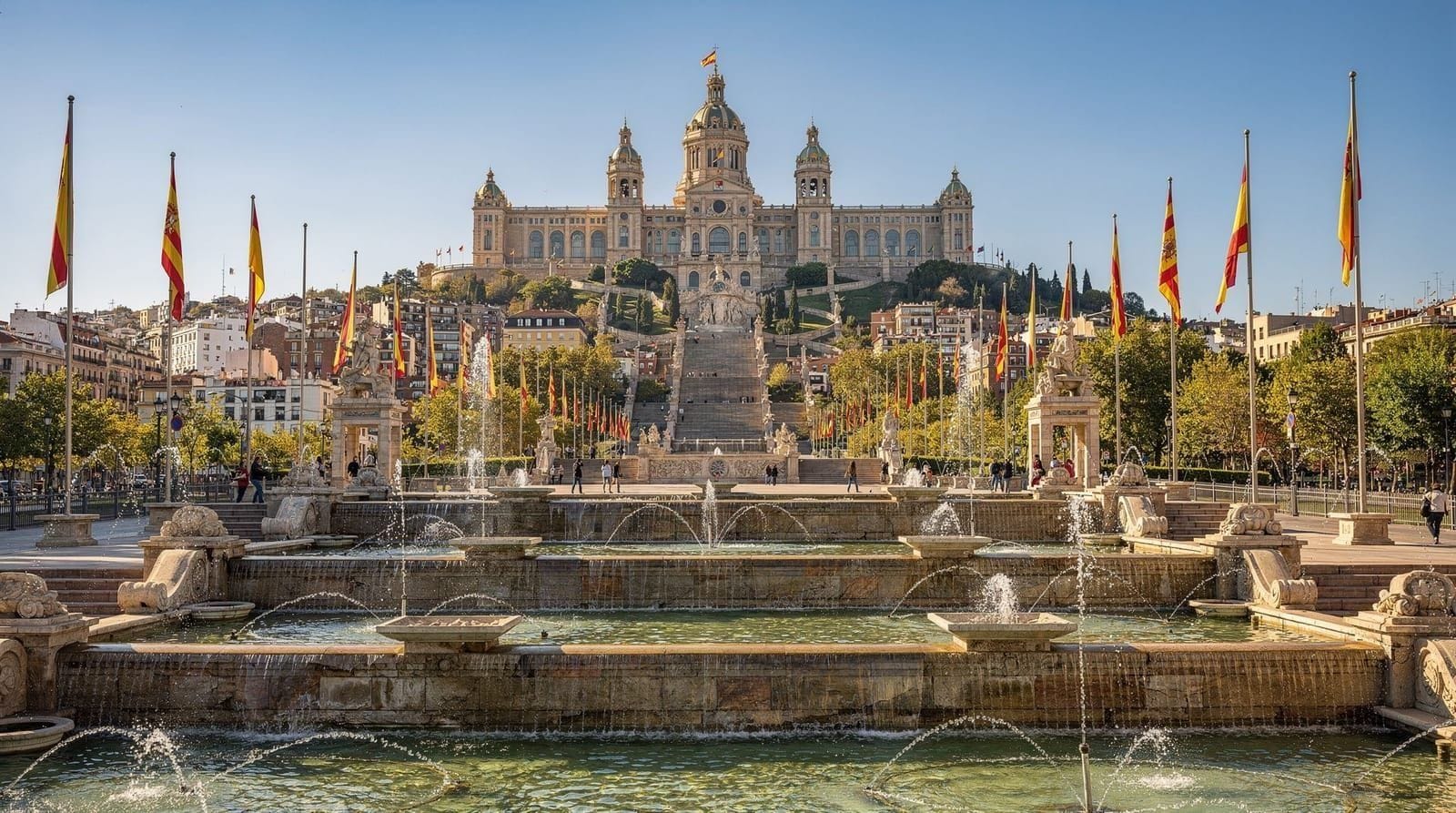
If you are doing Montjuïc in the afternoon — the Joan Miró Foundation, the castle, the gardens — the pintxos crawl makes a logical early evening conclusion as you come back down. If you are going up to watch the Magic Fountain show (Thursday through Sunday evenings in season), the crawl works as a 19:00–20:30 warm-up before heading uphill for the 21:00 or 21:30 show.
Either way, the combination makes sense: an afternoon of culture followed by an early evening of good cheap food and drink, then something spectacular in the sky. This is not a bad way to spend a day in Barcelona.
A note on the pintxos vs tapas distinction
Visitors sometimes arrive on Carrer de Blai expecting tapas in the Andalusian sense — small dishes brought to the table. Pintxos work differently, and understanding the difference helps you get what you actually want.
With pintxos, you take what you want from the bar (the cold ones laid out on trays), or you point and ask for hot ones from the board. There is no table service in the traditional pintxos bar. You eat standing at the counter or carry your plate to a table if one is free. The bill is calculated at the end by counting toothpicks for cold pintxos and combining that with any hot orders.
Some bars on Carrer de Blai have drifted toward a more hybrid model — menus, table service, tapas alongside pintxos — which works fine but is a different experience. If you want the purist version, stick to the bars that have the piled-up trays visible from the street and no menu boards with photographs.
Practical logistics
Getting there: Metro Paral·lel (L2/L3) is the most direct option, putting you at the bottom of Avinguda del Paral·lel with Carrer de Blai a five-minute walk uphill. Alternatively, metro Poble Sec on the same lines drops you closer to the residential heart of the neighbourhood.
What to drink: Beer (cerveza or the Catalan clara — lager with a small amount of lemon soda) is the classic pintxos accompaniment. Cava by the glass is often available and pairs well with the seafood options. Avoid ordering wine by the glass in the busier bars — the turnover may not be what you’d hope for. A glass of house cava is the safer bet.
Groups: Carrer de Blai works well for small groups (2–4 people) who can navigate a crowded bar together. For larger groups, it becomes unwieldy — everyone ends up ordering different things at different speeds and the social logic of the crawl falls apart. Better to split into smaller groups and meet at a terrace afterwards.
Budget: €15–20 per person for a satisfying crawl across three bars. More if you stop at Quimet and Quimet separately. This is among the most affordable ways to eat well in central Barcelona — considerably cheaper than a sit-down restaurant in El Born or the Gothic Quarter for equivalent quality.
A note on ordering etiquette
If your Spanish or Catalan is limited, ordering on Carrer de Blai is still easy — pointing works fine, and most bar staff are used to visitors doing exactly that. For cold pintxos, simply take the plate you want from the tray and keep the toothpick on your own plate; that’s how the bill gets calculated at the end. For hot pintxos, listen for the chalkboard items being called out, or ask “¿qué hay?” (“what’s on?”) if the board isn’t visible from where you’re standing. Nobody will mind a tourist ordering by pointing — it’s the normal way most people, locals included, get through a busy counter quickly.
If you’d rather have a guide handle the ordering
Self-navigating a pintxos crawl is straightforward, but for visitors who prefer not to guess which bars are worth stopping at or how to order in Catalan/Spanish, a guided tapas evening is a reasonable alternative — you get a curated stop selection and someone else doing the ordering, at the cost of some spontaneity.
How Blai compares to Barcelona’s other tapas streets
| Street/area | Style | Price level | Crowd |
|---|---|---|---|
| Carrer de Blai (Poble-sec) | Pintxos, counter-service | € | Local + visitors |
| El Born tapas streets | Sit-down tapas | €€ | Mostly visitors |
| Gothic Quarter bars | Mixed, touristy | €€–€€€ | Mostly visitors |
| Gràcia bodegas | Vermut + small plates | € | Mostly local |
Carrer de Blai sits at the more affordable, more local end of that spectrum, which is a large part of why it’s worth the trip out to Poble-sec rather than settling for the nearest tapas bar to your hotel.