Barcelona nightlife guide: when it starts, where to go, and what to avoid
Barcelona: nightlife private tour
Duration: 3 hours
- Free cancellation
When does nightlife actually start in Barcelona?
Barcelona nightlife runs much later than most visitors expect. Locals eat dinner between 21:00 and 22:00, move to bars around 01:00, and clubs do not fill until 02:00 at the earliest. If you arrive at a club before midnight you will be nearly alone. Closing time is typically 05:00 to 06:00.
| When it starts | Dinner 21:00–22:00, bars fill 01:00–03:00, clubs peak 02:00–05:00 |
| Entry cost | Free before midnight at most clubs, €10–20 cover after |
| Best local area | Poble-sec (Carrer de Blai) |
| Best beach-club area | Barceloneta (Opium, CDLC, Pacha) |
| Getting home | Metro to 00:00 weekdays / 02:00 Fri / 24h Sat, or Nitbus |
How Barcelona nightlife actually works — and why arriving at 22:00 leaves you standing alone
Every first-time visitor makes the same mistake: they show up at a Barcelona club at 23:00 expecting atmosphere, find a nearly empty room, feel cheated, and conclude that the nightlife is overrated. It is not overrated. The timeline is just completely different from what most northern Europeans or North Americans are used to.
Here is the actual sequence of a Barcelona night out, as locals live it:
19:00–21:00 — aperitivo time. Vermut at a neighbourhood bar, or a glass of cava somewhere with a terrace. No rush, no destination yet. This is the warmup that does not feel like warmup.
21:00–22:00 — dinner. Actual dinner, not a snack. Barcelona restaurants do not fill until 21:30. If you book at 20:00 you will be eating alone surrounded by tourists on early schedules. Go at 21:30.
23:00–01:00 — the pre-party (or botellón for younger crowds). Bar-hopping, cocktail bars, local spots. This is when El Born and the Poble-sec terrace bars are at their best — busy but not heaving, easier to have a conversation, more interesting than a club.
01:00–03:00 — bars are full. This is peak bar time. Clubs are starting to find their feet.
02:00–06:00 — clubs peak. If you walk into Opium or CDLC at 02:30 on a Saturday, you will understand why Barcelona has a reputation. The place is properly alive. If you walked in at midnight, you were alone.
This is not exaggerated. Nightclub doors in Barcelona do not see real footfall until 02:00 on weekends. Plan your energy accordingly: eat late, pace the earlier hours, arrive at clubs when it counts.
Barcelona by area: choosing the right night for your mood
Barcelona’s nightlife is not one thing. Different neighbourhoods attract completely different crowds and offer completely different experiences. Picking the wrong area for your mood is the other common mistake.
Barceloneta and the waterfront
The beach clubs — Opium, CDLC, Shoko, Pacha — are here. They are large, loud, professionally run operations that cater primarily to international tourists and younger Spanish visitors from outside Catalonia. The music is commercial house and pop. The drinks are expensive (€12–16 for a gin-tonic). The crowds are enthusiastic.
None of that is a criticism. If you want a big beach club experience with sea air and a party atmosphere, Barceloneta delivers exactly that. Opium holds around 2,000 people across indoor and outdoor areas; CDLC has a chic beach club vibe with a capacity around 1,200. Both offer free entry before midnight and cover of €12–18 after.
What Barceloneta is not: authentic. You will meet very few locals who go to Opium on a regular basis. It is a great time if you want that time — just go in with your eyes open.
Poble-sec: the most local option
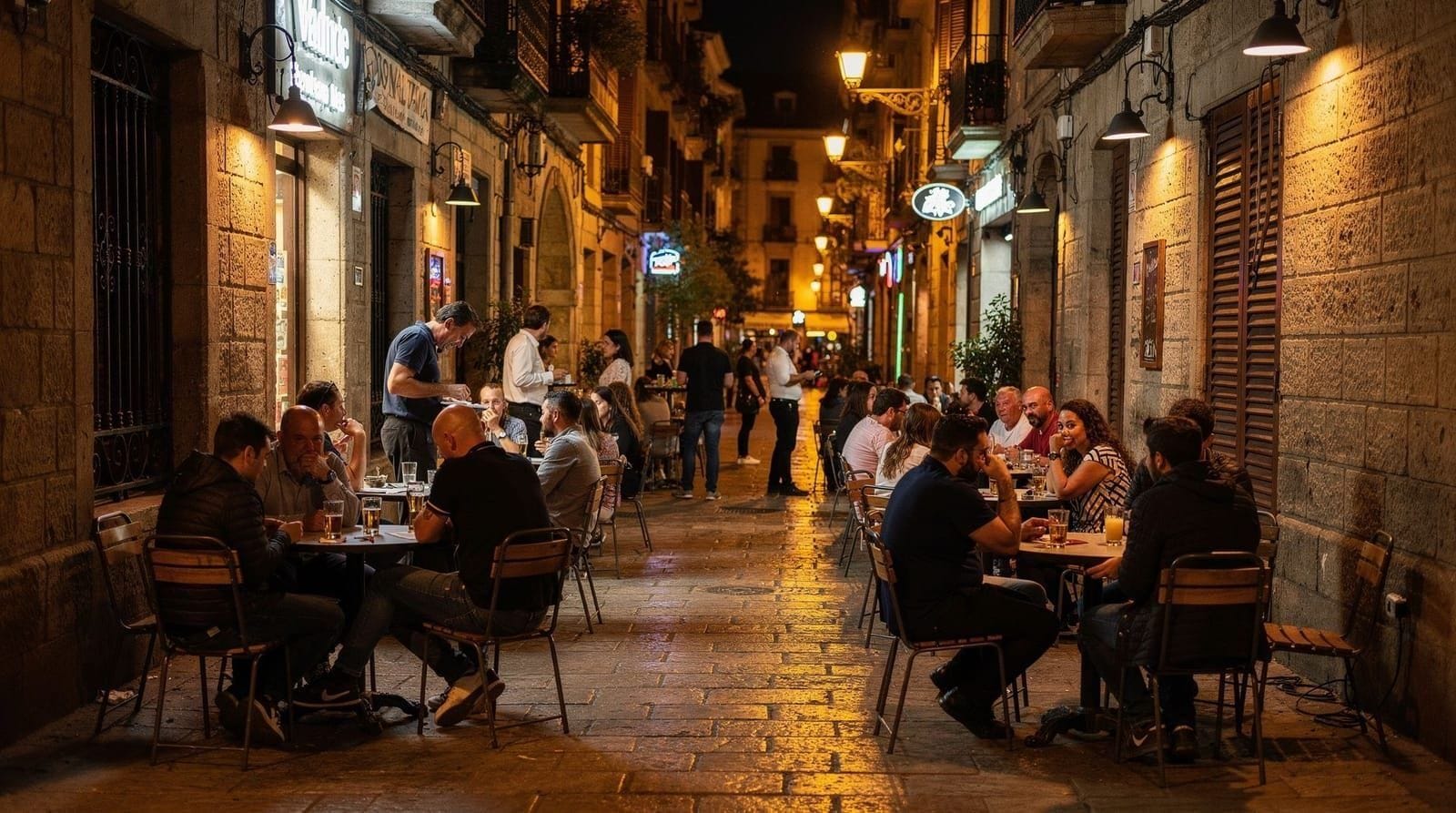
Carrer de Blai is a narrow street in Poble-sec lined with pintxos bars (the Basque-style small bites on bread) and neighbourhood taverns. It is the single best introduction to how Barcelona actually socialises after dark, and it is almost entirely off the tourist circuit.
Start with pintxos on Blai between 21:00 and 23:00 — each piece costs €1.50–2.50, the Galician-Catalan hybrid bars here serve excellent house wine for €2–3 a glass. Then walk five minutes to Sala Apolo on Carrer Nou de la Rambla. Apolo runs two formats: live music nights (international indie and alternative acts) and its legendary Nitsa nights (electronic music, serious crowd, one of the best sound systems in the city). A €12–15 ticket for a Nitsa night is one of the best value nights out in Barcelona.
Montjuïc is a short walk uphill from Poble-sec, which makes it possible to start the evening with the free Magic Fountain show before descending to Blai for pintxos. That combination — free spectacle, neighbourhood food, serious music venue — is a Barcelona night at its best.
Gràcia: neighbourhood bars, very different vibe
Gràcia is where Barcelona residents who are tired of clubs go. The neighbourhood has a dense network of small bars on streets like Carrer del Torrent de l’Olla and around the Plaça del Sol and Plaça de la Vila de Gràcia squares. These are the kinds of bars where the bartender knows the regulars by name, the music is not overwhelming, and a glass of wine costs €3.
Gràcia does not have big clubs. That is the point. It is for people who want to drink well in interesting places and talk to each other. If you are travelling with someone who does not want to go clubbing but still wants a genuinely good night out, Gràcia is the answer.
El Born: cocktail bars and creative crowds
El Born sits between the Gothic Quarter and Barceloneta and has some of the best cocktail bars in the city. The neighbourhood is more expensive than Gràcia but more local than Barceloneta. Bar Marsella on Carrer dels Escudellers (technically just into El Raval, but close) is one of the oldest bars in Barcelona and serves its own absinthe. Bar Paradiso, entered through the back of a pastrami deli, makes serious cocktails behind an unmarked door.
El Born is at its best from 23:00 to 02:00. It is not a clubbing destination but it is excellent for the hours before a club or as an alternative to one.
Eixample: upscale and varied
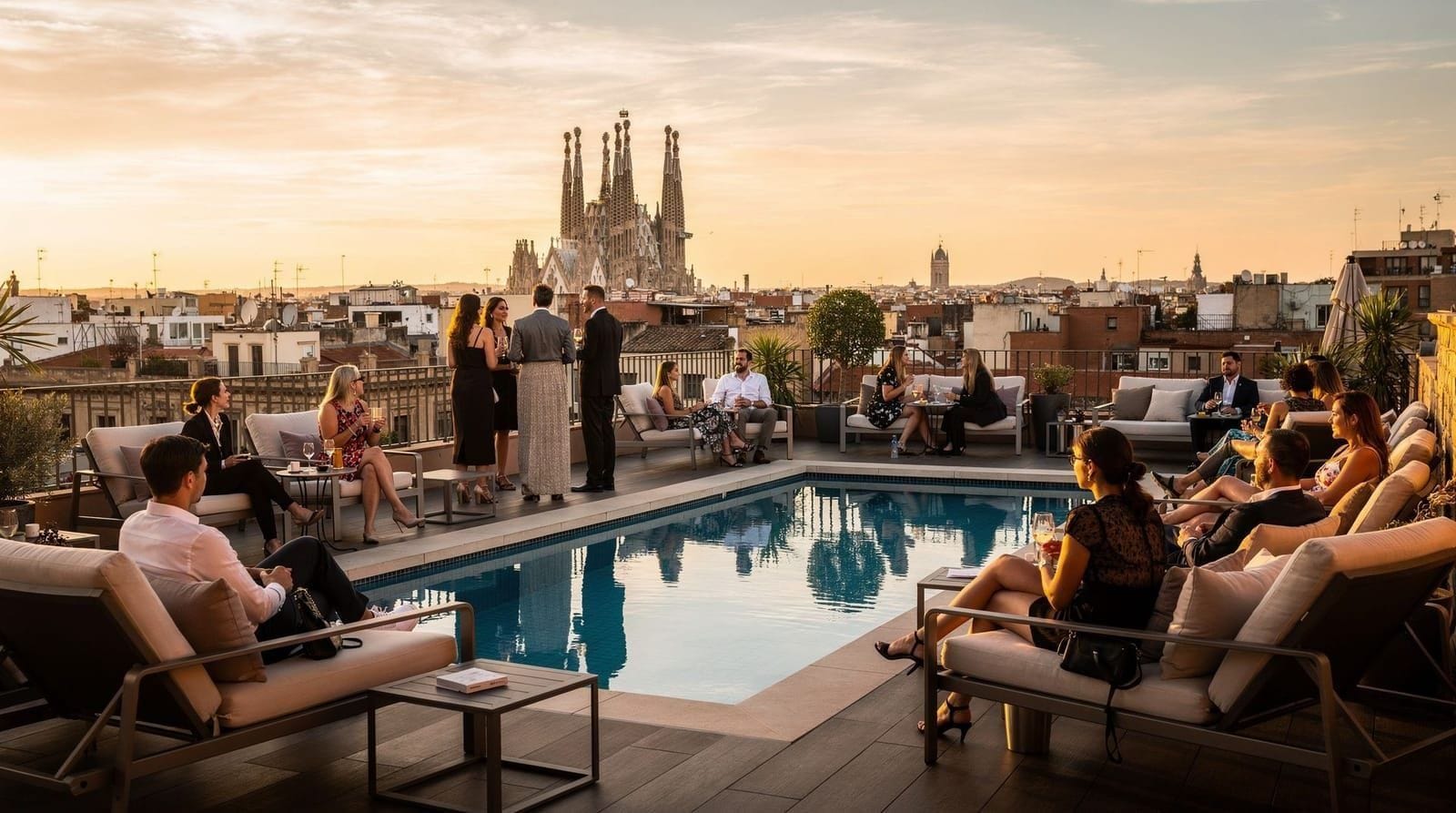
The Eixample grid — particularly the area around Passeig de Gràcia and the so-called Gayxample section around Carrer del Consell de Cent — has upscale bars, hotel rooftop terraces, and a mixed local-tourist clientele that skews slightly older than Barceloneta. The bars here tend to be more design-conscious and quieter than beach clubs. Prices are higher but so is the quality of the drink.
Specific clubs worth knowing
Razzmatazz (Poblenou, Carrer dels Almogàvers) — Five rooms, each with a different genre: pop, indie, electronic, more electronic, and experimental. This is where Barcelona’s music fans go, not where tourists are herded. The Lolita room (indie/alternative) and the main Razz room (electronic) are the anchors. €15–20 entry. Metro: Bogatell or Marina.
Sala Apolo (Poble-sec, Carrer Nou de la Rambla) — A converted theatre with exceptional acoustics and the Nitsa electronic nights on weekends. €12–15. One of the best venues in the city on the right night.
Opium Barcelona (Barceloneta, Passeig Marítim) — The big beach club. Free before midnight, €15–20 after. Commercial house music, capacity 2,000, outdoor terrace with sea views. Fun for what it is.
CDLC (Barceloneta, Passeig Marítim) — Slightly more boutique than Opium but similar crowd and music. Carpe Diem Lounge Club. Better restaurant-to-club transition if you eat dinner there first.
Pacha Barcelona (Barceloneta) — The Barcelona outpost of the Ibiza brand. Capacity 1,500. Similar to Opium in energy and music, slightly more upscale in ambience.
The sunset catamaran as an evening starter
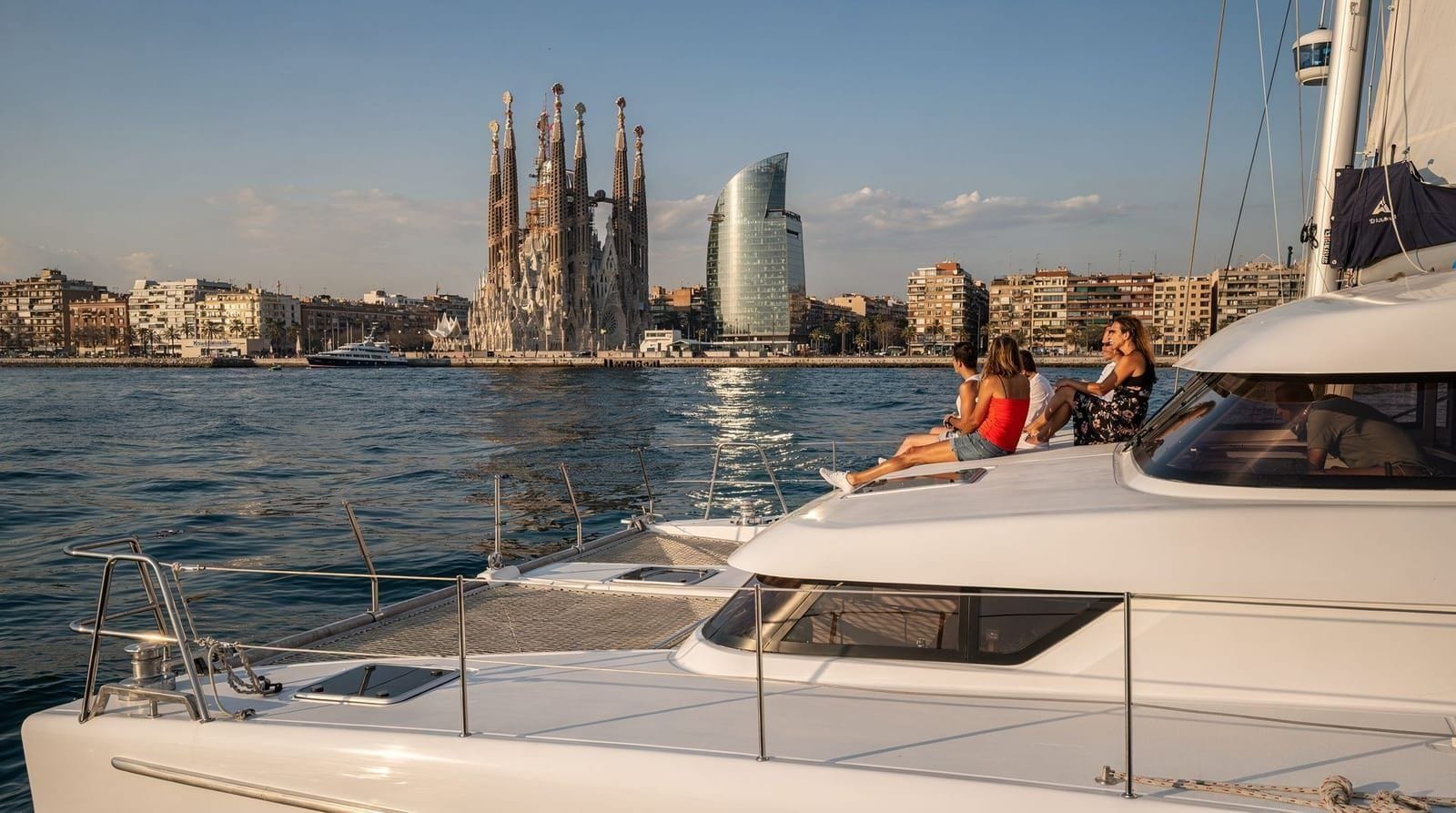
Before any of the above, consider starting the night at sea. The catamaran sunset cruise with live music departs in the early evening and gives you 2–3 hours on the water off Barceloneta before the night begins. This is one of the few tourist activities in Barcelona that locals also genuinely enjoy — the light on the city from the water at golden hour is legitimately beautiful, and having a drink on a sailboat before dinner at 21:30 sets a pleasantly different rhythm for the night.
The cruise costs €35 and the live music component is included. It is a good way to see the coastline and ease into the late-start schedule without feeling like you are sitting around waiting for nightlife to begin.
More on Barcelona’s evening options and views in the best rooftop bars guide.
What locals actually drink
Cava — Catalan sparkling wine from the Penedès region, made by the same traditional method as Champagne. Brut or brut nature (unsweetened) is the style to order. A glass costs €3–5 at a decent bar. It is what Catalans open at celebrations, pour at apero hour, and bring to meals.
Vermut — The Sunday tradition. Dark red, served cold with a splash of soda and an olive. Yzaguirre and Miró are the Catalan brands. You will see it everywhere in neighbourhood bars but almost nowhere in the beach clubs. See the Catalan culture guide for more on this tradition.
Estrella Damm — Barcelona’s own lager, brewed in the city since 1876. Clean, light, slightly more character than generic lager. Order it on tap (de grifo) rather than bottled. Costs €2–3.50 in a normal bar.
Gin-tonic — The default club drink. Barcelona has an inexplicable attachment to elaborate gin-tonicas served in large balloon glasses with botanicals floating in them. This is not ironic. The gins are usually decent and the garnishes are taken seriously. Expect €8–12 in a club.
Not sangria — Sangria is on every tourist menu in the city. No Catalan orders it socially. It is a pleasant enough drink but it signals the bar has adjusted its menu for tourists, which usually means higher prices and less interesting everything else.
Tourist traps to avoid
La Rambla and surrounding bars — The bars immediately on or around La Rambla charge €12–18 for cocktails and €6–8 for beer. The quality rarely justifies the price. Two blocks east into El Raval or west into El Born and you pay half as much for the same drink. The foot traffic on La Rambla makes it feel like where the action is; it is not.
Street promoters outside clubs — Young men and women outside Barceloneta clubs will offer you free entry, drink tokens, or VIP tables. Some of these are legitimate; many are not. The standard scam is that the “free entry” applies only if you buy a drink package at an inflated price once inside. If you want VIP access to Opium or CDLC, booking directly through the club’s website (or through tours like the Club Opium VIP night tour) gives you a known price upfront and avoids the lottery of what the promoter was actually selling.
Sangria-forward tourist restaurants — Restaurants that lead with sangria on their outdoor menu are calibrated for the tourist circuit. Their food is usually mediocre and their prices are disproportionate to quality. The restaurants that locals actually eat at before going out are quieter, have menus in Catalan, and do not flag you down from the pavement.
LGBTQ+ nightlife: the Gayxample
The area around Carrer del Consell de Cent and Carrer de Muntaner in the Eixample — often called the “Gayxample” — is Barcelona’s established LGBTQ+ nightlife district, with a dense concentration of gay bars, clubs and cafés that has developed over several decades. Arena Madre and Metro are two of the longest-running clubs in the area, both following the same late-start timeline as the rest of Barcelona nightlife — expect the same near-empty-before-midnight pattern described above. The neighbourhood’s daytime cafés and evening bars have a notably more relaxed, less clubbing-focused atmosphere than the nightlife venues, making it easy to build an evening that starts with dinner in the area and only escalates to a club later if that is what you want.
Sitges, the coastal town about 35–40 minutes south of Barcelona by train, has a complementary and internationally well-known LGBTQ+ scene, particularly built around its Pride week and Carnival celebrations. It functions as a genuine day-or-weekend extension of Barcelona’s own scene rather than a separate destination, and many visitors combine an evening in the Gayxample with a weekend trip to Sitges — see our Sitges day trip guide for logistics.
Live music beyond the clubs
Not every good Barcelona night out involves a club. The city has a substantial live music scene spread across smaller venues that rarely appear in generic nightlife round-ups. Harlem Jazz Club in the Gothic Quarter is a tiny, atmospheric room with nightly jazz and blues sets and a cover charge low enough (typically €8–12) that it works as a low-commitment addition to an evening. Jamboree, on Plaça Reial, mixes jazz, funk and hip-hop programming across the week and has hosted touring acts alongside local musicians for decades. For flamenco specifically — a genre worth experiencing live at least once even if it is not native to Catalonia — Tarantos on Plaça Reial offers a shorter, more accessible format than the dinner-show tourist venues, with sets running around 30 minutes at a fraction of the dinner-show price.
A sample first-timer’s night, hour by hour
For visitors who want a concrete template rather than abstract advice, here is one realistic sequence that respects the actual Barcelona timeline:
19:30 — Vermut and a light snack at a Gràcia neighbourhood bar, easing into the evening without committing to dinner yet.
21:30 — Dinner in El Born or Poble-sec, booked in advance if it is a weekend.
23:15 — Move to a cocktail bar in El Born or start the Carrer de Blai pintxos crawl in Poble-sec, depending on which neighbourhood you chose for dinner.
00:30 — Decide on the night’s direction: Sala Apolo for live music or Nitsa, a Barceloneta beach club for a bigger, louder scene, or simply continue bar-hopping if clubbing is not the goal.
02:00–02:30 — Arrive at whichever club you have chosen, timed to the point where it is actually full rather than empty.
04:30–05:00 — Head home via Nitbus, taxi or, on a Saturday, the 24-hour metro.
This is a template, not a rule — the point is the shape of the evening (late dinner, mid-late bar time, late club arrival) rather than the specific venues, which you can swap freely based on the area guides above and your own energy level on the night. Adjust the clock forward or back by an hour or two and the template still works — the shape matters far more than the precise minute.
Getting home
This is practical information that matters at 04:00.
Metro — Last train around 00:00 on weekdays and Sundays, approximately 02:00 on Friday nights, and 24 hours continuously on Saturday nights. If you are going to a club, Saturday is the night where transport logistics are simplest.
Nitbus — The night bus network runs from Plaça de Catalunya to all major neighbourhoods throughout the night. Routes are prefixed N (N17, N16, etc.). They are slow but reliable and cost the same as a regular bus. Check the TMB app for routes.
Taxis and rideshare — Taxis are plentiful and metered; the base rate is €2.10 with a night supplement after 20:00. Uber and Cabify operate in Barcelona and are often comparable in price. From Barceloneta to the Gothic Quarter or Eixample: €8–12 depending on demand.
Walking — Barcelona’s central areas are compact. From Barceloneta to El Born takes 15 minutes on foot along the waterfront. From El Born to the Gothic Quarter is 10 minutes. Walking at 03:00 is generally fine on main streets; stay aware in El Raval and avoid quiet backstreets.
For more on getting around the city: transport pass comparison and getting around Barcelona.
If you want a guided introduction to the night
For first-timers who find the late schedule disorienting or who want someone to do the logistics, a private nightlife tour is genuinely useful. These run 3 hours, cost around €55 per person, and include access to venues, a guide who knows the scene, and a structure that shows you how the timeline actually works without you having to piece it together yourself.
More detail on rooftop bars and sunset spots that work well as evening starters: best rooftop bars in Barcelona. For understanding the cultural context behind what you are eating and drinking at night: Catalan culture guide.
Barcelona nightlife runs on a schedule that genuinely surprises most visitors, and the gap between expectation and reality is responsible for more disappointed evenings than any other single factor. The main thing to internalise before you go: nothing starts when you think it does, and that is not a problem — it is just how the city is built. Dinner at 21:30, drinks at midnight, clubs at 02:00, home at dawn (or not). If you calibrate to that rhythm rather than fighting it, you will have one of the better nightlife experiences in Europe.
Budget for the night: a dinner in a decent Poble-sec restaurant runs €20–35 per person with wine. Bar-hopping in El Born costs €6–10 per drink. Club entry after midnight is €12–20. Taxis home €8–12. A full Barcelona night out — done properly, not expensively — costs €60–90 per person including food. See the daily budget calculator and Barcelona on a budget for planning help.
Frequently asked questions about Barcelona nightlife guide
When does nightlife start in Barcelona?
The real timeline: dinner 21:00–22:00, pre-drinks (botellón or bar-hopping) 23:00–01:00, bars fill 01:00–03:00, clubs peak 02:00–05:00. Most clubs are nearly empty before midnight even on weekends. Don't plan to arrive at a club before 01:00 if you want atmosphere.What is the best nightlife area in Barcelona?
It depends on what you want. Barceloneta is for big beach clubs (Opium, CDLC) — loud, young, tourist-heavy. Poble-sec (Carrer de Blai) is the most authentically local. Gràcia has neighbourhood bars with a very different, calmer vibe. El Born suits cocktail bars and creative crowds. Eixample is upscale and mixed local/tourist.How much does entry cost at Barcelona clubs?
Most major clubs (CDLC, Opium, Pacha) offer free entry before midnight. After midnight, cover runs €10–20. VIP packages with a bottle or drink credits cost €30–60. Razzmatazz (5-room indie/electronic venue in Poblenou) charges €15–20 for entry.What do locals actually drink in Barcelona?
Cava (Catalan sparkling wine), vermut (vermouth, especially on Sundays), and Estrella Damm (the local lager). Not sangria — that is a tourist drink. In clubs, gin-tonic is the go-to long drink. Ordering sangria in a local bar is a mild social tell.Is the nightlife on La Rambla worth it?
Avoid La Rambla bars for nightlife. They target tourists with inflated prices (€12–18 for a basic cocktail), watered-down drinks, and aggressive street promoters. The same drink costs €6–9 two blocks away in El Raval or El Born.How do I get home after clubs close in Barcelona?
Metro runs until 00:00 on weekdays, 02:00 on Fridays, and 24 hours on Saturdays. For later nights: night buses (Nitbus, prefixed N) run from Plaça de Catalunya throughout the night. Taxis and Uber/Cabify are reliable. Walking from Barceloneta to El Born takes about 15 minutes.Is it safe to go out at night in Barcelona?
Generally yes, but pickpocketing is a real risk especially in Barceloneta and around La Rambla. Use a front pocket or money belt for your phone and cards. Be wary of street promoters who offer 'free entry' — there is usually a catch. Avoid displaying expensive cameras or phones in crowded areas at 03:00.What is the Magic Fountain show and is it worth seeing?
The Font Màgica de Montjuïc is a free light and water show at the base of Montjuïc hill. It runs Thursday through Sunday, 20:30–21:30 from May to October. It is genuinely impressive and a good way to start an evening before dinner. Combine it with a walk up to the Palau Nacional viewpoint.
Top experiences
Bookable activities with verified prices and instant confirmation on GetYourGuide.