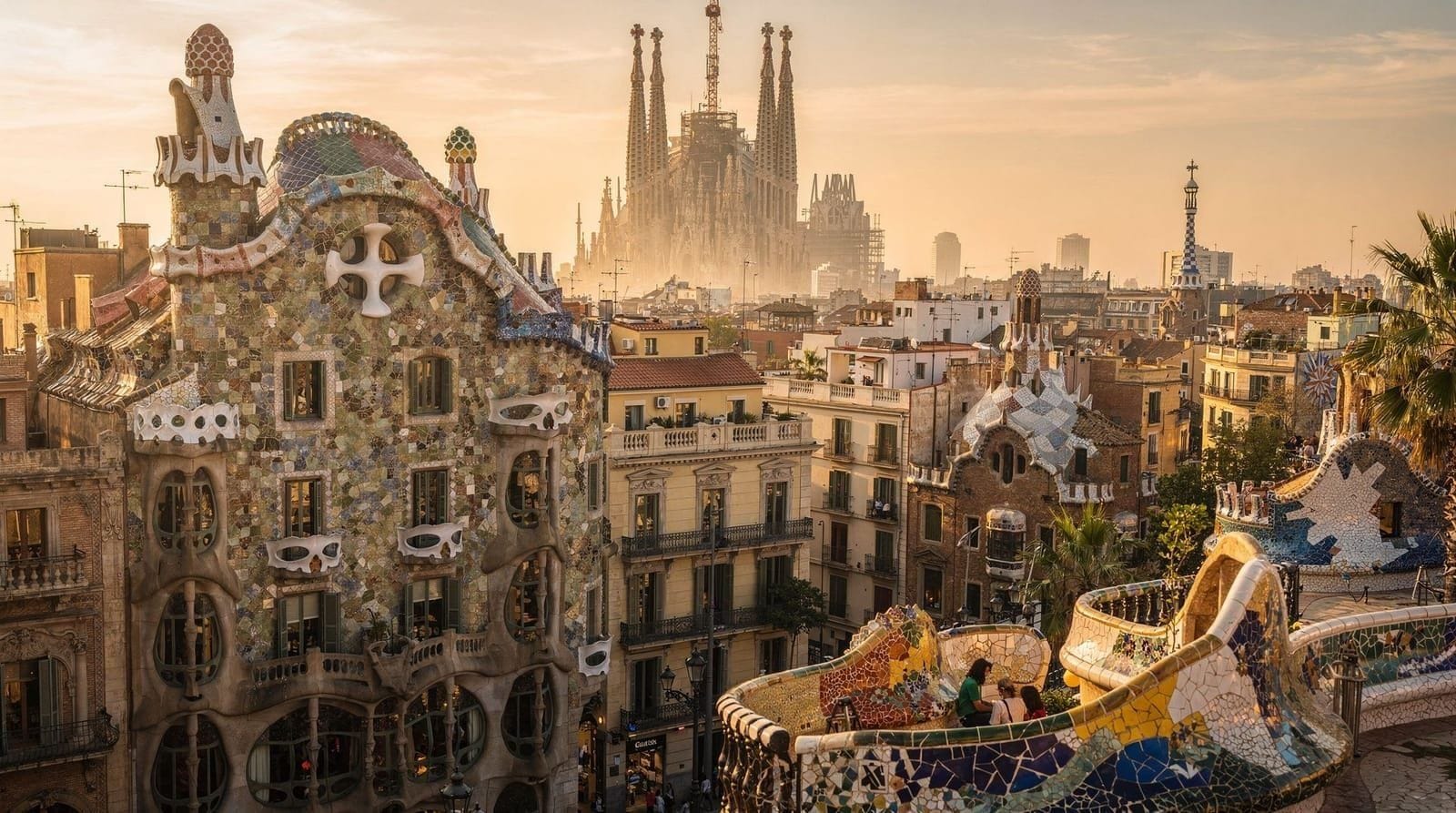
Modernisme route Barcelona: beyond Gaudí
Barcelona: Modernisme and Gaudí architectural walking tour
Duration: 2.5 hours
- Free cancellation
What is the Modernisme route in Barcelona?
The Modernisme route links the most significant Art Nouveau (Modernisme) buildings across the city — most of them UNESCO-listed. Beyond Gaudí's well-known sites, it covers the Palau de la Música and Hospital de Sant Pau by Domènech i Montaner, and buildings by Puig i Cadafalch and other architects of the 1890–1910 period.
| Where | Eixample (Passeig de Gràcia), El Born, Sant Pere, Gràcia |
| Time needed | 2 hours exteriors only, 3–4 days for all interiors |
| Cost | Free to walk; interiors €12–18 each |
| Getting there | Metro Passeig de Gràcia, Diagonal, Sagrada Família |
| Best time | Weekday mornings for the interiors, any time for exteriors |
Barcelona’s international reputation for architecture rests almost entirely on Antoni Gaudí. This is understandable — no other city has anything that looks like the Sagrada Família or Park Güell — but it flattens a richer story. Gaudí was one of three world-class architects working in the same city at the same moment, on the same cultural project, and the buildings created by Lluís Domènech i Montaner and Josep Puig i Cadafalch are of comparable ambition and comparable quality.
Catalan Modernisme was not a single unified style. It was a shared attitude: that architecture should express Catalan cultural identity, that traditional craftsmanship (ironwork, ceramics, stained glass, stone carving) should be used at the highest level, and that buildings should be beautiful as well as functional. The three architects pursued this attitude in very different visual languages, which is why the Manzana de la Discordia block on Passeig de Gràcia looks like an argument made in stone.
The three architects, briefly
Antoni Gaudí (1852–1926) pursued an organic approach derived from natural forms. His structural innovations — catenary arches, hyperboloid towers, self-supporting columns — are genuinely revolutionary. His style is unmistakable; no other architect has been successfully imitated.
Lluís Domènech i Montaner (1850–1923) was more academic and more politically engaged in the Catalan cultural movement. His two UNESCO buildings — the Palau de la Música Catalana and the Hospital de Sant Pau — are both more historically rooted than Gaudí’s work, drawing on medieval Catalan architecture alongside Art Nouveau. His detailing is more ordered; his colour is warmer.
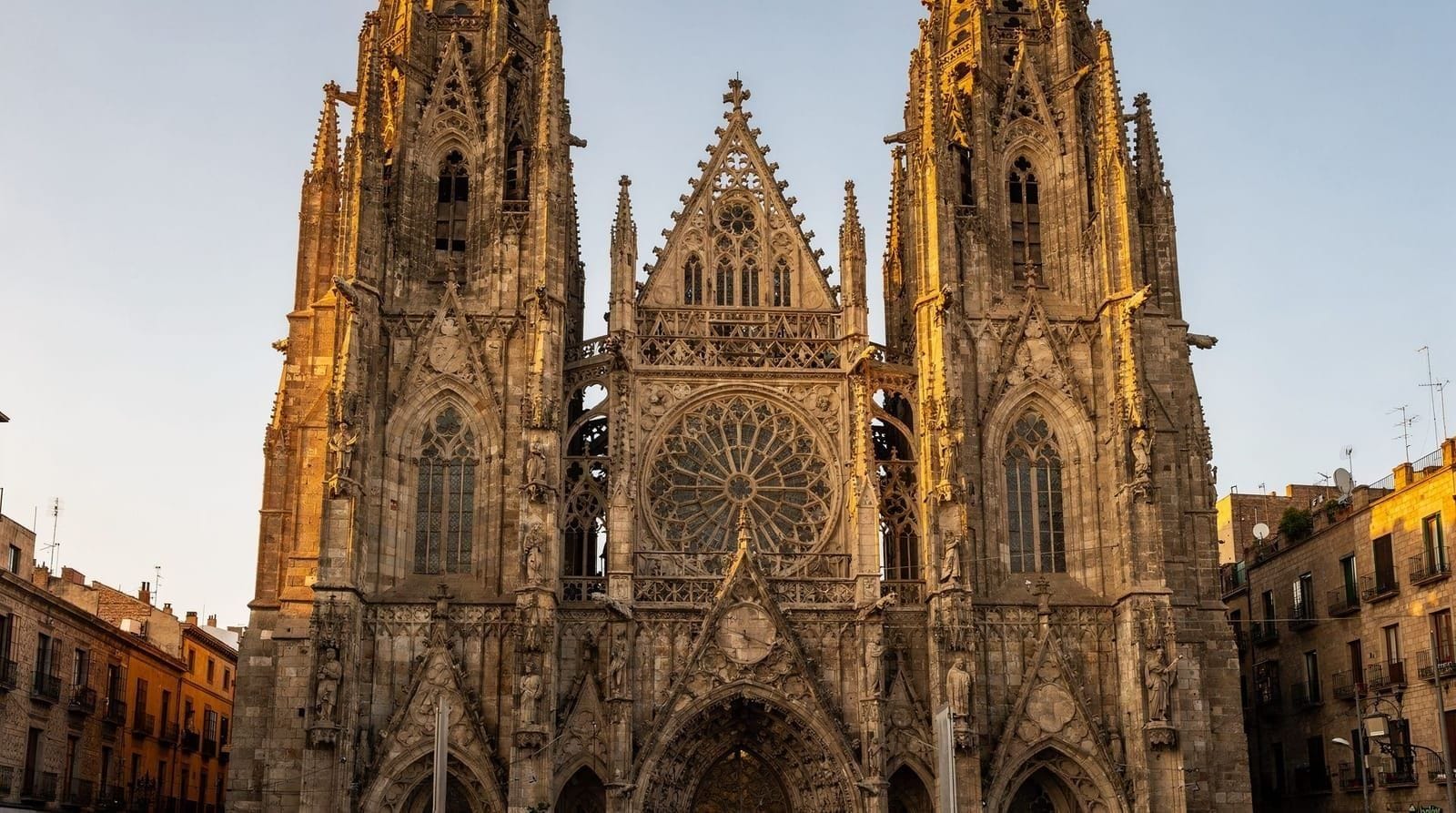
Josep Puig i Cadafalch (1867–1956) combined Gothic and Romanesque elements with Northern European Art Nouveau — particularly Flemish influences, visible in the stepped gables of several of his buildings. He was also an architect-politician who became president of the Mancomunitat de Catalunya (the autonomous Catalan government) during World War One.
The main route by zone
Passeig de Gràcia and Eixample
The central spine of the Modernisme route runs along Passeig de Gràcia from Plaça de Catalunya north to Diagonal.
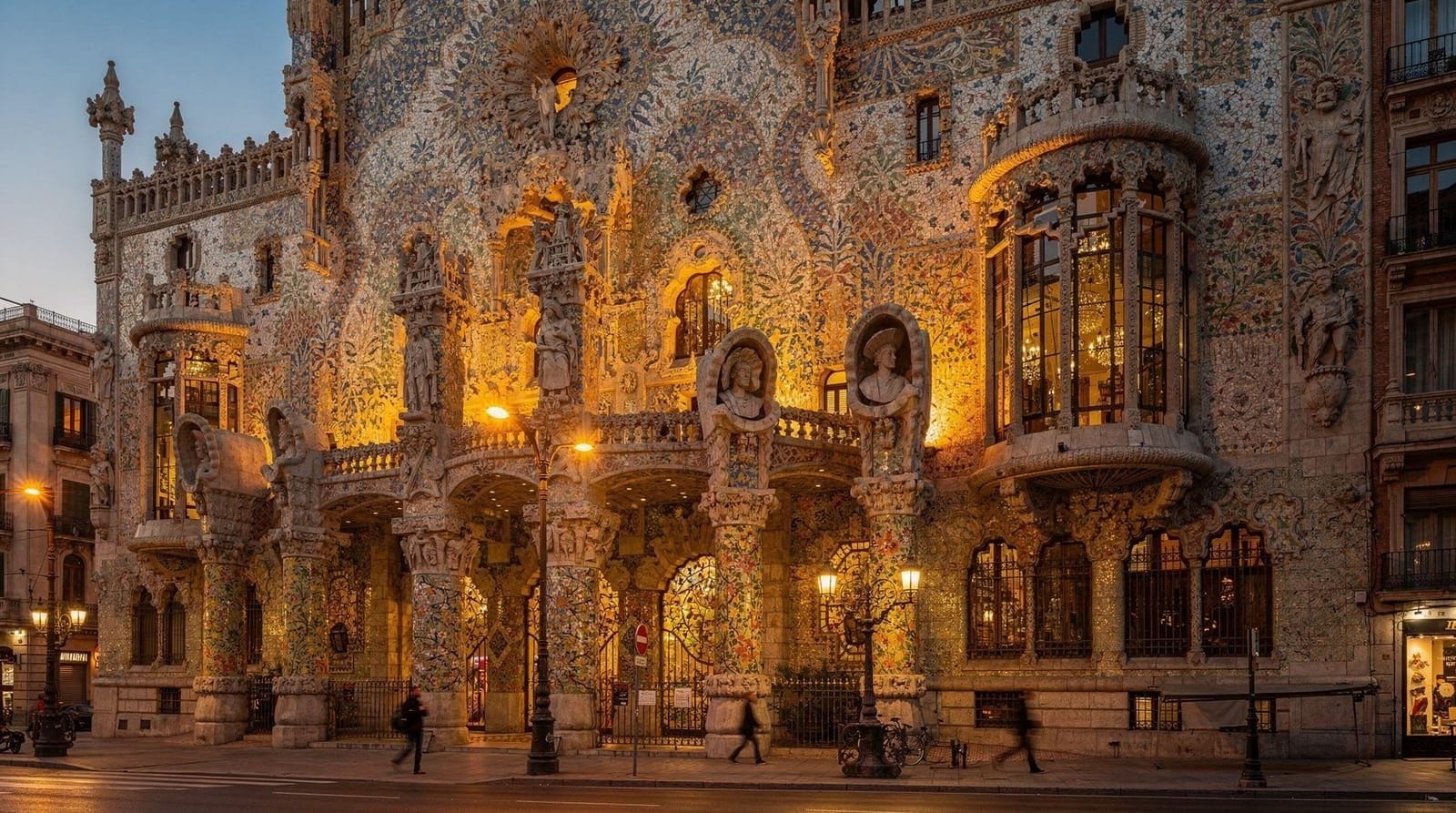
Casa Lleó Morera (No. 35) — Domènech i Montaner, 1906. The most flamboyant of the three Manzana buildings on the street level. The ground floor was partially destroyed in the 1940s by a leather goods shop that wanted display space; the upper floors survive in better condition. The corner tower with its circular oriel windows is the most recognisable element.
Casa Amatller (No. 41) — Puig i Cadafalch, 1900. The Flemish-stepped gable is the most distinctive feature, rising above a facade of carved stonework and polychrome ceramic insets. The ground floor interior houses the Institut Amatller d’Art Hispànic; tours run regularly and cost approximately €12.
Casa Batlló (No. 43) — Gaudí, 1906. See the full Casa Batlló guide. The contrast between this building and its immediate neighbours is the clearest demonstration of the architectural argument the block represents.
La Pedrera–Casa Milà (No. 92) — Gaudí, 1912. Five hundred metres further north. See the La Pedrera guide.
Casa Enric Batllò (No. 48) — Puig i Cadafalch, 1896. Now a bank branch; the facade is partially original.
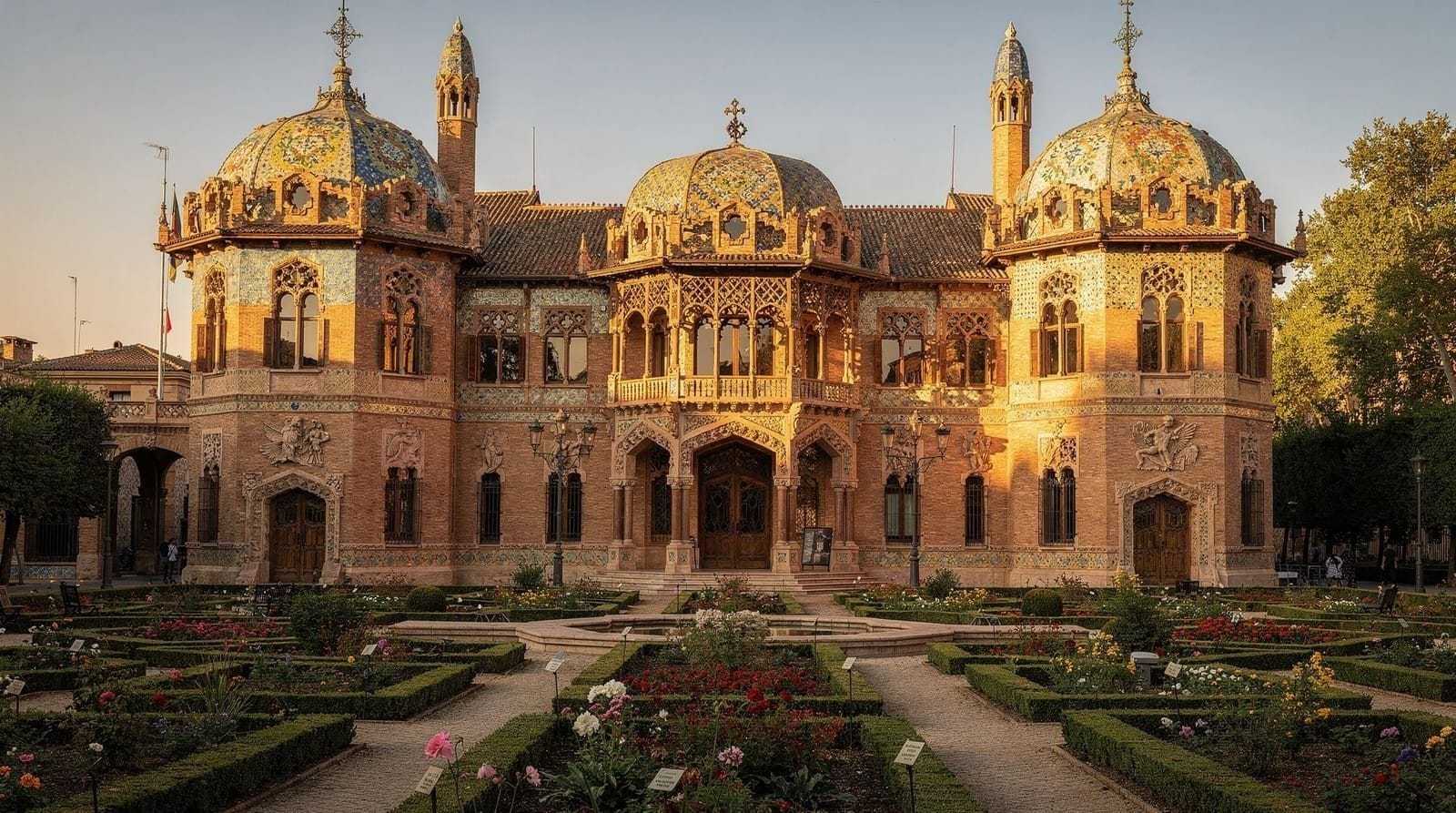
Palau del Baró de Quadras (No. 373, Diagonal) — Puig i Cadafalch, 1906. Houses the Institut Ramon Llull (Catalan language and culture institute). The carved Gothic facade facing Diagonal, with its detailed balcony windows, is one of Puig i Cadafalch’s finest surviving details.
El Born and Sant Pere
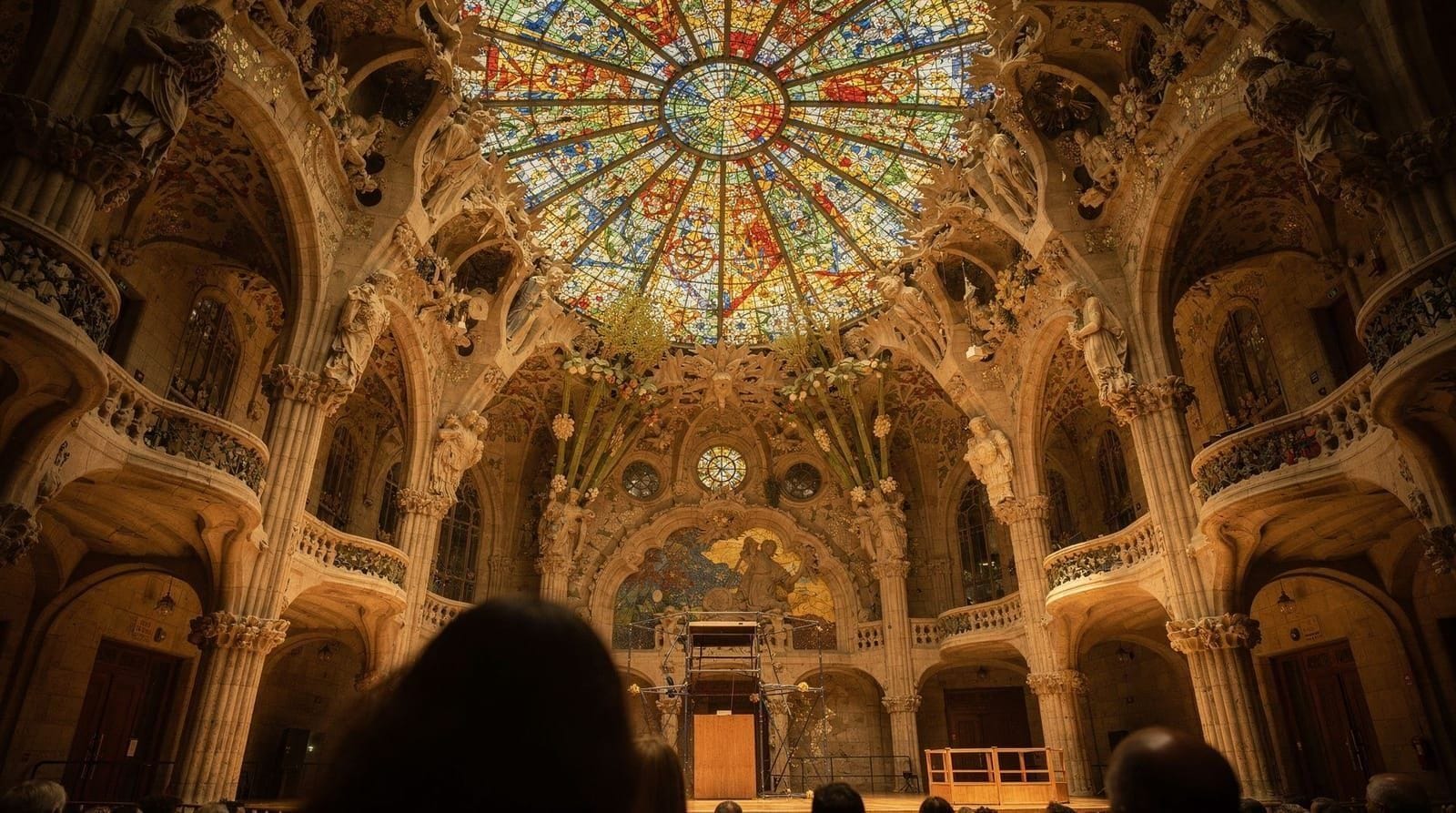
Palau de la Música Catalana — Domènech i Montaner, 1908. The single most elaborately decorated interior in Barcelona. See the full Palau de la Música guide. The building sits awkwardly on a narrow street, which makes the facade difficult to photograph from the pavement — but entering the auditorium compensates for any exterior disappointment.
Mercat de Santa Caterina — Enric Miralles and Benedetta Tagliabue, 1997–2005. Technically not Modernisme (it replaced an 1848 market), but the ceramic mosaic roof by Miralles is a deliberate conversation with the trencadís tradition of Gaudí and Jujol. More architecturally interesting than La Boqueria and less crowded.
Hospital de Sant Pau and surroundings
Hospital de Sant Pau — Domènech i Montaner, 1902–1930. A 10-minute walk from Sagrada Família along the axis of Avinguda de Gaudí. The full guide is at Hospital de Sant Pau visiting guide. The approach along Avinguda de Gaudí — with Sagrada Família behind you and Sant Pau ahead — is one of the few urban promenades in Barcelona deliberately aligned to connect two UNESCO-listed buildings.
Gràcia
Casa Vicens — Gaudí, 1885. In the northern residential neighbourhood of Gràcia, this is Gaudí’s first surviving major work. See the Casa Vicens guide. Less visited than the Eixample sites, the building represents the starting point of everything Gaudí later developed.
Walking the route
The Eixample cluster (Manzana de la Discordia, La Pedrera, and the walk between them) takes about 2 hours at a walking pace if you are looking at exteriors only and stopping briefly inside Casa Amatller.
Adding the Palau de la Música (30-minute walk northeast from Passeig de Gràcia) and Hospital de Sant Pau (20-minute walk north from Sagrada Família) to a single day creates a challenging but rewarding full-day programme if you are on foot. Metro connections make either building straightforward to reach independently.
The Ruta del Modernisme office at Palau del Baró de Quadras on Diagonal provides a comprehensive mapped guide to over 100 modernisme buildings across the Eixample, including many minor buildings not covered here. The €18 pass provides entry discounts at secondary buildings.
What is often overlooked
The lamp posts on Plaça Reial: Gaudí’s first public commission, 1879. The hexagonal lanterns on two paired columns in the central square are signed with the helmeted caduceus of Hermes. Easily missed.
Els Quatre Gats (Carrer Montsió 3): A café designed by Puig i Cadafalch in 1896 that became the meeting point of the Barcelona modernisme movement. Picasso had his first exhibition here in 1900. Restored and open as a restaurant.
Casa Calvet (Carrer de Casp 48) — Gaudí, 1900: A relatively restrained apartment building (for Gaudí) that won the City of Barcelona architecture prize in 1900. Not open to visitors but worth a look from the street.
Palau Güell (Carrer Nou de la Rambla 3) — Gaudí, 1888: Gaudí’s first Barcelona commission for Eusebi Güell. The rooftop chimneys are an early version of the La Pedrera aesthetic. Less visited than the later houses; entry approximately €12.
A practical 3-day Modernisme itinerary
| Day | Morning | Afternoon |
|---|---|---|
| Day 1 | Sagrada Família (book ahead) | Manzana de la Discordia + Casa Batlló |
| Day 2 | La Pedrera + Passeig de Gràcia walk | Palau del Baró de Quadras + Casa Vicens (Gràcia) |
| Day 3 | Hospital de Sant Pau | Palau de la Música (afternoon interior tour or evening concert) |
This spreads the major interiors across three mornings when the buildings are least crowded, leaving afternoons for the exterior-only sites and neighbourhood exploration. Compress it into two days by dropping either Casa Vicens or Hospital de Sant Pau if your schedule is tighter — both are excellent but the least essential of the UNESCO-listed sites if you have to choose.
A guided walking tour covering the Gaudí and Domènech i Montaner highlights in one outing is a practical option if you would rather have the architectural detail explained than read it off plaques.
For the two Domènech i Montaner UNESCO buildings specifically, a combined ticket covering the Palau de la Música and Hospital de Sant Pau saves booking each separately and is worth pricing against two individual tickets.
The Modernisme route rewards visitors who treat Barcelona as an architectural city rather than simply a beach and Gaudí destination. The non-Gaudí buildings — particularly the Palau de la Música and Hospital de Sant Pau — are extraordinary and, because they are less marketed internationally, offer a calmer, less crowded experience than the Gaudí trail. A visitor who sees all three architects’ major works comes away with a much richer understanding of what Catalan Modernisme actually meant.
Frequently asked questions about Modernisme route Barcelona
What is Catalan Modernisme?
Catalan Modernisme (not to be confused with architectural modernism) was the Catalan expression of the European Art Nouveau movement, concentrated between approximately 1888 and 1920. It was tied to the Catalan cultural renaissance — a movement asserting Catalan identity through language, art and architecture. Its three principal architects were Antoni Gaudí, Lluís Domènech i Montaner and Josep Puig i Cadafalch.Which buildings are on the Modernisme route?
The main sites are: Sagrada Família (Gaudí), Park Güell (Gaudí), Casa Batlló (Gaudí), La Pedrera (Gaudí), Casa Vicens (Gaudí), Palau Güell (Gaudí), Palau de la Música Catalana (Domènech i Montaner), Hospital de Sant Pau (Domènech i Montaner), Casa Amatller (Puig i Cadafalch), Casa Lleó Morera (Domènech i Montaner). The route also includes dozens of secondary buildings across the Eixample.How long does the full Modernisme route take?
Walking the main sites requires 3–4 days if you enter all major buildings. A condensed exterior-only walk of the Eixample cluster (Passeig de Gràcia and surrounds) takes about 2 hours. The focused interior visits — Palau de la Música, Hospital de Sant Pau, and the Gaudí houses — each take 1–2 hours.Is there a Modernisme pass?
The Ruta del Modernisme pass (available from the Casa Lleó Morera at Passeig de Gràcia 35) offers discounts at over 100 modernisme buildings for €18 (adults). It does not include Sagrada Família or Park Güell, but provides 20–50% discounts on many secondary buildings.What is the Manzana de la Discordia?
The Manzana de la Discordia — Block of Discord — refers to the block of Passeig de Gràcia between Carrer d'Aragó and Carrer del Consell de Cent, where three rival modernisme architects placed landmark buildings almost simultaneously: Gaudí's Casa Batlló (43), Puig i Cadafalch's Casa Amatller (41) and Domènech i Montaner's Casa Lleó Morera (35). The architectural styles differ radically despite the shared period and genre.Who was Domènech i Montaner and why is he important?
Lluís Domènech i Montaner (1850–1923) was arguably the most technically accomplished architect of Catalan Modernisme. His two UNESCO World Heritage buildings — the Palau de la Música Catalana and the Hospital de Sant Pau — are structurally and decoratively as significant as Gaudí's work. He is less internationally known because Gaudí's personal mythology (the ascetic mystic, the man who died for his art) is a more compelling narrative than Domènech's academic excellence.
Top experiences
Bookable activities with verified prices and instant confirmation on GetYourGuide.