Cava vs Champagne: an honest comparison for travellers
Penedès: Codorníu discovery tour with cava tasting
Duration: 4 hours
- Free cancellation
Is cava as good as Champagne?
They are genuinely different wines, not a hierarchy. Cava uses different grapes on different soils in a different climate, producing a distinct flavour profile. At the Gran Reserva level (30+ months on lees), serious cava competes with mid-range Champagne in complexity — at roughly a quarter of the price. The question to ask is not 'which is better' but 'what does each do well'.
When you arrive in Barcelona and someone offers you a glass of cava, the temptation — if you know Champagne — is to file it automatically as the budget version. That is a mistake worth correcting early, because it will shape every glass you drink for the rest of your trip.
Cava and Champagne share a production method. They share almost nothing else. Understanding what makes them genuinely different, rather than treating one as a cheaper imitation of the other, is the key to getting the most from the Catalan sparkling wine culture you are about to walk into.
| Where to taste | El Xampanyet (El Born), Monvinic (Eixample), or day trip to Penedès |
| Cost | Around €3–5/glass house cava, €18–60/bottle Reserva–Corpinnat in restaurants |
| Best for | Anyone who assumes cava is “just cheap Champagne” |
| Time needed | An evening in the city, or a half/full day for Penedès |
| Booking | Winery tours recommended in advance, especially weekends |
The method: where cava and Champagne are identical
Both cava and Champagne are made by the méthode traditionnelle — the process in which still base wine undergoes a second fermentation inside the closed bottle. A mixture of wine, yeast, and sugar (the liqueur de tirage) is added to the finished base wine; the bottle is sealed; the yeast consumes the sugar and produces carbon dioxide, which, trapped in the bottle, dissolves into the wine as fine bubbles.
The bottles are then aged on their lees — the dead yeast cells — for a minimum time that varies by classification. During this aging, the yeast cells break down (a process called autolysis) and release compounds that give the wine its characteristic breadiness, creaminess, and textural complexity. Longer aging on the lees produces more of these flavours.
After aging, the bottles are gradually tilted and rotated (riddling) to collect the lees sediment in the neck. The neck is briefly frozen, the cap removed, and the plug of frozen sediment expels under pressure (disgorgement). A small amount of wine and sugar (the dosage) is added to fill the space and adjust the final sweetness level. The bottle is corked.
This process is the same in Champagne and in Penedès. The differences begin before the base wine is ever made.
The grapes: where they diverge completely
Champagne is built on three varieties: Chardonnay (for freshness and elegance), Pinot Noir (for structure, body, and red-fruit character), and Pinot Meunier (for fruit and approachability in youth). A blanc de blancs Champagne is 100 percent Chardonnay; a blanc de noirs is made entirely from red-skinned grapes vinified without colour.
Traditional cava is built on three entirely different varieties: Macabeu, Xarel·lo, and Parellada. Macabeu brings floral aromatics and light body. Xarel·lo — the most distinctive of the three, and the one serious Catalan producers have spent the last decade championing — contributes texture, weight, and ageing potential, with a characteristic bitter almond note. Parellada, grown at higher altitudes for natural freshness, adds delicate fruit and acidity.
Chardonnay and Pinot Noir are now permitted in cava under DO regulations, and some producers use them, but the distinctive character of traditional cava comes from the indigenous trio. When you taste a properly made Penedès cava, you are tasting something that could not be confused with Champagne if you paid attention — and that is the point.
Rosé cava — a growing and increasingly impressive category — uses Garnacha, Monastrell, Trepat, or Pinot Noir. The best rosé cavas are among the most food-friendly sparkling wines produced anywhere.
Terroir: limestone meets chalk
The Champagne region sits near the northern limit of viable viticulture in France — cold, grey, maritime-influenced, with chalk soils that drain well and provide the vine-stressing conditions that produce grapes with high natural acidity. The climate produces wines with pronounced freshness that require aging and the addition of dosage to balance.
The Penedès is Mediterranean in character — warmer, sunnier, with a more reliable growing season. The soils are limestone rather than chalk, well-drained, mineral-rich. Nights cool significantly in the inland plateau where the best cava vineyards sit, providing the diurnal temperature range that preserves acidity in warm-climate viticulture.
The result is a different kind of freshness: where Champagne’s acidity tends toward bracing and citric, Penedès cava’s acidity is riper, rounder, with more stone fruit and less green edge. Neither is better. They are products of their places.
Aging classifications: how time shapes the wine
This is where cava’s quality tier becomes clearer:
Cava de Guarda (standard): minimum 9 months on lees. Entry-level, fresh, straightforward. The category most people encounter first.
Cava de Guarda Superior — Reserva: minimum 15 months on lees, vintage-dated. Noticeably more complexity, finer mousse, better food-pairing structure.
Cava de Guarda Superior — Gran Reserva: minimum 30 months on lees, vintage-dated. This is where comparisons with Champagne become genuinely meaningful. The autolytic character — the biscuit, brioche, and nutty notes from extended yeast contact — develops significantly. Top Gran Reserva cava from a careful producer, poured blind, will puzzle people who assume it is Champagne.
Paraje Calificado: minimum 36 months on lees, from a single estate with classified vineyard designation. A recent super-premium tier designed to identify exceptional terroir. The equivalent of a single-vineyard premium designation.
For comparison: non-vintage Champagne requires 15 months on lees (12 minimum); vintage Champagne requires 36 months. Standard DO Cava’s minimum is lower than Champagne’s, but Gran Reserva cava exceeds vintage Champagne’s legal minimum aging.
Corpinnat: the breakaway for the premium tier
In 2018, a group of premium Catalan producers left the DO Cava denomination and formed their own quality group: Corpinnat. The founding members — Recaredo, Gramona, Raventós i Blanc, and a handful of others — argued that the DO Cava label had been applied to wines from outside the Penedès heartland and from bought-in grapes under less rigorous conditions, diluting its credibility.
Corpinnat rules: estate-grown fruit only, certified organic or biodynamic farming, production within a defined zone in the heart of the Penedès, minimum 18 months on lees for the entry tier, minimum 30 months for Corpinnat Reserva. These are stricter rules than DO Cava requires, applying to a handful of producers who make some of the most extraordinary sparkling wines in Spain.
Recaredo’s Brut de Brut — a zero-dosage Gran Reserva aged for over 30 months — consistently receives scores alongside prestige Champagne cuvées. Gramona’s Tres Lustros is aged for 180 months (fifteen years) on the lees and produces a wine of extraordinary depth. These are not bargain sparkling wines. They are world-class sparkling wines that happen to be made in Catalonia.
What they taste like side by side
Generalising about both Champagne and cava involves the same risk as generalising about any wine denomination — the variation within each is enormous. But some broad tendencies hold:
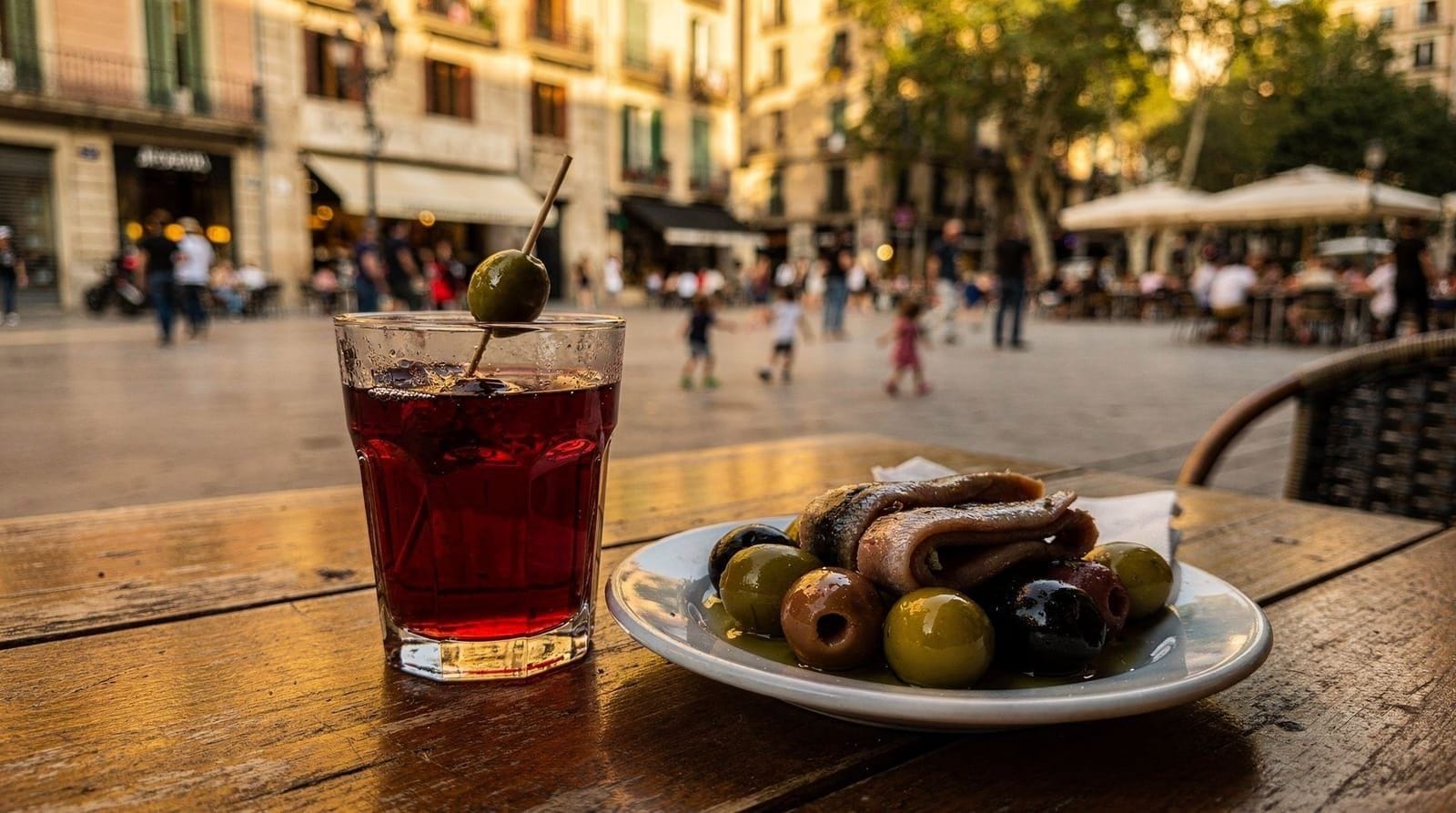
Young cava: green apple, lemon zest, white peach, raw almond, fresh bread. Light to medium body, lively bubbles, clean finish. Excellent as aperitivo, with fried food, with anchovies and olives, with light seafood.
Aged cava (Gran Reserva or Corpinnat): brioche, dried apricot, toasted hazelnut, white truffle, mineral chalk, preserved citrus. Fuller body, finer and more persistent bubbles, complex aromatic development. Works with richer food — roast poultry, aged cheese, shellfish in butter sauce.
Young non-vintage Champagne: lemon curd, cream, white bread, green apple, chalk dust. Higher acidity, more autolytic immediately even at younger ages (because the houses blend to a consistent house style). Classic aperitivo.
Vintage or prestige Champagne: honey, brioche, roasted almond, red berry, chalk, saline mineral. The wines for which Champagne’s reputation was built.
The overlap at the top tier is real. The differences are real too, and interesting.
In Barcelona: what locals actually drink
When Barcelonans open a bottle for celebration — a birthday, the end of a meal at a good restaurant, a Sunday family lunch — they open cava. Not Champagne, not Prosecco, not anything else. Cava is the local sparkling wine, produced 50 kilometres from the city in the Penedès wine country, and it is woven into the social fabric of Catalan life in the way that wine from the immediate region always tends to be.
The other thing locals drink, particularly at the weekend midday ritual, is vermut — see the vermut guide for how this fits into the city’s drinking culture. What they do not drink, despite what the tourist restaurant menus might suggest, is sangria. Sangria is not a Catalan tradition; it is a commercially driven offering aimed at visitors who associate it with Spain in general. When a restaurant leads with sangria on its drinks list, that is useful information about the establishment’s orientation. Order cava instead — you will spend less money, drink something local and genuinely good, and understand the city better.
Where to taste cava properly in Barcelona
El Xampanyet in El Born has been pouring house cava from unlabelled bottles since 1929. The style is slightly off-dry and deeply refreshing — nothing like a Gran Reserva, but perfect for understanding the everyday, accessible end of the category.
Monvinic in Eixample carries one of the most serious cava lists in Spain, with good representation of Corpinnat producers and vintage Gran Reservas. Worth visiting specifically if you want to understand the premium tier without making the trip to Penedès.
Vila Viniteca in El Born has the best retail selection of cava in the city, including producers that are hard to find elsewhere. Ask staff for their current recommendation for value and for a serious bottle — they know the stock well.
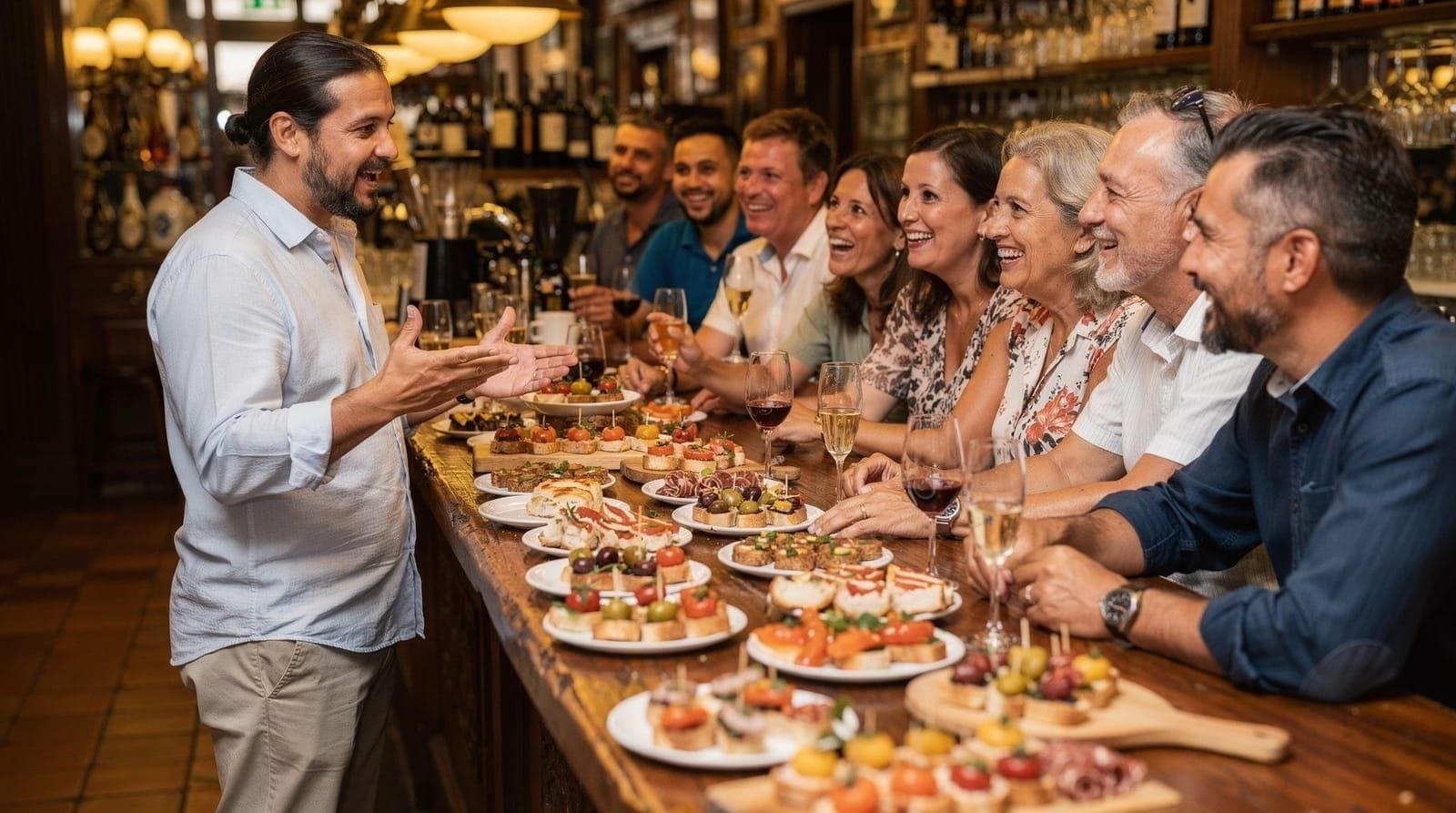
For a guided tasting experience that contextualises cava within Catalan food culture, the evening tapas and wine tasting tour covers the wine-food pairing logic well. The tapas tours guide explains the food side of that culture in depth, and the best tapas neighborhoods guide will point you toward the right streets for drinking well alongside eating well.
The value argument: honest numbers
Entry-level cava in a Barcelona restaurant: €3–5 per glass, €12–20 a bottle. Good Reserva cava: €18–35 at the table. Gran Reserva from a serious producer: €30–60. Corpinnat from Recaredo or Gramona: €30–80 depending on the cuvée.
Entry-level non-vintage Champagne from a recognisable house in a Barcelona restaurant: €40–60 a bottle, more at hotel bars. Prestige cuvées: €120 and upward.
At the top tier, Corpinnat cava and mid-range Champagne occupy similar price territory. The difference is that at every level below that, cava offers more for the money within its category — and that the money stays in Catalonia, with producers who have been making sparkling wine here since 1872.
Visiting Penedès to understand both sides of the comparison
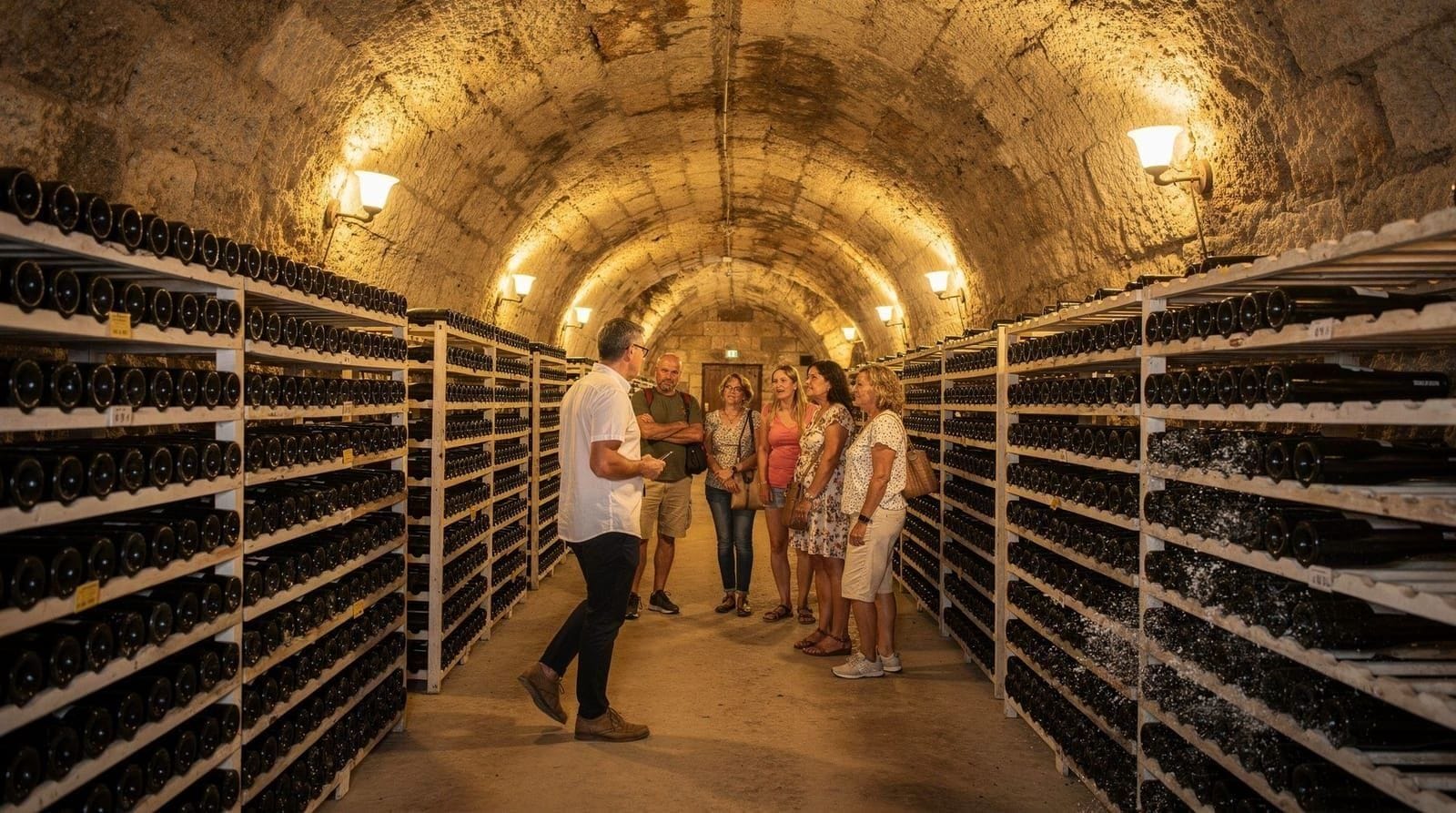
The most direct way to understand what makes cava distinct from Champagne is to visit the place where it is made. Codorníu, founded in 1551 and the winery where the first Spanish cava was produced in 1872, offers tours through its Art Nouveau cellars designed by Puig i Cadafalch — one of the great modernista buildings in Catalonia. Standing in those cellars, seeing the riddling racks and the aging bottles and understanding the scale of the operation, makes the wine in the glass more legible.
The Penedès cava tours guide covers the full logistics: how to get there by train, which wineries to prioritise, whether a guided tour from Barcelona makes more sense than the DIY option. For wine tasting within the city itself, the wine tasting in Barcelona guide covers the bars, the DO regions, and the best organized tasting experiences.
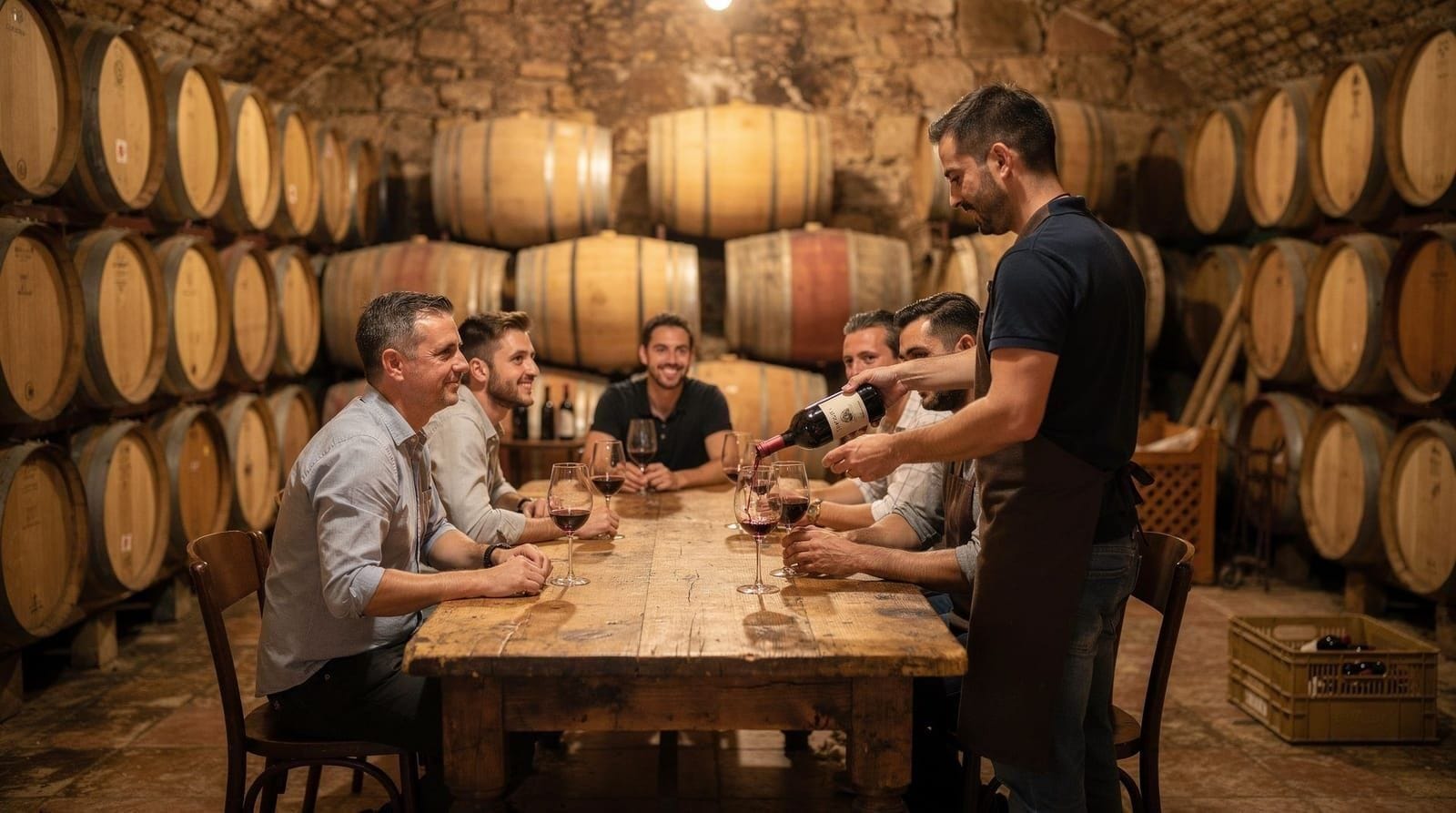
If you would rather combine cellars with countryside, a small-group 4x4 route through Penedès vineyards adds context that a single-winery visit can’t:
How to order and serve cava like a local
A few habits separate a tourist glass of cava from one poured properly. Serve it cold — around 6–8°C for young cava, a touch warmer for aged Gran Reserva or Corpinnat so the toasted notes can open — and pour it into a tulip-shaped glass rather than a flat coupe, which loses the bubbles and the aromatics far too fast. In a restaurant, asking for “una copa de cava” gets you the house pour; if you want to see the bottle before it’s opened, that’s completely normal and staff expect it. At a bar like El Xampanyet, cava is often served straight from an unlabelled bottle behind the counter — that is the tradition, not a shortcut, and it is usually some of the best-value cava in the city.
Buying cava to take home
Vila Viniteca and similar wine shops in El Born stock a far deeper range than the airport, including small-production Corpinnat bottles that rarely make it onto supermarket shelves. Staff will pack bottles for travel and can advise on what survives a flight well. If you are buying at the airport after security instead, expect a smaller selection and prices close to (occasionally above) what you would pay in town — convenient, but not where the best finds are.
The most useful thing to carry away from this comparison is not a verdict but a framework: cava and Champagne are two excellent answers to the same question (how do you make a complex sparkling wine that rewards aging?), arrived at by different people, in different landscapes, with different grapes, over parallel centuries of practice.
Frequently asked questions about Cava vs Champagne
What is the main difference between cava and Champagne?
The production method is identical: both use secondary fermentation in the bottle (méthode traditionnelle). The differences are grapes, terroir, and price. Champagne uses Chardonnay, Pinot Noir, and Pinot Meunier on chalk soils in northern France. Cava uses Macabeu, Xarel·lo, and Parellada on limestone soils in the Penedès. The flavour profiles diverge accordingly.Does cava taste like Champagne?
Not exactly, and that is not a criticism of either. Cava tends toward green apple, citrus peel, white peach, and almond bitterness, with a mineral edge on quality examples. Champagne tends more toward brioche, yeast, red fruit, and cream, particularly on Pinot-dominant blends. Both vary significantly by producer and aging level.What is Corpinnat?
Corpinnat is a quality group formed in 2018 by a handful of premium Catalan producers — including Recaredo and Gramona — who left the DO Cava denomination because they felt its rules had been diluted. Corpinnat members must grow their own grapes, farm organically, make wine within the Penedès heartland, and age for at least 18 months (versus 9 for standard DO Cava). Corpinnat wines are the most serious tier of Catalan sparkling wine currently being made.Should I order sangria or cava in Barcelona?
Cava. Sangria is not a Catalan drink — you find it almost exclusively in tourist-oriented restaurants as a high-margin item for visitors who associate it with Spain in general. Locals celebrate with cava. When the restaurant menu offers sangria prominently, that is usually a signal to look elsewhere.What is the price difference between good cava and Champagne?
Quality Reserva cava retails in Spain for €8–18 per bottle. Gran Reserva cava, with 30+ months on lees, runs €15–40 from good producers. Entry-level non-vintage Champagne from recognisable houses starts at €25–35 and climbs quickly. Corpinnat cava from Recaredo or Gramona typically sits at €25–60, comparable to mid-range Champagne but with different character.What temperature should cava be served at?
Colder than most people serve it — around 6–8°C, straight from the fridge or an ice bucket, not just lightly chilled. Young, fresh cava benefits from being served on the colder end; aged Gran Reserva and Corpinnat can come slightly warmer, around 8–10°C, so the toasted and autolytic notes open up rather than staying muted.Can I bring cava home from Barcelona?
Yes, either checked in your luggage (wrap bottles well) or bought after security at the airport, where several shops stock Catalan cava including some Corpinnat producers. Prices at the airport run close to city retail, sometimes slightly higher, so buying from a wine shop like Vila Viniteca in town before you fly usually gets you a better selection and a fairer price.
Top experiences
Bookable activities with verified prices and instant confirmation on GetYourGuide.