Tapas tours in Barcelona: what to expect and where to go
Barcelona: old town tapas & paella food tour with 8 tastings
Duration: 3 hours
- Free cancellation
Are tapas tours in Barcelona worth it?
Yes, if you pick the right one. A good guided tour takes you into El Born, Poble-sec or the Eixample — away from La Rambla — and pairs plates with honest context about Catalan food culture. Expect 6–10 tastings over 2.5–3 hours and €65–85 per person all-in.
Barcelona’s food culture is one of the most rewarding in Europe, and tapas are the format that makes it most accessible. Small plates, shared between friends, ordered one at a time as the evening progresses — it is a system built for curiosity. But it is also a system that rewards local knowledge and punishes tourist instincts. The wrong street, the wrong bar, and you end up with mediocre food at double the price.
This guide covers everything you need to make the right choices: which neighbourhoods to target, what a guided tour actually gets you, what to drink (and what to avoid), and how the pintxos scene on Carrer de Blai fits into the wider picture.
Tapas tours at a glance
| Where | El Born, Poble-sec, Gràcia, the Eixample — never La Rambla |
| Cost | Around €65–85/person guided; €25–35/person self-guided |
| Time needed | 2.5–3 hours for a guided tour; 2–3 hours self-guided |
| Best time | Evening, from 8:30pm — kitchens fill from 8–9pm |
| Booking | Guided tours a few days ahead; self-guided needs no booking |
How tapas actually work in Barcelona
Tapas are not a starter, not a course, and not a full meal by themselves in traditional Catalan practice. They are a way of eating — several small plates arriving across an extended session, shared between two or more people, paired with drinks. The social rhythm is as important as the food itself.
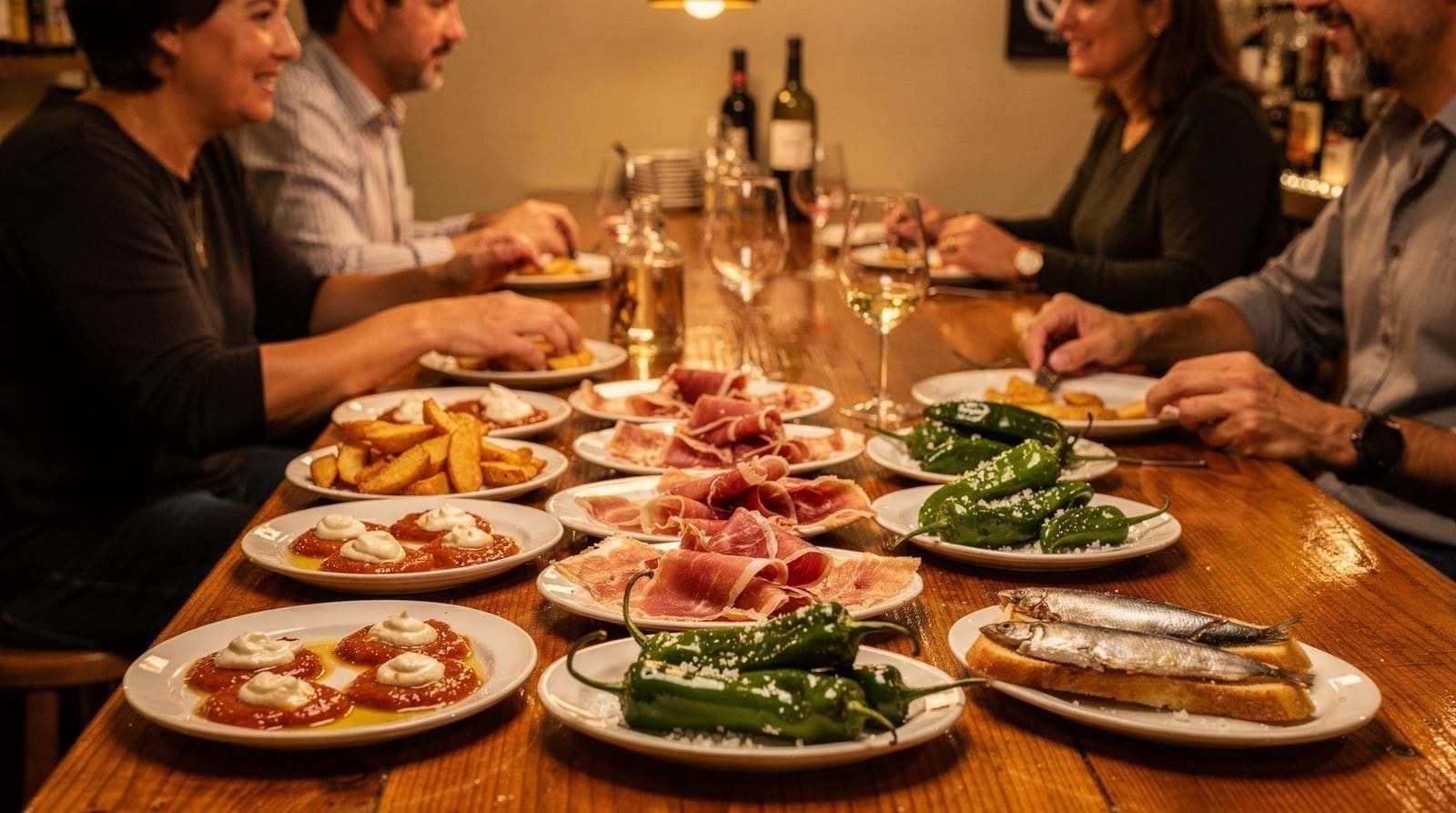
In practice, you tend to order two or three plates at a time rather than everything at once. A round of patatas bravas (fried potatoes with alioli and a spiced tomato sauce) or croquetes de bacallà (salt cod croquettes) arrives while drinks are poured; then you order more based on what you feel like next. Good bars have staff who can guide you through the options. Mediocre tourist bars present a laminated picture menu — a reliable warning sign.
Portion sizes are genuinely small: a typical tapa might be four croquettes or a small plate of anchovies. For a satisfying meal, two people generally need six to eight plates plus drinks. The cost at a genuine local bar usually works out to €20–30 per person including drinks, which compares favourably with any sit-down restaurant.
Pintxos vs tapas: the Basque dimension
Alongside the tapas tradition, Barcelona has absorbed a parallel culture of pintxos — small Basque-style bites displayed on bread along the bar counter, each one speared with a toothpick. You pick up what you want, they count your toothpicks at the end, and you pay per piece. Prices range from €1.50 to €2.50 each.
The main concentration of pintxos bars is Carrer de Blai in Poble-sec, a short pedestrian street lined almost entirely with bars competing for the same customers. On a Friday or Saturday evening the street is heaving. The quality is generally high because the turnover is fast — food moves off the counter quickly, so it stays fresh.
For a self-guided evening, Carrer de Blai makes an excellent starting point: pick up pintxos at two or three bars, then move into the quieter streets of Poble-sec for a sit-down plate of croquetes or a more serious tapa. The neighbourhood also has some of the city’s most interesting vermut culture — see our guide to vermut in Barcelona for detail.
The best neighbourhoods for tapas
El Born
El Born is consistently the strongest neighbourhood for a genuine tapas evening. The streets around the Basílica de Santa Maria del Mar are dense with independent bars where locals actually eat. Key spots to know:
Bar del Pla (Carrer de la Montcada) is a reliable anchor — busy without being a scrum, good croquetes, fair prices. El Xampanyet nearby on the same street is one of the city’s most beloved tapas bars, famous for its house cava and anchovies in vinegar. Arrive early or be prepared to wait.
The Picasso Museum is a two-minute walk away, which makes El Born an obvious combination for an afternoon-into-evening itinerary: museum in the late afternoon, tapas and cava as the light fades.
Poble-sec
Poble-sec sits at the base of Montjuïc and is the neighbourhood that food-conscious locals have been moving to for the last decade. Carrer de Blai is the pintxos spine; Carrer de Tamarit and Carrer de Parlament have more serious sit-down tapas bars. Quimet & Quimet is a legendary standing-room-only bar where the owner builds tiny open-faced montaditos (bread-based tapas) while stacked tins of conservas line every available wall surface. It keeps short hours and closes in summer — check before going.
Bar Calders on Carrer del Parlament is an excellent vermut and tapas bar with an easy neighbourhood atmosphere, popular for the Sunday vermut ritual that is one of the city’s more underrated pleasures.
Gràcia
Gràcia is the inland village-within-the-city, bounded by the Eixample to the south and open hillside to the north. The tapas scene here is quieter and more local: smaller bars, fewer menus in English, more families. Mercat de l’Abaceria on Travessera de Gràcia is where Gràcia locals buy their produce — a far more authentic market experience than La Boqueria, which has largely become a showcase for tourists.
The Eixample
The Eixample grid contains dozens of excellent tapas bars, particularly in the area around Carrer del Consell de Cent and Carrer de Muntaner. The neighbourhood is large enough that a few minutes of walking from the main tourist flow brings you somewhere genuinely local. Evening tapas culture here is more likely to be local professionals and families than backpackers.
What a guided tapas tour actually gets you
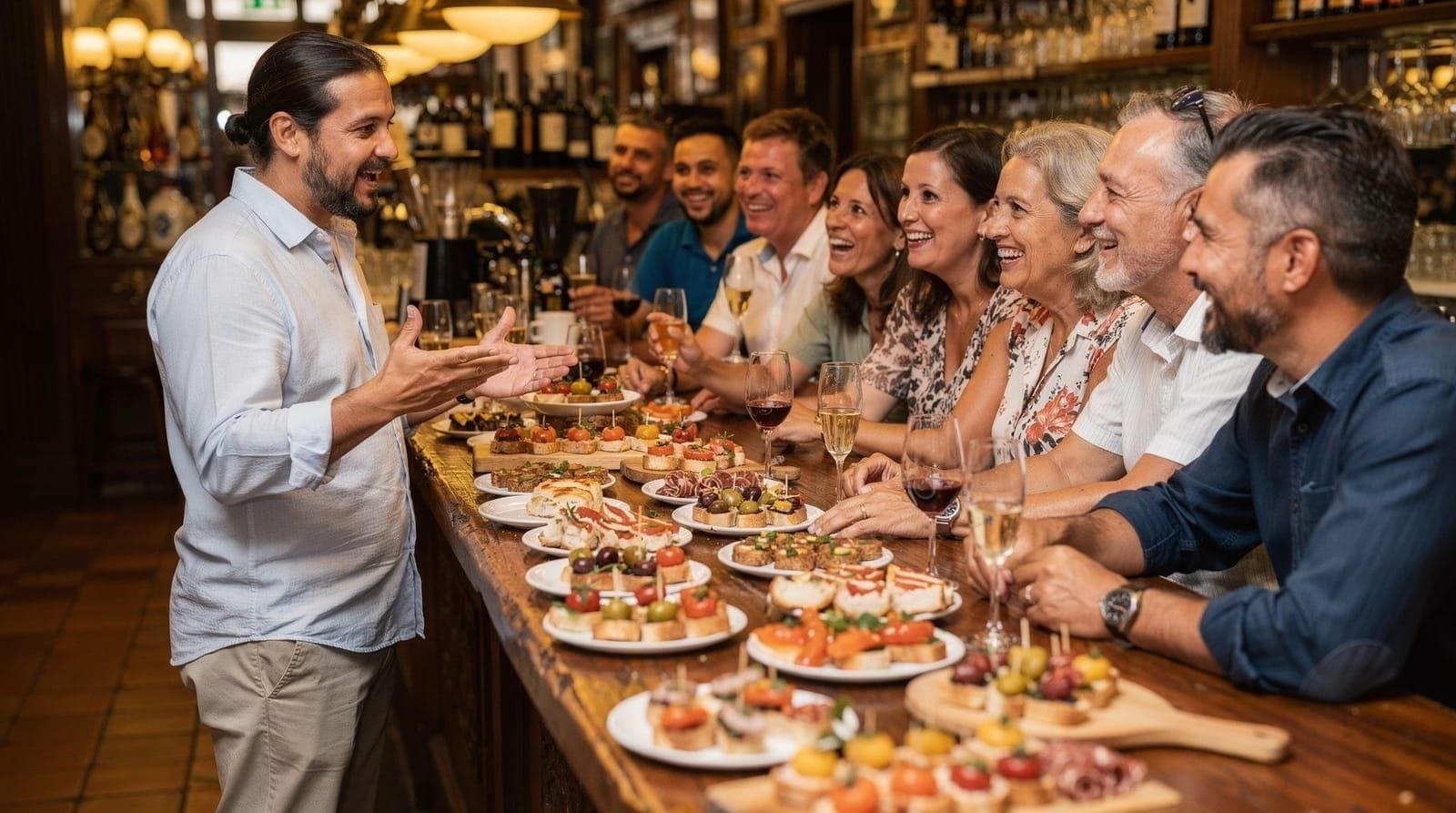
The honest case for a guided tapas tour is access and curation. An experienced guide has pre-selected bars based on current quality, knows the owners, and can sequence the evening so that each stop makes sense in relation to the others. They also explain what you are eating — why croquetes de bacallà are a Catalan staple rather than a generic Spanish thing, or how patatas bravas differ between Madrid and Barcelona (the sauce does most of the work here).
Practically, guided tours also remove the decision fatigue of navigating a new city’s food geography. The Gothic Quarter is full of traps; El Born has a few streets that feel local but are operating on tourist margins. A guide steers you away from both problems.
Most tours in Barcelona run 2.5–3 hours and cover four to six stops. At each stop you typically get two or three plates plus a drink — cava, vermouth, craft beer, or local wine depending on the bar and the theme of the stop. Total tastings across the evening usually reach eight to twelve, which constitutes a genuine meal.
The evening format tends to work better than afternoon tours for most visitors: you eat at local dinner time (which means the bars are actually full and vibrant rather than empty), you see the city in its evening mode, and the pacing feels natural rather than rushed.
For a tour rooted in the old town with a strong focus on authentic plates — including a paella stop later in the evening — the old town tapas and paella tour with 8 tastings covers all the main bases.
For something structured around wine and vermouth alongside the tapas, the wine and vermouth-focused tour is worth comparing.
Comparing the main tour formats
| Format | Around | Stops | Best for |
|---|---|---|---|
| Old town tapas + paella | €70–85 | 6–8, incl. a paella course | First-timers wanting a full meal in one booking |
| Tapas, wine & vermouth | €65–75 | 4–6, wine-forward | Visitors who prioritise drinks pairing over volume |
| Ultimate local tapas crawl | €70–90 | 6–8 across two neighbourhoods | Repeat visitors wanting a deeper local dive |
| Evening tapas & wine tasting | €65–80 | 4–6, relaxed pace | A calmer, later-evening experience |
What to drink: cava, vermut, and the sangria question
This deserves a direct answer because it comes up constantly.
Sangria is not a Catalan drink. It has its place elsewhere in Spain, but ordering sangria in a Barcelona tapas bar is roughly equivalent to ordering a Cosmo at a Parisian wine bar. The staff will serve it if you ask, but it is not what the locals drink, and the quality at tourist-facing places is typically poor — cheap red wine, too much sugar, a wedge of orange as garnish.
What locals actually drink with tapas:
Cava is the default for celebrations and casual alike. It is Catalan sparkling wine, made by the traditional method in the Penedès wine country an hour from Barcelona, and a glass costs around €3–5 in a good bar. Brut Nature is the driest style, preferred by many locals. See also the Penedès and cava tours guide if you want to visit the vineyards.
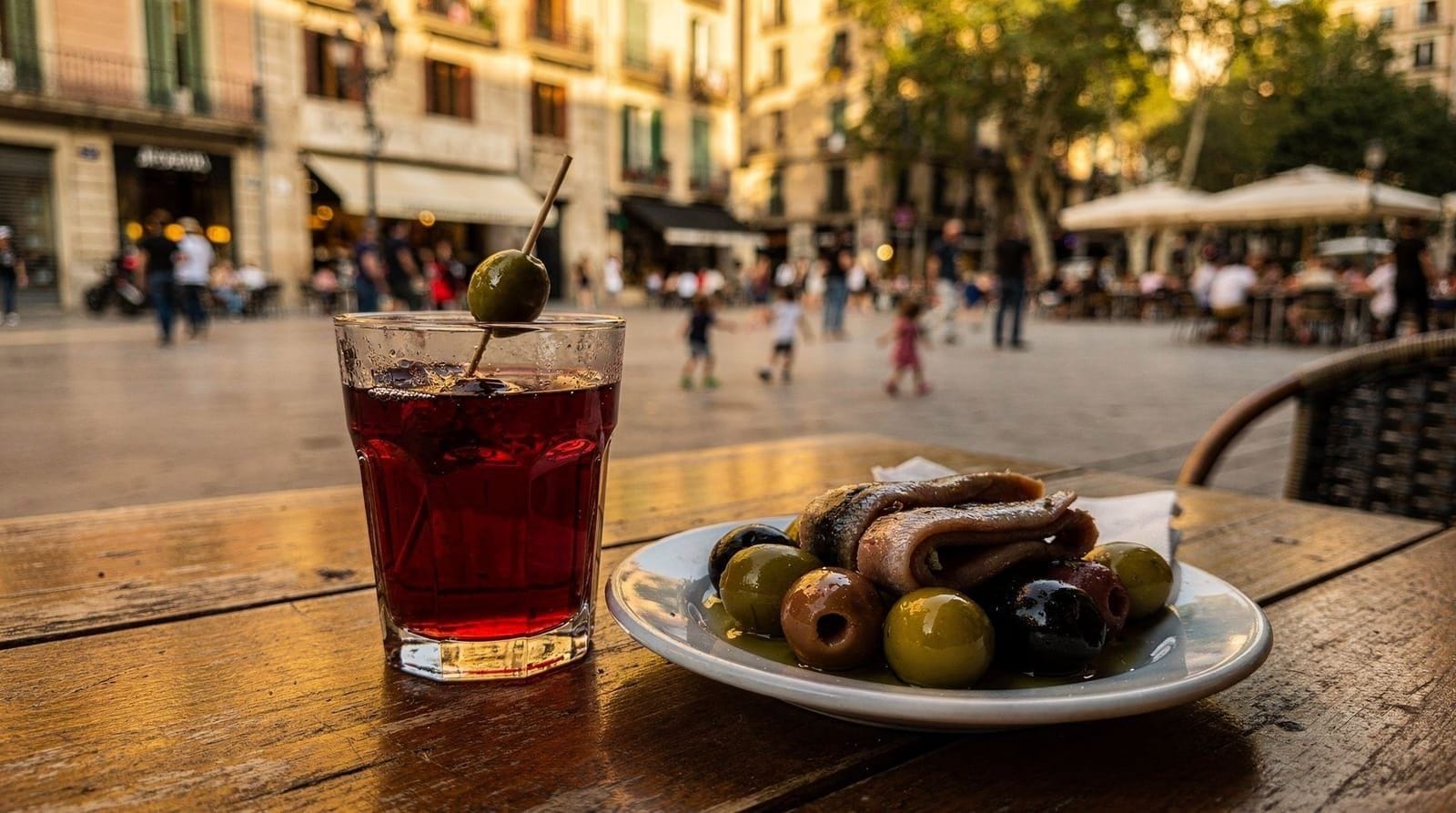
Vermut is the Sunday ritual. A glass of house vermouth — usually red, served with a splash of soda, an olive, and a slice of orange — is drunk mid-morning before the Sunday midday meal. The culture has spread to Saturdays and even weekday evenings in certain bars. Bar Calders and Quimet & Quimet in Poble-sec are the benchmark. Our vermut guide covers the ritual in depth.
Estrella Damm is the local beer, brewed in Barcelona since 1876. It is a clean, light lager and the most common beer you will see at tapas bars. Moritz is the other significant Barcelona brewery. Both are fine choices.
Local wine — particularly white wines from the Penedès and Priorat — is increasingly popular. A glass of cold Xarel·lo or Macabeu alongside a plate of fresh anchovies is one of the simple pleasures of a Barcelona summer.
Self-guided vs guided: making the call
A self-guided tapas crawl is entirely feasible if you have done some reading in advance and are comfortable navigating new cities with a degree of trial and error. The neighbourhoods in this guide give you a framework; the bars named here are genuine starting points rather than tourist traps.
Where guided tours earn their price:
- Language barrier: menus in El Born and Poble-sec are often in Catalan, occasionally in Spanish, rarely in English. A guide translates and explains.
- Context: knowing why you are eating what you are eating — the regional differences, the seasonal ingredients, the history of a particular bar — adds real value.
- Sequencing: a good tour is calibrated so you don’t overfill at the first stop or arrive at the best bar already too full to enjoy it.
- Avoiding the traps: an experienced guide will not take you anywhere near La Rambla. That alone is worth something.
The evening tapas and wine tasting tour is worth considering if you want structure but also a more relaxed, wine-forward experience rather than a high-energy food sprint.
La Boqueria and the food markets
La Boqueria on La Rambla is the most famous market in Spain and genuinely worth seeing — but with clear eyes. The stalls facing the entrance are mostly tourist-oriented: overpriced fruit smoothies (€5–8), jamón stands that quote prices by weight in ways designed to confuse, and prepared foods that a local would never buy. The best of La Boqueria is further inside: whole fish counters, charcuterie, local cheeses, fresh olives.
If you want a functioning local market, Mercat de Santa Caterina in El Born is the better choice — striking architecture, lower prices, and a real neighbourhood clientele. Mercat de l’Abaceria in Gràcia is another excellent option. See our food markets guide for a full comparison.
Most guided tapas tours include at least a passing mention of the market culture, and some begin with a Boqueria visit before the evening bar-hop. That sequencing works well — the market provides context for what you subsequently eat.
Tapas and the wider food picture
Tapas are one format among several in Barcelona’s food culture. A complete picture of eating well in the city should also include:
Cooking classes: learning to make croquetes or a proper sofregit (the Catalan onion-and-tomato base used in almost everything) gives you the underlying logic of the cuisine. Our cooking classes guide covers what to expect from a half-day class.
Paella: the beachfront rice dishes sold near Barceloneta are generally poor quality and expensive. Real paella — or its Catalan equivalent, fideuà, made with noodles instead of rice — is a different experience entirely. See our best paella in Barcelona guide for where to actually find it.
The best neighbourhoods: the food geography of Barcelona makes more sense in context of the wider neighbourhood picture. Our guide to Barcelona’s best neighbourhoods covers how each area feels beyond just the food.
The El Raval neighbourhood, directly west of La Boqueria, also deserves mention for its increasingly strong independent food scene — less polished than El Born, more genuinely diverse, with North African, South Asian and older Catalan bars coexisting on the same block.
The tapas calendar: seasonal plates worth knowing
Barcelona’s tapas culture is more seasonal than it may appear from tourist menus. Bars that cook seriously change their offerings across the year, and knowing what to look for by season is part of eating well.
Spring and early summer (April–June) bring anchovies from the l’Escala fishing port on the Costa Brava — one of the most prized ingredients in Catalan cooking. Anchovies in vinegar (boquerones en vinagre) or salt-cured anchovies (anxoves) are served simply, often on bread, and they bear little resemblance to the tinned version used as a pizza topping elsewhere. If you see l’Escala anchovies on a menu, order them.
Summer brings fresh tomatoes, which means pan con tomate at its best: ripe tomato rubbed hard onto toasted bread, drizzled with olive oil from Siurana or Les Garrigues (both Catalan appellations), and salted. It is the most basic preparation in Catalan cooking and also the one that most clearly reveals the quality of the ingredients. A good version is remarkable; a bad one tastes of tinned tomato and cheap oil.
Autumn is mushroom season. Catalan cuisine has a deep relationship with wild mushrooms — rovellons (milk caps), ceps (porcini), and moixernons (St George’s mushrooms) appear on menus from September through November. A plate of rovellons a la planxa (griddled with garlic and parsley) alongside a glass of house red is a distinctly seasonal pleasure.
Winter brings salt cod (bacallà) in its many preparations. Croquetes de bacallà are the most accessible form, but esqueixada — a cold salad of shredded salt cod with tomatoes, onions, olives and olive oil — is a Catalan winter classic that rarely appears in tourist-facing menus but is common in local bars.
Guided tours that source ingredients seasonally and explain the provenance are worth more than those running the same menu year-round. Ask before booking whether the tour adapts its plates to the season.
The seasonal picture also affects price and availability more than most visitors expect. L’Escala anchovies in peak spring season command a premium at serious bars precisely because good bars won’t substitute a lesser catch; the same dish in late summer, when the run has passed, is either absent from the menu or noticeably more ordinary. Mushroom season similarly means autumn tapas menus genuinely change week to week depending on what foragers bring in — a bar proud of its rovellons one week may have nothing comparable the next if the weather has been dry. None of this should discourage spontaneous ordering; it simply means asking “qué es de temporada” (what’s in season) is a more useful question at a serious bar than scanning a fixed menu.
Planning your tapas evening
A few practical notes before you go:
Time: kitchens in Barcelona begin in earnest from 8 or 9 pm. Arriving at a tapas bar at 7 pm means you may be eating alone in an empty room. 8:30 pm is more natural; 10 pm is not late by local standards.
Group size: tapas are best with two to four people — you can order more variety. Larger groups can work at bars with table space, but many of the best spots are small and standing-room. Book ahead if your group exceeds five.
Booking: many tapas bars do not take reservations. The approach is to show up, take a space at the bar or a high table, and order. Some of the more established places (Bar del Pla, for example) now take reservations for the dining area.
Pace: do not rush. The point is to linger. One bar, two bars, perhaps three over two to three hours is the right tempo. The goal is conversation and pleasure, not maximum tasting volume.
Dietary restrictions and tapas
Tapas culture is generally forgiving for vegetarians — patatas bravas, pimientos de padrón, tortilla de patatas (potato omelette), esparragos a la planxa (griddled asparagus) and pa amb tomàquet are all naturally meat-free and appear on nearly every menu. Vegan options are more limited but growing: ask specifically, since “vegetariano” on an older menu sometimes still means “contains ham.” Gluten-free diners should be cautious with croquetes and fried items (usually breaded) but can eat well around grilled fish, olives, cheeses and the naturally gluten-free classics. Guided tours generally accommodate dietary restrictions if you flag them at booking — this is worth doing at least 24 hours ahead rather than announcing it on arrival, since some stops are pre-selected and pre-ordered by the guide. The ultimate local tapas and drinks crawl, which spans two neighbourhoods in one evening, is one of the easier formats for flagging restrictions in advance since it typically has a smaller group size than the largest old-town tours.
Ordering without embarrassment: a short survival guide
If your Spanish or Catalan is limited, ordering tapas is still manageable with a handful of habits. Pointing at what other tables have is entirely normal and how many locals order at unfamiliar bars themselves. Learn a handful of names rather than trying to read a full menu: patatas bravas, croquetas (or croquetes in Catalan), pa amb tomàquet, boquerones (or anxoves), and jamón cover a large share of what you’ll want to order on a first visit. At standing-room bars, catching the bartender’s eye and simply saying the dish name plus “por favor” works everywhere, and tipping is not expected the way it is in the US — rounding up or leaving small change is customary, not obligatory. If a menu has no prices printed, that alone is a signal to ask before ordering, particularly near La Rambla or the Gothic Quarter’s busiest corners.
Whether you go guided or self-guided, the neighbourhoods of El Born and Poble-sec give you the most reliable access to the real tapas culture of Barcelona — and a glass of cava or vermut will always serve you better than a sangria.
Frequently asked questions about Tapas tours in Barcelona
What is the difference between tapas and pintxos?
Tapas are small shared plates — patatas bravas, croquetes, boquerones — common across Spain. Pintxos are the Basque version: bite-sized snacks on bread, skewered with a toothpick. In Barcelona you find pintxos mainly on Carrer de Blai in Poble-sec, where bars line up a dozen varieties on the counter for €1.50–2 each.What should I drink with tapas in Barcelona?
Locals drink cava (Catalan sparkling wine, around €4 a glass), vermut (vermouth — the Sunday ritual here), or Estrella Damm beer. Sangria is not a Catalan drink and you will find it mainly in tourist-facing restaurants. Skip it and ask for cava or a vermut.Which neighbourhood has the best tapas bars in Barcelona?
El Born and Poble-sec are the two strongest neighbourhoods for tapas. El Born has Bar del Pla and El Xampanyet; Poble-sec has Quimet & Quimet and the pintxos strip on Carrer de Blai. Gràcia and the Eixample also have excellent options away from the tourist corridors.How much does a tapas tour cost in Barcelona?
Guided tapas tours typically run €65–85 per person for 2.5–3 hours, including all food and several drinks. Self-guided, you can eat very well spending €25–35 per person across three or four bars if you choose wisely.Is the Gothic Quarter good for tapas?
The main streets of the Gothic Quarter and anything facing La Rambla are overpriced and mediocre. Walk one block inland and the quality improves immediately. Guided tours know this and route accordingly.Can I do a tapas tour in the evening?
Absolutely — evening tours (typically starting around 7 or 8 pm) are popular and fit naturally into the local rhythm. Spaniards eat late; kitchens start filling from 9 pm. An evening tapas tour is both a meal and an introduction to how the city actually works at night.
Top experiences
Bookable activities with verified prices and instant confirmation on GetYourGuide.