Best restaurants in Gràcia: eating like a local in Barcelona's village
There are no McDonald’s in Gràcia. No Burger King, no Subway, no international chains of any kind. This is not an accident — it is the result of a neighbourhood that has actively resisted the commercial pressures that have transformed other parts of the city. Residents vote with their custom: the places that fill up in Gràcia are independent bars, family-run restaurants, and the kind of wine shop that also pours by the glass.
| Where | Gràcia, above Eixample, around Plaça del Sol |
| Budget | Mains €14–22, tapas €5–10, cava by the glass €4–6 |
| Getting there | Metro L3 to Fontana or Diagonal, or a 15-min walk from Passeig de Gràcia |
| Best time | Sunday morning for vermut, evenings for the squares |
| Don’t miss | Sol Soler’s terrace, PARKING Pizza (go early) |
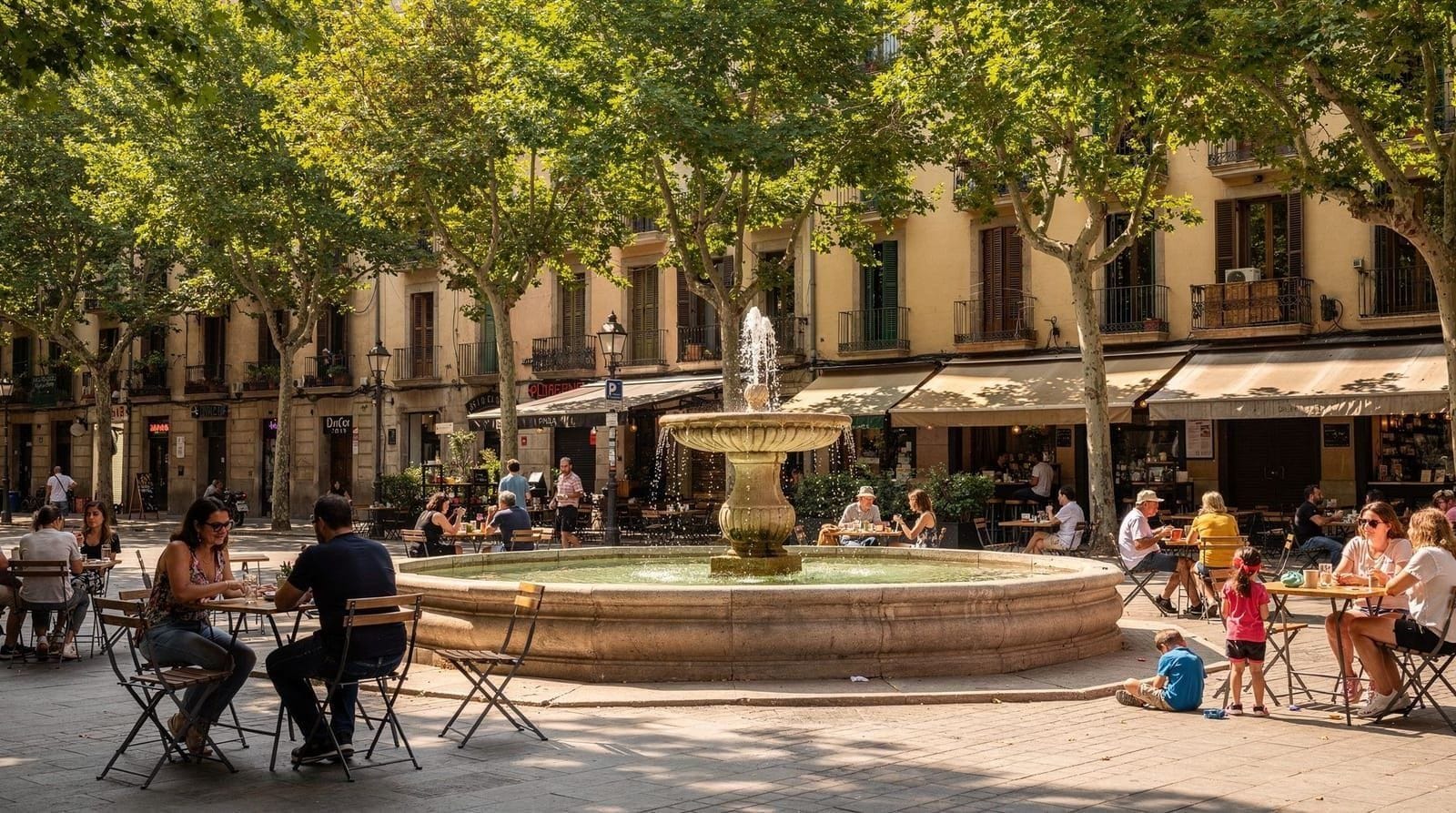
This gives Gràcia a character unlike anywhere else in Barcelona. Walking through it feels less like navigating a city neighbourhood and more like arriving in a village that happens to be embedded within one. The squares — Plaça del Sol, Plaça de la Vila de Gràcia, Plaça de la Virreina — function as living rooms, filled with people who actually live here rather than people passing through.
The food reflects this. Eating in Gràcia means eating where barcelonins who chose this neighbourhood specifically for its independence from the tourist economy actually want to spend their evenings.
Understanding Gràcia’s squares
Before we get to specific restaurants, it is worth understanding how the squares shape the eating and drinking experience. In most of Barcelona, you eat inside a restaurant. In Gràcia, the terraces matter as much as the kitchens.
Plaça del Sol is the largest and most social of the squares — a wide, slightly ungainly space that fills with young people in the evenings, particularly in summer. The bars here stay open late and the atmosphere on a warm Friday evening is excellent.
Plaça de la Vila de Gràcia is quieter and more residential, with the neighbourhood’s old town hall forming one side. The bars around it attract an older crowd, people who have been coming here for years.
Plaça de la Virreina is perhaps the most beautiful — smaller, cobbled, with the church of Sant Joan on one end and a cluster of bars where students from the nearby art schools mix with neighbourhood regulars.
None of the three squares has a single “best” bar attached to it — the point of Gràcia is that the terraces rotate through the evening as groups move, meet friends, and settle wherever there is a free table. Arriving with a fixed plan for the whole evening slightly misses how the neighbourhood actually works.
Comparing the three squares
| Square | Character | Crowd | Best for |
|---|---|---|---|
| Plaça del Sol | Wide, social, lively | Younger, loud on weekends | Late evenings, groups |
| Plaça de la Vila de Gràcia | Quieter, residential | Older, regulars | A calm early evening drink |
| Plaça de la Virreina | Smallest, most picturesque | Students, mixed | Photos, a relaxed afternoon vermut |
Coffee and morning café life
Gràcia’s café culture is genuinely Catalan in its rhythms — an espresso standing at the bar, or a longer café amb llet (café au lait) at a table if you have time. The neighbourhood has fewer of the Australian-style brunch spots that have colonised El Born and Eixample; mornings here feel slower and more authentic.
Syra Coffee has become a genuine institution for serious coffee: multiple locations in the neighbourhood, all of them doing excellent espresso-based drinks and a small but carefully chosen food menu. The Gràcia branches attract a mix of neighbourhood regulars and people who have specifically come from across the city for the coffee. Croissants, pastries, simple toasts. This is the best place in the neighbourhood to start the day.
Cafè del Sol on Plaça del Sol does what its name suggests: it opens onto the square, the coffee is good enough, and you are paying partly for the view of the neighbourhood waking up around you. More about atmosphere than gastronomy, which is entirely valid as a reason to sit somewhere.
Neither spot does the elaborate avocado-toast style brunch menus that have spread through El Born and parts of Eixample — for that, the dedicated brunch in Barcelona guide points toward the neighbourhoods that specialise in it. Gràcia mornings are simpler by design.
Lunch: where to eat in the middle of the day
La Pepita (bocadillos)
On Carrer de Còrsega, La Pepita has built a following on a simple proposition: exceptional bocadillos (Catalan sandwiches) on good bread with serious fillings. The queue at noon is real and forms quickly, but it moves. The combinations are creative without being fussy — jamón ibérico with good olive oil, tuna with escalivada (roasted vegetables), options that understand what bread and filling should do together. Prices are modest; this is unambiguously a lunch spot rather than a dining destination.
El Racó del Gat
A neighbourhood favourite in the most literal sense: the kind of place where locals have a regular table, where the daily specials board matters more than the printed menu, and where the cooking is traditional Catalan without being self-consciously heritage. Rabbit, salt cod, chickpeas with sausage in winter. Mains in the €14–20 range. The dining room is small and unpretentious. Booking is advisable for Thursday through Saturday lunch.
PARKING Pizza
Technically on the Eixample/Gràcia border but spiritually belonging to neither — its own thing entirely. PARKING does Neapolitan-style pizza at a level that is, by any honest assessment, among the best in Barcelona. The dough is properly fermented, the San Marzano tomatoes are the real thing, the bufala mozzarella is fresh. Queues form. There is no way around this; the restaurant does not take reservations for small groups. Go early (when they open, around 1pm for lunch) or accept waiting.
Vermouth and afternoon drinking
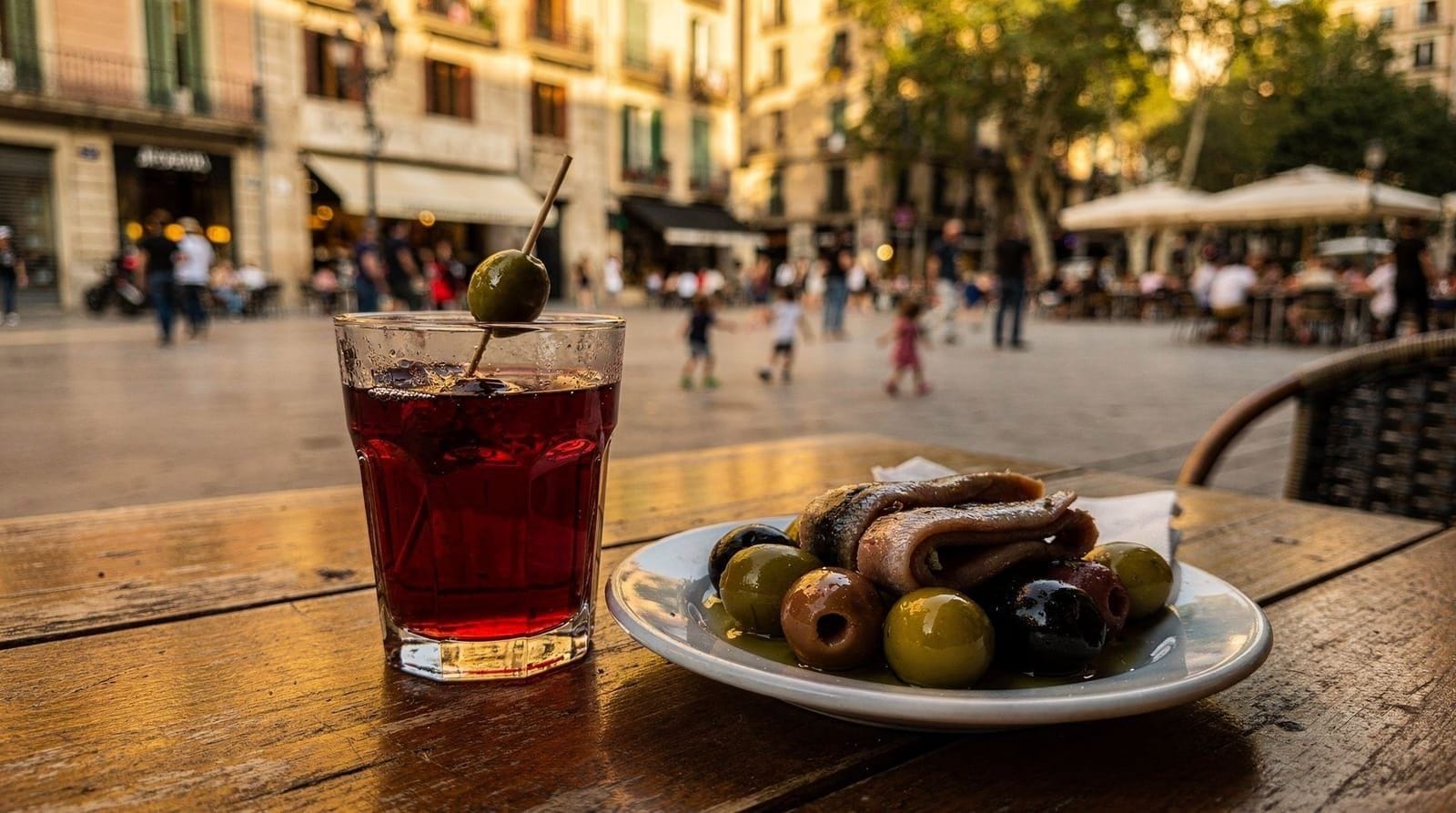
The vermut tradition is at its most alive in Gràcia. Sunday mornings bring out half the neighbourhood for a glass and a snack before lunch — it is a social occasion as much as a drinking one.
Sol Soler
The best natural wine bar in Gràcia and one of the best in Barcelona for people who take wine seriously. The list leans toward small producers from Catalonia and across Spain, with a good selection of orange wines and genuinely unusual bottles. Small plates accompany the drinks — charcuterie, cheese, things on toast that are done with more care than the category usually suggests. The terrace on Plaça del Sol is the place to be on a warm afternoon. Sol Soler has a loyal crowd that returns weekly; sitting in the middle of it feels like being briefly admitted into someone’s social circle.
If you’d rather have a guided introduction to this kind of tapas-and-drinks crawl than piece it together on your own, a general local tapas experience covers the same territory of small bars and honest small plates:
Bodega Sepúlveda
A wine shop with a bar counter, which is the best kind of wine bar: the bottles are primarily for taking home, but you can drink them here at retail price plus a small corkage. This makes it exceptionally good value compared to restaurants, and the selection — ranging from affordable everyday bottles to serious aged wines — is genuinely interesting. The crowd is local and knowledgeable without being precious about it.
A word on cava in this context: Gràcia is an excellent neighbourhood to drink it. The bodegas and neighbourhood bars stock Penedès cava from small producers that you will not find in tourist-facing restaurants, and the price difference is significant — a glass of something genuinely good for €4–6 rather than the €8–12 charged in Eixample hotel bars. If you have been drinking cava only in standard restaurants, drinking it here recalibrates what the category can be.
Dinner: Gràcia’s evenings
La Pepita (tapas, evening)
Distinct from the bocadillo operation of the same name — this La Pepita on Carrer de Gràcia proper is a tapas bar doing small plates in the evening. The approach is modern without being arch: good ingredients, combinations that make sense, portions sized for sharing. The room fills up quickly and stays full until late. This is the kind of place that has no ambitions toward Michelin attention and is better for it.
El Racó del Gat (dinner)
The same reliable kitchen that does lunch, now in a slightly different mode — fewer daily specials, more of the printed menu, the dining room a touch quieter on weekday evenings. Worth booking if you want something traditionally Catalan without any of the tourist-facing performance that similar cooking sometimes comes with in other parts of the city.
Getting to and around Gràcia
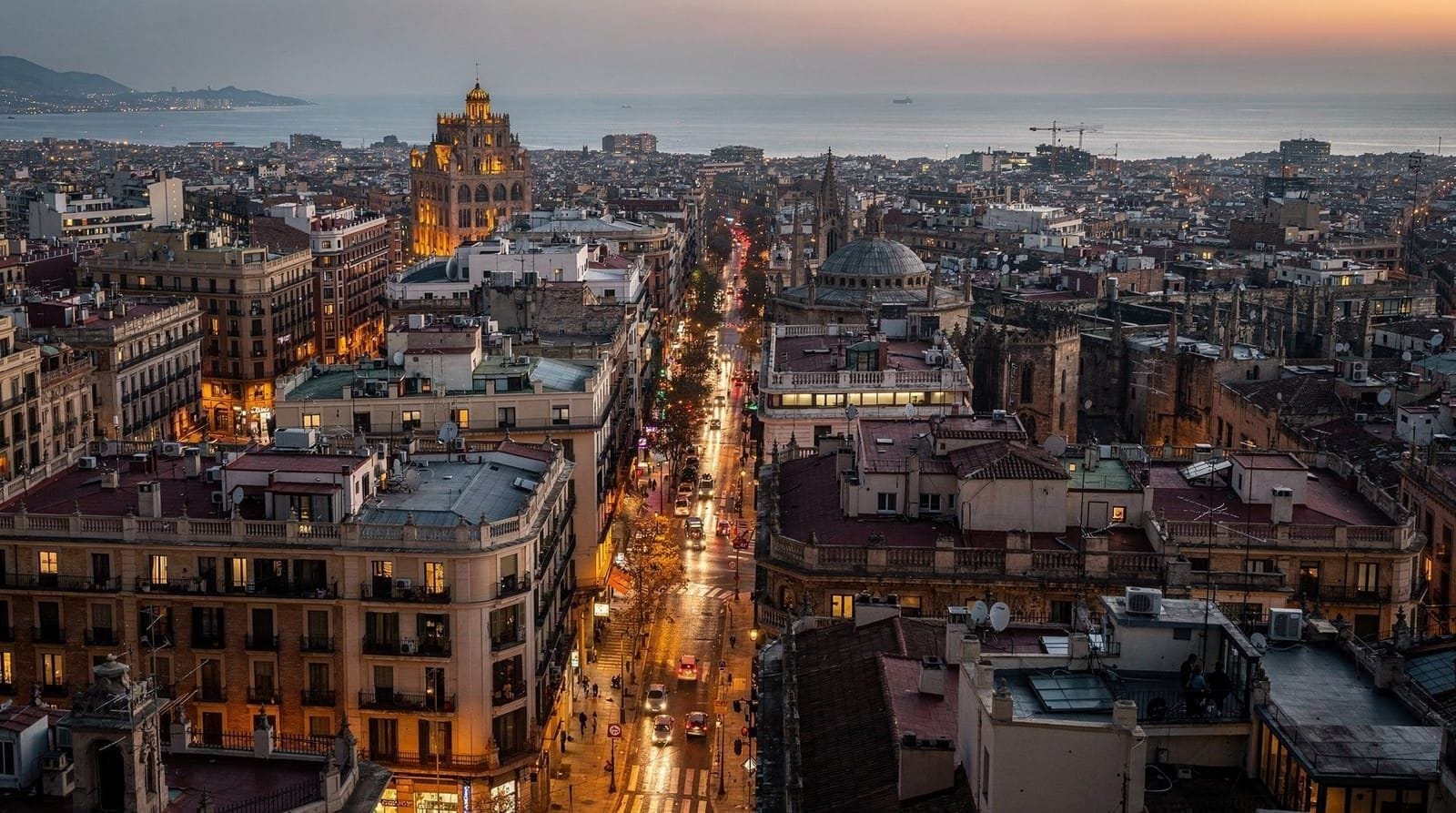
Gràcia sits above Eixample and is easily walkable from the Sagrada Família area (twenty minutes) or from Passeig de Gràcia (fifteen minutes uphill). Metro line L3 at Fontana or Diagonal gives you direct access from the centre.
The neighbourhood is best explored on foot. The streets are relatively quiet of traffic and the distances between the squares are small enough that wandering between them requires no planning. This is, genuinely, the best way to experience Gràcia’s food: pick a direction from whichever square you happen to be on, see what looks right when you find it.
For broader orientation on where to stay in Barcelona and how Gràcia compares to other neighbourhoods as a base, the differences are worth understanding before you book.
What makes Gràcia different
The absence of chains is significant because it means the neighbourhood’s restaurants compete on quality and local loyalty rather than brand recognition. A restaurant in Gràcia that is not good does not survive; there is no footfall of distracted tourists to keep it in business. This creates a self-selecting environment where the places that exist tend to be worth going to.
It also means the prices are more honest. You will pay similar amounts to what you would pay in El Born — mains €14–22, tapas €5–10 — but you are more likely to feel that the money went somewhere real: into the ingredients, into the kitchen, into a room that the owners have been running for years and intend to keep running.
Gràcia is not the most glamorous place to eat in Barcelona. It does not have the architectural drama of Eixample or the waterfront energy of Barceloneta. What it has is something harder to manufacture: the sense that the people around you have chosen to be here specifically, because they love this neighbourhood and want to spend their evenings in it.
FAQ
Is Gràcia walkable from central Barcelona? Yes — it’s about a 15-minute uphill walk from Passeig de Gràcia or 20 minutes from the Sagrada Família area, and Metro L3 (Fontana or Diagonal) covers it directly if you’d rather not walk.
Does Gràcia have good options for a quick, cheap meal? Yes — La Pepita’s bocadillos and the neighbourhood’s vermut bars (a small plate alongside a glass of cava or vermut) both deliver a satisfying meal for well under what a sit-down restaurant costs, without sacrificing quality.