Christmas in Barcelona: markets, traditions and what to expect
December is one of the better-kept secrets for visiting Barcelona. The summer crowds are gone, hotel prices drop substantially, Sagrada Família glows differently in the low winter light, and the city dresses itself in a version of Christmas that is distinctly Catalan — which means it includes some traditions you will not have encountered anywhere else. Among them: a figurine that defecates, a log that also defecates, and a set of national candy-throwing traditions. Let’s go through it properly.
| Where | Fira de Santa Llúcia (Gothic Quarter Cathedral square) |
| Cost | Markets free to browse; menú de Navidad €35–60 |
| Weather | 8–17°C, pack layers and a warm jacket |
| Hotel prices | Often 40–50% below August peak |
| Key dates | Markets to Dec 23, New Year’s Eve, Three Kings Jan 5–6 |
The Christmas markets
Barcelona runs several Christmas markets simultaneously from late November through December 23, each with a different character.
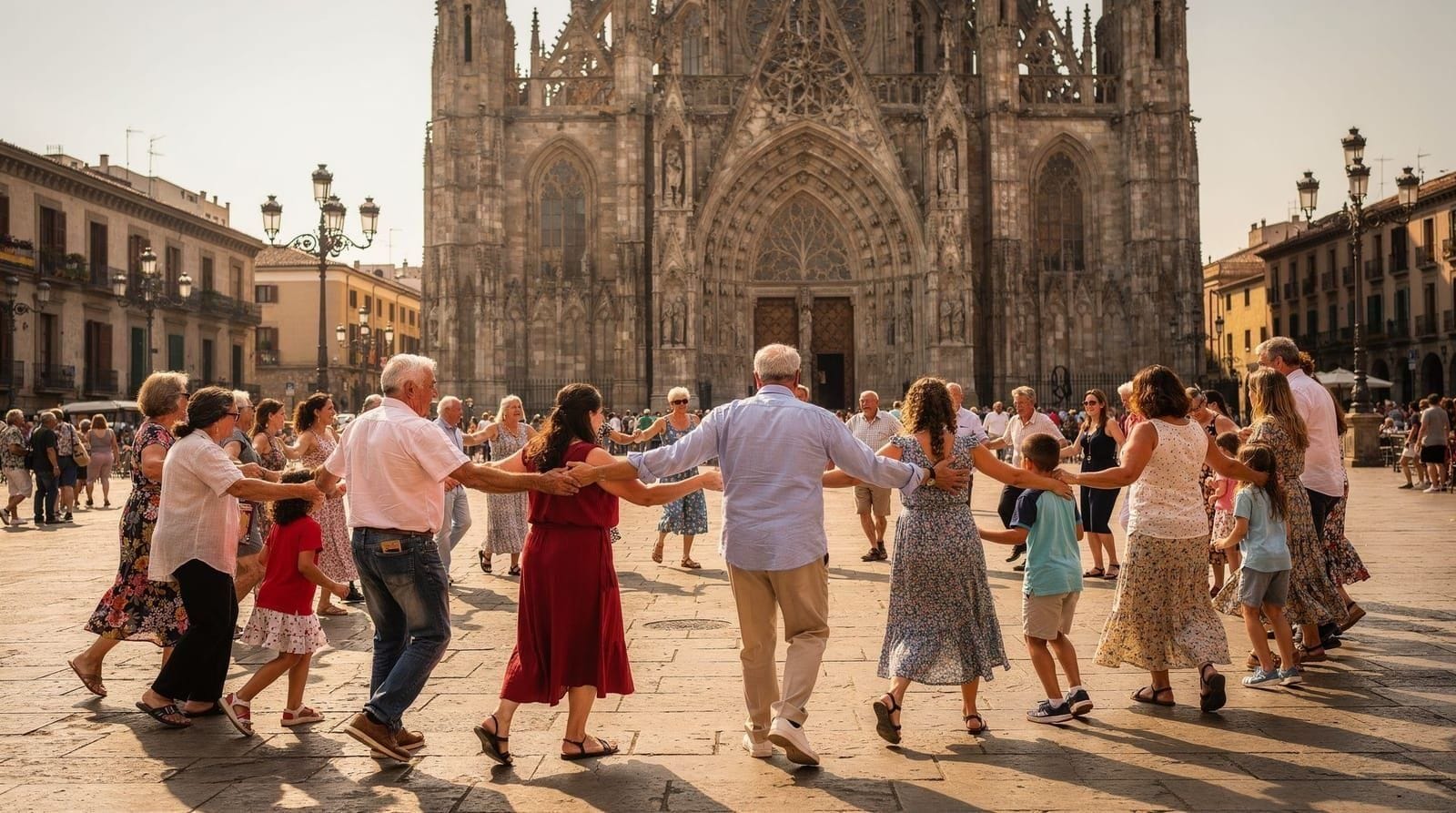
Fira de Santa Llúcia is the oldest. It sets up in front of the Cathedral of Barcelona, in the Plaça de la Seu in the Gothic Quarter, and it has been running in various forms since 1786. The stalls sell traditional Christmas items — nativity figures (pessebres), decorations, wreaths, the caganer and the tió (more on these shortly) — alongside artisan goods. The Cathedral behind it provides one of the best backdrops of any Christmas market in Europe. Go in the evening when the lights are on and the cathedral is illuminated.
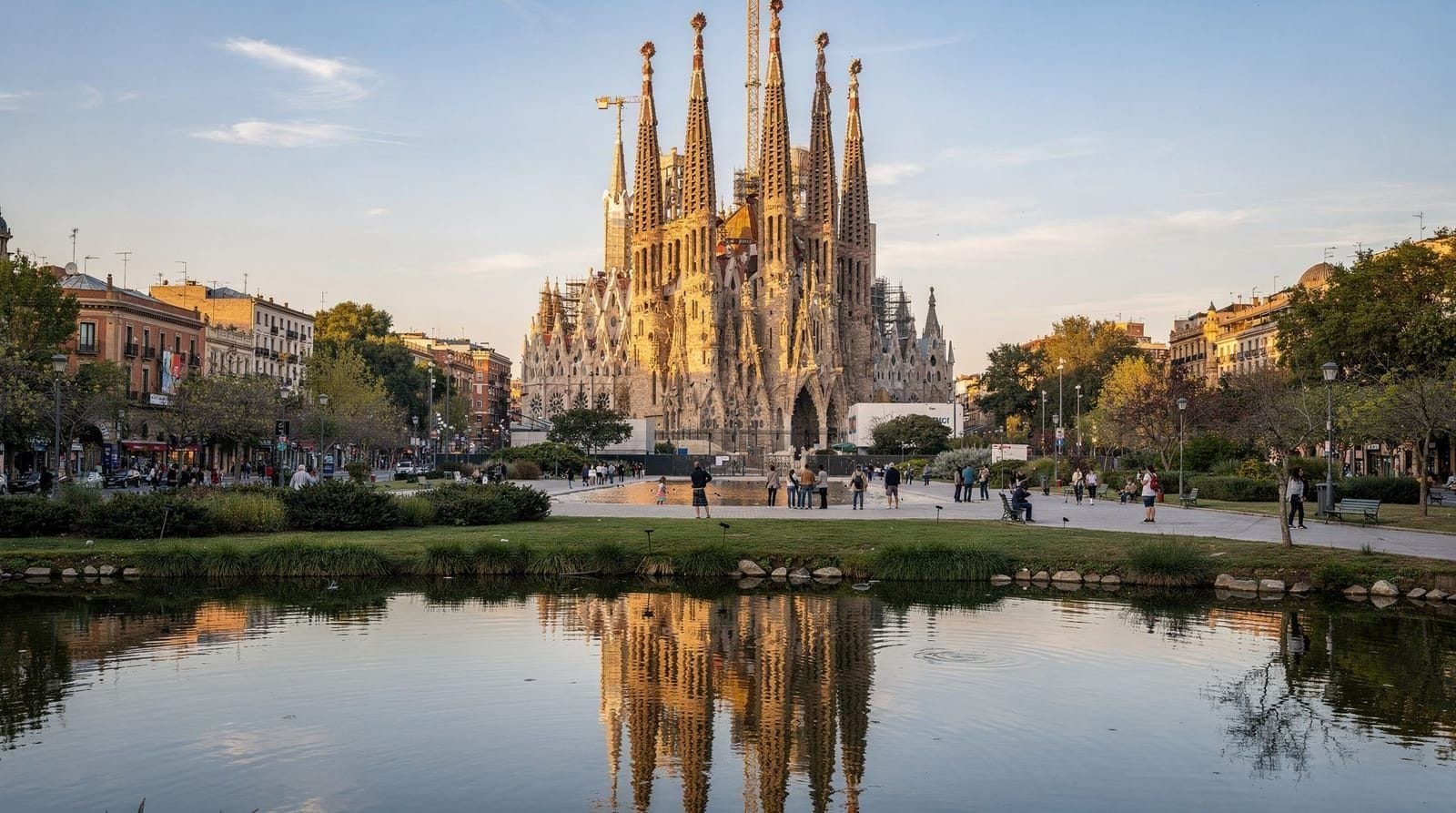
Fira de Nadal a la Sagrada Família is newer and more commercial, but the location makes it worth visiting even if you are only passing through. Stalls in the plaza in front of Sagrada Família sell gifts and festive food; the façades of the basilica lit at night are extraordinary in winter. Timed-entry tickets for Sagrada Família should be booked weeks in advance even in December — the site is popular year-round. Note that the basilica has scheduled closure dates in January 2026 (around January 12–18) for maintenance; check the official website if your visit extends into the new year.
A guided visit combining Sagrada Família’s interior with skip-the-line access is worth considering in December, since the shorter daylight hours make an efficient, planned visit more valuable than in summer:
Ice rink at Passeig de Gràcia: a seasonal outdoor ice rink typically sets up in Eixample near Passeig de Gràcia during December and runs through January. Entry with skate hire is around €10–14 for adults and less for children. It is not the largest rink, but the setting — next to the Modernista buildings, with festive lighting — makes it more than a novelty.
The Catalan Christmas traditions
This is where Barcelona diverges sharply from Central European or Anglo Christmas expectations.
El Caganer is a figurine traditionally included in nativity scenes (pessebres) throughout Catalonia. He is always depicted squatting and defecating. The tradition dates to at least the 18th century and is deeply embedded; every family nativity in Catalonia includes one. The stalls at Fira de Santa Llúcia sell them in great variety — the classic version is a Catalan peasant in a red cap, but modern caganers are made in the likeness of politicians, athletes, celebrities and public figures. Buying one as a souvenir is entirely appropriate and will give you something genuinely distinctive to take home.
El Tió de Nadal (the Christmas log) is the other tradition that baffles non-Catalans. Tió is a log with a painted face, small legs and a red blanket. From December 8 (the Immaculate Conception) through Christmas Eve, children “feed” the tió each day and cover it with the blanket to keep it warm. On Christmas Day, children beat the tió with sticks while singing a traditional song instructing it to defecate presents, then lift the blanket to find small gifts hidden beneath it. Tió figures are sold at the Christmas markets; the smallest ones make excellent gifts to bring home to people who will be confused by them.
These traditions are not performances for tourists. They are live, in every home with children in Catalonia, and the stalls selling caganers and tió are attended by locals buying them for family use.
For visitors with children, the whole Catalan Christmas sequence — market, tió, Three Kings — makes December a genuinely good month for a family trip, arguably more distinctive than a generic European Christmas market circuit. See the Barcelona with kids guide for how to build a family itinerary around it.
What Christmas feels like in Barcelona
The city in December is noticeably quieter than in summer. Beaches are empty; La Rambla is walkable at a normal pace; the Gothic Quarter and El Born feel like neighbourhoods rather than tourist attractions. The weather is mild by northern European standards — daytime highs typically 13–17°C, evenings dropping to 8–10°C — and rain is possible but not dominant. A warm jacket is necessary; a heavy coat is not.
The streets of Eixample are decorated with impressive festive lighting, particularly along Passeig de Gràcia and the streets running off it. The passeig becomes a walk worth doing in the evening specifically for the lights, particularly when the Modernisme buildings are illuminated alongside them.
The Gothic Quarter at night in December has an atmosphere all its own — narrow lit lanes, fewer crowds than a summer evening, and the Cathedral square anchored by the Christmas market. A guided evening walk is a good way to see it without navigating alone in the dark:
December compared to the rest of the year
| December | July/August | April/May | |
|---|---|---|---|
| Daytime temp | 13–17°C | 28–30°C | 18–22°C |
| Hotel prices | Lowest of the year | Peak | Moderate, rising |
| Crowds | Thin | Maximum | Growing but manageable |
| Signature draw | Christmas markets, Tió, cava | Beaches | Flowers, mild sightseeing weather |
Restaurant prices are lower than in summer. Many places offer menú de Navidad (Christmas menus) in the evenings around December 23–26, which are set menus at a fixed price (typically €35–60) and are the local way of eating out during the holiday period. Book ahead for the December 23–25 and December 31 evenings.
Food and drink in December
December is cava season. Catalonia produces cava — the local sparkling wine made in the Penedès region by the traditional method — and Christmas is when it flows most freely. Our cava vs champagne guide explains what makes it different; a glass costs €3–5 at a bar, a bottle €7–15 from a supermarket for a perfectly good one. Drinking cava at a bar counter while eating jamón and cheese is one of the better ways to spend a December afternoon in Barcelona.
Turron (turrón in Spanish) is the Christmas confection: almond-based, either soft or hard, sold in flat bars at every supermarket and pastry shop. The Catalan version tends toward the soft type (turrón de Jijona). It is very sweet, very good, and very much part of December in the city.
Hot chocolate — thick, almost pudding-like — is the traditional accompaniement to churros in winter. The Bar Granja Viader near El Raval has been serving their version since 1870 and is worth the short detour. Xocolata desfeta is the Catalan name for the thick version.
New Year’s Eve and the path to Three Kings
Barcelona New Year’s Eve centres on Plaça de Catalunya and the countdown at midnight, following the national tradition of eating one grape per each of the twelve bell strokes. It is crowded, festive and good-natured. January 1 is quiet; most of the city rests.
Then comes the final act of the Barcelona Christmas season: the Cabalgata de Reyes on January 5, when the Three Kings parade through the city throwing sweets, and children wake on January 6 to find their gifts. Our Three Kings parade guide covers this in detail. For most local families, January 5 evening is the emotional peak of the entire festive period — more significant than Christmas Day itself.
If your Barcelona trip spans late December through early January, you get the complete arc: markets, traditions, New Year, and the Kings. It is one of the best winter city breaks in southern Europe, and considerably underrated.
Practical notes for December
Sagrada Família in winter: book timed-entry tickets well in advance even in December. The interior in winter light is exceptional — the stained glass on the Nativity façade side glows in morning light; the Passion façade glows in afternoon. Arrive at opening time if possible. See our full Sagrada Família guide for ticket and visit tips.
Weather: pack for 8–17°C with layers. An umbrella is useful; a truly heavy coat is not necessary. The Christmas market at Fira de Santa Llúcia can be cold in the evenings — bring gloves.
Budget: December is low season for accommodation. Hotels that cost €200/night in August may be €90–120 in December. Restaurant prices are normal. Transport is the same. Our Barcelona on a budget guide notes that December is one of the most cost-effective times to visit.
Crowds: minimal by Barcelona standards. You can walk through the Gothic Quarter at a normal pace, enter museums without long queues, and eat at restaurants without booking two weeks ahead. The best time to visit Barcelona article makes this case in full.
What’s closed: December 25 and January 1 see most shops and many restaurants closed. The markets, main tourist sites and restaurants that cater to visitors typically remain open. Check ahead for specific places.
December Barcelona is not the same city as August Barcelona — and for many visitors, that is precisely the point.
FAQ
Is Barcelona worth visiting at Christmas? Yes — December combines genuine Catalan traditions (Christmas markets, the tió, the caganer), low hotel prices, and thin crowds, though at the cost of shorter days and cooler weather than the rest of the year. It suits travellers who prioritise atmosphere and value over beach weather.
What is the Tió de Nadal and where can I see one? The Tió de Nadal is a Christmas log figure with a painted face that Catalan children “feed” through December before it delivers small gifts on Christmas Day. Tió figures, along with the caganer figurine, are sold throughout the Fira de Santa Llúcia Christmas market in front of the Cathedral.