Gaudí combo: Sagrada Família and Park Güell — is it worth it?
Barcelona: Sagrada Família and Park Güell tickets combo
Duration: 4 hours
- Free cancellation
Two of the most-booked attractions in Barcelona. One combined ticket. The question is not whether to visit both — most visitors to Barcelona do — but whether the combo format genuinely saves you effort and money, or just adds a logistical wrinkle.
| Where | Sagrada Família (Eixample) and Park Güell (Gràcia hillside) |
| Cost | Around €55/adult combo (vs €39–49 booked separately) |
| Time needed | 4–5 hours minimum for both, including transit |
| Getting there | Metro L2/L5 for the basilica; bus 24 or metro L3 + walk for the park |
| Best time | Sagrada Família morning, Park Güell late afternoon |
What the combo includes
The Sagrada Família and Park Güell combo covers two things:
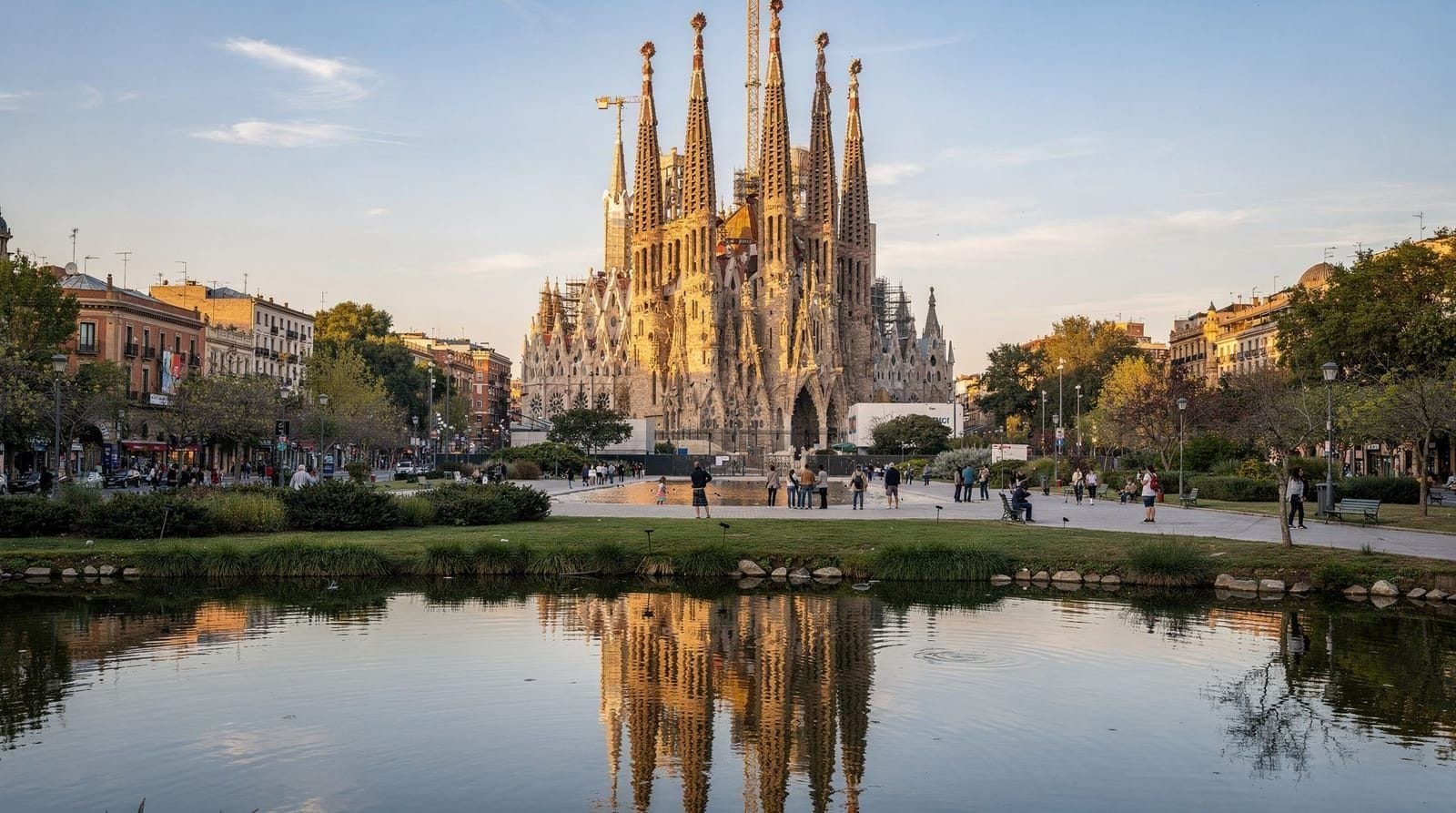
Sagrada Família: Timed skip-the-line entry to the basilica, including the audio guide. Tower access is not part of the combo — it remains an optional add-on if you want the rooftop views.
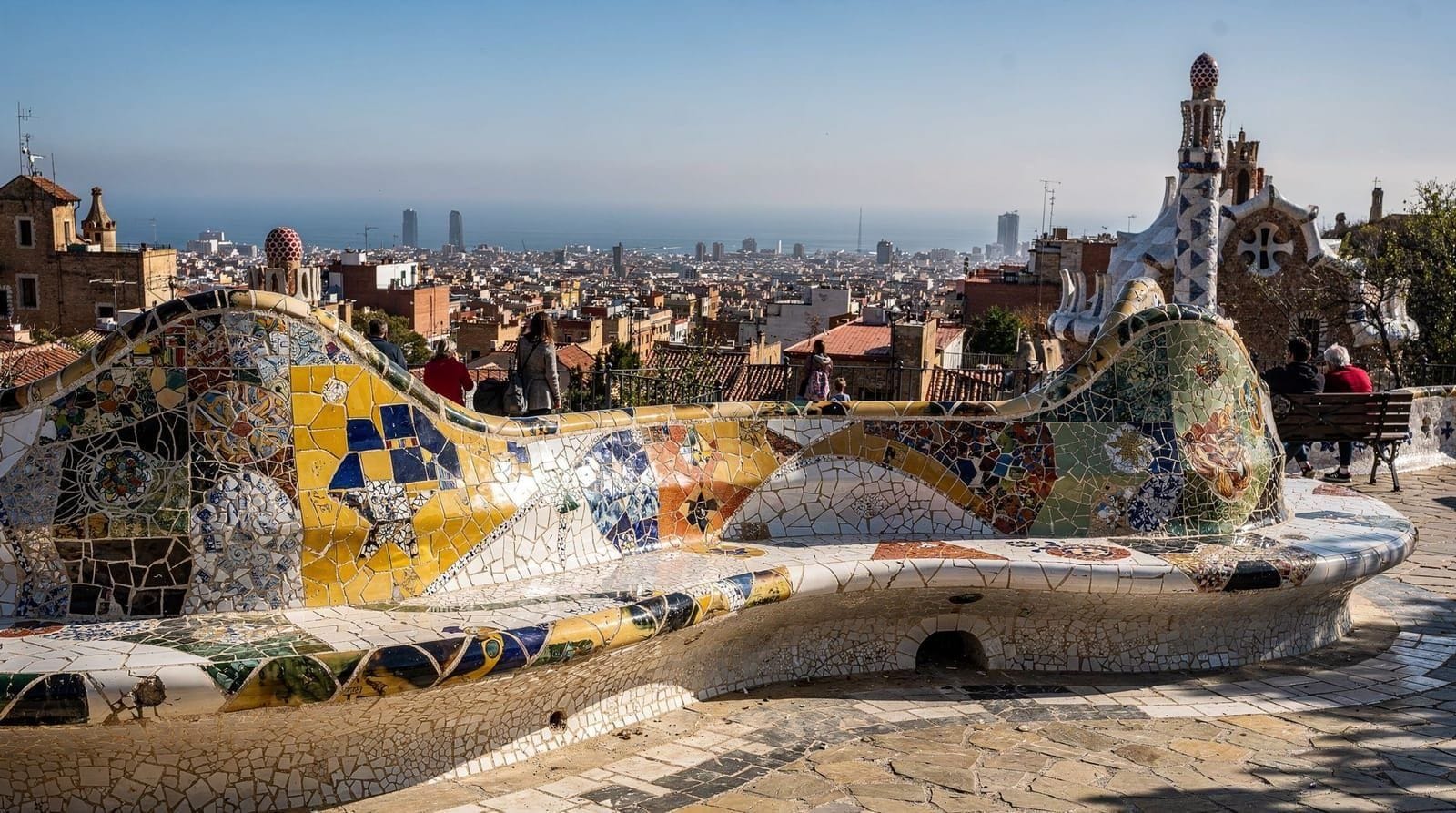
Park Güell Monumental Zone: Timed-entry ticket to the main terrace, the Dragon Staircase, the Hypostyle Room and the Gaudí House Museum (the Casa del Guarda). This is the ticketed 2-hectare section of the park. The surrounding parkland — walking paths, viaducts, forest — is free to enter at all times without a ticket.
Both entries include the standard audio guide content. No live guide is part of the combo unless you specifically book a guided version.
What does it actually cost?
The combo runs around €55 per adult. Buying separately, Sagrada Família entry starts at €26 and Park Güell’s Monumental Zone costs €18. That puts the separate total at roughly €44 for the basic versions — meaning the combo costs more than the cheapest individual tickets.
Where the combo justifies itself: if you were going to upgrade either attraction (better time slot, premium audio), the combo pricing competes well with mid-tier individual options. Think of it as one booking, one confirmation email, one logistics decision.
The Park Güell free-vs-paid question
This is worth addressing directly because many travellers do not know it: most of Park Güell is free. The Monumental Zone — the tiled terrace, the mosaic salamander, the Hypostyle Room — requires a ticket (€18). Everything else: the forested hillside, the viaducts, the stone arches, the views from the upper paths — you walk in freely.
Our Park Güell guide covers the free sections in detail and maps the best free viewpoints. If your goal is photographs of the city from the hilltop, you can achieve that without buying a ticket at all. The ticket is specifically for the Gaudí-designed terraces and the house museum.
That said, the Monumental Zone is the architectural heart of the park and worth seeing if you have even a moderate interest in Gaudí’s work. The combo makes it easy.
Visiting both in one day: logistics
Barcelona is compact, but Sagrada Família and Park Güell are on opposite sides of the Gràcia neighbourhood. The travel time between them is:
- Taxi or Rideshare: 15–20 minutes, around €8–12.
- Bus 24 from Passeig de Gràcia: 20–30 minutes, €2.55 per journey.
- Metro (L3 to Lesseps) + walk: 25–35 minutes total.
The recommended sequence is Sagrada Família in the morning, Park Güell in the afternoon. Morning light enters the basilica’s stained-glass windows from the east and illuminates the nave at its best before midday. Park Güell’s terrace faces south and west, so afternoon light makes the tiled benches and city views look their best.
Allow at least 1.5–2 hours at the Sagrada Família and at least 1 hour at Park Güell’s Monumental Zone (longer if you are walking the free sections). Budget 4–5 hours minimum for both with transit between them.
What you will miss if you rush
At the Sagrada Família: The crypt containing Gaudí’s tomb, and the museum showing his original models and construction methods. Many visitors skip the crypt, which is a mistake — it is the emotional heart of the building.
At Park Güell: The forested upper paths above the Monumental Zone, where the crowds thin out and you get unobstructed views of Barcelona’s coast from a height most visitors never reach. Our Park Güell guide maps the best free upper trails.
Both attractions benefit from time rather than rushing.
Alternatives worth considering
Park Güell with Gaudí House Museum: For €22 you get the Monumental Zone ticket plus entry to the Casa del Guarda museum inside the park — the restored house where Gaudí’s assistant lived. If you want maximum context for Gaudí’s domestic architecture, this is a better standalone option than basic entry.
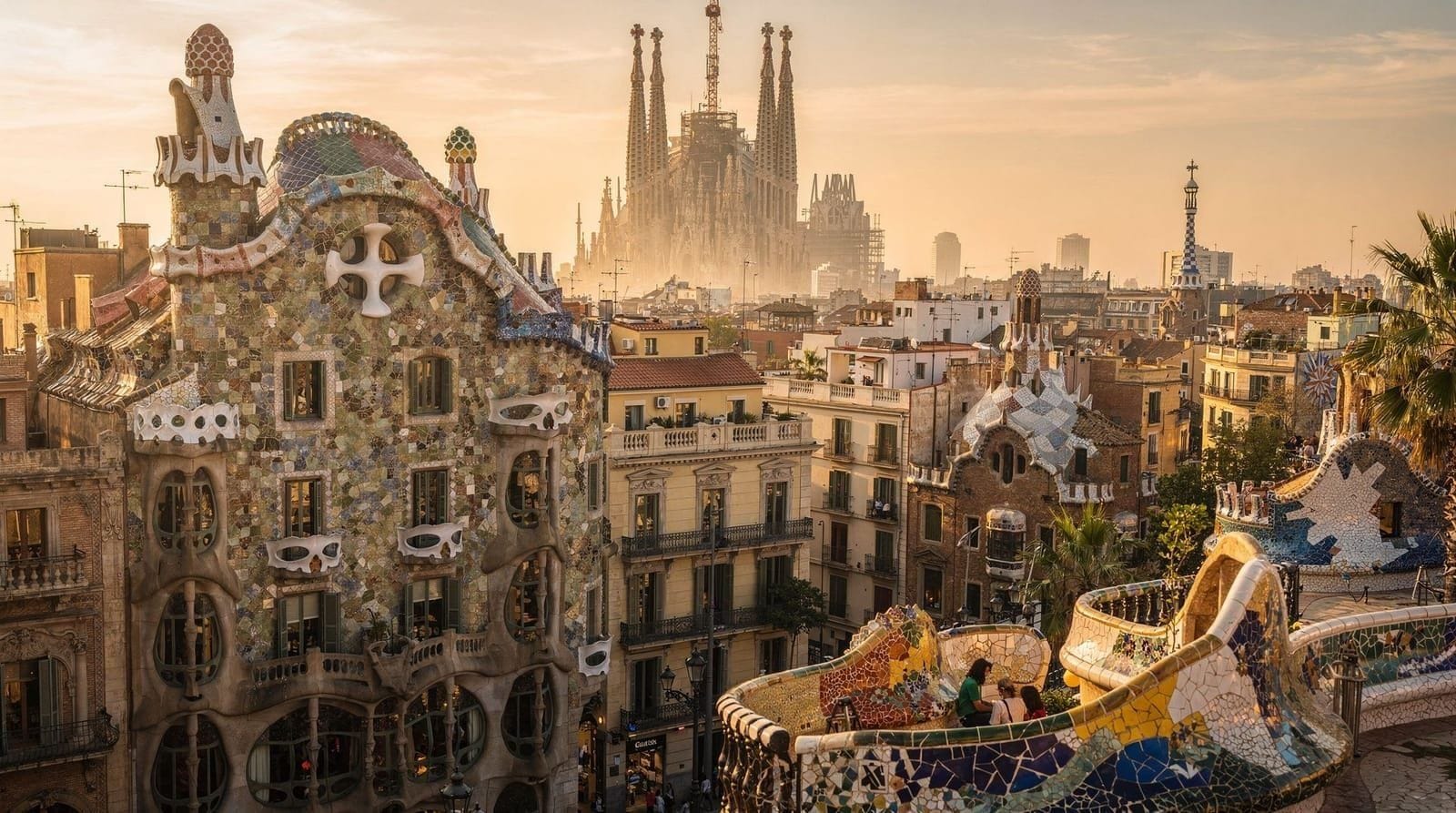
The full Gaudí day: Some operators offer a guided tour that combines Sagrada Família, Park Güell and one of the Passeig de Gràcia houses (Casa Batlló or La Pedrera) in a single guided day. These run €75–130 and eliminate all the transit logistics. Worth considering if you are in Barcelona for only two or three days and want to tick off the modernisme highlights efficiently.
Separate bookings: If you are a flexible traveller who wants to spend different amounts of time at each attraction, booking separately gives you full control over timing. The combo locks you into a joint booking which can be less adaptable if plans change.
The honest take on value
The combo is genuinely convenient, saves a small amount of money and reduces the number of booking steps. It is not a dramatic deal. If you were already planning to visit both on the same trip, book the combo — it is the path of least resistance.
If you were only going to visit one, Sagrada Família is the priority. It is more architecturally significant, more difficult to see well without a ticket, and has stricter availability. Park Güell can be partially experienced for free; the Sagrada Família cannot.
For more planning context, see how many days in Barcelona and the Gaudí trail guide.
Booking tips
- Book as early as possible. Both attractions have timed entry and both sell out weeks ahead in summer.
- If your combo allows split-day use (check the terms), use it — a morning at Sagrada Família and an afternoon at Park Güell on consecutive days often gives better photos and less crowds.
- Check availability on a Tuesday, Wednesday or Thursday. Weekend slots at both attractions fill first.
Getting there
Sagrada Família: Metro L2 (Sagrada Família) or L5 (same stop). Walking from the Gothic Quarter takes about 25 minutes through the Eixample.
Park Güell: Bus 24 from Passeig de Gràcia is the most direct public route. Metro L3 to Lesseps then a 10-minute uphill walk. Taxis are the easiest option if you are coming directly from the Sagrada Família.
Avoid driving to either location — parking is near-impossible, and both are well-served by public transport.
The Sagrada Família interior in detail
Walking into the Sagrada Família for the first time stops most people short. The nave is 60 metres tall and lined with hyperboloid columns that branch like a canopy of stone trees — Gaudí modelled the structure on forests, and the effect is immediate once you are standing beneath it. Morning light transforms the space: the east-facing windows are predominantly cool blues and greens, the west-facing windows warm ambers and reds, and by midday the entire nave is alive with shifting colour.
The nave and aisles: The central nave is bordered by side aisles with their own forest of branching columns. The acoustic design is equally deliberate — Gaudí wanted the basilica to function as a working church, not a museum, and the building does have regular masses. If your visit coincides with a sung service, stay for a few minutes even if you are not religious.
The stained glass: The windows were designed by Gaudí’s successors and installed in stages through the 20th and 21st centuries. The most celebrated is the rose window on the west facade (completed 2010), which washes the afternoon interior in a warm gold. The abstract geometric patterns avoid figuration, which gives the light an almost abstract quality. Photography captures a fraction of it — the experience requires being inside.
The crypt and Gaudí’s tomb: Beneath the apse, the original crypt (begun 1882, the oldest part of the building) is darker and quieter than the main nave. This is where Antoni Gaudí is buried. He died in 1926 after being struck by a tram on Gran Via, initially unrecognised, and was interred here by public demand. The tomb is simple: a stone sarcophagus in a Neo-Gothic chapel, still attracting votive candles and quiet visitors who come specifically to pay their respects. Many visitors do not know the crypt exists — follow the signs downstairs before leaving.
The Sagrada Família Museum: Located beneath the Nativity façade, the museum shows the evolution of the building across 140 years of construction. Gaudí’s original plaster models (damaged in the 1936 Civil War and painstakingly reconstructed) are the centrepiece — they reveal how he developed his structural ideas before computers existed. The museum also shows a scale model of the completed basilica, which helps put the current construction in context. The tower lifts (booked separately, not part of the combo) give rooftop access to the decorated pinnacles, but the views of the nave from inside are honestly more interesting.
Park Güell’s Monumental Zone in detail
The Monumental Zone is only 2 hectares of the 17-hectare park, but it contains the work Gaudí considered most architecturally experimental. The rest of the park is beautiful Mediterranean woodland — free to enter, lovely for a walk — but the tiled structures, the ceramic bench and the Hypostyle Room are what make Park Güell singular.
The Dragon Staircase: The main entrance from the lower plaza rises through a symmetrical double staircase flanked by fountains. The central element is the polychrome salamander (popularly called “el drac,” the dragon) tiled in broken ceramic fragments — Gaudí’s use of trencadís, the mosaic technique made from ceramic shards, at its most playful. The salamander is the most photographed object in the park and, at peak hours, the queue for a photograph can take 20 minutes. Arriving at your timed entry exactly when the slot opens significantly improves your chances of a calm photograph.
The Hypostyle Room: Immediately above the staircase is a forest of 86 Doric columns supporting the main terrace above. Gaudí intended this as a covered market for the failed residential development the park originally accompanied. The ceiling rosettes between the columns are decorated with broken ceramic and glass in circular patterns — look up immediately on entering. The room is shaded and noticeably cooler than the open terrace, and the light from the perimeter creates a dappled effect in the mornings.
The mosaic bench: The undulating bench at the edge of the main terrace is one of the longest ceramic benches in the world, approximately 110 metres of continuous trencadís-covered seating designed by Gaudí’s assistant Josep Maria Jujol. The ceramic pieces were sourced from discarded factory tiles and deliberately chosen for variety of colour and texture. The bench also serves as a retaining wall for the terrace and a rain-collection system for the cistern below — Gaudí’s design rarely separated aesthetics from engineering.
The Gaudí House Museum (Casa del Guarda): The small pink house at the park entrance was built as a showroom for the planned residential development and later used by Gaudí himself as a home from 1906 to 1925. It now contains original furniture, personal objects and documentation of his domestic life. Entry is separate from the Monumental Zone ticket (included in some combo variations — check your booking). The house is modest by the standards of his public work, which makes it surprisingly humanising.
Crowds and timing strategy
Both attractions have structured timed entry, but the crowd experience varies significantly by day of week and time slot. Making the right choices reduces waiting time and improves the quality of both visits noticeably.
Best days of the week: Tuesday, Wednesday and Thursday consistently have lower visitor numbers than weekends. Friday afternoon and Saturday morning are the worst combinations — the overlap of weekend leisure visitors and organised tour groups creates the longest waits at both locations. Sunday mornings at the Sagrada Família involve religious services that reduce free-roaming visitor access to parts of the nave.
Sagrada Família timing: The first entry slot (typically 9am) has two advantages: the nave is at its most serene before tour groups arrive, and the east-facing windows reach their best light around 10–10:30am. If you book the 9am slot and arrive five minutes early, you will have the interior in a state of relative quiet that deteriorates by 10:30am. The afternoon slot (3–4pm) works for west-window light but the building is at maximum occupancy.
Park Güell timing: The last 90 minutes before the Monumental Zone closes (typically 8pm in summer) are among the calmer times — later afternoon visitors are thinning, and the low sun catches the trencadís tiles and tiled bench at their most photogenic. The golden-hour light on the terrace’s south-facing view over Barcelona is genuinely superior to any midday shot.
Using the combo’s validity window: If your combo allows visits on separate days within 48–72 hours, consider splitting them deliberately rather than doing both in one day. A 9am Sagrada Família visit followed by a late-afternoon Park Güell visit on the following day means you hit both sites at optimal light and lower-crowd times, rather than one good and one rushed. Check the validity terms when you book — not all combos allow split-day use, but those that do offer a meaningful advantage.
Practical note on arrival: Both venues have now eliminated most physical queuing in favour of timed entry management at turnstiles. Arriving more than 15 minutes before your slot rarely helps and does not guarantee earlier entry. Arriving 5 minutes late may mean a delayed scan until the next available group — be on time rather than early.
The Sagrada Família and Park Güell combo is the most logical pairing in Barcelona. Book both, give each enough time, and you will have the best introduction to Gaudí’s genius the city offers.
Compare alternative tours
Frequently asked questions about Gaudí combo
How much does the Sagrada Família and Park Güell combo cost?
Combo tickets run around €55 per adult — roughly €4–6 less than booking the two attractions separately at full price.Do you have to visit both on the same day?
No. Most combo tickets allow you to visit Sagrada Família and Park Güell on different days within a set validity window, usually 48–72 hours. Check the specific listing when booking.Is Park Güell skip-the-line included?
Yes. The combo gives you timed-entry to the Monumental Zone (the ticketed part) plus skip-the-line entry to the Sagrada Família. The rest of Park Güell remains free to enter without a ticket.Which should I visit first?
Most visitors do the Sagrada Família in the morning when it is freshest, then Park Güell in the afternoon for the golden-hour light over the city. Travel time between them by taxi or bus is about 20–30 minutes.Do I need a guide for the combo, or just tickets?
Tickets alone are fine if you have read up beforehand. The Sagrada Família's audio guide is excellent. Park Güell's free audio in the app supplements the Monumental Zone well.Is the combo worth buying, or should I book separately?
It saves a small amount and simplifies the booking process. If you are already buying both, the combo is convenient. It is not worth stretching your schedule for the saving alone.