Montserrat day trip from Barcelona: guided tour review
Barcelona: Montserrat monastery and natural park day trip
Duration: Full day
- Free cancellation
- Hotel pickup
Montserrat is the one day trip from Barcelona that even non-religious visitors find worth the effort. The jagged mountain rising 1,200 metres above the coastal plain is one of the most dramatic landscapes in Catalonia, and the Benedictine monastery tucked into its cliffs has been a pilgrimage site since the 12th century. The guided tour from Barcelona handles a logistical puzzle that can otherwise eat most of your morning if you navigate it alone.
| Where | Montserrat massif, 50km north-west of Barcelona |
| Cost | around €55–90/adult guided; €30–35 DIY |
| Time needed | 4 hours (half-day) to 9–10 hours (full day with hiking) |
| Getting there | Guided minibus pickup, or FGC train + cable car/cremallera |
| Best time | Spring (April–May) or autumn (September–October) |
What the day trip actually includes
The standard guided tour with hotel pickup covers:
- Round-trip transport from Barcelona (typically by air-conditioned minibus or coach), with a pickup point in the city centre or hotel collection.
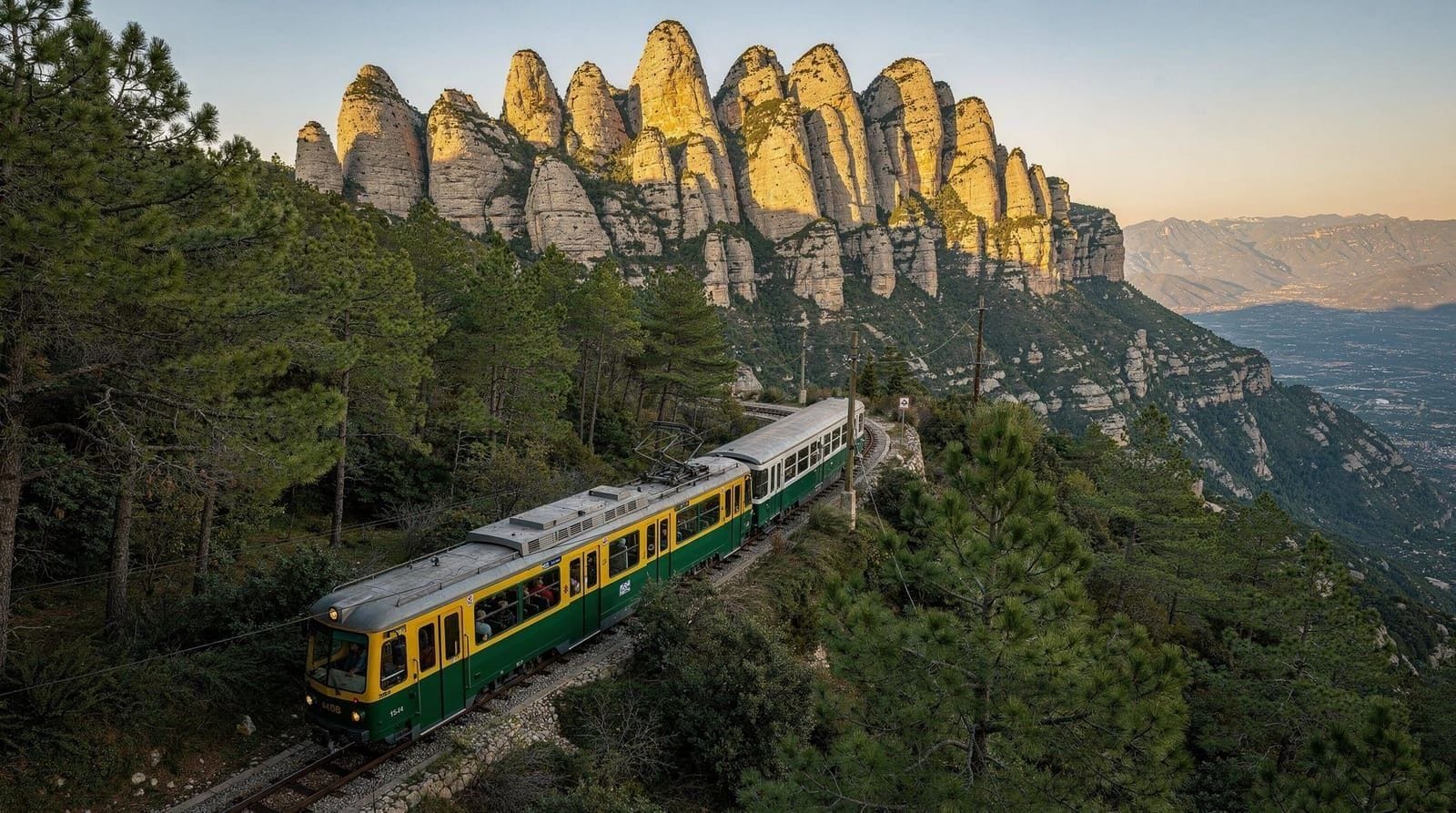
- Cable car or rack railway (cremallera) up to the monastery — most tours use the cable car for the ascent and the rack railway for descent, or vice versa.
- Entry to the monastery church and the Santa Cova (“Holy Cave”) route, where legend says the Black Madonna was found by shepherds in the 9th century.
- Time with a guide explaining the monastery’s history, the significance of La Moreneta, and the Catalan cultural relationship with the mountain.
- Free time to explore independently, visit the Museum of Montserrat (art collection including Caravaggio and Picasso) or walk one of the shorter nature paths.
Tours that include a guided hike add the Sant Joan or Sant Miquel circuits, which reach higher viewpoints and give you dramatically different perspectives on the rock formations. Expect to add 2–3 hours for hiking. Check the description carefully — many “full day” tours do not include any actual hiking.
Real prices
Guided tours from Barcelona: €55–65 for the monastery-focused version; €75–90 for versions with cava tasting at a nearby winery or a guided hike.
DIY by public transport: FGC train from Plaça Espanya to Monistrol (around 1 hour, €7.50 each way), then cable car or cremallera up to the monastery (€7–15 return each). Total: around €30–35. Doable and actually pleasant — see our full Montserrat day trip guide for the independent route.
What the guided tour buys you: a guaranteed seat, someone to solve problems, no transfers to figure out, and 2–3 hours of context from a guide who knows the site. If you have never been to Montserrat and have one chance to go, the tour eliminates the risk of spending 30 minutes at FGC booking machines and missing the first cable car.
The monastery and the Black Madonna
The Benedictine monastery dates from the 9th century, though most of the current buildings are 19th–20th century after the original complex was destroyed by Napoleon’s troops in 1811. The basilica houses La Moreneta, the Black Madonna venerated by Catalans as their patroness. Every visitor to the basilica stands in a short queue to touch her gilded hand — a moment that tends to move people regardless of their personal faith, mostly because of the intensity of emotion in the crowd around you.
The boys’ choir (Escolania de Montserrat), one of the oldest in Europe, sings at the 1pm daily mass and the 6:45pm vespers. If you time your visit around either, it adds considerably to the experience.
Guided tours account for both services in their timing. If you go independently, check the choir schedule before planning your return journey.
What to expect at the top
The monastery sits at 720 metres, and the terrain is cooler than Barcelona year-round. In summer this is a relief (Barcelona at 35°C, Montserrat at 25°C); in winter bring proper layers. The cable car from Aeri de Montserrat station takes 5 minutes and drops you directly at the monastery complex.
The main square (Plaça de Santa Maria) is where most visitors gather: cafés, a supermarket, the monastery entrance and the base of the hiking trails. It gets very crowded in summer between 11am and 2pm. Arriving before 10am or after 4pm makes a significant difference.
Hiking options at Montserrat
The two main accessible trails from the monastery:
Sant Joan hermitage (upper): Takes the funicular up to the Sant Joan station, then a 30-minute walk to the summit cross at 1,058m. Panoramic views of the Pyrenees on clear days. Moderate difficulty. Return on foot or funicular.
Santa Cova (lower): 20-minute downhill walk to the cave where the Black Madonna is said to have been found. Easy walk along a path with small sculptures by Gaudí and Josep Puig i Cadafalch. This one is on most guided tours.
Sant Miquel cross: 1-hour walk from the monastery through pine forest to a rocky viewpoint. No funicular needed. This is the best solo hike if you have 90 minutes to spare after the monastery visit.
Guided hiking tours typically include the Sant Joan circuit and the Santa Cova, with the guide explaining geological and religious context along the way.
Half-day versus full-day: which to book
Operators sell both a half-day version (around 4 hours, monastery and cable car only) and a full-day version (9–10 hours, adding hiking or a winery stop). The half-day suits travellers with a packed itinerary who want to tick Montserrat off without sacrificing a whole day — you see the basilica, the Black Madonna and the main square, but you miss the hiking trails and the quieter parts of the mountain. The full day is the better choice if Montserrat is a trip highlight rather than a box to check, since the extra hours are what let you get away from the crowded main square and actually experience the mountain.
Montserrat plus cava winery: is the combo worth it?
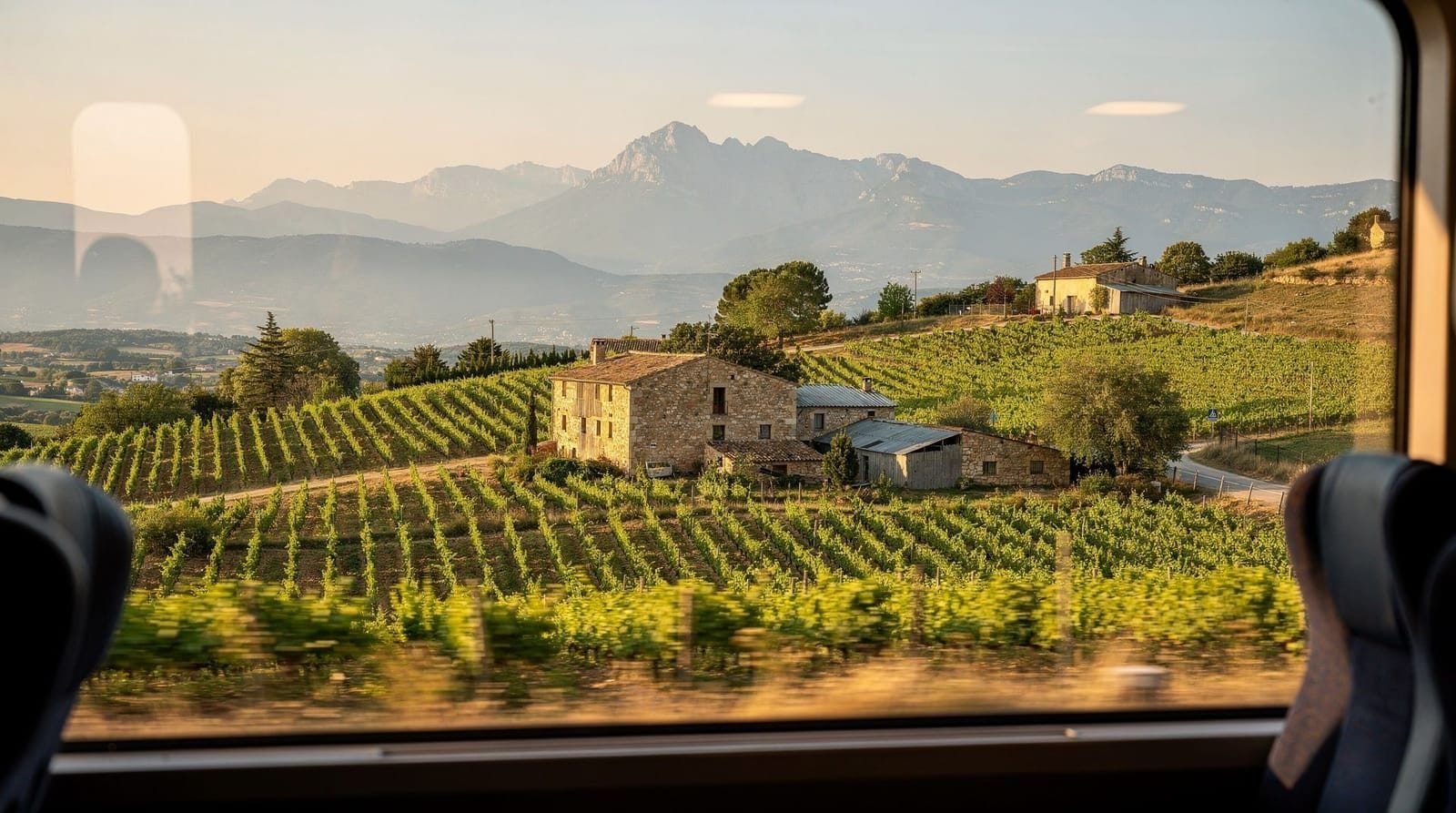
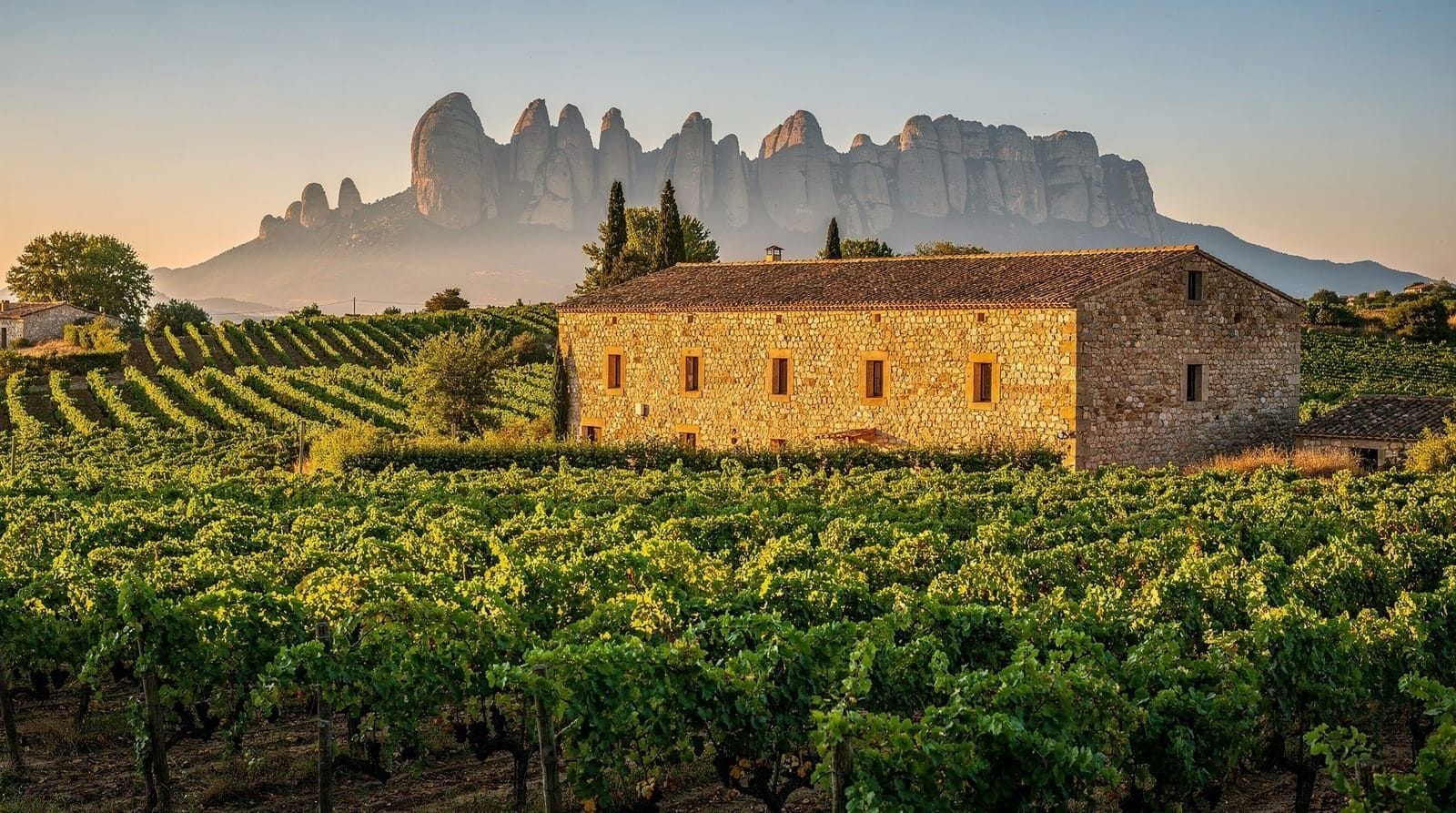
Several tours combine Montserrat in the morning with a cava tasting at a Penedès winery in the afternoon. The combination makes geographic sense — Montserrat and the wine country of Penedès are both south-west of Barcelona, and the winery stop is typically on the return journey.
The cava tasting adds €25–35 to the tour price and typically includes 2–4 glasses of cava with light charcuterie at a traditional cava producer. For wine lovers, this is a genuinely good add-on. For families or hikers who want to maximise time on the mountain, the winery stop eats into your Montserrat time and may not be worth the tradeoff.
Our Penedès wine day trip guide covers dedicated cava tours if the wine country is your primary goal.
DIY versus guided: the honest comparison
Go guided if: You have one day and want to maximise what you see without logistical friction. You want historical and religious context. You are travelling with others who do not want to navigate FGC transfers.
Go independently if: You are a confident traveller, you want full flexibility on timing and hiking, and you are comfortable with the FGC train system. The DIY route saves €20–35 per person and gives you more time on the mountain.
The Montserrat day trip guide covers the independent route in detail, including the train schedule and best viewpoints that guided tours often skip.
Booking tips
Tours sell out in summer — book at least 2 weeks ahead for July and August. Shoulder season (April–May, September–October) tours are easier to find a few days out.
Pickup times are usually 8–9am. Most tours return to Barcelona by 6–7pm, which leaves time for dinner in the Gothic Quarter or along the Barceloneta waterfront.
Check the cancellation policy — most reputable operators offer free cancellation up to 24–48 hours before departure, which matters if you are planning a hiking trip and mountain weather is unpredictable.
Getting the most from Montserrat
If you have any spare time after the monastery visit, walk at least to the Santa Cova path even if your tour does not schedule it. It takes 40 minutes return and gives you the most direct connection to the mountain’s spiritual history.
The Museum of Montserrat inside the complex is underrated — it holds a genuinely good collection of Catalan art and several significant international works. Entry costs around €9 separately.
Finally: do not overload Montserrat with other Barcelona sightseeing on the same day. It works best as a complete day out, not as a half-morning pit stop. For day trip planning, Montserrat and Girona are best on separate days.
The geological story of Montserrat
The mountain’s silhouette is so distinctive — a skyline of vertical needles and bulging domes rising abruptly from the flat Catalan interior — that it looks like something sculpted deliberately. The geology behind it is nearly as strange as the result.
Montserrat is composed of conglomerate pudding stone: a sedimentary rock formed roughly 50 million years ago when rivers flowing from what is now the Pyrenean mountain chain deposited pebbles and boulders in a delta basin. Over millions of years this material was compressed into a hard conglomerate — think of concrete with river pebbles embedded in it — and then lifted by tectonic forces as the Iberian plate shifted. What remained standing after 50 million years of erosion is the hard core: the pebble-rich conglomerate resisted weathering while the softer surrounding rock was stripped away, leaving the characteristic rounded columns and vertical faces you see today.
The result is a rock type found nowhere else in Spain in this formation — Montserrat is a geological anomaly in the Iberian landscape, which is one reason it has attracted religious attention for over a thousand years. Unusual landscapes tend to collect spiritual weight.
Gaudí visited Montserrat multiple times and its silhouette directly influenced the design of the Sagrada Família towers. The rounded, tapering form of the Nativity towers — often described as “corn-cob” shaped — are an abstraction of Montserrat’s eroded pinnacles. He wanted the basilica’s skyline, seen from a distance, to echo the mountain’s. This connection is usually mentioned by guides both at Montserrat and at the Sagrada Família, and seeing both in the same trip makes the reference legible in a way that photographs alone cannot convey.
The needles themselves (the narrow spires rising above the main massif) have individual names and have been the target of rock-climbers since the early 20th century. Several of the highest spires are accessible only to technical climbers with permits; others are visible from the Sant Joan trail. The rock is notoriously rough on hands — the conglomerate surface is essentially natural sandpaper.
The Escolania choir: how to time your visit around the music
The Escolania de Montserrat is one of the oldest boys’ choirs in Europe, with a continuous documented history stretching back to 1223. Around 50 boys between the ages of 9 and 14 live and study at the monastery, combining conventional schooling with intensive musical training. The choir performs exclusively at religious services — there are no concert performances separate from the liturgical schedule — which means visitors who want to hear it must align their visit with the service calendar.
The principal performances:
Daily mass at 1pm: The Escolania sings at the conventional midday mass, held in the basilica. This is the most accessible opportunity for most day-trippers, as it falls within the standard visiting window. Arrive 20–30 minutes early to find a seat — the basilica fills quickly before the 1pm mass, particularly in summer.
Vespers at 6:45pm: The evening prayer service includes a longer choral element from the Escolania and is often described as the more moving of the two daily opportunities. The basilica is quieter in the late afternoon, the light through the stained glass is different, and the crowd consists more of pilgrims than tourists. If you are willing to stay on the mountain until the early evening, this is the better experience — but it adds 2–3 hours to your day and requires checking the last cable car and cremallera times for your return.
Salve Regina: This Marian antiphon is sung at the end of the 1pm mass and at vespers. It is the musical element most associated with the Montserrat tradition and the one visitors are most likely to have heard recordings of.
Checking the schedule: The Escolania does not sing every day of the year — the choir has school holidays (roughly August, and periods around Christmas and Easter), and occasional schedule changes for religious feast days. Check the official monastery website (escolania.cat or the Montserrat abbey site) before planning your visit around the music. Guided tours booked through operators usually account for the 1pm mass in their timing but it is worth confirming.
For independent visitors, the strategy is simple: take the first cable car (around 9–9:30am), spend the morning exploring the mountain and hiking, be in the basilica by 12:30pm for the 1pm mass, and either return to Barcelona in the afternoon or stay for vespers.
Montserrat’s Catalan cultural significance
Montserrat is not only a pilgrimage site. It is one of the most politically significant places in Catalonia — and understanding this dimension changes what you see when you look at the monastery.
The Benedictine community at Montserrat maintained Catalan cultural and linguistic life during the Franco dictatorship (1939–1975) at a time when the use of Catalan in public, in publishing and in education was either banned outright or severely suppressed across Spain. The monastery used Catalan in its liturgy when the language was illegal elsewhere. It published books and cultural materials in Catalan through its printing press during a period when doing so was an act of open political resistance. The abbot corresponded with Catalan intellectuals and artists in exile; the monastery provided meeting space for cultural discussion that could not take place openly in Barcelona.
This was not without risk. The Franco regime was hostile to the monastery’s Catalanist stance, and there were periods of direct confrontation between the religious community and the government. The fact that the monastery maintained its position — partly because of the international visibility of a Benedictine community, partly because of the political difficulty of suppressing a major Catholic pilgrimage site under a nominally Catholic dictatorship — made it an effective sanctuary for Catalan culture.
The mountain itself carries symbolic weight in Catalan national identity that predates the modern political movement. La Moreneta, the Black Madonna, is the patroness of Catalonia; the monastery is where Catalan knights traditionally laid down their arms in acts of dedication; the mountain appears in Catalan poetry and song in a way that has no parallel in the relationship between a single landscape and a national identity elsewhere in Spain.
For visitors who arrive expecting only a religious site and a dramatic mountain, this political and cultural layer — which a good guide will explain during the visit — is often the most memorable part of the day. It answers the question that most visitors quietly have: why do Catalans care so intensely about this particular mountain?
Combining Montserrat with wine country
Beyond the cava-tasting add-on covered above, some operators sell a dedicated Montserrat-and-Penedès combination day trip that spends the morning at the monastery and the afternoon touring a family winery rather than a single tasting stop. This version suits travellers who want a genuine wine experience rather than a quick glass on the way back to Barcelona — expect a proper cellar tour and a sit-down tasting rather than the abbreviated stop included in the basic combo. It runs longer than the standard Montserrat day trip (closer to 10 hours door to door), so confirm the return time works with any evening plans in the city. Compare it against the dedicated Penedès wine day trip guide if wine is your actual priority and the mountain is secondary — a Penedès-only day gives you more time at the wineries themselves rather than splitting the day between two very different experiences.
What to pack and wear
Montserrat sits at 720m and the temperature difference from Barcelona is noticeable year-round — pack a layer even in summer, since the mountain air cools quickly once the sun drops behind the peaks. Closed, comfortable shoes are essential if you plan any hiking, even the short Santa Cova walk, since the paths are uneven stone rather than pavement. In winter, proper layers and a windproof jacket matter more than in the city itself, as wind chill on the exposed viewpoints is considerably sharper than the forecast for Barcelona suggests. Bring water regardless of season — the cafés at the main square are convenient but the trails themselves have no refill points.
Is it worth it? The honest verdict
Book ahead, arrive before the midday rush, and give the mountain the full day it deserves — Montserrat is one of the most distinctive landscapes in southern Europe and rewards the investment of time.
Compare alternative tours
Frequently asked questions about Montserrat day trip from Barcelona
How much does the Montserrat day trip from Barcelona cost?
Guided tours with hotel pickup run €55–90 per adult depending on whether cava tasting or hiking is included. The DIY option by FGC train plus cable car costs around €30–35 return.Is the guided tour better than going independently?
For first-timers or those short on time, yes. The guided tour handles transfers, includes monastery access and gives context. DIY is cheaper and more flexible if you are comfortable navigating public transport.How long does the day trip take?
Full-day tours typically run 9–10 hours door to door, departing around 8–9am and returning by 6–7pm. Half-day options (4 hours) skip the hike and monastery interior.Does the tour include entry to the Black Madonna?
Most standard tours include access to the monastery and the viewing of La Moreneta (the Black Madonna), but queue times vary. Some premium tours include priority access.Can I hike at Montserrat on a guided tour?
Some tours include a guided hike (Saint Joan or Sant Miquel routes). Others focus on the monastery and cable car. Check the tour description before booking.What time of year is best for Montserrat?
Spring (April–May) and autumn (September–October) offer cooler temperatures and better light. Summer is crowded and very hot. Winter can be cold but the mountain is often clear and uncrowded.Is Montserrat suitable for visitors with limited mobility?
The cable car and cremallera are both step-free, and the main square and basilica are accessible by wheelchair. The hiking trails (Sant Joan, Sant Miquel, Santa Cova) involve uneven terrain and are not wheelchair accessible. Check with your tour operator about specific accessibility needs before booking.Can I visit Montserrat and Girona on the same day?
It is possible but not recommended. Both destinations reward a full day of unhurried exploration, and combining them means rushing both. If you only have one day free, choose based on whether you want mountain scenery and monastery history (Montserrat) or a walkable medieval old town (Girona).