Sant Jordi: Barcelona's most romantic day
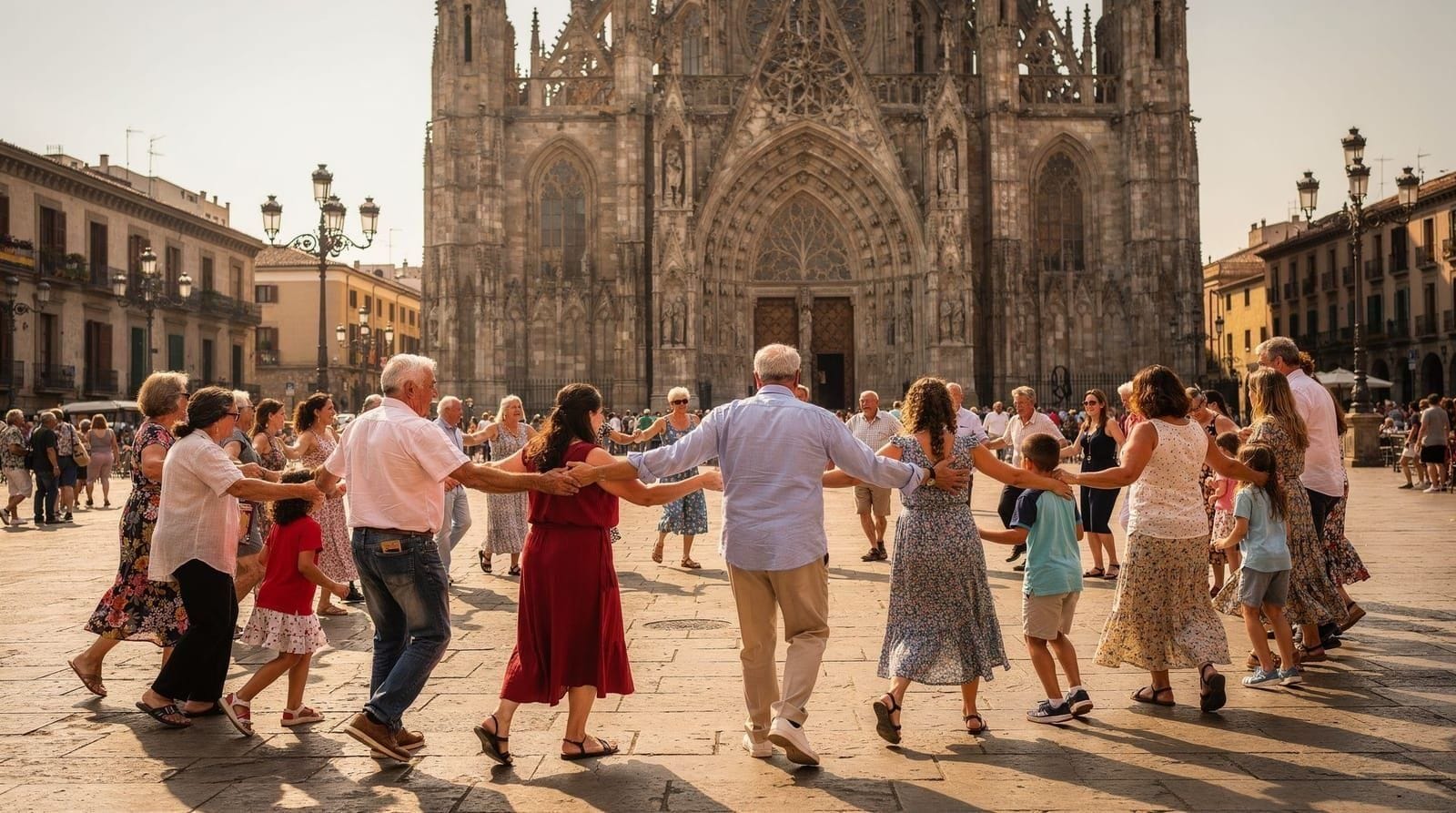
There is a day in Barcelona every April when the streets smell of roses and the bookstalls stretch as far as you can see. On April 23, the feast day of Sant Jordi — Saint George — the city observes a tradition unlike anything Valentine’s Day manages elsewhere: men give women roses; women give men books; and the whole city ends up outside, walking slowly, buying things, talking. It is one of the most genuinely lovely days you can spend anywhere in Europe.
| Date | April 23, every year (fixed, not a public holiday) |
| Cost | A rose is around €5–7; browsing the stalls is free |
| Where | La Rambla, Passeig de Gràcia, El Born, Gràcia |
| Busiest | 11am–7pm; go before 9am for photos without crowds |
| Weather | Generally mild, around 18–20°C; pack a light jacket |
The legend behind the day
Sant Jordi is the patron saint of Catalonia, and the story attached to his feast day is the classic dragon-slaying tale. A dragon threatens a kingdom, demands human sacrifices, and eventually a princess is chosen. The knight Jordi slays the dragon, and from the blood that spills, a rosebush grows — from which he picks a red rose to give to the princess. Roses and heroism, neatly bundled.
The book side of the tradition came later. On April 23, 1616 — the date recorded as the death of both Miguel de Cervantes and William Shakespeare — books were added to the celebration. Catalonia had already been giving roses; the books made Sant Jordi simultaneously a celebration of love and of literature. UNESCO later designated April 23 as World Book Day, borrowing from the Catalan tradition.
There is another April 23 connection worth knowing: Antoni Gaudí was born on this day in 1852. You will see his birthday noted in bookshop windows and on stalls selling his biographies. If you are already planning visits to Sagrada Família or Casa Batlló or La Pedrera, Sant Jordi is a natural day to weave them in — though queues at the major Gaudí buildings are longer than usual.
Where to walk and what to see
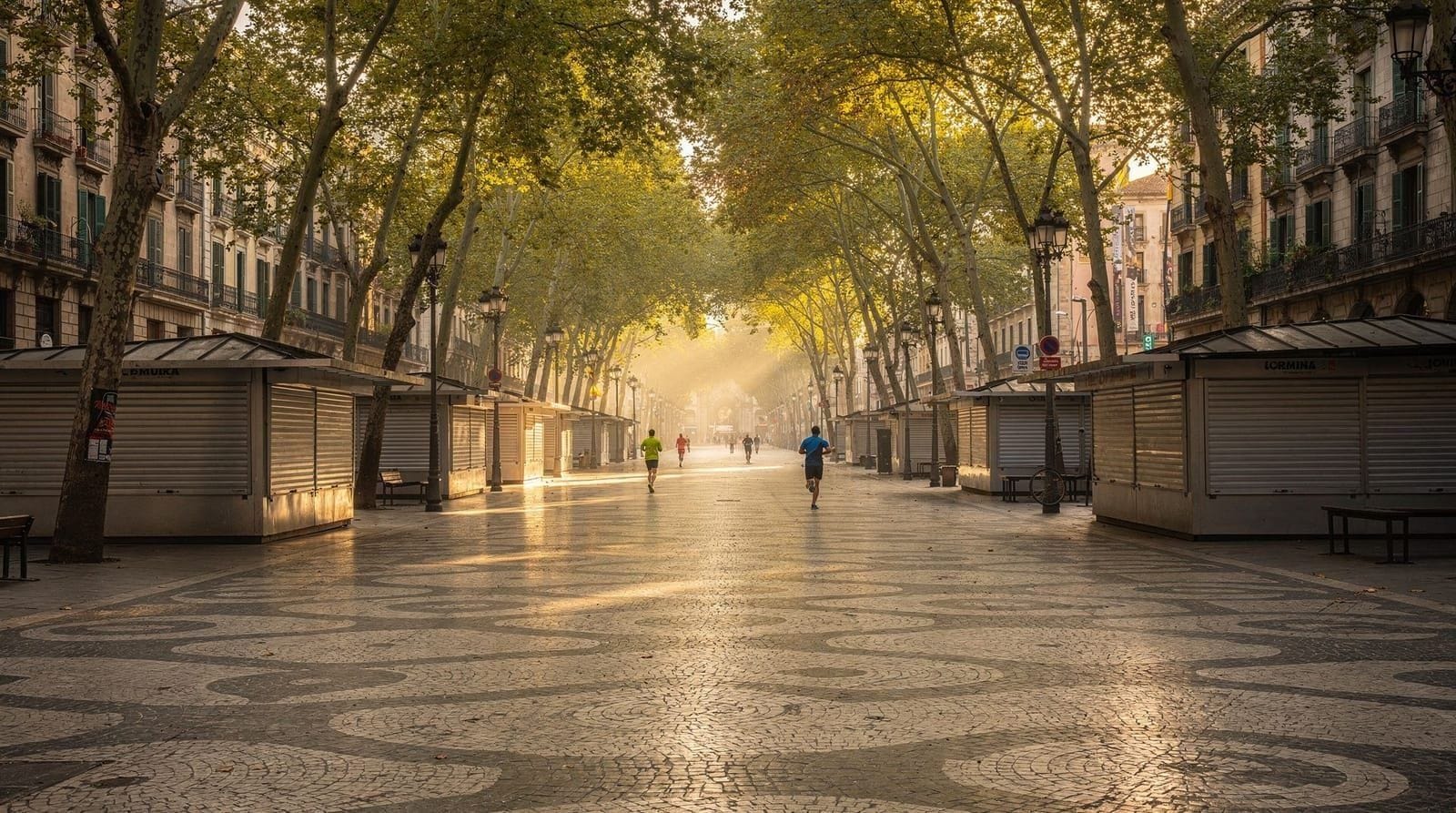
La Rambla transforms completely. The boulevard that on normal days runs a gauntlet of tourist menus and overpriced cafés becomes instead a kilometre-long open-air market of roses and books. Sellers set up stalls the night before; by mid-morning the street is so busy that walking at normal pace is impossible. It is crowded, it is loud, and it is genuinely festive. Our honest guide to La Rambla makes clear that we do not usually recommend lingering here — but Sant Jordi is the exception.
Passeig de Gràcia in Eixample is arguably better for a more relaxed version of the same scene. The wider pavements give the stalls more space, and the Modernista buildings provide a backdrop that makes every photograph more interesting. Walk from Diagonal down to Gran Via and back up again — it takes about forty minutes at a relaxed pace and covers the best of it.
El Born is the neighbourhood choice for a more local, less crowded Sant Jordi experience. The stalls here tend toward independent bookshops rather than publishers’ promotional stands, and the narrow streets mean the event feels intimate. The Mercat de Santa Caterina area and the streets around the Basílica de Santa Maria del Mar are particularly good.
Gràcia has its own Sant Jordi tradition with stalls along Carrer Gran de Gràcia and in the neighbourhood plazas. If you are already planning to explore the best neighbourhoods of Barcelona, April 23 gives you a perfect reason to focus on Gràcia for a morning.
How the buying works
Rose sellers are everywhere — on stalls, but also roving with armfuls of stems. A single rose with a single stalk of wheat (another tradition) typically costs around €5–7 from a proper stall, though prices vary. Florists also run Sant Jordi specials. The roses are almost universally red; if you see other colours, they are usually from more commercial sellers.
Books are sold at stalls set up by publishers and bookshops, with authors often present to sign copies. Catalan-language books dominate — this is a celebration of Catalan culture and language — but Spanish-language and international titles are also sold. If you read in French, English, German or another language, you will find something. Buying a book in Catalan even if you cannot read it is a gesture that locals appreciate.
What else happens on Sant Jordi
Cultural institutions open their doors. The Palau de la Generalitat — the seat of the Catalan government, which only opens to the public a few times a year — typically opens for visits on Sant Jordi. The queue is long but the interior is exceptional. Check the official schedule in advance.
Many bars and restaurants run Sant Jordi menus. Look for places offering a red rose with a meal, or special cava pairings — this is not a commercial gimmick but a genuine local custom. Vermut before lunch and cava in the afternoon are the drinks of the day.
Sant Jordi coincides with the Catalan culture at its most public and celebratory. The language is everywhere — in the bookstall signs, in the songs playing from speakers, in conversations around you. It is one of the days when the distinctness of Catalonia from Spain is most visible and most warmly expressed.
Practical things to know
The day is busiest between 11am and 7pm. If you want photographs without crowds, go early — by 9am the stalls are open but the rush has not arrived. After 7pm things quiet down quickly as sellers begin to pack up.
The weather on April 23 is generally good — average highs around 18–20°C — but Barcelona in April can produce a surprise shower. A light jacket is sensible.
Do not attempt to drive anywhere in the central city. Metro and buses are reliable; the transport pass comparison article explains your options. The closest metro stops to the main action are Passeig de Gràcia (lines 2, 3, 4), Liceu (line 3) for La Rambla, and Jaume I (line 4) for the Gothic Quarter and El Born.
Sant Jordi is not a public holiday; offices and many businesses remain open. The stalls, though, are the spectacle — and they are entirely free to browse. You can spend the whole day on Sant Jordi and spend only as much as you choose to on a rose and a book.
One final note
Sant Jordi is primarily a Catalan celebration, not a Spanish one. Tourists who arrive expecting a generic “romantic European festival” sometimes miss what makes it specific and interesting: it is an expression of Catalan identity, language and literature. Lean into that dimension — visit an independent Catalan bookshop, buy a book in Catalan even as a souvenir, learn three words — and the day becomes something more than a pleasant walk with roses.
Which street to choose
If you can only pick one area, match it to what you want from the day.
| Area | Character | Best for |
|---|---|---|
| La Rambla | Loud, crowded, the biggest stalls | The classic spectacle, once |
| Passeig de Gràcia | Wide, elegant, Modernisme backdrop | Photos and a relaxed pace |
| El Born | Intimate, independent bookshops | A local, less touristy feel |
| Gràcia | Neighbourhood plazas, village mood | Combining with a slow lunch |
Building a day around it
Sant Jordi works well paired with the sights you’d visit anyway. A morning walk through the Gothic Quarter before the crowds peak, a late-morning vermut, then the stalls of Passeig de Gràcia or El Born in the early afternoon, is a realistic and unhurried plan. If you’re staying nearby, our where to stay in Barcelona guide has neighbourhood options that put you within walking distance of the best stalls. For the wider seasonal picture, spring in Barcelona explains why April is one of the best months to visit regardless of the date.
FAQ
Is Sant Jordi a public holiday in Barcelona? No. April 23 is not an official public holiday, so most offices, shops and services operate normally. The festival atmosphere comes entirely from the flower and book stalls that fill the streets, not from a citywide closure.
Do I need to buy a rose or a book to enjoy Sant Jordi? No — browsing the stalls, watching the crowds and soaking up the atmosphere on La Rambla, Passeig de Gràcia or in El Born is free. Buying a single rose (around €5–7) is a nice, low-cost way to take part if you want a souvenir of the day.