Castellers: how to see human towers in Barcelona
Barcelona: 2-hour Gothic Quarter walking tour
Duration: 2 hours
- Free cancellation
Where can I see castellers (human towers) in Barcelona?
The best opportunity is La Mercè festival (23–27 September), when the city's main patron-saint celebrations include a castellers competition in Plaça de Sant Jaume. Competing colles (teams) build towers in the square over multiple days, free to watch. Outside La Mercè, castellers also appear at the Festa Major de Gràcia (August), Sant Miquel feast day and other neighbourhood festivals throughout the year.
On a September afternoon in Plaça de Sant Jaume, the square at the heart of Barcelona’s Gothic Quarter, a crowd of several thousand people presses against the barriers. In the centre of the square, a dense mass of bodies — the pinya — locks together, arms wrapped around waists, heads down. From that base, people begin to climb: up backs and shoulders, finding footholds in the latticework of human bodies below them, rising floor by floor against the sky. A child makes the final climb, raises one hand with fingers spread, and the crowd roars.
This is castellers — human tower building — the UNESCO-recognised tradition that is one of the most astonishing things you can witness for free in any European city. Understanding what you are watching makes it considerably more extraordinary.
| Where | Plaça de Sant Jaume (Gothic Quarter) for the biggest show |
| Cost | Free, no ticket, no booking |
| Best time | La Mercè, 23–27 September |
| Time needed | 2–3 hours for a full performance |
| Also see | Festa Major de Gràcia (14–20 August) |
Origins: from Valencia to Catalonia
The history of castellers begins in the late 18th century in the region of the Camp de Tarragona, in southern Catalonia. The precise origin is disputed but the most documented account traces the tradition to the Valencian ball de valencians — a dance brought to Catalonia by itinerant Valencian performers in the 1770s and 1780s. The dance ended with participants lifting each other to form simple human structures.
The earliest colles castelleres documented in Catalonia date from Valls, in the Alt Camp region, in the 1790s. Valls produced two of the most historically important and still active colles: the Xiquets de Valls (now Colla Vella dels Xiquets de Valls, wearing black) and the Nens del Vendrell. Competition between these two teams at the Festa Major de Valls drove the towers higher and more complex across the 19th century.
By the mid-19th century, castellers had spread across Catalonia, carried by the same festival culture that carried cobla music and sardana dancing. Each town with a significant colla had its own tradition, its own tower vocabulary and its own rivalry. The practice contracted during the Franco dictatorship (1939–1975), when expressions of Catalan cultural identity were suppressed, but it did not disappear; it resurged strongly from the late 1970s onward as Catalan cultural institutions re-established themselves.
UNESCO recognition
In 2010, the UNESCO Intergovernmental Committee for the Safeguarding of the Intangible Cultural Heritage inscribed castellers on its Representative List. The inscription recognised the practice as an expression of Catalan communal values — specifically the cooperation, effort and collective discipline required to build and safely dismantle a human tower of ten floors. For a broader picture of what that identity encompasses, see the Catalan culture guide.
The inscription also noted the social dimension: castellers crosses age, class and professional lines. A colla includes children as young as five, grandparents in their seventies, doctors and construction workers, lifelong residents and recent arrivals. What unites them is commitment to the colla and to the shared physical project of the tower.
The UNESCO recognition was not a surprise to Catalans, who already understood the practice as one of their most significant cultural traditions. It was, however, useful in increasing international awareness and in formalising the argument for public support of colles that operate entirely on volunteer labour and private membership.
How a castell is built
The anatomy of a human tower is precisely defined and each position has a name. Understanding the structure changes what you see when you watch.
The pinya
The pinya is the broad human base from which the tower rises. It can contain dozens or even hundreds of people, packed tightly together in concentric rings. The pinya has several functions: it provides the stable foundation for the climbers above; it absorbs the weight distribution of the tower through its mass; and — critically — it physically cushions any fall from the tower. When a castell collapses, the pinya folds in around the falling bodies. This is not incidental; it is by design, and it is why serious injuries are so rare.
Pinya members hold each other around the waist or shoulders, heads tilted in to avoid being struck by falling climbers, feet braced. They cannot see what is happening above them. They feel it through vibration and weight. Pinya is where adult newcomers to a colla begin.
The folre and manilles
Above the pinya, on larger towers, come additional reinforcing layers: the folre (a second reinforcing layer around the base of the tronc) and the manilles (a third layer on the very largest towers). These additional layers provide extra stability for the upper sections and increase the number of people the tower can safely support.
The tronc
The tronc is the main body of the tower — the trunk — rising from the pinya through the folre. Each floor (pis) of the tronc contains a specific number of people (typically two, three or four, depending on the tower type). Climbers in the tronc stand on the shoulders of those below, maintaining their position through balance and the grips of those above and below.
The tronc requires not just physical strength but a specific technique — how to distribute weight, how to signal distress, how to stabilise quickly when the tower sways. Tronc climbers are the experienced core of a colla.
The pom de dalt
The pom de dalt is the top section of the tower — the “bouquet” — above the main tronc. It comprises the dosos (two people), the acotxador (who crouches to support the enxaneta’s feet) and the enxaneta at the very crown.
The enxaneta
The enxaneta is always a child, typically between five and eight years old. They climb the entire height of the tower to the crown, supported from below as they go. At the top, they raise one hand with four fingers extended — the traditional gesture — and then begin the descent. The four-finger gesture has been interpreted variously as representing the four stripes of the Senyera or simply as a visible signal of completion, readable by the judges and the crowd.
The enxaneta’s descent is as technically demanding as the ascent, and the tower is not considered complete (descarregada) until all members have returned safely to ground. A tower that rises but cannot come down cleanly without collapse is a tower that has failed.
The rating system
Castells are rated by a code that gives height and width simultaneously. The code reads: number of people per floor, then “de” (of), then number of floors.
- 2 de 7: 2 people per floor, 7 floors — a classic mid-difficulty tower
- 3 de 8: 3 people per floor, 8 floors — a high-difficulty tower
- 4 de 9: 4 people per floor, 9 floors — one of the most celebrated achievements, rarely completed
- 3 de 10: 3 people per floor, 10 floors — the summit of the sport, attempted by only the most elite colles
The difficulty increases exponentially with height. A 9-floor tower weighs vastly more on its base than a 7-floor tower; each additional floor multiplies the physical demands on every person below.
Colles are also judged on construction (carregada — tower fully loaded), completion (descarregada — full clean descent) and technical difficulty. A failed tower, even a spectacular one, scores lower than a successful lower tower.
How training and preparation actually works
What spectators see at La Mercè is the product of a full year’s weekly training. Most colles practise once or twice a week year-round in a local assaig (rehearsal hall or square), building and rebuilding towers to refine technique long before festival season. Training begins with the pinya — new members spend months learning how to brace, distribute weight and communicate through touch before being trusted in any climbing role. Climbers in the tronc progress gradually through lower, less demanding tower configurations before attempting anything approaching competition height. Children destined for the pom de dalt and enxaneta positions train separately and progressively, starting on low practice towers at ground level long before attempting a real crown. The season builds toward late summer and September, when the density of festivals (Festa Major de Gràcia, La Mercè, and dozens of town festivals across Catalonia) gives colles the chance to attempt their most ambitious towers of the year in front of the largest crowds.
The colles: teams and identity
Each colla castellera is a social organisation as much as a sports team. Members meet weekly for practice throughout the year and attend festivals across Catalonia during the summer and autumn season. Loyalty to a colla is fierce and often inherited — children join the colla of their parents and grandparents.
Barcelona has several colles, of which the most prominent is the Castellers de Barcelona (blue). Founded in 1969 during the late Franco period, they are among the most historically significant colles in the city and have contributed to the post-Franco revival of the tradition. They practise at the Casal de la Marina in the Barceloneta area and perform throughout the festival calendar.
Other colles you may encounter at Barcelona festivals include:
- Castellers de Sants (light blue) — from the Sants neighbourhood, one of the oldest urban colles
- Castellers de Sarrià (white and black) — from the Sarrià neighbourhood
The great colles of the Camp de Tarragona — Castellers de Vilafranca (green), Minyons de Terrassa (red), Colla Vella dels Xiquets de Valls (black) — travel to Barcelona for La Mercè and are among the most accomplished teams in the country. Rivalries between these historic colles, particularly between the Tarragona-region teams and Barcelona’s own colles, add a genuine competitive edge to the La Mercè programme that’s worth knowing about as you watch — commentators and knowledgeable spectators nearby will often be tracking which colla completes the more difficult tower.
Where to see castellers in Barcelona
La Mercè — 23–27 September
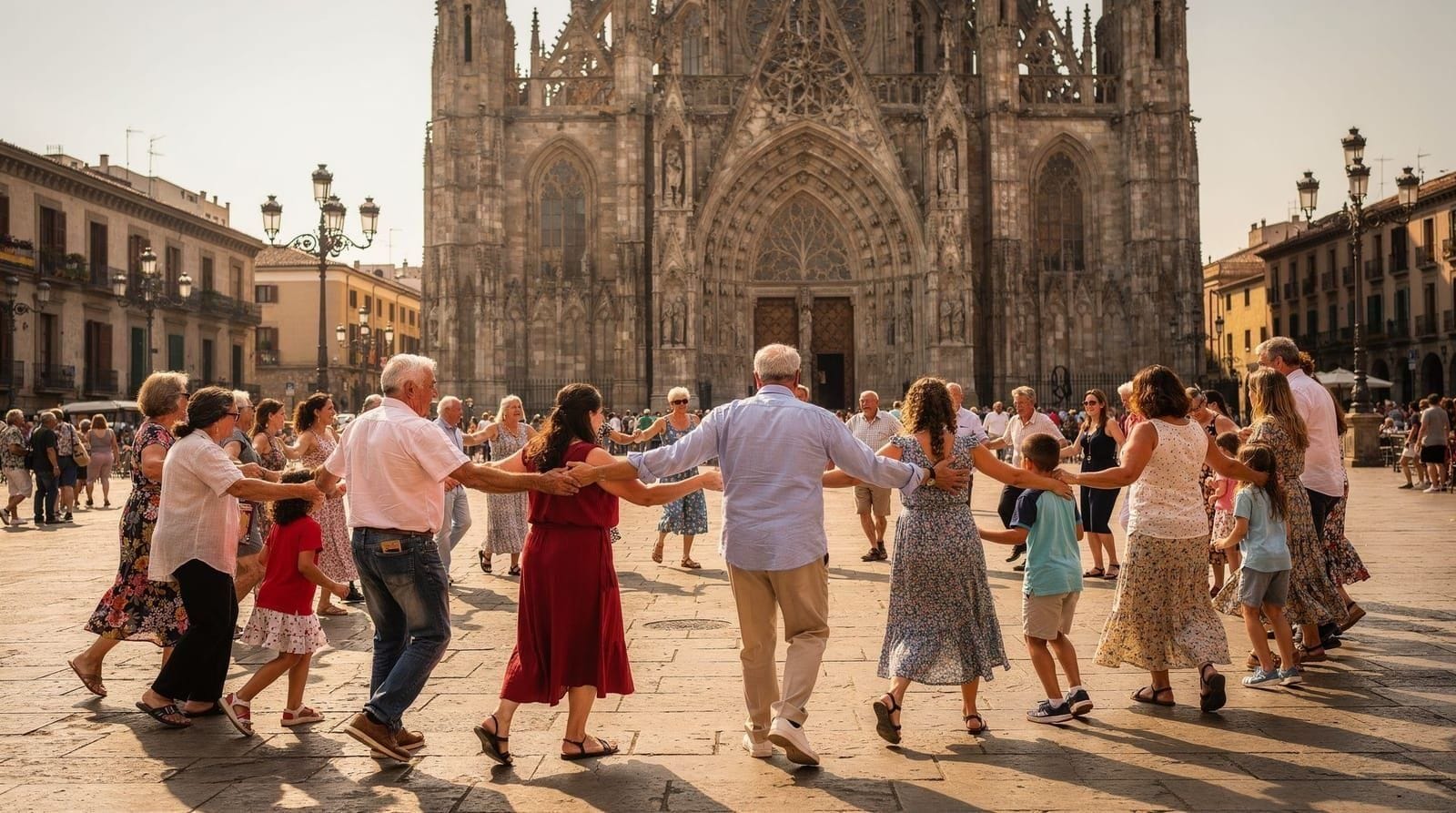
This is the definitive opportunity. La Mercè, the city’s main patron-saint festival, features casteller performances across multiple days in Plaça de Sant Jaume, the square between the town hall and the Generalitat (regional government) buildings. Multiple colles compete on the same day; the square becomes a theatre of towers.
The event is free. Plaça de Sant Jaume is not large; arrive at least an hour before the advertised start time (usually early afternoon) to secure a good position. The surrounding steps and balconies of the historic buildings give elevated views. The performances last two to three hours; bring water and sunscreen in September.
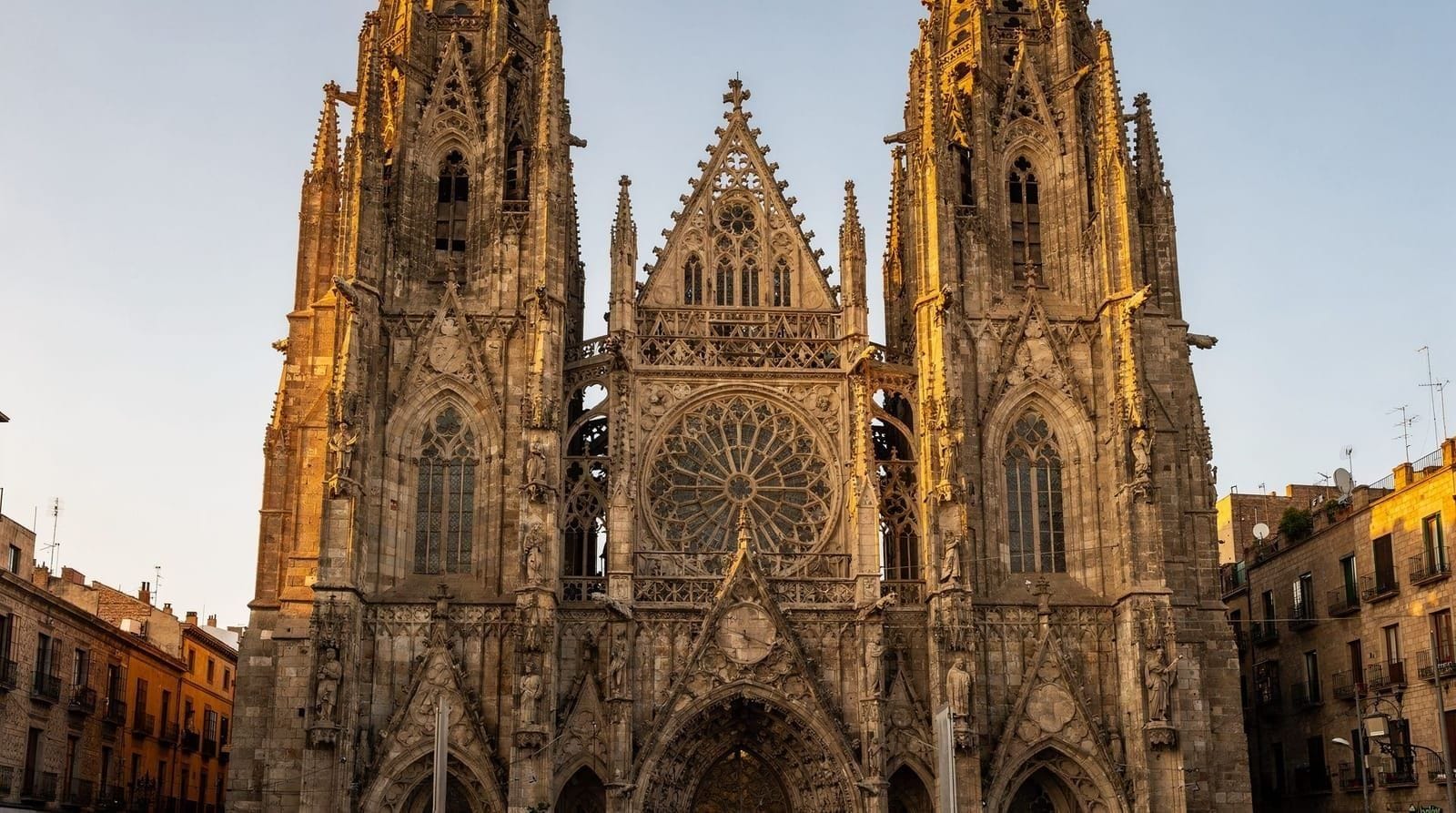
The Gothic Quarter location, the historic buildings as backdrop, the competing colles in their coloured shirts and the sheer improbability of what you are watching — this is one of the most memorable free experiences available in any European city. The old town walking tour passes through Plaça de Sant Jaume and gives context to the buildings that frame the spectacle.
A guided Gothic Quarter walk is a good way to understand the square and its buildings before or after watching a performance, since the history of the town hall and Generalitat buildings adds depth to the setting.
Festa Major de Gràcia — 14–20 August
The Gràcia neighbourhood festival (see the Gràcia guide) includes casteller performances as part of its programme. The Gràcia setting — narrower streets, smaller squares, more intimate scale — gives a different atmosphere to the performances than the large Plaça de Sant Jaume.
Sant Miquel — 29 September
The feast day of the archangel Sant Miquel, one of the patron saints of Barcelona, typically includes casteller performances around the date of La Mercè.
Other neighbourhood festivals
Throughout July, August and September, every Barcelona neighbourhood holds its own festa major. Most include at least one casteller event. Check the programme of the neighbourhood festival for whatever district you are staying in — you may find a castellers performance in a local square with a fraction of the crowd of La Mercè. The best time to visit Barcelona guide has a month-by-month breakdown of festivals to help plan around them.
What to expect on the day
Arrive at the square with time to find a position. The performance area is usually roped off; observers stand around the perimeter. For La Mercè in Plaça de Sant Jaume, the square has steps on several sides that give elevated views — worth occupying early.
The performance begins with the colles entering the square in formation, their musicians playing. Each colla announces its intended towers (the construction list — the ordre de construccions) in advance; this is visible to informed spectators and creates anticipation.
Between towers, the atmosphere is social — families, children, food, conversation. When a colla begins building, the crowd quietens and focuses. The pinya assembles first; climbers begin ascending; the crowd tracks each floor with the sound of breathing and then sudden noise when the enxaneta reaches the crown. If a tower collapses, the response is a mixture of concern (brief, then relieved when all are clearly safe) and appreciation for the attempt.
After the performance, colles often remain in the square and members are accessible. Photographers are welcome; colla members are generally happy to talk about the experience. If you are visiting on a tight budget, the Barcelona on a budget guide confirms that castellers and all La Mercè events are completely free, which makes it one of the best-value cultural experiences available anywhere in the city during festival season.
Beyond Barcelona: day trips to the heartland of castellers
Barcelona’s La Mercè is the most convenient place for visitors to see castellers, but the practice’s historical heartland is the Camp de Tarragona region south of the city, and a day trip there during festival season offers a different, more locally rooted atmosphere. Valls, where the modern tradition is documented from the 1790s, holds its major casteller events around its Festa Major in October. Vilafranca del Penedès, home to the green-shirted Castellers de Vilafranca — one of the most consistently elite colles in the country — holds significant performances around Festa Major (late August) and the Sant Fèlix festival. Both towns are reachable by regional train from Barcelona in under an hour, making a festival day trip realistic for visitors with flexible dates who want the tradition in its original context rather than the more touristic Barcelona setting.
Etiquette for watching respectfully
Castellers is a serious, high-stakes activity for participants, and a few points of etiquette make the experience better for everyone. Stay behind the roped perimeter at all times — the pinya needs space to absorb a fall safely, and stepping into the performance area is genuinely dangerous, not just against the rules. Keep noise reasonable during the actual climb; the crowd naturally quietens as tension builds, and loud disruption during a climb can be distracting for participants relying on coordination and communication. Applause is appropriate and expected after a successful descarregada, win or lose — colles that fail to complete a tower are still cheered for the attempt, which reflects the value the culture places on effort over pure success.
Castellers and Catalan identity
Understanding why castellers matter requires understanding what they express about Catalan communal values. The Catalan phrase used to describe the ideal of castellers is: força, equilibri, valor i seny — strength, balance, courage and good judgement. These four words appear in the anthem of the casteller world and are taken seriously as values.
The human tower is an explicit metaphor: it works only when every person does their part precisely, trusts the others completely and subordinates individual performance to collective success. A single person losing their nerve, their footing or their grip can collapse a tower of a hundred. The visual metaphor of a community literally building something together — with children supported by adults, adults supported by elders in the pinya, all of it sustained by collective will — is not accidental.
Castellers became particularly associated with Catalan cultural identity during the Franco period, when Catalan language and cultural expression were suppressed. Maintaining the tradition was an act of cultural persistence. The revival from the late 1970s was rapid and enthusiastic precisely because it had carried that weight.
The wider Catalan culture guide places castellers within the broader context of Catalan identity, festivals and traditions.
For the most common questions, see the FAQ section above — covering safety, the enxaneta, the rating system and how to watch — and the castellers human towers guide for practical details on La Mercè timing and Plaça de Sant Jaume access.
Castellers repay every minute of attention you give them. The first time you watch a tower of nine floors rise from a crowded square — bodies climbing, the structure swaying slightly as it reaches its full height, a child raising a hand against the Barcelona sky — you understand immediately why it was worth crossing the city to see. Use the daily budget calculator to plan the rest of your trip, and the getting around Barcelona guide for transport to Plaça de Sant Jaume.
Frequently asked questions about Castellers
What are castellers?
Castellers are people who build human towers (castells) as a traditional Catalan practice. Teams (colles castelleres) compete at festivals to build the tallest and most technically difficult tower, rated by height in floors and the number of people in each floor. The tradition was inscribed on UNESCO's Representative List of the Intangible Cultural Heritage of Humanity in 2010.Is it safe for children to participate in castellers?
Yes. The safety record of castellers is extraordinary — serious injuries are extremely rare despite the apparent danger. Children who climb to the upper sections and the crown are experienced participants raised in colla families; their involvement is voluntary, family-based and progressive. The pinya (human base) is specifically designed to cushion any fall. Children are never placed in positions they have not trained for. The culture around safety is meticulous and longstanding.How tall do human towers get?
Competition towers range from 6 to 10 floors (pisos). A 9-floor tower (castell de 9) with three people per floor (net) is one of the most celebrated achievements in the sport. The tallest towers achieved in competition reach 10 floors and require years of preparation by the most elite colles. Towers are rated by a code: for example, '4 de 9' means 4 people per floor, 9 floors — a very difficult tower.What do the different colla colours mean?
Each colla castellera wears a distinctive coloured shirt and sash. Castellers de Barcelona wear blue; Castellers de Vilafranca wear green; Minyons de Terrassa wear red; Castellers de Sants wear light blue; Colla Vella dels Xiquets de Valls wear black. The colours identify the team instantly in the crowd and are a source of intense local loyalty.Who is the enxaneta?
The enxaneta is the child (typically 5–8 years old) who climbs to the very crown of the tower — the highest position. The enxaneta raises one hand with four fingers extended, palm outward, to signal that the tower is complete. Then they descend carefully through the structure. Completing an enxaneta crowning is the moment of triumph for the colla; it is followed by the equally dangerous controlled descent (la descarregada).Can visitors watch castellers for free?
Yes. Castellers performances at La Mercè and all neighbourhood festivals in Barcelona are completely free and open to the public. No ticket or booking is required. Arrive early to get a position close to the square — Plaça de Sant Jaume fills quickly during La Mercè. Standing on the surrounding steps gives an elevated view.Can non-Catalans join a colla castellera?
In principle, yes. Colles accept new members, including adults with no prior experience, for the pinya (base) positions. The colla trains weekly and participation requires commitment over months. Contact the Castellers de Barcelona directly if you are a Barcelona resident interested in joining. For a short visit, watching is the appropriate role.
Top experiences
Bookable activities with verified prices and instant confirmation on GetYourGuide.