La Boqueria market: what to eat and what to skip
Barcelona: exclusive Mercat de la Boqueria walking tour
Duration: 1.5 hours
- Free cancellation
- Small group
Is La Boqueria worth visiting?
Yes — for the architecture and targeted purchases like jamón, olives, and spices. Skip the food counters near the entrance, which are overpriced and aimed at tourists. Head to the back stalls instead.
| Where | La Rambla, 91, Metro L3 Liceu |
| Cost | Free entry; €10–25 for jamón, cheese, olives |
| Time needed | 30–60 minutes |
| Getting there | Directly off La Rambla, Liceu exit |
| Best time | Weekday mornings before 09:30 |
Inside Barcelona’s most famous market — and how to actually enjoy it
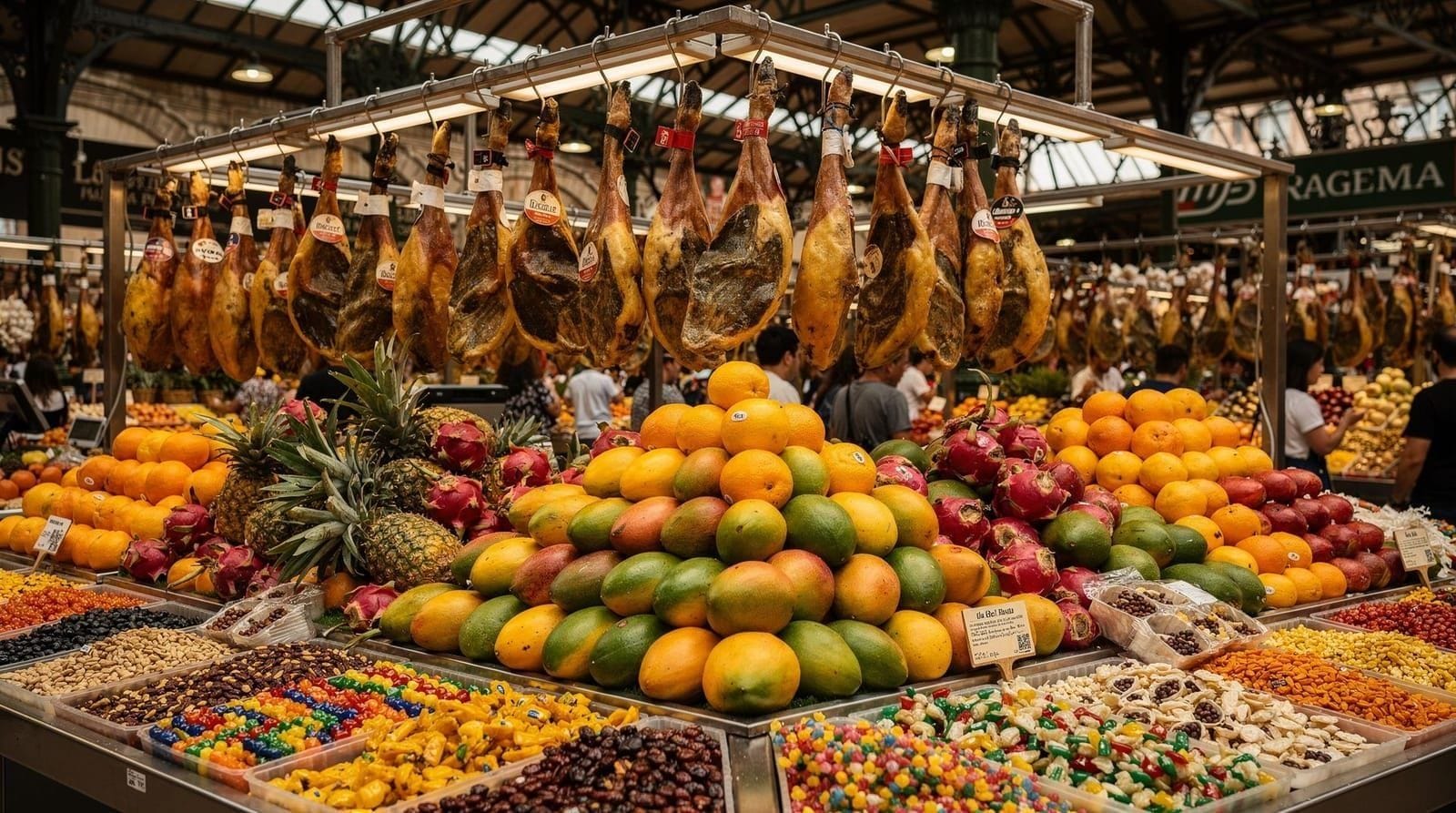
La Boqueria has a reputation problem. Step inside and you’ll immediately understand why: a wall of blended-fruit smoothie stands greets you at the entrance on La Rambla, each cup priced at €5 to €8, each staffed by someone actively flagging down passing tourists. The corridor beyond is lined with prepared seafood counters, colourful candy stalls, and displays of sliced jamón that look extraordinary but cost significantly more than in any neighbourhood market across the city.
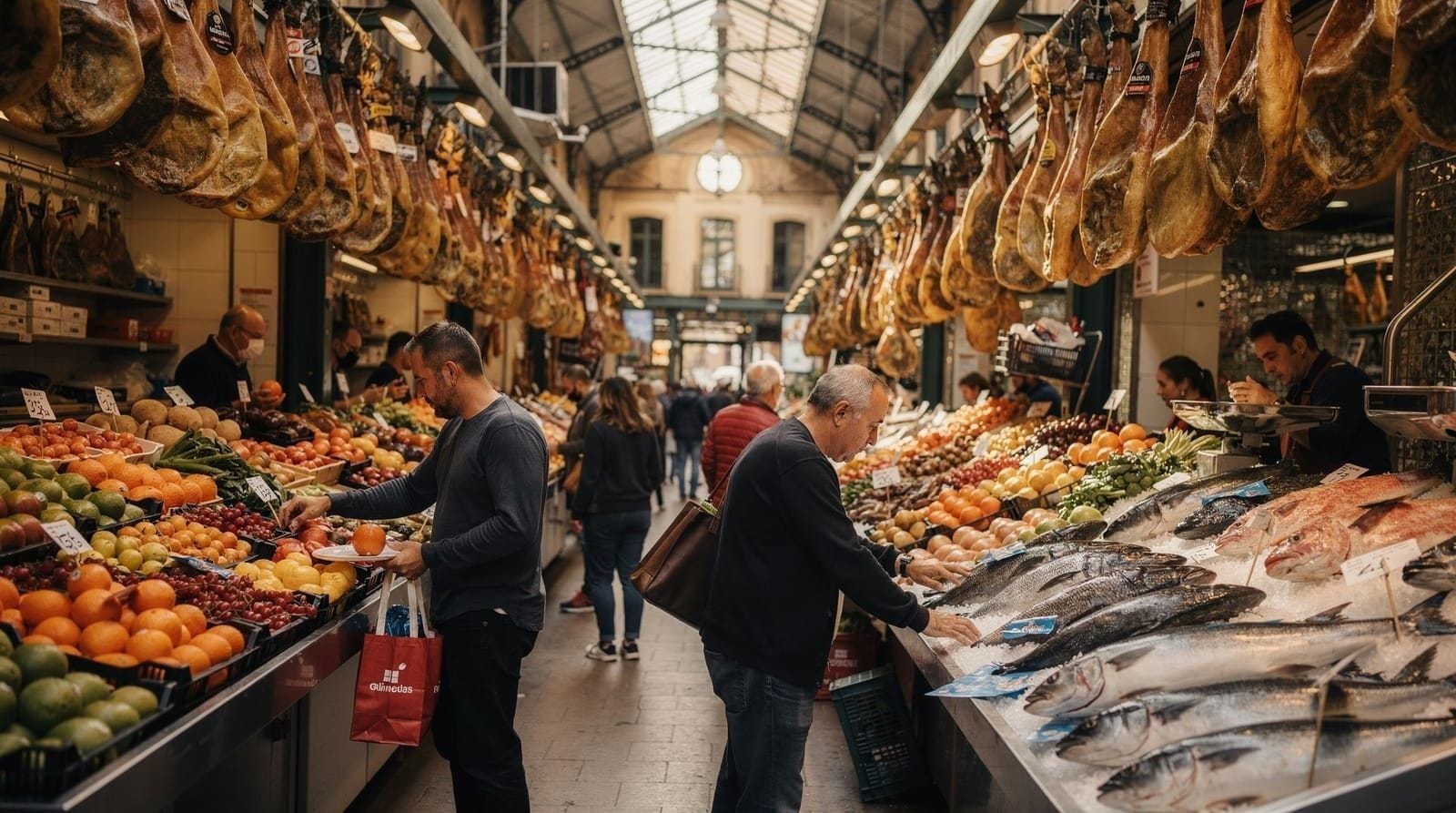
And yet La Boqueria remains one of the great market halls of Europe. Built in 1840 on the site of a former convent, the soaring iron-and-glass structure is genuinely beautiful. The back stalls — away from the tourist corridor — still sell extraordinary produce at honest prices. Chefs from serious restaurants still shop here. If you know where to look, the market delivers.
This guide tells you exactly where to look, what to buy, what to skip, and how to time your visit so the experience is about the food rather than the crowd.
The honest truth about tourist traps here
Let’s get this out of the way early, because no guide that glosses over this is actually useful.
The entrance area of La Boqueria — roughly the first 30 metres inside from La Rambla — is one of the most tourist-targeted stretches of retail space in Barcelona. The smoothie stands are the most visible example: pre-cut fruit, blended on demand, served in plastic cups at prices that would be steep even in an airport. They taste fine. They are not worth €6 when the same fruit costs a fraction at any neighbourhood supermarket.
The prepared-food counters are a more complex trap. They look spectacular — whole lobsters, grilled gambas, open seafood platters — and some are genuinely good. But prices are set for visitors who won’t return, not for neighbourhood regulars. A plate of gambas al ajillo that costs €8 at a local cervecería will be €18 here, with no chairs and a plastic fork. The quality often doesn’t justify the premium.
The candy and dried-fruit stalls near the entrance use the same tactics: mounds of colourful sweets, paper bags that seem cheap until you notice the price per kilo.
None of this means the market is a scam. It means you need to walk past the entrance corridor and find the real market behind it.
What is actually worth buying
Jamón ibérico and charcuterie
This is the single best purchase you can make at La Boqueria, provided you find the right stall. Look for stalls in the interior aisles — away from the main entrance strip — selling whole legs and vacuum-packed cuts. The distinction between jamón ibérico de bellota (acorn-fed, the premium tier) and jamón ibérico de cebo (grain-fed, very good but less complex) matters. A good stallholder will explain it; a tourist-trap stall won’t bother.
Prices for 100g of sliced jamón ibérico de bellota should be around €8–12. If you’re seeing €18–25 per 100g on La Rambla side, you’re being charged tourist pricing. Walk deeper.
Fresh olives
The olive stalls in the back section of the market offer a range that puts supermarkets to shame: manzanilla, gordal, arbequina, olives marinated in herbs, in citrus, in chilli. Prices are fair and you can taste before you buy. Buy a tub for a picnic or as a gift — they travel well if consumed within a day or two.
Local cheeses
Look for Catalan cheeses specifically: Garrotxa (a firm, grey-rinded goat’s cheese with earthy, mild flavour), Mató (fresh curd cheese, often eaten with honey), and Manchego from just over the regional border. The cheese stalls in the back aisles offer tastings. This is genuinely one of the better places in the city to explore Spanish regional cheese.
Spices and dried goods
The spice stalls here carry a quality and range that outperforms most specialist shops in the city. Pimentón de la Vera (smoked paprika, dulce or picante), saffron, dried peppers, ñora peppers for romesco — all excellent purchases. Saffron is particularly good value compared to tourist shops in the Gothic Quarter. Buy small quantities; the turnover is high and freshness shows.
Fresh seafood — from the back fish counters only
If you want to eat fresh seafood at the market, the fish counters in the rear section sell to restaurants and locals. You can buy raw product to take away; you cannot cook it on-site. This is not the place for a sit-down seafood meal — for that, head to Barceloneta. But the quality of the raw fish here is excellent.
When to visit and how to navigate the crowd
La Boqueria opens Monday to Saturday at 08:00 and closes at 20:30. It is closed on Sundays.
Best time to visit: 08:00–09:30. The market is quieter, the stallholders are fresh, the produce is at its best, and you can actually move. By 11:00 on any weekday, the main corridor becomes uncomfortably crowded. By midday on weekends, it can be genuinely unpleasant.
Avoid: 10:30–14:00 on weekends. This is peak tour-group time. The aisles near the entrance are essentially impassable and the food counters have queues.
Navigation tip: Enter from La Rambla and immediately walk straight through the tourist corridor without stopping. Your target is the rear third of the market, where the stallholders serve a mix of locals, restaurant buyers, and visitors who have done their research. The change in atmosphere is immediate and noticeable.
Where locals actually shop instead
Being honest about this is important, because the single most useful thing you can do as a visitor who wants authentic market culture is visit the markets where Barcelona residents actually buy their food.
Mercat de Santa Caterina in El Born is the most spectacular alternative. Designed by the late architect Enric Miralles and completed in 2005 after his death, it has a mosaic-tiled undulating roof that is one of the most striking pieces of architecture in the city — arguably more interesting than La Boqueria’s Victorian ironwork. The fish, meat, and produce counters are excellent. The prepared-food stalls are authentic and cheap. Locals actually shop here. It is far less crowded than La Boqueria.
Mercat de Sant Antoni in Eixample reopened in 2019 after a nine-year renovation and is now one of the best markets in the city. The building is a 19th-century iron-frame hall with handsome tiled facades. The food market runs daily, and on Sundays the surrounding arches host a vintage book and comic market that draws a genuinely local crowd. The food stalls are excellent value.
Mercat de l’Abaceria in Gràcia is the most bohemian option — a covered market with a Sunday antiques and bric-a-brac market alongside the food stalls. Very neighbourhood, very un-touristy. Excellent for a Sunday morning with a coffee from one of the surrounding bars.
Mercat de la Barceloneta is tiny, focused almost entirely on fresh fish, and has almost no tourist infrastructure. If you’re staying in Barceloneta and want to cook, this is where to shop.
For a complete comparison of all these options, the food markets guide covers each market in detail.
Going with a guide: why it can make sense here
La Boqueria is one of the markets where a guided tour genuinely adds value — not because the market is confusing to navigate, but because the gap between what a first-time visitor buys and what a knowledgeable guide points you toward is significant.
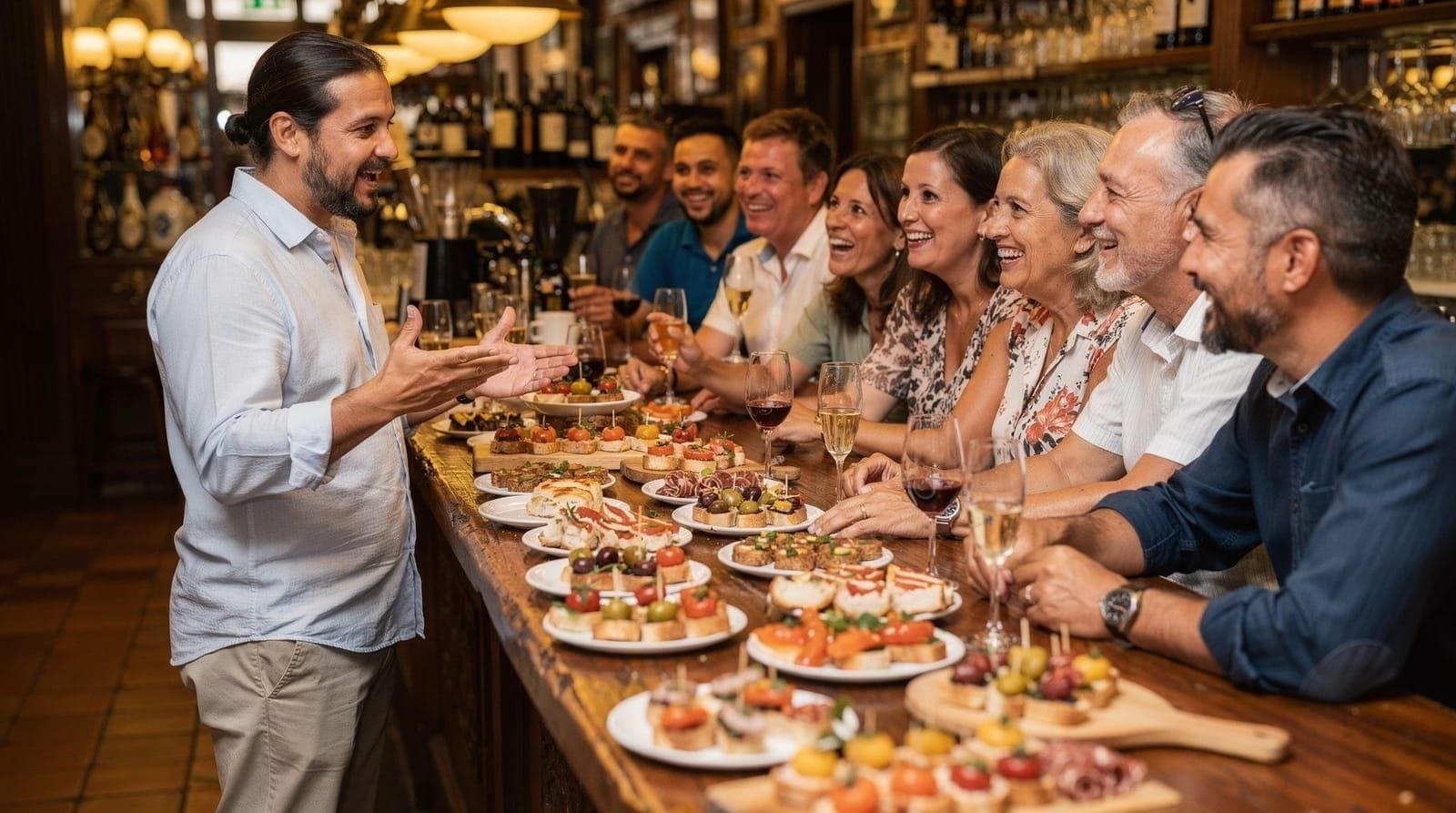
A good guide will walk you past the entrance stalls without stopping, explain the difference between the tourist-facing counters and the back-of-market professional stalls, help you taste before you buy, and put the whole operation in context — what arrives from where, how the stallholder system works, what the market was like before tourism changed it.
The best tours also combine La Boqueria with the surrounding Gothic Quarter, turning a market visit into a neighbourhood food walk that includes stops at bars and smaller shops the entrance-only visitor would never find.
If you want to understand La Rambla and the Gothic Quarter’s food scene beyond the market itself, a food walk that uses the market as a starting point is one of the most efficient ways to do it.
Combining La Boqueria with the surrounding neighbourhood
The market sits at the heart of El Raval on one side and the Gothic Quarter on the other. Both reward exploration immediately after a market visit.
From the Gothic Quarter side, walk away from La Rambla — one block east is enough to leave most of the tourist density behind. Carrer del Bisbe, the Plaça de Sant Felip Neri, and the streets around the Cathedral have a completely different character from the market’s main entrance strip.
If you want to continue eating well after the market, the best tapas neighbourhoods guide covers where to go next, neighbourhood by neighbourhood. For a specifically seafood-focused continuation, Barceloneta is a 20-minute walk from the market and the natural place to finish a morning of food exploration.
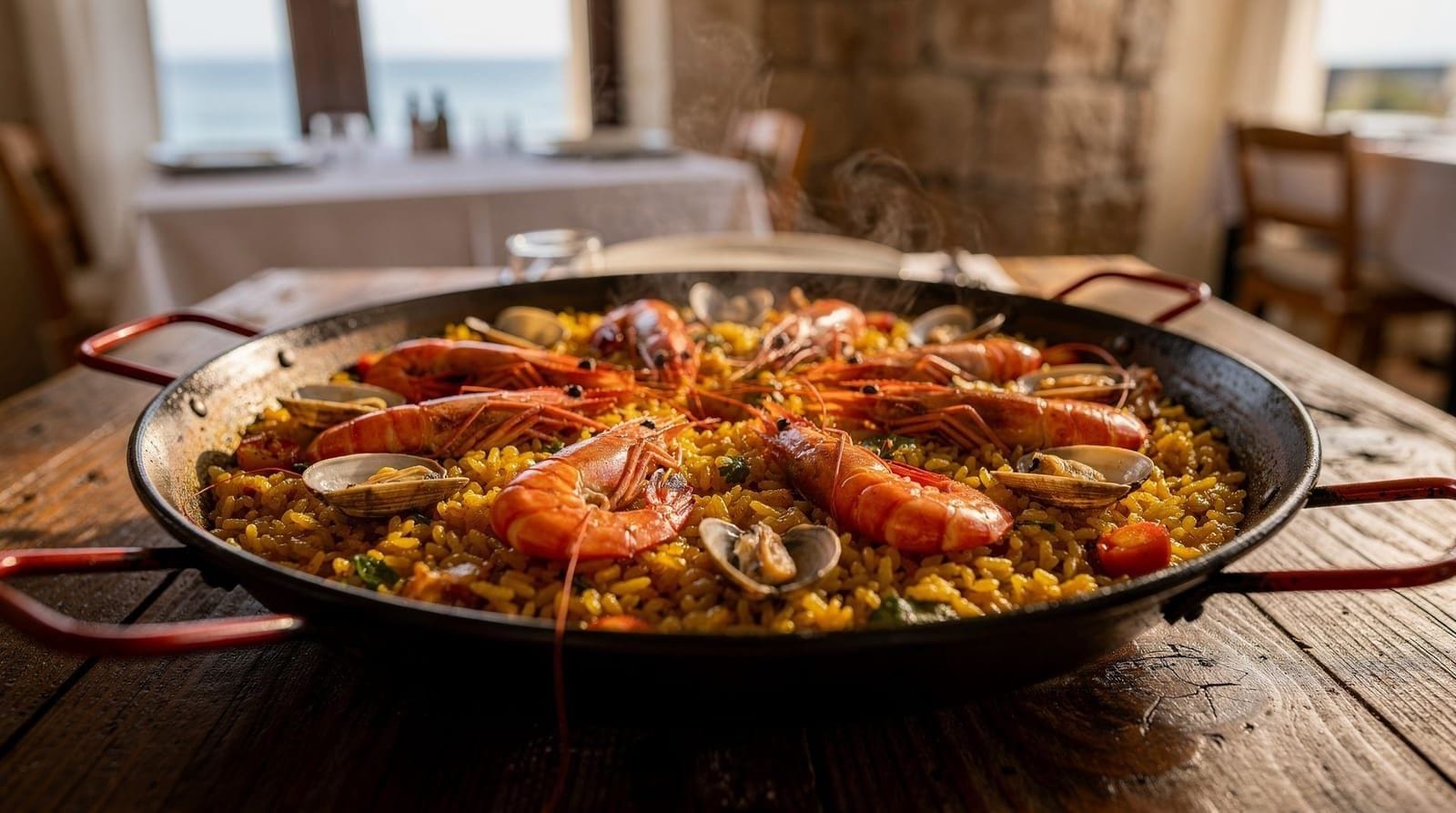
The best paella guide is useful if you’re planning to have a proper sit-down seafood lunch after the market — it covers the genuinely good options while being clear about which restaurants near the market are tourist traps.
A note on the market’s history and character
La Boqueria’s full name is the Mercat de Sant Josep de la Boqueria. It has occupied this site on La Rambla since 1840, though the iron-framed hall was built in stages through the 19th century. The stained-glass entrance gate and the soaring iron roof are genuine architectural achievements.
For most of the 20th century, it functioned as a neighbourhood market serving the residents of the Raval and the surrounding barris. The transformation into a tourist destination accelerated through the 1990s and 2000s as La Rambla became increasingly focused on international visitors. Stallholders near the entrance adapted — those deeper in the market less so.
What you experience now is genuinely two markets occupying the same space: the tourist-facing front section, and the working professional market in the rear. Both are real. The trick is understanding which part you’re in.
The food markets guide puts La Boqueria in context against the city’s other markets and is useful reading before you visit if you want the full picture.
Practical information
Address: La Rambla, 91, Ciutat Vella, Barcelona.
Metro: Liceu (L3, green line). Exit directly onto La Rambla.
Hours: Monday to Saturday, 08:00–20:30. Closed Sundays.
Best time to visit: Weekday mornings before 09:30.
Budget: Allow €10–25 if you’re buying jamón, cheese, and olives. Much more if you’re tempted by the food counters (our recommendation: resist).
Photography: The market is photogenic and photography is welcome. The entrance area and main corridor are the most visually dramatic. Be mindful that stallholders are running businesses, not tourist attractions — ask before photographing at close range.
Language: Catalan is the first language of most stallholders. Spanish works everywhere. A simple “bon dia” (Catalan for good morning) before asking a question goes a long way.
Is La Boqueria worth visiting in 2026? Yes — if you approach it correctly. The architecture is genuinely beautiful, the back-stall purchases (jamón, olives, cheese, spices) represent real quality, and the atmosphere of an active professional market in the rear section is worth experiencing. The key is walking past the entrance tourist zone without buying anything.
Can you eat a meal at La Boqueria? Technically yes — several counters serve cooked food. But the value-to-quality ratio is poor compared to almost any restaurant in the city, and the experience of eating standing at a crowded counter with tourists on all sides is not what most visitors imagine. Better to buy produce and find a bench in a nearby square, or walk to a proper restaurant.
Is La Boqueria crowded? Yes, particularly mid-morning through early afternoon and on weekends. If you are visiting in summer, it can be genuinely overwhelming during peak hours. Early weekday mornings are the most manageable.
What’s the difference between La Boqueria and Mercat de Santa Caterina? Santa Caterina is where many Barcelona residents actually shop — it’s cheaper, less crowded, and has equally good produce. La Boqueria has more architectural drama and is more internationally famous. If you can only visit one market, La Boqueria is the more iconic choice; if you want to experience authentic local market culture, Santa Caterina is better.
Are there any good bars or restaurants near La Boqueria? Yes — but walk one block away from La Rambla in any direction. Bar Marsella on Carrer dels Escudellers (Gothic Quarter side) is the oldest bar in Barcelona (1820) and worth a visit in its own right. The Gothic Quarter has several genuine neighbourhood bars within five minutes of the market.
For a broader look at eating and drinking across the city, the Barcelona destination guide is the best starting point.
Entrance versus interior: the honest price gap
To make the “walk further in” advice concrete, here’s roughly what the same categories of purchase cost depending on where in the market you buy them:
| Item | Entrance corridor | Interior/back stalls |
|---|---|---|
| Fruit smoothie / cut fruit | €5–8 | Not typically sold; whole fruit €2–3 |
| Prepared seafood tapa | €12–18 | N/A (buy raw, cook at home) |
| Jamón ibérico de bellota (100g) | €18–25 | €8–12 |
| Fresh olives (small tub) | Similar city-wide | Similar city-wide, better selection |
| Saffron (small packet) | Tourist-shop pricing nearby | Fair market pricing |
Frequently asked questions about La Boqueria market
What are the tourist traps at La Boqueria?
The smoothie and fruit-cup stands near the entrance (€5–8 each) and the prepared-food counters along the main corridor are the main offenders. Prices are two to three times what you'd pay elsewhere.What should I actually buy at La Boqueria?
Jamón ibérico, fresh olives, local cheeses, pimentón, dried fruits, and saffron — all from the back stalls. These represent genuine value and quality you won't find in supermarkets.Where do Barcelona locals actually shop for food?
Mercat de Santa Caterina in El Born, Mercat de Sant Antoni in Eixample, and Mercat de l'Abaceria in Gràcia. All are cheaper, less crowded, and far more authentic.What are La Boqueria's opening hours?
Monday to Saturday, 08:00 to 20:30. Closed on Sundays. Early mornings (before 09:30) are noticeably quieter.Is a guided tour of La Boqueria worth it?
A good guide can unlock stalls you'd never find alone, teach you to read the market like a local, and steer you away from the traps. Several solid options run 90 minutes to 2.5 hours and include tastings.How much should I budget for a La Boqueria visit?
€10–25 covers a good haul of jamón, cheese, olives and spices from the back stalls. Add more if you're tempted by the entrance-corridor counters, though the value there is generally poor — a proper sit-down meal elsewhere in the city usually beats eating standing at the market.
Top experiences
Bookable activities with verified prices and instant confirmation on GetYourGuide.